
Home » 2022 (Page 5)
Yearly Archives: 2022
SOMETIMES WHEN YOU LEAST EXPECT IT: ON GETTING A GOOD NIGHT’S SLEEP

HALIFAX, Nova Scotia, August 18, 2022 – The best sleep I ever had was in a 4X4 outhouse in Oakville, Ontario. I hadn’t planned on sleeping there, but I got caught in a fall thunderstorm at my storage unit, and by the time the rain had stopped and I’d ventured outdoors, the gates of the facility were shut and locked and there was no way out. I could have spent the night in my storage unit, but it was too cold there, so I went to the outdoor heated bathroom, spread a giant garbage bag over the floor, laid down with my legs propped up on the wall (the floor wasn’t large enough for me to stretch my legs out), and promptly fell asleep. Because the outhouse was only dimly lit, I didn’t realize until the next morning, when I woke up magnificently refreshed and opened the door, letting the daylight stream into the tiny room, that the place was full of spiders. Big ones. Big black ones. There must have been at least a hundred of those big black spiders all over the walls and ceiling, but not one of them bothered me or bit during the night.
I still think of that sleep when I toss and turn in my expensive hotel beds or short-term condo rentals. I don’t think the quality of the bed or the pillow or the bedding or even the sleeping environment is important. I don’t think location is important. I don’t think what you eat or drink or otherwise ingest before you go to bed is important, any more than your bedtime routine is. Based on my own experience over many years of sleeping in thousands of locations, I think you sleep well when you’re good and tired, when you say your prayers, and when God grants you a good night’s sleep.
Some other good sleeps I’ve had were on rock-hard benches at airports, using my laptop as a pillow and surrounded by loudspeaker announcements (not to mention blindingly bright lights and screaming kids) or on sleeping cars in trains. The sleeping cars in trains I paid for and expected to have good sleeps in, but the airport bench sleeps were an unexpected surprise. I also have fantastic naps when I’m riding in one of the older models of subway cars in Toronto, when I have a long journey of at least 45 minutes to an hour. Regardless of how crowded the car is, as long as I can nab a seat, I just close my eyes and I’m out for the duration.
I mention this because Jesus didn’t have much by way of beds during most of his ministry years, and yet every day he put in a full day’s work and then some. So he must have been sufficiently refreshed by his sleeps, even if they were just on cold hard dirt or at the back of a heaving boat.
I also mention this because I’ll likely be starting a regime of camping soon as I relaunch my travels. Hotels and Airbnb’s are too expensive at the moment, so I’ve been exploring the camping option again.
I say “again”, because two years ago, I spent two nights camping and promptly threw my tent and tarp into a dumpster after the second night, as soon as it was light enough for me to find the dumpster. “Never again”, I swore to myself. But as born-again believers, we know not to swear anything (not to ourselves or to anyone), and common wisdom teaches us through humbling experience never to say “never again”. So I guess the “never again” timeframe I mentioned a few years ago is coming up in a few days, which I am with some trepidation preparing for.
Not wanting to relive my rookie camping mistakes, I’ve been watching “How To” camping videos on YouTube. I can see now why my previous camping efforts failed so dismally, but at the same time, I have to laugh at how much equipment you’re expected to buy and drag around with you if you want a good night’s sleep in a tent. I guess, like a sponsored runner on a coast-to-coast marathon with a supplies van trailing behind, I’ll have to hire someone to drag everything around for me, since I can’t drive and therefore don’t have a car.
Or I’ll just do what Jesus did, which I assume was to lay his robe on the ground, lay down on top of it, say his prayers, and fall asleep.
I’ll let you know how it goes. ;D
GETTING THE MIRACLE YOU NEED

HALIFAX, Nova Scotia, August 18, 2022 – So many people praying for a miracle, praying for healing, praying for the cancer to go away or at least to go into remission. Praying for relationships to be healed. Praying for enough money to pay the bills or maybe a lottery win.
Praying for a miracle.
And then, when the requested miracle doesn’t come, so many people crying to God: “Why are you doing this to me? What have I done to deserve this?” and cursing him, or worse, swearing he doesn’t exist.
But God answers all prayers, including those made in the agony of the soul. You might not get the exact miracle you requested, but you will get a miracle. God will intervene, if you ask him to. Through divine intervention, he’ll give you the strength to endure whatever it is you’re going through, whatever it is you’ve brought on yourself, whatever it is you have to suffer. There’s your miracle. The miracle is in the power of your strength to endure, which you wouldn’t have had if you hadn’t prayed to God for help. Your strength to endure is God working through you. There’s your miracle.
People ask me if God works miracles in my life, and I say yes, every minute of every day. Every minute of every day God works through me. Every day I witness his intervention, because I constantly ask for it and thank God for it. Every day I see his miracles.
I may not get precisely what I ask for, but I do get what God knows I need to stay on the path Home. And sometimes he’ll throw in a little something extra, something he knows I’ll know could only have come from him, just to make me laugh. God loves it when he can make us laugh.
The night before Jesus was crucified, he prayed to God that there would be some other way for him to complete his mission without his having to be crucified. He didn’t want to be crucified. He didn’t want the agony and very public humiliation of that kind of death. But note that he qualified his prayer with “not what I want, but you want”, and he prayed the same prayer three times in succession, showing us that we need to be persistent in prayer, so that God knows we mean what we say and that it’s not just a passing fancy.
Jesus didn’t get specifically what he asked for; he was crucified. But immediately after Jesus prayed, God sent an angel to strengthen him. There was the miracle he needed – not the miracle he wanted, but the miracle he needed to get through what he had to get through in order to get Home.
Our strength to endure whatever we have to endure is not our strength; it doesn’t come from us, no matter how strong we think we are. That strength to endure comes from God. That is divine intervention. That is a miracle.
So whatever you pray for, pray like Jesus – qualify your prayers by telling God not to give you what you want, but what he wants. God loves you even more than you love yourself, so if you give God leave to give you what he wants rather than what you want, you’ll always come out ahead. Yes, Jesus had to deal with being crucified, but he was crucified while also strengthened by God to endure it. Imagine how much worse it would have been for Jesus without God’s help.
I know how bad things can get when you don’t pray for God’s help, because I lived the first 36 years of my life on Earth without praying to God, and I stumbled from one disaster to the next. I was constantly an emotional basket case, constantly flailing in pain, and constantly casting blame like an AK-47 spraying bullets.
But on that day when I finally called out for help, not even knowing who I was calling to, God heard, and he answered immediately. He offered me the option of choosing to forgive or choosing not to forgive, showing me the outcome of each choice and shining a bright light on the choice to forgive as the right one and the one that would stop all my pain. Thank God I cried out for help that day. Thank God God heard me, and thank God he answered.
God always hears our prayers and always answers them. Always. There is never a time when he doesn’t. When you give God leave to intervene, he might not do exactly what you want him to do, but he will do what’s best for you. That’s his job description as your Heavenly Father.
So pray to God like Jesus prayed – not demanding, not expecting, not threatening or negotiating, but humbly giving into God’s will for you, whatever that may be.
That’s how you pray, and that’s how you get the miracle you need.
JESUS’ SILENCE

HALIFAX, Nova Scotia, August 15, 2022 – Jesus lived outside the economic system during his ministry years. He didn’t participate in the labour market, he didn’t own a home, and he moved from place to place, never staying anywhere for very long. He also lived outside the cultural system, alienating himself from his family and friends, withdrawing from routine participation in his hometown synagogue, and refusing to marry and have children, which would have been expected of him as the eldest son.
When you don’t participate in the economic or cultural systems within which you live and move, they have no power over you. The relevant authorities can’t fire you, they can’t unhouse you, they can’t dictate that you socialize with certain people, and they can’t force you to marry against your will. The world and all those who are in agreement with it essentially have no right to your consent, your presence, or your services. Their only claim on you is to demand that you pay some form of tax or custom when you enter an area or purchase something.
By choosing not to participate in the world’s systems, Jesus was silently declaring two things: 1) that he operated outside the systems, as he wasn’t in agreement with them, and 2) that neither the world’s systems nor the people in them had any power over him, unless he chose to let them have power.
Jesus’ silence was particularly thunderous during his trial. It was so unusual for a prisoner to remain silent in the face of death that Pontius Pilate openly wondered at it. He was impressed; he’d never encountered anyone with such extraordinary self-discipline. Jesus’ only words during the proceedings were to remind all those present that the only power they had over him was the power that God gave them, by Jesus’ permission. Without this permission, they would not have been able either to arrest him or try him.
As Jesus’ followers, we should either be living outside the world’s systems or preparing to live outside them. Note that living outside the world’s systems doesn’t mean you have to physically live outside of cities, towns or communities. You can live in Manhattan and still be outside the world’s systems, as the homeless people living on the streets of the lower east side can attest. Those in the upper echelons of the deep state also live outside the world’s systems. They delegate and authorize those who work within the systems, but they stand removed from them and are beyond the reach of worldly justice.
So, both those at the very bottom of the socioeconomic scale and those at the very top live and move outside the world’s systems, though in different ways. Followers of Jesus should also live outside the world’s systems, but not like the destitute homeless who beg for a living or the uber-rich who have sold their souls to attain their wealth. As Jesus’ followers, we live in the Kingdom, which overlays the world but isn’t controlled by it. That means we can freely move through the world, being provided for from its resources and not owing it anything beyond an occasional gold coin from a fish’s mouth. Think of how Jesus and his disciples moved through the farmer’s field, picking the corn when they were hungry, or how David and his men ate the altar bread that was meant only for the priests to eat. God provided for Jesus and his disciples and David and his men, permitting them even to violate religious rules and customs to get what they needed to survive.
My grandmother always used to say “the good Lord provides”. When you live in the Kingdom, you don’t have to participate in the world’s systems. God has put them there for you to use, as the need arises, but you don’t have to rely on them, you don’t have to contribute to them, and you aren’t controlled by them. You don’t have to make a big deal out of living outside the world’s systems; you just do it. Jesus didn’t make any grand announcement; he just separated himself from all worldly influence and worked from there. Nothing and no-one had any hold on him except God, which is how it should be for us as his followers. Jesus said not to swear any oaths or make any promises, and he might just as well have warned us not to sign any contracts, including lease, employment, and marriage agreements.
To serve God in his Kingdom means to be free of any obligations to the world and to those who are in the world. We should at all times be able to walk away from wherever we are and from whatever it is we’re doing without worrying about leaving anyone or anything behind. We should be living day-to-day (“sufficient unto the day is the evil thereof”), ever mindful that we’re on God’s clock and our time could be up at any moment. It was crucial that the disciples leave their jobs and their families and their homes and their communities when they started to follow Jesus. In fact, it was the first order of business for each of them, after they got the call. Whatever defined them in their previous life, whatever ties bound them, whether business or personal, had to be cut. They had to walk away from ALL their obligations and make following Jesus their one and only focus. That’s why, as a born-again believer, you need to live and move outside the world’s systems. Otherwise, your mind may slip and slide back to worldly matters instead of remaining firmly on God.
Again, there’s no reason to make a grand announcement about choosing to remain silent. Jesus didn’t. Just cut your ties with the world. Owe nothing to anyone, beyond a day or two’s lodging. Sign no contracts. If you’re in a contract, get out of it. A contract is an oath, and we’ve been warned not to swear those. The aim is to live entirely outside the world’s systems so that you can’t be accused of agreeing with the sin the world condones. If you live within the world’s systems, contributing to them and participating in them, you are also contributing and participating in its sin by proxy.
Don’t do that.
We should be following Jesus in his silent rebuke of the world and its systems, just as we follow him in everything else. We need to cut our ties to everything and everyone who is not of the Kingdom, like Jesus and his early followers did. We need to keep it simple. Living in the Kingdom means always being ready to leave wherever we are – including the mortal realm itself – at a second’s notice.
This is a heads-up for someone reading this. If it’s you, please take it heart. There should be no difference between the way Jesus’ early followers lived and how you live. If there is a difference, you need to correct it.
Now.
WHAT IS A CHRISTIAN?

HALIFAX, Nova Scotia, August 14, 2022 – Back when the term was first coined, “Christian” was synonymous with “death sentence”, which is why anyone who identified as Christian in those days lived undercover and on the run. Jesus warned his followers that they’d be considered outlaws, and so they were. Most were killed for the sole reason that they were Christians, but they willingly chose death rather than renounce their faith and lose their place in God’s Kingdom. This shows how highly valued being a Christian once was to those who were Christians.
Nowadays, the standard definition of “Christian” has significantly changed from the original incarnation. A Christian in today’s post-modern world is someone who attends church on Sundays, follows the Commandments (more or less), gives to charity, lives a comfortable if somewhat bland life, but is otherwise indistinguishable from non-Christians. Post-modern Christians easily blend in with the same world that once persecuted and killed them. They marry, they divorce, they have careers, they have children, they have mortgages, they have pensions, they have investments, they retire, until finally they go to their eternal reward never really understanding or even wanting to know what it means to be born-again or to follow Jesus. This is a standard-issue Christian in the 21st century.
So what happened? How did Christians go from being #1 enemies of the state to being dismissed as inconsequential?
We could say “the devil happened”. Without a doubt, the worldly church has been infiltrated by the devil to the point that it is now more the congregation of Satan than of God, but that’s only part of the equation. The devil can influence, tempt, coerce and threaten, but he can’t force people to do anything against their will. He can’t force people to stop being Christians in the original meaning of the term (that is, he can’t stop them from being born-again followers of Jesus). He can’t force people to water down their faith or adjust their lifestyle to where it is indistinguishable from that of unbelievers or even outright Satanists. Only individual Christians themselves can choose to do that.
Which brings us back to the question: What is a Christian?
Christians were persecuted and killed because their beliefs were considered a threat to the status quo of the powers-that-be, who were then (as now) under the authority of Satan. Jesus, whose most violent act was to overturn a few tables, was considered such a major threat that he had to be eliminated, on the assumption that eliminating him would also kill the movement he’d started. Ironically, eliminating Jesus in the mortal realm only succeeded in unleashing him in the spiritual one, where his influence was exponentially stronger. You can’t kill God’s Spirit; get rid of one genuine believer, and others will stand up in his place.
Knowing that he was not going to succeed at eliminating Christians, the devil focussed instead on compromising them to the point where they would no longer be a threat to him. He did this through infiltrating the worldly church with anti-Christ doctrine and splitting into denominational factions what was originally the same church at different locations. He also did this by making Christianity the official religion of many countries and regions, which was accomplished by blending Christian traditions and beliefs with pagan traditions and beliefs, so that the “NEW & IMPROVED!” Christianity would be more easily accepted by the non-Christian masses.
Somewhere along the line, being born-again and following Jesus were dropped from the definition of being a Christian. Those prerequisites were still in scripture, but they weren’t in the state-created, state-sanctioned, mainstream church. Instead, you were a Christian if you lived in a certain country or region, or you were a born a Christian if your mother was a Christian. Genuine spiritual rebirth was no longer needed, because allegedly you were automatically reborn at baptism (a few weeks after birth) or at confirmation (around age 12 or 13). As for following Jesus, the Gospel was essentially replaced by creeds that differed from denomination to denomination, but were the same in that they introduced lies that denominational adherents were forced to recite, memorize, and regurgitate. Some of the creeds even stated that if you didn’t believe them, you were eternally damned.
Again, the devil can seduce and bully you, but he can’t force you to do something you don’t want to do. Sometimes the consequence of not doing the devil’s bidding is torture and death at the hands of the state or other worldly authority, but that’s how it is. Jesus warned us it would be that way, so we shouldn’t be surprised when it is. He also taught us that the world is under the authority of Satan, so we shouldn’t be surprised when we find that to be the case. The Catholic organization’s nearly 1000-year reign of terror against genuine Christians, called the Inquisition, was dressed up to look like a holy war, with the papacy and its adherents heralded as the good guys and genuine Christians framed as the bad guys. The torture inflicted by the so-called good guys on the so-called bad was so heinous, I refuse to describe it here. Let’s just say it involved demon-level atrocities that only demon-infested people could have devised and carried out. And yet the people promoting the torture and those carrying it out considered themselves to be Christians doing God’s will.
I have a love-hate relationship with the word “Christian”. Jesus never used the word, but the early born-again believers claimed it. So the love part of my love-hate relationship is using “Christian” the way the early believers used it – to identify genuine born-again followers of Jesus who were so committed to serving God in Jesus’ name, they would rather be killed than renounce their faith. These were true believers who were worthy of being called followers of Jesus, and of calling God their Father and Jesus their friend.
On the other hand, the “hate” part of my relationship with the word “Christian” flows from how watered down to the point of meaningless the term has become today. What value is there in identifying as a Christian if the word is synonymous with someone who is, at best, well-meaning but impotent or, at worst, a hypocrite or con artist?
So what is a Christian? Is it time to reclaim the term, to bring it back to its roots and original meaning, or is it too late for that? Has too much damage been done, too much water flowed under the bridge for the notion of Christian ever again to mean what it did 2000 years ago? The devil has been busy over the millennia, knowing that while he can’t prevent conversions and rebirths, he can muddy the waters and poison the wells so that the converted and reborn have a hard go of it and nominal Christians just spin their wheels, getting nowhere.
If you ask me, as a born-again believer, what a Christian is, I’ll tell you this: It means, first and foremost, to be genuinely reborn through a genuine rebirth experience. Being genuinely reborn, Christians then have God’s Spirit with them 24/7, to varying degrees (never as much as Jesus had, but still enough to guide them in the Truth along the Way and to enable them to communicate with God and Jesus constantly and directly, through prayer). Being reborn and having God’s Spirit with them 24/7, Christians can then take their place in the Kingdom of God, surrounded by their brothers and sisters in Spirit in the cloud of witnesses mentioned by Paul and described by John. They can also either prepare to teach and preach the Word, or actually teach and preach it. They should be doing one or the other: preparing to teach and preach, and then, when emboldened by the Spirit, actually doing it.
Born-again Spirit-filled Christians who live in the Kingdom and who are either preparing to teach and preach or are actually doing it also take their cue entirely from Jesus on how to act in and interact with the world (e.g., follow the Commandments, love their enemies, treat others as they’d want to be treated, etc.). Christians, in the truest sense of the term, don’t make choices based on how they feel or what the world says is OK to do – they look to Jesus to see what he did when he was on Earth in a human body. Jesus is their sole example of how to live their lives. In the Gospels, Jesus first taught them theoretically what they should do, and then he walked it out practically for them to see the theory in action. He told them, and then he showed them; he told them, and then he showed them. This is the hallmark of a great teacher and preacher.
Finally, Christians always have their eyes on the prize, which is Heaven. Living their lives day by day, as Jesus showed them to do, the only long-range plan they make is getting to Heaven. Making it to Heaven is the overarching goal and guiding light that draws them ever forward and upward, no matter how bad things get on Earth.
This, then, is what a Christian is – one who is a born-again, Spirit-filled believer who lives in the Kingdom and is always consciously in the presence of God and Jesus, who either teaches and preaches the Word or is preparing to do so, who follows in Jesus’ footsteps according to his example of how to live in the world, and who is aiming for Heaven and therefore only does and says those things that are worthy of someone aiming for Heaven. This, to me, is a Christian, and I base my definition on scripture.
Even so, I also know that the term “Christian” will never again mean to the world what it meant at its inception, and that lamenting how cheapened the worldly definition of Christian has become will not change worldly Christians into authentic ones. Only they can choose, on an individual basis, to want that change to happen, and only God can make it happen. So while I distance myself from using the word “Christian” to describe myself to the world, I still use it with God and Jesus; I still stand among my Christian brothers and sisters in the cloud of witnesses as one of countless Christians who have stood before God throughout the ages, following Jesus’ example of how to live in the world and being guided and emboldened by God’s Spirit as I make my way carefully, carefully, and with fear and trembling, Home.
TARRYING IN OUR OWN PERSONAL JERUSALEM
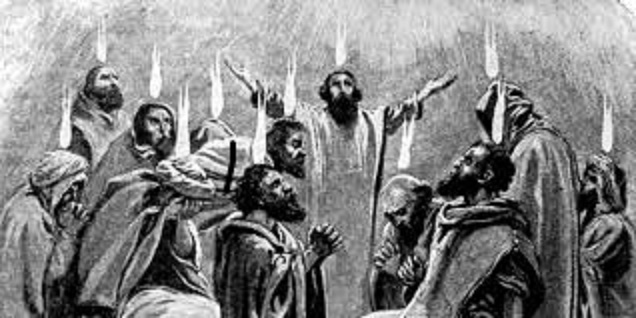
HALIFAX, Nova Scotia, August 12, 2022 – You can’t teach people who don’t want to learn.
Jesus said to feed his lambs and to feed his sheep, not to force-feed them.
He himself only taught and preached to those who came to him to learn.
We have to be mindful to do the same.
“But” (someone will inevitably say), “God’s Truth must be spoken both in and out of season”.
That’s true – Jesus’ brilliant responses to the religious powers-that-be are legendary, but he didn’t go looking for a fight. He didn’t seek out his enemies or confront them. He didn’t poke a stick into the proverbial hornets’ nest. His enemies attacked him with lies and provocations, and Jesus responded with just enough Truth to set the record straight. More would have been wasted on them.
I mention this as a caution against street preaching and witnessing to strangers. People get deeply discouraged by trying to force-feed God and Jesus to people who have no appetite for them. There is a misconception among many evangelical Christians that they need to harass people on public streets, shoving pamphlets in their faces and waving Bibles at them. This approach has never worked to sway people, other than to sway them to curse you.
Jesus was not an evangelical preacher, he was an itinerant one. He only went where he knew people wanted to hear what he had to say. He instructed his disciples to follow his example by moving around from village to village and staying only in those places that welcomed them. Those homes or villages that didn’t welcome them were to be avoided. God would deal with them in his time.
When Jesus, at his ascension, instructed his disciples to first wait for the “promise of my Father” and then to go out into the world to preach the Good News, he did not mean they should go out to people who did not want to hear the Word or who would feel coerced into hearing it. His earlier instruction to the disciples still stood: to go only where people wanted to hear what they had to say. He also did not mean they should go out willy-nilly, on their own steam and motivated by their own ego. These two factors – 1) only going to people who are receptive to God’s Word and 2) waiting for God’s Spirit to embolden you – are foundational tenets for preaching the Word.
I converted to Christianity from atheism, so I am intimately acquainted with how unbelievers react spiritually to the Word of God. It’s not a pretty thing, their reaction, and it shouldn’t be provoked. No-one who ever tried shoving God in my face when I was an atheist succeeded in anything but getting laughed at or cursed out for their efforts. They accomplished nothing, because God’s Spirit was not with them. They were operating on their own steam. You accomplish nothing when you attempt to preach God’s Word where it’s not welcome and on your own steam.
It’s better not to preach at all then to preach without the blessing and power and guidance of God and Jesus, through God’s Holy Spirit. It’s better to remain silent than to cheapen God’s Word. It is the highest privilege and office in the mortal universe to be a prophet of God and to preach and teach God’s Word. There is no higher privilege, but it isn’t self-bestowed or bestowed by another person: It is bestowed by God.
This is why Jesus cautioned his followers to wait for the baptism of the Holy Spirit before starting their ministry. When they initially went out in twos, Jesus was physically there with them to guide them, correct them, and oversee their progress, and they also had their partner as a fallback. But this approach to preaching was meant only to be temporary, as a form of training for the time when Jesus would not physically be among them. The baptism of the Holy Spirit, which gave them a direct line of communication with God and Jesus, later emboldened them to speak without the safety net of a partner and with miracles accompanying their witness, like they accompanied Jesus’ witness. The miracles were God’s very public seal of approval and evidence that the followers spoke not from their own power, but from God’s.
I do not know you and you do not know me, but God knows us and also knows whether or not we are equipped to preach his Word. You’ll know whether or not you’re equipped to preach the Word because you’ll open your mouth and God’s words will come out, not yours. God will speak through you. That is the very definition of a prophet – one who speaks God’s Truth – and born-again believers are prophets by spiritual nature. If they’re not a prophet, they’re not born-again.
So before you take to the streets or to a virtual format to preach and teach the Word, first make sure you’ve been sent by God – not by your Bible college or your pastor or yourself – BY GOD. If you’re unsure whether or not you’ve been sent by God, you haven’t been and should remain silent. Otherwise, the devil will put his words in your mouth and you’ll turn into a false prophet.
These words are meant to discourage you from doing something you know you shouldn’t, and to encourage you to do something you know you should. The guidance to “tarry in Jerusalem until you receive the power from on high” is as much meant for us today as it was meant for the disciples nearly 2000 years ago. We dare not go where we have not been sent, and we dare not speak in God’s name unless we do so with God’s words, put there by God himself. If we presume an office and a privilege that God has not given us, we will not succeed in our preaching and we will place ourselves firmly in the camp of Satan, who also presumed an office and a privilege, leading to his fall.
“Wait on the Lord:
be of good courage, and he will strengthen thine heart:
wait, I say, on the Lord.”
Psalm 27
THE TEMPTATION OF ROMANTIC LOVE

HALIFAX, Nova Scotia, August 12, 2022 – We are to love God with all our heart and all our soul and all our mind and all our strength. That is a Commandment. If we love God with all our heart, soul, mind and strength, we don’t need romantic love. We have no room for it; we have no desire for it; we have no time for it. Romantic love is just another filthy worldly rag that we throw away.
Jesus said that if we don’t hate everyone except God, we’re not worthy of him. What on Earth did he mean by that? He meant precisely what he said: God and God only should be our focus. God and God only should have all our love.
God and God only.
In our all-consuming relationship with God, there’s no room for anyone else. That would be someone coming between us. That would be spiritual adultery.
Jesus did not have a girlfriend or a wife during his time on Earth. He also did not have a boyfriend. All his love he gave to God and God only. To be a follower of Jesus means to be like Jesus in whom we choose to love.
Born-again believers don’t form romantic attachments. That doesn’t mean we’re not still attracted to people or are not attractive to them. I experience both, as temptations. I have no intention of giving into those temptations. A romantic attachment has zero value to me. It’s like I’m standing on the side of a mountain, with the peak within easy viewing range, having reached that point with phenomenal effort over a long period of time, only to have someone call to me from the canyon below to come down and join them. It would be stupid of me to traipse down the mountain to join them, to give up everything I’ve learned and experienced and accomplished over the years for a few seconds of fluttery feels. I can’t think of anything less worth losing grace over than romantic love.
Listen carefully to the words of popular love songs. Imagine that instead of a man singing them to a woman or a woman to a man, demons are singing those words to God. Because that’s what popular love songs are – demons mocking God by claiming to be heartbroken over his rejection of them, and demons inciting people to replace their natural desire to love God with an unnatural desire to love others rather than God, to love created beings rather than the Creator who made them.
Love is only love when it comes from God, the source of all love. Otherwise, it’s fake love. It’s a sham. Most of what people call love is actually a sham. Real love never dies.
When Jesus told us we are to love God more than our family, he was basing his teaching on examples such as Abraham’s willingness to sacrifice Isaac and Aaron’s refusal to mourn his sons when they violated their priestly office and were killed for it. There are numerous instances in the Old Testament of people choosing God over their families or their people, even to the point of deserting wives and children. Regardless of the collateral damage, choosing God is always the right choice. It is never wrong to choose God, just as it is never wrong to follow the examples set by Jesus.
Jesus advised us to become eunuchs for the Kingdom of Heaven’s sake. With this, he not only promoted celibacy but the stage beyond celibacy, which is not the denial of sexuality but the dismissal of it. Sexual desire has no value to born-again believers living in the Kingdom, any more than gluttony has any value or coveting has any value. These are all appetites that we leave behind us when we enter the Kingdom. We will be tempted by them, certainly (even Jesus was), but it shouldn’t be any problem for us to overcome them once we identify them as temptations and then lean on God and his Word to strengthen us against them.
When we look to people to give us what only God can give us – perfect loyalty and unconditional love – we will fail in our pursuit. Romantic love is a cheap, imperfect knock-off of God’s love. It is often demon-inspired, and born-again believers have no reason to be involved in romantic love or to seek it out. Yes, romantic love will seek us out (we are lightning rods for the devil’s temptations), but we don’t need to give into it. There is no value for us in romantic love. It is a diversion off the narrow Way and a possible trigger for our fall from grace.
God’s love is all you need. The more you open yourself to God, the more he can satisfy you and fulfill all your God-given need for love. No-one can love you better or deeper or longer or stronger or more unconditionally than God, because God is the source of love. He is love. Love is what he does, and he does it perfectly.
Give God all your love and open your heart to him and him only, and you will have no need or time or inclination ever again for romantic love.
UNHOLY CURIOSITY: VIDEOS ABOUT DEMONS

HALIFAX, Nova Scotia, August 6, 2022 – Based on my online activity, YouTube algorithms routinely “recommend” videos by allegedly Christian pastors. I don’t watch the recommended videos, but I can’t avoid reading the titles as I scan through the AI-generated offerings. What I’ve noticed is that videos about demons have far more views than videos about, for instance, entering at the strait gait or living the sober Christian life. Significantly more. One series of videos by the same author consistently shows views of around 16,000 for non-demon-themed videos, while postings about demons generate 64,000+ views. This is not an insignificant difference. I see the same trend in videos by other pastors.
What is the draw to videos about demons? Why are so many Christians more likely to click on a video when fallen beings are the theme?
The answer is: unholy curiosity, which reveals a chink in the armor of faith. Jesus spent very little time preaching on fallen beings, and that for a reason. We don’t need to know about them, beyond knowing they exist and that we should have nothing to do with them other than to cast them out as God guides and enables us to do. Wanting to know more about them is spiritually unhealthy and even dangerous. It is a form of spiritual adultery; a man may at first be drawn to look at a woman who is not his wife, then to speak to the woman, then to fantasize about the woman, then to be drawn into a physical relationship with her, all the while knowing what he is doing is wrong but somehow unable to stop himself. One step almost inevitably leads to the next. The same happens with spiritual adultery: demonic oppression can be gate-wayed by something as seemingly innocuous as clicking on a “Christian video” about demons.
Do not click on those videos. Do not be curious as to what the pastor has to say. Do not be drawn into the study of fallen beings. Do not be lured, tempted, or seduced by pastors who do not have your best interests at heart. No-one sent by God will post a video about demons, unless it is to warn you against watching such videos.
Similarly, do not be drawn into “comparative religion” studies where you are tasked with reading the so-called holy books of other belief systems. Refuse to have anything to do with those books. Treat them, as the Old Testament prophets would say, as a “menstruous cloth” – unclean spiritual disease vectors that are to be given a wide berth. To do otherwise may lead you into spiritual adultery.
God hates spiritual adultery. It is more repugnant to him than physical adultery. All our love, as born-again believers, should be for God and God alone. That is the Commandment. If our love for God wavers for whatever reason, our attention will be drawn to other spiritual beings. This is a sign of faith that has been weakened by unrepented sin. If you find yourself drawn to spiritual entities other than God (even just through curiosity about them), you need IMMEDIATELY to repent and get back 100% with God.
What is the draw to a menstruous cloth? It is a filthy thing teeming with bacteria and potentially with disease. It holds spent blood that has no value. Only the spiritually unwell would be drawn to such a thing; only the spiritually unwell would hold it out for you to touch and feel and smell.
Do not be curious about the fallen beings. Let them alone. Never invite them in, even through allegedly Christian videos. Shun any pastor who tries to lead you down the path of spiritual adultery.
The Way is narrow for a reason. We need to set tight boundaries for ourselves. Temptation is everywhere, all the time, even through AI-generated viewing recommendations. If we don’t set and adhere to tight boundaries as we walk along the narrow Way, we will not survive spiritually. A click is not just a click if it opens the door to damnation.
THE PRIVILEGE OF POVERTY

HALIFAX, Nova Scotia, August 3, 2022 – God has granted me the very great privilege of being poor.
Being poor is the financial version of being on the spiritual strait and narrow.
Straitened financial circumstances narrow your options, which means you are less likely to do something you shouldn’t (mainly because you can’t afford to).
I was raised in comfort and lived in comfort for most of my life. Comfort became my default, and I assumed life was meant to be comfortable. I couldn’t imagine being uncomfortable, and the few times I was, I rushed to feel comfortable again.
Comfort and doing God’s will do not always align, at least not during our time on Earth.
Jesus lived a relatively comfortable life in Nazareth as a carpenter. When he became a full-time minister, his comfort years ended. Then he only occasionally lived in comfort, while the rest of the time he slept rough. He dined well, though, at the homes of the wealthy hypocrites (too bad about the dinner companions).
Scripture says that God’s children will be a “poor and afflicted” people, and so we are. When we struggle against our condition of being poor by trying to earn more money, we are essentially struggling against God. We are throwing God’s great gift of poverty back in his face.
We shouldn’t do that.
If God grants us a life of poverty, it’s because he trusts us to know how to handle it and to embrace it. As Paul says: “I have learned to rejoice whether I’m abased or abounding.” The key word here is not “rejoice” but “learned”. Learning requires an immersive experience. You can’t learn to rejoice over being abased unless you’ve actually live abased and learned the right way to handle it. God, of course, will guide you in that.
Immigrants who move from third- to first-world countries typically experience an increase in comfort but a decrease in overall well-being. Comfort, it seems, isn’t good for your health. Nietzsche loathed “wretched comfort” and blamed it for the stagnation of people’s philosophical (that is, proto-spiritual) aspirations. He wasn’t wrong in that. I know people who refuse to travel because they don’t want to leave the comfort of their own bed. They trade experiencing the invigorating wonders of God’s creation for a few hours of unconsciousness. That, to me, is not a good trade-off.
When God first introduced me to my life of poverty, I fought against it. I railed against it. I tried to figure ways around it. But God was firm with me, even while allowing me space and time to get used to it.
Now I can honestly say that I prefer poverty. I see how much better I am in every aspect of my life when I have enough for my needs but not more than enough. When I have more than enough, it just gets me into trouble. Pride creeps in – pride in consumerism, pride in being able to afford more than you or you, pride in what I have achieved rather than in what God has blessed me with. I am not a pleasant person when I have more than enough.
I was also not a pleasant person when I first started to have just enough and no more. It was initially unnerving. Even though God assured me I’d always have enough for my needs, I was too used to having more than enough to find having “just enough” sufficient. Having just enough didn’t seem like enough. But it was, and it is, and it will continue to be for the rest of my time here.
Those outside the Kingdom dream and scheme about ways to make more money, while we inside the Kingdom put aside those thoughts and let God provide for us. On nights when I don’t officially have a place to lay my head, God guides me past snoring security guards and through open doors that should be locked to find temporary shelter waiting for me. I’m constantly in awe at where I end up. It’s not always comfortable, but it is sufficient. I get the rest I need.
Poverty keeps me active, alert, and always on the move, whereas comfort tends to make me inactive, dull-minded, and stationary. For those reasons alone, I far prefer poverty. Jesus taught us to pray “Give us this day our daily bread”, not “Give us this day enough bread for the next six months”. If we truly mean that prayer (and we should always mean our prayers), we would embrace the godly concept of “just enough” and reject comfort.
A life of ease is no life for a follower of Jesus.
THE LONGEST FALL

HALIFAX, Nova Scotia, July 29, 2022 – I hate this topic.
It’s the only thing that frightens me.
It’s like walking across a narrow bridge spanning a bottomless pit and being told not to look down. Everything will be OK as long as you don’t look down.
And then your eyes are drawn downward, and you look down.
That’s what I think about when I think about this topic.
I hate the thought of turning against God, but some born-again believers do leave him, do betray him. I can’t imagine it, and yet the very angels in Heaven once turned against God and fell off that bridge.
We know from scripture that the phase of spiritual rebirth is not permanent. It’s conditional and can be forfeited. If we remain in God’s grace to our last breath on Earth, we’ll move on to the next phase, which is going Home. If we turn away from God – if we willfully and persistently and with full intent do what God warns us not to do – we will lose our grace. And if we lose our grace, there is no getting it back.
Without grace, we cannot go Home.
This possibility of losing our grace must always remain at the back of our minds. We cannot dismiss it or sugar-coat it or write it off as non-scriptural, as some who are not born again claim. But they simply do not know. We must be aware that our grace is probationary, not guaranteed. This understanding is a major motivator for us to remain on the strait and narrow.
Those who say they’re Christians but who then turn from God and continue their lives as Buddhists or atheists or Muslims or whatever were never really Christians to begin with, not in the true sense of the word. If you’re genuinely a Christian (that is, born again and with God’s Spirit living in you), leaving God means your certain and swift earthly demise, followed by eternal damnation. Think of Judas Iscariot. Think of how long he remained alive after betraying Jesus. Think of how he died.
Well, you say, Judas Iscariot wasn’t born-again because Jesus hadn’t finished his job yet. True, he wasn’t born-again, but while he was with Jesus, he had the same abilities and privileges born-again believers have. The disciples lived a prototype of spiritual rebirth, with Jesus always with them, and so God was always with them through his Spirit. In John, Jesus told the disciples that they were clean, except for Judas. Obviously he mean spiritually clean. Spiritual rebirth is a form of cleansing.
Ironically, shortly after Jesus’ pronouncement, all the disciples ran away in fear for their lives. Note that in running away they didn’t reject Jesus or God. They were motivated by fear to distance themselves, but they still loved Jesus and God. True, they didn’t at that time love them more than their own lives, but the time would come when they would. So their fear-motivated flight was entirely different from Judas’ betrayal and subsequent damnation. What Judas did was unforgivable.
We make mistakes, as born-again believers. We don’t always treat others as we’d want to be treated. We don’t always (initially) love our enemies. We sometimes delay doing something God has asked us to do. We sometimes even get mad at God, as stupid as that sounds. We make mistakes. The disciples made mistakes, too, but not enough to lose the prototypical grace they were under at the time through the presence of Jesus. They made what we would call “honest mistakes”.
Judas, on the other hand, betrayed Jesus with full intent. It was no mistake, what he did, honest or otherwise. It wasn’t a misstep; it was deliberate. I can imagine that he was warned at some point by God that he was approaching the edge of the narrow bridge and to pull back and look up, but he ignored the warning. I am certain that God warned him. It would not have been fair of God not to do that, and God is as perfect in his fairness as he is in everything else.
We, as born-again believers, are on that narrow bridge. As we walk along it, it disappears behind us, so that the only way is forward. If we try to go backward, we fall.
There is no going back to the lifeless lives we once lived before our rebirth. There is the possibility and potential to go back, but there is no wisdom in going back. The instant we reject God, we sign and seal our own death warrant, and the demons come for us like they came for Judas. The only way out of that predicament is to hastily sign an agreement with Satan as a temporary reprieve. It delays our earthly death, but ensures that we suffer the same end as Satan in the lake of fire. Those are our only options if we turn from God.
As I said at the outset, I hate this topic. I hate it because I, as a human being, still have the capacity – not necessarily the likelihood, but the capacity – to betray God. Free will is part of the human condition that cannot be overwritten. And because it can’t be overwritten, it needs to be overcome. We do that by remaining as close as we can to God and Jesus, through God’s Spirit; we do that by daily renewing our faith, daily reading scripture, daily searching our heart, daily repenting and doing whatever is required to remain “clean” and on the bridge. We dare not go backward. There is nothing behind us but pain.
We need to remain mindful that while going backward is an option for us, we must never, ever do it.
DO YOU FELLOWSHIP WITH HYPOCRITES?

HALIFAX, Nova Scotia, July 25, 2022 – Many people still go to church on Sundays because they think they need to fellowship with other Christians. Even knowing that most of the people in the church aren’t genuine believers doesn’t stop them from thinking they have to fellowship with them.
But do we, as born-again believers, really need to fellowship with unbelievers?
Or put another way, HOW can we fellowship with unbelievers?
I would rather sit alone than be with people who pretend to believe. I have sat alone for nearly 20 years. Every now and then I venture into a church building, hoping to hear the Word preached live, but I always end up leaving after only a few minutes, more bitter than ever at what has become of mainstream Christianity.
The life of a born-again believer is a solitary one. I am never alone (God and Jesus are always with me), but human companionship is not part of the job description. I interact with people of necessity (you live in the world, you have to interact with people), but it’s always at arm’s length, and I trust no-one. Unbelievers are easy tools of the devil and can turn on you in an instant.
Jesus trusted no-one – not even his disciples – and for good reason: He knew their thoughts. I don’t always know the thoughts of those around me, but I can read their faces and hear their voice intonation and note their body language, and that gives me reasonably accurate insight into what they’re thinking. I can hear what they’re saying and then read between the lines. Most people rarely say what they’re thinking, which is to everyone’s benefit. Imagine the insanity of everyday conversation if unbelievers actually said aloud everything the devil put into their mind.
Jesus directed us to go out into the world and preach the Good News. He didn’t say to preach it to the world. The world, by definition, doesn’t want to hear the Word. The world, by definition, has rejected the Word. Jesus wants us to seek out those who are hungry and thirsty for the Word, not to force-feed those who are not. Make yourself available, and those who are hungry and thirsty will come to you, even if only by cover of night.
I have not made a secret of my loathing for mainstream Christianity. I’ve written about it here and here and here and here and here and here and here and here and here and here and here, etc. I hated mainstream Christianity when I was an atheist, and I still hate it as a born-again believer. If it doesn’t have the whiff of pretense, it has the full-blown stench of hypocrisy. Jesus also loathed those who said they believed and yet showed by their actions that they didn’t. To be accused by Jesus of being a hypocrite is about as bad an insult as you can get.
True believers are few and far between these days. We mostly find each other via the internet. God always makes a way for his children to fellowship, though maybe not always in person. For the personal touch, we have God and Jesus with us 24/7.
There’s no need to settle for unbelievers. There’s no need to fellowship with hypocrites.
We have God and Jesus, and we have each other, even though we’ve never met in person and perhaps don’t even know that the other exists. A genuine born-again believer has a true friend in every genuine born-again believer, so that’s quite a few friends, even in this wicked age. Paul called it a cloud of witnesses: I’m out here praying for you and you’re out there praying for me, and our touchstone is God’s Holy Spirit. I can’t see you, but I can feel your prayers; I don’t know you, but I know you’re there. This is a comfort to me. Knowing that out there somewhere are others who believe as I believe is a comfort to me. This is part of my faith, and I know it’s as real as these words that I’m typing and you’re reading.
God may not bring believers together in person, but he lets them know that others like them exist, that they’re not entirely bereft of human companionship, that they needn’t settle for hypocrites.
We don’t need to go into a church building because we live in our church 24/7.
We don’t need to seek out unbelievers who say they believe because we have each other in our cloud of witnesses.
And we have God and Jesus, who are always with us through God’s Spirit.
Surely that’s enough.
 A BORN-AGAIN BELIEVER