
Home » 2024 (Page 2)
Yearly Archives: 2024
FINDING GOD IN THE INDIVIDUAL

HALIFAX, Nova Scotia, November 22, 2024 – Every so often, there’s a move somewhere within Christianity to get back to basics. A flurry of spiritual housecleaning ensues that sweeps away doctrines that have proven to be man-made rather than God-given, resulting in a recentering and refocusing on God rather than on family, work, society, and/or self. These collective purifications typically happen within a denomination that then splinters off to form another denomination, which then devises a whole new creed and set of doctrines, and the flawed process of religiosity sprouts a shiny new branch.
The drive to return to the purity of belief that Jesus showed during his ministry years is admirable and true. There’s nothing wrong in the desire to do that, and in fact it needs to be done, and daily. The problem is in its execution, as it’s almost always approached collectively rather than on an individual basis.
My relationship with God and Jesus is as an individual. When I go to them in prayer, when I talk to them daily, I speak to them as me, Charlotte, an individual, not a collective, and they know me and interact with me as an individual, not a collective. During his time on Earth, Jesus had a relationship with God that was acutely and supremely individualistic. No-one before or since has had such a relationship with God. It was unique and as perfect as you can get while still being in a mortal body. The relationship Jesus had with God formed the basis of his beliefs, which he then shared with us.
Jesus expressed his faith as an individual, not a collective. There is no consensus model in Jesus’ expressed beliefs. He didn’t change them so as not to offend anyone or get arrested. He believed what he knew to be true because it came directly from God.
The beliefs he shared with us, the commands he left with us, and the directives he gave to us all came from God, who also doesn’t operate on a consensus model. The periodic remodeling of denominations by tearing down spiritual wallpaper and painting it over in another shade – all of these efforts have failed over the centuries because they were corrupted by collective input and conferencing. We cannot come to the pure expression of our belief by pooling our desires and experiences. All we get when we do that is a composite Frankenstein monster that is as flawed in its doctrine as it is in its expression.
Rather than once every few years or decades, born-again believers need to work every day to return to the purity of belief and faith expressed by Jesus during his ministry years. We need to work every day to refocus and recenter ourselves on God. It is an act of constant revival, to put God first and to love him with all your heart, soul, mind, and strength. We need to espouse no doctrines beyond the certitude of Jesus’ messiahship and the necessity to hold to the Ten Commandments, and we need to practice no rituals other than to fall asleep with God on our mind every night and wake up with him on our mind every morning, awaiting instructions on what to do that day. And once a year, at Passover, we need to raise a glass and share a morsel in memory of Jesus, as he directed us to do. Anything beyond this comes from the devil, who himself is a huge fan of doctrine and rituals, because he knows how easily they can draw our focus away from God.
I know I will never find purity of spiritual expression in a collective experience like a church service or a group prayer session or a Bible study because there are just too many egos involved, too much input with questionable motives. We are reborn as individuals, we grow at our own pace spiritually as individuals, and we will at some point stand before God as individuals, answerable as individuals for our own words, thoughts, and actions during our time on Earth. There is no consensus model in God’s Judgement. While it’s not wrong to want to be around other believers, it is wrong when our focus shifts to appease other believers (or people who say they’re believers) at the cost of turning away from God, if only ever so slightly.
Our revivals and refocusing on God need to be daily, not once in a blue moon, and they need to be done as individuals. This is the only way to reach the purity of faith and expression that Jesus experienced during his ministry years and which we should all be striving for as Jesus’ followers. Even though he lived in a group setting, Jesus had a father-son relationship with God, and he invited and enabled us through rebirth to have the same intimate one-to-one relationship that he had. We can never achieve such a relationship in a collective setting, any more than we can use consensus to arrive at genuine, true, God-given doctrine.
CHILDREN OF THE WORLD AND CHILDREN OF GOD
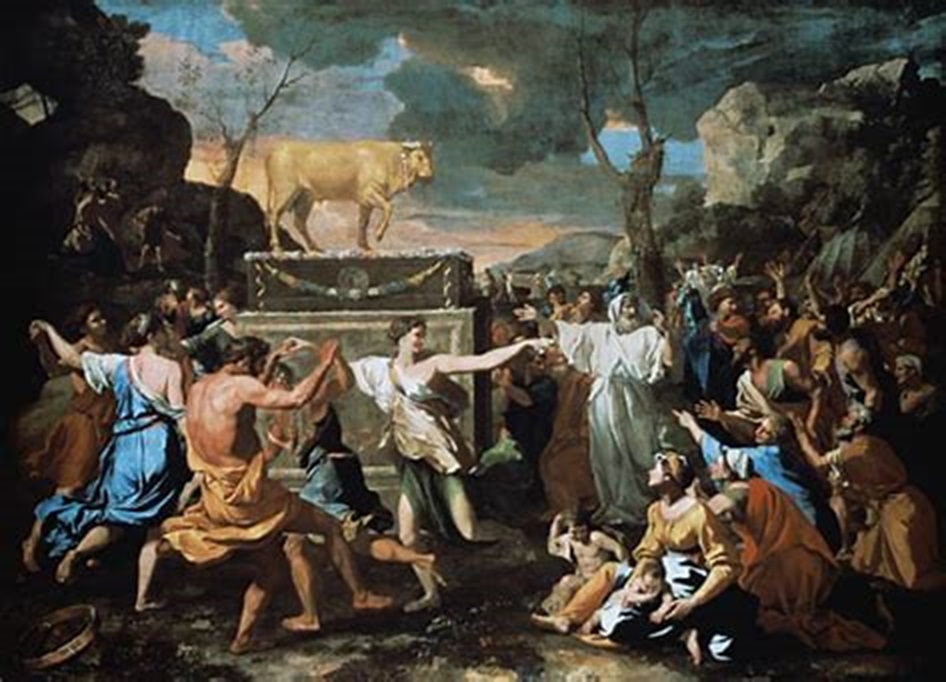
HALIFAX, Nova Scotia, November 20, 2024 – In the Gospels, Jesus states that Moses introduced laws that were contrary to God’s, and that Moses did so because of the “hardness of your hearts”. In other words, Moses legalized sin (such as adultery, by allowing divorce for any number of reasons) because the children of Israel were too spiritually immature to do what was right in God’s eyes, but he didn’t want to alienate them.
Did Paul do the same as Moses? We know Paul mainly from his letters to various churches. In one of those letters, Paul laments that the people there are too spiritually immature to receive the message he wants to give them, that spiritually they’re still drinking mother’s milk when they should be eating hard foods. He also refers to incidences of incest and other sins that frankly leave me wondering whether some of those people were believers at all.
Based on Paul’s letters, it seems that the worldly church was already off and running in the years immediately following Jesus’ ascension. Just as Jesus attracted some drive-by adherents during his ministry years, Paul was also dealing with half-hearted believers. But unlike Jesus, who openly discouraged his less-committed followers and didn’t hesitate to separate the wheat from the chaff, Paul appeared to want to appease the spiritual laggards so as not to thin the herd. In this, he acted more like Moses than Jesus, and perhaps for the same reasons as Moses.
Scripture informs us that of all the people who left Egypt during the exodus, only two fighting-aged men (Joshua and Caleb) made it to the promised land. This means that everyone else aged 20 and older died during the 40-year journey through the desert. God threatened to slaughter them all immediately after the golden calf incident a few months into the journey, but Moses pleaded with him and God relented. He allowed them to live only because he could use them to further his aims for Joshua and Caleb and for those who were younger than 20 at the time. The doomed in the desert were given the job of raising the next generations based on the laws God had dictated to Moses and fighting any enemies they encountered during their wanderings. They were also to serve as a visible and enduring sign of God’s presence on Earth. These are the sole reasons why God kept them alive.
The worldly church is full of the same kind of doomed people who would turn against God in a heartbeat, if circumstances warranted. We know they’d turn against God because they’ve done so already in any number of ways, willfully bringing pagan practices into the church, instituting doctrines of man, and unapologetically living the life of the world so that to the casual observer there is little to distinguish a worldly church member from, say, an atheist or even a satanist. Still, throughout the ages, God has kept these double-minded people alive and allowed them to engage in their rites and rituals because they have a use and purpose for his genuine Church – namely, they act as an incubator, birthing and raising believers until those believers are strong enough to survive outside the worldly church. They also provide resources for God’s children and serve as a visible and enduring sign of God’s presence. These are the tasks assigned to the worldly church today, just as they were assigned to the fledgling worldly church millennia ago and to the children of Israel who made it out of Egypt but didn’t make it to the promised land.
Jesus, on the other hand, was more stringent in his selection of followers because he had to be – he was laying the groundwork for the Kingdom, not for the worldly church. Far from appeasing those who were curious about him, he actively discouraged people from following him by highlighting all the difficulties that came with being his follower. He took everything but their lives away from his twelve disciples and demanded that anyone else who follows him must likewise give everything up. And even those who did do everything he asked of them, he constantly challenged further by demanding they think as God thinks, not as the world thinks.
And so, those in the Kingdom were to love their enemies, which is a concept that was unheard of until Jesus preached it (and is still a hard thing for most people, including and especially those in the worldly church). They were also to embrace poverty and accept being outcasts, all while praying for those who shunned and hated them. They were to keep God’s Commandments, including never to kill, even if it meant they die at the hands of their enemies. And they were to focus on the life to come, not on this life: God was to be their all, as he was for Jesus.
We’d be hard-pressed to find anyone in the worldly church who adheres to Jesus’ requirements of his followers. But God doesn’t expect them to adhere to these requirements and also doesn’t need them to. The role of the worldly church differs from that of the Kingdom, just as the role of the doomed children of Israel differed from that of Joshua and Caleb. With God’s permission, Moses adjusted some of God’s laws to better suit the double-minded, and Paul watered down certain aspects of the Gospel to suit the fledgling worldly church. Their aim in so doing was to keep the numbers up and growing in order to create an incubator for God’s children and an enduring sign of God’s presence on Earth. In their sermons today, the various denominations of the worldly church focus nearly exclusively on the teachings of Paul rather than on the teachings of Jesus, because Paul’s letters were written for people who are not born-again, whereas the Gospels were written for born-again believers.
This blog is written for born-again believers.
FORCE-FEEDING THE WORD: ON MEGAPHONE AND PUBLIC TRANSIT PREACHING
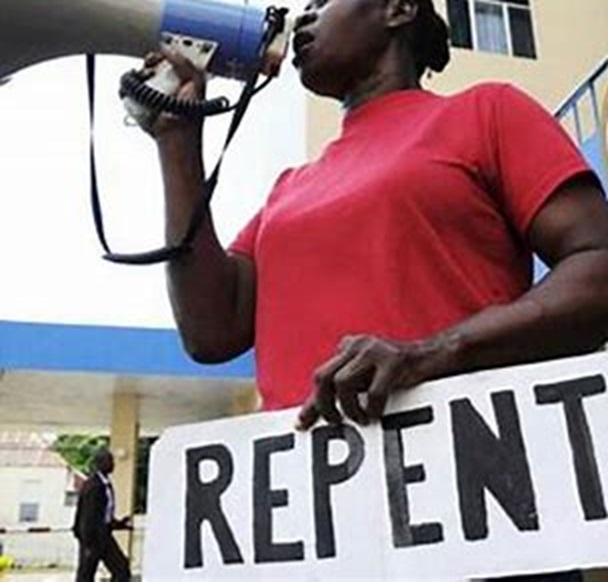
HALIFAX, Nova Scotia, November 19, 2024 – We are blessed beyond measure to have Jesus as our example. Over the three years of his ministry, he showed us how to do everything we’ll have to do during our time on Earth. Still, many Christians ignore Jesus’ example when it comes to preaching the Word. I’m talking here mainly about megaphone street preaching and public transit preaching, the latter which unfortunately appears to be a growing trend. These preachers are like the proverbial bull in the China shop spiritually, causing destruction and chaos wherever they show up. The Word cannot be sown in such an environment.
Based on what I’ve seen, I’d say it’s mostly ego and frustration that drives these preachers to yell at strangers. The only other people I see yelling in public spaces are the sleep-deprived homeless, strung-out addicts, and the deranged, all of whom at least have a valid excuse for their outbursts. As you know if you’ve spent any time here at all on this blog, I am a fully committed born-again follower of Jesus, but whenever any of these preachers come at me screeching Jesus’ name and accusing everyone within earshot of being sinners, all I want is for them to shut up. They sound possessed with a devil rather than filled with God’s Holy Spirit.
You cannot force-feed the Word. If people aren’t hungry for the Truth, they won’t swallow it, not one bite. It doesn’t matter how eloquent (or loud) you are or how true your words: Only the hungry will want to feed, and so only the hungry should be fed. That is a spiritual fact of life that even God won’t override.
Some priests and ministers guilt their parishioners into “reaching out” to people who reject God. Based on the Gospels, we’re not meant to reach out – we’re meant to stand in God’s Truth: Those who want the Truth will eventually reach out to us, and we’ll be there for them. We need to let them know that we’re there for them, but we also need to let them come to God and Jesus in their own time and in their own way. If we force the matter – if we try to force-feed them God and Jesus – we may win some reluctant half-believers, but these will be weak in their faith and will fall away at the first test or trial.
The gospels give us numerous examples of how and where Jesus preached. Under no circumstance did he force himself on others; he always waited for people to come to him. Equally importantly, he ‘read the room’, whether indoors or outdoors, and adjusted his message accordingly. Everyone who came to him did so with a unique need, and Jesus tailored his message to satisfy it spiritually. For instance, the Pharisees came to him dismissively and arrogantly, needing to be warned about their pride and hypocrisy, whereas the adulteress came to him in tears, needing to be comforted but also warned not to sin again. These two very different messages were delivered entirely differently, as they were meant to satisfy two very different needs.
Along with waiting for people to come to him and tailoring his message to the listener, Jesus was careful to leave people with a sense of hope. The Good News is, after all, the most joyful of all messages, so any preachers of the Word who leave their listeners with a feeling of shame or despair rather than an upwelling of hope are doing the Gospel a disservice. Even if you believe that someone who came to you is about as close to being beyond hope as any person can be, you still feed that person hope. No-one who comes to us in earnest is fully beyond hope, no matter how hopeless it may appear to us on the surface. Again, no-one who comes to us in earnest – not in anger or abusively, not feignedly or with evil intent – no-one who comes to us earnestly seeking to be fed God’s Word is beyond hope, or God’s Spirit wouldn’t have sent them to us.
You can see from the above that megaphone and public transit preaching doesn’t align with the preaching examples given to us by Jesus, which means the people who do this type of preaching are following a wayward spirit rather than God’s Holy Spirit. Certainly, fashions change and with them circumstances and technologies, but if Jesus consistently modeled one way of preaching and people today choose an entirely different way, they can’t expect their efforts to be successful. To me, megaphone street preachers and public transit preachers are less like Jesus and more like the demon-possessed woman who followed Peter and Silas around, constantly shouting that they were from God and were showing the way of salvation. Certainly, she spoke the Truth (devils often do), but she was an irritant and did not help anyone by her constant interruptions. The last thing we want to be when we’re delivering God’s Word is an irritating, unhelpful, interruption.
Preach as Jesus preached; don’t be ego- or devil-driven. Let the hungry know you’re there, but let them come to you; and when they do come, feed each of them according to their expressed and unexpressed needs.
Read the room.
Tailor your message.
And always end with hope.
SHHHHH!

HALIFAX, Nova Scotia, November 19, 2024
**********
And who are they? (I pointed to a long line-up stretching as far as the eye could see.)
Those are the ones who thought they could get into Heaven by faith alone. They lived the life of the world and didn’t take the time to get to know God as their loving Father. They were certain that all they needed was “faith” because that’s what their pastors told them. But then they showed by living the life of the world and remaining strangers to God that they didn’t have any faith at all, none whatsoever. It was all just talk.
And those ones over there? (I pointed to another seemingly endless line.)
They thought they could work their way into Heaven. They thought that if they read the Bible and went to church and gave money to charity and volunteered for church activities and missionary work, that was enough. They didn’t spend any time getting to know God as their Father, even though they knew they needed to know him. They just kept busy doing church things.
But if they knew they had to know God as their Father, why didn’t they do it? What stopped them?
They weren’t born-again. You can know about God if you’re not born-again, but you can’t know God as your Father and have a close loving relationship with him unless you’re born-again. You don’t even want to know God personally if you’re not born-again, because you’re still full of unrepented sin. It’s your sin that keeps you from wanting to get close to God and it’s your sin that will keep you out of Heaven.
And what about those ones over there? They look miserable!
They are miserable. Those are the souls who were told they could believe in anything they wanted, as long as they were a good person. They treated spirituality like it was a cafeteria and they could take a little bit from this belief system and a little bit from that, whatever they were hungry for at any given time. They were told that being a good person was all it takes to reach Paradise. Otherwise, they could believe in any religion they wanted to or none at all.
It doesn’t look like Paradise is where they think they’re going.
No, it’s not where they’re going, and they know it now, but they found out too late.
(It made me sad to see all the souls who’d resisted hearing God’s Truth during their time on Earth, but I couldn’t help them anymore. And then I remembered the souls who didn’t resist hearing God’s Truth. It made me happy to think about them, and I wanted to see them.)
What about the ones who’re going to Heaven? Where’s that line-up?
There’s no line-up for the souls going to Heaven.
What?! Why not?
Because those souls don’t need to line up. When they leave their earthly bodies, they go straight to Heaven. A few, like Moses and Elijah, start doing missions right away, but the rest fall into a deep dreamless sleep. They’re dressed in long white robes and their beds are covered in the finest white linen. Think Sleeping Beauty, only much more beautiful. They sleep the best sleep they’ve ever had, and they stay sleeping right up until Judgement Day.
Can I see them sleeping?
No, you can’t.
Why not?
Because they’re sleeping!… Shhhhh!
TRUE AND FALSE PROPHECIES: A COMPARISON OF THE ASCENSION EVENT AND THE RAPTURE
HALIFAX, Nova Scotia, November 19, 2024 – There are many ways to discern a false prophet. I’ve gone over some of them in earlier articles (if you’re interested, type “false prophets” into this webpage’s search bar in the upper right corner). As I’ve mentioned in several of the articles, false prophets can still preach God’s Truth, though they mix it with the devil’s lies. Is there a way, then, to know when a prophet is giving us good intel about the future?
Yes, thank God, there is. Jesus himself told us about it in various parables that stressed two key features about prophecies that deal with future events. These two features are:
- Unexpectedness. The events will happen when you least expect them; and even if they do occur more or less when you expect them to occur, they’ll unfold differently than you anticipated. In some cases (like the coming of Jesus, the Messiah), they’ll be so unlike what was anticipated, many will doubt whether the event fulfilled the prophecy.
- Urgency. Prophecies that give you the impression you still have plenty of time to get things right with God are not from God. They are false, as all prophecies about future events are fueled by a sense of spiritual urgency – an urgency that arises from the prophesied unexpectedness of their occurrence. The urgency also comes from our understanding that we as individuals must be ready at every moment of every day to face God for the judgement, because after we breathe our last (which could come at any time), it’s too late to make amends. At that point, what we’ve done, we’ve done, and what we’ve left undone, we’ve left undone, and that for all eternity.
These two characteristics – unexpectedness and urgency – are the hallmarks of prophecies that come from God regarding future events. In short, if the prophecy doesn’t highlight the quality of unexpectedness in the event’s occurrence and the urgency of our taking immediate steps to prepare for it spiritually, the prophesy is not from God.
With these rules of thumb in mind, let’s take a look at the most highly anticipated and publicized future event of all time – the second coming of Jesus Christ. In particular, let’s look at the ascension event that Jesus and Paul prophesied and which has been popularized recently as the “rapture”. As I’ve written here before, I’m not a fan of the rapture, as I believe it’s a false prophesy. The ascension event as foretold by Jesus and Paul is unquestioningly from God, but the rapture is not. Here’s why.
UNEXPECTEDNESS
Unexpectedness is a key feature in future event prophecies that come from God. We are to expect the unexpected; we are to prepare for the unexpected; but we should still anticipate being entirely surprised when it occurs. We won’t be sitting with a stopwatch, counting down the seconds or watching the power balls drop our lucky numbers one by one. Jesus mentions that people will be doing things as mundane as working in the fields or sleeping in a bed or lounging around waiting for the very late bridegroom to show up (some perhaps giving up hope that he’ll even come). I also believe that the unexpectedness of the ascension event will be supernaturally imposed by God – whoever’s still on Earth when it happens won’t know it’s about to happen, because God will prevent them from knowing, the same way he supernaturally prevented the disciples from knowing about Judas Iscariot’s planned betrayal of Jesus (so they wouldn’t try to stop him).
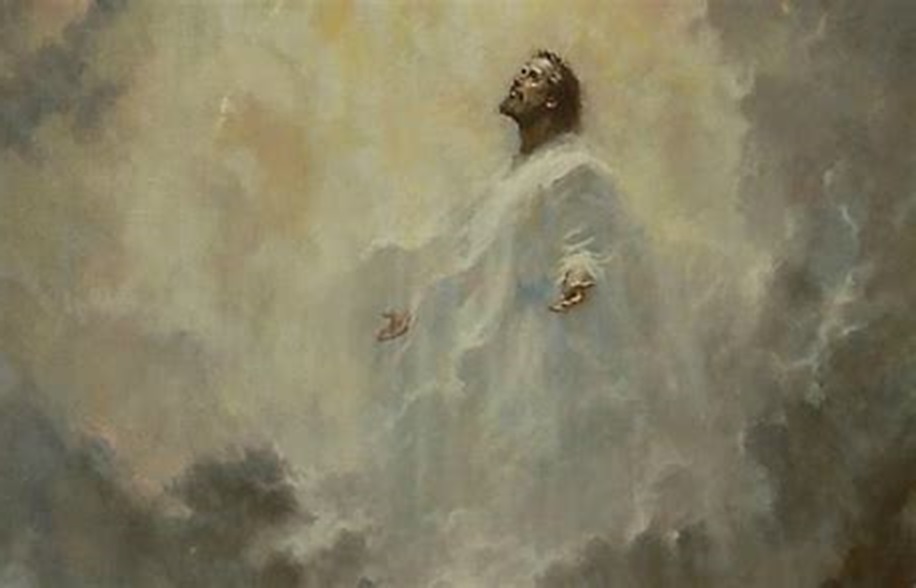
Unexpectedness will also play out in how the ascension event itself will play out – that is, what it will actually look like. Jesus said that he will return in glory with his holy angels, and that he’ll send his angels to all corners of the earth to gather his Church. At Jesus’ ascension 40 days after his resurrection, two angels told the disciples that Jesus would return the same way he went up – that is, via the cloud in the sky and accompanied by holy angels. Paul mentions being “caught up in the clouds… in the air”, the same way Jesus is described ascending (and also the same way Elijah and the two witnesses are described ascending). This, then, we can assume is how the ascension event will play out, at least according to scriptural references.
The rapture, on the other hand, widely publicizes a type of disappearance that doesn’t align with scripture and is almost comical. The bodies of believers disappear, but their clothes are left behind either in a heap on the floor or bench or car seat, or neatly folded with glasses, watches, and jewelry on top. In every instance, the actual disappearance is not witnessed, just the aftermath is. None of the “left behind” people see the disappeared disappear; typically, they look away for a second, and when they look back, the person is gone. Or they come home to an empty apartment or an empty house, finding only the aforementioned heap of clothing on a chair or the floor. Nobody witnesses anyone rising up in a cloud or into the clouds accompanied by angels, as prophesied by Jesus and Paul and as relayed by the disciples at Jesus’ ascension. There’s just a “Now you see ‘em, now you don’t” moment, which is not scriptural.
There’s also a question of timing. Paul prophesies that the “dead in Christ” will rise first, after which the rest will ascend. Jesus states that he’s send his angels to the “four winds” to gather his Church, which seems to me like it won’t happen all at once but staggered over a period of time. Paul does mention that it will happen in “a twinkling”, or very fast, but I believe the “twinkling” refers to how fast the ascended will change from their earthly body to their glorified one. I don’t believe the ascension of the Church will happen in a twinkling.
Let’s look at Elijah’s ascension as an example of what might happen to Jesus’ Church. It was well-known among the local prophets of each region that Elijah would be taken to Heaven. God must have informed them all, because Elijah knew it, Elisha (the prophet who took over from him) knew it, and all the lesser prophets knew it. What they didn’t know was the exact time or exact manner that Elijah would be taken. First, they all thought it would likely happen on this day at this place, and then God sent Elijah somewhere else that took a few days’ journey to get to. So then they all thought it would likely happen at that place, but God sent Elijah somewhere else, until everyone involved just kind of slacked off a bit, thinking it wouldn’t happen for a while… until suddenly, chariots and horses of fire appeared in the sky and Elijah was taken up in a whirlwind. That was the last that anyone on Earth saw of Elijah until his cameo appearance with Moses at the transfiguration.
Eijah, Elisha, and all the local prophets were definitely not expecting chariots and horses of fire to emerge from the clouds in the sky. Nor were they expecting the chariots and horses to show up when they did. In fact, after the several false starts, the two prophets were just ambling along shooting the breeze when Elijah was unexpectedly whisked away. I think the ascension event for us will be just like that – both expected and unexpected, and in a manner that was unanticipated.
I also believe that the ascension of Jesus’ Church will happen one by one and that each of the ascendees will be escorted by angels. If we’re here when it happens and we’re blessed to be chosen, we’ll all see Jesus coming in the clouds in his glorified body, but it will be his holy angels who come for each of us individually to take us up into the sky to join Jesus. How that will play out? How will the angels will approach us and draw us up into the sky? I guess we’ll have to wait and see when the time comes. Tellingly, the angel escorts are glaringly absent from any rapture movie I’ve ever seen, even though Jesus pointedly mentions them in his ascension prophecy.
I have attended at the death of a loved one, and while I didn’t see any angels present, I definitely felt their presence (and the absence of their presence when they left with my loved one’s soul). At the ascension of the remnant Church, the angels will be in their glorified form, like Jesus, and fully visible to everyone on Earth. Just the thought alone of this glorious event makes me so excited and happy! Like Elijah anticipating going Home to Heaven, I can’t wait!
URGENCY
The overwhelming emotion that is expressed as a jubilant “I can’t wait!” fuels a sense of urgency that is the second main characteristic of a prophecy from God. God’s prophecies never leave us with the impression that we can settle on our lees or that we’ll always have plenty of time to prepare. The urgency characteristic contrasts sharply with the “If at first you don’t succeed…” feature of the rapture doctrine, which assures us that if we or our loved ones miss out on the first round of the second coming, we shouldn’t be unduly worried because we can catch up with Jesus at the second round (as if there will be such a thing). I believe, and again scripture backs me up here, that there will logically only be one second coming, not two or more, which means that anyone left behind after the ascension event prophesied by Jesus and Paul will not have another opportunity. It will be just one and done.
The whole point of the urgency feature in God’s prophecies is to prevent people from procrastinating spiritually. As I mentioned above, we should be ready at every moment of every day to come before God for Judgement. We shouldn’t be “rapture-ready”, we should be Judgement-ready, which incites in us an entirely different and deeper degree of spiritual readiness. I don’t want to lay my head down at night with unrepented sin on my soul, any more than I want to go through any part of my day with sin on my soul. I want always to be Judgement-ready and prepared to meet God at any time.
This is the sense of spiritual urgency that a prophecy from God inspires in us, and I don’t see that in the rapture doctrine, mainly because it promises second or even third chances to get right with God after the initial rapture event. I also don’t see it in the rapture-related doctrine of the tribulation period preceding Jesus’ second coming that insists that people will simply be able to call out to God right up to the last minute and be saved. I believe the cut-off time for conversion will occur at the end of the birth pangs period and just before the tribulation proper begins, and no-one knows the day or hour for that. The book of Revelation doesn’t describe any conversions – none at all – after the tribulation proper begins in Chapter 8. There’s horrendous suffering accompanied by copious cursing and blaspheming, but no conversions. Not one conversion is recorded in scripture after the start of the tribulation. What we do see recorded is that, for all their suffering, none of the unsealed repent.
This bleak outlook for the unconverted is meant to be bleak. It needs to be bleak. Its bleakness relays an urgency that is the hallmark of a prophecy from God. We should not be left with the impression that we’ll always have plenty of time to change our ways. The devil wants us to think that, but God doesn’t. We should also not be given the impression that our unconverted loved ones will have plenty of time to convert. Jesus says that anyone who loves his spouse, parents, children, etc., more than they love him is not worthy of him. A harsh statement, certainly, but necessarily harsh. We should pray for our unbelieving loved ones (who else will pray for them?), but we should never let their unbelief come between us and Jesus or between us and God. If we must choose between our family and Jesus and God, we must never hesitate to choose Jesus and God. The rapture prophecy, with its loosey-goosey approach to conversion and the promise of mid- and post-tribulation conversions for those who currently reject the Gospel, is clearly false.
God’s prophecies always have two key features: unexpectedness and urgency. The unexpectedness comes from the miraculous nature of the event, and the urgency comes from the necessity always to be Judgement-ready. Prophecies that don’t have these characteristics don’t come from God.
THE JOY OF BEING A POOR NOBODY

HALIFAX, Nova Scotia, November 19, 2024 – I came across a mini-biography of a prominent politician the other day on a social media forum thread. It read like this:
>born into extreme poverty
>family is torn apart by drugs and abuse
>fights through this
>serves his nation as a soldier
>attends a great university
>pulls himself up
>has a family
>achieves [political prominence].
The OP was arguing that the politician’s ascendancy was evidence that the American Dream was still alive. Unfortunately, the OP missed the part where the politician is approached by an agent of the luciferian deep state, who tempts him with wealth and fame beyond his comprehension, all for the low, low price of his soul. The temptation likely occurred in the politician’s early adult years, followed by a radical change, as if a switch had been flicked.
The opposite occurs in people who are genuinely born-again. They also have that definitive 180-degree change moment, but instead of gaining worldly success in their chosen field, they become poor “failures” or nobodies (in the eyes of the world), like Jesus was before his resurrection.
You can clearly see who has or hasn’t sold their souls if you know what to look for. Some of the devil’s minions are in so deep, they’ve become household names. Tellingly, they all claim to have embraced some form of religion, usually in early adulthood, but that’s just the hook they hang the devil’s hat on.
When Jesus told us the world was under the authority of Satan, he wasn’t speaking figuratively. Nor was he speaking figuratively when he told the religious ptb in Jerusalem that their father was the devil and that they served the devil, not God. Furthermore, when Jesus relayed his experience in the desert of being tempted with wealth and power in exchange for worshiping the devil, it was to let us know that this – trading your soul for worldly success – is the devil’s MO.
The world is an ugly place for those who have eyes to see; soul-sellers are everywhere, from the local primary school all the way up to the highest political and judicial offices. They dominate, business, industry, all the professions, entertainment, education, the arts, sports, etc. Quite simply, if you live in the world, you can’t avoid interacting with soul-sellers.
What’s a poor born-again believer to do?
As I’ve written here before, God doesn’t want us to work against or even to “out” the soul-sellers. He has them firmly in his grip by having full authority over the devil (how else can God’s justice be perfect?). If we work against the soul-sellers, we’re ultimately working against God. Certainly, we need to see these people for what they are, but we also need to let them be. They have no authority over us, other than to make laws that we’re free to ignore or work around if they contradict God’s laws.
Our job as followers of Jesus is not to praise, envy, support, or “out” the condemned, but only to “do that which pleases the Father”. The reward for not selling your soul is that you’ll likely be a poor nobody – in other words, the opposite of what you would have been had you served the devil. But I’m happy to be poor and a nobody in the eyes of the world if it means I get to serve God and follow Jesus. To me, there’s no greater achievement, though I didn’t do anything to achieve it; God did it all for me, just as the devil masterminds the soul-sellers’ achievements.
The poorer you are, the more dependent you are on God; the more dependent you are on God, the closer you grow to him; the closer you grow to him, the more you get to see him in action, up close and personal. This – not fame and fortune – is the truly “good life”, and it shows the devil’s rewards for the curses they are.
GOD’S BABIES AND THE BEASTS OF THE EARTH

HALIFAX, Nova Scotia, November 19, 2024 – We are blessed to share the earth with God’s babies. All of God’s non-human creatures are on the same homeward journey as we are. Many of us have (or have had) God’s babies as pets, and so know first-hand what it means to love them and be loved by them. It’s a love that is unlike any other in its transparency and is in fact closer in characteristic to the love we share with God than the love we share with people.
I mention our relationship with God’s babies, whether domesticated or wild, because one day most of them will turn on us. They’ll see us as enemies and prey. Imagine walking out of your house and being attacked by a flock of birds, like in a Hitchcock movie. And if you somehow manage to fight them off, you’re then surrounded by a pack of dogs, growling and snarling and moving in for the kill. Even heavily armed, you’d be hard-pressed to fend off so many animal attacks from all sides all at once, not to mention the insects that would also be swarming you, carrying deadly diseases.
What a horror show it will be! We can only pray that God will take us Home before this happens, because happen it will. When the time comes and Hell empties out, all the disembodied demon spirits will be looking for live bodies to inhabit, and once all the humans without God’s seal are possessed, they’ll start taking over animals and insects.
Jesus once famously allowed demon spirits to enter pigs, so there is scriptural precedence for it. But animals don’t necessarily need to be inhabited by demon spirits to carry out the nasty part of God’s justice, because animals do God’s will without question. The best examples of animal compliance to God in the Bible can be found in the animals and insects that played a role in the plagues of Egypt, in the ass that refused to budge (even when beaten by its master), in the ravens that fed Elijah, and in the lion that killed the children who mocked Elisha. Even from these few examples we can see that God uses “the beasts of the Earth” to carry out his will, whether for good or evil. Animals simply do as they’re told by God, and to the precise measure.
Animals occupy an important place in God’s economy as well as in his plan of salvation. They’re so important, God spared far more animals during the flood than humans. God’s babies serve us through their labour, their companionship, and yes, even through their sacrifice so that we can be fed and clothed.
But one day, God’s babies will serve a much darker purpose. Then we’ll understand why God made them with such strength and such speed and such teeth and such claws, and why even just a pinprick of venom from a tiny spider can kill a grown man. When all these weapons are given into the hand of Satan and collectively turned against us, we’d better pray that we have God’s seal, or better yet, we’d better pray we’re not still here.
**********
If I cause noisome beasts to pass through the land, and they spoil it, so that it be desolate, that no man may pass through because of the beasts…. Though [Noah, Daniel, and Job] were in it, they shall deliver neither sons nor daughters, but they only shall be delivered themselves. (Ezekiel 14:15, 18)
**********
And I looked, and behold a pale horse: and his name that sat on him was Death, and Hell followed with him. And power was given unto them over the fourth part of the earth, to kill with sword, and with hunger, and with death, and with the beasts of the earth. (Revelation 6:8)
**********
Woe unto you that desire the day of the Lord! to what end is it for you? the day of the Lord is darkness, and not light. As if a man did flee from a lion, and a bear met him; or went into the house, and leaned his hand on the wall, and a serpent bit him. (Amos 5:18-19)
**********
For then shall be great tribulation, such as was not since the beginning of the world…. (Matthew 24: 21)
**********
ON JESUS’ THIRD COMING: CHATTING WITH LUCY

HALIFAX, Nova Scotia, November 19, 2024
**********
[Phone ringing.]
Hi, this is Lucy. How can I serve the Lord by serving you today?
Have I reached Raptures R Us™?
Yes, you have reached Raptures R Us™. This is Lucy. How can I serve the Lord by serving you today?
I have a question about the raptures.
Which one?
That was kinda my question. I was hoping that you could clarify something for me.
I’ll try.
In the Gospels, Jesus says he’ll come back at the end of time to gather his church after the great tribulation. Is that correct?
Yes, that’s correct. Was that your question?
No, I was just confirming that Jesus is coming back after the tribulation. Raptures R Us™ also claims that Jesus is coming back before the great tribulation. Is that correct?
Yes, that’s correct. Was THAT your question?
No, again I’m just confirming that we both have the same information. According to Raptures R Us™, Jesus is coming back both before the tribulation and after the tribulation. Is that correct?
Yes, it is. I already confirmed that.
So which one is his second coming?
[Silence.]
Was that your question?
Yes, that’s my question. If Jesus is coming back twice (before the tribulation and after the tribulation), which of his two returns will be his second coming? Is the one before the tribulation his second coming or is the one after the tribulation his second coming? Because Jesus says in the Gospels that he’ll come again, and the angels confirm it in Acts, but none of them mention that Jesus will come back twice, only once. So, if he comes back already before the tribulation and then comes back again after the tribulation, will that be his second and third comings? Or are both of his returns considered his second coming, as in “Second Coming: Part A” and “Second Coming: Part B”?
[Silence.]
Hello? Lucy? Are you still there?
[Silence.]
Lucy??
Yes, I’m still here. I was just consulting with my team. We’ll have to get back to you about this. Could you please give us your full name and address and let us the best time we can meet with you in person at your place of residence?
You want to meet with me in person just to answer a question?
Yes, the personal touch is very important to us here at Raptures R Us™. We’ll send a personal van team to your place of residence at your earliest possible convenience.
That sounds kind of complicated. How about if I just drop by your office instead?
Sorry, that won’t be possible. We don’t give out our physical address.
Neither do I. Thank you for answering my question.
But… I didn’t answer it yet.
Oh, yes you did.
[Click, and dial tone.]
**********
OUR HOLY FIREWALL

HALIFAX, Nova Scotia, November 11, 2024 – Were the 40 years of wandering in the wilderness a social experiment conducted by God as a way to kill off several generations of unrepentant sinners while allowing their offspring to be formed under the newly minted religious laws?
It certainly looks that way.
Less than three months after God had miraculously rescued the Hebrews from their cruel Egyptian taskmasters, the Hebrews started setting up their demon idols in the wilderness. Nice way to thank God, people!
Were the Hebrews even worth saving?
God didn’t think so, and if it weren’t for Moses’ interventions and pleadings, all of them (except for Moses, Joshua, and Caleb) would have been wiped out in an instant. Still, God was willing to give the children of the Hebrews a chance, which meant that anyone under the age of 20 at the time of exodus would be allowed to enter the promised land 40 years later, whereas anyone 20 years or older would die in the wilderness, with the sole exceptions of Joshua and Caleb.
The idea behind this social experiment was to see whether the Hebrew children, who would be raised in near total isolation from the demon-worshiping cultures of the heathens, would become godly adults who were fully obedient to God and his laws or if they would continue in their parents’ sinful ways. I believe that the laws and statutes given to Moses by God were unduly plentiful and the punishments unduly harsh in order to form the young ones appropriately (like at a boot camp) while at the same time punishing the parents for their disobedience. The parents were still in charge of raising their kids, but they would do it knowing that God (or one of his agents) was perpetually breathing down their necks to make sure they were doing everything right. If they didn’t do everything right, they could potentially forfeit not only their own lives, but also the lives of their children, which would mean the end of their bloodline.
The outcome of this social experiment has clear implications for us today. During the 40 years in the wilderness, the youngest generations willingly absorbed God’s laws and statutes and were generally obedient. In fact, after all the people who were slated to die did die, and their adult offspring were preparing to enter the promised land under the leadership of Joshua, there was total consensus that they would do whatever they were instructed to do, and would do it to the letter and with no murmuring. So far, so good, and this must have pleased God immensely.
However, after they’d entered the promised land and taken over the cities and towns Joshua had instructed them to take over, the children of Israel began to disobey God and his laws. The more they interacted with the heathen, the worse they became, until eventually the children of Israel were indistinguishable from the devil worshipers they lived among.
We can see from this social experiment the benefits of living in relative isolation from unbelievers. We can also see the benefits of living under stringent laws that have unduly harsh punishments. If God (or Moses, or some other godly person) were my taskmaster, I frankly would have no problem living under either of those conditions (i.e., in total isolation and under strict laws with brutal punishments) and would in fact welcome such a living environment: I’d see it as being for my ultimate (i.e., eternal) benefit. The dispersion of the children of Israel among the heathens meant that not only were the laws and statutes mostly a personal choice from that point onward, but the punishments were also sporadically and unevenly applied by the religious PTB. The social contract between God and his people was broken, as it takes all affected parties to agree to a contract, and the Hebrews had, by their creeping disobedience, effectively bowed out.
This may surprise some of you who are reading this, but we, as born-again believers, are under contract with God today. The Kingdom of God, the spiritual Zion where born-again believers spiritually live and breathe, is the new promised land. Our contract is no less rigorous than the one entered into by the children of the children of Israel and the terms of agreement are the same: Be obedient to God and his laws, and you will prosper spiritually; be disobedient, and you will die spiritually, and there’s no coming back from that death.
In this latest of God’s social experiments, which began at Pentecost nearly 2000 years ago, God has given us – his adopted children – massive leeway to live among the heathen, all while trusting us not to become like the heathen. To enable us to remain loyal to him, he’s given us his Spirit through rebirth, opening up a 24/7 communication line that is a combined hotline, helpline, and spiritual 911, and he’s always there to answer. This is how God is breathing down our necks now, and I thank God that he is.
Mind you, the devil is also betting that the demonic influences around us will be our undoing, as they were the children of Israel’s undoing, but it’s up to each one of us to prove the devil wrong. The Church established by God and lorded over by Jesus is impenetrable to the forces of evil. So, as long as we remain behind our holy firewall by remaining obedient to God and following Jesus, we’ll be fine. We’ll live and thrive spiritually.
But if, like the descendants of the children of Israel, we allow ourselves to slip-slide away from God by taking on the cares and concerns and interests and characteristics of unbelievers and of those in the worldly church, we’ll give the devil the victory. We must never do that.
God has given us every motivation and every means possible to remain loyal to him, so let us remain loyal behind our holy firewall.
IF THE GOOD LORD IS WILLING

HALIFAX, Nova Scotia, November 11, 2024 – I don’t think Jesus sat down every night before going to bed and wrote out a list of things he wanted to do the next day. I don’t think he wrote out a list of resolutions, either, at the Jewish version of New Year’s Eve (if there was such a thing back then). I don’t even think he wrote grocery lists.
What I do think Jesus did during his ministry years is fall asleep every night with a clear conscience, with nothing to repent. He would almost always sleep deeply and well – even on heaving boats in the middle of a storm – and when he woke up refreshed in the morning, God let him know what he had to do that day. Jesus rarely knew in advance what his daily tasks were. He woke up and waited for God to inform him.
“Sufficient unto the day is the evil thereof.”
As a young believer, I often wondered how Jesus’ ministry could possibly have spanned three years when the gospels don’t seem to relay three years’ worth of activity. But as I matured as a believer, I came to understand that Jesus wasn’t on the move 24/7. Like the Israelites staying put in the desert for long periods of time until God gave them the signal to strike camp and move on, Jesus sometimes stayed put wherever he was, like in the desert during his temptation or during his stint at Capernaum. Mind you, he didn’t laze around playing video games and eating pizza pockets during those times, as John attests (“if everything Jesus did was written down, I reckon the whole world couldn’t hold all those books”); he probably just did the same things over and over, like healing the sick and teaching at the local synagogue. He would do those things in the same place until God told him it was time to move on.
It’s critically important to note that the decision to stay put or to move on never fell on Jesus. It was never Jesus’ decision. It was always God’s decision and Jesus always obeyed: “I always do that which pleases the Father”.
I mention this because how Jesus lived his life is how we need to live ours, which is why I can’t emphasize enough that Jesus waited for God to direct his plans. Many of us make up physical or mental to-do lists about all the “godly” things we want to accomplish within a certain period of time. We set these tasks for ourselves, sometimes on our own initiative and sometimes at the goading of others who have questionable motives. But, like Jesus, we need to be waiting for God and God only to set our tasks for us. We should never run ahead of God. Sure, we can let God know what we’d like to do (he always wants to hear our ideas), but we should only follow through on our plans if we get the clear go-ahead directly from God.
Throughout scripture, we’re reminded again and again to let God handle our reins and direct our steps. This includes doing whatever we do at God’s direction and in God’s time, not just in God’s way. In his letter, James teaches us that we’re to say: “if the Lord will, we shall live, and do this, or that,” rather than simply to state we’ll go here or there in such and such a time to do such and such. I remember my grandmother being fond of saying: “If the Good Lord is willing”, and then stating what it is she wanted to do and when she wanted to do it. This phrase – “if the Good Lord is willing” – used to be common among believers in adherence to James’s teaching, but it’s fallen out of fashion in favour of self-directed to-do lists.
We need to go back to letting God and God only plan our lives and finalize our tasks, even if it means we wake up every morning with no clue whatsoever what we’re going to do that day.
“Wait on the Lord: be of good courage and he will strengthen your heart: wait, I say, on the Lord.”
(Psalm 27)
 A BORN-AGAIN BELIEVER