
ON PROVOCATIONS

HALIFAX, Nova Scotia, July 30, 2025 – We’re not to respond to provocations like the world responds, we’re to respond like Jesus.
Again – we’re not to respond to provocations like the world responds, we’re to respond like Jesus.
Provocations are tests. When someone offends us, we’re being tested on our response. We shouldn’t respond with anger or with threats of retribution, because “vengeance is mine, saith the Lord; I will repay.” If we respond with anger or with threats of retribution, we’ll fail the test. If we fail the test, we’ll have to keep taking it until we get it right.
Our job is not to do God’s job. God has a job to do when people offend his children, and that job is vengeance, God-style. God is very good at his job (in fact, he’s perfect at it), so we don’t need to do his job for him. If we try to help, we’ll just get in the way and make things worse for ourselves.
Vengeance is not our job as children of God. What is our job is what Jesus taught us to do when people offend us – we’re to pray for them (as God gives us guidance) and bless them (as God gives us guidance). Nowhere does Jesus say that we’re to give an eye for an eye or sue the offenders in a court of law. That’s the world’s way, not our way.
How we respond to offences distinguishes us from the world. We can’t respond to offences like the world responds and then call ourselves followers of Jesus. If we respond to offences like the world responds, nothing distinguishes us from unbelievers, not in the spiritual realm, anyway, which is the only realm that matters. We can preach the Gospel until the cows come home, sing sweet sweet melodies to Jesus, and give everything we have to the poor, but if we respond to provocations like the world responds, we fail our test and drop in spiritual rank.
This is not what we want as followers of Jesus.
Provocations are not few and far between; they’re not once-in-a-lifetime or rare events: They’re daily occurrences, sometimes even hourly or minute by minute. At times, one provocation is barely finished before the next comes hard on its heels, giving you no time to regroup or catch your spiritual breath. The closer you grow to God—the closer you follow Jesus—the more and harder the tests, and the faster they come.
We will continue to be tested for the rest of our time here on Earth. We’re to respond to provocations like Jesus showed us, not like the world shows us. That means no lawsuits, no tit-for-tat, no bearing our grievance like a trophy, and no vows of revenge. Given that our every word, thought, and deed is being meticulously recorded in the spiritual realm, we must respond like Jesus responded, like he taught us to respond. For us, with our sights on Heaven, there can be no other way.
JUST A TOOL: ON AI, TRUTH, AND THE MARK

HALIFAX, Nova Scotia, July 28, 2025 – I recently had the strange experience of being grilled by an older person about my Artificial Intelligence (AI) usage. Specifically, I wasn’t grilled on how I was using AI; I was blasted for not using it, for not wholeheartedly embracing the tool.
Because that’s what AI is essentially, just a tool. Just another tool. I don’t know if you’ve experienced it as well, but I’ve found that many people across the age spectrum are starting to view AI with near worship-like awe at its capabilities, even though it’s just a tool and can only ever be just a tool. And whether we choose to use that tool or not is still up to us. We still have free will. Most of us. For now, anyway.
There are some places where we use AI without knowing it. We don’t consciously summon it; it’s built into the feature we’re using, like online searches. But even there, when we use the AI tool inadvertently, we can see its limitations, we can see how the promptings are at best best-guesses and the search results leave out more than they include. We can see how the tool’s been digitally carved to deliver results that accord with a certain agenda, and that agenda is not godly. That agenda is skewed away from God.
Which leads me to the whole point of this article, which is that AI, being just a tool, has no love for the truth. Truth doesn’t guide its results in my online searches any more than truth guides its responses to people’s “chats” with the technology. Being just a tool, AI can’t discern between truth and lies because it doesn’t have that capability. It has a lot of capabilities, but not that key one, not the one that distinguishes us from it. Missing the key capability of being able to discern truth from lies renders AI able only ever to be just a tool. It can only ever be just a tool.
Even as a bio-neurological implant, AI is still just a tool, because when AI merges biologically with humans, it overrides their free will. By overriding people’s free will, AI replaces people’s ability to discern truth from lies. I say “replaces”, but what I really mean is “nullifies” – AI nullifies people’s innate God-given discernment so that, like AI, the humans become a preprogrammed tool with all the awe-inspiring capabilities of AI, but still just a tool.
In merging with humans biologically, AI doesn’t become human or even a human hybrid: AI doesn’t become sentient (it can never become sentient). Instead, the humans it merges with become AI hosts, fully controlled by the AI’s programming and no longer able to discern truth from lies, no longer having free will, no longer able to choose the truth solely because it is the truth and therefore desirable, regardless of the consequences of choosing the truth. The human-AI entity devolves to an “it”, to being just a tool.
And there’s the crux of the problem right there. The Bible talks about people who take the mark being permanently shut out of Heaven. People who’ve lost their free will have also lost their ability to discern truth from lies and therefore cannot have a love for the truth. Just as it’s impossible for AI, being without free will, to have a love for the truth, one day it will also likewise be impossible for AI-controlled humans to have a love for the truth. The Bible says that most humans will choose this state—will willingly take the mark—and that it will be their eternal damnation.
I can very well see the older person who grilled me about embracing AI taking the mark without thinking twice. I can also see the people who willingly took the injections and willingly wore the mask taking the mark without thinking twice. These are people who, though still having free will, display no love for God in their free-will choices, no love for the truth. They will willingly exchange their God-given free will for a SmartMind™, or better said hive mind, but we dare not. We dare never make that exchange, not for any promise of near godlike abilities if we do, nor for any threat of punishment if we don’t. We who are melded with God’s Holy Spirit dare never make that exchange.
I’m not against AI as a tool, but I am against AI as a replacement for free will. When the time comes, will you use your free will to choose Truth—to choose God—or become just another tool?
A LOVE FOR THE TRUTH

HALIFAX, Nova Scotia, July 26, 2025 – I’ve been a born-again believer for over 26 years. During that time, I’ve met very few genuine believers and have witnessed no genuine conversions. What I have seen is a progressive falling away into progressiveness by unbelievers and also by people who say they’re believers, a falling away into embracing DEI without really understanding what DEI is.
It’s not a coincidence that DEI falls just short of spelling “DEVIL”. We know what is worshiped by those who embrace and promote DEI, and it ain’t God. It ain’t Jesus. In fact, even the mere mention of God and Jesus can throw DEI worshipers into a frenzy, as we’ve seen with the Sean Feucht “LET US WORSHIP” concert cancellations across Canada.
But I’m not here to trash DEI worshipers. They’re doing a good enough job of trashing themselves, so I just let them be and let God deal with them. They’re not my business. My business is helping born-again believers and people who love the truth.
You can tell when people have a love for the truth, even if they’re not believers. There’s something in the set of their words and how they hang back from following the crowd. As an atheist, I believed that truth existed; I just didn’t know where to look for it. I rejected relativism as being short-sighted and, well, relative. To me, DEI is nothing more than relativism repackaged as a social construct, which is why I reject it. In my opinion, relativism is a lie, and therefore so is DEI. Again, my opinion, but still, my opinion.
For those, like me, who love the truth, I say thank God for God! If you love the truth enough, you’ll eventually end up being a believer, because God is Truth and the only source of it. If you have a love for the truth, God draws you to him little by little, little by little, little by little, until—WHOMP!—like a magnet come full into range, you slam into God heart-first and cling to him for dear life, never wanting to let go.
That’s where I am now, clinging to God for dear life. I’ve been clinging for over 26 years. When Jesus said: “When the son of man returns, will he find faith on Earth?”, he meant that he didn’t expect to find many believers upon his return. He didn’t mean that he expected to find millions if not billions of believers ready and waiting to be raptured, as the televangelists and YouTube prophets would have you believe. No, Jesus meant that he expected to find only a few believers, and those few would be scattered to the four winds. This is my experience, as a born-again believer and therefore by definition as someone with a love for the truth – this is my experience, that we’re already few in number and scattered to the four winds, “one to a city, and two to a family”.
As disheartening as it is for me as a believer and as a Canadian to see how hated God and Jesus are now in Canada and how the infrastructure of the state has weaponized DEI to target Christians even in their places of worship, it’s not going to change my love for the truth. On the contrary, the state-sanctioned rejection of everything I hold dear just makes me cling to God all the tighter. I’m on enemy turf here, and the only thing that’s protecting me is the power of God’s Holy Spirit to keep the devils in line. They don’t dare touch me as long as I do God’s will. They don’t dare touch me, but it’s a war zone here. To see it as anything less is not to have a love for the truth.
SANCTUARY: PRELUDE

HALIFAX, Nova Scotia, July 25, 2025 – I know that you come here and that you take great pains to hide that you come here. I know you’ve told no-one that you come here because there’s really no-one to tell, is there? Not in your world, where every deed is weighed and measured and every word examined for inklings of betrayal. That’s how starts, the betrayal – by inklings, by niggling doubts that everything might not be quite as rosy as you were assured it would be.
And that’s why you’re here. Your nigglings and inklings brought you here, and you’re right to be here. You’re right to have doubts. A sane mind reflexively responds to lies with doubt. Whatever they told you when you signed on all those years ago – whatever they told you about what happens afterwards – was a lie. You’re not exempt. The ‘chosen’ are not exempt. You can’t barter good deeds for the privileges you’re afforded. You can’t nullify the consequences of what they ordered you to do. When all is said and done, we’re all held to the same measure, which is the reason why I’m talking to you here today.
We’re all held to the same measure – no exemptions – and sooner or later that measure is taken. With you, it might be taken later, but it will be taken. That’s a guarantee. And everything you did, assured that you’d mitigated the consequences through the rituals and the offerings and the works of charity – everything you did will come crashing down on you like the proverbial cornerstone. You cannot escape consequences.
As you know only too well, they monitor everything, listening for a stray word here and there, for a sign that things might not be with you as they should. And if they find a sign, they’ll test your loyalty, adding burden to burden. Only your thoughts are safe from them. Only your thoughts remain your own, and your thoughts are the only place you can openly doubt them. God gave you this sanctuary of your thoughts so that you’d have somewhere to go to make sense of it all. He knew that they’d come for you all those years ago, and why they’d come, and what they’d offer, and he also knew why you’d agree to their terms, just as he knew that one day you’d start to have doubts about your agreement.
Imagine if you didn’t have the safe space of your thoughts! Imagine if you had no place to hear yourself think! But God loves you so much that he gave you this sanctuary, this place where you’re free to think whatever you want, where you’re free to be you. They cannot follow you into your sanctuary. They cannot hear your thoughts.
We can meet there, if you like, in your thoughts. When you mull over these words, that’s how we meet.
Your thoughts are safe with me.
THIS SIDE SODOM

HALIFAX, Nova Scotia, July 24, 2025 – I could have told them, if they’d asked me.
I could have told them that Halifax is just this side of Sodom now, and that to host a Christian worship concert here, especially during “Pride Week”, would bring out the worst in the locals, and they did not disappoint.
You don’t have to wonder what it was like for the disciples who went out two by two, under Jesus’ instruction, to preach the Good News. You don’t have to wonder what it was like for them to enter a town that was so opposed to their message that it ran them out. You don’t have to wonder what it was like, because it happened only yesterday in Halifax. You can read about it here. The site location permit for the concert was revoked less than a day before the event was supposed to take place. And just like that, the concert permits in neighboring cities were also revoked, all for the same reason: “safety and security considerations” due to planned protests against the concert and its attendees.
Jesus directed his disciples not to argue with those who rejected the Good News and not to stay where the message wasn’t welcome. Instead, the disciples were instructed to respond to the rejection by shaking the dust of the place from the bottom of their feet and leaving more or less like Lot left Sodom – hastily, and with no plans to return.
Once a formerly Christian place has gone demonic, as Halifax has—as most places in Canada have—there’s no going back. It’s like a fallen angel or a born-again believer who loses grace. Time’s up for that place; there’ll be no more do-overs, no reclaiming what is irretrievably lost. It’s Satan’s turf now, and he won it fair and square. Paul explains that God permits these people to wallow in their sin, since sin is what they’ve chosen. He respects their free-will right to reject him and his Word, and as difficult as it can be for us at times, we must also respect their free-will right to reject God and Jesus, and let the sinners be.
I’m only here in this almost-God-forsaken place as long as God wants me here. Once he gives me the signal, I’m gone.

UNINTENDED CONSEQUENCES

Here’s an amazing video, sent to me by a reader in Calgary, Alberta.
The video has a surprise ending, so watch to the end!
Enjoy!
ON SHARING AND FAIRING
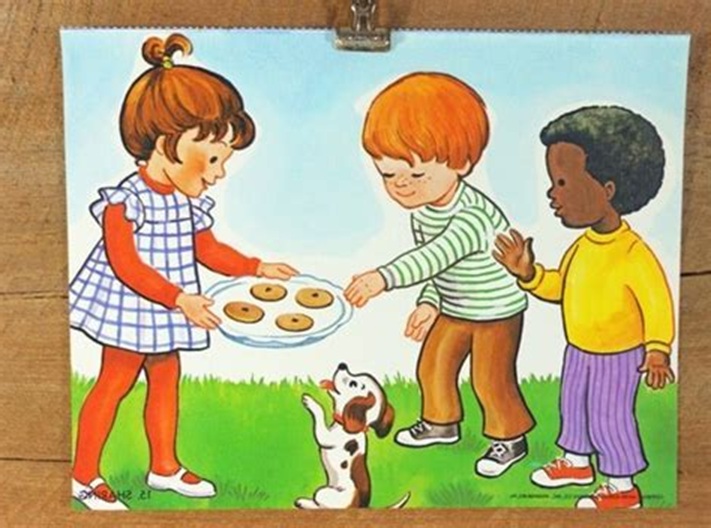
HALIFAX, Nova Scotia, July 21, 2025 – I’ve never been good at random sharing because I don’t always see sharing as being fair. What I have always been good at is “fairing”, which means giving others a fair deal that we’ve all agreed on. I believed in fairing even before I was a believer.
In scripture, a good example of fairing is the employer who hires people to labor in his fields, offering them all the same daily wage. They all agree to the wage, but when it comes time to pay the laborers, some of them become miffed because they’re getting the same daily wage as laborers who only worked a fraction of the time they did. The miffed workers believe that because they worked more hours and under worse conditions, they should be entitled to more pay, even though they agreed to their daily wage before they started working.
According to fairing, everyone who labored got a fair wage because it was precisely the wage they’d agreed upon. It wasn’t imposed on them; they agreed to it.
Another example of fairing is the parable of the ten virgins and their oil lamps. As scripture tells us, five of the virgins were wise and five were foolish. The wise had oil in their lamps and the foolish didn’t, so the foolish foolishly presumed that the wise should share their oil with them. But the wise virgins told the foolish ones that they wouldn’t share their oil (why should they, if it would be to their detriment?), so if the foolish virgins wanted oil, they should go buy it for themselves.
I love these parables because they fly in the face of “worldly wisdom”, which is that everyone is owed whatever they want just for existing, and that those who have more (the so-called privileged) must give to those who have less (the so-called underprivileged) for no other reason than those who have less have less. The idea underlying this perspective is that everyone (meaning the masses) should have more or less the same, regardless of ability, aptitude, effort, or need. To the world, the wise virgins not sharing their oil is an outrage that needs to be rectified, and by force, if necessary. Wage parity, undergirded by mass third-world migration and DEI, is the wise virgins being forced to share their oil at gunpoint.
As I said at the outset, I’m not good at sharing just for the sake of sharing, but I have nothing against sharing if it’s done fairly and wisely and according to God’s guidance. If I have two coats, and God indicates that I should give one of them to someone who has no coat, I share my coats, no questions asked. If I have an extra room in my house, and God indicates that I should offer that room to someone who has nowhere to live, then I offer that room to that person. I don’t run around looking for someone to give a coat to or offer a room to; I share with whomever God indicates I should share with. This is how we share fairly and wisely as followers of Jesus, not followers of the world.
The virgins were wise not only because they had oil in their lamps when they needed it, but because they chose not to share that oil when they were goaded and guilted into doing so. It’s not wise to give what God hasn’t guided you to give, or you’ll end up with less than what you need, which is not God’s intention for you. It’s not Christian to give what God hasn’t guided you to give, or you’ll do more harm than good, not only to the recipient, but to yourself.
Share, but share fairly and wisely, as God guides you.
ME, CHARLTON HESTON, AND AI

HALIFAX, Nova Scotia, July 17, 2025 – When I was eight years old, my grandmother took my sister and I to the movies one hot summer afternoon. We’d planned on seeing the latest Disney flick, but when we got to the theater, we found out that it was no longer playing. The sweltering hour-long bus ride from the suburbs had put my grandmother in no mood for an immediate return trip, and lured by the coolness wafting from the ticket booth window, she decided that what was on the screen didn’t matter: She needed to be in that air-conditioned theater. And so, she purchased one adult and two child tickets for whatever was playing that day, and what was playing that day was The Omega Man.
The Omega Man is a post-apocalyptic horror film starring Charlton Heston. Because it was made for adults, most of the movie was pretty much lost on me, though some scenes stay with me to this day. Granted, what frightened me as a child no longer frightens me as an adult, but what caught my interest then still draws me now, and what caught my interest was the solo life of the main character.
Far from being horrified by his aloneness, I was fascinated by it. I wanted to live alone in a big house like him and speed through deserted streets in a cool car like him. I wanted to shop in deserted stores like him and wander through deserted buildings like him. I’m not sure this was the response that the screenwriters had hoped to elicit from the audience, but it’s what they got from me. That’s what I took from the movie as a kid, that, and the certain knowledge that if your afro suddenly turns white, you’re doomed.
I’ve since rewatched The Omega Man, this time as an adult. I’ve also watched The Last Man on Earth, starring Vincent Price, and I Am Legend, starring Will Smith. All these movies are based on the same novel, and all feature a strong but reluctantly solo male character whose downfall starts when he allows a female into his safe space (plot sound familiar? lol ;D). To me, all the movies kind of fizzle out as soon as the female arrives and the focus shifts from the male’s ingenious survival techniques to the male throwing all caution to the wind for the sake of “gettin’ some”.
The allure of living alone in a deserted city remains as strong for me today as it did years ago. At the start of the so-called pandemic in early 2020, I was the one wandering the deserted streets at all hours and riding around in empty buses. I was the one who didn’t want the lockdowns to end if it meant people continued to cower in their houses and work and study from home. I was the one who wanted the whole store to myself—the whole city to myself—and for a few fleeting moments it seemed like I did.
I mention the Omega movies because I had a curious daydream today that may or may not have been inspired by them. In my daydream, I was the only person living in my part of the city. The reason I was the only one living there is because I was the only one who was born-again. Everyone else had left or died or had otherwise been removed. But far from feeling lonely, I reveled in my aloneness: I’d waited a long time to have this place to myself.
I was aware that there were other born-again believers in other parts of the city. We’d spy each other in the distance on occasion and wave in greeting, but we felt no pressing need to meet up. We were happy to be in our own and God’s company. It was enough for us to know that there were other born-again believers out there as far-flung neighbors and that we could meet up at any time if we wanted to. We also knew that we had nothing to fear from each other because we were God-approved and God-affirmed. We wouldn’t be there if we weren’t.
And so, in my daydream, I lived a life of ease and comfort, never locking my doors, never wary of going out after dark, never worrying about anyone stealing my bike or any of my possessions. I went to stores that stocked all my favorite things, and I never had to pay for them. All the services required for modern life, like clean running water and electricity, continued as before, only better. I lacked for nothing, and everything ran smoothly and seamlessly. But how was this possible with only a handful of people living in the city?
Enter AI. An army of bots had been programmed to provide for my and my neighbours’ every need. From the planting of seeds to the harvesting, processing, delivery, and even display of the final products, everything was done by robots that were directed and monitored by AI. Self-driving buses carted me around on my daily adventures unless I wanted to drive one of the countless abandoned cool cars at my disposal. Self-driving garbage trucks picked up my garbage at my command. If I fancied a pizza, bots would prepare it for me and deliver it piping hot, all within a half hour (and still free!).
As I delved deeper and deeper into my daydream, it occurred to me that what I was seeing was a high-tech version of Heaven that was super-imposed on my current surroundings. It was an idealized here and now that had some elements of the post-apocalyptic movies I’d seen, but with all the negative aspects removed. Instead of mutants and zombies, born-again believers were my neighbors. Instead of overgrown streets and crumbling buildings, tidiness and order ruled the day. Instead of having to forage for leftovers in dead people’s fridges, I was offered fresh produce in pristine stores.
But then I thought: What’s the point of having Heaven on Earth if I can have Heaven in Heaven? I might finally have good neighbors if they’re all born-again, but bugs and dogs can bite me here, and I still generate waste and need a bath. For all its wonders and conveniences, the AI-enabled city I’d envisioned falls far short of the supernatural perfection that awaits us in Heaven. Earth can never be Heaven, no matter how high the tech, and trying to make it so is a waste of time.
Better to daydream about (and wait for) the Real Thing… and maybe be a little pickier about the movies I watch next time!
ZEAL FOR MY HOUSE

HALIFAX, Nova Scotia, July 6, 2025 – There are very few things that get my goad more than the lie about a “millennial kingdom”, where Jesus will descend to Earth in bodily form and rule from the temple in Jerusalem for a thousand years. The absolute and utter hogwash of this “prophecy” should anger anyone who’s born-again and living in the prophesied Kingdom because it flies in the face of everything we know to be true about God’s Kingdom on Earth. And we know it to be true because we’re living in that Kingdom. It’s our everyday reality.
According to scripture, Jesus’ main teaching topic was showing people how to live in the Kingdom of God on Earth. Why would Jesus have wasted these people’s time teaching them how to live in the Kingdom if that Kingdom wasn’t to come for thousands of years? When Jesus said: “If I by the finger of God cast out demons, then the Kingdom has come upon you”, was he lying? Did he not cast out demons by the finger of God, and even if he did, was the Kingdom not then upon them?
Of course, we know that Jesus wasn’t lying either about casting out demons by the power of God’s Holy Spirit or about the establishment of the Kingdom already during his time on Earth. When Jesus rode into Jerusalem on a donkey, he rode in as a king, as prophesied in scripture. He was crucified under the marker “King of the Jews”. He now sits at the right hand of God and has been there since his ascension nearly 2000 years ago. He is King of kings and Lord of lords, and rules over God’s Kingdom on Earth. He has full authority over Satan and over all the fallen spirits, and by proxy, so do we, if we’re genuinely born-again.
Jesus said: “In the world, you’ll have problems, but don’t worry about it: I’ve overcome the world”, and also: “My Kingdom is not of this world”. This is the Kingdom where we, as born-again believers, live and move spiritually, have our being, and are protected and guided by God and Jesus, as Jesus promised we would be. There’ll be no other kingdom (though people are waiting in vain for one), just as there’ll be no other messiah (though people are waiting in vain for one). The here-and-now spiritual realm of the Kingdom of God is the one and only prophesied Zion, just as the here-and-now Jesus is the one and only prophesied Messiah. If you’re genuinely born again, you know this to be true. If you’re not born again, you’re likely falling for lies.
And who’s behind those lies? Who wants people to believe that a physical kingdom will be set up and ruled over by a benevolent but nonetheless iron-fisted ruler in the not-too-distant but still hazy future? None other than the Father of Lies himself, who easily deceives people who are not born-again and so gloss over scripture in favor of having their ears tickled. God permits Satan and his minions to disseminate these lies as a test to those who say they believe but don’t. The so-called “millennial kingdom” is among the chiefest of those lies and one, frankly, that makes my blood boil whenever I hear it being repeated. It’s right up there with the “Jesus is coming back soon!” mantra and the “once saved, always saved” lie, making a mockery of everything Jesus taught us and everything we know to be true.
I haven’t yet progressed to the point of overturning tables and whipping random bystanders as an expression of my anger over false prophets and their lies, but that might not be far off. In the meantime, I calm myself with the reminder that God permits the lies for a purpose, though he has no problem with my being angry with them. In fact, he encourages our righteous anger: It helps fuel our zeal.
ON BETRAYAL

HALIFAX, Nova Scotia, July 6, 2025 – One of God’s chief promises is that he will never betray us. I think this promise doesn’t get the star treatment it deserves because most people haven’t lived long enough or suffered enough betrayals to understand its true value. During his time on Earth, Jesus never entirely confided in anyone except God, never put himself in a position of emotional vulnerability with anyone except God because, as scripture tells us, he knew people’s hearts. And knowing people’s hearts, Jesus knew that people were just a hair’s breadth away from betraying him at any given moment.
And he wasn’t wrong about that, considering that even his most loyal disciples ran from him at his arrest and then later denied knowing him. But knowing people’s high probability of betraying you gives you the advantage of not being surprised or even let down when they proceed to do so. We see this in how Jesus responded to his disciples’ betrayal. We need to deal with people who betray us in the same way Jesus dealt with them, all while learning from their betrayal that we’re to trust no-one but God.
I have lived long enough and suffered enough betrayals that I now, like Jesus, only put my trust in God. But it was a hard journey to get there. Unless we live in complete isolation, we interact daily with people, most or likely all of whom are not born again and therefore don’t consider themselves answerable to God. Not considering themselves answerable to God, they’re capable of virtually anything they believe they can get away with, and I’ve personally experienced some real doozies (and done a few myself, before I was reborn). But in every case where I was betrayed after my rebirth, I really didn’t have anyone but myself to blame for trusting people I knew in my heart I shouldn’t trust, not because they purposely choose evil, but because they’re guided by evil without knowing it.
It’s not virtuous to be unwise, and to trust people who are not born-again is unwise. That’s not to say that people can’t be trusted to a certain extent; you have to trust them with mundane everyday tasks or you’d have to withdraw entirely from society and live like John the Baptist before he started his ministry. Even Jesus didn’t do that and prayed that we’d be protected from the world, not taken out of it. He didn’t want us to isolate ourselves from the world, just to be wary of it and be protected from it. In other words, he prayed that we’d interact with the world on the same terms as he interacted with it during his ministry years.
God’s emphasis on his promise not to betray us highlights the importance God places on loyalty. If God values loyalty to such a great extent, so should we. That means we should not only expect it (though again, not from people), we should give it first and foremost to God, but also to people who are likely to turn around and betray us.
We are to expect betrayal from people and so not be surprised when they fulfill our expectations. In not being surprised, we should also not be angry or vengeful about it. Jesus wasn’t. Instead, knowing people’s hearts, Jesus chose not to make himself vulnerable in any way to people so that their inevitable betrayals would not hurt him.
Does this mean we should emotionally harden ourselves as a form of protection? God forbid. We were given a heart of flesh for our heart of stone at our rebirth, and we dare not go back on that trade. We should never emotionally harden ourselves but instead live with the understanding that we will, at some point, be betrayed even by those closest to us, but we will never be betrayed by God. Having this understanding, we allow ourselves to be ourselves only with God, and to give our confidences only to God, and to trust only God. This we can choose to do (it’s a choice), and if we choose not to do it, we have no-one to blame but ourselves when we suffer the consequences of human betrayal.
I love God with all my heart, soul, mind, and strength, and when I’m hurting in any way, I run to him for relief. Among God’s many wonderful characteristics is his utter candor, and so when I run to him with my hurts, he generously lets me know how they came to pass. He does this not while standing at a distance and pointing a finger at me but while I’m sitting on his lap and he’s soothing me. And in every instance, I learn (thanks to God’s candor) that I brought the pain on myself one way or another, usually by trusting the wrong person.
I thank God for this lesson, and his candor, and his soothing.
God’s promise not to betray us is an implicit invitation for us not to betray him. It’s also an implicit invitation to live like Jesus did during his ministry years, not hardening our heart to others but choosing very carefully what to confide and what to hide. God’s promise not to betray us likewise implies that everyone else will sooner or later betray us, a sad fact of this world that is backed up by scripture. Knowing this, we should expect betrayal and not be surprised or outraged by it. Rather, like Jesus, we should do all we can to avoid opening ourselves to betrayal, but if we still end up suffering it, we should take our hurt to God. He will soothe us, all while dealing with our betrayers in his time and in his way.
We can trust God implicitly to do that because he promises us he will, and he would never betray a promise to us.
 A BORN-AGAIN BELIEVER