
Home » Articles posted by abornagainbeliever (Page 19)
Author Archives: abornagainbeliever
THINGS THAT GET YOU…

HALIFAX, Nova Scotia, August 19, 2024 – I have a long and storied history of being banned from public online forums, and this supposedly in a time and place when we have constitutionally guaranteed freedom of opinion and freedom to express our opinion openly, as long as we remain civil. I’ve touched on this before. I’m also shadow-banned on nearly every site I leave comments on, but I still leave comments, even knowing no-one will read them. It’s important (to me) that the AIs scrape as much opinion-related information about me as they can. I want the name of JESUS CHRIST OF NAZARETH! emblazoned across my file.
And we all have one of those – a file. Does anyone read them? Likely not. But our files certainly exist and can be pulled and tweaked by the powers-that-be if we become too troublesome.
Jesus had a file. Pontius Pilate read from it at Jesus’ trial. The alleged eyewitnesses in attendance also contributed to the file, but their input was so contradictory, they nullified each other’s witness. Still, it was Jesus’ time, and so despite the lack of verifiable evidence presented to Pilate, the mob’s judgement (“Crucify him!”) held sway.
I was once put through one of those trials, though not for a death sentence. I was facing up to two years in prison. Multiple witnesses were lined up against me attempting to corroborate the evidence presented in my file. The evidence was false, but my simply stating “not guilty” would not have been sufficient to get me out of this particular pickle because the multiple witnesses testifying under oath were police officers, so their word carried significant weight.
However, because it wasn’t yet my time, God got me off on an obscure technicality, which surprised even my lawyer when it came to him suddenly in the midst of the court proceedings. He’d been handed my case the evening before the trial and confessed during our one and only phone call that he had no idea how he would defend me. Hoping against hope, he’d brought some case file books with him to court. Scripture tells us never to prepare our defence in advance, as it will be “given [us] in that same hour what [we] shall speak. For it is not [we] that speak, but the Spirit of [our] Father that speaketh in [us].” I lived this scripture personally that day. The file on this trial is likely still accessible. It took place in Toronto, Ontario, Canada, in December 2000.
Jesus warns us that we’ll be hated simply for existing, and so we are. If we get banned in one place for speaking God’s Truth, we move on to another, whether in physical or virtual space. Where God’s Truth is not welcome, neither are we, but the current rapid expansion of the devil’s turf means that our own turf on Earth is correspondingly shrinking, and we are grossly outnumbered. At this rate, we’ll soon be outcasts not only socially (by being banned) but under worldly law (by being arrested).
Already in Canada, a law is on deck that will make it a crime to state the obvious, even if we genuinely believe what we’ve stated and are backed in our assertions by scripture. We’re protected for the time being, but within a few years that protection will end. God’s Truth is first made unacceptable socially and then punishable under law, first by a prison sentence and then by death. And have no doubt – these are blasphemy laws, as speaking against Satan and his worldly creation is blasphemy to those who love the world.
I’m OK with being banned and actually consider it a job well done. It also shows me where not to waste my time. Being outcast, reviled, excluded, banned, arrested, imprisoned, and martyred goes with the territory of being a born-again believer, as the members of the early Church well knew and as every Holy Spirit-filled follower of Jesus since then personally experiences. Even though our footprint in the world is growing smaller and smaller, the Kingdom has not shrunk. In fact, the Kingdom has only expanded over the past 2000 years. There, we can speak our mind freely and live our beliefs without fear or compulsion, as none but the reborn can gain entrance past the fiercesome Cherubims and the flaming sword.
Thank God for his Truth, thank God for his Kingdom, and thank God for Jesus!
NOT EVER

HALIFAX, Nova Scotia, August 17, 2024 – Let me tell you a secret. The people in your life now, the ones you know personally and the ones you only know of, will be wiped from your memory when you’re in Heaven unless they too make it Home. Scripture ensures us that all our pain will disappear in Heaven, and for most of us, people are the source of our pain. That we will no longer be plagued by those who hate God (and who therefore hate us) is a great comfort to me, as I know it is to you. There will be no more weeping for the lost in Heaven. They will be to us as if they never were.
They, on the other hand, the ones who don’t make it to Heaven, will never be able to forget us. When I say “never”, I mean it in the truest sense. Not ever will the memory of their unkindnesses be wiped from their thoughts. They will relive the pain they inflicted over and over and over again for all eternity. Not ever will they be able to escape the horrific understanding of what they forfeited when they said “No” to God and his Way. Over and over and over again, God gave them chance after chance, opportunity after opportunity, but they persisted in their pride and in their arrogance and in their “cool” and in their “No!”, and it brought them to the Hell of their own making both on Earth and beyond, all of their own free will.
I have cried for these people. For some, I cry still; the rest I let be. God directs me who to cry for and who to let be. I forgive them all because God directs me to and I know they don’t know what they’re doing, but I also know that nothing I can say will reach them, not the ones I don’t cry for anymore. Not ever can they be reached. Not ever will they repent. They are the eternally lost even while they stagger through whatever’s left of time and space. They arrived here lost and will leave it that much more lost, and both their former and latter states are of their own doing.
Of the ones God directs me to still cry for, even if they don’t make it Home, their eternal pain can be lessened. This is what I pray for them. We can help them in that way, the ones God directs us to still pray for. We can help lighten their eternal load, smooth the jagged edges of memories they will never (not ever) escape. Even if they’ve stonewalled us and erected a firewall of pride around themselves that we cannot get past, we can still help soothe them through our prayers. This is our job as born-again believers and children of God, though it’s a sad one. The only time I cry now is when I pray for these people.
Our whole being should be focused on God and on the promises he’s made to us through scripture, through Jesus, and through prayer. We should hold fast to God’s promises and on the foretaste of those promises because they are the only thing of real value here in Earth. People’s promises are as flighty and changeable as the wind, but God’s promises never change. Not ever. These we should stake our hope on and tie ourselves to, even while we’re buffeted by the broken vows of others.
How do we do this? How do we remain focused on God and his promises and look past the rest? By reminding ourselves to endure to the end. By reminding ourselves that this too will pass. By reminding ourselves to forgive, not just for the sake of the here and now but more importantly for the sake of the hereafter. Our hereafter. Our promised hereafter. We need to remind ourselves of what’s waiting for us in Heaven and so see past those who are stoning us here on Earth, the way Stephen saw past and forgave his murderers when he saw the vision of God and Jesus.
Fix your eyes on the heavenly realm, the ultimate prize of God’s promises. Of all that you know and all that you feel, you take home only the good. The rest will be (to you) as not.
NO GREATER PLEASURE

HALIFAX, Nova Scotia, August 15, 2024 – I’m not talking here to casual Christians in the worldly church but to born-again believers in the Kingdom. There is never a time or place or situation when it’s right to take someone’s life – not in the defence of your country, not in the line of duty, not in the defence of your loved ones or yourself or your property, and certainly never, under any circumstance, in the name of God or Jesus. THOU SHALT NOT KILL covers every conceivable evil foisted on you, including being arrested under trumped charges and sentenced to death. You are not to physically fight back or to resist arrest; if it’s your time, it’s your time, and God will walk you through it and strengthen you spiritually for your final tests and temptations, but only if you don’t resist. If it’s not your time, God will get you out in ways that only he knows how. Scripture 100% backs these assertions. If you’re born-again, you know the scriptures I’m talking about; if you’re not born-again, these directions are not for you.
I’m not here to talk in riddles, and I’ve been open and frank with you since the start of this blog nearly 10 years ago. I’ve been open and frank about this not being an evangelical outreach site. I’ve been open and frank about what it means (or in academic parlance, what the “lived experience” is) to be a born-again believer. I’ve even been open and frank about informing you that there are things I cannot talk about, and we all have those. Each one of us in the Kingdom has been entrusted with certain secrets as a test of sorts, to see how much we can be trusted. Again, if you’re in the Kingdom, you know what I’m talking about.
We must never kill another human being, not under any circumstance. When God first gave that Commandment through Moses, those who were not under the jurisdiction of the Law were not considered human, so they could be killed with impunity, that is, without breaking the Commandment. Many of the genetic and self-styled descendants of the people of that time still consider those who are not under the jurisdiction of the Law not to be fully human and therefore to be treated as humanely as cattle (which includes slaughtering, consumption of their flesh, and the use of their skin for practical and decorative purposes), but we are not of that misguided ilk. We are in the Kingdom, and Jesus showed us that we are to carry weapons when it’s time – that is, when we’ve formally become outcasts and outlaws from society – and that we’re to brandish our weapons as if we intend to use them, but that we’re never actually to use them. That is, we’re to use our weapons for deterrence purposes only.
There is never a time or place or situation when we in the Kingdom can break any of the Commandments and not expect major blowback, up to an including the loss of grace. Again and again and again, I’m not talking here to worldly Christians or to unbelievers. Certainly, the Law is also meant for them as a guidance (and is enshrined in the laws of most lands), but if they choose not to abide by it, they will suffer the consequences of not treating others as they themselves would want to be treated, and they will each suffer according to the degree they have earned the suffering, that is, according to how much they knew they were in the wrong, minus their overlay of self-justification. We in the Kingdom should never compare our sufferings to those of worldly Christians or unbelievers; we suffer differently and in different ways and are held to be more responsible for our actions if we choose to break a Commandment. The exact degree to which each of us is held responsible depends on the level of intimacy of our relationship with God and with Jesus, through God’s Holy Spirit.
We should always strive for the deepest of intimacy with God and Jesus. We should never hold ourselves back or put someone or something ahead of them. After all, loving God with everything we have and everything we are is the first and greatest of the Commandments. To put someone or something ahead of God is to break that great Commandment right out of the gate and is the main cause of low levels of intimacy with God and Jesus. Low levels of intimacy with God and Jesus translates to low levels of faith.
I’m not telling you how to live your life. That’s not what this blog is about. I’m just reiterating what Jesus taught us and applying the lessons of scripture to the here and now. We are never, under any circumstance, to break a Commandment. If we do it unwittingly and God brings it to our attention, we are not to resist his correction but to humbly submit to his Word. There is enormous pleasure in humbly (that is, willingly, of your own volition) submitting to God. In fact, there is no greater pleasure, which you would know if you submit to God and live in submission to him. This is how you achieve higher and higher and deeper and deeper levels of intimacy with God and with Jesus. There is no other way than through humble submission, and there is no greater pleasure than intimacy with God and Jesus.
But if you resist God when he draws attention to your error, and disregard – or worse, protest – his Law as if you were an unbeliever or in the worldly church, things will not go well for you (understanding that “things will not go well for you” is an understatement). Whatever God knows we can handle by way of persecution, deprivation, and other forms of suffering, we need to endure, not curse or complain or fight against. We need to endure it. Our time here is so short that if we willingly choose the path of endurance, it will seem to us that even before it’s begun, our time for endurance will be over, submission to God having miraculous and unforeseen rewards.
TL;DR – There is never a time or a place or a situation when it’s OK to kill someone, not under any circumstance. You are called and chosen by God to follow Jesus, not the world; to adhere to God’s Law, not the world’s laws; and to suffer on occasion what you haven’t earned as a test and a trial permitted by God for your ultimate benefit. Living your life humbly submissive to God every day is the only way to achieve deep intimacy with God and Jesus, and there is no greater pleasure than this intimacy, not in time and space, anyway. Maybe in Heaven God is saving up greater pleasures for us, but on Earth, submission to God is the greatest, which is why loving God with all your heart, soul, mind, and strength is, as Jesus reminded us, the first and greatest Commandment.
THE WORLDLY CHURCH AND GOD’S CHURCH
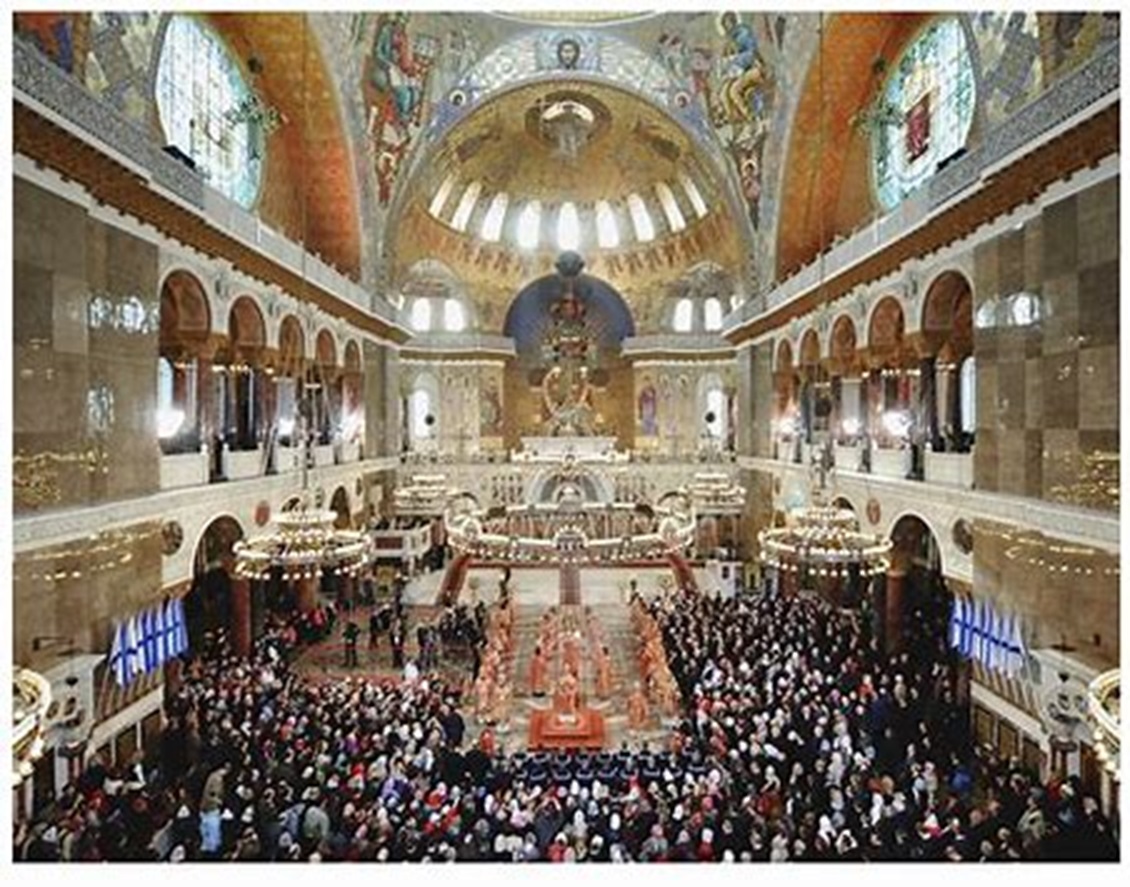
HALIFAX, Nova Scotia, August 9, 2024 – There are two churches active today: The worldly church and the genuine Church of born-again, Holy Spirit-filled believers. Anyone can join the worldly church, but only those invited by God are in the genuine Church.
The worldly church covers all denominations, from Catholic to Orthodox to Protestant and beyond, and stakes its authenticity in allegedly being the successor of Peter. The genuine Church has no denominations and needs none because it is the one true enduring Church whose cornerstone is Jesus.
The worldly church exists in commercial buildings and online and in people’s homes, but the genuine Church exists only in the spiritual realm of God’s Kingdom.
The worldly church was started likely the same day as the genuine Church (at Pentecost, 50 days after Jesus’ resurrection) but got a major boost in membership when the pagan Constantine made Christianity the official religion of the Roman Empire back in the fourth century A.D. Today, the worldly church is still growing by leaps and bounds and constitutes the largest religion in the world, with an estimated membership of 2.63 billion souls. The membership of the genuine Church waxes and wanes and is far, far less than 2.63 billion souls. A major decline in membership is prophesied for the genuine Church before Jesus comes back.
When most people think of Christianity, they think of the worldly church. This is unfortunate, as the worldly church is full of false prophets, false doctrines, pagan rituals and practices, scandals, corruption, and excess. It’s also full of proud sinners who have no intention of repenting. The worldly church is and has been since its inception the biggest deterrent preventing unbelievers from considering Christianity as the solution to their problems. From this alone, you can clearly see who its head is.
It’s helpful to draw a line between the worldly church and the genuine Church, but those in the genuine Church should otherwise let the worldly church be. God does. Jesus calls these people “the blind leading the blind” and tells his followers not to interfere with them. Let them find comfort in lies, if lies are all they want. Those who sincerely want God’s Truth will run to God when it’s time, and God will welcome them into his Church.
ON VICTIMHOOD

HALIFAX, Nova Scotia, August 9, 2024 – One of the most common lies that the devil tells is that we’re victims, that we’re not to blame, that it’s not our fault. He’s been very successful with this lie throughout the ages, which is why he continues to tell it. Most people would prefer to hear that they’re victims (and to benefit from their perceived victimhood financially, socially, or otherwise) than to acknowledge that they’ve brought their suffering on themselves.
Jesus was the only one who didn’t earn the pain he suffered. The rest of us – including us born-again believers – suffer what we’ve earned either through our disobedience to God or as some kind of test. In either case, our response to our suffering needs to be the same – patient endurance and forgiving those who hurt us. We will never achieve peace or resolution of our pain if we fight it or refuse to own it by saying: “I haven’t earned this; it’s not fair”.
God’s justice is perfect. The way the world is today, here and now, is perfectly just according to what has been earned, mitigated by God’s mercy for those who’ve shown mercy. Those who live by the dictates of the world will stubbornly refuse to accept that “the pain you feel is the pain you’ve earned” and so will fight against anyone they see as hurting them in some way. Fingers will be pointed, blame will be cast, and thoughts of revenge and self-pity will take root and flourish. This is how pain is recycled and amplified into greater pain and is the main reason why most people grow worse and worse emotionally as they age, irrespective of their finances, social standing, or worldly achievements.
We in the Kingdom cannot refuse to accept that the pain we feel is the pain we’ve earned. We cannot cast ourselves in the role of victim or point fingers of blame. Yes, people will do cruel things to us (some of which we’ve earned, some of which are tests), but our default response must always be the same – “Forgive them Father, they don’t know what they’re doing” – and our forgiveness must be total and absolute, not partial and conditional.
We don’t revisit past pains. We learn from them, but we don’t bring them up again either in conversation or in our own minds. We are as if they never happened, the way God is as if the sins he’s forgiven us never happened. We’ll be tested on that. And if we fail that test, we’ll have to redo it until we get it right.
The notion of blameless victimhood is satanic. It is one of Satan’s most successful lies not only because people fall for it almost without exception, but because it leads to worse and worse outcomes the longer it remains unresolved. Victimhood spawns more victimhood, moving in a downward spiral that draws other people into the victimhood narrative like into a deep dark whirlpool. All those who encourage the victimhood are likewise pulled in and drowned, mainly in the alleged victim’s self-pity.
I am not saying we should be distant or cruel to those who are suffering. We’re here on Earth to be present and kind, not distant and cruel. At the same time, we also need to remember that those who live according to the world’s dictates will not accept God’s Truth about the source of their suffering, so there’s no point in trying to inform them about it. You’ll only enrage them and make things worse for them (and for yourself). Better to let them be and to offer kindnesses as a balm, as God directs you to offer them. But never join them in their finger-pointing or plans for revenge. To do so would be to declare that God’s perfect justice is imperfect.
On the other hand, those of us in the Kingdom must never hesitate to remind ourselves and each other that all our pain, whether earned or as a test, must be endured patiently and with God’s help. We don’t run to the world for sympathy or restitution. We don’t fight wars or back those who do. We don’t protest. We don’t sign petitions. We don’t vote. We love our neighbours and our enemies equally, and we treat others as we want to be treated, not necessarily as we are treated. We don’t get involved in the affairs of the world, because the world is under the direction and authority of Satan, with God’s permission. We don’t ignore the world or withdraw from the world; we need to be aware of what’s going on in the world, all while holding it at arm’s length, like Jesus did, and being kind, like Jesus was, but otherwise letting it be.
The world is God’s perfect justice unfolding in real time, and you don’t mess with perfection.
We’re not here for a good time and we’re not here for a long time. We’re here to get done whatever we need to get done, doing it to the best of our ability and in full submission to God. That is the summarized job description of a born-again follower of Jesus.
And when we’re done doing whatever it is we need to get done and are in right standing with God, we get to go Home.
Oh, Happy Day!
ANYTHING WE SAY, THINK, OR DO CAN AND WILL BE USED AGAINST US

HALIFAX, Nova Scotia, August 8, 2024 – Just a timely reminder that God sees everything. He also hears everything and knows our every thought. There’s nowhere to hide from God: He’s all-knowing, all the time.
There’s another layer of surveillance that most people don’t like to think about, let alone talk about (and I include born-again believers in the “most people” designation here). This secondary surveillance layer has some restrictions but still sees most of what you do and hears most of what you say. Your thoughts, however, are off-limits (for now). This secondary layer is the fallen entities assigned to you.
We all have them. Even born-again believers have them. Jesus had battalions of them following him around, harassing him, outing him as the Holy One of God, and generally making a nuisance of themselves trying to trip him up. Even Satan himself made occasional cameo appearances in Jesus’ earthly life. Thank God, none of them ever found so much as a speck of dirt on Jesus, but the entities following us around have a much higher success rate. That just goes with the territory of our not being Jesus.
Unlike Jesus, we all fail some of our tests and temptations. We all let a word or two slip past our lips that we shouldn’t have let slip but chose (for whatever reason) not to stop. Jesus reminded us that we’ll be accountable for those words come Judgement Day, and you wanna bet the unholy contingents trailing us are taking copious notes to be presented at that time. To believe otherwise is not to take Jesus at his word.
I thank God, my Heavenly Father, that I am under his surveillance. His constant presence through his Holy Spirit gives me comfort. I know that at any time I can talk to him and that he hears me and will answer me. I know he is right here, right now, as he is with you. This is a promise given directly to us born-again believers by Jesus. God’s Spirit is our connection between us and God and between us and Jesus, and nothing and no-one can break that connection except God. And God will only break it if we show by our words and thoughts and actions that want to break it.
May none of us ever do that.
I also thank God (or better said, I learned to thank God) for the other layer of surveillance because it keeps me on my spiritual toes. God watches over us with love, guiding us and reminding us of how we need to be. The fallen entities, on the other hand, are constantly looking for a chink in our spiritual armour, a moment of weakness that they can massage into sin and then leverage toward our fall. God permits this layer of malicious surveillance over his children (with, as I mention, some notable restrictions, such as not being able to read our thoughts or to hear our conversations with him), knowing it will make us that much more circumspect in our choice of words and actions.
That’s the theory, anyway. The practice (on our part) takes some doing to get it right.
As I mentioned at the outset, this is a reminder that we’re all under surveillance 24/7, and that while God’s surveillance is done lovingly and with good intent, the other surveillance is not. We need to be aware not only of the layers and levels of surveillance, but also in the crucial differences between them. God only should we fear (with zero exceptions), but that doesn’t mean we shouldn’t be aware (and wary) of what the unholy entities are up to and the kind of dirt they may or may not have on us. God doesn’t want us to be naïve about this but to understand it as a spiritual fact of life and to deal with it accordingly. A rankling conscience signifies the need for repentance, and repentance should never be delayed.
A third artificial level of near-constant surveillance has grown up over the past few decades that involves digital technology. For quality, it trails at a significant distance behind the other two surveillance layers and is more opportunistic than benevolent or malicious, but still, it’s there, and we should be aware of it.
Technology, as a tool, can never be good or evil: It simply exists. How the technology is applied determines whether its use is for good or for evil. Unfortunately, most of the technology being applied today is more the intrusive, snitching, and exploitative variety, clearly demonstrating which layer of spiritual surveillance is behind its inspiration and privacy-defying application.
**********
The tl;dr of this article is to be aware of the constant surveillance, but not to be paranoid about it. Cling to God and heed his advice, even if it doesn’t make sense to you at the time or is the polar opposite of what you feel like doing. Know that your prayer time with God (which should be all the time) is just between you and him and that your thoughts are also only shared with God. The constant presence of God is meant to be a comfort (Jesus promised us he would send the Comforter), so receive it as such. As for the other two layers of surveillance, be aware of them and maybe even be grateful for them, “for we know that all things work together for good to them that love God, to them who are the called according to his purpose.”
NOAH’S NEIGHBOURS AND THE ELEPHANTS IN THE ROOM

HALIFAX, Nova Scotia, August 7, 2024 – During the long slow decline of Judaism, in the years between the rebuilding of Jerusalem after the Babylonian exile and the coming of Jesus the Christ, the enemies of the children of Israel would get elephants drunk, poke their feet with sticks to enrage them, and then send them rampaging into Jewish towns and villages, trailed by enemy soldiers. These “war elephants” were styled after those used by Hannibal in his battles against the Romans and were considered a superweapon for their sheer size and weight alone. Not meaning to kill, the otherwise docile giants couldn’t help but cause death and destruction in their drunken fury. Tolkien’s mumakils are based on these beasts.
The human capacity to twist the natural use of God’s creation into unnatural and evil purposes seemingly has no bounds, which is why God on occasion issues a Time Out. These may take the form of a flood or world-wide war or genocidal event whose intent is to reset human desire back to basic survival mode. Ravaged by destructive forces, the blood-thirsty quickly devolve into the just plain thirsty who spend their days looking for potable water and scraps of food rather than plotting revenge. The famished, sick, and freezing, as both Hannibal and Hitler found out too late, make for poor soldiers.
If the current level of excessive twisting of God’s creation is any indication, we’re long overdue for a Time Out. Perhaps we’re already in the midst of one, but instead of a flood of water, it’s a flood of euphemistically labeled “newcomers” pouring over the borders of former Christian nations; instead of a declared war, it’s an invasion of military-aged males with military-grade experience masquerading as asylum seekers.
But have no doubt, we’ve earned these interlopers. They’re a reward, not a test or imposition: a reward. We collectively had them coming after we consistently, resolutely, and proudly turned away from God and embraced the ungodly. Given free reign to choose, we showed by our choices that we wanted a world without God, and he’s now in the process of giving it to us.
There are now so many drunken rampaging elephants in the room, it’s impossible to ignore them let alone avoid them. We see them coming but are warned to unsee them; we try to unsee them but succeed only at seeing them all the more. We are by turns drowning and being trampled, with no safe haven but under the shadow of God’s Hand.
And so we scurry under here and crouch, panting and wounded. We dare not venture beyond these confines, even after our breathing has calmed and our bleeding has stopped. Here is where we need to stay, aware of the carnage happening all around us but just as aware that we can do nothing to stop it. Earned rewards cannot be stopped, though they can be mitigated while there’s still time.
Is there still time? Can the floods be rerouted and the elephants made docile again? Can we lure these great beasts out of the room and back into the jungles where they belong? Is there still time to mitigate the damage and recalculate our rewards, or is it already too late?
How much time did Sodom have?
How much time did Noah’s neighbours have?
Is this a Time Out or a Time’s Up?
**********
I see and am commanded (not by God) to unsee, but I only take my Commands from God.
**********
A PALE HORSE

What the world says:
The rider emerged from the river on a dappled grey horse at the Trocadero at the base of the iconic and resplendent Eiffel Tower. A parade of flag bearers from all countries assembled behind the rider as they walked together through the streets of Paris to raise the Olympic flag and sing the Olympic anthem.
It was magnificent and humbling.
What the Bible says:
And I looked, and behold a pale horse: and his name that sat on him was Death, and Hell followed with him.
WHEN BLASPHEMY COMES CALLING

HALIFAX, Nova Scotia, July 28, 2024 – In light of what’s been going on at the 2024 Olympic games in Paris, just a timely reminder that Jesus told his followers to be offended in nothing.
He also taught us to love our enemies.
Paul cautioned us to repay evil with good, which is another way of saying to love your enemies.
Outrage and finger-pointing only fuel the hatred, piling hate on hate, which is precisely what the devil wants us to do and expects us to do. Outrage is what the devil is aiming for with his provocations: Don’t give into him.
How the world and the worldly church respond to evil is their business, but we’ve been taught differently. As followers of Jesus, we’re to be offended in nothing and to love our enemies by praying for them, wishing them well, and blessing them in any way we can.
That is our calling as born-again believers and our sacred duty as children of God.
Repaying evil with good and hate with love is also the highest form of spiritual warfare, but it can only be done with God’s help. If you’re struggling to love your enemies (and make no mistake; they are your enemies), ask God to help you. Moses repeatedly fell on his face before God, begging him to forgive the sins of his people. Jesus said of those crucifying him: “Forgive them, Father, they know not what they do.” We need to do the same.
God will judge both the quick and the dead; we’re not to judge. God will deal with our enemies in his time and in his way, just as he deals with each one of us. In the meantime, we’re to love and pray for our enemies without question and without caring what the world (or the worldly church) thinks of us. Where they see weakness and foolishness, God sees strength and righteousness.
We are to repay evil with good; as for blasphemy, we’re to respond with prayer and a kind word.
That’s our job as God’s ministers.
Just a timely reminder.
ON THE GREAT TRIBULATION AND DRAWING LINES

HALIFAX, Nova Scotia, July 27, 2024 – God is good at drawing lines. He does it all the time. He drew a line between the children of Abraham and everyone else, and then between the children of Israel and everyone else. Prior to that, he drew a line between what was acceptable in the Garden of Eden and what wasn’t, and what wasn’t acceptable in the Garden was unceremoniously expelled. A similar line was drawn between the pre-Flood and post-Flood eras, and between pre-Sodom and post-Sodom (that is, Sodom and no Sodom, respectively).
Then there’s the biggest line God’s drawn thus far, which is the line between everything before Jesus and everything since Jesus, which we know as the Old Testament and New Testament times or the dividing of time into BC and AD. Shortly after that line was drawn, the second temple was destroyed and all of Judaism with it.
I mention lines because there’s a big one in the offing, again to be drawn by God. I’m talking about the line between the end of the pre-tribulation era (what Jesus called the “beginning of sorrows”) and the start of the Great Tribulation. It’s mentioned in the book of Daniel and in the book of Joel. Jesus also talked about it in the Gospels, as did John in his book of Revelation. That line, when it’s drawn, will be the penultimate line. The final line will herald God’s Judgement on the world and its complete annihilation.
But that line – the final one – may still be a long time coming. Only God knows when it will be drawn. The line I want to talk about now is the one that comes before that line, the one that divides the beginning of sorrows from the Great Tribulation, because when that line is drawn, there’ll be no more conversions.
As born-again believers, we need to be aware of when there’ll be no more conversions, as it will be a pivotal point in the evolution of our Church. It will change how we interface with the world and with each other. The Church proper began with the conversion of the disciples on the morning of Pentecost, ten days after Jesus’ ascension. That was the first time that God’s Holy Spirit was given to believers upon rebirth as a constant indwelling presence. And just as suddenly, unexpectedly, and definitively, God’s Holy Spirit will one day cease to be given, and only those who already have God’s Spirit will retain God’s Spirit. Everyone else will retain one or more of the various fallen spirits of the world.
I have not made a secret of my wanting to go home at God’s earliest possible convenience. In that, I’m like Jesus when he said to his disciples: “How long shall I be with you? How long shall I suffer you?”, only you’re not my disciples and I don’t mean you personally. I just mean I want to go home as badly as Jesus did. I want to go home not only because of what God’s shown me awaits me in Heaven, but because of the horrors that will be unleashed on Earth once God draws that penultimate line between the beginning of sorrows and the Great Tribulation, and there are no more conversions.
Jesus talks about that time as the worst that’s ever been or ever will be. John in Revelation provides a few more details, none of which would make me want to prolong my stay, if I were still here. After each of the horrors is unleashed, the unbelieving survivors, instead of repenting and turning back to God, curse him instead, as if Job’s wife were hissing in their ears, egging them on. But the few believers who do remain will have to be like Job, ever faithful in their suffering and not giving into the temptation to just “curse God, and die”.
There’s a false teaching that’s gained steady traction over the years regarding conversions that will be made throughout the Great Tribulation period, right up until the time that Jesus comes back for his Church. These conversions will not happen because there will be no more conversions after the start of the Great Tribulation. There will be believers, but no new believers, and the Church will continue to dwindle in size, likely all the way down to or below the original number that it was on the day of Pentecost, which was somewhere in the vicinity of 3,000 souls. When Jesus asked: “When the son of man returns, will he find faith on earth?”, he meant for us to seriously consider the implications of that question.
Nowhere in the book of Revelation does it say that anyone repents after the seventh seal is opened and the first trumpet is blown. Nowhere in Jesus’ narratives in any of the Gospels regarding the time of what Jesus calls “great tribulation” does he mention conversions. What he does talk about is the necessity for believers to patiently endure to the end. What he does mention is the proliferation of highly seductive false teachers and false messiahs, implying an accompanying proliferation of highly convincing false conversions and false proselytizing, all leading to an end-times globalized false church.
We’re already, as a Church, neck-deep in false teachers, false messiahs, and false converts. In fact, the entire worldly church, which sprang up like a weed around the True Branch probably the very next day after the Church was planted at Pentecost, is premised on false teachings and false conversions. These, 300 years later, were supercharged into overdrive by the pagan Constantine, when he founded what eventually grew into a pearl-clutching version of the Holy Roman Empire, renamed the Holy Roman Church and its protestant and orthodox offshoots.
We are safe inside the line God has drawn separating his True Church from the worldly church – the Kingdom from the world – but that doesn’t mean we aren’t exposed to the false church’s seducing lies. God permits us to be exposed even as he protects us behind his firmly drawn line because tests must be conducted and loyalties measured. How else are we to solidify and affirm our place and positions in Heaven? It is not and has never been enough simply to state: “I believe” and then to live our lives indistinguishable from the rest of the world, other than for some strategically placed Christian-themed bling. As the adage goes, “talk is cheap”, which is why tests of faith are necessary.
Jesus makes a very clear distinction between the time he calls the beginning of sorrows and the time he describes as the worst there ever was. These are two very distinct time periods, divided by a line drawn by God himself. In describing these two distinct periods, Jesus cautions us that many will try to convince us that the time of great tribulation has already arrived. He tells us to beware these people and not to follow them or be seduced by their rhetoric. In today’s terms, they’re the breathless “Jesus is coming back soon!” crowd or those who are constantly drawing parallels between world events and the mark of the beast or the rise of the anti-Christ. Not being born-again, they’re inhabited and informed by seducing spirits whose sole purpose is to lure believers away, to mislead and misguide us, and ultimately to humiliate and demoralize us into forsaking God.
When God draws that line between the beginning of sorrows and the Great Tribulation, there will be no more conversions, but there will still be a testing of the remnant Church and a falling away of some. Being sealed by God means you have God’s Spirit within you and are protected by God; it doesn’t mean you have an automatic ticket to Heaven. I wish it did, but it doesn’t. We are vulnerable to losing God’s grace right up until our final breath here, otherwise Jesus wouldn’t have advised us to “endure to the end”. He didn’t say “endure until you’re reborn” or “endure until the first trumpet is blown”, he said “endure to the end”. Our hardest tests will come at the end of our time here on Earth, as they did for Jesus. And then our own line will be drawn, the one that God will draw specially for each of us, his children – the line separating us from this life and the one to come.
But our work here is not yet done. We all need to be reminded of this every now and then, just as we need to be reminded to take a break from our labours every now and then. Jesus took breaks, and so should we. But we should never feel that we can retire from active duty and rest on our laurels. The time for rest is not yet, not for us. We don’t rest here. We’ll rest when we get Home.
I do not want to be here when the Great Tribulation begins. It’s bad enough living through the age of the beginning of sorrows, which the world has been in now for a while. The demons are growing ever bolder with the passage of years, and every passing of a believer is shrinking the size of our Church. We need to be very careful not to take God’s grace and protection for granted, but to assiduously, and with what Paul called “fear and trembling”, treat everyone – not just believers – as we would want to be treated, especially and particularly in our thoughts. This is true spiritual warfare. Jesus said that treating others as we would want to be treated is the summation of Holy scripture. In that, as in everything else, we need to take Jesus at his word.
When the line is drawn and the conversions stop, the hardest of all tests will begin for the remnant of God’s Church still on Earth. Pray, as Jesus urged us, not for a long and prosperous life in the here and now but to endure to the end and to be called Home before that horror show begins.
 A BORN-AGAIN BELIEVER