
Home » Born-again Christian (Page 37)
Category Archives: Born-again Christian
A WORD OF ENCOURAGEMENT: SOWING SEEDS WITH GOD

CAMPBELLTON, New Brunswick, May 8, 2023 – The strangest thing is, I don’t remember saying it. I mean, I must have said it, otherwise this person wouldn’t have told me how much it meant to her and how it made her look at her situation differently. I must have said it; I just don’t remember saying it.
This is how it is sometimes when you minister to people. You have no idea what will stick and what won’t, what will sprout and what won’t, what will mean something to someone and what won’t. The funny thing is that when you think you’ve said something that will resonate, you find that no-one paid any attention.
But God did. God hears everything you say and he sees everything you do. So everything you say and everything you do he can work with to your credit. He can use your unwitting labour to tend his fields, and then reward you with the fruit.
Sometimes you’re just throwing seeds to the wind, not knowing if even one of them will eventually sprout. But you have to do it; you have to sow your seeds into the cold dark silent earth, praying for rain, praying for heat and sunlight, praying that something eventually will grow. You have to do it because it’s your job description as a born-again believer. And strangely, the more you do it, the more you find you can’t not do it.
It’s a great mystery, sowing into God’s Kingdom. Jesus told us to go out into all the world and preach the Good News, so here we are, going out into all the world (mostly via the Internet) and preaching the Good News. But who knows who’ll hear us, who’ll read us, and most of all, who knows what will stick, what will sprout, and what will grow roots deep enough to endure to the end?
Sometimes I think about my labours thus far in the Kingdom – 24 years’ worth – and all I see is someone dropping seeds hither, thither, and yon. Dropping seeds and hoping and praying. But that’s our job. God only expects us to do our job, nothing more. If we do our job (dropping seeds hither, thither, and yon), God can take it from there. He can take our most bizarre and unlikely seed-sowing effort and turn it into a conversion, like a mustard seed turns into a bush as big as a tree. We just never know what will sprout. That’s the wonderful part about it – never knowing the impact our words and deeds have on others, because it’s not our efforts doing the impacting, it’s God moving through them in his mysterious way.
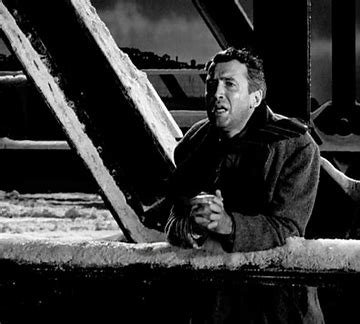
I’m not a fan of the movie “It’s a Wonderful Life” (horrible depiction of a holy angel!), but I like the part where Jimmy Stewart’s character finds out how much he’s positively impacted people’s lives. He’d just stumbled through his days like most of us do, trying his best to do his best under whatever circumstance, never realizing (until he does) how important his humble contributions have been to the lives of his family, his friends, his colleagues, his community, and beyond.
If he hadn’t had the spiritual crisis that formed the fulcrum of the movie, he may never have found out how big his mustard bush was.
So we need to keep on keepin’ on with our ministering, whatever form it takes, knowing that as long as we do our part (sow the seeds), God will do the rest (water them, germinate them, sprout them, tend them, etc.). We need to have faith and keep going, even if we see no discernible fruit from our efforts.
Because at some point, someone’s going to come up to you and thank you for what you said to them, and you won’t have a clue what they’re talking about, even as you nod and smile. And when that happens, you’ll know that God did his mysterious ways thing again but is giving you all the credit, and that of all the seeds that you sowed over all the years, at least one sprouted.
And that has made all the difference.
PERSECUTION, TORTURE AND MARTYRDOM
CAMPBELLTON, New Brunswick, May 7, 2023 – I’ve been reading the Bible now for nearly 24 years, since the day I was reborn. For the first three years, I read only the New Testament; after that, I read the Old Testament as well. I’ve worn through three Bibles so far, having to retire them when the pages started falling out. I guess they don’t make Bibles like they used to.
God’s gotten on my case a few times about making the Bible an idol. He tells me it’s an instruction manual and a history of my people, not something to be held aloft and worshiped. (There are no Bibles in Heaven.) Even so, I don’t eat or drink when I’m reading the Bible, like I do when I read magazines or newspapers. I take the Bible to bed with me every night. I pack it carefully into my luggage when I travel. I kiss it on occasion, like I’d kiss God if I could.
And I read it every day. I cannot not read the Bible. It feeds me and brings me new revelations. God himself reads it to me, through his Spirit, highlighting what I need to learn.
Today, he highlighted this verse in one of Paul’s letters:
“All that will live godly in Christ Jesus shall suffer persecution.”
Note that Paul wrote “all that will live godly”, not “some that will live godly”. That means all of us who genuinely follow Jesus will be persecuted, no exceptions. That was Paul’s lived experience 2000 years ago, and nothing has changed since then. Born-again believers who remain true to God and Jesus can expect to be persecuted.
So I asked God if he could flesh out a bit what Paul meant by persecution.
The Christian martyrs list.
Jesus was crucified. Stephen was stoned. John the Baptist was beheaded. Paul was beheaded. Peter was crucified upside down. James (Jesus’ brother) was stoned. And that’s just the start of the list. Millions of others since then have been martyred for no other reason than they’d repented and believed the Gospel. Living godly in Christ Jesus put them on the wrong side of the worldly powers-that-be.
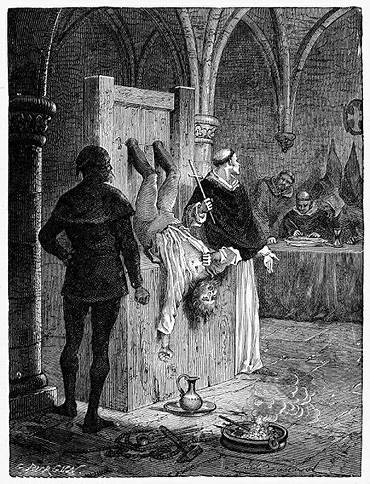
The persecution, torture, and martyrdom of Jesus’ followers has been ongoing for 2000 years, but by far the worst of it was in the 20th century. In the various revolutions and regime changes, such as in Armenia, Russia, Spain, Germany, and China, somewhere between 20 million to 65 million Christians were slaughtered. This is on top of the untold numbers of believers, starting with John the Baptist, who were tortured and killed, including during the 800 years of the Inquisition that mostly targeted Bible-believing Christians. The aim in torturing these poor souls was to break them so that they’d finally agree to serve the papacy. In 2022, the same office of the Vatican that has administered the Inquisition throughout the centuries was renamed the Dicastery for the Doctrine of the Faith. In other words, the persecution, torture and martyrdom of Bible-believing Christians is unapologetically ongoing.
Jesus himself warned us about our sure prospect of persecution, including martyrdom, telling us that those who killed us would believe they were doing God’s will.
Which brings us to the likely prospect of our own martyrdom. When Paul wrote “persecution”, he meant a broad range of ill treatment, from taunting to beating to bankrupting to exiling, but he also meant martyrdom. He meant we’d likely be killed for our beliefs. We wouldn’t be killed for murder, mind you. Nor for rape. Nor for plotting against the powers-that-be – no, we’d be killed solely for what we believe, for what we read about and write about every day: God’s Truth. We’d be killed for believing and teaching God’s Word.
Are you ready to die like Jesus or Paul or Stephen or Peter, or like all the other believers who were tortured to death by agents of the worldly powers-that-be? If you’re not ready to be martyred, you’d better start getting ready, because your martyrdom could come any day, and who knows what form it will take. I hope this knowledge gives you pause. As born-again believers, we live and move in God’s Kingdom, but the Kingdom is smack dab in the middle of Satan’s realm, and Satan hates us and wants us dead and gone. As long as we’re here and witnessing the Good News, we’re a thorn in his eye and a spanner in his works, not to mention a living breathing reminder of everything he lost.
Scripture says that God’s people will suffer all manner of persecution, ending, for some, with martyrdom. If you count yourself among God’s people, you have to accept that you’ll be persecuted, which might also include being martyred.
The Bible, as God reminds me every now and then, is an instruction manual as well as a history of our people. We need to read it because we need to learn how to deal successfully with the rest of our time on Earth. Today, God taught me about persecution in the form of martyrdom. I’d read about martyrdom before, but I’d never really taken it to heart as applying to me. I guess it potentially does apply to me – it potentially applies to everyone who, as Paul puts it, lives godly in Christ Jesus. I’m not going to be scared away from being a born-again follower of Jesus, even if it does put me on the Christian martyrs list. I’ll just draw closer to God and Jesus, keep reading the Bible, and get ready for whatever comes.
HEALING THROUGH EXORCISM
CAMPBELLTON, New Brunswick, May 4, 2023 – We are allegedly in the midst of a mental health crisis. This is how the mainstream media is labeling it – a “mental health crisis”. Having collectively turned their backs on God, most people living in former Christendom have no concept of demons or what spiritual oppression looks like. So those in positions of authority call it a mental health crisis and try to shock, counsel, incarcerate, or drug the demon-oppressed person into some semblance of health. Of course, these approaches don’t work, because the more you try to suppress a demon, the more it will call for back-up, which means the oppressed person will get worse and worse until finally succumbing to full possession or suicide.
The book of Revelation tells us of the time when Hell will empty out and every disembodied fallen spirit ever created will roam the earth, looking for a body to possess. It also says that no matter how bad things get at that time, people will still refuse to repent and will continue with the same sinful behavior that got them into their spiritual mess and vulnerability to demons in the first place.
We’re not at that point in Revelation yet (thank God), but we’re getting closer every day. Demons are gaining an upper hand in the lives of more and more people. Yet these same people, these demon-oppressed and occasionally possessed people, are our neighbours, our family members, or even our friends, and they need our help. They don’t know the kind of help they need – some don’t know they need help at all – but spiritual help is the only thing that can heal them.
How do you get people to ask for the kind of help that they don’t even know they need?
Jesus, during his ministry years, spent most of his time healing sick people, and the majority of those who were sick were demon-oppressed or possessed. There was an understanding among the general public at that time that demons were at the root of most health problems, so people actively sought out Jesus and his disciples, begging to be healed.
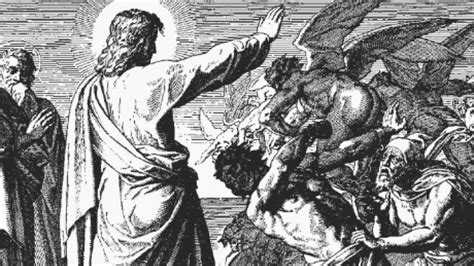
Spiritual rebirth is an exorcism. During the rebirth process, the spirits of the world (that is, demons) are expelled and God’s Holy Spirit enters in. No demon can share a soul with God’s Spirit; a soul can house only holy or unholy, not both types of spirit simultaneously. This process of exorcism happened to me and was confirmed by God to have happened, when later that same day, after reading the verse about seven devils being driven out of Mary Magdalene, I was told by God that he’d done the same to me, only there were a lot more than seven.
Exorcism nowadays has devolved into the stuff of horror movies or the confessions of renegade priests on YouTube looking for attention (and donations). But Jesus cast out demons as a matter of course, all in a day’s work AND WITHOUT PAY, and so did his disciples. Exorcism was part of their job description. People came to them specifically requesting that type of healing.
Fast-forward to today, and we see in Canada that it’s now illegal (as of 2022) to perform an exorcism under what the federal government calls “conversion therapy”. This should not be surprising, considering that Canada has become a posterchild for how fast a former Christian nation can devolve into godlessness. Canada is now officially a secular (atheist) nation, with more unbelievers than believers. Back when I was seven years old and started calling myself an atheist, I was in a very very tiny minority in Canada.
How fast we’ve fallen as a nation.
Exorcism heals. I know that, because it healed me at my rebirth 24 years ago. All the pain I’d accumulated since I was a child disappeared in an instant and has not come back. Exorcism is a casting out of demons from a soul, to be replaced by God’s Holy Spirit. God himself had to perform the exorcism on me, since no-one else offered to do it. In my pain, I cried out for help from the depths of my soul, but God was the only one who heard.
We, as born-again believers, who ourselves have been exorcised of the spirits of the world (or else wouldn’t be born-again), need to hear the cries of the demon-oppressed calling out for help. We need to hear them, and we need to help them. These people are everywhere, all around us. And like Jesus, we need to let them know we’re here and that we can help them. People traveled vast distances to get to Jesus for healing because they’d heard he could help them. They had faith in him that he could help them. We need to build that same faith in people today that they can come to us for healing. And we need to be ready and able to help them when they do.
I believe that demons are at the root of most people’s problems. We’re not in a mental health crisis, we’re in a spiritual health crisis. Sin opens the door to demons, and they let themselves in and make themselves at home. Once in a soul, the only way that demons will leave is either through the death of the host or exorcism.
Most people didn’t initially come to Jesus to hear the Gospel: They came to be healed. Then, after they were healed, they were open to receiving the Gospel. This is not surprising to me, since the first thing I did after God exorcised me was to reach for a Bible and read the four gospels for the first time in my life. I read them all in one sitting, and I haven’t stop reading them since.
If your notion of exorcism is still based on Hollywood’s version, you need to read and reread the gospels. And then you need to ask God to help you heal the spiritually sick the way that Jesus and his first disciples did.
For us born-again believers, exorcism is part of our job description.
HOW’S YOUR HEART?

CAMPBELLTON, New Brunswick, May 2, 2023 – The state of your soul at the instant of your death determines your eternity, determines where you’ll spend your eternity, and there are only two places you can go: Heaven or not Heaven.
I don’t know about you, but that is a very sobering thought to me.
I remember hearing it first from a professor years ago, when I was an atheist. I recall very little about my time at university, but I remember my professor saying that the state of your soul at the instant of your death determines your eternity. In hindsight, it was a strange thing for an atheist to tuck away in her mind for safekeeping. I never thought about death in those days, other than for romanticizing suicide. Years later, a few months before I was reborn, I had a revelation about pain and death, that pain doesn’t end at death; that death doesn’t end the pain, it just keeps on going. After that revelation, I never thought about committing suicide again.
We don’t know when our death will come, unless God chooses to reveal it to us. I think that’s a good thing, if God does that for us (you can ask him to do it), because then we can take care of any loose ends that need to be taken care of. We can clean out the dust of any lingering grudges or hurts that might have accumulated in the nooks and crannies of our heart. Lingering grudges have no place in Heaven. We can make our peace, as they say, if God lets us know that our time is near. We can prepare to meet our Maker.
If, instead, death comes when we least expect it, without prior warning, that means we’d better be prepared to go at any time. That means we need to clean out any lingering grudges or hurts as soon as they come to mind, not put them off until later. We may not have later to deal with them.
There are many Christians who don’t believe that the state of your soul at death determines your eternity. They instead believe that Jesus did the work for them and all they have to do is state their belief in Jesus and claim his blood as a cover for their sins. They plan to stand before God on Judgement Day and plead the blood of Jesus over them. Certainly, Jesus did the hard slogging of paying the sin debt that we’d carried since Adam, but we still need to pull our own spiritual weight in the Kingdom. None of us gets a free ride.
So you’ve died and you’re standing before God pleading the blood of Jesus, and God asks you about your hard heart and all the grudges you carried around with you for years. And you know, you can’t lie to God at the Judgement. You also can’t change the state of your soul at the Judgement. There are no last-minute reprieves at that point. There’s just the books being opened and read, and your name indelibly written in either one or the other. You’re either a sheep or a goat. You’re either in the Book of Life or you’re not. You either know God as your Dad or you don’t. You’re either reborn or you’re not. There’s just the one or the other at Judgement, and no-one with any hardness of heart whatsoever gets into Heaven, no matter how much they plead the blood of Jesus.
That is a spiritual fact. You may not believe it, but that doesn’t make it any less true. Scripture tells us all the things that will keep us out of Heaven, and a hard heart is at the top of the list. But most self-professing Christians I know have the hardest of hearts, holding grudges against close relatives or former friends or colleagues, or former priests or ministers, or former spouses. Did you know that even holding grudges against authority figures will harden your heart? Paul says we should strive to live at peace with everyone, and Jesus says to love our enemies. That’s the stuff that softens your heart to a nice putty-like state, which is the kind of consistency that God’s looking for in a heart and the kind that will get you into Heaven.
We all have old hurts that the devil likes to tempt us with every now and then. The only way to deal with those old hurts when they pop up is to say what Jesus said on the cross: “Forgive them, Father, they don’t know what they’re doing.” I find it works every time. As soon as I say it (and God knows exactly who I mean when I say it to him), the hurt melts away and all that’s left in my newly soft-as-putty heart is love and compassion for the person or persons who hurt me. It works every time, that phrase. Every single time.
I don’t know what you’re nursing in your heart right now or what you think is unforgiveable on the part of someone who hurt you, but please consider what you’ve read here today. No hardness of heart gets into Heaven. No grudges, no matter how justified you think they may be, will be allowed in the hearts of those who get to go Home. The blood of Jesus will not cover a hard heart in someone who’s been warned to repent (this is your warning) and chose not to.
Again, I don’t know what’s in your heart and who it might be hardened against, but I do know from personal experience that the devil will try to harden your heart at every chance he gets, because he knows that’s one of the main stumbling blocks for people on the Way, and he knows that hard hearts do not make it Home.
Please search your heart right now, and if there’s any hardness in it, remember what Jesus said on the cross and say it yourself over that person or persons. Just say: “Forgive them, Father, they don’t know what they’re doing.” Say it as many times as you have to, night or day, every time the devil tries to tempt you back into hardness of heart. God will know who you mean when you say it, and then he’ll soften your heart.
The owner of a hard heart will not get into Heaven, and the state of your soul (which is the state of your heart) at the instant of your death determines where you spend eternity.
HOW TO BE HOLY
CAMPBELLTON, New Brunswick, May 2, 2023 – Many Christians try their best to be holy. They do what they think are “holy things”, like attending church services, reading the Bible, and praying to God. They do these things on their own volition, thinking it’s required of them. But the truth is, you can’t do anything to make yourself holy, no matter how often you attend church or how many Bible verses you read every day or how hard you pray.
Only God can make you holy, because only God is the source of holiness.
You can’t make yourself holy, but you can become holy by the grace of God. It’s the presence of God’s Holy Spirit in you that makes you holy. You’re not the source of your holiness; God’s Holy Spirit is.
As born-again believers, we all have a measure of God’s Holy Spirit in us. That is God’s grace, which he gives to his adoptive children at rebirth. God’s Holy Spirit is part of the rebirth deal. If you’re genuinely reborn, God’s Holy Spirit is with you all the time, which means you’re automatically holy.
So what then does it mean to be holy?
When you’re holy (that is, when you’re genuinely reborn and God’s Holy Spirit is in you), you’re drawn to godly things and have an aversion to ungodly ones. This aversion is particularly acute when you’re newly reborn, when, for instance, hearing or seeing curse words is almost like a physical attack on you. Thankfully, God takes the edge off that experience over time, so that you can at least tolerate being around people who curse. If he hadn’t done that, you wouldn’t be able to be around unregenerated people at all, since my experience has been that people tend to curse and use the Lord’s name in vain much more frequently when they’re around me than otherwise (or so they confess).
God’s children are holy by virtue of being God’s children, through the presence of God’s Holy Spirit in them. They don’t have to work at being holy; they simply are holy. But that doesn’t mean they can’t lose their holiness, like the formerly holy angels who fell from God’s grace.
So even though God has made you holy, you still have to make the right choices (righteous choices) to remain holy. That part is up to you. I don’t mean there’s a to-do list that you have to check off every day to remain holy. There’s no such thing. There’s only living your life by making righteous choices, like Jesus did.
And you don’t have to go out looking for choices to make; God will bring them to you. Every day, he’ll lay before you countless options to choose from, such as what to mull over in your mind, what to talk about, what to read and write, what to watch, how to interact with people, how to make a living, etc. Jesus didn’t go looking for ways to be holy; he simply was holy by virtue of the full measure of God’s Holy Spirit that was in him. Throughout his time on Earth, Jesus retained the full measure of the Spirit by making righteous choices in everything he did. This is why God was “pleased” with him.
We don’t have the full measure of God’s Holy Spirit, but we do have a measure, if we’re genuinely born again. How big a measure we have depends on the kind of choices we make and what we do with the talents God gives us.
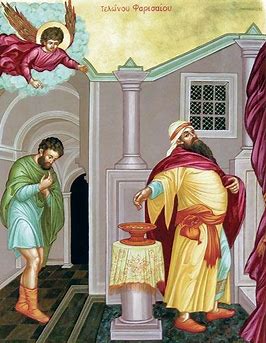
Many people like to parade around thinking they’re holy, as Jesus pointed out. They make a big show of praying in public or wearing ‘holy garb’, like priests wearing special robes. (I actually wore a long black priest’s robe as a coat when I was a rebel teen atheist. I paired it with leopard-skin high heels and black tights held together with safety pins. From first-hand experience, I can tell you that wearing that priest’s robe did not make me holy!) Fake holy people are all over the worldly church, draping themselves with crosses and other paraphernalia and intoning God’s Word rather than speaking it. They also like to think of themselves as “holier than thou” and are perfectly captured in the parable of the Pharisee who stands at the front of the temple, congratulating himself on a presumed holiness that comes from fasting, praying, giving alms, tithing, etc. He also congratulates himself on not being like the poor wretch at the back of the temple who can’t even bring himself to lift his head before God. But Jesus informs us that it’s the poor wretch whose simple humble confession justifies him, while the presumptuous pompous Pharisee falls ever deeper into his sins.
We cannot make ourselves holy (only God can do that, through his Spirit), but we are responsible for making sure that we retain our God-given holiness. We do this by making righteous choices with our free will as long as we’re still here on Earth.
As for who is holy and who isn’t – people can be fooled, but God knows who’s holy, and so do the demons.
ON WILLFUL SUBMISSION TO GOD

CAMPBELLTON, New Brunswick, May 1, 2023 – Adam’s sin wasn’t disobedience to God, it was willful submission to evil. Adam was willfully submissive to Eve and the snake rather than being willfully submissive to God. God doesn’t require mere obedience to him; he requires willful submission. Willful submission is what Jesus demonstrated in the Garden of Gethsemane. He didn’t want to do what God required of him (be arrested, tortured, and executed), but he willfully chose to do it anyway. He tried to find a way around it, and when no way was offered, he willfully submitted to doing it. God didn’t force him; he willfully submitted to doing it. By his own free will Jesus said “yes” to God, even while hating what he was agreeing to do.
You can hate what God asks of you, but you can still do it free-willingly, you can still choose to be willfully submissive to God. Your willful submission to God enables his Holy Spirit to work through you. Mere obedience to God does not enable that. Mere obedience is not what God is looking for. Mere obedience is lukewarm and noncommittal. We have whole churches full of people who are merely obedient rather than willfully submissive. Mere obedience will not bring a soul into relationship with God. Only willful submission can do that.
On the surface, willful submission looks the same as obedience. The difference between the two can only be seen in the heart. A heart that’s willfully submissive to God looks entirely different from a heart that is merely obedient to God. That’s why scripture says that God looks at the heart, not at the mouth or the hands. Your mouth can be saying something that’s completely at odds with your heart, just as your hands can be doing something that’s completely at odds with your heart. How many of us have been fooled by people’s mouths and hands! God is never fooled because he looks on the heart. That’s how he can discern those who are willfully submissive to him from those who are just pretending to be.
*****
As an atheist, I hated the term “submissive”. I loathed it. I thought being submissive was for weak people and losers. I prided myself on never submitting to anyone or anything. I did what I wanted, when I wanted to do it. Now, as a born-again believer, I want only to be submissive, but only to God. Because I understand that God is every good thing I could ever want or need and that God loves me more than any person could ever love me.
To be submissive to God – willingly submissive – is to agree to receive everything that is the best for me. So it’s not about God, my being submissive to God, it’s about me and my best interests. Our submission to God puts us at the center, looking up at God who is over all. Even when we choose to do something for others that exalts them and debases us, if it’s God’s will for us to do that, we remain at the center, looking up. There is nothing we can do in willful submission to God that doesn’t keep us at the center, looking up.
Scripture says we are always before God’s throne, serving him. As born-again believers, we are always before God’s throne. We are always waiting for his direction and always willing to do whatever he asks of us. This is what I mean by being at the center and looking up. The first thing God asked me do when I was born again was to stand on my feet and look up. I felt then that I was at the center of all created things, and I have remained there in spirit ever since, looking up.
BEING AN ATHEIST WAS GOOD TRAINING FOR BEING A CHRISTIAN

CAMPBELLTON, New Brunswick, May 1, 2023 – Every so often, I get contacted by people I knew when I was an atheist but who’ve heard I’m now a Christian. All the contact is done by email. Sometimes it comes in the form of a letter that reads like a job application, with a long list of accomplishments that could double as a resume. Or sometimes it reads like this: “You $#@%ing piece of #@@$! I $#@%ing HATE YOU!!!!”
They reach out in pride or anger and sometimes in pity or curiosity, but my job is to respond the same to all of them – in love. The prideful ones and the ones who curse me, I answer in prayer. The rest I answer in carefully coached words that minister to them without them knowing they’re being ministered to. I usually never hear from them again after their initial outreach, though a few do email me again a while later, more combatively than at first. I suspect that most of the emails are written while drunk.
Jesus never included any of his family or friends in his initial circle of followers. In fact, it wasn’t until his death and resurrection that his family members joined the group of believers. Recall that Jesus chose his followers according to God’s directives. He said, “of those you gave me, I have lost none”. So the followers were chosen by God, not by Jesus. Recall also that Jesus said that, as believers, our real family is those who do God’s will. The people who knew Jesus as the son of the carpenter continued to see him as the son of the carpenter, even after he came out as the Messiah, even after he performed miracle after miracle. Jesus said that prophets are not without honor, except among their own people.
It was a hard sell for Jesus, to be seen as something other than a carpenter to those who had only known him as a carpenter. It’s a hard sell for me to be seen as a believer in the eyes of those who only knew me as an unbeliever. They look for chinks in my spiritual armour to drive a wedge into. They write me off as mentally ill. They dismiss me as a fraud. They avoid me like the plague, afraid I’ll dare to utter the holy of name of Jesus in reverence rather than as I used to spew it, in hate.
They’re somehow afraid of me without knowing why. They despise me without knowing why. They look for excuses to hate me and hang their hatred on the smallest perceived slight as justification. I know what they do because I used to do it myself. Being an atheist was good training for being a Christian. I have the insider scoop on what makes unbelievers do what they do and think what they think and hate what they hate. But my knowing these things only makes unbelievers hate me all the more because I chose what they hate, and they can’t understand why.
My job as a born-again believer is to take all this in stride and return their hatred with love. I couldn’t do that without God’s direct intervention. It’s not me taking it all in stride, it’s God working through me. It’s not me loving those who loathe me, it’s God working through me. But it’s me giving God permission to do so. The haters see my love as fraud or idiocy or proof positive of mental illness, but I just continue along my merry way. The more they hate me, the more I pray for them. “Forgive them, Father, they know not what they do.” This is all good training, the daily doses of hate and loathing. Jesus also had years of this kind of training, and it stood him in good stead when he needed it the most: On the cross.
“Forgive them, Father, they know not what they do.”
That, my friends, is the whole point of our training.
ON STAYING CLOSE TO GOD

CAMPBELLTON, New Brunswick, May 1, 2023 – The Bible tells us repeatedly that our lives are a reflection of the choices we make.
If we make godly choices, our lives will be godly.
If we make ungodly choices, our lives be ungodly.
It’s really that simple.
No-one (including God) is doing anything to us; we do it to ourselves.
The good comes from God; the bad comes as a reward for our bad choices.
The world sees life entirely differently. To those in the world, bad things happen not because of bad choices made, but because bad things just happen randomly (no causation), or bad people are doing bad things to you for their own selfish ends, or “fate” causes bad things to happen. These three explanations exonerate you from all bad things that happen to you, placing the blame squarely on external forces (random chance, bad people, and fate). This is how the godless make sense of the world.
But we are not the godless. We do not blame our situation on external forces. Whatever negative circumstances we are experiencing, we either have only ourselves to blame for them, or we’re being tested.
It’s important to distinguish between suffering we’ve brought on ourselves through our wrong choices, and suffering that comes as a test. The whole point of a test is to gauge whether we want what God is offering us or what the world is offering us.
When we suffer because of our own actions, we suffer spiritually as well as physically and emotionally. We have an all-over, all-encompassing bout of suffering. When we experience that state, we know we’ve brought it on ourselves through wrong choices we’ve made. There’s nothing to do in this case except to repent, realign ourselves with God’s will, and endure whatever we’ve brought on ourselves until it’s over (this, too, will pass).
When we suffer because of a test, our physical and emotional states may be affected to some extent, but not our spiritual state. We remain as close to God as ever; there’s no separation between us, as there sometimes appears to be when we suffer because of our own bad choices. Think of Daniel in the lion’s den or Jesus on the cross or Paul throughout his ministry years. They all remained steadfast in their faith, even despite massive physical and emotional challenges.
The bottom line here, for us believers, is choosing to remain close to God, regardless of our circumstances. We will be tested, but more likely we will suffer from the consequences of our own bad choices. Either way, we need to endure to the end of whatever God permits us to suffer, and it will be better for us to endure with God’s help than without it.
Always stay close to God.
THE UNPARDONABLE SIN

CAMPBELLTON, New Brunswick, May 1, 2023 – The thought of committing the unpardonable sin scares the you-know-what out of some people.
And so it should.
If it doesn’t scare the you-know-what out of you, you’re not paying close enough attention. You don’t fully understand the consequences of committing it.
So just what is the unpardonable sin?
It differs for everyone, which is why it’s not fully defined in scripture. The unpardonable nature of the sin depends on the circumstances in which its committed and on the individual committing it. But for us born-again believers, the common features of the circumstances around the unpardonable sin are the same, which are:
1) having a close relationship with God through genuine spiritual rebirth, which means you have God’s Holy Spirit with you 24/7.
2) sinning (or constantly thinking about sinning).
3) refusing to back down from the sin or from thinking about committing the sin, even after God warns you about what will happen if you refuse to back down.
God loves us unconditionally, which is why he gives us plenty of warning and time to repent. But if even after his clear and unmistakable warnings you still choose not to repent, he has no choice but to follow through. “Following through” means he removes his grace and his Holy Spirit leaves you. You become from that point onward prey for demons and other unholy beings. You no longer have any godly protection – not from your guardian angels, who watched over you prior to your conversion, nor from God’s Holy Spirit, who was with you night and day from the instant of your rebirth. There is no chance, once you lose God’s grace, to get it back: It’s a one-time deal, and once it’s gone, that’s the end of it for you spiritually and physically.
This is what happened to all the fallen entities who were removed from Heaven permanently. No matter how much they petitioned God for mercy after the fact, there was no going back to Heaven for them. This is also what happened to Judas Iscariot, who, as a disciple of Jesus, had been protected by God’s Holy Spirit and enabled to preach the Word and perform miracles. Judas’s betrayal of Jesus was his unpardonable sin. There was no second chance at redemption for Judas, no matter how hard he repented or prayed to God after the fact.
Those who once claim to know God but then turn from him to sign on with the devil or other fallen entities also commit the unpardonable sin. These contracts, sadly, are very real and are made every day all over the world. Once the contract is enacted, there is no coming back from it. The person is under Satan’s protection for the rest of their time on Earth, but after death, he/she ends up first in Hell and then in the lake of fire, like Satan and all the fallen beings.
Some sign on with the devil thinking it’s a joke; these people are still salvageable. Signing on with the devil isn’t the unpardonable sin for these people because they don’t (yet) know God and so they sign on with the devil without having full knowledge of the consequences. God knows the difference between those who consciously and with full intent turn against him and throw their lot in with Satan, and those who don’t really believe in anything and just sign the devil’s contract for a lark. By “salvageable”, I mean that these people, even after signing the devil’s contract, still have a chance at rebirth and salvation. But if they are eventually reborn, they will lose everything (except their soul) in the process. That is, they will lose whatever Satan had given them, which is usually power, wealth, fame, and fortune.
The book of Revelation mentions the mark of the beast and plainly states that those who receive it are beyond redemption. In other words, bearing the beast’s mark is a sign that you have committed the unforgiveable sin and are under the protection of the devil.
In the Gospel, Jesus tells the parable of the man who was “swept clean” of demons, but who then starts to sin again and so all his former demons and then some come back to torment him. Jesus tells us that this man’s end was worse than his beginning, meaning he has no chance of being swept clean again. To die after losing God’s grace is far worse than to die never having received it. The eternal punishment for such a backslider is much more severe.
You can see from the above that the unpardonable sin differs according to circumstances and to individuals. Even so, the common element is ignoring God’s warnings before willingly and with full intent choosing sin.
There’s a common belief among some Christians that God, being “all-merciful”, will ultimately forgive Judas and those like him, including the fallen angels. We must never allow ourselves to believe such a diabolical lie. Yes, God is all-merciful, but he’s also all-just. What Judas did to Jesus was the worst possible thing he could have done as his disciple, short of hammering the nails into Jesus himself.
Judas ignored the very pointed, very clear, and unmistakeable warning given to him by Jesus during the Passover meal. Jesus stated that his betrayer was among them, and that it would be better for his betrayer if he had not been born. When Judas asked Jesus if he (Judas) was the betrayer, Jesus responded with “thou has said”. It’s like they were speaking between the lines, sub rosa, having a private conversation that only they two could understand. Again, Jesus couldn’t have made his warning more explicit to Judas, but Judas still went on to betray him. Consciously, and with full knowledge of the consequences, Judas chose to sin. Even after being pointedly and repeatedly warned, he chose sin.
So again, the unforgivable sin is as varied as there are sinners, but the core of the sin is willful, intentional, and conscious disobedience to God by someone in a state of grace, even after being pointedly and repeatedly warned of the unavoidable consequence of eternal damnation that is the reward for such disobedience. This is the unforgiveable and unpardonable sin that no sacrifice can atone for and that blasphemes the Holy Spirit that is protecting the reborn soul.
I know this from personal experience, because I received such a warning from God years ago, when I was a relatively young believer (young in spiritual age, not earthly years). I was about to do something I actually thought was a good thing, not a sin at all. (Just like, I suspect, Judas thought that what he was doing was a good thing for the Jewish religion.) God’s warning stopped me in my tracks and I backed off from doing what I’d planned. Thank God for God’s warning. I would be in hell now without it.
Scripture says that God wants us all to come to knowledge of him and of his salvation. He doesn’t want to lose any of us. But he also wants us to come to him of our own free will and to stay with him of our own free will. He doesn’t want slaves or robots; he wants loving children. So if we wander too close to the edge of a spiritual cliff, God will warn us loud and clear. And he won’t just warn us once, he’ll warn us repeatedly, ever louder and more urgently, until we either retreat to spiritual safety, or unequivocally with full intent and knowing the consequences choose sin.
May you never choose sin. May you always, upon first warning, immediately and with open arms run straight back to God.
WALKING OUT YOUR FAITH

CAMPBELLTON, New Brunswick, May 1, 2023 – Christians love to talk about their faith – oh, how they love to talk! But it’s quite another thing when it comes to walking out their faith. They cherry-pick scriptures that assure them all they have to do is “believe” and “have faith” and their eternal reward is guaranteed. Meanwhile, they conveniently overlook the verses about how they’ll be judged by every word they utter, every thought they think, and every deed they do.
They confuse the works of the law (don’t eat this, don’t touch that) with walking out their faith. Those kinds of works have nothing to do with walking out your faith. But works are required, have no doubt about that. God himself requires them of you. In fact, everything that God asks you do to is required of you. Willful submission to God is non-negotiable for continued membership in God’s Kingdom on Earth. Not what you say but what you do shows God your faith. Words without actions to back them up have zero value in God’s economy.
When you walk out your faith, you’re like the son who initially said he wasn’t going to work in the field, but later changed his mind and went. Or you’re like the person who heard the Word and did it, meaning that you built your house on a rock, whereas the person who heard the Word and didn’t do it built his house on sand.
We need to be very careful to distinguish between doing the dead works of the law (don’t eat this, don’t touch that) and walking out our faith. If we don’t walk out our faith, all our declarations of love for God and Jesus are just so much hot air. We’re like the hypocrites who say but do not do.
Don’t be like the hypocrites.
Just before I was born again, I made a choice to forgive someone. God knew that in my heart I’d made that choice. He also knew that even as I made that choice, I didn’t feel forgiveness in my heart for the person I was choosing to forgive; for me, it was a decision of the will, not an emotional response.
But in choosing to forgive that person and subsequently being born-again, I also had to walk out my forgiveness. I had to do certain things the next day to show that my decision was sincere, if not (yet) heartfelt. It wasn’t enough for me simply to agree to forgive that person; I had to walk out the forgiveness in real time. Walking out the forgiveness required me not just to say I was going to do it or to intend to do it, but actually to do it.
And the funny thing was, after I’d done the few things that God asked me to do the next day – when I’d walked out my faith in real time – I finally FELT forgiveness for the person. I felt compassion and love. That was 24 years ago, and the feeling of forgiveness for that poor soul has never left me.
There’s an intellectual and spiritual laziness that’s taken hold of many Christians. So, for instance, instead of reading the Bible for themselves, they rely on being spoon-fed God’s Word by someone else. The problem with being spoon-fed God’s Word is that you have to take everything that person says as Gospel truth. You have to swallow it whole. But not everyone is honest in relaying God’s Word.
Jesus’ temptations in the wilderness are a good example of this. The devil quoted scripture during his temptation (oh, how the devil loves to quote scripture!), but he purposely misapplied it and took it out of context. Jesus was able to refute the devil because he not only knew scripture, he knew it in context and how it should be applied. So when the devil told Jesus he should throw himself off a building because God’s angels are always there protecting him, Jesus responded with the scriptural warning not to tempt God. Yes, the devil was correct in saying that God protects his people through his holy angels, but he was incorrect in saying that God will protect his people if they purposely do something to hurt themselves while relying on God to save them.
Our faith needs to be more than just empty words and recitations of our alleged beliefs. If we don’t back up what we claim to believe with actions – that is, if we don’t walk out our faith – then our claim has no validity. God’s a heart-reader, not a lip-reader. He knows who intends to follow through by walking out their faith and who’s just mouthing words for public approval.
We need to walk out our faith in God’s timing and under God’s direction. That’s how we make our faith real.
 A BORN-AGAIN BELIEVER