
Home » Former atheist
Category Archives: Former atheist
ON ATHEISM

CHARLO, New Brunswick, January 28, 2024 – If you open the door to Hell, don’t be surprised if the devil walks in and makes himself at home. Jesus’ focus was on the lost sheep of the house of Israel, not random people he happened upon in his travels. He never forced his views and opinions on anyone; those who came to hear him came of their own free will. We need to be reminded of this every so often. Standing on the street corner and shouting the “The End Is Nigh!” or handing out “God loves you!” flyers is not what Jesus taught us to do.
I was an atheist before I was born-again, so I know how utterly closed-minded (that is, spiritually deaf and blind) atheists are to Truth. They claim to be seeking the truth in their rejection of all things God, but what they’re actually seeking (although they don’t know it) is the truth according to Satan, which is of course the gospel of lies. Atheists and Satan are all about pride; both stake their claims with arrogance, and both disdain anyone who disagrees with their arguments, dismissing them as fools. But real Truth – God’s Truth – doesn’t need to be argued; it only needs to be presented, and those who genuinely love Truth will recognize it and immediately embrace it as such. Those who don’t love Truth will not accept it, no matter how clever or persuasive the argument.
We do God and Jesus a grave disservice when we argue God’s Truth. Arguing God’s Truth implies that God didn’t explain his Truth well enough in scripture so we have to make up for God’s shortcomings and oversights. I remember, as an atheist, editing the Ten Commandments for style and content (aiming for humor) and then faxing the marked-up copy to an ad agency, hoping for a job interview. What I got back was a stern rebuke commanding me never to contact them again. This is what happens when you try to one-up God.
I have never met a happy atheist, but I have met many a happy believer. “Happy believer” is so much a given, it’s basically a tautology, whereas “happy atheist” veers into the realm of the twilight zone. Snarky atheists abound, as do drug- and alcohol-addicted atheists, boastful atheists, cruel atheists, degenerative, debauched, and deranged atheists, depressed atheists, and suicidal atheists. But happy atheists? No. When I was an atheist, I sneered at the concept of happiness. I thought it a delusion for the weak-minded. I was certain that the strong needed to feel pain in order to be truly alive, which is why, I reasoned, all great writers and artists were of necessity suffering souls. Anything that fell short of this “necessary” state of (what I know now to be mostly self-induced) suffering was mere wretched contentment, as Nietzsche once phrased, derided, and dismissed it.
Happiness eludes the unbeliever because happiness, like all good things, comes from God. That’s not to say that atheists can’t every now and then perceive sensations that are akin to happiness, as I used to on rare occasion as an atheist, such as when walking through a fragrant forest or sitting on the edge of a cliff overlooking an ocean. But whatever the sensation was that I felt in those moments, it was fleeting and superficial and nothing compared to the deep steady joy that is my everyday reality as a believer. I don’t even drink alcohol anymore, not because I’m a teetotaling kill-joy but because alcohol just brings me down.
If I had one wish for atheists, I would wish for them to be made whole. To be made whole means to be healed, but a bone that has grown crooked first needs to be broken for it to be set straight. Now imagine if everything – mind, body, and soul – is crooked and in need of healing, in need of being set straight. Only God can affect such a monumental breaking and resetting, and that’s what I wish for atheists. I wish – no, I pray – that they be fully and properly broken, not caught and cushioned before they crash but permitted to crash hard. We Christians do people a grave disservice when we don’t allow them to crash; under the guise of helping them, we prolong their agony. Atheists in particular need to crash (as I well know and as I certainly did) because crashing is the only way to break their pride and make them whole again.
LIVING BEYOND “MY SIDE, RIGHT OR WRONG”

MCLEODS, New Brunswick, October 23, 2023 – Honor differs from culture to culture. For some, it means defending “my side” (that is, family, organization, nation, etc.) regardless of what that side has done. Defending, in most cases, means killing or at the very least socially excoriating whoever did the alleged dishonoring. In other cultures, honor is more the upholding of a vow or cherished norm, such as integrity, even if it means you have to stand against your family, organization, nation, etc., to do so.
I have never been a fan of being a fan. I never understood the practical purpose of supporting a team solely for the sake of supporting that team. To me, such support has shades of defending “my side” for no other reason than it is my side. Even as an atheist, I found that kind of blind allegiance troubling.
Not being a fan of being a fan has positioned me on the periphery of mainstream society for most of my adult life. I like it here. As a fringe dweller, I enjoy the advantages of living within a society without having to be participate in its blind enthusiasms. I contribute my fair share (that is, I pull my weight; I’m not a burden), but I don’t identify with the mainstream or any of its cultural tributaries.
Jesus, during his ministry years, and all prophets throughout time have been fringe dwellers. To be a fringe dweller is not to impose your opinions on others with the intention of getting them to agree with you, but simply to state your opinions, letting them fall where they may and living by them. Fringe dwellers respect the free will of others because they so cherish their own.
I didn’t choose to be a fringe dweller. I wouldn’t even say it chose me. When Truth (or the finding of it) is more important to you than going along to get along, you are automatically relegated to the fringe. You find no other place suitable for you but the fringe. Anyplace else is claustrophobic and inauthentic.
Years ago, when I was an atheist, I spent time occasionally within the bosom of mainstream society. In hindsight, I guess you would call me an imposter or interloper, though I never purposely intended to be one. I was just going to school or earning a living or involved in a personal relationship that required me to spend my days and nights among mainstream dwellers. And so I read what they read, ate what they ate, wore what they wore, listened to and watched what they listened to and watched, and generally tried to make myself agreeable. This is what you do when you’re trying to get an education, make a living, or nurture a relationship – you adapt to your environment. Only I found I could only adapt for very short periods of time before I had to get out. And so I moved from school to school, job to job, and relationship to relationship without really understanding why I never felt like I belonged in any of them.
Truth, to me (even formerly as an atheist who otherwise believed in nothing but my own self-gratification), doesn’t dwell in mainstream society. It can’t dwell there because mainstream society by very definition is built on compromise. It’s composed of a group of people who agree to set aside their differences so they can mutually benefit from each other. There’s nothing wrong with this set-up; I’m not criticizing mainstream society (it has its uses for me as a fringe dweller); I’m just saying I can’t live there because it doesn’t value Truth.
For mainstream society, if Truth gets in the way of doing business or pursuing an agenda, Truth gets the boot. The mainstream will always gravitate towards whatever supports the continuation of its status quo, like cultures that define honor as “my side, right or wrong”. That today’s status quo was yesterday’s anathema doesn’t faze mainstream dwellers in the least. In fact, they’re oblivious to it. Their willful or unconscious blindness is what marks them as being mainstream dwellers. Without such inherent blindness, you can’t live in the mainstream for very long.
I was blind to God before I was reborn, but I believed in the existence and supremacy of Truth from a very young age, even if I didn’t know what Truth was or where I could find it. My desire to find Truth was what drove me to pursue higher education and romantic relationships. Needless to say, I found no Truth in any of those pursuits. Like mainstream society, higher education and romantic relationships are premised on compromise and self-justification that at times stands against Truth. I eventually found that the costs of these pursuits far outweighed the benefits, so I got out and have no plans to go back.
Jesus, as I mentioned, and all prophets throughout the ages have lived on the fringe of society. There is nowhere else for Truth-lovers to live. Some are outcast and driven to the fringe, while others gravitate toward it on their own. And there we stand, like lighthouses in a stormy night, shining the Light of Truth both as a welcome and a warning.
Honor, for me, can only mean standing for Truth, no matter the personal cost. As a born-again believer, I have come to know Truth not as a concept that is “out there somewhere” but as a living being that lives within me: His name is God, and I love him more than I love myself (which, if you know me, is saying something). He is not “my team, right or wrong”, because he’s never wrong. There is no compromise with God, no flawed self-justification just to keep the ball rolling or save face. I can fully and with 100% of everything I am stand for him with no regrets and no doubts, like Jesus did. I know he will never let me down, never betray me, and never change, because he has never let anyone down, never betrayed anyone, and never changed.
There is no Truth outside of God. I may live on the fringe of society, but I’m nestled deep within the heart and core of God. I wouldn’t want to live anywhere else.
“I WANT TO LIVE!”

CHARLO, New Brunswick, October 1, 2023 – So here’s the thing about God – he doesn’t stay where he’s not wanted.
If you don’t want God in your life, he’ll leave.
But here’s the other thing that’s just as important or perhaps even more important – after God leaves, demons rush in. There’s no such thing as a spiritual vacuum. Either God occupies and administers your spiritual real estate or the devil does. There’s no third option.
When demons take over spiritual real estate that used to be administered by God, things fall apart. Whether a nation or a city or family or an individual – once God is kicked out or willfully blocked from entering, there’s nowhere to go but down down down like the Titanic.
And that’s what we’re seeing now everywhere in the world, especially in former Christendom.
I’ve written before here and here and elsewhere about how kicking God out of a nation disastrously affects that country, but let’s look today at what happens to individuals when they turn from God or deny his existence altogether.
I’ll speak from personal experience because I lived as an atheist before I was born-again 24 years ago. I know what a life without God looks like from the outside and what it feels like from the inside.
From the outside, it can look fine. Prosperous, even. Happy, even. But this is an illusion that is very superficial.
Inside (that is, where no-one can see or when no-one’s looking), it’s a disaster zone. One thing after the other goes wrong – health-wise, relationship-wise, work-wise, study-wise. Not one day goes by when you don’t think about running away from it all, thinking that running away will solve your problems. Sometimes “running away” is called quitting a job or getting a divorce or dropping out of school or going on a drinking binge. Sometimes vacations are running away. But no matter what you do to try to shake off the constant feeling that you HATE YOUR LIFE (or just simply hate life), it follows you wherever you go. So you start therapy or you get a new lover or you try a new fitness regime or a new diet or a new hair style, or you learn a new skill or take up a hobby or buy a new car or laptop or phone, or you spend the day shopping or drinking – anything to take your mind off how hurt and angry you feel inside.
And then at some point you start thinking about killing yourself. This used to be known as suicide ideation, thinking that killing yourself will solve your problems. I actually tried it a few times (obviously not very successfully), but with me it was a classic case of a cry for help. When I was 18, I bought a doll that had a hangman’s noose around its neck. The doll was manufactured as an effigy of an executed woman. I hung this loathsome thing from my bedroom chandelier, horrifying everyone in my family, but I actually liked the doll. I felt sorry for it. I related to it.
People who’ve kicked God out of their lives may also become social justice warriors who spend most of their time obsessing over how victimized they are and who’s to blame for it (never themselves). This is probably the worst way to try to deal with life – obsessing over your problems and blaming others for them. This will, guaranteed, lead you directly into the hell of your own making. And in the process, you’ll become a demon-magnet. Remember the crazy guy in scripture who lived in a graveyard and ran around naked because no chains could hold him? He called himself “Legion” because there were so many demons in him. If he lived today (and trust me, he does), he’d go by the pronouns “they/them”. I became Legion as an atheist, only I kept my clothes on and wore a big smile, so no-one knew what was inside me.
And here’s the thing about people who’ve rejected God and are sorely in need of spiritual help – they’ll turn down whatever spiritual help is offered them. Oh, they’ll reach out eventually for the kind of help they think they need, but the kind of help they really need they won’t even consider. It will repulse them. Again, I speak from personal experience. As an atheist, the older I got and the worse my life grew in every conceivable way, the less I thought of looking to God for a solution to my problems.
It’s not that people didn’t try to help me; they certainly did. And it’s not that people were unkind to me; they certainly weren’t. But offers of help and gestures of kindness didn’t address the root of my problem, which was that I was demon-infested from unrepented sin. So while the kindnesses might have numbed my pain in the short term, they ended up prolonging and ultimately worsening my spiritual agony. In other words, the help the world gave me didn’t help me in the way I needed to be helped. The help the world gave me only made things worse.
Sin and repentance are words that are rarely heard these days, even among Christians. Most Christians blame the devil for their problems. They claim to be “under spiritual attack” and beg for people to pray for them, when what they actually need is to get down on their face before God and repent. They also need to forgive whatever they’re holding against others. Grudges and unrepented sin will sooner or later land you in hell on Earth, followed by hell in Hell. If Christians don’t even know to repent and forgive when they have problems, how can we expect unbelievers to do so?
Individuals who turn from God or try to live without God are on a fast track to perdition. There’s no other way to put it and the odds are totally against them. Their plight reminds me of the scene in the movie Titanic, where Rose gives up hope of rescue and lays down to die. She’s freezing to death floating on a piece of wood in the middle of the North Atlantic, surrounded by a sea of bobbing corpses propped up by their unaptly named life vests. Like the corpses around her, Rose’s skin is ashen, her lips are black, and her hair has frozen into icicles. She’s a goner if ever there was one.
As she drifts in and out of consciousness, she hears a voice calling from a distance. At first, she ignores the voice as background babble that has nothing to do her. But when the voice that she’s been ignoring starts to fade away, something inside her wrenches back to life and she finds the strength to blow the whistle attached to her now very aptly named life vest. Her whistle blows are faint and feeble at first, but grow stronger and stronger until the voice responds eagerly and a rescue boat appears.
I remember this scene when I think about people who’ve all but given up on life. I think about how they ignore God’s rescue call but God keeps calling anyway. As long as there’s still time and a sliver of hope, God keeps calling.
So for the individuals who’ve kicked God out of their lives or who deny his existence altogether, we who know and love God dare not give up on them. We dare not give up. If it’s too late for them and they’re beyond his help, God will let us know, but as long as there’s still any hope – however faint – we dare not give up on them. We never know when their desire to live will roar back to life and they’ll finally open themselves to God.

BEING AN ATHEIST WAS GOOD TRAINING FOR BEING A CHRISTIAN

CAMPBELLTON, New Brunswick, May 1, 2023 – Every so often, I get contacted by people I knew when I was an atheist but who’ve heard I’m now a Christian. All the contact is done by email. Sometimes it comes in the form of a letter that reads like a job application, with a long list of accomplishments that could double as a resume. Or sometimes it reads like this: “You $#@%ing piece of #@@$! I $#@%ing HATE YOU!!!!”
They reach out in pride or anger and sometimes in pity or curiosity, but my job is to respond the same to all of them – in love. The prideful ones and the ones who curse me, I answer in prayer. The rest I answer in carefully coached words that minister to them without them knowing they’re being ministered to. I usually never hear from them again after their initial outreach, though a few do email me again a while later, more combatively than at first. I suspect that most of the emails are written while drunk.
Jesus never included any of his family or friends in his initial circle of followers. In fact, it wasn’t until his death and resurrection that his family members joined the group of believers. Recall that Jesus chose his followers according to God’s directives. He said, “of those you gave me, I have lost none”. So the followers were chosen by God, not by Jesus. Recall also that Jesus said that, as believers, our real family is those who do God’s will. The people who knew Jesus as the son of the carpenter continued to see him as the son of the carpenter, even after he came out as the Messiah, even after he performed miracle after miracle. Jesus said that prophets are not without honor, except among their own people.
It was a hard sell for Jesus, to be seen as something other than a carpenter to those who had only known him as a carpenter. It’s a hard sell for me to be seen as a believer in the eyes of those who only knew me as an unbeliever. They look for chinks in my spiritual armour to drive a wedge into. They write me off as mentally ill. They dismiss me as a fraud. They avoid me like the plague, afraid I’ll dare to utter the holy of name of Jesus in reverence rather than as I used to spew it, in hate.
They’re somehow afraid of me without knowing why. They despise me without knowing why. They look for excuses to hate me and hang their hatred on the smallest perceived slight as justification. I know what they do because I used to do it myself. Being an atheist was good training for being a Christian. I have the insider scoop on what makes unbelievers do what they do and think what they think and hate what they hate. But my knowing these things only makes unbelievers hate me all the more because I chose what they hate, and they can’t understand why.
My job as a born-again believer is to take all this in stride and return their hatred with love. I couldn’t do that without God’s direct intervention. It’s not me taking it all in stride, it’s God working through me. It’s not me loving those who loathe me, it’s God working through me. But it’s me giving God permission to do so. The haters see my love as fraud or idiocy or proof positive of mental illness, but I just continue along my merry way. The more they hate me, the more I pray for them. “Forgive them, Father, they know not what they do.” This is all good training, the daily doses of hate and loathing. Jesus also had years of this kind of training, and it stood him in good stead when he needed it the most: On the cross.
“Forgive them, Father, they know not what they do.”
That, my friends, is the whole point of our training.
HOLY GHOST HIGH: THE ONE ABOUT BOOZE AND WINEBIBBERS

GREENVILLE STATION, Nova Scotia, July 18, 2021 – Jesus drank.
Alcohol, I mean.
He was accused of being a “winebibber”, which is like being called a drunkard.
I have zero doubt that Jesus was NOT a drunkard. I believe he went to pubs to talk to people and do informal ministry work (no preaching, just listening). Of course he had a few drinks while he was there, but I don’t believe he drank to drown his sorrows or because he was addicted to alcohol. He drank with those around him as a social gesture.
I mention “Jesus the winebibber” because alcohol receives mixed reviews in the Bible. In some cases (especially in the Old Testament), it’s poo-pooed altogether and considered a sign of degeneracy and sin, while in other cases it’s equated with God’s Holy Spirit. Throughout the New Testament, Jesus himself compares the effects of the Good News on a soul as being like new wine. Consider also that Jesus’ first public miracle was to turn water into wine (which was then immediately drunk and judged superior to the earlier wine) and that Jesus used Passover wine to represent the sacrificial blood of God’s new covenant with his people. A few months later, at Pentecost, the disciples are accused of public drunkenness, they’re so over-the-top animated and joyful from being baptized in the Holy Spirit.
I haven’t had a drink in years. I stopped counting just how many a while back, but it’s been more than a few. Over ten at least. Prior to that, I really enjoyed drinking. I started when I was 14. As an atheist, I was a genuine winebibber; I used to call booze my medicine and self-medicated daily. My favourite drink was the first of the day, which I usually had mid to late afternoon. And then I would drink for the rest of the afternoon, all evening, and into the night… and get up early the next morning and pop Tylenol and drink coffee until it was time for the first drink again. I did this for years while working full-time and thought it was normal. I think the term for that is “functional alcoholic”.
The days leading up to my spiritual rebirth I was on a 2-week bender. In fact, all I did was drink and write. I even forgot to eat. But the instant I was reborn, I lost my taste for alcohol and caffeine. For months after my rebirth I couldn’t drink at all. The rebirth process had reset me both spiritually and physically. I had no tolerance for alcohol or caffeine, though I slowly rebuilt it over time. I also couldn’t write anything beyond a grocery list for three years after my conversion.
Spiritual rebirth is a total reset of mind, body, and soul.
Years ago, as a Christian. I worked for the Salvation Army for a few months. They have a strict no-drinking policy for their members and heavily promote their 12-step program made famous by Alcoholics Anonymous. I do not support the 12-step program, nor do I support the Salvation Army any more. I believe that any attempt to overcome addictions needs to be done on a spiritual level. I also don’t believe that “once an alcoholic, always an alcoholic”, any more than I believe “once saved, always saved”.
Alcohol addiction is not a physical or mental disease; it’s a spiritual stronghold that can be broken by the power of God’s Holy Spirit, and an alleged Christian organization like the Salvation Army should know that. When I was born-again, God healed me from alcoholism instantaneously. That’s how miracles work – instantaneously and perfectly. I went from being an alcoholic one second to a tee-totaller the next. No 12-step program or a lifetime of creepy and controlling “mentors” required.
As I grew and matured as a believer, God let me drink again on occasion, though I never used alcohol as a means to feel better. It was more a social thing. Eventually, I lost my taste for it altogether and gave it up over a decade ago now. I don’t miss it, but I am looking forward to having a nice big glass of perfectly chilled heavenly champagne at the wedding feast, if I make it home.
Champagne was my preferred poison. I loved how it made me feel good without feeling drunk. I used to drink Perrier-Jouët, a whole bottle in one sitting. It’s a lovely dry champagne that comes in beautiful hand-painted bottles. Drinking Perrier-Jouët, I would not feel myself going up or coming down; I would just feel a happy buzz that would unfortunately fade after an hour or so.
That’s something like the same feeling I get from God’s Holy Spirit now. The buzz I used to pay a hundred bucks a bottle for I can get for free any time of the day or night. And it doesn’t fade after an hour. In fact, it’s been with me for over 21 years. Holy Ghost High is far superior to any high I’ve ever had from a bottle.
And that’s how I know for sure that Jesus wasn’t a winebibber. God’s Spirit was more powerfully with him than with any other person on Earth. Jesus wouldn’t have needed alcohol to make him feel better because he must have felt great all the time. That’s the feeling you get from God’s Holy Spirit – you just feel great, no matter what’s going on around you or to you. There is no better feeling than the presence of God’s Holy Spirit on a soul. Always deferring to God (that means, praying without ceasing) keeps the Spirit strong in you.
Excuse me now while I go take another hit. ;D
I HAVE A CONFESSION TO MAKE

GREENVILLE STATION, Nova Scotia, July 18, 2021 – I have a confession to make: I don’t spend time on Christian forums. In fact, I can’t stand them.
Same with Christian churches. I haven’t been in one for years. Can’t stand those, either. I was in an Anglican chapel a few years back, but only because I was the only one there (I checked before going in). It was empty except for me. I liked it that way.
I don’t purposely avoid Christian-designated spaces. I just don’t go out of my way to spend time in them, mainly because there are usually no genuine Christians there. There’s something cold and cloying about those spaces. They don’t feel blessed by God. They tend to have an oddly vacant feel even when they’re full, as if the space is not loved, just passed through and tolerated. It does God a disservice, those spaces being like that. That’s one of the main reasons I avoid them.
I used to live in a Catholic church. Not really, but basically yes, I lived there. I was given a key by a priest so I could come and go as I pleased. I spent more of my time there than I did at home, which at that time was a converted garage that I shared with my little five-and-a-half-pound calico cat, Pumpkin. She’s gone home now to her real forever home, so this piece isn’t about her; I just mention her in passing because we had a very cozy time sharing the converted garage together.
I was living in the garage when God showed me the truth about Catholicism (that it’s a pagan cult). He didn’t show me in the garage; he showed me in the church. Even so, the garage at that time was like a shrine or an off-site chapel of the church, full of crucifixes, pictures of the pope, alleged pictures of Jesus and the saints, prayer beads, prayer cards, blessed candles, blessed salt, and even a little blessed cat (yes, I took Pumpkin to the church one day and had her blessed in a private ceremony). I thought I had to have and do all these things because the Pope said I should have and do them, and I always (in those days) did what the Pope told me to do. The Pope said that pets were to be blessed by a priest, so off I dutifully carted Pumpkin to the priest to be blessed, even though Pumpkin hated her carry case and also superstitiously believed bad things would happen to her if I put her into it. (She was usually right about that.)
Jesus tells us that God is looking for people to worship him not in a building but in Spirit and in Truth. You don’t usually find that kind of worshiping going on in church buildings. In most cases, you find people who are there out of obligation or just going through the motions, or you find people who are trying to outdo each other in spiritual enthusiasm, like cheerleaders. But people who are there just because they love God and actually want to be there? Those people are few and far between. That’s been my experience, anyway.
Same with online Christian forums. BORING! Not to mention ill-informed and tyrannical. I can be as tyrannical as the best of them, but only for the Truth. The tyranny on some Christian forums in support of outright scripture-defying lies is, to me, intolerable. You know who hangs out and dominates Christian forums (besides the occasional spook)? Modern-day Pharisees, Sadducees, scribes, and lawyers. All the ones Jesus locked horns with. That’s who you’ll find on most Christian forums. They’re the gatekeepers that Jesus warned us would be trying to keep us from finding and proceeding along the Way. There have been gatekeepers in some guise or other since Jesus’ day. Another name for gatekeepers is wolves.
But what you choose to do is up to you. If you like your church building, go into it. If you like your Christian forums, hang out on them. Maybe because I came to Christianity directly from atheism without any bridge other than God and Jesus and God’s Holy Spirit, I have no use for people who say they’re Christians but live as if they’re not. I have no time for hypocrites. And I have zero patience for people who teach doctrines that are a-scriptural. Most people who call themselves Christian are, by their words and actions, doing more to keep people away from Jesus and God than drawing them to them.
Jesus only taught those who wanted to learn what he was teaching. Yet he also drew people to him just by the way he was. They came to him without him trying to draw them. At one point, even people who’d been sent to arrest him forgot they were supposed to be arresting him, they were so captivated by his words. In fact, they even left without arresting him. This is the effect we should have on people, too.
We are not Jesus, but we are to be like Jesus. That’s what it means to be a Christian. People may come at us as enemies, to oppose us, but we should be able at least to give them pause. There should be something about us, something about our words and actions that makes them stop and reconsider. If the world and the hypocrites love us, we’re not doing our job. If we’re welcomed by the worldly church and feel comfortable on Christian forums, we’re not doing our job: We’re not being like Jesus.
Being a Christian means to be hated by the world and loved by those who love God and Truth, just like Jesus was. You can’t be a Christian and at the same time be loved and accepted by the world. It doesn’t work that way. But you can be a type of curiosity that draws some people who love Truth but are still in the world, like Jesus drew Nicodemus.
Jesus went to the pubs not to preach but to comfort. He knew that the people there would not be among those who followed him from place to place, and he knew they didn’t want to be preached to. But they might want to share a drink with him and shoot the breeze. So Jesus spent some time at the pubs, doing an informal ministry that mostly involved just listening rather than talking. I’m saying that’s what he likely did (though the evidence is not blatantly presented in scripture) because that’s what you do when you want to minister to people who don’t want to be ministered to – you listen to them, you offer a kind word, you buy them a drink, you spend time with them, you show them they have value.
Of course, Jesus was castigated by the Pharisees & Co. for spending time in pubs, yet their disapproval didn’t stop him from going. Nothing they said stopped him from doing God’s will, and going to the pubs to spend time with and comfort the lost was definitely God’s will or Jesus wouldn’t have done it.
There is a big difference between those who say they see and are lost, and those who are just plain lost. Jesus used discernment to know the difference between the two, and so should we. Don’t waste your time arguing with the blind who claim to see (you’ll find them hanging out on Christian forums and warming pews in church buildings); help those who God puts in your path, the ones who’ve rejected the world but can’t find the way forward because they haven’t been taught the true Gospel. These are the lost sheep Jesus came to minister to, and we must continue his work.
I have another confession to make. I prefer hanging out with atheists than fake Christians. Atheists reject organized religion, which is the right thing to do, but equate religion with God and Jesus, which is the wrong thing to do. But this is an error in judgment, not an attempt at pretence. I prefer to spend time with people who are honestly wrong about something than with people who pretend to be what they’re not or to know what they don’t. Hypocrites are just as despicable now as they were in Jesus’ day.
I know from personal experience that those who genuinely love and seek the truth eventually come to God, because what they’re seeking is God and can only be found in God.
So what is your confession? And how do you not fit the worldly Christian mold?
DANIEL, END-TIME PROPHECY, AND THE SECOND COMING OF JESUS
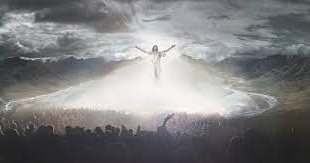
HALIFAX, Nova Scotia, March 26, 2021 – His own people, at the time of his first coming, didn’t recognize Jesus as the fulfillment of prophecy because he was of such low birth. How could a carpenter – and the son of a carpenter, at that – be the Messiah? The Israelites had built up in their minds a vision of the Messiah as a great military leader who would overthrow the Roman invaders and fortify the borders of the Promised Land, keeping them safe from their enemies for all time. But Jesus had no intention of instigating a military coup. His kingdom, as he told his followers repeatedly, is a spiritual realm that is not of this world. Those who refused to accept him as Messiah had misinterpreted prophetic scripture because they had hardened their hearts to the truth. In other words, they believed a lie.
Many Christians today also suffer from the same false expectations, and for the same reason. They’ve built up in their minds a vision of end-time scenarios that must unfold, and in so doing have hardened their hearts to everything but the latest popular interpretations of prophetic scripture. Can it be that the exact same worldly misinterpretation of scripture that prevented his own people (the Israelites) from recognizing Jesus as “the one who was to come” is again playing out today for Jesus’ second coming, and again with Jesus’ own people (the Christians)?
Just like 2,000 years ago, people are expecting Jesus to set up a worldly kingdom based on superior (or even supernatural) military strength. I guess the Devil thinks if his lie worked so well the first time around, it will work again, and he’s right. Many have fallen for the same old shtick. And they’ve fallen for it because they’ve hardened their hearts to the truth and read scripture (if they read it at all) through the eyes of the world rather than through the eyes of God’s Holy Spirit.
I have written before about how the lie of Jesus coming back to set up a worldly kingdom is a relatively new misinterpretation of scripture, and how it dovetails nicely with the likewise relatively new misinterpretation of Jesus being God. At the same time, other worldly belief systems are expecting a great leader to establish a powerful earthly kingdom; some even expect that leader to be called “Jesus”. For Christians, scripture had to be slickly “reinterpreted” so that their end-time beliefs align with those of other worldly religions. Considering that most Christians today do actually believe that Jesus is coming back to set up a worldly kingdom, I would say “mission accomplished” to everyone who propagated the lie.
Jesus tells us explicitly to look at Daniel’s prophecy of end times. There is no mention of a benign Messiah setting up a worldly kingdom in the book of Daniel. What we see instead is a series of worldly kingdoms, each one worse than the one before, culminating in a thoroughly evil kingdom that overthrows all others and whose chief accomplishment is the persecution and purging of God’s people. This final kingdom is led by a “vile person” who sets himself up as God and is eventually overthrown. After his demise comes a time of great trouble, followed by the annihilation of the planet.
There is no mention in Daniel of a 1,000-year worldly kingdom led by a Messiah. There are, however, two passages about a kingdom that will be set up in the midst of the other kingdoms, but this kingdom will smash down the others and last forever. Jesus told us to read Daniel. He also told us many times that his kingdom is not of this world. If you read Daniel’s prophecies of the end times and of the kingdom that has no end, and if you take Jesus at his word that his kingdom is a spiritual realm that is not of this world, you will have no choice but to accept that Jesus is not coming back to set up a worldly kingdom.
Jesus himself tells us that he’s coming back in glory – not in a mortal body, but in a heavenly one – and that all eyes will see him when he does come back. He makes zero mention of setting up a kingdom upon his return. What he does say is that he’ll be sending his angels to the four corners of the earth to gather the last of his faithful followers. Paul says that at that time our bodies will change “in an instant” from mortal to immortal (that is, from earthly to glorified). This is what many call the “rapture”, although that phrase doesn’t exist in the Bible. Rapture is just another word for a collective ascension.
The second coming will be in glory and with trumpets blaring, and all eyes will see Jesus, just as all souls, whether believers or not, will know in an instant and beyond a doubt who he is. Those who love and follow him will be gathered by his angels and whisked home to Heaven, while those who hate and reject him will be left behind in a God-less world soon to be destroyed, and mourning forever what they’ve lost.
Read Daniel. Read the gospels. There is no 1,000-year worldly kingdom led by a Messiah in those scriptures. But there is in Daniel a kingdom led by someone posing as God just before the final destruction of the world, and there is in the gospels reminders from Jesus that his kingdom is a spiritual realm and warnings that we should read Daniel about end-time prophecy so that we’re not led astray.
In the end, what you choose to believe is up to you. We all have God-given free will. With my free will, I choose to believe Jesus and to follow his guidance in everything I do, including what I believe about end-time scenarios. I do not believe that Jesus is coming back to Earth to set up a worldly kingdom because Jesus and the Bible tell me he’s not going to do that. If you find a source that says something different and has higher authority than God, Jesus, and Holy Scripture, please let me know.
“THE FATHER AND I ARE ONE”

HALIFAX, Nova Scotia, March 3, 2021 – Before the coming of Jesus, God would visit his prophets on occasion to give them a word or a vision through his Holy Spirit. The prophets would then go forth to the people and proclaim what God had told them. This proclamation was usually preceded with “Thus saith the Lord”, indicating that the word or vision had been given to the prophets some time before it was proclaimed. In other words, there was a gap in time between when the prophets received the word or vision from God, and when they proclaimed it to the people. God’s Spirit did not remain with the prophets, but only visited them now and then. This distinction between Old Testament prophets and all prophets since Jesus is critically important.
With Jesus, there was no need for “Thus saith the Lord” because God’s Spirit was with him 24/7. God didn’t just occasionally visit Jesus with a prophetic word or vision, he was with Jesus all the time, through his Holy Spirit. So when Jesus opened his mouth to speak a word or vision, God was speaking directly through him at that time. There was no delay between when Jesus received the word or vision from God and when he proclaimed it to the people. The receiving of the word from God and the proclamation to the people were simultaneous, which is why Jesus didn’t have to say “Thus saith the Lord”.
However, this form of proclamation, enabled through the constant presence of God’s Spirit with Jesus, has confused many into believing that Jesus is God. This deification of Jesus would have puzzled not only his followers but also Jesus himself. In fact, Jesus is very clear that “the Father” is greater than he, and that he is the “one who was to come”, meaning that he is God’s Messiah, God’s son, God’s suffering servant, and God’s Prophet, as prophesied throughout the Old Testament by various prophets. Jesus himself referred to his role on Earth as “son of man”, which means “prophet” or speaker and revealer of God’s Truth. This was in reference to Moses’ renowned prophecy (Deuteronomy 18:15-18) that a mighty “Prophet” (note the upper-case “P”) would one day arise, and that God would put his words in his mouth and the Prophet would speak all that God commands him.
Similarly, the prophet Isaiah’s reference to the Messiah as “Immanuel” or “God with us” doesn’t mean that Jesus is God, but that God was with Jesus through his Holy Spirit. In the same way, God is with born-again believers through his Holy Spirit, as Jesus promised us he would be. In fact, the presence of God’s Holy Spirit with someone is the key indicator that the soul is reborn. The main difference between us born-agains and Jesus is that Jesus had the fullness of God’s Spirit with him, having been born with it (not born-again), whereas we have only a portion of God’s Spirit with us, depending on the strength of our relationship with God and the depth of our faith.
As with Jesus, when God gives us a word or vision, we also don’t have to precede it with “Thus saith the Lord”, because God speaks directly through us at any given time. His Spirit is always with us. However, it’s up to us how much we allow God to speak or work through us. We make that decision through our thoughts and actions, that is, our will. The more our will aligns with God’s, the more he can work through us, through his Spirit.
I don’t know about you, but I want God to work through me as much as possible, so I want to align my will with God’s as much as I can. When Jesus stated that “the Father and I are one”, he meant that his will and God’s will were so aligned that what Jesus wanted was exactly what God wanted, and vice-versa. Jesus, in everything his did and said, reflected God’s will.
We need to strive for the same.
I KEEP THE SABBATH FOR MY BENEFIT, NOT FOR GOD’S

HALIFAX, Nova Scotia, February 22, 2021 – When Jesus stated that the Sabbath was made for man, not man for the Sabbath, it was considered blasphemy by the religious powers-that-be. This is not surprising, given how fanatical they were not only about keeping the Sabbath, but about forcing their views on others regarding precisely how to keep it. Stiff penalties were imposed on those who violated their dictates. As a result, the Sabbath became a heavy burden of restrictions and obligations, which was the opposite of what God had intended when he handed down the Sabbath law through Moses.
A whiff of that same fanaticism can be found in some Christians today. Yes, sanctifying the Sabbath is a Commandment, but I’m firmly on the side of Jesus in believing that God gave us the Sabbath for our benefit, not for his. If we love God and make him the center of our lives, spending a day only with him and his Word is pure pleasure and rejuvenation, in the same way as spending time with someone we deeply love is pleasurable and rejuvenating. There is no burden in being with those we genuinely love and who genuinely love us in return. There is no grudging sense of obligation or feeling that we’re missing out on something, or that we’d rather be somewhere else. If we love God, we look forward to the Sabbath each week, we don’t dread it.
As I’ve mentioned throughout this blog, I’m a relatively new believer. I was raised an atheist, so keeping the Sabbath was never ingrained in me as a child. I had to learn it as an adult, after I was reborn. But that learning process was slow. Initially, the Sabbath for me just meant going to church on Sunday morning and then doing whatever I pleased on Sunday afternoon, including working. I didn’t see it as a day of rest and rejuvenation or a time to spend with God. That understanding only came later when I noticed that far from being rested on Monday morning, I was still tired from the previous week’s labours. Technically, I considered the Sabbath only as a church day, and nothing more. The “day of rest” part escaped me.
As I my faith grew and I started to get to know God as my Dad (which only happened after I’d left Catholicism, three and a half years after my rebirth), I found that I wanted to spend more and more time with him and his Word. In fact, I was taking time off from my work to spend with God, as being with him and reading the Bible were such pleasures. However, as much as God wants us to put him at the center of our lives, we still need to work. The Sabbath law not only stipulates one day of rest, it also stipulates six days of labour. In taking time off from work to spend with God and his Word, I was shirking the part of the Commandment about labouring. Just like working too much, not working enough became problematic for me.
But growing in faith is a learning process for born-agains. Babies don’t come out of the womb diaper-trained and fully able to walk and talk. It takes time and lots of boo-boos. Learning about God’s Sabbath and how to keep it as Jesus taught us to keep it was a very long learning process for me, mainly because I didn’t take it seriously enough. Seriously, yes, but not seriously enough to consider exactly what Jesus meant when he said the Sabbath was made for us.
I am happy to report that I am now out of the diaper stage with regard to the Sabbath, and that the worst of the messy boo-boos appear to be behind me. The Sabbath for me is now something I look forward to all week, not something that happens every day. I labour for six days, as required, and completely rest on the seventh (I don’t even do the dishes!). Sometimes, on rare occasion, I am called to work on a seventh or an eighth day in a row, but I never purposely schedule work. If an emergency arises, I deal with it, but then I take my Sabbath afterwards. This is what Jesus taught us to do in scripture.
The result of adopting and living what I believe is the spirit of the Sabbath Commandment is that I LOVE SABBATH! It is by far my favourite time of the week, and I look forward to it the way I used to look forward to Christmas when I was a kid. In fact, I love Sabbath so much, I start it already on Saturday evening, after sunset. (I believe that is biblically sound, for you purists out there.) During Sabbath, I keep meal preparation to a minimum, and as I mentioned, I don’t do dishes or any housework at all, including making my bed. I am a completely lazy slob for a whole day, and I love it! Even just the sight of my messy bed makes me smile, because it’s a clear sign that it’s Sabbath.
As for being with God, there is no greater pleasure than spending an entire day with him without feeling like I’m shirking my work duties in some way. It took me a while to get there, but I’m now like Mary sitting at Jesus’ feet, enjoying his company and learning from him, rather than like Martha, running around doing all kinds of unnecessary chores that only make me tired, cranky, and frustrated.
If your day off is not a pleasure for you, if it is not restful and rejuvenating, if it is not deepening and strengthening your faith and your relationship with God and his Word, you might want to reconsider how you’re keeping your Sabbath.
Now when Monday morning rolls around, I’m ready to face the work week again. I don’t dread it; I’m ready for it, and I look forward to whatever the week may bring. This, I think, is proof not only of the importance of keeping the Sabbath, but of keeping it as God intended and as Jesus taught us.
THE UNFORGIVABLE SIN

HALIFAX, Nova Scotia, February 21, 2021 – Scripture gives us an example of the unforgivable sin in the expulsion of Satan and his followers from Heaven. We don’t (yet) know the exact story of what happened to Satan to turn him away from God, but we do know the consequences of that turning – the loss of Heaven, the fall to Earth, and the guarantee of eternal hellfire. We also know that these disembodied fallen beings are beyond redemption and that no intervention can save them. This is the darkest of all sentences: the place of no hope. In the moment before I was reborn, I was on the doorstep of that place (not inside the door, but just outside it), and I never want to be there again. Nor would I wish that on anyone.
But the fact remains that the unforgivable sin is one that Jesus tells us we still have the capacity to commit, which means we too may end up in the same place as Satan. Much has been written about the unforgivable sin, about what it might be and whether or not the writer speculating on it may already have committed it.
I admittedly don’t know much about anything, but I do know this: if you had committed the unforgivable sin, you would not be wondering whether or not you had committed it. You would know, and you would also know the end that awaits you. These facts would not be hidden from you: You would know them just as surely as I know that I’m born-again, because God himself would tell you in person, clearly and unequivocally. There would be no mystery and no doubt, any more than there is mystery and doubt when a judge renders a verdict to the accused in a court of law: The accusation and evidence are summarized, the judgement is stated, and the sentence is passed. Your judgement will be just as clear to you if you commit the unforgivable sin.
But what is that sin? We know the consequences of it, but what exactly is the sin itself? We want to know what it is for no other reason than to avoid committing it, and by avoiding committing it, avoid its consequences.
Jesus tells us that to speak against him or against God is not unforgivable. We also know that God is merciful and patient beyond anything we can imagine, and that spiritual rebirth is God extending to us a second chance to go home. These are all good things and show how much God loves us and takes into consideration our weaknesses. He does everything he can to mitigate them while still allowing us free will.
And yet even this good and patient and merciful and loving Father has a no-go zone that we dare not pass. I know, because I was at its border, and it stopped me (thank God) in my tracks. It happened a few years after my rebirth, when I was old enough spiritually to know better, but just couldn’t help myself. I’d fallen into a series of temptations that in my mind I kept dressing up as a chance to witness. The temptations continued over a span of months, dragging me deeper and deeper into its quicksand. But it wasn’t the temptation that was the unforgivable sin – it was something that happened afterwards in relation to it.
I am not at liberty to reveal what it was (that is between me and God), but I can say this much: if I had crossed over the border into the no-go zone, I would have lost my grace, like Satan, grace being the presence of God’s Spirit with you and the promise of eternal life in Heaven. I know beyond a shadow of a doubt that I would have lost my grace, because as I was riding along on my bike that day, heading for an afternoon of skating at the local arena and thinking about that thing I would do (which in my mind at the time was an honest thing to do), God said to me very clearly: “If you do it, you will lose your grace.”
I slammed on my brakes and came to a hard stop. It had not occurred to me that doing this what I thought was an honest thing could have lost me my grace. How could honesty be a bad thing? Which is when God showed me that the pain I would cause by doing what I thought was an honest thing would come back to me amplified with such ferocity that it would equate to lost grace. I could still do that thing (I still had free will), but in doing it, my grace would be irretrievably lost – irretrievable, as in lost forever. No chance of getting it back. The same state as Satan. I would have knowingly sinned against God’s Holy Spirit by purposefully doing what I had been explicitly warned by God – in person – was wrong to do, and in the process purposely causing unimaginable pain to others.
And that was the crux of it – the pain that my “honest” gesture would have caused to others and my knowingly inflicting that pain. If I had proceeded knowing the measure of pain I would have caused, God would have had no choice but to return that pain to me in the measure that I, as a reborn soul, had earned, which would have been sufficient for me to lose grace.
Even today, I shiver at how close I came to this final fallen state.
God will not let you, as his born-again child, wander unknowingly across the border into the no-go zone of the unforgivable sin. You will be warned not by vague signs or third-party notices, but by an in-person cameo appearance by God. It will be just as memorable to you as God speaking from the burning bush was for Moses. It will stop you in your tracks. And it will remain with you for the rest of your days.
The unforgivable sin is different for each of us. There is no one unforgivable sin, but all of them are premised on the same thing: purposefully and unremorsefully doing what we have been explicitly warned by God – one-on-one – not to do, with an equally explicit warning of the consequences that will follow if we proceed. The warning comes not through a third party, but directly from God through his Holy Spirit. To blaspheme and speak against God’s Holy Spirit is to do that one thing you have been warned by God explicitly and in-person and beyond a shadow of a doubt not to do.
There is no remedy for this level of informed disobedience. There is no course of appeal. Satan and his condemned followers know that.
May you never join them.
 A BORN-AGAIN BELIEVER