
Home » Uncategorized (Page 5)
Category Archives: Uncategorized
GETTING THE MIRACLE YOU NEED
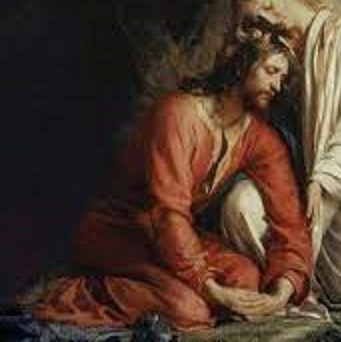
HALIFAX, Nova Scotia, August 18, 2022 – So many people praying for a miracle, praying for healing, praying for the cancer to go away or at least to go into remission. Praying for relationships to be healed. Praying for enough money to pay the bills or maybe a lottery win.
Praying for a miracle.
And then, when the requested miracle doesn’t come, so many people crying to God: “Why are you doing this to me? What have I done to deserve this?” and cursing him, or worse, swearing he doesn’t exist.
But God answers all prayers, including those made in the agony of the soul. You might not get the exact miracle you requested, but you will get a miracle. God will intervene, if you ask him to. Through divine intervention, he’ll give you the strength to endure whatever it is you’re going through, whatever it is you’ve brought on yourself, whatever it is you have to suffer. There’s your miracle. The miracle is in the power of your strength to endure, which you wouldn’t have had if you hadn’t prayed to God for help. Your strength to endure is God working through you. There’s your miracle.
People ask me if God works miracles in my life, and I say yes, every minute of every day. Every minute of every day God works through me. Every day I witness his intervention, because I constantly ask for it and thank God for it. Every day I see his miracles.
I may not get precisely what I ask for, but I do get what God knows I need to stay on the path Home. And sometimes he’ll throw in a little something extra, something he knows I’ll know could only have come from him, just to make me laugh. God loves it when he can make us laugh.
The night before Jesus was crucified, he prayed to God that there would be some other way for him to complete his mission without his having to be crucified. He didn’t want to be crucified. He didn’t want the agony and very public humiliation of that kind of death. But note that he qualified his prayer with “not what I want, but you want”, and he prayed the same prayer three times in succession, showing us that we need to be persistent in prayer, so that God knows we mean what we say and that it’s not just a passing fancy.
Jesus didn’t get specifically what he asked for; he was crucified. But immediately after Jesus prayed, God sent an angel to strengthen him. There was the miracle he needed – not the miracle he wanted, but the miracle he needed to get through what he had to get through in order to get Home.
Our strength to endure whatever we have to endure is not our strength; it doesn’t come from us, no matter how strong we think we are. That strength to endure comes from God. That is divine intervention. That is a miracle.
So whatever you pray for, pray like Jesus – qualify your prayers by telling God not to give you what you want, but what he wants. God loves you even more than you love yourself, so if you give God leave to give you what he wants rather than what you want, you’ll always come out ahead. Yes, Jesus had to deal with being crucified, but he was crucified while also strengthened by God to endure it. Imagine how much worse it would have been for Jesus without God’s help.
I know how bad things can get when you don’t pray for God’s help, because I lived the first 36 years of my life on Earth without praying to God, and I stumbled from one disaster to the next. I was constantly an emotional basket case, constantly flailing in pain, and constantly casting blame like an AK-47 spraying bullets.
But on that day when I finally called out for help, not even knowing who I was calling to, God heard, and he answered immediately. He offered me the option of choosing to forgive or choosing not to forgive, showing me the outcome of each choice and shining a bright light on the choice to forgive as the right one and the one that would stop all my pain. Thank God I cried out for help that day. Thank God God heard me, and thank God he answered.
God always hears our prayers and always answers them. Always. There is never a time when he doesn’t. When you give God leave to intervene, he might not do exactly what you want him to do, but he will do what’s best for you. That’s his job description as your Heavenly Father.
So pray to God like Jesus prayed – not demanding, not expecting, not threatening or negotiating, but humbly giving into God’s will for you, whatever that may be.
That’s how you pray, and that’s how you get the miracle you need.
THE CHURCH THAT JESUS BUILT

HALIFAX, Nova Scotia, June 23, 2022 – What does Jesus think of Christianity?
I asked him, and this is what he told me.
He hates what’s it’s become, the same way he hated what Judaism had become.
He’s also not surprised what Christianity has turned into. He warned us 2000 years ago already that it would morph into something unrecognizable from what he’d established.
Is a church still Christian if Jesus has left the building?
What remains is a mish-mash of soulless rituals adapted from dead belief systems, songs of praise that sound like funeral dirges, and a worldly ideological free-for-all that would make even the ancient Sodomites blush. Yes, Jesus was notorious for eating and drinking with tax collectors and prostitutes, but he didn’t invite them into the temple to drink. He made it very clear that the temple was set aside as a house of prayer.
In a house of prayer, you come before God to talk to him and hear from him. When you come before God, you don’t come loud and proud, demanding that God accept your sin as righteousness. If you’re born-again, you come before God as his child, respectful and loving. If you’re not born-again, you come before God penitent and humbled. There is no room for pride in God’s house of prayer.
There is no room for Pride in God’s house of prayer.
Those who feel compelled to express their pride can do it elsewhere; the places designated as God’s houses are places of prayer for all people, not places for acting out.
The penitent sinful are welcome in God’s house, but sin isn’t. Pride isn’t.
*****
But of course, I’m dreaming here to think that the mainstream worldly churches have the remotest grasp of these concepts now, and that even if they did, they would care to apply them. Jesus hates the current manifestation of Christianity not because of the people in it, but because of the sin in it. The one true Church that Jesus established by very definition has no sin it; sin cannot enter into God’s Kingdom: It’s a spiritual impossibility for sin to enter in. Which means the churches masquerading as his are not his.
Christian churches are not Christian.
The Church that Jesus established is the Kingdom of God on Earth. This is the one true Church and the one that born-again believers automatically become members of at their rebirth. There is no need for born-again believers to join a worldly denominational church. If you’re genuinely born again and you want to know what your Church looks like in the spiritual realm, you can see a vision of it in Revelation 7. All those white-robed people of different nations and languages standing before God’s throne day and night and waving palm fronds to witness their allegiance to Jesus as Messiah – there’s your Church. You’re among those white-robed people, if you’re genuinely born-again.
In John, Jesus prayed that his followers would be one with God as he was one with God. Jesus always got what he prayed for (as he always waited for God to direct his prayers), so we know that we, as his born-again followers, do have the same relationship with God as Jesus did during his time on Earth. God is our Father.
And having the same relationship that Jesus had with God, we are one family of believers and we all believe the same thing. There is nothing to dispute. There are no disagreements. There is no need for denominations or creeds or statements of belief. We believe what Jesus believed, not because we’re mindless zombies who parrot whatever is told us, but because Jesus believed Truth, and so do we.
We believe the Gospel. We believe God’s Word. Any deviation from that we do not believe and in fact any deviation cannot enter into God’s Church. Only Truth lives in God’s Church, and only genuine born-again believers can enter in there.
Lies, deceit, Pride, and all forms of sin cannot enter. It’s a spiritual impossibility for unrepentant sin to enter into God’s Church.
That’s how we know that the sin-laden mainstream denominational churches are not God’s Church. They are places designated for people to come before God, if they want to, they are a house of prayer for all people, but they are not God’s Church.
The Kingdom and the Kingdom only is God’s Church – the one foretold in scripture, and the one that Jesus built.
THE NUMBERS GAME

HALIFAX, Nova Scotia, June 21, 2022 – Abraham made a deal with God that if there were 10 righteous souls in Sodom, God would not destroy it.
As it were, God did destroy Sodom, so clearly there weren’t even 10 righteous souls there.
However, I’m wondering if someone had done a show-of-hands survey just prior to the destruction to see how many people in Sodom self-identified as righteous, I’m guessing a lot more than 10 people would have raised their hands.
By the same token, of the million or so souls who were of age (20 years and up) when they left Egypt in the exodus, only 2 (Caleb and Joshua) were considered by God to be sufficiently righteous to enter the Promised Land.
And of all those alive during the days of Noah, only Noah was considered sufficiently righteous to be spared the flood.
So let’s take a look at this – so far, the actual named righteous out of millions if not billions of souls who lived during those eras are 4 in total: Lot, Caleb, Joshua and Noah. (Their families were spared as chattel.)
We could also add Abraham, of course, but that only makes 5.
What about the 2 billion Christians today? How many of them do you think would raise their hands and self-identify as righteous? There were many children of Israel during the days of Jesus’ ministry who would have self-identified as righteous, too, and some of those Jesus told to their face they didn’t have a hope in Hades of getting to Heaven, not in the spiritual state they were in.
These low numbers should be very sobering to us.
Do you consider yourself to be as righteous as Lot? How about as righteous as Noah? Or maybe as righteous as Stephen, the first martyr of the church, who prayed for and forgave those who were stoning him to death while they were stoning him to death? We know that Moses made it to Heaven, too, and Elijah, because they came to visit Jesus during the so-called transfiguration on the mount. So now, along with the other named 5 souls, we’ve got a few more, but not many.
This speaks to me of how difficult it is to make it all the way Home. At the same time, it also speaks to me of how full of crap the mainstream Christian church must be to assure their adherents that Jesus did all the heavy lifting, so all they have to do is show up every Sunday and/or give money to the church, and off to Heaven they go. Or something like that.
I frankly do not consider myself righteous. I have a long way to go before I would make such a claim, if ever. And I think the point here is precisely that: We cannot judge our own righteousness or the righteousness of others. We cannot know definitively whether we’re righteous before God. Abraham thought it was a sure thing to negotiate God down to just 10 righteous souls in Sodom, thinking there must be at least 10, but he was wrong. There was only 1.
And then there was none.
*****
We read of visions of mass destruction throughout the book of Revelation and in Ezekiel 9. Mass destruction was also recorded as historical fact in the book of Jeremiah and in Genesis and elsewhere. In the visions and actual scenes of destruction, very few are spared. Jeremiah relays how mothers cooked and ate their own children during the famine when Jerusalem was under siege by the Babylonians, in fulfillment of Moses’ prophecies in Leviticus 26 and Deuteronomy 28.
It’s a nasty world out there, filled with nasty people doing nasty things. God knows that. None of what anyone does is a surprise to him. But don’t you be nasty. Don’t you eat your own children, no matter how hungry you get. Don’t you congregate around the door of your neighbour, demanding he bring out his guests so you can rape them. Don’t you strip yourself naked and dance drunk around a golden calf made from the very gold God gave you for his temple ornaments. Don’t you sell everything you have and give only half to the poor, hiding away the other half for a rainy day.
In other words, don’t be unrighteous. Be like the people of Nineveh, who repented when they were told they needed to repent. That’s how you overcome any unrighteousness you may not even know is in you.
Jesus’ message at the start of his ministry was to repent and believe the Gospel. That message doesn’t change at any point during the rest of our time on Earth. We are all in constant need of repentance and all in constant need of the Gospel, just as we’re all in constant need of being reminded how precious and elusive the reward of Heaven actually is.
It’s a numbers game. Jesus said that many are called but few are chosen; Jesus also said that the Way Home is narrow and few find it.
We need to take these words to heart and hope that in mentioning the few, Jesus was talking about us.
HAPPY ENDINGS

HALIFAX, Nova Scotia, June 4, 2022 – Most people, including born-again believers, want stories to have happy endings. They want those who deserve punishment to be punished and those who were unjustly accused to be vindicated. If there’s a romance involved, they want the lovers to marry and live happily ever after. They want the plot tied up with a bow and the loose ends pulled into festive curls. They want a happy ending almost like it’s hardwired in them to want a happy ending.
Outside of stories, real life doesn’t always end happily, if you consider death as the ending. Most people die in pain, whether from disease or violence. Some take their own life and die groggily by overdose. Very few “die peacefully in their sleep”, and of those few who do, we have to wonder how peaceful their passing actually was.
Even believers aren’t exempt from experiencing a painful death, as we see in scripture. Jesus died in excruciating agony, as did many of his disciples and followers, as did many of the prophets before them. If Jesus couldn’t arrange for a happy ending to his earthly life, what chance do we have?
The short answer is “next to none”. We have next to no chance of having a happy earthly ending. Even as we live with the joy of God’s Spirit 24/7 as born-again Spirit-filled believers, even as God provides for our needs and wipes away all our tears, we can still anticipate having a painful death someday. That’s why Jesus said that those who endure to the end will be saved. He emphasized the end, because the end, when we’ll be racked by pain, is where it will be most tempting for us to give up and betray God.
*****
The best stories build slowly and steadily to a crisis, which then quickly resolves in a happy ending that we didn’t see coming. The contrast between the crisis moment and the subsequent unforeseen and satisfying resolution is what gives the story its emotional punch. It’s the retelling, over and over again, of being stuck between a rock and a hard place (like between the advancing Egyptian army and the Red sea) and then being sprung in a way we hadn’t anticipated that makes sense to us. We not only demand our happy endings, we demand them to happen in such a way that we’re happily surprised and satisfied.
God is only too happy to deliver on our expectations. Granted, those of us who do endure to the end will have to wait a bit for our happy ending, but it will come. Our earthly exit might not be so happy, but we know that our earthly exit is not our ending. It’s the end of our time here on Earth, yes, but it’s not our ending. Our happy ending comes after the Judgement.
Jesus’ death on the cross looked like an agonizing and humiliating defeat. Don’t expect your death to look any better. And yet we know that Jesus was only paying the price that had to be paid in the way it needed to be paid according to scripture and God’s guidance, and that once the debt was paid, the happy ending would begin. And so it did for Jesus, with his resurrection into his new body and his ascension to sit at the right hand of God and be Lord of creation for ever and ever. If ever there was a happy ending, that is it.
Our ending will be just as happy for us, if we endure to the end of our time here. Jesus said we should expect persecutions while on Earth, we should expect to be outcasts, we should expect to be alienated from those we love (but who don’t love God), and we should expect to live in poverty, though not in want. We will never live in want as long as we stay true to God.
The Good Lord always provides.
*****
I anticipate my own happy ending as if the anticipation were hard-wired into me, because it is hardwired into me. God made us to want a happy ending. Our need for a happy ending is as much a part of who we are as our need for food and water and air. We know better than to look to the world for satisfaction, and we will never find our happy ending there, any more than Jesus did.
Our happy ending will only come if and when we make it Home.
WORKING FOR GOD
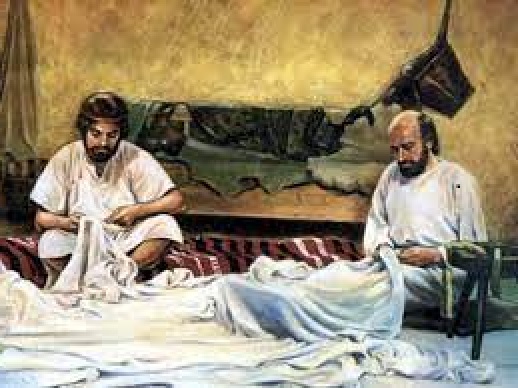
HALIFAX, Nova Scotia, May 22, 2022 – Work, to Jesus, was not something you did 9 to 5. It was also not something you did full-time, part-time, seasonally, in shifts, or three weeks on, one week off. It was not contractual, in the sense that you had to agree to do and say certain things “on the job” that you may or may not do or say in your “off” hours.
It was not something you did for money.
Work, to Jesus, was not like that.
To Jesus, work was who he was. He was his work. He made no distinction between the work he did for God and who he was as a person.
We who live in the Kingdom and follow Jesus should also strive to be our work, as Jesus was his.
*****
Today is my Sabbath. I’ve written before about how much I love the Sabbath. The Sabbath, of course, is our God-sanctioned day off from work. We need it and use it to rest from our labours. Keeping the Sabbath is also a Commandment. That means, not keeping the Sabbath is not an option. In keeping the Sabbath, we’re also to keep it holy, which means we’re not to devote our Sabbath day to profane (worldly) pursuits, including doing work for mammon.
I don’t always keep my Sabbath on the same day that most people keep theirs. Sometimes, I’m led by God to keep it on a different day, but the content of my Sabbath – regardless of the day I keep it – is still the same. Jesus says that the Sabbath was made for man, not man for the Sabbath, and I take him at his word. I keep the Sabbath when God guides me to keep it, and I keep it holy, as he instructed in his Commandment.
Jesus, however, was infamous for breaking the Sabbath, or so his detractors accused. Because he made no distinction between the work he did and who he was, Jesus worked on the Sabbath without breaking the Sabbath. Like priests, Jesus was actually obligated and expected to work on the Sabbath, as he frequently pointed out to his detractors.
We again see Jesus’ take on work reflected in the famous interchange between him and Martha, when Martha asks Jesus to get Mary to help her with her chores. In asking Jesus to intervene, Martha likely assumed this tactic would shame Mary into helping her. So imagine her shock when Jesus instead sides with Mary and reminds Martha that, in sitting at Jesus’ feet and learning about the Kingdom, Mary has chosen the better job.
*****
During the time they were with Jesus on Earth, the disciples did the same mundane daily chores that the rest of us generally do, such as shopping, food prep, and so on. However, shortly after they’d received the baptism of the Holy Spirit, they allocated the mundane daily chores to others and spent all their time doing the work of the Kingdom. Like Jesus, they had finally become their work.
It took Paul some time to get there. Even while he was traveling and preaching and writing his letters, he still made tents for his daily bread. He also encouraged others to earn their way through the world rather than to rely on hand-outs. The six-day designated work-week was important to Paul, as it should be to us. Working six days a week is part of the same Commandment as keeping the Sabbath holy.
*****
So where does all this information leave us? If you’re like me, you’re both working in the Kingdom and working in the world, as Paul was for most of his ministry. I don’t know if I’ll ever get to the point where I’m working only in the Kingdom, like Jesus, but I hope so. I’m on God’s time, not mine.
In the meantime, I’ve been blessed to have work that I can do anywhere in the world and where I’m my own boss. The work I do for the world (freelance writing and editing) also feeds the work I do for the Kingdom, which is a profound blessing. Even better, God is my agent. And being perfect at everything he does, God is a perfect agent, which means he only gets me work that suits me, that I have time for, and that satisfies my needs. I am never without.
How much longer I’ll be doing my worldly work is up to God: again, I’m on his time, not mine. When I do my God-sanctioned and God-given worldly work, I keep in mind that I’m always to do it (as scripture tells us) as if unto God, as if I were doing it for God: as if God were my client. So even in doing worldly work, I’m still doing Kingdom work if I do it unto God, which means if I do it to the best of my ability.
In doing both worldly work and Kingdom work, I see myself along with others doing the same. We’re in a vision given to John, which he recorded in the book of Revelation:
After this I beheld, and, lo, a great multitude, which no man could number, of all nations, and kindreds, and people, and tongues, stood before the throne, and before the Lamb, clothed with white robes, and palms in their hands;
And cried with a loud voice, saying, Salvation to our God which sitteth upon the throne, and unto the Lamb.
And all the angels stood round about the throne, and about the elders and the four beasts, and fell before the throne on their faces, and worshipped God,
Saying, Amen: Blessing, and glory, and wisdom, and thanksgiving, and honour, and power, and might, be unto our God for ever and ever. Amen.
And one of the elders answered, saying unto me, What are these which are arrayed in white robes? and whence came they?
And I said unto him, Sir, thou knowest. And he said to me, These are they which came out of great tribulation, and have washed their robes, and made them white in the blood of the Lamb.
Therefore are they before the throne of God, and serve him day and night in his temple: and he that sitteth on the throne shall dwell among them.
They shall hunger no more, neither thirst any more; neither shall the sun light on them, nor any heat.
For the Lamb which is in the midst of the throne shall feed them, and shall lead them unto living fountains of waters: and God shall wipe away all tears from their eyes.
Revelation 7:9-17
There we are, having come through our own personal Tribulation and washed our robes in the sanctifying blood of Jesus, making them white. That is spiritual rebirth. Protected, guided, provided for, and comforted, we spend the rest of our time on Earth in what Paul called a “cloud” of witnesses – spiritually before the throne of God, rejoicing in God, and serving God only. If you’re genuinely born-again, you’re in John’s vision. Your work and everything you do is now a testimony to Jesus. Stick your face close enough to the words of that passage, and you’ll see yourself waving at you. I’m waving at you, too. Go ahead and wave back.
*****
For Jesus, working and doing God’s will were one and the same, and he did them night and day. For us born-again believers who are doing both worldly work and Kingdom work, we’re not that far off from how Jesus worked if we do everything we do as if unto God.
Even so, if God guides us to do it, we shouldn’t be ashamed to make tents. It’s always better to work than to beg; God never wants his children to beg. If we show the willingness to do whatever’s asked of us, God will bring us the resources we need in the world to continue our work in the Kingdom. That’s a guarantee.
Scripture tells us so.
THE GREATEST TEMPTATIONS

WINDSOR, Nova Scotia, May 8, 2022 – As we born-again believers make our way – God’s Way – along the strait and narrow of this life, we need to keep in mind that our greatest temptations probably won’t look like temptations; they’ll look like everyday concerns or ways of the world. They might even look like shortcuts that promise to get us to Heaven faster and with less effort.
Satan, for all his brilliance, still relies on the same old tricks that he used with Eve all those years ago: He finds our weaknesses and exploits them. He relabels forbidden fruit as “New!” and “Improved!”, burying the truth of the matter deep in the endless fine print that no-one bothers to read.
One of the worst things about temptations (if avoiding them is your goal) is that God supernaturally hides from you that they are temptations. You go into a temptation spiritually blind. God does that on purpose so that we’ll react organically to the scenario, not in a pre-processed way. I have been tempted on numerous occasions since I was reborn, and I’m sorry to report that I fell for many of them. The only positive thing I can take from my spiritual failures is that I learned from them by suffering the consequences of my bad choices, and the failures humbled me.
As we get closer and closer to our time to go Home (or in the other direction), we can be sure that our temptations won’t be the over-the-top type that Jesus was subjected to in the wilderness just before the start of his ministry. No, they’ll be much more subtle, which makes them that much more dangerous to us. For example, we might be tempted to break one or more of the Commandments, but it won’t appear as if we’re breaking them, either because “everyone is doing it” or the law of the land permits it. This is why we need to very clearly distinguish between God’s Law and worldly laws, between what is right in God’s eyes and what is right in the eyes of the world. Taking up arms with the intent to kill is a major temptation that born-again followers of Jesus hopefully never fall for, regardless of whether it has the blessing of the state.
Another temptation that comes to us disguised as something good is earning money. How much money do we need? Based on Jesus’ example, I’d say we need as much as it takes to put a roof over our head, food in our mouth, and clothes on our back, with a few extra pennies to pay for incidentals. Anything we earn beyond that is a temptation from the devil. God told me once that it’s useful to think of money as cancer cells, in which case we wouldn’t want to have any money at all, or at least no more than what we need to keep our immune system primed and pumped and humming along.
For many people, earning more money than you need is a lifelong temptation, though I’ve yet to hear of a deathbed confession that mentions any regret over not earning more. It’s like impending death completely cuts through the delusion that money has any real value beyond a roof, food, and clothing. If you take money concerns out of your life and let God dictate the amount you need, you free up a good portion of your day and your mind. For born-again believers, money should only be a tool; it should never be an end in itself beyond the bare minimum requirements.
Probably one of the biggest temptations in most people’s lives these days is complaining, especially publicly and before giving the offending person a chance to correct the wrong. Social media is usually the vehicle of choice for the complaining. Scripture tells us that if someone does something wrong, we need to go to that person and talk to him or her PRIVATELY. We’re not to make a show of it by standing up in public and thundering “J’ACCUSE!” That’s Satan’s job, to accuse. Our job is to take someone aside and quietly suggest that a change of behavior might be in order. If that doesn’t work, we’re to take a few more people to that person and quietly suggest the same. If even that fails, we need to pray for that person, but keep our distance. You don’t complain about them, not publicly and not privately. You pray for them.
Keep this in mind the next time you feel the urge to leave a bad review on social media. It’s a temptation. Best not to leave any review and let God deal with your grievance in his time and his way.
This category of temptations is called provocations, because they’re intended to provoke you into acting badly.
For the past month, I’ve been traveling for the first time in nearly two years, and I can tell you that the attitude of the people working in the hospitality industry in particular has changed drastically. I’ve suffered rudeness and arrogance that I’ve never experienced in all of my previous travels combined. Each time someone snaps at me or studiously ignores me, I have to bite my lip not to say anything that I’ll regret, just as I have to physically restrain my fingers not to type anything on a review that I’ll feel bad about later. So I instead step back and look at the goodness and kindness of the situation, if there is any (and there is always something), and I choose to overlook what wasn’t so good and kind. I choose to be grateful for small mercies rather than to be resentful. Note that I say “I choose” to do these things. Sometimes I have to make the choice with my nails digging into the palms of my hands. I have to learn (and relearn [and re-relearn]) to do this, because my default tends to be to get provoked, at which point my back goes up, my mouth opens, and out pours the invective. Mind you, what comes out isn’t necessarily inaccurate; it’s just not the best way to handle the situation.
These are temptations in the form of provocations, and they are everywhere these days. We need to be on our guard, even knowing that God will prevent us from seeing these temptations as provocations, watching to see how we respond. I think that when we get to the point where our default is to have compassion for the offender rather than condemnation, we’ve passed that particular test, overcome that particular temptation.
And then on we move to the next one.
GOD’S HOLY SPRING

WINDSOR, Nova Scotia, May 5, 2022 – Spring is a curious thing: out of the seemingly dead ground, green shoots emerge; out of the seemingly dead branches, buds burst through. Birds build nests and fill them with their eggs. The combination of longer warmer days and the angle of the sun triggers this activity.
Or so the story goes.
God has hardwired into his earthly creation new growth out of old. Renewal is part of the life cycle. We can expect it and celebrate it and thank God for it: as long as there is life in a living thing, there will be cyclical renewal, whether based on the sun’s position or not.
We humans are no different. We are hardwired for physical renewal on a regular basis. Some Christians talk about renewing their faith, and I believe that the desire and ability for faith renewal is also hardwired into us – the desire to want a refreshing, a plumping and smoothing of our belief pillows.
But what isn’t hardwired into us is spiritual rebirth. Rebirth is a process that comes from without – from God. We can’t direct it; we can’t demand it; and we can’t plan it to happen: it is 100% organized and enabled by God as an “add-on” feature to the human experience.
Spiritual rebirth isn’t the same as spring: some people compare rebirth to the renewal of spring, but that’s not an accurate comparison. Spring is hardwired into God’s creation; spiritual rebirth is not. Jesus says the Spirit goes where it wills, not where we will it to go. Paul says we become a new creature at rebirth, so that we are no longer Greek or Roman, or Black or White, or male or female: We are no longer quite human. That part of us that was hardwired to want to reproduce is overwritten. That part of us that was hardwired to want to protect our own (through violence, if necessary) is overwritten. That part of us that was hardwired to want to accumulate the world’s resources into personal wealth is overwritten. We become, as Jesus says, eunuchs for the Kingdom of Heaven’s sake, enemy-lovers for the Kingdom of Heaven’s sake, and poor for the Kingdom of Heaven’s sake, and we do it all as if it’s our default, because it becomes our default when we’re reborn.
We are all born of the same Spirit at rebirth – God’s Holy Spirit – so born-again believers are all the same spiritual family and an entirely new spiritual creation. This family forms and inhabits God’s Kingdom on Earth. We humans have been hardwired in such a way that rebirth can be added to us, but our factory settings don’t include rebirth. That’s why most people never experience it.
We didn’t always have rebirth as an add-on option. It was launched with Jesus 2000 years ago. John the Baptist, according to Jesus, was the greatest of all people who were born of a woman, but even the least of those in the Kingdom of Heaven is greater than John the Baptist. That’s because God’s Spirit inhabits born-again believers, whereas those who aren’t born-again can, at most, have only temporary visits from the Spirit. Not being born-again (Jesus’ sacrifice not yet having been made to enable it), John had only temporary visits from the Spirit; we born-agains have God’s Spirit with us full-time.
It’s God’s Spirit within born-again souls that makes those souls great, not anything they do or are on their own.
Born-again believers should embrace and welcome the cyclical renewal of the earth as well as of their own mind and body. But refreshing ourselves in God’s Spirit is something that should be done every day (or even several times a day, as required), not once a year. Every day we should be renewing our faith and re-examining our conscience. Every day we should be consciously in God’s Spirit, open to advice and encouragement and reprimand. What did I do wrong yesterday? How can I make up for it? How can I avoid doing that wrong thing today? What did I do right yesterday? How can I make sure I keep on doing it?
Sufficient unto the day is the evil thereof, as Jesus tells us. We take our lives day by day, and learn and apply our lessons day by day. In the same way, we should examine our conscience and spend time with God and Jesus through God’s Spirit day by day. For born-again believers, our spring renewal comes every day through the spring of the Holy Spirit that is constantly welling up inside of us, as Jesus promised us it would. Even in the dead of our own personal winter, the Holy Spring is there within us, ever ready to wash away what doesn’t belong and to renew our faith and promises and set us firmly back on the road Home. This spiritual healing and rejuvenation we have access to every day, all day. It is a very great gift of God to his children, given to us at rebirth.
We must never forget that we have this gift of perpetual renewal and cleansing, and we must never let it go to waste.
YOUR GOD-GIVEN RIGHT TO SAY NO

MEADOWVILLE, Pictou County, Nova Scotia, January 9, 2022 – I hear a lot of people these days claiming that they didn’t have a choice. They did what they did because they “didn’t have a choice”. They did it to keep their job or to travel or because everyday life would be too difficult if they didn’t do it. The fact that they always had the option to make the opposite choice never seems to occur to them. It’s as if they’ve lost their understanding that they have God-given free will, and that their free will is inviolable.
No-one can force you to do something against your free will, and no-one can take your free will away from you during your time on Earth, not even God himself. In fact, your free will is you: it bears the record of everything you’ve done while you’re here, and in large part determines the course of your life now and your eternal reward later.
Your free will is you, and there is never a circumstance during your time on Earth when you can’t exercise it. So if you say “I didn’t have a choice”, what you really mean is that you used your free will to choose something you didn’t fully agree with. But you did have a choice. While you’re here on Earth, you’ll always have a choice.
When I was an atheist, I made a lot of bad choices. I then lived the consequences of those choices, so I had a pretty crappy life. Like many people today, I also claimed “I didn’t have a choice” as a justification for choosing what I knew in my gut was wrong, but which I thought was the best way forward at the time.
For those of you thinking that you don’t have a choice, I’m here to remind you that you do. If you feel you don’t have a choice, it’s either because someone’s lied to you by telling you don’t, or because you’re thinking short-term.
You always have a choice. Your free will is God-given, inviolable, and quality-controlled at the gut level.
Use it wisely.
TREASURES ON EARTH

MEADOWVILLE, Pictou County, Nova Scotia, December 30, 2021 – I have a houseplant named Florence. She’s a poinsettia. My mother gave her to me last Christmas. I’ve moved 6 times since last Christmas, and each time Florence has moved with me. She just had her first birthday on Christmas Day, celebrating in grand style by showing off her brand new red leaves.
Poinsettias are fascinating plants. Many of us buy them at Christmas time and then discard them before Easter, but I can’t kill things that are still alive and breathing. Not even bugs. I let them live until God takes them home. So Florence will be with me for as long as she keeps breathing.
I didn’t know much about poinsettias until I got Florence. As you may or may not know, poinsettias are native to Mexico, so they’re not big fans of the Canadian climate. Florence would die if I planted her outside, even in the summertime. She was born in a pot and she’ll die in a pot.
Plants can teach you many things about life. I’ve moved so often over the past several decades that I’ve never bothered to get any plants. It wasn’t practical for me to have them. The few plants I did get were given to me by my mother, maybe in a subconscious attempt on her part to get me to stay in one place for more than a few months. So when Florence was deposited on my doorstep last Christmas, my first impulse was to give her away. I’m glad I didn’t. Here’s what she’s taught me so far.
Plants have friends. When I first moved out to the country, I rented a furnished house that came with a live potted cactus. It was just a little wee thing that I called Shorty. I set Florence down next to Shorty, and over the next few months, the strangest thing happened: They started growing towards each other. I had set them in front of an east-facing window, but instead of growing towards the window, they grew towards each other until their leaves were touching. At one point, I turned the plants around so that their “backs” were towards each other, but their leaves on that side started doing the same thing. They were friends.
Unfortunately, I had to leave Shorty behind when we moved to where we are now, but that was a life lesson for Florence, I guess. She’ll make other friends someday, and she’ll see Shorty again when she gets to Heaven.
Plants need down-time. Poinsettias are primarily green plants when they are thriving. They only turn red during their down-time, which is the cooler and darker months of the year. The red color of their leaves indicates an absence of chlorophyll. In the cooler darker months, poinsettias shut down most of their chlorophyll production in order to survive as a plant. The lack of chlorophyll results in the brilliant red leaves that are the plant’s calling card. So what we’ve come to associate poinsettias with (brilliant red leaves) is actually a sign of their partial hibernation in survival mode. Poinsettias turn red for much the same reason as trees turn red in the fall.
To get Florence to turn red for her first birthday (December 25), I had to give her her own bedroom and put her to bed at sundown every day, starting in October. She needed total rest and darkness for at least 12 hours out of 24, followed by indirect sunlight only, so I gave her the northeast-facing bedroom. She seems to like it there. I’ve been rewarded for my diligence with a burst of red bracts just in time for Christmas.
Plants do not like to move. They are rooted for a reason. Every time I move Florence, she weeps white liquid and her leaves completely droop. I guess that’s her stress response to rapid changes in lighting, humidity, air pressure, etc. As soon as I set her down someplace that isn’t moving, the weeping stops and her leaves slowly return to their normal position. Florence doesn’t even like a breeze. I set her outside a few times in the spring, on warm days with the lightest of breezes, but she completely drooped then, too. She is decidedly a houseplant.
I was a reluctant plant-mother, but I’ve grown into my role nicely. Poinsettias are a relatively low maintenance plant-child. The only other time I had a plant was when my mother gave me one to put into a hanging pot outside of a house I was renting one summer in downtown Halifax, nearly 10 years ago. I didn’t have a place to hang the plant, so I would set it down on the doorstep each morning and take it into the house each evening (I didn’t want it to get stolen). I called the plant “Flower”, and that was that. Once you name them, they’re yours for life.
Unlike Florence, who is growing upwards, Flower was a spreading plant. It was her nature to spread out. Within a year, she’d outgrown three pots, and by the time I moved her to her final resting place, I had to move her in a wagon on the back of a pick-up truck (lol). I had bought the wagon specifically for her.
Flower’s in Heaven now. Shortly after her first birthday, I planted her in a location that she did not take to, and she died soon afterwards. I guess, like Florence, Flower was a houseplant at heart, too. I know for sure she’s in Heaven and flourishing, and I’ll see her again when I get there.
God surrounds us with living things that we can share our time on Earth with. Each of these things we can have a relationship with and learn from. We can show them good stewardship and treat them as we would want to be treated, if we were them. If God puts them into our hands in some way, he wants us to look after them, so we have to look after them. They’ll look after us, too. Then, when it’s their time to go home, God will take them, but we’ll see them again when we get there.
I have lots of treasures in Heaven. Jesus says that Heaven is where we should be storing our treasures, so that’s where I’m storing mine. Flower’s in Heaven with Pumpkin (my pet cat) and Priscilla (my pet fly), and someday Florence will be there, too, waiting for me. They’ve all shared their life with me, as I’ve shared my life with them, some for a short time, and some for a longer time. In Heaven, we’ll be together forever. That’s the joy of it. And that’s a big part of what draws me home.
GETHSEMANE AT CHRISTMAS

MEADOWVILLE, Pictou County, Nova Scotia, December 10, 2021 – It’s a strange thing to think about Jesus’ death a few weeks before the holiday commemorating his birth, but we don’t always get to choose our thoughts.
Jesus didn’t want to have to suffer in order to do what he knew he had to do. So he asked God if there was some other way to accomplish the same ends. God told him gently “No”. God told him gently “No” three times before Jesus’ resolve finally kicked in. Thank God it did, because then Jesus was unstoppable.
It’s critically important to understand that JESUS DID NOT WANT TO SUFFER. If he had wanted to suffer, it would have been an indication that he was spiritually unwell. People who are spiritually sound do not want to suffer. They may choose to suffer because they know it’s part and parcel of what has to be done, but they don’t rush up to volunteer to suffer with a big grin on their face, waving their arms in the air and yelling “ooh ooh ooh, pick me, pick me, I want to suffer!”, and then proudly displaying an “I suffered for YOU!” sticker on their shirt.
People who self-flagellate or have themselves crucified are not well souls. God doesn’t ask us to voluntarily suffer or to hurt ourselves as a grand gesture in his name, though sometimes suffering is part of the package deal of doing God’s will. In those cases, the suffering is a means to an end, like it was for Jesus, not an end in itself.
We’ll all be in our own Garden of Gethsemane at some point in our lives. When you find yourself there, don’t beat yourself up because you don’t want to suffer. Don’t think that you’re somehow spiritually inadequate because you want to find a way around the suffering in order to get where you need to go. It’s OK not to want to suffer. It’s OK to ask God if there’s some other way to do what has to be done. It’s OK for your whole being – body and soul – to recoil at the prospect of what lies ahead. It’s OK to ask God not once, not twice, but three times or more if there’s some other way around the suffering. God understands. Maybe there will be a way around it for you, or maybe there won’t.
Jesus did not want to suffer. He chose to suffer, but he didn’t want to do it and he hated every second of it. He did it because it was the only way through, not because he wanted to suffer, and not because he saw suffering as an end in itself, like some form of masochistic self-sacrifice.
There are very few things I find more repulsive and aggravating than when people claim that being a Christian means embracing a life of self-sacrifice, self-effacement, and humility. This could not be farther from the Truth. Being a Christian means we’re to follow Jesus’ example of how to live life, and Jesus lived every day to the full – when he was hungry, he ate; when he was tired, he slept; when he was angry, he let loose; when he had a Word to preach, he did it without restraint; when he wanted a drink, he went to the pub; when he wanted some alone-time, he went up the nearest mountain – this is not a man who lived a life of self-sacrifice, self-effacement, or humility. On the contrary – this was a man who was his own person, who made his own decisions, who did not suffer fools gladly, and who hated suffering, because God made us to hate suffering, not embrace it.
Jesus was a healer: He healed people, he didn’t hurt them. He preached and practiced healing, which is the opposite of suffering.
Which is why Jesus’ agreement to suffer the worst kind of death for the sins of others is so monumental.
God is not asking us to suffer for other people. That was Jesus’ job at the end of his ministry, and it’s over and done. Our job is to treat others as we want to be treated and to pray for them. Suffering is sometimes part of the job, but it’s not the job in and of itself.
When our Garden of Gethsemane moment comes (and come it will for each of us), remember how Jesus dealt with it. Remember how he was up-front with God about not wanting to suffer. Remember how he asked if there was some other way around the suffering, and then remember how he accepted that it was God’s will that he suffer for a brief time, and how rock-solid his resolve became after he accepted it. This is our model. This is how we need to respond when the time comes.
But willingly choosing to suffer for the sake of suffering? That is not what Jesus did and that is not what God requires of us. You do not get spiritual brownie points for willingly choosing to suffer when you don’t have to. In fact, you only get the spiritual booby prize – the same prize that people get when they trumpet their charitable acts for others’ approval or pray standing up in public for all to see. As Jesus said, they have their reward.
When you give charity, do it anonymously so that only God knows; when you pray, do it privately, so that only God hears; and when you suffer, do it silently, so that only God sees.
I hope you have the best Christmas of your life.

