
Home » Posts tagged 'Born-again Christian' (Page 28)
Tag Archives: Born-again Christian
I WANT IT ALL: ON BEING SPIRITUALLY GREEDY

CAMPBELLTON, New Brunswick, May 1, 2023 – I don’t know about you, but I want everything God wants to give me. I don’t want to be like King Ahaz who was afraid to ask God for anything even when God specifically demanded that he ask – I want everything that God wants to give me. Jesus told his disciples that they have not because they ask not. We also know that Jesus had the fulness of God’s Spirit because he was born sinless, lived sinlessly, and was willfully submissive to God, and we know that Jesus knew his reward was waiting for him in Heaven, not on Earth. That’s what I want – the best eternity God has to offer me, according to my capacity and ability. I don’t want just a little sliver of what God wants for me: I want it all.
At the same time, I don’t want to squander my eternity by asking for my reward here and now – I want to store up my treasures in Heaven. I know God will provide for me here on Earth, one way or another, if I free-willingly choose to be willfully submissive to him, like Jesus was. I know God will provide, and I know God is generous in his provision, because I live and witness God’s generosity every day. I don’t want to worry about what I have or don’t have in the here and now; my sights are on eternity. Whatever God wants for me, that’s what I want. I want it all, not just a small portion of it. I want everything that God wants to give me.
So I’m rockin’ up to the spiritual superstore with my spiritual shopping cart and my spiritual platinum VISA that’s on God’s account, and I’m going to fill my cart to overflowing, because that’s what God wants me to do. That’s what he invites me to do and urges me to do. That’s what he’s prepared for me to do, like he’s preparing the Party Of All Parties. And it’s a big cart, my spiritual shopping cart. It’s not one of those little child-sized rinky-dinky models like at the dollar store, and it’s not a basket you sling over your arm. It’s bigger than even one of those big honkin’ Costco or IKEA carts, meant to haul gigantic purchases and family-sized packs of whatever. That’s what my spiritual shopping cart looks like.
Spiritual greed is good. We know it is because Jesus told us that we have not because we ask not. And when his disciples told him they wanted to sit next to him in Heaven, he didn’t tell them they were greedy and it was the wrong thing to ask for; he just told them it wasn’t his decision to make. And he also reminded them that the higher up they aim, the more will be required of them.
The higher up we aim, the more will be required of us.
Sounds fair.
We saw how that played out with Jesus, and then we saw how that played out with Stephen and Andrew and Peter and Paul and all of Jesus’ faithful followers who looked for their reward in Heaven, not on Earth. Once we set our sights on getting everything God wants to give us, the tests and blessings and persecutions follow like night follows day. These are the terms of the agreement. You don’t want tests and blessings and persecutions, you don’t ask God for everything he wants to give you.
Simple as.
The greatest reward we can get in the here and now is a close relationship with God and Jesus. There’s nothing better. Spiritual rebirth enables that relationship, which is why Jesus says we must be reborn. In spiritual rebirth, the spirits of the fallen world are expelled and God’s Holy Spirit rushes in to fill the void. It’s the presence of God’s Spirit in a soul that enables one-on-one communication with God and Jesus. Our soul was made to be filled with God’s Holy Spirit. The spirits of the world that inhabit a pre-reborn soul are spiritual trespassers and squatters. You weren’t made for spiritual trespassers and squatters to inhabit you; you were made for God’s Holy Spirit to inhabit you. Only with God’s Holy Spirit in you are you healed and made whole.
Only with God’s Holy Spirit in you can you heal others.
CONFESSIONS OF A (FORMER) PREPPING JUNKIE

NIAGARA FALLS, Ontario, January 7, 2023 – It never ceases to amaze me that Jesus went into the wilderness for 40 days and 40 nights without any preps at all. Not even water. And yet, even after having starved for nearly 6 weeks, he still managed to outwit the devil.
How’d he do that?
People are starting to furiously prep again, like they did just before the “pandemic” was declared nearly three years ago. I overheard a woman today in the dollar store breathlessly detailing her latest prepping acquisitions to a friend she’d run into. She said she got most of her ideas from survivalist videos she saw on YouTube. Her friend was ooh-ing and ahhh-ing over her overfilled grocery cart and congratulating her on her alleged prepping acumen.
Meanwhile, in grocery stores all across Canada and the US, shelves are being emptied out of basic necessities like rice, pasta, canned vegetables, etc., causing food shortages for everyone else. That they’re causing food shortages doesn’t seem to faze the preppers one whit. They’re only interested in their own perceived needs.
Jesus, as demonstrated by his 40 days and 40 nights in the wilderness, was no prepper. In fact, he stated his position on prepping quite clearly:
“Therefore I tell you, do not be anxious about your life, what you will eat or what you will drink…. Is not life more than food?”
Jesus was notorious for having only enough supplies at any given time to get him through the day. When he needed food and none was available, he relied on God to supply it. Think of how he fed the thousands who’d come to listen to him preach the sermon on the mount. Even his disciples were at a loss to figure out how so many people could be fed in the wilderness, but Jesus just calmly held up the few fishes and loaves they had, said a silent heartfelt prayer, and God took care of the rest.
Because that’s what it’s all about – letting God do his job while we do ours. Jesus was able to go 40 days and nights in the wilderness with no food or water because God set that task to him and then supernaturally enabled him to do it.
When you prep, what you’re saying is that you don’t trust God to supply for your needs. You’re relying on your own strength and ingenuity and turning your back on God.
You’re showing zero faith in God.
Now before you start huffing and puffing, allow me to let you in on a little secret. I know that God doesn’t want us, his born-again children, to prep, because I was once a prepper myself. I still have around 10,000 pristine tea light candles in storage to prove it (lol). But then God started getting on my case a few years ago. He pointed me to various scriptures to show me that my prepping revealed I had a very low level of faith in him to provide for me in some future SHTF scenario. I got the message loud and clear, and from that point onward I stopped prepping altogether. Instead, because I move around so much and occasionally live out in the boonies, I only buy what I think I’ll need until my next shopping trip.
I know what a buzz it is to prep, because I’ve done it. It has addictive properties, in that no matter how much you buy, you still feel you don’t have enough and have to buy more. Many Christians have become prepping junkies who invest a good portion of their income on food and other supplies they may never actually need.
Imagine if they had instead invested all that money, time, and energy in the Kingdom.
If we follow Jesus, we live as Jesus lived. If he didn’t prep and he relied on God to provide for him, then so should we. I’m not talking to unbelievers here or to nominal Christians – I’m talking to born-again believers. The only prepping we should be doing is spiritual prepping, which means working on our relationship with God, treating other people as we want to be treated, and following ever closer behind Jesus. If unbelievers what to prep, let them. Don’t interfere with them. It’s not our business to tell them what to do. If nominal Christians want to prep, maybe remind them that Jesus was no prepper, and leave it at that. They may take the bait, but whether they do or not is between them and God. It’s out of our hands.
But for us born-again believers, we need to understand that prepping food and other items is not what we do. Prepping shows a lack of faith in God to provide for our needs. We are not in Old Testament times, where prepping was actively encouraged, such as in the time of Joseph, where his job was to prep in order to provide for his family. Let other people prep, if they want to, but we born-agains need to remain faithful to our calling to follow closely behind Jesus, who never prepped, not even when he knew he’d be spending 40 days and 40 nights in the wilderness.
Whatever task God sets for us, he will provide for us ONE WAY OR ANOTHER. The “one way or another” part is really important for us to take on, because, like the disciples who wondered where all the food was going to come from to feed the thousands, we won’t always know how our needs will be provided for. That’s where having faith in God comes in handy. You may not be able to see how you’ll be provided for, but trust that God sees very clearly how it will be done.
And it will be done.
I had to learn the hard way that prepping was a no-no for me, throwing out dozens of cans of expired peaches, cranberry sauce, kidney beans, etc., in the process. God doesn’t want us to prep in that way. If he did, Jesus would have been an exemplary prepper. Instead, Jesus prepped in the only way that mattered – spiritually, and for all eternity, storing up his treasures in Heaven, not on Earth.
He taught us and showed us that we should do the same.
Now, if you have a basement or a garage full of preps, don’t throw them out. Use them and share them. And then resolve within yourself not to buy any more than you’ll need until your next anticipated shopping trip.
As born-again believers, we don’t need to be prepping junkies; we need to be faith junkies.
PRAYING LIKE JESUS

NIAGARA FALLS, Ontario, January 6, 2023 – It always astounds me, what people pray for. Most pray for a miracle that involves physical healing or financial rescue. Very rarely does anyone pray like Jesus prayed, which was to go Home as soon as possible.
If you truly love God, you want to be with him in Heaven, because that’s where we’ll see him as he is. While we’re yet on Earth, we’ll likely only perceive him as Spirit, but in Heaven things will be completely different. We’ll be able to walk with God the way that Adam walked with him. We’ll be able to talk to him one-on-one and face-to-face, and we’ll be able to touch him and hug him (and yes, dance with him, if the spirit moves us).
If you truly love God, you don’t want to spend another minute in this valley of shadow and death than you have to. You’re not praying to stay here longer; you’re praying to get the heck out of here. That’s how you pray if you truly love God: You pray to do his will, you pray to follow as closely behind Jesus as you can, and you pray to go Home.
The world is not a welcoming place for born-again believers. Jesus warned us we’d have problems here, and so we do. What else can we expect, since the world is under Satan? The world will never magically change and become like Heaven. It will, however, change to become more and more like hell on Earth. That’s the satanic mandate. That’s where the world and all those who treasure and put their hope in the world are headed.
Jesus told us that where our treasure is, there will our heart be also. If we treasure God and want to be with him, our heart will be with God in Heaven. It won’t be on Earth or on earthly things. Our sights will be much higher. We won’t be praying for a long, prosperous, and healthy life in our human body; we’ll be praying for whatever it takes to get Home so that we can claim our perfected eternal body.
Some people reading this will be like “But, but, but… Jesus always healed people. Isn’t that what we’re supposed to be doing, too?” Jesus healed people who believed he could heal them, that’s true. But his purpose in healing them was to bring them back into alignment with God’s will, as they’d strayed off the path (as evidenced by their illness). Born-again believers shouldn’t be straying off the path or having to be brought into alignment with God’s will. And if we do stray, we should be self-correcting, with the prompting of God’s Holy Spirit.
Ultimately, what casual Christians pray for is inconsequential. God admits that he doesn’t listen to people if they come to him unrepentant, backslidden, proud, presumptuous, and demanding. But what we born-again believers pray for is critically important. Our prayers (the prayers of the saints) ascend directly to God. We have God’s ear 24/7, if we choose to. So what we communicate to God has eternal consequences.
Jesus admitted that he didn’t pray for the world but only for those in it who were God’s. In other words, he prayed for us born-again believers, the one true church on Earth. He prayed for our protection, but more importantly, he prayed that we would have the same relationship with God as he’d had during his time here. He prayed that we’d have the same intimacy with God and share the same love, and you know that Jesus always got what he prayed for because he prayed God’s will. Our intimacy with God and our love for God should be prompting us to pray to be where God is, not to stay here on Earth. It certainly is prompting me to pray to go Home.
One of the main reasons why God made us to love him was that we’d want to be fully with him, both spiritually and physically. He made us so that our desire to be with him would be stronger than our desire to be with his imperfect and decaying creation. The only place we can be with God both spiritually and physically is in Heaven, so that’s what we should be praying for: to go to Heaven.
Next time you ask God for a favour, ask him to take you Home at his earliest convenience. You wanna bet that Jesus prayed for that favour morning, noon and night. He knew what was waiting for him in Heaven, and he couldn’t wait to start his eternal life. We should be looking forward to our heavenly reward with as much fervour as Jesus did. If we’re not, we’ve got some serious soul-searching to do.
If your daily prayers don’t include a request to go Home as soon as possible, you’re not right with God. Imagine telling someone you love on Earth that you want to be with them, just not now or any time soon. That wouldn’t happen, right? You love someone, you want to be with them in person, one-on-one, and ASAP. If you love God, you want to be with him in person, one-on-one, and ASAP.
That’s the simple truth of the matter.
I hope you consider this the next time you talk to God. If you’re genuinely born-again, your prayers have eternal consequences. Make sure you pray like Jesus.
EVERYTHING

NIAGARA FALLS, Ontario, January 3, 2023 – Jesus tells us that we’re to love God with all our heart and all our soul and all our mind and all our strength.
In other words, we’re to love God with everything we have and everything we are. We’re to give him everything, holding nothing back.
That is a Commandment, not just a directive.
If we love God with everything we have and everything we are, God will take that love and return it to us purified and amplified. God’s holy love then works through us so that we’re able to love like him, see like him, think like him, and operate in his strength, depending on the measure of our love that we’ve given him.
If we instead choose to invest our love in someone or something else, giving God only a little bit of our love (our leftover love), God will only be able to give us a little bit of his love back. So then, when we try to love like God, we’ll only be able to love a little bit, and when we try to see and think like God, we’ll only be able to see and think a little bit, and when we try to operate in God’s strength, we’ll fail, because we’ll have only a little bit of his strength. We’ll mostly be operating in our own strength, not God’s.
Loving God means giving him everything, like Jesus did. God advises us to do that because we were made to function optimally only when we give him everything. The more of ourselves we give to him, the more of himself he can give to us; the less of ourselves we give to him, the less of himself he can give to us, keeping in mind that when God works through us, so, too, does his joy and peace.
But remember – it’s up to us, how much we want to love God and how much of ourselves we want to give to him. God leaves that choice in our hands. We can give him all our love, or we can give him just a certain measure of it and give the rest to our spouse or our children or our friends or our job or our hobbies or our possessions or our money or our comfort, etc. We can invest ourselves in anything we want during our time on Earth. We have the God-given free will to do that. We can give God everything or we can give God nothing or we can give him something in between.
We can even give all our love to the devil, if that’s what we want to do, to the devil or to one of his earthly representatives. We’re also free to do that.
But the right thing to do is what Jesus modeled for us and what the Commandment commands us, which is to love God with all our heart and soul and mind and strength, and to give him the full measure of everything we have and are. What God then chooses to do with what we’ve given to him is up to him, but I don’t think we have to worry that we’ve invested unwisely. I don’t think anyone has ever regretted loving God with all their heart, soul, mind and strength, or felt in any way short-changed by giving him their everything. I think that if we do love God as he commands us to love him and if we do give him our everything, we will not be unlike Jesus or Paul or David or Abraham or any of our other brothers and sisters who followed the Commandment to the letter and gave God their everything.
You cannot lose when you invest everything in God.
Even if you lose everything else in doing so, you still come out ahead.
THE ONE PRAYER GOD ALWAYS ANSWERS

NIAGARA FALLS, Ontario, December 26, 2022 – Some people see God as a heavenly vending machine: They “sow into the Kingdom” as prepayment, punch in their prayer, and then wait expectantly for the requested miracle to drop into their outstretched hands. They see God as an eternal giver whose main job is to provide them with exactly what they want as soon as they ask for it.
And when the expected miracle doesn’t materialize, their faith takes a hit.
Never once do they consider asking God how they can help him. Never once do they sincerely thank God for everything he’s given them and done for them already.
We born-again believers need to seriously examine the content of our prayer requests. If we’re constantly looking for a spiritual hand-out rather than offering God a helping hand, our focus is wrong. God, of course, doesn’t need our help, but we sure do need to help him. That’s what we’re here for, that, and to learn our lessons and pass our tests.
As a reminder, we born-agains are in training for Heaven. A big part of that training is helping God in the Kingdom. But we’re not going to know what to do to help God unless we ask him.
So I asked God last night what I could do to help him, and he said I could write this blog piece to remind you that you need to ask him how you can help out in the Kingdom. He said way too many people are asking for help and way too few are offering it. He stressed that while he loves to help people, that’s only part of the equation. We should be offering God our help way more than asking him for help, if we’re born-again. In fact, asking God how we can help him should be our default prayer position.
That’s not to say we shouldn’t expect God’s help in everything we do. We should expect it and we get it. But we also need to be willing to help God in whatever capacity he enables us to help him. And he shouldn’t have to ask us to help him; we should be offering our help.
He shouldn’t have to ask us to help him; we should be offering our help.
So tonight, when you say your prayers at bedtime, ask God how you can help him. Ask him tonight, and then ask him again tomorrow night, and then ask him the night after that, and the night after that, and so on and so on and so on until your time on Earth is up and you’re standing before him, face to face.
Ask him every night and every day what you can do to help out in the Kingdom.
I can guarantee you that is one prayer God will always answer.
SUFFERING? HERE’S HOW TO GET THROUGH IT

NIAGARA FALLS, Ontario, December 16, 2022 – It’s good to remember that whatever you’re suffering at the moment has God’s seal of approval. That means God is either permitting you to be tested or is permitting you to experience the measure of pain you’ve brought on yourself by your choices. If it’s a test, it won’t be so difficult that you can’t endure it with God’s help (pray!); if it’s punishment, again, it will be measured in such a way that you won’t be overwhelmed by it, as long as you remember to ask God to help you in your suffering (pray!).
We cannot avoid suffering in this life. It’s part and parcel of the mortal realm. Even Jesus suffered during his time on Earth – he suffered tests, which he always passed with flying colors, and he suffered punishments, which he accepted to suffer on our behalf, not having brought any punishments on himself. So if even Jesus had to suffer, we shouldn’t be surprised that we have to suffer, too.
But let’s be honest – suffering sucks. There’s no pleasure in it; all we can do is endure it without complaint until it’s over.
If you’re not suffering now, think of a time when you were. Was your first response to complain? Did you try to do something to mitigate it? The problem with trying to mitigate your suffering by some means other than God’s mercy through prayer is that you’ll have to suffer the mitigated measure in some other way. You don’t get out of earned suffering by taking a spiritual painkiller and thinking that’s that. Oh, we can try (I know I have), but the suffering will just creep up on you some other way.
Is there a way we can avoid suffering altogether? In a word, no, but we can avoid the kind of suffering that comes from punishment. That, at least, is in our hands. If we choose to do God’s will, we’ll sidestep the suffering that comes as the result of disobedience to God.
Tests, however, we cannot avoid. They come whether we want them to or not, and they usually come when we least expect them and least need them. God’s timing is perfect. I have to laugh (after the fact) at the perfection of God’s timing. I don’t need a test on loving my enemies when I’ve missed my bus, it’s pouring rain, I’m running late, and the wheel just popped off my filled-to-the-brim carry-cart, but I’ll get it. I’ll get the test when I least expect it and least need it, and if I don’t pass it, I’ll get it again and again and under similar circumstances until I get it right.
We cannot avoid tests. God permits them for our benefit, though it doesn’t always feel like it at the time. It’s tempting (and that’s part of the test) — it’s tempting to blame God or get angry with him when the test comes upon you. I’ve done that, gotten angry with God. That’s an automatic fail right there, followed by a redo that’s ratcheted up a notch on the suffering scale.
Scripture says that the remnant of Israel will be a poor and an afflicted people. If we count ourselves part of that remnant, we have to accept that our lot here on Earth will necessarily involve poverty and suffering. Let’s not make things worse for ourselves by getting mad at God or grumbling or feeling sorry for ourselves when we have to go through a test or suffer the consequences of our actions. Let’s not make things worse for ourselves by complaining, even about being persecuted for our beliefs. The world complains, but we’re not the world. Let’s just get the suffering over with as quickly as possible so that we can put it behind us and move on. Every test we successfully survive gets us one test closer to Heaven.
Our lot as born-again followers of Jesus is constant joy from the presence of God and Jesus, through God’s Holy Spirit; constant peace, again, through the presence of our divine companions; and occasional suffering, whether from tests or from consequences. All of these things – joy, peace, and suffering – come with the permission of God. We cannot have joy and peace and then reject or resent the suffering, because it’s a package deal.
But the good news is that while our joy and peace will follow us into Heaven, our suffering will not. There is no suffering in Heaven. If we make it Home, we’ll leave all suffering behind us and never experience it again. If we don’t make it Home, we’ll experience only suffering, unmitigated and unending, forever.
No-one likes to suffer. Pain sucks. But if we accept that we number among God’s chosen remnant, we don’t have any choice but to suffer whatever God permits. When I say “we don’t have any choice”, I mean we don’t have any choice but to suffer patiently and in silence if we ultimately want a good outcome for ourselves. The choice to accept the suffering or resent the suffering is still ours to make. We have free will as long as we remain in our human body. But resenting or fighting the suffering or trying to mitigate it in some way (other than by God’s mercy, through prayer) will only make it worse and/or prolong it. All suffering is permitted by God for a certain purpose and a certain end: The purpose is our purification and edification, and the end is our assured election. There is nothing assured in our election until God says there is. He alone, with the assistance of Jesus, is the sole judge.
Remember how Jesus dealt with his approaching crucifixion. He did not want to suffer that horrendously painful death and prayed to God three times to find some other way to accomplish what needed to be done, but God was adamant that crucifixion was the only way. Remember that Jesus, in petitioning God, ended his prayer with “nevertheless not as I will, but as thou wilt”. God always invites us to petition him. The prayer line directly to God is always open. But his way is the best way, and his say is the final say, and the sooner we get on board with that Truth, the better it will be for us. Jesus couldn’t avoid the crucifixion, but God did lessen and shorten his suffering.
Don’t go looking for ways to suffer, thinking you’ll earn spiritual brownie points. You won’t. But when God permits you to suffer, accept it and pray to God to lessen it or to help you endure it without complaint. If your suffering is not a consequence of your actions, it’s a test. Either way, the sooner you face it head-on with God’s help, the sooner you’ll get through it and past it, and the sooner you’ll get Home.
OUR SISTER, MARY

NIAGARA FALLS, Ontario, December 11, 2022 – I tread very carefully as I write this, because I have enormous love and respect for Mary, Jesus’ earthly mother and our sister. At the same time, I don’t want to trample on the sensibilities of anyone who sees her as something she is not. But it’s important for the sake of the Gospel – God’s Truth – that the record on Mary be set straight. It’s also important for her legacy that she be seen as she is, not as some religious authorities want us to see her.
Mary was a mother first and foremost before she became a follower of Jesus. In fact, her role as Jesus’ mother initially blinded her to who Jesus was. Throughout Jesus’ lifetime, including during his ministry years, Mary saw Jesus as her son and perhaps maybe as a prophet (like his cousin, John), but she didn’t see him as the Messiah. It wasn’t until sometime after Jesus rose from the dead that she understood who he was and became his follower.
I’ve written before about how difficult it is for most people, especially unbelievers, to see born-again believers as the new person they’ve become. If you’re genuinely born-again, you know what I’m talking about. It can be frustrating, but it is what it is. You roll with it, like Jesus did. If they don’t want to hear what you have to say, you move on. If you and God’s Word are not welcome, you move on. You don’t force the Word on anyone; Jesus never did. But he was always adamant that the record be set straight in matters of scriptural Truth. That was his special ministry to his enemies in Jerusalem.
I now offer the same special ministry to my enemies.
Mary did not live her adult life as a virgin. She was a virgin when she conceived Jesus, as we know from Isaiah’s prophecy of the Messiah and also from the Gospel. As well, we know that Mary was a virgin when she gave birth to Jesus. But after that she assumed her wifely duties with Joseph. The Gospel specifically tells us that Joseph did not “know” Mary until after she had given birth to Jesus. I don’t know how much more explicit the Gospel can be about Mary and Joseph’s conjugal relations, short of dropping a sex tape. So yes, Mary was a virgin when she conceived, carried and bore Jesus, but she then had marital relations with Joseph, from which children were born, of which we know of Joses and James by name, and also Jesus’ sisters.
Mary was not Jesus’ first disciple. She was not anywhere near the front of that line. Yes, she gave Jesus the nudge that had him perform his first public miracle (at the wedding in Cana), but that in no way signalled her discipleship to Jesus. In fact, Mary was more a stumbling block than a disciple throughout Jesus’ ministry years, so much so that she even attempted to stop his ministry work altogether when she, accompanied by her daughters, went to his house in Capernaum to take him back to Nazareth. She knew that what he was doing was dangerous and she was trying to protect him, but so was Peter, and we know what Jesus said to him.
Again, we need to learn and absorb scriptural Truth rather than what some religious authorities want to force-feed us. Nothing I’m saying here is in any way contradicted by scripture. Mary, as we know, was present at Jesus’ crucifixion, but we have no evidence that she held his lifeless body in her arms, as Michelangelo would have us believe. What we do know is that Jesus gave her into John’s care while she stood near the foot of the cross, and that she likely joined the disciples from thereon in. But again, even none of the disciples at that point (Jesus’ crucifixion) believed that Jesus was the Messiah. They considered him a great teacher, yes, and a great prophet, but not THE Prophet foretold by Moses in his farewell speeches.
It wasn’t until Jesus rose from the dead and showed himself to them that the penny dropped for most of them and they believed. This likely includes Mary, but that is speculation on my part. What we do know is that Mary was with the disciples and other followers shortly after Jesus’ ascension and before Pentecost. That scriptural passage (Acts 1-14) also mentions that Jesus’ brethren (her children) were there with the disciples and followers as well.
I love Mary. In temperament and demeanor, we couldn’t be farther apart, but I have utmost respect for the fact that God chose her to bear Jesus and to mother him, and that when it was time, she turned. She converted and became a follower of Jesus. Yes, she was still his mother even then (she is and will eternally be his mother), but she is first and foremost his follower. Her relationship is no longer that of a mother to a son, but that of a follower to the Lord Jesus Christ, God’s one and only Messiah.
When Christianity became the state religion of Rome back in the 4th century A.D., the figure of Mary was conflated with those of Isis (an Egyptian ‘deity’), Artemis (a Greek ‘goddess’), and Diana (a Roman one) in order to make Christianity more acceptable to the pagan masses. The conflation continues to this day. Rather than the humble mother of Jesus who eventually became his follower, Mary was mischaracterized as a perpetual virgin and “Queen of Heaven” who needs constant worship, petitions, prayers, and offerings. The Roman church authorities superimposed the pagan deities on Mary, mainly because of her storied virginity at Jesus’ conception and birth. Needless to say, those authorities were wrong to teach their adherents to worship Mary. We shouldn’t worship her (she’s our sister and fellow believer; we’re to worship God), and we definitely shouldn’t pray to her or bow down before statues that represent her. If you find yourself mumbling a “vain repetition” addressed to Mary, stop yourself. We pray to God and God only, in Jesus’ name. We do not pray to people and we do not pray to angels: We pray to God and God only, as Jesus did, and in his name.
If you’ve been caught up in the cult of Mary-worship, please consider the above. But be warned: In reading this far, you no longer have a cover for your guilt. It’s only your ego and pride keeping you from acknowledging God’s Truth, and it’s high time you let those things go.
I hope that you get to know Mary someday, if and when you make it Home. I know I’m looking forward to getting to know her, if and when I make it Home. We’re polar opposites in personality, Mary and I, but we’d find our common ground in our love for God and our discipleship of Jesus. There is nothing better, whether here on Earth or in Heaven, than to love God and to follow Jesus wherever God’s Truth leads.
HAVE YOU BEEN PIGEON-HOLED? SEPARATING WHO YOU WERE FROM WHO YOU ARE

NIAGARA FALLS, Ontario, December 9, 2022 – As many of you know, I was born again from atheism 23 years ago. For me, the switch from atheism to God worship was easy-peasy, because God did all the work during my conversion. All I had to do was agree to his terms (to choose to forgive), and I was an atheist no more. I didn’t have to work at being born-again; it just happened.
Since my conversion, I think and feel and speak as a born-again believer and follower of Jesus, at least in my own mind I do. But people who knew the atheist Charlotte have a hard time letting her go. You see, we get pegged as being either this or that and as having either these or those characteristics and traits. And for most people, these characteristics and traits are set in stone. They have no intention of changing their impression or opinion of you, no matter how much you actually change.
We all get pegged and pigeon-holed. Jesus was pegged and pigeon-holed in Nazareth. Even when he returned home as a renowned healer after he’d started his ministry, he was still, to the Nazarenes, the son of Joseph the carpenter. They couldn’t get past who he had been to see what he had become. He had been pegged and pigeon-holed for life, regardless of the miracles he performed or his newfound eloquence in scripture. The Nazarenes – including his family – still had him pegged and pigeon-holed as Joseph’s son, and the brother of Joses and James and the rest of Mary’s brood.
This is why Jesus ultimately left Nazareth permanently and warned us that we will never be taken for who we are by those who knew us as we were. Like everything else Jesus said, he was bang on the money. Every now and then I get contacted by people I knew before my conversion, and once they find out I’m a Jesus freak, they disappear down the communications black hole, never to be heard from again. Some of my old friends who contact me actually ask outright if I’m still a Christian, and when I say “yes, of course”, the conversation pretty much ends there. I don’t take it personally; I know how I’d feel if one of them converted and I’d remained an atheist: I wouldn’t even have bothered to contact them. I would have written them off completely and in derision.
We need to accept that we’ve been pegged as we were pre-conversion by those who knew us and who are not born-again. The sole exceptions are other converts. People who are genuinely born-again know that I’m genuinely born-again, but I know only one such person from my past, and that person is now gone. I’m not sad about her passing, because I know that if I make it Home I’ll see her again and forever. But for now, I’m just grateful that at least one person who knew the atheist Charlotte was able to make the leap to the born-again believer Charlotte, and to see me not for who I was, but for who I am. So far, it’s only been the one person who was able to do that, but it was enough. It was affirmation.
Maybe I’ll live to see a few more take the leap before I go Home.
In the meantime, I generally avoid people I used to know as much as they avoid me. I can’t pretend to be someone I’m not anymore, and it’s frustrating to see people look at me like I’m crazy simply for being a believer. It’s also frustrating when people treat me as if I’m still the cursing, drinking, “for-ny-kating”, lying, cheating bad girl I was before my conversion. That person is dead (she always was, spiritually) and gone, and she ain’t comin’ back. Jesus had the same problem of being perceived as Joseph’s son rather than God’s son, which is why he told us that, as children of God, we are prophets everywhere except among our own people. With few exceptions, we will remain to them whatever we were before our conversion (something something “first impressions…”).
It can be a temptation to turn back to who we were, if for nothing else for the companionship we used to have in the world. I don’t dislike the people I used to know before my conversion; I just don’t have anything in common with them anymore, and I make them uncomfortable. It’s like we’ve become strangers because we actually are strangers. We would not have formed a friendship in the “old days” if I’d been a convert then. It’s better just to admit that rather than to keep trying to force proverbial square pegs into round holes.
My friendships now are all in the Kingdom. Paul tells us that we’re surrounded by a cloud of witnesses, and he’s right. I can’t see my “invisible friends”, but I know they’re there. If you’re genuinely born-again, we’re friends. We may never meet or speak to each other, but we’re friends. I know you’re there and you know I’m here, and that’s enough, at least for me. And then there’s the spiritual realm of those who live permanently in God’s Kingdom in Heaven – they’re all our friends, too, which at last count was almost infinite in number.
Yes, the world has pegged and pigeon-holed us for whatever we used to be, but God and those who love him, and Jesus and those who follow him, know us for who are. That alone should suffice and sustain us for the rest of our time on Earth.
BUT DO YOU REALLY BELIEVE IN GOD?

INIAGARA FALLS, Ontario, December 8, 2022 – In the gospels, Jesus gives us an excellent description of who and how God is. Whatever Jesus doesn’t touch on, the Bible fills in. So we have no excuse not to know that God is omnipotent, omniscient, just, loving, fiercely protective of his children, immeasurably patient, merciful even to the unmerciful, and the only one who is actually good. In short, God is all the things that we ourselves strive to be but never can be because we’re not perfect like he is.
So if you say you believe in God, you’re essentially saying that you believe God is all those things Jesus and the Bible say he is. To believe in God is to believe he is as described by Jesus and the OT prophets.
If that’s the case, and you say you believe in God, why are you afraid of the world? Why are you hoarding food, fearful that you might otherwise starve? Why are you doing everything you can to prolong your time on Earth rather than lining up to go Home at the first available opportunity?
Why are you afraid to get sick?
Why are you afraid to die?
If you live in the Kingdom, which you do if you’re genuinely born-again – if you live in the Kingdom, there’s no place for fear of the world. There’s no cause for such a fear and no place for it. Fear of the world cannot enter into the Kingdom. I’m not talking about being foolhardy or what Jesus calls “tempting God”. There’s no need to be foolhardy. There’s no need to walk naked through back alleyways at 3 in the morning, believing you’re safe to do that because God is always protecting you. There’s no need to be foolhardy. But there’s also no need to be afraid of every little bump in the night or every news item that doesn’t align with Jesus’ teachings.
We know the world is under Satan and as such is opposed to God. Jesus told us that already 2000 years ago. Nothing that happens in the world should surprise us or faze us in any way. Jesus never got fazed by the world, and things were much worse in Roman-occupied Judea than they are here now. For example, crucifixions were the norm then, not the exception, and corpses were left to hang for days as a warning to others. Public executions were a daily occurrence. Pedophilia was the norm. Sodomy was the norm. Men behaving like women was the norm. Corruption of people in positions of authority was the norm. Slavery was the norm. Human sacrifice was the norm. Decrees to kill children was the norm. Raping and pillaging was the norm. Stoning people to death was the norm. Cooking and eating your own babies was, if not the norm, at least considered marginally acceptable if things got bad enough. People went to their local arena not to watch a sporting event, but to watch people kill each other for sport or to watch animals maul them to death.
So, yes, things were definitely worse in Jesus’ day than they are now, but Jesus was never fazed by it because it wasn’t his concern.
The world wasn’t his concern: the Kingdom was.
The Kingdom should also be our sole concern. The world is only something we should watch at arm’s length, so we know where we are in the end-times timeline. We should never try to intervene in the world or in any way try to steer events. We should never vote. We should never get involved in activist activities. We should never sign a petition. We should never fall for the lie that we need to try to “make the world a better place”. You can’t improve on God’s perfect justice, and the state of the world is God’s perfect justice playing out in real time.
So why are you afraid of the world if God is ultimately in control?
When someone has suffered enough, God will take them. There is no need for anyone to intervene in ending a life. Euthanasia, like abortion, is another word for murder. God does not hold innocent those who choose to end their own life, any more than he holds innocent those who choose to support or promote this form of murder. God alone decides when a life needs to end. God, and God alone.
The world, of course, will tell you otherwise. The world will tell you that euthanasia is a ‘mercy’ and that it’s cruel to prolong a person’s suffering. Or the world will lecture you that it has the right to decide when it’s had enough. The world, of course, is the mouthpiece of Satan, the arch deceiver. Tricking people into wanting to kill themselves with the blessings and encouragement of the state is one of his latest achievements. Never mind that the main purpose of offering euthanasia as a medical treatment is to secure organs and tissue for harvesting. Never mind that, back in the early 2000s, fentanyl was successfully tested as a pre-harvesting drug before it coincidentally started flooding the drug underworld. Nearly every otherwise healthy young person who ODs on fentanyl becomes an organ donor at the behest of their shocked and grieving parents so that ‘something good can come of all this’. Never mind that the organs and tissue are being used for research that would make the hairs on the back of your neck stand up if you only knew about it. Never mind that many of those organs end up in the bodies of the self-titled elite, and that much the rest ends up on their dinner plates.
Never mind.
Never mind that Satan well knows how to market death as life; he’s been doing it since the Garden of Eden.
Jesus tells us the only one we’re to fear is the one who has the power to condemn us, body and soul, to the lake of fire. We are to fear nothing and no-one but the one with this power. If you don’t fear God and the power he has to condemn you, body and soul, to an eternity of pain, you don’t really believe in God. You believe in the world’s version of God, the warm and fuzzy version you’re force-fed just before the offerings plate is passed. If you don’t believe in the God who can condemn you, body and soul, to an eternity of torment, you don’t really believe in God at all.
We are to fear no-one and nothing in the world, while being careful not to be foolhardy. But we are to fear God, even as we live under his loving protection in his Kingdom on Earth. We are to fear God not like a beaten dog that cowers in a corner, but as a respectful child who fears his loving parents. I was not afraid of my parents as a child, but I did understand the authority and power they had over me; that understanding was a constant presence of my childhood years. I still recall the dread I felt whenever I got caught doing something I knew I shouldn’t do. That dread was a healthy fear. We need to have the same healthy fear of God when we do something we know is wrong in God’s eyes, because his power to condemn us for all eternity is part of who he is.
If we genuinely believe in God, we fear God as Jesus feared him. If we fear God, we have a dread in our souls even thinking about doing things we know we shouldn’t. A healthy fear of God and the power he has over us is the main tool that guides us through the temptations and deceptions of the world.
To know God is to love him; to know God is to fear him: The two are the same. There is no genuine belief in God without love for him and fear of him, but the fear should never overtake the love, not in the heart of a child of God. Love God and fear him, but love him first and foremost and always. That is the Commandment. Love God first and foremost, and the rest will fall into place.
TOUGH AUDIENCE
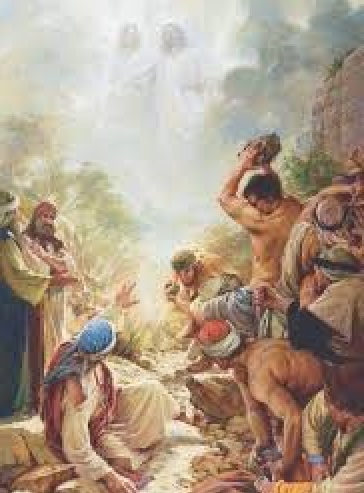
NIAGARA FALLS, Ontario, November 27, 2022 – Jesus was a brilliant teacher, the best who ever was.
Not only did he fearlessly speak God’s Truth, he delivered it in such a way that it made sense to everyone who heard him, whether they had eyes to see and ears to hear, or not.
This is no mean feat, as any teacher worth his or her salt well knows.
At the same time he was teaching, Jesus was also dodging the verbal and physical assaults of people who disagreed with him or wanted to trip him up.
And then there were his hard-core enemies who just wanted him dead.
A tough audience, Jesus had. Every day for nearly three years he dealt with these people. But he did it because it was his job, not because he enjoyed the harassment and threats. He also did it because he wanted to get his mission over and done with so he could go Home.
You can always tell the ones God sent from those he didn’t send by how they view their time on Earth. The real prophets (that is, those who speak God’s Truth) are doing everything they can to get Home as fast as they can. The false prophets, on the other hand, are doing everything they can to prolong their time here. They have lots of reasons for wanting to stay in their human bodies, but I have a sneaking suspicion the main one is they don’t want to face God. If you know and love God and he’s shown you Heaven, there’s no way you want to spend even one second longer on Earth than you have to. The instant God gives you the signal, you’re off like a shot! Earth is the place of labouring and suffering. Why, given the choice, would you want to labour and suffer in an imperfect body if you could live leisurely and pain-free in a perfect one?
Pay close attention to how preachers and teachers talk about their future. Listen for whether they want to prolong their days here or are eagerly waiting to go Home. Wanting to stay here as long as possible is a big red flag of a false prophet.
Remember how Jesus willingly chose to go to Jerusalem at the end, knowing he would be crucified? Or how Paul willingly chose to go to Rome, knowing he would be arrested and killed? No matter how hard their friends and followers pleaded with them to stay, they were steadfast in their decision. They knew that death was just a “baptism” to get past in order to get Home. Stephen also famously looked past his tormenters to see God and Jesus waiting for him. That sight was enough for him to forgive his killers. None of these men, being close enough to Heaven to taste their reward, pleaded with God for any more time on Earth.
Jesus had some tough audiences, but he didn’t shy away from them. He also didn’t let them bully him or get the last word in. He schooled them in the only way that mattered: setting the record straight on scriptural interpretation. Our time here is short. We’re now in the same situation as Jesus, Paul, and Stephen were 2000 years ago – labouring to finish the work God’s given us and strengthening ourselves for the final tests, temptations, and battles. Whether you face your last days like the false prophets, doing everything you can to prolong your stay, or like real prophets, eagerly looking forward to going Home, is a decision only you can make.
 A BORN-AGAIN BELIEVER