
Home » Posts tagged 'Born-again Christian' (Page 3)
Tag Archives: Born-again Christian
ENEMIES AND FRENEMIES

HALIFAX, Nova Scotia, April 27, 2025 – I wrote earlier about how God blesses those who look after his children. They don’t even have to be believers, those people; they just have to do right by us. The people who do God’s will without realizing they’re doing God’s will are immensely rewarded for good, both in this life and in the next. This is how important it is to do right by God’s children.
But what I’m writing about today is the other kind of people – the ones who purposely harm God’s children. If you’re born-again, you know what I’m talking about. I don’t mean the people God permits to come into our lives and hassle us to a certain degree by following us around and demanding our attention. Jesus had to deal with those people, as did the disciples, and as do we, if we’re genuinely born-again. It’s part of our job to learn how to deal with them. But they’re not what I’m writing about today.
Today I’m writing about the people who purposely target and work against us, aiming to bring us down spiritually. For their efforts, they earn an entirely different type of reward than those who either consciously or consciously help us. By “purposely target and work against us”, I mean people like Judas Iscariot or Herod or the temple elders and chief priests who conspired to kill Jesus. I mean satanists and witches. I mean the powers-that-be in secret and not-so-secret societies. That’s the level of nasty I’m talking about. If we don’t have fake friends (“frenemies”) and outright enemies like these in our lives already, we will some day; that’s a guarantee. It’s actually a badge of honor to be targeted by these people. It means our witness is perceived as a threat to Satan’s plans.
And how should we interact with our own personal Judases? We should treat them the way Jesus treated Judas Iscariot – just like everyone else. Even though they target us while feigning to be friendly, we should never target them (except with prayers, in private). We should never “out” them. We should never attack them. We should never condemn them. They’re already condemning themselves by their choices, so there’s no point in our doing it: “Vengeance is mine, saith the Lord; I will repay.”
Our own personal Judases require an especially light touch and certain kindnesses that God will direct us to extend. We should never be spiritually color-blind to our Judases by pretending they aren’t what they are, but we should also never be hostile to them. We’re being tested on how we treat them, once we know who and what they are. For explicit details on how to treat your frenemies, refer to Jesus’ treatment of Judas Iscariot. That’s our gold standard.
As for how to interact with our own personal temple elders and chief priests – well, that’s a whole different kettle of fish. Jesus never held back on them, and neither should we. But at the same time, Jesus didn’t go looking for a fight; he only ever defended his position when the fight came to him. He never went on the attack. If they accused him of something, he unraveled their lies. If they baited him, he refused to bite.
With our own personal temple elders and chief priests, as with our own personal Judases, we need to follow Jesus’ example to the letter. That means we defend our position when we’re attacked, we set the record straight when we’re falsely accused, but we never – NEVER – start the fight. Call them out for the hypocrites they are, certainly, like Jesus did, but for educational purposes only. We need to know who our enemies are. They need to be identified.
Like our Judases, our own personal temple elders and chief priests come into our lives as tests. They’re being used to measure our response to provocations, so we’d better respond appropriately. By “appropriately”, I mean the way God wants us to respond. I mean the way Jesus responded. That doesn’t necessarily mean that you have to be polite or even on the level with them. Jesus on many an occasion famously breached the line between civility and hostility with his tormentors, even getting called out for it by the assorted powers-that-be, but he didn’t dial it back. He didn’t allow them to silence him or even to lower his voice. Sometimes, when it’s called for, and with God’s approval and guidance, ya gotta let loose, ya gotta call a spade a spade, even while holding your own cards close to your chest. In this, as in everything, Jesus is our example.
The world is a spiritually hostile environment for born-again believers. We can’t sugar-coat that reality and we’re not meant to sugar-coat it. Even in the worldly church we have more enemies and frenemies than friends. Still, God protects us constantly and powerfully, which is part and parcel of being born-again. Everyone is under God’s protection to a certain extent, but we’re especially protected not only because we’re God’s children but because we need the extra protection while we’re still here on Earth. We’re constantly being targeted, and if it weren’t for God surrounding us like an impenetrable spiritual firewall, we wouldn’t survive a minute. Jesus could only survive as long as he did because God was so powerfully with him, protecting him like a 24-hour highly trained elite security detail that no-one and nothing could get past. We have the same security detail surrounding us, if we’re genuinely born again, because if we are genuinely born-again, we need the protection.
I’m sending out this guidance for born-again believers, not the general public or people in the worldly church who are not genuinely born-again. This is not and never was an evangelical outreach site. We, the prophesied remnant, are a set-aside people, a peculiar people – a spiritually targeted people – and we need to look out for each other. That’s what this blog aims to do.
We’re surrounded by people who hate us, mock us, smile to our faces and then tear us down behind our back. We are despised, misunderstood, loathed, pitied, shunned, and that by our frenemies. Our enemies just want us spiritually dead.
Don’t respond to them like the world responds. Love your enemies and frenemies even as you see them for what they are. Pray for the ones God guides you to pray for and bless the ones God guides to bless, but leave the rest alone. They’re not our business. Our whole business and full job description is “Do God’s Will”, like it was for Jesus during his ministry years.
As for those who are not born-again but still help us in ways God enables them to help us, they will be generously, generously blessed.
WHAT MAKES A SAINT A SAINT?
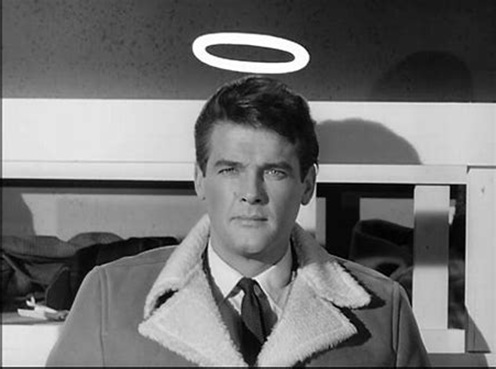
HALIFAX, Nova Scotia, April 22, 2025 – I was on the Vatican’s website recently and noticed something odd: On the Home page, about halfway down, there’s a Parade of Popes in chronological order (according to their reign as the so-called Supreme Pontiff, successor of Peter). Each “float” in the parade shows a picture of a pope from the shoulders up. Some of the pictures have halos drawn around the heads, signifying that these popes have been “sainted” by the designated papal authority.
As we know (since we know God as our Father and so we know the Truth), all genuinely born-again believers are saints. We were saints from the instant that God’s Holy Spirit entered into us, making us both holy and saints at the same time. And we’ll remain holy saints for the rest of our days on Earth, unless we do something so spiritually nasty that God has no choice but to withdraw his Spirit from us forever (may none of us ever do that spiritually nasty thing, amen).
Catholic doctrine, on the other hand, holds that you can only be sainted after you’ve been dead for a while and it’s been proven via scrupulous investigation by the relevant Catholic authorities that you’ve been a conduit for certain supernatural occurrences (e.g., healings, bi-locations, stigmata, fulfilled prophecies, etc.). The only problem with this laborious verification process for sainthood is that people who are conduits for demons can also perform healings, bilocate, manifest stigmata, and make prophetic utterances that come true. The demons, needless to say, can easily fool Catholic authorities and have been doing so for centuries.
So, what makes a saint a saint? Is it: a) post-mortem after-the-fact evidence based on the witness of a worldly authority with a dubious track record, or b) the presence of God’s Holy Spirit in a regenerated soul? Obviously, I’m going with the second option. And while I don’t go around thinking of myself as a holy saint, I am one. I’m holy and I’m a saint, not based on anything I’ve done or anything a worldly authority has imputed to me – I’m holy and a saint purely by the presence of God’s Holy Spirit with me.
All genuinely born-again believers are holy saints, and there’s not one soul in God’s Kingdom on Earth (a.k.a. the Church) that’s not been sainted. In fact, sainthood and holiness are the prerequisites for membership in God’s Church, just as they are for entrance into God’s Kingdom in Heaven.
I haven’t drawn a halo around any of my pictures yet (maybe I should? lol) or manufactured any dishes or spoons with my saintly image on them. Still, even without a visible halo or trinkets, I’m a verified saint. All genuine born-again believers are.
Just ask God.
GOD’S WILL: JUST DO IT

HALIFAX, Nova Scotia, April 20, 2025 – I wrote a few days ago about Jesus’ comment regarding God numbering all the hairs on our head. I mention this again (that God always knows precisely – to the strand – how many hairs are on our head) because we need to understand the absolute level of power and control God holds and exerts over all creation.
So, when people say “sh$t happens”, they’re wrong. When people refer to “luck”, they’re wrong. When people describe an event as “unforeseen”, “random”, “accidental”, or “serendipitous”, they’re wrong, wrong, wrong, and wrong. When people say: “He died way too young”, they’re wrong. There’s no such thing as “bad timing” or something happening when it shouldn’t, just as there’s no such thing as coincidence, not in the sense of something randomly happening at the same time as something else. As born-again believers, we need to wipe the notion of random events and occurrences from our minds (and vocabularies) because they’re false teachings that originate with the devil.
And yet, God being in control of everything doesn’t mean we don’t have free will. We do. Even people who’ve signed on with the devil through the various secret and not-so-secret societies and organizations that administer the world (with God’s permission) still have free will. They can forswear their oath to the devil if they choose, but there are severe (i.e., fatal) worldly consequences, which is why most of the “brethren” remain within those societies and organizations, even to the detriment of their soul. But the point is, even those self-condemning people have free will while they’re yet on Earth.
Again – God controls everything, which is why there’s no such thing as “luck”, either good or bad. If God wants you to win the lottery, you’ll win it. If he doesn’t want you to win it, you won’t, no matter how many times you play your “lucky numbers”. If God wants you to run into someone unexpectedly, you will; if he doesn’t want you to see that person at that particular time, you won’t see them, even if they walk right past you. God doesn’t make our choices for us, but he does try to steer them this way or that. He does try to influence our choices, even while ultimately letting us choose on our own using our own decision-making processes. That’s free will. We’re not automatons, but everything outside the realm of our free will is entirely under God’s control based on God’s perfect justice mitigated by God’s perfect mercy.
That God has complete and absolute control of our natural and artificial environments is the best situation we can hope for. Scripture tells us that God made the planets and the stars and set them on their courses, and that he also made all the non-human creatures on Earth and set them on their various courses while keeping in close contact with them. God talks to his creatures just as surely as he talks to us. Even the tiniest of insects know God on a one-to-one basis and gravitate towards him, loving him in their own way just as we love God in our own way. So if you think you that you just randomly got bitten by a mosquito, think again – God either sent that mosquito (by name!) to bite you or he permitted it to bite you for a specific reason. Nothing happens beyond our free will that isn’t either willed or permitted by God. Our free will he won’t touch, but everything else is fair game.
Knowing that God is in full control not only of our environment but of our every interaction within that environment is, for me, massive cause for celebration. There’s no-one else I’d rather have in that role than God, because whatever God wills or permits, he does it with an eye to our benefit. Everything God does, he does it with an eye to our benefit, though it might not always seem so at the time. That’s why we need to trust God and have faith in God and let his plan unfold in his time and his way, all while saying “Yes!” to whatever God asks of us.
Our time here is short, and when it ends, we’ll be glad we did those things that God asked of us, the way that Jesus did everything that was asked of him, even in the garden of Gethsemane. Jesus says that those who choose to prosper in this world rather than to follow him into the next will ultimately lose everything of real value. They might gain wealth and prestige and immunity from prosecution for a time, but their reward will be that of the rich man who suffered eternal torments in Hell while the poor man (Lazarus) was rewarded with eternal comforts in Heaven.
Our time here is very short. Whatever God asks of you, do it. Do it unhesitatingly and to the best of your ability, allowing his power to flow through you. Don’t think about it, don’t overthink it, don’t try to understand it, and don’t try to explain it or justify it to anyone.
Just, whatever your Father asks of you, do it.
THE FAITH OF THE UNFLAPPABLE

HALIFAX, Nova Scotia, April 18, 2025 – When Jesus says that God knows us so intimately, he even knows the number of hairs on our head, Jesus does in fact mean that God knows the actual number of hairs on our head. It wasn’t a figure of speech. God knows everything there is to know about us, and he knows it in real time, not as something written about in a report that he’ll skim through when he gets a minute. God knows everything about us, inside and out, here and now, and he also knows everything about us as we were and as we are yet to be.
If you genuinely grasp the magnitude of the miracle of God’s knowledge of us, then you’ll get what Jesus means when he says: “Where is your faith?” Because you’ll understand the pervasiveness of God’s presence with you, whether you’re awake or asleep, whether you’re aware of him or not. And in understanding that God is so pervasively with you and in you and all around you, you’ll have zero reason to be afraid or intimidated or even slightly worried about anything at any time. You’ll be totally unflappable, like Jesus was. In perpetually walking with God and talking with God (“pray without ceasing!”), and by consulting him on everything and following his lead, your only concern will be doing God’s will. That is your full job description – do God’s will. Everything in your life falls within it.
If God knows us so miraculously that he even knows the exact number of hairs on our head, then we can fully trust his absolute power. We can trust him in everything and all the time, regardless of what’s in front of us (especially regardless of what’s in front of us). When the boat was rocking and heaving in the storm, Jesus slept soundly. The disciples were terrified and rushed to wake Jesus, begging him to save them. But his only words upon waking and seeing their terrified faces were “Where is your faith?”, and then he calmly stilled the storm.
We’ve all had our moments of terror like the disciples, forgetting God’s miraculous reach, and in so doing revealing our lack of faith. There is not one instance in the gospels where Jesus displays so much as a minor degree of fear or intimidation. Even when his entire village is chasing him in a rage, vowing to stone him to death, Jesus calmly walks through the midst of them and escapes unscathed. How was he able to do that? The same way we’re able to do it: By consulting God in real time and doing precisely as God advises. In so doing, Jesus stayed deep within God’s miraculous reach and protection, a protection that we, as God’s children, also have but which we sometimes forget we have and so put ourselves under unnecessary stress and strain.
We have no reason to feel any stress or strain as children of God. If we’re stressed and strained, it’s an indicator that we’re not following God’s lead, which likely means that we’re not consulting God. Trials we’ll have, and tests galore (they’ll continue non-stop to our final breath, like with Jesus), but these situations are not meant to stress or strain us. They’re meant to teach us and guide us and in some cases deliver our due punishment. There’s no avoiding them and so we need to accept and endure them. But if we trust God and have the unflappable faith of Jesus (which is within our grasp as born-again believers), we’ll remain calm no matter what’s thrown at us.
Now here comes the part that’s likely going to ruffle a few feathers. Women, being more emotion-driven than men, have a more difficult time remaining calm and unflappable than men. I’m not making excuses here; just stating a fact. And because women are more emotion-driven than men, they’re more prone to experiencing stress and strain than men. They’re also more biased, more easily triggered, more easily offended, and more likely to react against the offense to their detriment.
Does this mean that women get a pass on remaining calm under pressure? Not at all. It just means that women, being emotionally hardwired differently than men, need to remember always and in every circumstance to put themselves fully into God’s hands, especially when they feel their emotions rise. If women put themselves fully into God’s hands, they won’t fall into the emotion-triggered traps set for them by the devil and permitted by God. Men, too, need to remember to put themselves fully into God’s hands, but women even more so, because of their emotions.
You can lay your feathers back down now, ladies. That’s all I’m going to say about that.
And speaking of feathers, God knows all of ours thoroughly, just like he knows all our hairs and what triggers us and what tickles us. There’s nothing about us that God doesn’t know, and yet he still loves us with a fervour and singlemindedness that we cannot fathom, being incapable of such love ourselves. And there, more than anything else, is the reason why we, too, can be unflappable like Jesus – because of God’s perfect love for us. He not only knows everything about us and is always with us, perfectly guiding and perfectly protecting us, he’s with us in love – he’s in love with us – and so wants only the best outcome for us, always and forever.
I’d be lying if I said I’ve achieved the faith and unflappableness of Jesus, but I’m aiming for it. I’m aiming for it knowing that God has made it well within my reach, as long as I do his will.
WHEN GOD BLINDS
HALIFAX, Nova Scotia, April 13, 2025 – We’ve all been blinded by God on occasion. He blinded me for the first 36 years of my life, when I suffered the same deserved blindness that Isaiah describes and Jesus quotes:
“By hearing ye shall hear, and shall not understand; and seeing ye shall see, and not perceive:
For this people’s heart is waxed gross, and their ears are dull of hearing, and their eyes they have closed; lest at any time they should see with their eyes, and hear with their ears, and should understand with their heart, and should be converted, and I should heal them.” (Matthew 13:14-15)
If you’re genuinely born-again, you were also once blind. If you’re not genuinely born-again, you’re still blind.
God famously blinded Pharoah just before the exodus from Egypt. Scripture calls it a hardening of the heart, but it’s the same as spiritual blindness. The result is the same.
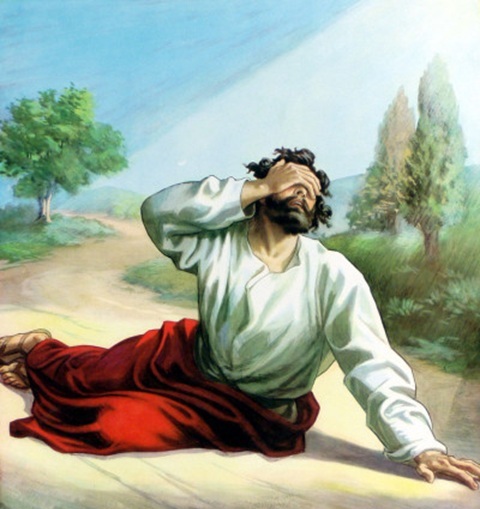
Sometimes God physically blinds people, like he blinded Paul on the road to Damascus or he blinded the men who were trying to sexually assault the angels at Lot’s house. And sometimes he unblinds people, like the ones Jesus healed.
So, God can make you spiritually or physically blind, and he can make you spiritually or physically see. Nothing is impossible for God.
Sometimes God will blind you spiritually as a form of protection, following the adage “what you don’t know, can’t hurt you”. Sometimes he’ll blind you as a form of punishment, and sometimes he’ll blind you because he needs you blind for his plans to proceed. This is the form of blindness that affected the disciples just before Jesus’ crucifixion, so they wouldn’t stop Judas Iscariot from betraying Jesus.
Even Jesus was blind to a certain measure and for a certain time. For instance, he knew what his mission was and he knew the intended outcome, but he didn’t know when it would start or end until God let him know. Jesus also said that no-one but God knows the timing of his second coming and of the end of the world. These things are hidden from us to thwart our spiritual enemies and to test us. If we knew the end was a long way off, we might slack off doing God’s will. Conversely, if we knew the end was coming soon, we might focus solely on that event and ignore everything else that God’s asking us to do.
I see this in the “Jesus is coming back soon!” cult that currently infests the worldly church. Nothing matters to these people except the presumption that they’ll soon escape all their troubles by being raptured to Heaven. Their whole witness is based on Jesus whisking them away to safety, but Jesus himself told us that he’ll come when he’s least expected. In other words, we’ll be spiritually blinded just before his second coming so that we won’t be expecting it. Because Jesus told us point-blank that he’ll come when no-one expects him to come, the “Jesus is coming back soon!” cult is clearly false.
God allows us to be blind if our life choices lead us to that state, and he also purposely blinds us whether as a form of punishment or protection or so that we won’t disrupt his plans. But he never maliciously blinds us. If he, for a time, physically or spiritually blinds us to further his agenda (like he did to the man who’d been blind from birth and who Jesus later healed in the temple to show God’s glory), he repays us multiple times over whatever we “lost” in being blinded.
Although we can see, we born-again believers still don’t have perfect spiritual vision. We have the measure of vision that God permits us, according to the measure of God’s Spirit that’s in us, which means that a certain measure of spiritual myopia is our unavoidable lot here on Earth. Paul likens it to seeing through a glass darkly, but he promises that we’ll all see clearly if and when we get to Heaven.
This is what I’m holding out for – perfection in Heaven. In the meantime, I don’t fight the blindness or curse the blindness or try to see more than God allows me to see, because I know that whatever God wills or permits, it ultimately works in my favor as long as I remain his child.
THE EVENTUALLY

HALIFAX, Nova Scotia, April 9, 2025 – We’d been emergency evacuated from our train, and I found myself on a station platform surrounded by a press of noise and people in heavy winter clothing. The stench of diesel was nauseating. This wasn’t my stop. I was frantically trying to see if I had all my belongings with me, but the light was so dim, I couldn’t tell my luggage from other people’s luggage, and there were so many passengers thronging past me that I got caught up in their motion and had no choice but to hurry along with them. If I’d stood still, I would have been trampled.
Two men closed in on me to my left. One of them gestured that he wanted to help me with my suitcase, but I could tell that he just wanted to steal it. He leered at me and muttered something in a language I didn’t understand. I held onto my suitcase all the tighter.
As we hurried along, the platform turned into a narrow, paved pathway with high thick bushes on either side. Suddenly, the twilight plunged into darkness. It wasn’t a normal nightfall of gradually dimming light, but more like an eclipse. I could see nothing but a thin beam of light illuminating the path directly in front of me. I must have fallen far behind the other passengers because I couldn’t see them anymore, as if they’d disappeared. I couldn’t even see the bushes. All I could see was a thin strip of paved path.
The next thing I knew, it was morning and I was at another station, but this one was deserted. It was an old-style wood-framed building with gingerbread trim and a long portico supported by thin wooden pillars. The tracks in front of the station were covered in flowering weeds and obviously hadn’t been used for a while. As I stood in the cool of the morning under the portico’s shade, it occurred to me that I no longer had my suitcase with me, the one the man had tried to steal. It was gone. I looked up at the pathway behind the station, but I couldn’t see the suitcase. I thought maybe I should go back and look for it, but then I thought there was no guarantee I’d find it (or had even lost it there). Someone might already have nabbed it or someone might have taken it the next station. And if I did go back looking for it, I’d never catch up with my fellow passengers who were heading (or so I suspected) to the connecting train that we were all supposed to take after being evacuated from the earlier one.
As I stood there chasing ideas back and forth in my head, the trill of a bird cut through my thoughts. It so startled me, I felt like I’d just woken up. What a beautiful day! The air was fresh the way it only is after an early morning shower and everything sparkled with the last of the raindrops. I reckoned it was around 9:30 or 10:00. I had no idea where I was, but I didn’t want to leave. I didn’t want to backtrack and frantically search for my suitcase, and I didn’t want to rush forward to try to catch the next train. I just wanted to stand there in the quiet of the coolness and the sparkling of the beauty, hearing the bird sing. This is where I needed to be.
It wasn’t until later that I realized that the road leading to the next train station also led to the view I have from my house in Heaven, and that the missing suitcase was full of moldy old Bibles I hadn’t read in years.
**********
God wants us to be patient. It’s supposed to be one of our defining features – “the patience of saints” – but not all of us have quite yet earned that stripe. We’re to be patient the way Isaiah was when he walked barefoot and naked for three years, or patient like Ezekiel when he lay for 390 days on his one side, and another 40 days on his other. We’re to be patient like John the Baptist was when for all those years he lived in the desert and ate nothing but locusts and wild honey, or like Jesus, when he was ready to start his ministry at 12 years of age but had to wait another long 18.
We’re to be patient, and it’s not something we can do on our own. It’s a supernatural ability that comes from God, the same way our sainthood does. We can’t make ourselves patient any more than we can make ourselves saints. We can’t even pray for patience. We need to open ourselves to it and wait for it, and wait for it, and wait for it, and then – eventually – like a dream – it will come.
We have to be patient because God’s timing is perfect, and you can’t rush perfection.
THE SWORD OF OUR MOUTH

HALIFAX, Nova Scotia, April 9, 2025 – Jesus never engages in hand-to-hand combat anywhere in scripture. We don’t see him pull a knife, brandish a sword, hurl stones, or even gently push anyone. Sure, he turned over a few tables in the temple to get the message across to the moneychangers (and whipped a few of them who weren’t paying close enough attention), but the only thing he really hurt was their pride. When push came to shove, it was always other people doing the pushing and shoving. It was never Jesus. He didn’t promote physical violence, and he stood by the motto that those who live by the sword, die by the sword.
Which is why his advice to his followers to arm themselves can be confusing to the casual Christian. Surely if Jesus told us to get weapons, he meant for us to use them? And surely he intended that we should defend ourselves with those weapons, or why else should we get them?
Jesus is nothing if not consistent with his message. When he said that those who live by the sword die by the sword, he wasn’t contradicting his advice for us to arm ourselves. He was explaining why and to what purpose we needed to arm ourselves: for deterrence, and only if we become outcasts from society and so have to live without the protection of law enforcement. Unarmed people are sitting ducks among the lawless, whereas people armed with even one weapon are less attractive targets (which explains why Jesus told his disciples that the one sword they had was enough). When someone openly displays a weapon, it gives the impression that he or she intends to use it. That’s the impression Jesus wants us to convey with our weapon. But at the same time, he doesn’t want us to use the weapon to physically hurt anyone.
How do we know this? Because again, Jesus was consistent with his message. He never contradicted himself. He taught us to keep the Commandments, which includes the Commandment not to kill. Any vengeance we want to exact, we’re to leave in God’s hands: “Vengeance is mine, saith the Lord, I will repay.”
So, we’re to get weapons for deterrence purposes if and when we’re banished from mainstream society and forced to live among the lawless, but we don’t have permission to use those weapons to hurt others. The only slaying we have God’s permission to do is with the sword of our mouth. That’s how Jesus fights his battles, and that’s how we’re to fight ours.
COME UP HIGHER

HALIFAX, Nova Scotia, March 29, 2025 – You don’t have to do any of it – none of it. God hasn’t ordered you to serve him. He hasn’t forced you or coerced you, any more than he forced or coerced Jesus do give himself as a sacrifice for many. God made Jesus an offer, he invited Jesus, he gave Jesus the opportunity to come up higher, just like he gives us the same opportunity. No guns are pressed against temples, no arms twisted behind backs. It’s an invitation that no-one but God can extend – the chance to come up higher for all eternity.
Jesus was insistent, particularly during his final days among us in mortal form – Jesus was insistent that we understand that the trial he agreed to endure was his choice and his choice only. God had not forced him into it. Even in the Garden of Gethsemane, when Jesus was begging his Father to find another way to get done what needed to be done, God would have let him off the hook if he’d said he wanted off, only the terms could not be changed because prophecy had to be fulfilled. The sacrifice had to proceed as laid out in scripture or God would have to extend the offer to someone else. Yet even so, God mitigated the suffering that Jesus agreed to go through, allowing him to die so soon in the proceedings, it caught the guards by surprise. God softened each blow against Jesus as much as he could (even arranging for someone to carry the cross the final distance) while still keeping up his end of the bargain.
And it was a bargain, what happened that day, a bet made by the devil that Jesus wouldn’t make it all the way through. It was the devil who set the terms that God agreed to. It wasn’t God’s will that Jesus suffer; God permitted it, all the while betting that Jesus would indeed make it all the way through, which he did, and in so doing came up as high as he or anyone possibly could.
We, too, are in the process of coming up higher. With each test and each round of suffering that we don’t solicit but agree to endure, we inch up higher on the heavenly rewards scale. We come up higher. Sometimes it’s by a little bit and sometimes it’s by leaps and bounds. But just as we can come up higher, we can also slide down lower. God does everything in his power to prevent that from happening (the alarms ring loud and clear; trust me, you cannot not hear those alarms when you’re in danger of sliding), but it’s still up to us whether we want to go up or down, to say “yay” or “nay” to God. Heavenly rewards are not a guarantee until our time here is done. It ain’t over ‘til it’s over, and until it’s over, the upward trajectory can just as easily go downward.
Being born-again doesn’t prevent that slide. We still have free will. We can still say “no” to God. We can still go our own way or even the devil’s way. We’re fine now reading this, comfortable in our seats and with a full belly, but some day when the pain gets too extreme, some of us may choose to do or say whatever it takes to make the pain stop, including denying and betraying the Very Ones we now claim we’d die for. It’s happened before to others and will happen again, maybe to us. We need to pray and pray hard that it doesn’t.
This is a depressing article for me to write, knowing that some of you reading this have already made the deal that cannot be undone and that you’re only here to find a chink in my armour that you can use against me. It’s depressing knowing that some of you who haven’t sold your souls still resolutely refuse to accept any of God’s offers and that you’re only reading this because it amuses you and you look forward to mocking me afterwards. It was depressing for Jesus to dine with the hypocrites and to argue with them and endure their insults, but he did it because it was part of his duties, depressing or not. To get through these and similarly distasteful chores, Jesus always kept his eyes on the prize of his heavenly reward, knowing that with each sling he deflected and every arrow he endured, he moved up higher and therefore closer to God.
You have no idea how close Jesus was to God on that cross. No mortal being has ever been closer to God than Jesus was during his time of suffering. That’s how he got through it – putting himself entirely into God’s hands and letting God guide him, step by step, breath by breath.
You cannot endure what you have coming unless you do the same.
GOD’S WILL AND GOD’S PERMISSION
HALIFAX, Nova Scotia, March 24, 2025 – There’s a difference between what God wills and what God permits.
This is important, so listen up here.
Jesus always did that which pleases the Father. We know that Jesus always did that which pleases the Father because he told us he did: “I always do that which pleases the Father.” When he said he always did that which pleases the Father, Jesus meant he always did God’s will. Again, this is important, so listen up here. It’s important because God’s will is not the same as what God permits, and we need to know the difference.
GOD’S WILL
God’s will is that everyone should do what pleases him. God states multiple times in scripture that if we only do that which pleases him, life will be good for us, because then he can give us all the blessings he wants to give us during our time here. Doing God’s will and doing what pleases the Father is the same thing.
And what is God’s will as it plays out in our everyday lives? Keep the Commandments. Choose the good. Follow Jesus’ example in everything you do, say, and think. Keep your eyes on the prize of your eternal reward, not the earthly ones. Suffer what you need to suffer, whether as an earned reward or a test. Suffer patiently and in silence. Give what God commands you to give, speak what God commands you to speak, be silent when God commands you to be silent. Do whatever God advises you to do one-on-one. Help those he explicitly directs you to help. And remember that not everything God tells you needs to be told to others. Most of what God told Jesus he kept to himself.
GOD’S PERMISSION
God’s permission is not God’s will: God’s permission is our free will intersecting with God’s justice. Doing what God permits is not the same as doing God’s will. Jesus didn’t say he always did that which the Father permits; he said he always did that which pleases the Father; he always did God’s will.
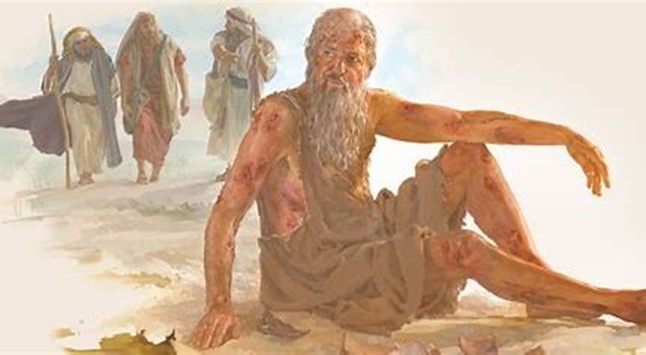
Satan does what God permits. Once upon a time (actually, once upon an eternity), Satan did God’s will, but that all ended with the rebellion in Heaven. Now Satan can only do what God permits: that’s his one and only job description. Satan and all those who follow him can only do what God permits. They cannot do more than what God permits, and you can bet the bank they won’t do less. They hate us and want only for us to suffer during our time here and then lose the reward of Heaven. No matter what they tell their human recruits when they’re enticing them into their ranks, Satan and his horde want only for us to suffer to the most extreme degree, ending with our eternal damnation. God wants the best for us and Satan wants the worst, which is why God strictly limits what Satan is permitted to do, as we see in Job.
God permits suffering as a reward for bad choices, but he also permits suffering as a test. He doesn’t will that we suffer; he permits us to suffer, but always with the proviso that our suffering, if we handle it righteously, will be to our benefit.
When God permits you to suffer, don’t try to avoid it. Don’t revel in it, either (it’s not God’s will that you revel in suffering; reveling in suffering is not a godly response: nor is boasting about it). Endure your suffering. Get through it. Come out the other side. Be silent in the face of God’s tests and negative rewards. If you have them coming, you have no right to complain; if you’re undergoing a test, you have no reason to complain, because “all things work together for good to them that love God, to them that are the called.”
God created evil and permits it to thrive only when and where it’s been earned. He doesn’t will evil; he permits it. He uses the forces of evil as a reward for bad choices and as temptations and tests, all of whose end goal is to bring us up higher. Even babies can be on the receiving end of evil, bearing in mind that souls come into the world already sin-stained. The only one who arrived here sin-free was Jesus.
TL;DR
God’s will is that we do what pleases him, like Jesus did, so that everything will be good for us. Jesus is our best and greatest example of how to do God’s will. But because not everyone chooses to do his will, God permits an earned and precise measure of evil to exist in the form of temptations, tests, and suffering, with the aim of bringing us up higher. God wills that we not only to come to knowledge of him – the ultimate good – but form a close and loving bond with him, like he has with Jesus. This can only happen if we do God’s will.
GUARANTEED BUZZKILL?

HALIFAX, Nova Scotia, March 22, 2025 – The greatest trick the devil ever pulled is not convincing the world he doesn’t exist but convincing the world that sin doesn’t exist. In convincing the world that sin doesn’t exist, the devil created a disconnect between cause and effect, action and reaction, sin and suffering, crime and punishment. In so doing, he birthed the Age of Victimhood, whose motto is Thou Shalt Do Whatever You Want and whose symbol is an accusatory finger pointing at everyone and everything except back at itself.
When you take away the fundamental truth that the pain you feel is the pain you’ve earned, you’re left only with lies, and you can’t make sense of your pain if you’re basing your explanation for it on lies. You also can’t find a solution for it if you’re blind to its cause. There is no pain and no suffering that can’t be explained by the pain you feel is the pain you’ve earned, including pain that comes from tests and temptations, because tests and temptations are themselves a form of paying forward for the promised reward of a future pain-free existence, if you deal with the tests and temptations righteously, like Job did.
The most unpopular truth that will instantaneously lose you the most friends, listeners, readers, upvotes, etc., is the pain you feel is the pain you’ve earned. It’s such a guaranteed buzzkill for anyone who’s not ready to receive it, Jesus didn’t teach it directly but instead used phrases like “the measure you mete is the measure you get in return”. Even in softened form, this truth irks and in some cases outrages people who aren’t ready receive it.
As I mentioned, the devil has been very successful in making us believe we’re all innocent victims. If we’re innocent, then there’s no sin. If there’s no sin, there’s no cause for guilt; if there’s no guilt, there’s no repentance; if there’s no repentance, there’s no turning back to God. And this ultimately is what the devil is aiming for – keeping souls alienated from God for as long as possible, until they reach the point of no more return.
I know that if you’re genuinely born-again, you eagerly embrace the truth that the pain you feel is the pain you’ve earned. You don’t shun it; you don’t question it; and it doesn’t anger you. Instead (and perhaps strangely) it comforts you because it serves as a guide, like rumble strips along the side of the highway that jolt you into straightening your course back onto the road. You accept the unpleasant jolt as earned and so you willingly – even automatically – submit to it not because you’re masochistic but because you understand that God’s rod and staff are meant to comfort you through correction. They’re meant to comfort you.
They’re there to comfort you.
God corrects us by allowing us to suffer the consequences of our actions, and he does this because he loves us and wants us to come home. We can’t go home if we let sin separate us from God. And so he lets us know that the pain we feel is the pain we’ve earned, and he asks us to accept the pain, and submit to it, and get it over with, and learn whatever lesson we need to learn so that we don’t have to go through it ever again.
And he does all this for one purpose and one purpose only: to prepare our souls for Heaven.
 A BORN-AGAIN BELIEVER