
Home » Posts tagged 'Born-again Christian' (Page 35)
Tag Archives: Born-again Christian
WHAT DOES IT MEAN TO BELIEVE?

HALIFAX, Nova Scotia, June 21, 2022 – In John 3:16, Jesus tells us that whoever believes in him has eternal life.
That’s quite a promise. I mean, the demons believe that Jesus is the Holy One of God – the Messiah – so does that mean the demons have eternal life?
Of course not. We know that the demons are on their way to the eternal lake of fire, despite their knowing beyond a doubt who Jesus is.
What, then, does it mean to believe in Jesus? It can’t simply mean to believe that he’s the son of God and the Messiah because, again, the demons believe that for sure (scripture tells us so), but they’re not saved.
So what does Jesus mean by believing in him?
Let’s think about this for a minute.
What else in life do you believe?
I believe that if I walk out in front of a bus that’s barreling towards me, I’m going to get run over by that bus and likely killed. I don’t want to be run over by a bus and killed, so I operate in my belief and I don’t walk out in front of any buses that are barreling towards me. I act on my belief.
I think Jesus meant the same thing when he said that those who believe in him have eternal life. Many people say they believe in Jesus, but they go about their everyday lives as if they don’t: They unapologetically break the Commandments, they never open a Bible to read what’s in it, and they essentially live the life of unbelievers, even while claiming that they “believe”. In other words, they purposely walk out in front of countless spiritual buses barrelling towards them and still think they’re spiritually safe. Surely the reward of Heaven can’t be won that cheaply? Surely Jesus meant that it took more than just to say (or sing) “I believe” to get into Heaven?
I am certain that Jesus did indeed mean that it took much more than that to get into Heaven. I am certain that, in God’s economy, to believe means not just to think something is so (like holding an opinion), but to live that belief. It’s not a superficial mental or emotional state that’s referenced in John 3:16; it’s a whole-body, whole-soul, whole-mind, core position that, once adopted, guides everything you do and say. Your belief is so deeply entrenched within you, so inseparable from who and what you are, that it molds your thoughts and actions, mostly without your even having to think about them in advance.
Belief is not the steam rising from a teacup full of tea, but the tea leaves themselves resting at the bottom of the teapot. There can be no tea without tea leaves, though there can be steam from any number of sources. Genuine belief is like tea leaves infusing and informing and flavoring the water in which they rest, whereas superficial belief is like steam that looks the same whether it rises from a teacup or a sewer grate.
I would wager that the belief steam rising from most Christians these days comes from a sewer grate. Belief that is stated but not lived is not what Jesus meant in John 3:16. How do we know that? Because Jesus, in other parts of the Gospel, clearly explains that it takes a certain amount of doing this-and-that and of not doing this-and-that to make it Home. Think of the parable of the sheep and goats. Think of the parable of the virgins and their lamps. Think of the rich young ruler. Think of Jesus outright stating that those who believed they were fast-tracked to Heaven based solely on their belief of being a certain tradition and heritage were destined to remain on the outside, gnashing their teeth for all eternity. Think of Jesus stating that you’ll be held to account for every word you utter. Think of Jesus stating that you have to be born-again.
John 3:16 is a great comfort to those who truly believe and whose lives – both outer and inner – reflect their belief. But for those who mistakenly assume that just saying “I believe!” is their ticket Home, a hard awakening awaits them, like it did the goats and the foolish virgins and the children of Israel who assumed Heaven was their reward simply for being children of Israel. Think of how many who were of age (20 years and up) at the start of the exodus actually made it to the Promised Land. In case you’ve forgotten, only two made it all the way.
That’s a sobering statistic if ever there was one, and that’s just for the temporal reward of the earthly Promised Land.
Why would the eternal reward of the heavenly Promised Land be any easier to obtain?
LIVING WITH NO FEAR

HALIFAX, Nova Scotia, June 20, 2022 – Throughout scripture, fear is the great divider that separates those who love God from those who don’t. The amount of fear you have (fear of death, fear of disease, fear of poverty, fear of going hungry, fear of going homeless, fear of being outcast or ridiculed or slandered, etc.) is a direct measure of your relationship with God: the more you fear, the farther away you are from God.
Fear is also the opposite of faith.
Of all God’s prophets, Jesus not only had the greatest faith and the greatest measure of God’s Spirit, but also the least amount of fear. I would even suggest (and I believe scripture backs me up) that Jesus had no fear of anyone or anything at all, other than a righteous and holy fear of God.
We born-again believers need to be like that.
I’m talking to you, preppers, and to all those who’ve stockpiled whatever you stockpile (food, money, property, ammunition, supplies, etc.) – the more you stockpile, the more you reveal your fear and the weakness of your faith.
I’m talking to you, mandate compliers, and to all those who call themselves followers of Jesus but who still cover their faces and go along to get along, afraid they won’t be able to provide for their family or get what they need or go where they want. The more you comply, the more you reveal your fear and the weakness of your faith.
I’m talking to you, lovers of the world more than lovers of God. I see you in the pews in the mainstream churches, faces covered and bowing down to the satanic rainbow, too afraid to speak up lest you be kicked out of spiritual Sodom. The more sin you tolerate in houses designated as God’s, the more you reveal your fear and the weakness of your faith.
Jesus never prepped or complied with mandates that conflicted with his beliefs or bowed down to the world’s idols. Like Jesus, you don’t need to do any of those things if you live in the Kingdom. God will provide for all your needs as you need them, as long as you keep him and his Commandments front and center in your life. You stray off the path, things will get rough for you (speaking from experience here, lol).
But if you keep God front and center, defer to him in all matters, and rely on and follow his advice rather than that of the world, he will provide. That is his promise to his children (LEVITICUS 26 and DEUTERONOMY 28), and if you’re genuinely born-again, you are his child. You are the spiritual progeny of the perfect Father who is also the greatest force in the universe. Do you think such a perfect force would abandon his children? I don’t think so. God always keeps his promises, whether to reward or to punish. Scripture provides ample evidence of that.
Fear is the hallmark of unbelievers and of those who are weak in faith. Look around you and see who is afraid and what they’re afraid of. Whatever their fears, you don’t need to share them. Jesus didn’t. He embraced the sick and diseased, embraced poverty, embraced being shunned, embraced being outcast, and in the end he even embraced being crucified. In none of those circumstances did he show any fear.
But, you say, he was Jesus. I’m just me.
Jesus came to show us how to follow him in the Way, that is, how to live without fear. The closer you follow his example, the less fear you have, the greater your faith, and the closer you grow to God.
This is not spiritual rocket science here; it’s the foundation and cornerstone of what it means to be a Christian.
Share in the world’s fears and get the world’s spiritual rewards, or cast off the world’s fears and get the rewards of the Kingdom.
The choice is yours.
The right one is obvious.
WE GET WHAT WE DESERVE

HALIFAX, Nova Scotia, June 18, 2022 – Just as I opened a new document to type this, thunder boomed from the Heavens, right on cue:
“Righteous thou art, O Lord… because thou has judged thus
For they have shed the blood of saints and prophets; and thou has given them blood to drink
Even so, Lord God Almighty, true and righteous are thy judgements.”
This quote is from the book of Revelation, in the chapter where the angels are pouring out the vials and stating that people get what they deserve. Their statement is made dispassionately and somewhat coldly, the same way that the narrator prophet in Ezekiel 9 states dispassionately and somewhat coldly that people get what they deserve even as he watches the slaughtering of untold numbers, including children.
God’s judgments are perfect.
When I was a newborn-again, I remember pausing at that part of Revelation where the angels pour out the vials and wondering how they could be so emotionally detached from the pain and suffering they were causing. I wonder no more. After 23 years as a believer, I’m fully on board with whatever God doles out for people to suffer, as they have it coming. God doesn’t inflict anything that people haven’t earned, and even then he softens the blow through his renowned mercy.
There’s only been one person in all of history who suffered what he didn’t have coming, and that was Jesus. EVERYONE ELSE SUFFERS WHAT THEY’VE EARNED. You cannot be a follower of Jesus and not accept and believe this 100%.
*****
I went to a Bible study last week. It was more a sermon than a study, as no-one but the pastor had any input into the interpretation of the chapter being studied, which was Leviticus 26.
Leviticus 26 is basically the same as Deuteronomy 28, which is Moses’ detailed laundry list of the blessings that come with obeying the Commandments and doing the right thing in God’s eyes, and the curses that come with disobeying the Commandments and doing the wrong thing in God’s eyes. Every Christian not only needs to be intimately familiar with this laundry list, but to refer to it on a regular basis, as Jesus tells us the Commandments still apply to us. Unfortunately, the pastor only interpreted Leviticus 26 as applying to the children of Israel 2000 or 3000 years ago, not to current-day Christendom. In so doing, he missed the whole point of the chapter, which was to deliver a very real and very present warning to God’s people, so that they would make their everyday life choices accordingly.
I despise cowardly pastors. I despise them the way Jesus despised them. It took every ounce of my self-restraint not to ask the pastor how this chapter could be applied to Christians and Christendom today. But most pastors churned out by Bible colleges won’t touch that application of Leviticus 26 or Deuteronomy 28 with a 10-foot pole, as it would upend their doctrine about “just believing” and “having faith” as being the only way to Heaven. If you accept that all you need to do is “believe in Jesus” and you’re on your way to paradise, then choosing to do what is right in God’s eyes is no longer a necessity, which then negates the teachings of Leviticus 26 and Deuteronomy 28. This is precisely what mainstream Christianity now does – negate the teachings of scripture.
How you can call yourself a Christian pastor and then stop short of applying scripture to life today? This is entirely the opposite of how Jesus taught. Jesus always applied scripture to the here and now, as scripture is intended to be applied to the here and now. That’s why God inspired his prophets to write it and his preachers to teach it.
Note that I said “his preachers”, meaning those who are genuinely sent from God. There aren’t many of those around today, any more than there were a lot at any time in history. The true prophets and preachers have always been few and far between, but God provides at least one for his people, and makes sure that they can be heard by those who want to hear.
*****
People get back what they put out, mitigated by God’s mercy. Once the Age of Mercy is over for a given people at a given time and their Age of Judgement begins, there will be no more mitigation (softening) of the earned blows – people will get the full measure of what they’ve earned. This is the scenario that plays out in Revelation 16 and Ezekiel 9: Judgement without mercy. It also plays out in the passages on the flood and in the passages on the destruction of Sodom and Gomorrah. I used to balk at the dispassionate coldness of those scriptural passages, but no more. People get what they deserve. Only Jesus suffered what he didn’t deserve, and he did so willingly and fully informed in advance.
God’s justice is perfect. So the next time you hear someone say “He didn’t deserve that” or “They didn’t deserve that” or “You didn’t deserve that”, correct the speaker. God’s justice is perfect.
We only get back what we put out.
We only suffer what we deserve, with Jesus the sole exception.
EVERYDAY RADICALISM

HALIFAX, Nova Scotia, June 10, 2022 – I’ve been accused on occasion of being a radical Christian.
What my accusers mean is that I am too extreme in the expression and witness of my faith.
But what my accusers are implying is that following Jesus’ example of how to live life is a radical application of Christianity. In which case Jesus himself must have been a radical, by this definition.
But we know that Jesus is just Jesus. There was nothing radical about him during his ministry years, unless you consider his refusal to condone lies and hypocrisy by those who claimed to know God to be radical.
It’s not radical to believe in Truth and to live by that belief.
It’s not radical to keep the realm of Satan (the world) at arm’s length.
It’s not radical to focus your attention on immortal things rather than mortal ones.
It’s not radical to take God at his word to to believe that he means what he says.
Those things are at the core of what it means to be a Christian. You can’t deny Truth, embrace the world, focus on mortal things, doubt God’s Word and still be a Christian, no matter how many crosses you hang off yourself.
The call to radicalism in faith is actually just a call to follow Jesus, to follow the example he set for us during his ministry years. There is nothing radical in this alleged radicalism, but if the world and nominal Christians want to see it as radical, we’ll roll with that. I could care less what people think of me. I care what God thinks of me; I don’t care what people think of me.
*****
Every so often there’s a push for a revival among this or that Christian denomination or a call to “ministry work” in foreign lands. This is a curious phenomenon. However well-intentioned the push is initially, it invariably devolves into little more than a point of pride and a numbers game that eventually devolves even further into a cash grab. The churches then pride themselves on how much more money they’ve been raking in since their alleged revival or expanded ministry or how many more butts-on-seats they have, as if these things are clear evidence of the Spirit moving in their congregation. Eventually, the so-called revival peters out and the denomination returns to its previous state of spiritual life-support.
This is not how Jesus’ ministry proceeded. Whomever Jesus called, he called in Spirit and in Truth, and those who responded were aware they were embarking on a life-long commitment. There is no need for a revival where there is a life-long commitment. There is no reason for pride. This is not a numbers game or a source of cash flow. This is walking the Way of God, carrying our cross, as Jesus walked the Way during his earthly years, carrying his cross. There is nothing radical about followers of Jesus actually following Jesus’ example of how to live. How else can you be a follower of Jesus other than to do as he did, which is what he taught us to do?
It is not radical to follow the path that Jesus forged for us; it’s imperative for us to follow that path, as there’s no other Way to get Home. Following Jesus doesn’t make us radicals; it makes us followers of Jesus.
But let the world and the worldly Christians call us what they will. Let them choose whatever path they want to choose. Their choice is between them and God. As for us, we preach far more by our example than by words that will only be combatted, however well-intentioned we mean them. Our example (that is, our witness) is unique to each of us, as God guides us.
*****
When I was first born-again, I used to attend mass at Catholic churches twice a day. Whenever I entered a church building, I would remove my shoes, as I believed the ground I stood on was holy ground, being God’s House. One day, as I was making my way to a pew, a man called me over and asked me why I take off my shoes. I told him I took them off because I was on holy ground. He said I shouldn’t take off my shoes, because it was an odd thing to do, and we shouldn’t do odd things as a witness, as it would turn people off and drive them away. At the time, I had no response to his concerns (I’d only been born-again for a couple of months and didn’t want to disrespect an elder), but I continued to take off my shoes for three and a half more years until God finally sprang me from Catholicism. My last act, in leaving the Catholic church, was to put my shoes on while I was still in the pew and walk the length of the church with them on, and then out the door forever.
I can only imagine what that man who was offended by me taking off my shoes would have said if he’d seen Isaiah walking around naked for three years.
*****
My witness and my words are not radical in God’s eyes. That’s all that matters to me.
That’s all that should matter to any of us.
“FEED MY SHEEP”

HALIFAX, Nova Scotia, June 8, 2022 – The question should never be how to reach people with the Gospel, but how to feed them when they come to you hungry for Truth.
It’s not our job – JESUS NEVER DID IT – to shoot wide with the Gospel message, hoping that something will hit and stick. That is not the intention behind Jesus’ directive to go into all the world and preach the Good News. During his ministry years, Jesus himself only taught those who came to him, who clearly indicated they wanted to learn, just as he only healed those who came to him for healing. He didn’t force himself or the Gospel on anyone; he made himself available by traveling around. That is what he meant by going into the world and preaching the Good News. He never intended for the Gospel to be force-fed or to be served as a lukewarm leftover to people who either aren’t hungry or don’t really care for what’s on the menu.
Showing up regular as clockwork every Sunday and sitting your butt in a pew for an hour doesn’t indicate that you’re hungry for Truth; it just means that you’re good at keeping to a schedule. Those who sit week after week and year after year in churches that preach another gospel (which is nearly all Christian churches these days) are not hungry or thirsty for Truth. As cruel as it may sound, these people need to be cut loose. They are the blind being led by the blind, and they will gladly fall into the ditch. No-one who willingly and habitually sits in a pew in what passes for a Christian church these days has any love for Truth in them.
After my impromptu fact-finding mission last Sunday, I spent some time this past week watching videos online of various Sunday services of churches in my area, hoping to find at least one pastor who spoke something even remotely resembling the Gospel as preached by Jesus. I’m sad to report that I found nothing. What I did find were churches celebrating “Pride” month, one of which was led by a blind pastor who openly identifies as gay. You can’t make this stuff up. I had hoped for better from my hometown, but why should Halifax be any different from any other fallen city? Nazareth wasn’t any different from any other place, even though it was Jesus’ hometown. The Nazarenes were no more hungry for Truth than were the people from Jerusalem. Had the Nazarenes been hungry for Truth, they wouldn’t have run Jesus out of town.
We need to focus on feeding those who are genuinely hungry for Truth. Ironically, many of these people don’t identify as Christians and in most cases despise Christianity. Don’t let that fool you. They’re not wrong to reject the modern-day version of Christianity. I rejected it as an atheist and I still reject it as a Spirit-filled born-again follower of Jesus.
*****
When those who are hungry for Truth come to you, be straight with them. Don’t sugar-coat God’s Word so as not to offend them. Sometimes you’ll have to deliver the message obliquely, like the early Christians tracing a fish in the dirt, but make sure when you do that, your meaning is understood. Jesus spoke in parables partly because people who were not in the Kingdom wouldn’t understand plain speaking, and partly because he needed to sidestep the booby traps that were always being set for him.
Never shy away from calling sin sin, even if you have to relabel it a shovel to get past censors. Never shy away from calling sin sin.
Jesus lost many of his followers by refusing to sugar-coat his message. He anticipated that would happen, so he wasn’t surprised when it did. He was almost relieved to lose the dead wood. Jesus knew from the start who would stay and who would go, just as he knew who would betray him.
We need to focus on those whose love for Truth is sincere and let the rest go. I am approached every so often by someone who is trying to tempt me into saying something that presumably I’ll later regret. They ask leading questions, like the scribes and Pharisees asked Jesus, trying to trip me up. Watch out for those people. They’ll play on your sympathies, as they always come with a long convoluted sob story to provoke your compassion and desire to help, while flattering you to appeal to your pride. Watch out for them. There is no love for Truth in them. They don’t want your help; they only want to bring you down.
*****
In one of his final teachings, Jesus tells his disciples to feed his sheep. He doesn’t say to go out and look for sheep, he says to feed them. He means they’ll come to you hungry; their hunger will drive them to look for you. Let them find you, and when they do, feed them the way Jesus fed his sheep: in Spirit and in Truth. Don’t feed them another gospel of sugar-coated evil, like mainstream Christianity does, to tickle their ears and give them a rush and lead them astray and get money out of them. Feed them in Spirit and in Truth. The ones who are genuinely Jesus’ sheep will stay and feed and eventually learn to feed others.
The ones who are not Jesus’ sheep will leave when the going gets tough.
Let them go. Don’t run after them. Jesus calls them the blind leading the blind, and he lets them be. He knows that nothing he says will make any difference to them, because there is no real love for Truth in them. They don’t hear his voice. They are deaf and they are blind and if they hunger for anything, it’s sugar-coated evil.
Focus on feeding those whose love for Truth is real.
WHEN GOD KISSES YOUR BOO-BOO

HALIFAX, Nova Scotia, June 4, 2022 – I can only imagine what Jesus was mumbling under his breath about the Nazarenes when they ran him out of town for saying he was the Messiah.
But Jesus being Jesus, he likely would have tagged on a prayer and a blessing as he shrugged off the hate in his hometown the same way he shrugged it off everywhere else. Being hated and outcast goes with the territory of being godly in an ungodly world. He knew that when he took on the job of being the Messiah. We need to know it, too.
Still, it doesn’t mean you can’t get a good grumble in every now and then. God understands. Certainly Jesus does, seeing that he spent 33 years dealing one-on-one with the ungodly. Though to be fair, Earth is the realm of the ungodly. Time and space are theirs. God made temporal creation as a resource for everyone, but he put it under the management of a tightly controlled Satan.
The Kingdom is ours, though. All ours. The ungodly can’t get in there, unless they repent and stay the course. Some beings, like Satan, can never get into the Kingdom.
So Jesus would have retreated into the presence of God when he was being run out of his hometown, the same way we retreat into the presence of God when the ungodly world gets to be too much for us. That’s why God made us the Kingdom, so we can take shelter in him. He knew how progressively crappy things were going to get on Earth in every regard, so he created our own personal spiritual safe space of the Kingdom, which we can access only as born-again believers and only by God’s Spirit.
*****
I love God’s creation, but I hate the world. I wish I could have seen Earth before people did a number on it. I wish I could have smelled the air and drunk the water before the manmade pollution ruined them, but I guess I’ll have to wait until I get to Heaven to do those things. I can wait. Heaven is worth the wait.
Heaven is an infinite Earth, perfected, just as our heavenly bodies will be infinite and perfected. Some people lie about Heaven and say it’s a spiritual realm only and that we’ll have a spiritual body only, but that lie comes from the pit of Hell. The fallen beings only have spiritual bodies. That’s where the lie comes from – their own experience of having no bodies for all eternity.
Those who make it to Heaven will have beautiful and glorious bodies, even more beautiful and glorious than at the beginning, before the fall. In Heaven, everyone is not only at least as beautiful as Satan before his fall, they’re MORE beautiful. And Jesus is second in beauty only to God, who is the most beautiful of all.
We’ll see for ourselves just how impossibly beautiful God is, if and when we make it home.
*****
These are the things I think about and the daydreams I dream when the world gets to be too much, when the sugar-coated evil gets to be too galling. I think about Heaven and daydream about God. God loves it when we daydream about him; he fills in the blanks with little details that corroborate with lines and words in scripture that we didn’t understand before. He whispers secrets in our inner ear and says things to make us laugh. He wipes all our tears away. There’s nothing the world can throw at God’s children that he can’t make right for them or help them through, if they rely on him, if they turn to him only. Jesus is living proof of that. So is Paul. So are all the disciples, except for the one who betrayed Jesus. And so are we, God’s born-again children and Jesus’ followers. There’s nothing the world can throw at us that God can’t catch and throw back.
*****
No matter how foul a mood the world puts me in, God turns it around on a dime and has me giggling and singing before I know it. His promise to his children is that he will wipe all their tears away, and so he does, with his beautiful voice and his beautiful hands and his beautiful everything. He wipes all the tears away, and before we know it, we’re singing his praises in words and music that he gives to us only, as a gift.
Let the ungodly run you out of your own personal Nazareth. Let them run you out, and then let God turn your grumbles into his own special brand of joy that he serves up customized just for you. Let them run you out of town even as you pray for them. Let them crucify you even, as you pray for them. How can you not pray and feel sorry for such a people who don’t know God and don’t know Heaven?
How can you not feel sorry for them?
HOW TO INHERIT ETERNAL LIFE
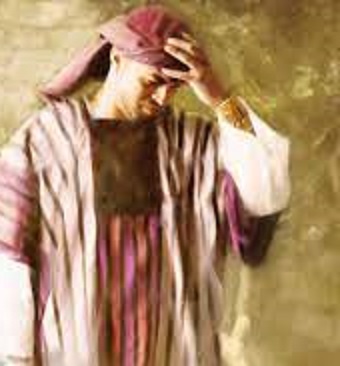
HALIFAX, Nova Scotia, June 4, 2022 – When Jesus told the rich young ruler to sell what he has, give to the poor and follow him, he was using him as an example of how attachment to worldly possessions can get in the way of going to Heaven. The few times I’ve heard this scriptural passage preached in a mainstream church, it’s always along the lines of “that message doesn’t refer to us; that was just for the young man because he was rich and cared too much for his wealth. We don’t have to give up anything to follow Jesus. We’re not called to do that.” The preachers don’t use those exact words, but the spirit is the same: They imply that Jesus preached two messages on the same topic – one for the rich young ruler, and one for us.
Only Jesus didn’t do that. When he told the rich young ruler to give everything up and follow him, it was the same message he had given earlier to Peter and to James and to John and to Andrew and to all his disciples, without exception, and they all did what he asked them to do. To claim that Jesus gave one message to one person and another message to everyone else is to preach another gospel.
This is one of those hard Truths that I wrote about a few weeks ago. I would guess that nearly every Christian knows this scripture, but very few actually do what Jesus advises. Jesus did it himself when he left Nazareth, got baptized by John, and then went into the wilderness for 40 days and nights. There’s no indication that Jesus ever did his carpentry work again or that he returned to Nazareth for more than a brief visit. We can only assume that Jesus sold what he had, gave the proceeds to the poor, and hit the road as an itinerant preacher with little more by way of belongings than the clothes on his back.
He was no hypocrite in that regard (Jesus was no hypocrite in any regard); he practiced what he preached. When he told his disciples to leave everything behind, he’d already done it. He not only knew what was required to do it, he also he knew the rewards of doing it. He knew that anything that was not directly contributing to his ministry work was detracting from it, so it had to go, whether possessions or jobs or people.
*****
Have you done it yet? Have you sold what you have and given the proceeds to the poor in order to genuinely free yourself up to follow Jesus? Or do you still have a house and land and possessions and a job and entanglements in a relationship with someone who is not born-again? Do you have a bank account with more money than you need for the next few days or weeks? Do you have investments? Do you have a pension plan? Does even the thought of giving any of these things up – let alone all of them – fill you with fear and dread?
Are you a rich young ruler in spirit?
*****
If you haven’t yet done what Jesus advised the rich young ruler to do, I’m setting a challenge here. The challenge is to read the scriptural passage about the rich young ruler and think about it. Pray about it. Talk to God and Jesus about it. But I’m setting this as a challenge for all those who haven’t yet done what Jesus advised the rich young ruler to do. Born-again Christians claim they want to radically follow Jesus, but at the same time, they cling to their lives. In particular, they cling to the material aspects of their lives. They cling to their job and everything that goes with it. And they cling to their blood relatives and to lovers who do not share their love for God and Jesus.
In his ministry, Jesus’ first order of business was to choose his disciples and to ask them to walk away from their life and everything that had previously defined them. There is no indication in scripture that Jesus chose a disciple who refused to give up his family or his possessions or his job. They all did precisely what Jesus asked of them, and they did it without hesitation. The same process took place after Jesus’ death and resurrection – his disciples directed the members of the early church to sell their possessions and give the proceeds to the church leaders to disperse according to need. Those who didn’t do as they were instructed suffered accordingly.
This is a hard Truth, to apply this scripture to ourselves today, but it is a Truth nevertheless. Jesus clearly meant it to apply to all his followers, as he later went on to assure Peter that everyone who gave up their livelihoods and possessions to follow him would receive a better livelihood and better possessions in this world, and eternal life in the world to come. Jesus did not make a distinction between the rich young ruler and his disciples, so neither should we make a distinction between the rich young ruler and us. The teaching applies equally to everyone, whether rich young rulers or not, if eternal life is the goal.
It is worth noting that, when the young man asked Jesus what he should do to gain eternal life, Jesus told him he had to keep the Commandments and treat others as he wanted to be treated, in addition to selling his possessions and giving the proceeds to the poor. This is worth noting because Jesus didn’t simply say “You just have to believe in me” or “You just have to have faith in God”. No, he very clearly stated that the young man had to do specific things, namely to keep the Commandments and to treat others as he wanted to be treated. The icing on the cake (or what Jesus called “being perfect”) was to sell his possessions, give the proceeds to the poor, and follow him.
Like the rich young ruler, most Christians do their best to keep the Commandments and treat others well, but that isn’t enough. Those things are important, but they’re not enough. If they were enough, Jesus would not have had to leave Nazareth and all it represented and the disciples would not have had to leave their lives. If keeping the Commandments and treating others well were all it took to inherit eternal life, then Jesus’ ministry was in vain and his sacrifice on the cross superfluous. But we know that Jesus’ ministry was not in vain and his sacrifice was not superfluous because everything Jesus did and said during his ministry years was directed by God, and God would not have sent Jesus on a wild goose chase. If Jesus, by God’s direction, instructed people to give up their possessions and worldly relationships to follow him, then that’s what people need to do. And not just some people – everyone who wants to inherit eternal life.
*****
I pray that you take this challenge to heart. Jesus’ teachings don’t change because fashions change or seasons change. The teachings remain the same and are equally applicable to Jesus’ followers today as they were 2000 years ago. The scriptural passage that I’m challenging you to read and pray over is the one about the rich young ruler. It appears in three of the four Gospels:
MATTHEW 19:16-30
MARK 10:17-31
LUKE 18:18-30
If inheriting eternal life is your goal and you’re still clinging to people, places and things that are getting between you and Jesus, then you know what you need to do.
And the sooner you do it, the better.
WASHING YOUR FEET

HALIFAX, Nova Scotia, June 4, 2022 – Jesus often surprised (and confused) his disciples with the things he said and did, and one of the most surprising things he ever did was to wash their feet. In fact, the last thing the disciples expected Jesus to be doing at the Passover meal was to take off his robe, wrap a towel around his waist, and get down and dirty with that part of their anatomy that was by far the filthiest. But Jesus washed their feet with the same total absence of squeamishness that he displayed when he embraced lepers – nothing deterred him from his mission to do what his Father laid out for him to do.
By way of explanation as to why he was washing their feet, Jesus told the disciples that they wouldn’t understand at that time, but they would understand later. Further, he told them that if they didn’t permit him to wash their feet, they’d have no part in him. He also mentioned that just as he washed their feet, they would also have to wash the feet of others.
From that explanation, it’s clear that the foot washing done by Jesus had a meaning far beyond simply removing the dust and grime and whatever else had accumulated between the disciples’ toes. Most theologians and other commentators focus on the humility aspect of the foot washing, as such washing was normally done by servants or slaves. However, I’m not convinced that humility is the main reason why Jesus almost ritualistically washed the disciples’ feet. I’m not even convinced that humility is any part of the reason at all for the foot washing. Jesus was adamant that the disciples wouldn’t understand at that time why he was doing what he was doing, but he was certain they’d understand at some point in the future. He was also just as insistent that they would someday wash others’ feet as he was washing theirs.
I believe the ritualistic way that Jesus approached the foot washing is the key to why he did it. Remember how important it was for Jesus that John baptize him in the River Jordan, and remember how surprised John was to be doing the baptizing. John told Jesus that he should be getting baptized by him, but Jesus responded that the baptism needed to happen in that way (that is, John baptizing Jesus) in order to fulfill prophecy. In other words, the ritual had to be carried out in accordance with scripture.
John’s form of baptism was full body dunking or a dunking of the head or water sprinkled on the head. However performed, the baptism was focused on getting the head wet. It was also a way to publicly declare the repentance of the baptized person. This form of baptism is still used in Christian circles today.
I propose that what Jesus did in washing the feet of his disciples was a baptism, and that Jesus’ baptism – the ritualistic washing of feet – was a sequel to John’s baptism. Where John’s baptism signaled the start of the penitent’s journey along God’s Way, the foot-washing baptism marked the end of the initiate phase and the beginning of the master phase. Remember that Jesus at the Passover supper told his disciples that where once he was their Lord and master, he was now their friend, meaning they were spiritual equals and peers.
John’s baptism symbolized spiritual cleansing through repentance, but Jesus told the disciples when he was washing their feet that they were already clean. In other words, they didn’t need to repent and wash their head again, like in John’s baptism. Jesus wasn’t washing their feet to spiritually or physically clean them; he was washing them as an indicator that the disciples had reached the next stage in their spiritual evolution. That next stage was to take over from where Jesus left off – that is, to take over the role of master by teaching and preaching the Kingdom in the power of God’s Holy Spirit.
Their journey as initiates began with the ritualistic cleansing of their head in John’s baptism and ended with the ritualistic cleansing of their feet in Jesus’ baptism. All they had to do from that point onward was to wait in Jerusalem, as per Jesus’ instructions after his resurrection, until they’d received the baptism from on high (that is, the baptism of the Holy Spirit). They would then be able to preach and teach God’s Word as Jesus did. They would become teachers and masters in God’s Kingdom.
I do not see humility in Jesus’ washing of the disciples’ feet – I see a ritual that Jesus was carefully demonstrating, the same way as he carefully demonstrated drinking wine as a symbol of his blood and eating bread as a symbol of his body as a new way to celebrate the Passover in remembrance of him. Keep in mind that everything Jesus did at that Passover supper was incredibly important. Nothing was left to chance in its preparation, and every word that Jesus spoke and every gesture that he made was determined in advance. Jesus (and God) wanted everything that took place that night to be branded in the hearts and minds of those present so that they would clearly recall and record it later. Because what Jesus was actually doing at that Passover celebration was launching a new religion – a new Testament to replace the old one – and that new religion would have as its high priests Spirit-filled born-again believers who had ascended to the same teaching position as Jesus during his ministry years.
Have your feet been washed yet?
If so, are you ready to wash the feet of others?
GOOD FIRE

HALIFAX, Nova Scotia, June 4, 2022 – Someone asked me the other day why preachers don’t preach on sin anymore.
I guess the short answer is because they don’t want to lose their customers.
Most Christians are easily offended these days. Sure, they understand, for instance, that adultery is a sin. But if you point out that, according to Jesus, the sole grounds for divorce is fornication, making most second and third (and fourth, etc.) marriages illegitimate and therefore adulterous, they get offended. They would rather remain in their adulterous union (that is, live in sin) than follow Jesus’ teaching.
I hope that the bar is higher for born-again believers. I hope that when someone points out that we’re committing a sin according to Jesus’ teaching, we rush to repent. I hope we don’t get offended or make excuses. I hope we don’t look for sin loopholes or alternate interpretations, or just look the other way. Jesus was always crystal clear in his teachings. You either accept what he taught and apply it to your life, or you don’t. The choice is always yours, but obviously to accept what Jesus taught and apply it to your life is the right way forward. There’s no wriggle-room for being offended when it comes to Jesus’ teachings, not for born-again believers. We’re supposed to be feeding the sheep. We’re supposed to be setting the example.
*****
Last Sunday, I went to a church service for the first time in 12 years. I only went because God suggested I go. Otherwise, I would not have gone. I wasn’t sure initially what God wanted me to see or hear, but it was a dismal display that I beheld. If I were not a born-again believer, if I were just someone who’d wandered in off the street, wondering what Christianity was all about, I would have thought I was at a funeral and wandered back out.
The building was dank and smelled of mould, the way old buildings devoid of sunlight and fresh air tend to smell. It was also dark as twilight. Not surprisingly, there weren’t many people there (maybe a couple dozen). There were no Bibles or hymnals in the pews; I figured people must have been stealing them and the church decided not to put them out anymore, but that left the pews empty of scripture. I guess I should have brought my own Bible with me.
Another church staple strangely absent was singing. At the altar, a small orchestra played tunes that you could hum along to in your head, if you were so inclined, but you could not sing along, as there were no words. The songs were wordless, played by a masked violinist, a masked cellist, and a masked clarinetist. In fact, everyone there was masked except me. I guess the purpose of having the instrumentalists playing wordless songs was to prevent people from singing, which, I guess, is still verboten in some churches, lest the pestilence spread via joyful expression.
I confess that I did not stay beyond 20 minutes. I could not stay. Even those 20 minutes were painful. I kept thinking about Ezekiel’s vision of spiritual adultery (Ezekiel 8) and God’s call to Haggai to rebuild the temple. And I thought about an odd comment I’d heard years ago, that what the thousands of decrepit and run-down Victorian wooden row houses in Halifax needed was a good fire. The commenter was not wrong. Some degrees of decay, whether physical or spiritual, cannot be redeemed; in such cases, destruction is a mercy.
*****
The pastor spoke a form of English that I did not understand. I taught English as a second language for years, so I’m well-versed at deciphering mangled English, but the English spoken by that pastor was beyond even my professional abilities to comprehend. To make matters worse, he mumbled and he spent at least ten minutes offering some kind of a tribute to the tribes that hundreds of years ago used to roam in the same general vicinity as where the church building now stood. The tribute included words in the tribal language, which the pastor constantly stumbled over. To be honest, it was difficult for me to tell when he was mumbling English and when he was mumbling the tribal language; it was all equally incomprehensible.
After 20 minutes of straining to decipher the gibberish, I’d had enough.
As I thankfully slipped out of the cold dank building and onto the warm sunny sidewalk, I asked God why he wanted me to go to the service. He said simply so that I could see it. I needed to see it for myself.
*****
I wasn’t going to write about this, but God suggested that I should. I don’t know what your experience is with church services these days, whether my experience was an outlier or par for the course. I hope God doesn’t send me to another service any time soon, but I’ll go if he sends me.
I think pastors don’t preach about sin anymore not only because people don’t want to hear it, but the pastors are incapable of doing it. When you stand before a congregation as a representative of Jesus, preaching God’s Word, you had better be doing so in the power of God’s Spirit; otherwise, get off the stage.
I said to God, just before I left the building, “There’s no God here”. The words spilled out of me as a visceral response to what I’d just seen. But God said to me: “Yes there is; you’re here.” He’d meant that I’d brought his Spirit with me into the building.
Then I took his Spirit back out.
******
God, among other things, is a purifying fire. There is nothing that will save what has become of the mainstream worldly church. It would be a mercy for it to be destroyed by a good fire. What I witnessed on Sunday is not what Jesus came to establish; it is not what he built. The spiritual temple of his body is alive and well and living through genuine born-again believers. This I know for a fact, because I am such a one. I am a witness to the Spirit in me, which is the same Spirit that was in Jesus.
As long as there is even one genuine born-again believer on Earth, the church that Jesus built will live on. When the last believer leaves, hell will reign.
Hell is now waiting in the wings: It wears a mask and plays Wordless tunes, while mumbling another gospel no-one understands.
THE SEASON OF THE SHOVEL

HALIFAX, Nova Scotia, June 1, 2022 – Sometimes you have to call a spade a spade, and sometimes ya gotta call it a shovel, lest ye be banned from the Internet.
Sin, though, is sin, and should always be called sin. You should never call sin anything other than what it is.
Sin is sin.
Whether a fashionable term or not, sin remains the sole state that separates us from God. Nothing that separates us from God is good, no matter how sparkly the packaging or slick the label, no matter how cleverly terms and symbols are co-opted and misapplied. Sin remains sin, and sin separates us from God.
Nothing that separates us from God can be good.
*****
As we enter the season of the shovel, we are faced with the dilemma of how to deal with in-your-face shoveldom 24/7, even in churches. There is nothing to celebrate about shoveldom; it is the same sin that has gotten whole regions destroyed in the past and it will get whole regions destroyed again. As a born-again believer, I feel sorry for those who identify as shovels. Their shoveldom is a manifestation of sin on their soul. Those with a certain type of sin manifest that sin as shoveldom. Some choose to be shovels; others are tempted and fall for shoveldom, seeing the temptation as “who they are” instead of the temptation that it is.
No-one needs to be a shovel. Even those who claim to be born that way (in sin) don’t have to stay that way (in sin). While there is yet time, sin can be overcome.
I have a passing acquaintance with shoveldom, because when I was an atheist, I identified for a time as a half-shovel. In that state, I spent a lot of time with other half- or full-shovels (or variations on those themes), and I know this: They are messed up. They are not happy souls. They constantly act out their self-hatred and fear, as I did as an atheist half-shovel. And they are addicted to sex far beyond an urge that can be explained as a natural biological function (desire). Their desire is demonically inspired. It does not come from God.
I am not trying to belittle the shovel experience. A life lived in sin and based on sin is no life; there can be no real peace and no real joy. There can be short-lived euphoria, but no real peace and no real joy.
Nor can there be real love, not in that sinful state. There can be lust; there can be obsession; there can be possessiveness; there can be infatuation; there can even be companionship and a sense of obligation and responsibility; and there can be ungodly desire that rips you apart from the inside, but there cannot be love. Love is God and God is love, and where God and his Word are not welcome, love cannot be.
*****
The purpose of these words is to say that no matter how it’s relabeled or rebranded, sin remains sin. Sin separates us from God and therefore has no grounds to be celebrated or normalized. It is not normal for a soul to be separated from God. We were not made to be that way. That’s why Jesus came to pay the sin debt owed by Adam – to spring us from the abnormal state of sin.
That debt was paid for shovels, too, if they want to avail themselves of it. They don’t have to be shovels if they don’t want to be. Repentance is free to all, for a time, and God’s mercy extends to shovels and beyond, for a time. Shoveldom is a sin that is a manifestation of a deeper sin on a soul, but neither sin is beyond redemption.
Again – shoveldom is a sin that manifests as an indicator of other underlying sins on a soul: Deal with the underlying sins, and the other will disappear.
It did for me.
The cure for every spiritual ill isn’t to relabel or rebrand or normalize sin; the cure is always and only spiritual rebirth that results in reunification with God.
*****
As we enter yet another season of the shovel, let us not condemn shovels, but instead pray that those who identify as such find their way to God through genuine repentance and forgiveness, while there is still time.
Amen.

 A BORN-AGAIN BELIEVER