
Home » Posts tagged 'Born-again Christian' (Page 6)
Tag Archives: Born-again Christian
THE ONLY WAY FORWARD

HALIFAX, Nova Scotia, November 2, 2024 – Becoming more like Jesus doesn’t mean we have to grow our hair long and wear sandals. It means we make the same choices he did and embrace the same values he did, not because we’re trying to mimic him for the sake of mimicking him, but because he did things right.
If you’re genuinely born-again, you want to do things right. The desire to do things right is your default position in everything you do. You don’t consciously make it your default position; it becomes your default position at rebirth.
I was born-again from atheism, so I don’t share the mindset of people who are happy to remain in churchianity. When I say I don’t share their mindset, I mean I don’t understand it. I’ve never experienced it. For me, it’s been either zero belief or 100% belief. For me, there was never anything in between, by which I mean that in-between place where most people in churchianity dwell who say they believe but don’t live their belief.
When Jesus raised Jairus’s daughter from the dead, he took only three of his disciples and the dead girl’s parents into the girl’s room. There is a reason why Jesus did this and why it was meticulously recorded in the Gospels. Outside were crowds of people who mocked Jesus for saying the girl was not dead, just sleeping, but also outside and far far away were the rest of Jesus’ disciples whose faith wasn’t as strong as Peter’s and James’s and John’s. I wonder how they felt when Jesus looked past them and chose instead those three disciples to accompany him for the miracle. Was it a wake-up call for them, an incentive to grow their faith? Or did it shame them? Hurt them? (Maybe even get them a little angry?) All the disciples had been called at the same time to follow Jesus, but some had become much stronger in their faith than others. Why was that? Why did some grow fast and deep in faith, while others lagged behind?
We know it wasn’t for lack of opportunity that some of the disciples progressed more slowly than others. I mean, they were all living and working with Jesus. I can’t imagine a better opportunity to become more like Jesus than by watching him and hearing him and interacting with him day after day. So what makes people drag their heels in their faith journey? What side-tracks them? What makes them draw the belief line this far and no further?
Jesus gives us the answer:
If any man come to me and hate not his father, and mother, and wife, and children, and brethren, and sisters, yea, and his own life also, he cannot be my disciple.
And whosoever doth not bear his cross, and come after me, cannot be my disciple.
Whosoever he be of you that forsaketh not all that he hath, he cannot be my disciple.
This is not the first or the only time that Jesus tells people they have to leave their old life behind if they want to be his follower. It’s a theme that runs through the gospels from start to finish. But Jesus didn’t tell people to leave their families, quit their jobs, and give up all their possessions for his sake. Jesus wasn’t gaining anything from having them do these things. It wasn’t for his benefit that Jesus had them walk away from their old lives – it was for their own benefit. They were the ones who would gain from it.
And what would they gain? A closer relationship with God and everything that goes with having a close relationship with God. And how would they gain it? By relying more and more on God than on people and possessions. By leaving their minds undistracted and unburdened by “the cares of this world”, they’d be free to focus fully on the task at hand, as directed by Jesus.
The call to walk away from your old life is as loud and clear as it was when Jesus chose his first disciples. The call has not changed, even though some claim it was only for the early church, not for us today. But I disagree. Clinging to your old life lies at the root of weak and superficial faith, and weak and superficial faith explains why so many people who say they believe end up spinning their wheels in churchianity. Not making God their priority, they can’t receive what God wants to give them. Sure, they’ll have their family, but at what cost? Sure, they’ll keep their job and their possessions, but at what price and for how long?
Rebirth is like a birth: you arrive with nothing and are given everything you need to survive. But imagine a newborn refusing to let go of its placenta and umbilical cord. Imagine a newborn refusing to use its lungs to breathe. Imagine a newborn refusing to suck on a breast but instead crying for the blood transference that fed it in the womb. That newborn wouldn’t survive very long.
Yet that newborn is not unlike a Christian who refuses to let go of his old life.
Becoming more and more like Jesus is a call we need to answer every day. We do this by making the same choices Jesus did and for no other reason than that they were and are the right choices. If Jesus unequivocally says we’re to leave everything behind, we leave everything behind, and we do so not for Jesus’ sake, but for ours. We can’t claim to have a close relationship with God if we’re hanging onto the world’s umbilical cord. Letting go of our old life – giving it all up for God – is not only the best way forward for genuine believers, it’s the only way forward.
ARE YOU PRAYING TO GOD OR TO THE WALL?
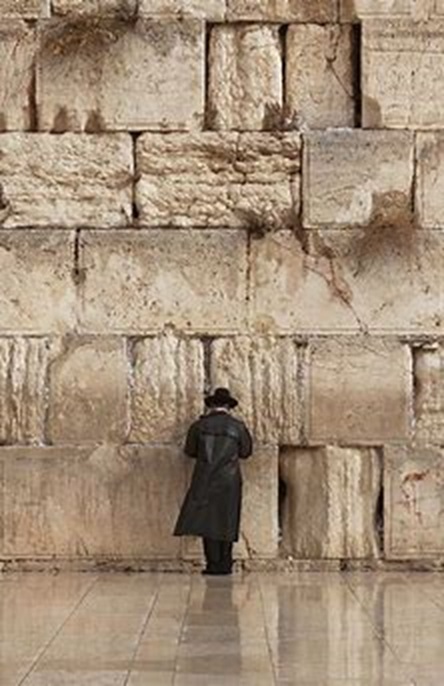
HALIFAX, Nova Scotia, October 28, 2024 – Jesus taught us to love our enemies. He also reminded us that before we petition God in prayer, we need to make sure we’re not holding anything against anyone or God will not hear us. He will simply refuse to allow our petition to be heard. That’s a pretty bold statement, that God will refuse to hear us. Did Jesus really mean that, or was he just speaking figuratively?
I believe that Jesus really meant what he said. God will not hear our prayers if we go before him holding a grudge. Even worse, when we go to God in repentance, God will refuse to forgive us unless we first forgive others. We can go through all the motions of repentance as loudly and elaborately as we want, or as quietly and humbly, but either way we’ll accomplish nothing if we’re harbouring so much as a smidge of unforgiveness. In other words, we might as well be talking to the wall if we come before God holding a grudge, as our prayers will go nowhere.
God outright refusing to forgive us is also a bold statement. Nonetheless, I believe it’s true and vitally important to the repentance equation, although it’s nearly always left out of sermons about repentance. We’re told by our pastors that it’s good to repent and that we need to repent and that we should do so often, as if the act of repenting in and of itself is all it takes for God to forgive us. Rarely, if ever, are we reminded that we must first resolve our grudges or our repentance cannot be accomplished. In other words, if you go before God with hate in your heart, God will not only not forgive you, he won’t even acknowledge your petition, no matter how many times you pester him.
Repentance only works if you first forgive. That’s what Jesus taught us.
Then why do so many people beg God’s forgiveness while holding onto grudges? Some people are even holding onto grudges against God while asking God to forgive them! But as Jesus taught us, there’s no point in asking for forgiveness if you haven’t first forgiven. This includes forgiving people you know personally as well as (and just as importantly) those you don’t know personally, like politicians or people you’ve read about in the news.
When you go before God, your heart should be squeaky clean of any form of grudge or judgement whatsoever. You should be holding nothing against anyone, including the neighbour down the street who has a habit of firing up his lawnmower at 7 in the morning. So many Christians wonder why God doesn’t seem to hear their prayers let alone answer them, and there’s the reason why – grudges. If you want God to hear you loud and clear and to answer your prayers as they’re leaving your mouth, come to him with a clean heart. Love your enemies by praying for them and blessing them.
Hold nothing against anyone, and God will hold nothing against you.
SPIRITUAL AIR FRESHENER

HALIFAX, Nova Scotia, October 24, 2024 – Ideally, we as Christians should be able to walk into any Christian-designated church building or service or organization anywhere in the world and feel not only welcome but “at home”. We should feel like family to the people working or worshiping there. We should never feel alien or as if we don’t belong. We should never feel “othered”. This is my ideal take on being a Christian in the world.
Realistically, though, there are few if any Christian church buildings, services, or organizations where you feel welcome or at home if you’re a stranger to the people in them. You’ll be received more like Paul just after his conversion than like Jesus after his resurrection, or at least that’s been my experience over the years since my rebirth. Maybe it’s because I’m a woman or because I always show up at these places alone. Maybe being a woman on my own makes me suspect. I don’t know. I generally find the men and the children to be somewhat warmer and more welcoming than the women, but again that might just be because I’m a woman. When they see me, the wives tend to pull their husbands closer (lol) and pepper me with questions, the main one being “And is your husband coming, too?….”
As I mentioned a few articles back, God has me doing the rounds of churches and church-run organizations again. It’s always an eye-opener, attending services and partaking of the hospitality of these places. I make a concerted effort to enter them as if I have the right to be in them, because I do have the right to be in them. Every Christian has the right to be in a place designated as a Christian space or organization. There are zero exceptions to this rule. Sometimes I have to say outright to whoever is giving me the stink-eye and third-degree: “I’m a Christian”, and let that proclamation sink into their hearts and minds and hopefully soften them a bit towards me. Sometimes it does, sometimes it doesn’t. I haven’t (yet) been chased out of any place, like Jesus was chased out of his hometown synagogue, but I have walked out on numerous occasions, mostly when things were being said or done that I didn’t agree with, or when the sad state of the people and the space was too much for me to bear.
You can feel when a church or organization is on life support, the same way you can tell when a sick animal is nearing death or a business is about to go bankrupt. There’s a pall of leanness that hangs over the proceedings, darkening and dimming and dampening, even though the official word is that everything is just fine. The first thing you notice when an end is nearing is the lack of cleanliness, like the smell of old product left moldering on store shelves or the heaviness of a room that hasn’t been aired out in years. Animals stop cleaning themselves in the days leading up to their death, either because they’re too unwell to do it or they don’t care about doing it anymore or they have more important things to attend to than grooming (Heaven now being in their sights). Sometimes I think I should be taking cleaning products with me when I go to church services so I can do some impromptu wiping and dusting when no-one’s looking.
I remember, when I was first reborn, that I wanted to clean the bathroom in the church I was attending. I was there every day, and I considered it would be an honor to clean that bathroom. But the priest wouldn’t let me do it, without giving me a reason why. Only later did I find out it was because the bathroom, which was readily accessible from the sidewalk outside the church’s front doors, was habitually used by drug addicts to get their fix. Sometimes they’d be found passed out. Sometimes they’d be found dead. It was basically a hazmat zone, that bathroom. Still, every now and then I would drop by the dollar store to get some air fresheners for it. I felt that the least I could do was make the place smell a little better, even if the filth went too deep to remove.
Sometimes that’s all we can do now as born-again believers – place spiritual air fresheners here and there to give the impression that things aren’t as dire as they are. The same thing was done in the decades leading up to the destruction of Jerusalem, both before and after Jesus’ first coming. The few who cared did what they could to turn people back to God, but the majority wanted nothing to do with him. Did they know their efforts were in vain, those few who cared? I think they did, the same way Moses knew that only two among the millions of adults who streamed out of Egypt would ultimately make it to the promised land. But like Jeremiah trying to stop himself from preaching about God, the people who cared couldn’t help themselves. They couldn’t contain their love for God; it just burst out of them, even if they knew that all their efforts (or most of them) were in vain.
So they rolled with it. And rolling with it, they were maligned, mocked, threatened, hated, expelled, persecuted, imprisoned, and sometimes even killed, and nearly always by the very people they were trying to help. It didn’t stop them, though, those few who cared. They considered it a privilege and a good sign to suffer for the Word.
As God leads me, I will continue to roll into whatever building, service, or organization that is officially designated as Christian, expecting not to be particularly welcome but also not letting the stink-eye stop me. Every designated Christian space (and the resources offered there) is a space that’s been set aside for me – for us – and I will gratefully make use of them for as long as they exist. I encourage you to do the same, though you might want to pack a few baby wipes and some spiritual air freshener, just in case.
OUR GREATEST JOY

HALIFAX, Nova Scotia, October 22, 2024 – Whenever believers claim to want to be more like Jesus, I hope they mean that they want to have an intimate one-on-one relationship with God as their Father, because that’s the whole reason why Jesus offered himself as the sinless sacrifice in the first place. Adam once upon a time had an intimate one-on-one relationship with God, as did Noah, Abraham, Moses, David, Elijah, Samuel, and others. But as close as they were to God, they only knew him as their God; they didn’t know him as their Father. Jesus was the first to show us what it meant to know God as our Father.
Jesus wanted us (his followers) to have that same intimate relationship with God as he did. Jesus didn’t suffer everything he suffered just so that we’d run to the Bible whenever we wanted guidance or comfort or confirmation. No. Jesus suffered what he suffered so that we’d regain the ability to go to God ourselves, as his children, which God promised us through his prophets that we would be one day.
I’m taking the first steps towards learning Biblical Hebrew so I can read the Old Testament in the original language, or at least understand a few words here and there. My instructor is adamant that we need to learn Biblical Hebrew in order to really know what God said to his prophets, but I’m not convinced that you need to learn a language in order to know what God is saying. God can communicate with or without words, in every language or in none. I also firmly believe that if you want to know what God permits you to know, you just ask him. This ability to go directly to God is, as I mentioned, the whole reason why Jesus died – he was the perfect sinless sacrifice that wiped the sin record clean, and in so doing reconciled “whosoever will” to God. As born-again believers, to downplay or deny the supremacy of our profound privilege to go directly to God as our Father would be to downplay the supremacy of Jesus’ sacrifice. We must never do either of those things.
Who’s going to be closer to God – someone who has a one-on-one relationship with him, or someone who doesn’t have such a relationship but can read the OT in Biblical Hebrew? I’m not saying this to be flippant or arrogant but as a reminder that as born-again believers we do have this relationship, thanks to Jesus’ sacrifice, and that we can and should take advantage of it 24/7. God is always with us through his Spirit, guiding us, informing us, chiding us, cautioning us, and making us laugh. We should fall asleep whispering “Good night” to God and wake up yawning “Good morning” to him. Then we should spend the rest of our day consciously in his presence, regardless of what we’re doing.
It’s a hard thing to do, though, always being conscious of being in God’s presence. In fact, God’s made us so that we can’t do it; it’s impossible for us always to be conscious of God’s presence. Even if, as some Jews do, we attached physical reminders of God between our eyes and our hands, we’d still see past those reminders on occasion. Their purpose just wouldn’t register with us. God does this (makes it impossible for us always to be conscious of his presence) so that he can see us as we are when we’re just being ourselves. It’s an ongoing test, bearing in mind that all our spiritual tests are for our benefit. Whatever negative traits God sees in us in those moments when we’re not conscious of his presence, he later brings to our attention and helps us to overcome.
I don’t know if I’ll actually go forward with learning Biblical Hebrew. I’m listening to some recordings now and following along in the King James Bible. It’s fascinating how the cadence of the original Hebrew matches the cadence of the King James translation. I know almost none of the Hebrew words, but I can still keep track (that is, align the Hebrew with the English) by reading only the English, thanks mainly to the cadence.
And yes, God first revealed himself to the Hebrews speaking their language, but God has also revealed himself to me speaking my language (English with a Canadian accent). Is my relationship with God any less valid because we don’t communicate in Hebrew? I love hearing the Bible read in old Hebrew for no other reason than that it’s the Bible being read, but I don’t think the King James Version is any less accurate than the Hebrew Bible in relaying what God wants us to know. In any case, it’s God who reads to us, and God is multi-lingual as well as fluent in visions, dreams, drawing, pictograms, etc. As an FYI, the language of Heaven isn’t Hebrew. Heavenly language is not like anything on Earth, and we’ll only learn that language if and when we make it home.
God spoke to Moses and most of the prophets in Hebrew for the sole reason that it was their language. After the Babylonian exile, the dispersed remnant started to lose their Hebrew and adopted Aramaic instead, to the extent that some of the final books added to the Hebrew Bible are written in Aramaic. And, of course, we know that Jesus spoke Aramaic and likely preached and taught solely in Aramaic. Were his teachings any less valid because they weren’t given in Biblical Hebrew? Were Jesus’ conversations with God any less worthy because they weren’t conducted in Biblical Hebrew?
Speaking of Jesus’ words, I am not convinced that they weren’t recorded in Aramaic. We’ve been taught that the books in the New Testament were written in Greek (the lingua franca of the time, like English is the lingua franca of our time), but I can’t imagine that no-one was inspired to write down in Aramaic what Jesus said either as he was saying it or shortly thereafter. I can’t imagine that whole books weren’t written in Aramaic, quoting Jesus directly to preserve his words exactly as he spoke them. John, at the end of his Gospel, states that if everything Jesus did were written down, the entire world couldn’t hold the number of books such a feat would require. This indicates to me that there was a lot of writing about Jesus going on at that time. If that were the case (and I believe it is), most of the fruits of that writing frenzy appear to have been lost, either because they were destroyed or were hidden away, whether maliciously or for safekeeping. The writing that was hidden away may yet be revealed or found, like the scrolls found in the caves after WW2, some of which were written in Aramaic and languages other than Greek.
But even if nothing further comes to light, I believe the language used to convey God’s words doesn’t really matter. God created language as a tool and uses language as a tool. He spoke in Hebrew to those whose language was Hebrew, and he spoke in Aramaic to those whose language was Aramaic, and he speaks in Greek, and Latin, and French, and Chinese, and English, etc., to whosoever speaks those languages. Think of the Pentecost preaching at the beginning of Acts, when everyone present heard the Word being spoken in his own language, even though Peter was likely speaking Aramaic. This shows the power of God to miraculously simultaneously translate and convey whatever needs to be translated and conveyed. If he did it during Peter’s sermon at Pentecost, he can do it any time and any place, and I believe he still does it for us today even if we’re just reading the Bible in a translation of a translation of a translation of a translation.
Jesus lived a sinless life and then offered himself as a worthy sacrifice so that we’d finally be reconciled to God. We born-agains are honored and privileged to know God as our Father and to be able to communicate with him one-on-one whenever we want. The enormity of that privilege cannot be overstated. Mere words, being only tools, cannot either better effect or hinder our communication, whether those words be in ancient Hebrew or modern English or some other language, because we don’t necessarily need words to communicate with our Father. He’s a heart-reader, not a lip-reader, which means that words are optional, and which is why most of the OT prophets heard from God through visions and dreams. We, too, may have visions and dreams, if God gives them to us, but communicating with God can happen anytime and anywhere, without the need for ritual or for waiting on God. This is the greatest joy of my life and what constantly centers (and recenters) me in my Father.
I hope it’s your greatest joy, too.
THICKENING THE VEIL
HALIFAX, Nova Scotia, October 19, 2024 – God has me attending church services again, and to my credit, I’m at least not running screaming for the door 20 minutes into the proceedings, like I used to. I’m (mostly) managing to make it all the way to the end, with copious help from God.
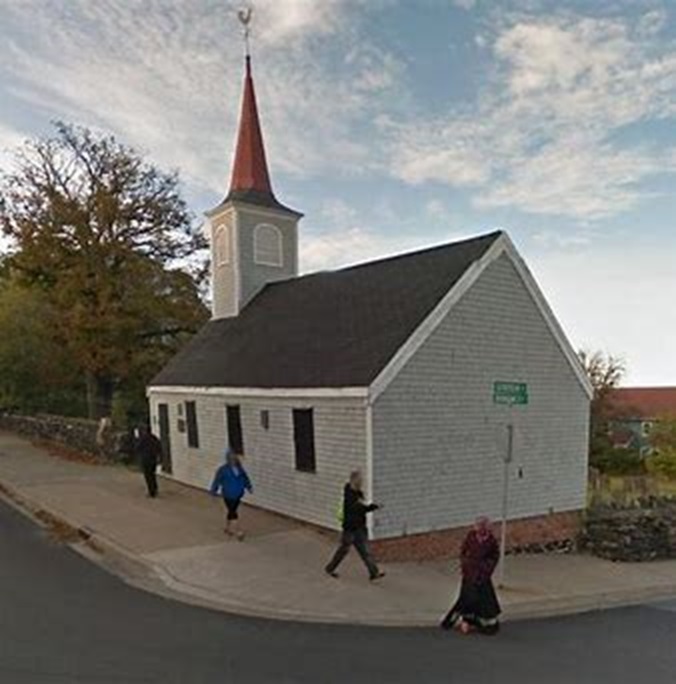
In attending these services, I’m occasionally invited by other attendees to attend other services. One recent invitation was to a choral requiem on All Souls Day (November 2). Having been out of the ecclesiastical loop for several years, I wasn’t exactly sure what a choral requiem was, but the fact that it was to take place in the Little Dutch Church by candlelight piqued my interest.
The Little Dutch Church is actually a little German church (the German word for “German” being “Deutsch”, which sounds like “Dutch” to the untrained ear, hence the inaccurate name). The modest one-room wooden structure was built in Halifax in the 1750s to serve as a worship and meeting center for the then fledging German immigrant community in Nova Scotia. Like a tiny home is to a mansion, the Little Dutch Church is to a standard-sized church, giving it an intensely intimate feel. I attended a few services in the tiny church in September, but it’s closed now for the winter (no heating; the old wood stove was removed), with the sole exception of the upcoming All Souls service. I was genuinely looking forward to attending that service (again, mainly because of where it was being held) until I found out what kind of service it is.
A choral requiem is a sung mass for the dead. It’s held on behalf of the dead, who obviously can’t hold services for themselves or pray for themselves anymore. But, stupid me, when I heard “all souls”, I thought it was a service where we’d be praying for the souls of people here on Earth (like me praying for you, and you praying for me). Nothing could be farther from the truth. The set liturgy for All Souls services is specifically and pointedly a series of recited “prayers” for the dead, that is, pre-fabricated requests to God to have mercy on the souls that have left their human bodies. The whole idea underlying these prayers is to sway God’s judgement in favour of those being prayed for, totally ignoring Hebrews 9:27.
I have all kinds of problems with praying for the dead, but the main one is that praying for the dead is just a hair’s breadth away from communicating with the dead (or on behalf of the dead), which is necromancy and vehemently condemned by God. All Saints Day, which comes one day before All Souls Day, is actual necromancy, where service attendees recite prayers to the souls of the “departed” and ask them to intervene on our behalf. This, for me, is so far beyond acceptable for Christians, I wipe my hands of it without further comment.
All Souls Day (November 2) services in the Catholic church were formalized about 1000 years ago. You can google it and read about it for yourself, if you’re so inclined. Needless to say, Jesus never instructed us to pray either to or for the dead, and neither did Moses. We pray to God, in Jesus’ name, or we can pray to Jesus, too, if we want, but we don’t pray to souls who are no longer on Earth in a human body, and we don’t pray on behalf of any souls who’ve left this plane of existence. We pray to God and we pray to Jesus and we pray for the benefit of souls who are still here in their human bodies: Everything else comes from the devil and should be vigorously shunned and avoided.
The pagan-originating demon-summoning festivals that occur at the end of October and the beginning of November (when allegedly the “spiritual veil” between the living and the dead is the thinnest and entities from other realms can pass through into our realm) are the obvious inspirations for the All Saints and All Souls feasts in the Catholic church. I expect nothing less from that openly demon- and idol-worshiping papist organization, but I’m sad to learn that Protestants, too, have adopted this evil “tradition” and continue to practice it to this day.
Knowing now what goes on at All Saints and All Souls church services, I want nothing to do with any of them, including the one that takes place in the little wooden church where my German forebearers likely gathered to worship the Lord. Instead, I’ll be spending those nights reading the Bible and praying to God and Jesus, thanking them for everything they do and giving myself wholeheartedly and unreservedly to their service.
I invite you to do the same. Let’s pray that veil so thick, nothing will get through.
WHAT DOES IT MEAN TO LOVE GOD WITH ALL YOUR HEART, SOUL, MIND, AND STRENGTH? (PART 2 OF 2)

HALIFAX, Nova Scotia, October 18, 2024 – Yesterday, we considered the question of what loving God with all your heart, soul, mind, and strength looks like in the life of a born-again believer. I asked you to think about it, given how important the “first and greatest” Commandment was to Jesus and therefore how important it should be to us as his followers. Today, I’m going to talk about what it means to me to love God with everything I have and everything I am, and how that works in my life. My understanding of this Commandment may not be your understanding of it, but it’s always useful to consider a fellow believer’s insights, even if we don’t share them.
First of all, in loving God with all my heart, soul, mind, and strength, I look to Jesus as my example. I don’t mimic him; I follow his lead. I always look to Jesus because he “always did that which pleased the Father”. Jesus didn’t just sometimes do the right thing or mostly do the right thing – he always did the right thing: Every. Single. Time. We have no better example of how to please God than Jesus, so I look to Jesus first and foremost.
What do I mean by looking to Jesus? I mean looking at how Jesus lived his life during his ministry years, as recorded in the Gospels, because how he lived his life day by day is our best example of how to love God with all our heart, soul, mind, and strength in the here and now.
And how did Jesus live his life? Entirely in service to God. He didn’t attend to worldly matters and then schedule “church things” or “God things” when he had time for them. No – he went full scorched-earth on his pre-ministry life and then sat down in the middle of desert with nothing but the clothes on his back, waiting for God to further direct him. Too often, even we born-again believers are seduced into continuing our self-directed pre-born-again lives if only for practical purposes (gotta put that roof over our head and food in our mouth!), forgetting that if we work for God, God will take care of all our needs in his way and in his time – that is, miraculously and behind the scenes. We know God will take care of our needs, because Jesus told us he would. From a personal perspective, I know that God will take care of my needs because I experience it every day.
So, first and foremost, I follow Jesus’ lead to better understand how I should love God with all my heart, soul, mind, and strength. But I’m not Jesus (any more than you are), and my relationship with the Father is different than Jesus’ relationship with him, so I can’t just mimic everything Jesus did and consider my mimicry as obedience to the first and greatest Commandment.
However, in following Jesus’ lead, I find out that I can go directly to God, like Jesus did. I don’t need to pray to Jesus and then ask him to hand on my message or request (or complaint lol) to God; I can go directly to God myself. This is one of the promises given to us by Jesus in John’s Gospel, but this promise also appears elsewhere in the Bible, wherever God, through his Spirit, states that he’ll be a Father to us.
So, I follow Jesus’ lead, as exemplified in the Gospels, while at the same time going directly to God for everything. He’s my heavenly Dad and I talk to him all the time, just like I would my earthly Dad if he could tolerate me talking his ear off night and day. Yet God has invited us to do just that – to “pray without ceasing”. Also unlike our earthly Dad, God knows everything that’s going on in our lives, down to the minutest detail, including what we’re going to say before we even say it. That’s because he’s always with us through his Spirit, and always waiting for us to ask for his help and guidance.
Having such a close and constant connection with God will just naturally result in your loving him with all your heart, soul, mind, and strength. You constantly crave his voice and the feel of his presence. You constantly want to be with God like you used to want to be with someone you were in love with, and you constantly and sincerely – on a gut level – want to do what’s right in God’s eyes, as you don’t want to do anything that might break the intimate one-on-one connection you have with him. So if your mind starts to wander in a direction you know it shouldn’t (TEMPTATION WARNING!), you can easily haul it back on track simply by telling God you don’t want to think about whatever it is you’re being tempted to think about.
In fact, for us born-again believers, every temptation known to man (and woman!) can immediately and completely be overcome simply by sincerely telling God that we don’t want it in our life. You don’t have to formulate a fancy prayer with “thee’s” and “thou’s” and get down on your knees and put your hands up in the prayer pose, you just have to tell God you want nothing to do with whatever it is you’re being tempted with, and God will remove the temptation.
That’s not to say that that same temptation won’t return at some point in the future (the devil knows your weaknesses as well as God knows them and will from time to time press God for permission to test you on them), but God will again and again remove the temptation if you sincerely ask him to.
And so, loving God with all your heart, soul, mind, and strength is really just as simple as following Jesus’ lead in everything you do (summed up as always doing that which pleases the Father) and maintaining a constant, close, and loving relationship with God as your heavenly Dad. If you do those two things, you can’t help but want to be in God’s presence night and day and to do what’s right in God’s eyes. And being in God’s presence, his Way becomes your way through a type of spiritual osmosis, or transference, from God to you.
When that happens, you don’t have to remind yourself anymore to love God with all your heart, soul, mind, and strength; you just do, and you can’t imagine not loving him. You also don’t have to remind yourself to do God’s will or to do only those things that please the Father because, again, you can’t imagine not doing them. The first and greatest Commandment becomes your constant state of being, like it was for Jesus, and the only thing you want is for God to take you over completely and to fill up every nook and cranny of your life. Everything you have and everything you are you give to God, willingly and joyfully, and you let him direct you in everything, holding nothing back.
This, to me, is what it means to love God with all your heart, soul, mind, and strength.
What does it mean to you?
WHAT DOES IT MEAN TO LOVE GOD WITH ALL YOUR HEART, SOUL, MIND, AND STRENGTH? (PART 1 OF 2)
HALIFAX, Nova Scotia, October 17, 2024 – What does it mean to love God with all your heart, soul, mind, and strength?
As born-again believers, we need to know exactly what it means, because Jesus said it’s the first and greatest Commandment. As such, it should be our lived experience, day in and day out. If we don’t know what it means to love God with all our heart, soul, mind, and strength – if we can’t articulate what it means if someone asks us – we won’t be able to do it because we won’t really know what it looks like. We’ll know the expression, but not the meaning.
I went to a church service yesterday. I’ve been to the same service for the past few weeks, and each time I’ve attended, the minister reminds the parishioners that they’re to love God with all their heart, soul, and mind. It’s a recitation that he reads, not something that he says off the cuff. It’s baked into The Book of Common Prayer, so I’m guessing it’s recited during all the services in that church, or at least during most of them. Yet I wonder, for all the recitations, how many of the parishioners who hear this Commandment actually put it into practice.
But back to us born-again believers – how are we to love God with all our heart, soul, mind, and strength? Because love him we must, and precisely in that way. If we know that we should love God with everything we have and everything we are and yet choose not to, we could lose our grace, and there’s no getting that back. Without grace, we can’t get into God’s Kingdom on Earth or God’s Kingdom in Heaven, which means that whatever time we have left here will be more or less Hell on Earth and our only possible final destination the lake of fire.
Considering how critically important the first and greatest of all Commandments is, maybe we should take a moment to think about what it means for us in our own lives. Holy scripture is deeply one-on-one and personalized, not “one size fits all”. What the first Commandment means to you may not be what it means to me or even what it meant to Jesus during his time on Earth.
So, what does is mean to you to love God with all your heart, soul, mind, and strength? How does your obedience to that Commandment play out in real time in your life?
Please think about these questions, and we’ll continue our discussion tomorrow.
YEARNING FOR WILL-FREE

HALIFAX, Nova Scotia, October 8, 2024 – Who we are as a person is measured by what we do when we think no-one sees us. As born-again believers, we have an advantage in this measuring process because we know that God sees us all the time and that nothing – including our thoughts – can be hid from him. Knowing that God sees us always and under every circumstance, we’re careful in what we do and say and think, even and especially when no one (except God) is around.
I was at a church service a few days ago, sitting at the back, and was startled to see one of the young men tasked with collecting cash “offerings” slip some of those offerings into his pants pocket. I glanced at the minister, but he didn’t appear to see what I saw. I left the matter in God’s hands.
We’re surrounded, it seems, by Judas Iscariots. In the world, we expect to be lied to, cheated, and stolen from, but not in a church. Judas fooled all of Jesus’ disciples and followers into thinking he was just like them, but Jesus knew from the start who and what Judas was and what he would do when it was time. At some point in his three-year discipleship, Judas started stealing from the group’s money bag and plotting to betray Jesus, and no-one appeared to notice except Jesus. Did Judas arrive in the group already fully formed as a consummate liar, thief, and backstabber, or did he become those things over time?
A soul is a miraculous creation. For us humans, our souls are made by God in Heaven and then placed in earthly bodies. The precise instant of that soul transfer from the eternal realm to time-and-space is still open to conjecture, but that it does occur is without a doubt. Just as certain is the soul’s vacating of the earthly body at death and its instantaneous return to the eternal realm.
Does our soul come desirous of all things good? I believe it does. God made our souls in his image, which means he made us desirous of him. If that is in fact a fact, then how do we get Judases? Where do they come from?
Free will. The ability to choose not only the good but also the bad has been our undoing. God knew it likely would be, and yet he still “gifted” us with the right to choose him or not to choose him. Why would he do that?
Knowing God as I do now, I know that he doesn’t want automatons as children. He doesn’t want lip-servers or people who feel obligated to serve him rather than who are sincerely desirous to serve him. He, our living and loving Father, wants living and loving children, and so he gives souls the choice to willingly serve him or not, to willingly choose the good or not, to willingly love him or not. And even those souls who willingly choose him he further tests to make sure their decision is sincere and not just a momentary whim. Those who choose against him he leaves the door open to, for a time, in case they change their mind.
What we do when we think no-one sees us is the true measure of our soul. And it’s our soul that’s judged on Judgement Day, not our bodies or our bank accounts or our credit rating. It’s our soul that persists into eternity and never ceases to exist. Our soul had a beginning, but it will have no end. Knowing this, and knowing how relatively short our human journey is and how everything we do impacts the state of our soul, how can we not be careful – even excruciatingly so – of our every word, thought, and deed?
I am terrified of the power God has to condemn my soul. I’m not afraid of the devil or his demons, I’m not afraid of hurricanes and earthquakes, I’m not afraid of war or of those who want me dead so they can plunder my body and seize my inheritance – I only fear God, as Jesus said we should. And fearing God, I am mindful, ever so mindful, to choose the good, even and especially in my thoughts.
What doesn’t sit right with God can have no place with me. I don’t want what doesn’t sit right with God to have any place with me, and yet choosing the good has made me many enemies over the years, some even masquerading as friends.
There is no free will in Heaven. I know for a fact there isn’t, but only complete and utter and willing submission to God. This is what I yearn for.
I’ll be glad when my free will is over.
DOGS AND SMALL CHILDREN

HALIFAX, Nova Scotia, October 8, 2024 – Why is that people whose heritage is God, when they turn from God, become worse than the heathens around them? What drives them not only to wallow in the spiritual ditch but to purposely crawl into the pit below it and to drag others down with them? When the children of Israel had filled up the full measure of their sin and everything in Jerusalem was being destroyed – including Solomon’s temple – God placed the small remnant of believers into the hands of the destroyers for safe keeping. He couldn’t even trust his own people to look after his own people anymore. They had become completely unsalvageable.
This pattern repeats over and over in the Bible, just as it does in unrecorded history at street level. My hometown of Halifax used to be a conservative “Christian” city with a church on every corner and all stores and businesses firmly shut on Sundays. Throughout the weekdays, the main downtown thoroughfare was alive with shoppers streaming in and out of bakeries, butchers, hardware stores, record stores, clothing stores, stationery stores, toy stores, cinemas, and department stores. The only places serving alcohol were licensed restaurants, and those had heavy government-imposed restrictions on them regarding serving hours and terms of service for alcoholic beverages: You couldn’t order a drink unless you also ordered a full sit-down meal. The bars were few and far between and relegated to the side-streets and alleyways in the sleazy part of town down by the harbour, where only the drunkards and the sailors on shore leave (and the scantily clad ladies who entertained them) dared to venture after dark. Loitering and vagrancy were illegal, as was littering. This is the Halifax I grew up in.
Fast-forward to today, and more than half the shopfronts along the garbage-strewn main thoroughfare are covered in faded “For Lease” signs. Of the few businesses still doing business, most are bars that are closed during the day. The street’s primary retail offerings are a sex store and a witch paraphernalia supply store, open seven days a week. The panhandlers outnumber the shoppers, while the homeless sleeping on the sidewalk outnumber the panhandlers. The charge of vagrancy was declared unconstitutional in the 1990s and struck from the lawbooks. Loitering in public places is also now allowed.
The churches are still here, though, at least the ones that haven’t been turned into condos yet. You can spot them by the rainbow flags draped over the entrances and windows. But unlike in the “old days”, when churches were open to the public 24/7, the doors are now locked and bolted except during services, and even then they’re guarded by watchful men in dark suits. I’ve gotten the stink-eye from those men more than once for being a “stranger” amidst the sparse and frail congregations.
What happened to change the Halifax of my childhood into the Halifax of my adulthood? The same thing that happened to all cities and towns in former Christendom over the past two or three generations, which is the same thing that happened to all cities and towns in the former promised land millennia ago. Turning away from God and the consequences that follow always look the same, regardless of the time or place.
I can only wonder when our Babylonian moment will finally come, because come it will. When we’ve filled up the full measure of our sin in what Jesus called the fulfilling of the times of the gentiles, total destruction can be the only reward. Like the vast majority of the children of Israel, the vast majority of the children of Christendom are stiff-necked and unsalvageable. They will never turn back to God.
And of our many heathen enemies around us, which will God appoint to harbour the tiny remnant of remaining believers? Which of our enemies will God have us submit to so that we can live to fight another day? Jeremiah willingly went with the Chaldeans. Daniel willingly went with the Babylonians. Paul willingly went with the Romans. Will we be directed to go with the atheist Chinese? Or maybe the Sikhs? Or the Muslims?
As a born-again believer, I feel I have more in common with my heathen enemies than with my own people. Is this how Elijah felt around Ahab and Jezebel? Or how Jeremiah felt around the false prophets? Or how Jesus felt when he dined with the Pharisees? I am a stranger in my own land and perceived as a stranger even in Christian churches. To use modern parlance, I am “othered” wherever I go. I fit in nowhere and am welcome nowhere. I am eyed suspiciously and questioned, and as soon as my back is turned, I am whispered about.
A born-again believer is a strange and terrible thing in today’s Canada.
But at least dogs and small children like me.
OUR ISRAEL

HALIFAX, Nova Scotia, October 7, 2024 – The current geopolitical state of Israel is a nation that through treaties, landgrabs, strong-arming, bloodshed, collusion, deception, backroom deals, and sheer chutzpah has willed itself into being. I have no problem with this. Most nations on Earth have been established in more or less the same way, though usually over longer periods of time and mainly as spoils of war. Nation-building can be a thoroughly nasty and unequitable business.
What I, as a born-again believer, do have a problem with is the equating of the current geopolitical state of Israel with the Israel prophesied in the Bible, because the two are not the same. Saying that today’s geopolitical state of Israel unquestioningly deserves to exist because God promised a certain people the inalienable right to occupy a certain landmass in perpetuity is a misinterpretation of scripture. Yes, originally the promised land was indeed a specified landmass “flowing with milk and honey” that the children of Israel were to take by force as a spoil of war, with God himself fighting their battles. This occurred just after the exodus from Egypt over 3000 years ago, but a lot has happened since then, the main happening being Jesus.
Once Jesus had conquered death through his resurrection and was crowned King of Israel, a whole new realm emerged – spiritual Zion, otherwise known as the Kingdom of God. This was supernatural nation-building, but without the usual backroom deals and collusions. None were needed, as the prophesied promised land is entirely God-driven, God-sanctioned, and God-protected. It is the Israel foretold in scripture that will have no end and will be inhabited solely by God’s people. It is a spiritual realm, not a geopolitical one, and it exists here and now. I know, because as a born-again believer I live in it. I am a citizen of the prophesied Israel, as are you, if you’re genuinely born-again.
The misinterpretation of scripture by those who use scripture as a reason to justify the establishment of the geopolitical state of Israel is, I believe, unintentional for most people. That is, most people misinterpret scripture out of ignorance, not malice. They don’t purposely conflate spiritual Zion with geopolitical Zion. They simply don’t know the difference and/or don’t make the effort to learn the difference. As such, they become the so-called useful idiots of the bad players.
And there are bad players lurking in the background. Many of them. Multiple entities purposely conflate the two Israels and use emotional manipulation to garner support for the geopolitical one. But why do they do this? What’s in it for them, and what’s their end game?
Jesus told us that the world is under Satan, and we have no reason not to believe Jesus. Worldly powers and authorities (including those in the worldly Christian church) get their marching orders from Satan, to whom they’ve sworn an oath. Satan is their god, and they must do whatever Satan commands them to do. If they don’t, they (and their families) suffer his wrath.
This army of satanically driven powers and authorities, both worldly and supernatural, steers the ignorant masses towards adopting certain beliefs, using earthly and supernatural means. God permits Satan to operate within tightly restricted bounds and only upon his approval (as exemplified in Job), all leading to a certain end. This end, of course, is the unveiling of the false messiah and the establishment of the false messiah’s world-wide kingdom, as prophesied in the book of Daniel and warned by Jesus.
What does the geopolitical state of Israel have to do with the establishment of the false messiah’s kingdom? Basically everything. Scripture tells us that the false messiah will sit on a throne in the temple, having full control of the world and demanding to be worshiped as God, and that the temple is in Jerusalem. The building of the so-called third temple must come first, and this can only happen if the preferred site for the temple (the alleged site of the previous two temples) is entirely under the authority of the geopolitical state of Israel.
As of today, this site is not under Israeli authority. The Jordanian-controlled Al-Aqsa Mosque sits on top it and the Muslims refuse to budge. The only way they and their mosque can be dislodged is through all-out war that gifts the site to the geopolitical state of Israel as a spoil of war. Just before the false messiah is ready to take his seat in the temple, such a war will erupt.
Based on this interpretation of scripture, the resurrection of the geopolitical state of Israel has been done for the sole purpose of paving the way for the coming of the false messiah and his global domination. Ironically (or perhaps not), the biggest supporter and enabler of this paving project is the worldly Christian church, which sees in the revival of Israel not only the fulfilling of (misinterpreted) scripture, but the return of Jesus after the removal of the false messiah. This purposeful manipulation of the worldly church by bad players both within and without the church has been the prime mover not only in establishing “Israel” in 1948, but in financing it, supporting it, arming it, and defending it. Without the ongoing support of the worldly church through political and other machinations, the geopolitical state of Israel would struggle to exist.
I am no fan of the current geopolitical state of Israel. For that matter, I’m no fan of the current geopolitical state of Canada, either (even though I’m a Canadian), any more than I’m a fan of any other geopolitical state on Earth. I think they’re all satanic, every last one, and I support none of them. Still, I have no intention of getting in the way of “Israel”, as what has been decreed by God through his prophets will come to pass. “Israel” will successfully take by force the historical promised land, and the prophesied false messiah will sit on the throne of the third temple. Trying to stop or hinder what has been prophesied is a fool’s errand. Jesus warned us about the false messiah not so that we’d fight against him or his enablers, but so that we’d be aware of them and not fall under their spell.
As born-again believers, we should not join the worldly church in its support of a movement to enthrone the false messiah, regardless of the church’s motivation for doing so. God permits evil to thrive not because he loves evil but because he honors his promise to grant us free will. If we choose evil, God will permit us to have evil. But we shouldn’t choose evil believing it will lead to good (that is, that the fall of the false messiah will usher in the return of Jesus). Evil cannot lead to or beget good. If you choose evil, your reward can only be evil.
As a born-again believer, I encourage other born-again believers to adopt a hands-off approach to the current geopolitical state of Israel. It is not our concern. Our concern, as always, is serving and worshiping God, following Jesus, and helping our fellow believers in the Kingdom. We’re to watch and be aware of what’s going on in the world, but we’re not to get involved in it. Like the geopolitical state of Israel, the world is not our concern. It is under the authority of Satan, and God himself has put it there. To fight against the world is to fight against an authority ordained by God. We must never do that.
In the meantime, though, and for the rest of our time on Earth, we can revel in the knowledge that we live in God’s Kingdom, which is the true prophesied Israel of spiritual Zion, and that we live here thanks to the sacrifice of Jesus the Messiah and the love and grace of our Father, the Almighty God.
 A BORN-AGAIN BELIEVER