
Home » Posts tagged 'faith'
Tag Archives: faith
THE ANSWER TO MY PRAYER
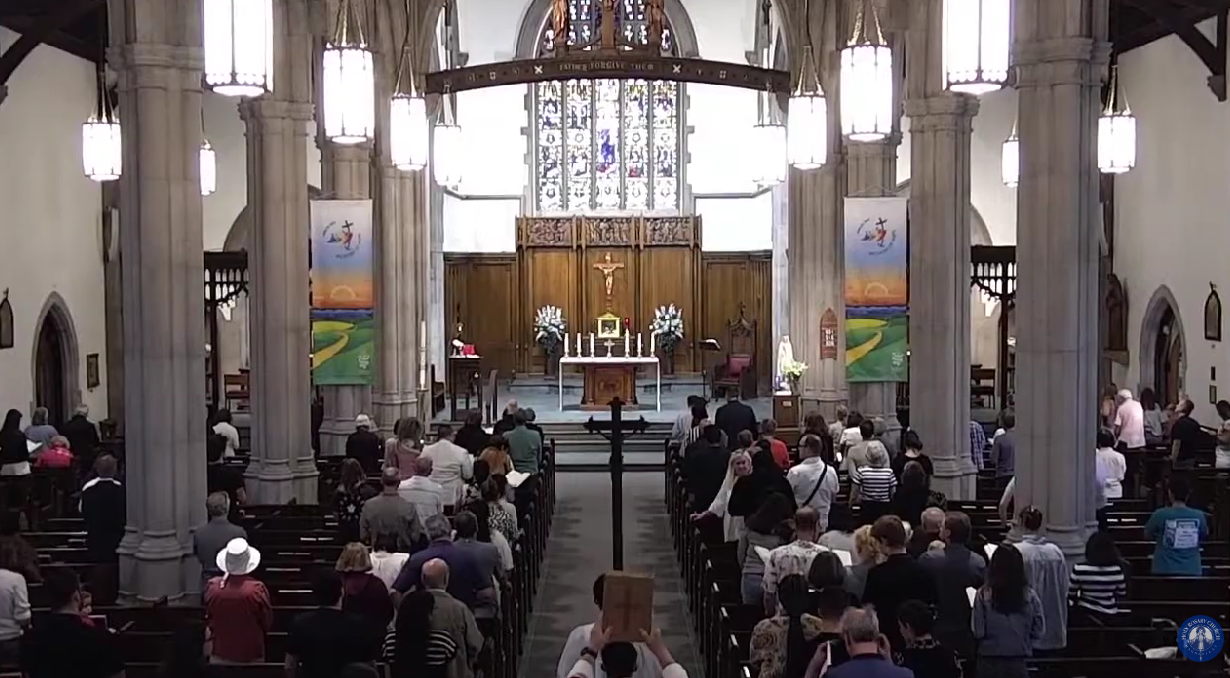
HALIFAX, Nova Scotia, February 14, 2026 – Because I came to belief as an adult rather than as a child, my faith evolved differently than most believers. Still, even as an adult, I was as docile as a child when I first believed. Having been infant-baptized into the Roman Catholic church and so believing that’s where I belonged, I started attending Catholic masses shortly after I was reborn. Sometimes I’d go twice a day (noon and five p.m.) and on Sundays I’d go three times. I couldn’t get enough of God, who (as I was told by the priests) lived in a box at the side of the altar. I’d always sit in the front pew so I could get as close to him as possible.
As I matured in my faith, I started having doubts about what the priests were telling me. I started not being able to say some of the responses during mass because I knew they were wrong. I started reading with horror about the various Inquisitions and other crimes, past and present, of the papacy. I also (and this for me was by far the worst) started to feel a distance developing between me and God. The joy that had been my constant companion in the early days and months of my rebirth began to retreat. In its place was a sense of duty (attending mass, praying the rosary, following all prayer and fasting directives issued by the pope, decorating my place with crucifixes, pictures of saints, prayer candles, etc.) that seemed to be taking me farther and farther away from God.
Three-and-a-half years into my rebirth, I was heavily involved in Catholicism. Along with attending mass daily, I sat on several committees, was appointed lector, taught a Bible class, and was even entrusted with a key to the church building, I was there so often. I also rented the church basement for my employment-related events. My life revolved around “the church”, so what happened on January 12th that year upended everything.
It was a Sunday. I was sitting in my pew after the service, reveling in my usual post-mass bliss and enjoying the smell of the just-extinguished altar candles. I loved that smell because it reminded me of birthday candles (and so birthday cake!). Other than for a few people milling around some statues of saints, lighting candles and bowing down in prayer before them, I was alone in the church’s main room. As I sat there in a haze of spiritual warm ‘n’ fuzzies, God suddenly opened my eyes. I say “opened my eyes”, but it was more like something fell from my eyes and I could see what I hadn’t seen before. And what I saw horrified me.
I was in a pagan temple. I wasn’t in a God-worshiping church, I was in a pagan temple, and the people bowing down before the statues were bowing down before effigies of demons. Even worse was the abomination of the mangled corpse that hung, larger than life, over the altar. It was a reenactment of Jesus on the cross that was supposed to represent God’s great love for us, but all I could see (and all I still see, whenever I see a crucifix) was Jesus’ tormented and humiliated body. This is not how God shows us his love.
While I sat there in shock at what was being revealed to me, the priest slipped through one of the back doors behind the altar, smiled at me, and asked me if I’d be attending the Christmas party in the church basement at noon. I managed to squeak out a “we’ll see”, to which he nodded and disappeared back through the door. Then the deacon bustled up the aisle behind me to prepare the altar for the next mass. Seeing me sitting there, he also asked me if I was attending the party, to which I managed another weak “we’ll see”. He murmured a few more pleasantries while performing his housekeeping duties and then disappeared through the same back door as the priest.
I took this as my cue to leave.
Carefully, deliberately, I stood up and put on my shoes. For three and half years, I’d removed my shoes whenever I passed the threshold of the church, believing the place to be holy ground. For me to put on my shoes while I was still at the church pew was an act of revolution. Likely no-one else noticed me putting on my shoes at the pew, but I did and God did. And then, firmly shod, I made my way to the back of the church, out the doors, and onto the street, never to return.
In showing me the truth about the church building I’d just exited, God didn’t say to leave it. He gave me no directive or command in that regard: He simply revealed to me what manner of place I was in and then left it up to me to decide what to do. But having seen what I just saw, there was no way I could stay there. And not being able to stay there (or in other places like it), I could no longer be a Catholic.
When I got back to my apartment, I immediately tore down all the crucifixes and pictures of saints adorning my walls and threw them into a box. Into a second box went my rosary beads, chaplets, prayer cards, and every other piece of Catholic paraphernalia I’d collected (at great expense) over the years, including my Catholic Bible, hymn books, and catechism. I then closed the two boxes and shoved them under a table out of sight.
I half expected to be struck by lightning through my skylight while I was doing this, but nothing happened other than that the room appeared much brighter and cleaner after the purge. Then I sat down at my kitchen table and opened a second-hand Bible I’d bought on impulse a few years earlier but hadn’t used (because it wasn’t Catholic) and started reading the Old Testament for the first time in my life. I’d been reading the New Testament every day since my rebirth, but I hadn’t yet touched the Old Testament. I’d been relying instead on the carefully selected and sanitized OT snippets that were doled out during mass. But in reading the older books for myself, I soon realized why those snippets had been so carefully selected.
The OT clearly showed that Catholicism is not Christianity. Many of the rites and rituals taught to Catholics are expressly forbidden and even outright condemned in the Old Testament. Tellingly, those verses are never included in the OT morsels spoon-fed to us during mass.
From that day forward, I removed myself entirely from the church and all its activities without telling anyone there why. God had me remain silent, as I wasn’t yet strong enough to combat their arguments. I let them draw their own conclusions as to why I’d left. Occasionally, I’d pass a congregant on the street, but they’d avert their eyes and ignore my greeting. The priest stopped me once and asked me “Charlotte, what happened?…”, but I could only mumble some vague excuse that I no longer recall and that didn’t resolve the confusion in his eyes.
The priest was a kindly man. He’d consistently supported me in everything I did at the church, appointing me as lector at noon mass and even agreeing to let me teach a Bible study, which at that time was unheard of in a Catholic church. He knew my conversion was real and that I was different from most if not all the other congregants. I could see the hurt in his eyes that day on the street, hurt and concern underlying his confusion, but God had me remain silent beyond my mumbled excuse. It wasn’t my time to explain.
The revelation God showed me on January 12th that year was an answer to a prayer I’d prayed on my face in tears on a milestone birthday nine days earlier. In that prayer, I’d begged God to take out of my life everything that was keeping me from doing his holy will, to take me back spiritually to how I was when I was first reborn. My prayer was awkward and stilted (I was repeating a phrase I’d heard from a televangelist), but my tears were real and my agony was real and my desire to reconnect with God—to be close with him again like we were at the beginning—was a cry from the heart, pure, raw, and unfeigned.
And God heard my prayer.
And he answered it.
In his time and in his way, he answered it, showing me that what was keeping me from doing his will was Catholicism and all its trappings. He didn’t tell me to leave Catholicism; he showed me what it was – first, by revealing the true nature of the place I’d been worshiping in, and second by revealing to me in scripture how Catholicism violated his commands and how I’d been replacing him with Catholicism, faith with religion. What I chose to do with that knowledge was up to me.
I know I made the right choice in walking away from the Catholic organization. Although my life was temporarily upended and I became an outcast in that community, the reward was a closer relationship with God. My prayer was answered in the best possible way. I’ve never once regretted leaving Catholicism and I have no plans to return. But in rejecting the church, I didn’t reject the people I’d met there; most of them were kind-hearted and well-meaning, just spiritually confused. It wasn’t Catholics I was rejecting, it was Catholic doctrines, Catholic creeds, Catholic paraphernalia, and the whole rotting edifice of the papacy. It’s all spiritual garbage, but it does have a worldly purpose, and so I let it be. Catholicism is not my concern.
I’m glad I experienced the worldly church firsthand, but I’m also glad it was “one and done”. I might have been infant-baptized into Roman Catholicism, but I was reborn into God’s Kingdom. I know now, as a mature bornagain believer, that my worship center is the Kingdom established by Jesus, and my fellow worshipers are bornagain believers. This is my Church. These are my people. This is where I belong. No buildings. No creeds. No recitations. No props. Faith, not religion. Just us living in constant spiritual communion with each other and with God and Jesus, through God’s Holy Spirit.
This is all I want and this is all I need until I get Home.
THE GIFT

HALIFAX, Nova Scotia, February 4, 2026 – There was a guy, a few weeks before Christmas, who was slumped in an old manual wheelchair at what is probably the coldest, windiest, and busiest intersection in Halifax. That day it was also snowing. But the old man didn’t seem to notice the snow, or if he did, didn’t care. He was on a mission. He was crying over and over again “Jesus is coming!”, and he’d obviously cried it so many times by the time I’d arrived, his voice was a croak. And yet despite the cold and the wind and vocal cords strained to breaking, the man didn’t abort his mission. He continued to preach. In response, the throngs of people hurrying by didn’t so much as lift their eyes from their phones. To them, he wasn’t there.
I stopped for a minute to listen to him. He was elderly and gaunt and looked ill. He also wasn’t dressed for the cold. I thought at first he was just another panhandler like the dozens of panhandlers plying their trade along that busy strip, but I didn’t see a cup or upended hat near him. He wasn’t begging. He was giving rather than taking.
Nearly two months later, I can still see him in his wheelchair with the snow and crowds swirling around him. I can still hear his voice. He hasn’t been back to that corner since, or at least I haven’t seen him. Maybe he’s moved on to another intersection elsewhere in the city, or maybe that was the only time he’d preached. Maybe some force drove him out into the bitter cold and wind that day to cry those few words over and over, some force that he didn’t quite understand and yet obeyed. I’m glad he did.
Because even though he isn’t there, I still see him. I still hear him. His simple message still rings in my head loud and clear: “JESUS IS COMING!” And whether Jesus comes today or tomorrow or in another 2000 years, he is coming. That is a guarantee. And whether we receive his coming with joy or with shame – well, that’s the whole point of the old man’s message.
EVERYDAY JESUS

MCLEODS, New Brunswick, March 12, 2024 – I am not a fan of religion. I believe that organized religion, more than any other force on Earth (including sin and Satan) is the biggest barrier stopping people from seeking God. This should be ironic, that religion prevents people from finding God, but it’s actually been par for the course for thousands of years. Jesus also had issues with organized religion during his ministry years and likewise considered it to be the main stumbling block to genuine faith.
Even so, organized religion can still be used as a resource tool for genuine believers. It has good value in that regard and God permits it to continue mainly for that purpose. In my case, God encouraged me to attend mass every day for nearly three and a half years after I was reborn from atheism so that I could be in an environment where belief was accepted and I could hear God’s Word spoken and explained, albeit from a Catholic perspective. I was grateful at the time (and still am) that the doors to the various Catholic churches I attended were open for the scheduled services and that the priests did the job they were paid to do. But as I matured in my faith and reached the stage where I needed to be consciously developing a relationship with God as my Father and Jesus as my brother and best friend, God pulled back the veil cloaking Catholicism, and what I saw made me walk out, never to return.
Jesus used the synagogues and the temple for teaching purposes. He also took full advantage of the hospitality of the religious powers-that-be by accepting their invitations to dine, knowing full well that their motive for inviting him was less than charitable. But eating at their tables and using their religious buildings for his purposes didn’t blind Jesus to the problems inherent in organized religion and didn’t stop him from making the best of the situation and suggesting better ways forward than killing those who disagreed with you. He didn’t overlook the corruption and rot that had come to characterize Judaism; he stared it down and offered himself as a solution.
Faith, as we know, is far more than just reciting a list of beliefs and attending a service. Faith is life, as much as God is life and Jesus is life. I know for a sure fact that without my faith, I would be dead. My faith encompasses my belief in God and Jesus and everything they teach, but it also includes how I interact with people on a day-to-day basis when I’m not consciously thinking about God and Jesus. My faith informs those interactions, and charity guides them. That’s the goal, anyway.
When Jesus said that God was looking for people to worship him in spirit and in truth, he meant God was looking for genuine believers who were interested in the practical application of Jesus’ teachings, not hypocrites who relied on ritual to mask their lack of belief. Ritual has its place in faith when used sparingly (like in the changes to the ritual of the Passover meal that Jesus introduced), but it should never override faith or be equated with faith. Ritual should never be the centerpiece of faith. The centerpiece of faith should always be our one-on-one relationship with God and Jesus, which should not be contrived and preset but unfeigned and spontaneous, the way we are with anyone we love and who loves us in return.
What does the practical application of Jesus’ teachings look like? It can take many forms, but it definitely doesn’t look like religion. It looks like everyday life. It also doesn’t announce itself as the practical application of Jesus’ teachings: It simply responds to situations as Jesus did.
We born-again believers aren’t called to be religious; we’re called to follow Jesus, which means we’re called to make the same life choices Jesus did – everyday Jesus, not religious Jesus. There’s no such person as religious Jesus.
May you never let religion come between you and God.
EYES OF FAITH

CHARLO, New Brunswick, December 8, 2023 – We have two sets of eyes as believers: the eyes of the world and the eyes of faith.
God wants us to look through the eyes of faith, but the devil wants us to look through the eyes of the world, because if we look through the eyes of the world, faith will be impossible. The world is ruled by fear, so the eyes of the world are the eyes of “I can’t do it” and “be afraid, be very afraid”.
But the eyes of faith are the eyes of “I can do all things through God who strengthens me”.
One year after the exodus, Moses sent twelve leaders, one from each of the houses of the children of Israel, to spy on the land of Canaan, the land stretching from the river to the sea that God had promised he’d give them when it was time. When the twelve men returned, ten were full of fear over what they’d seen, describing the impenetrable fortresses and the mighty warriors guarding them. The other two men – Joshua and Caleb – gave entirely different reports, claiming they were well able to break through the strongholds and overcome the inhabitants because God had promised them the land and God was with them. We can see from their reports how the ten fearful men were looking through the eyes of the world, while Joshua and Caleb were looking through the eyes of faith.
As believers, we cannot afford not to look through the eyes of faith. We can still look through the eyes of the world – we’ll have that capacity for the rest of our time on Earth – but we need to steadily focus through the eyes of faith or we’ll lose our way and maybe even (God forbid) lose our grace. The ten men who chose to view the promised land through the eyes of the world lost the promised land. They perished in the wilderness. Only Joshua and Caleb made it all the way.
David, as a young shepherd, spent a lot of time watching over his father’s sheep. I’m wagering that he spent a lot of that time shooting objects with his slingshot (he might even have used it to keep his sheep in line), and the rest of the hours he wiled away teaching himself how to play the harp and write songs. I’m wagering the sheep responded to his music, too, and that he used it to calm them. But amidst all the sling-shotting and music-making, David was doing something even more important – he was deepening his relationship with God. He was building his faith. And it was his strong faith that then enabled David to take the skills he’d learned during his shepherding years and use them to the glory of God, with God’s timing and guidance.
God’s timing and guidance are critical to the application of our learned skills. We can have faith great enough to move mountains, but if we try to move them at our whim, without God’s timing and guidance, we will fail. After Moses had upbraided the ten fearful men for their lack of faith, they resolved the next day to go to battle against the Canaanites. Moses pleaded with them not to go, but they insisted that because God had promised them the land, God would bring them victory.
But it wasn’t time for the children of Israel to fight the Canaanites, so God wasn’t with them and they lost the battle. Not only did they lose the battle but their defeat inspired fear in the rest of the children of Israel, who then resolved they should return to Egypt and put themselves back under the bondage of Pharoah. This is the fruit of misapplied faith, and we see it today in the many Christians who are falling into disbelief because their presumed miracles and prophecies didn’t come true, or their prayers weren’t answered in the way they wanted them to be answered.
Faith involves not just believing but waiting on God’s timing and guidance. God is not a genie in a bottle that you can command at whim; he tells his prophets the when, the where, and the what, and then it comes to pass with his blessings. Jesus said he always did that which pleased the Father; he didn’t say the Father always did that which pleased him.
We can live in fear, like the world does, or we can live in faith, like believers do. The choice is ours. But if we choose to view life through the eyes of faith, we also need to rely 100% on God, and in relying on God, we need to do everything according to his timing and with his guidance. We don’t direct God, he directs us. Moses well knew this, as did Joshua and Caleb, as did David and all believers throughout the ages.
Your faith might indeed be great enough to move mountains, but the only way that mountain’s going to move is when God says it’s time and then shows you how.
RELATIONSHIP OR SUPERSTITION? GOD IS MY FATHER

CAMPBELLTON, New Brunswick, July 6, 2023 – When I was a little kid, my parents took care of all my needs. I didn’t have to ask them to feed me, house me, clothe me, and protect me, they just did it all by default. It’s what parents do for their kids. It was part and parcel of our parent/child relationship.
God does the same for his children. He feeds, shelters, clothes, and protects born-again followers of Jesus spiritually as well as physically for no other reason than that they’re his kids. We don’t have to beg God to look after us; as long as we remain his children, he will look after us.
I mention the Father/child relationship we born-agains have with God because many Christians seem not to know about it. They think they have to ask God specially for protection or to pray for it using incense and incantations. They think they have to plead the blood of Jesus or perform some kind of ritual to get God’s attention or to keep evil spirits at bay. As a child, I didn’t have to recite a verse or sacrifice a pigeon in order to get my three square meals a day. All I had to do was show up in the kitchen when I was called.
My point here is that much of what is termed ‘Christianity’ today is actually superstition. Not understanding the foundational tenet of our belief (that God is our Father), many Christians rely on rituals and sacrifices to “invoke” God, petitioning him for things he provides anyway by default to his children. When you rely on superstition instead of faith, ritual instead of relationship, you miss the whole point of why Jesus sacrificed himself on the cross. A mindset that’s steeped in superstition and ritual will do things like “meditate on”, memorize, and study God’s Word, hoping this roundabout approach will help crack its meaning. But you can’t understand the meaning of God’s Word in a roundabout way, relying on your own insight and intellect. You can only understand God’s Word through the guidance of God’s Holy Spirit.
When I was newly born-again, I spent three and a half years neck-deep in Catholicism. I was taught to get down on my knees and recite “prayers” to Mary and angels and saints, and to accompany the recitations with candle-lighting, holy water dabbing, and rosary bead counting. I was never taught about my relationship with God. I was taught rituals. I was taught superstition, like this water is holy and that water isn’t, and candles need to be blessed, as only blessed candles will provide spiritual protection. Ditto for salt and oil and crucifixes (and pets). Everything needed to be blessed, and evil spirits could only be chased away by incantations, recitations, the sprinkling of holy water, and the frantic waving of crucifixes.
It would be funny if it weren’t so sad, this fallback to superstition that is the hallmark of many denominations today. I thank God that he sprung me from superstition and taught me about our relationship through his Word. Now I know that I don’t have to study the Bible, I simply read it, and in reading it, God opens up its meaning to me through his Spirit. This is how he teaches his children.
So I’ve learned, through his Spirit, that God is my Father, and as my Father, he does everything a father does, and he does it perfectly. If God’s my Father, then I’m his child, and as his child, he will feed me, clothe me, shelter me, and protect me. I don’t have to ask for those things; he’ll do them by default, as long as I remain his child, that is, as long as I continue in his will and his Word.
And prayer – well, prayer is just talking to God. No recitation or props are needed. I can pray standing up, sitting down, laying down, or standing on my head, if I want to, and I can pray wherever I am at any given time using whatever words come to mind or no words at all. It’s a relationship we’ve be called into with God, not a ritual. We do not know God as our Father by ritual; we know God as our Father by faith.
Jesus says we need to become like little children if we’re to enter into the Kingdom. Part of that directive means to understand that we’re in a Father/child relationship with God, with all that such a relationship entails: We not only know God but God knows us. We’re not like fans worshiping a pop star from a distance while the pop star has no idea we exist. We know God intimately and are known by him intimately.
This Father/child relationship forms the basis of our faith. Without it, we’re just mouthing empty words and making empty gestures, however holy they may seem to us or other people. Without a relationship with God as our loving Father, no matter how much church-going and Bible-studying and good-deed-doing and evangelical outreach we do, all we’re going to hear from God on Judgement Day are the four worst words in all of creation: “I never knew you.”
It’s a relationship we’re called to have with God and need to have with God, a loving, one-on-one, Father/child relationship. And we need to maintain that relationship in good standing, the way that Jesus maintained his relationship with God in good standing when he was on Earth in human form (“I always do that which pleases the Father”).
If you don’t have the same relationship with God that Jesus had, you need to get it and you need to get it now. Because without it, you won’t make it Home.
I BET: A CALL TO SPIRITUAL ARMS
CAMPBELLTON, New Brunswick, June 18, 2023 – I bet, were someone so inclined, he or she could chart the steep decline of the developed world (or what used to be known as “the West” or the now politically incorrect “first world” or the even more politically incorrect “Christendom”) – I bet that someone so inclined could chart the steep and swift decline of former Christendom by connecting the falling away or death of each believer to an uptick in evil.
That is, for every believer’s death or turning away from God, evil would show an increase.
I bet it can be charted, this correlation between the withdrawal of God’s Spirit and the inrush of demonic forces. I bet it can be charted and I bet the devil is already doing it, because for every light that dims and/or goes out, God permits Satan to extend his reach. When the devil extends his reach, wildfires burn out of control, endless wars erupt, government corruption flourishes, people run out of money, families break apart, kids don’t know if they’re male or female, and killing your own child is as simple as swallowing a pill.
No, Charlotte, you’re wrong, sniffs the world. It’s White supremacy. It’s colonialism. It’s systemic racism. It’s socioeconomics geared towards the ruling oligarchy. It’s insufficient diversity and inclusion. It’s insufficient equity. It’s cis genderism.
It’s climate change.
I bet, if you had the right instruments, you could measure evil. You’d need very special instruments to do that, though, because evil doesn’t always look like we think it should look and you’d have to find it first before you could measure it. And you might have a hard time finding it. Evil shrouds itself so you look right past it, so “you don’t see it coming”. That’s how evil has gotten away with being evil for so long. It flies under the radar. It pretends it doesn’t exist. Sometimes it even pretends it’s your friend.
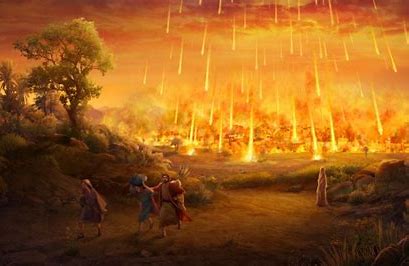
It’s not a balance, the favourable measure of good and evil. It’s more a percentage, like 33.333% falling from Heaven and 66.666% not, or a fixed number, like 10 righteous souls holding back Sodom’s destruction. Balance implies compromise and God never compromises. He would rather have only one committed soldier fighting the good fight than thousands who are only in it for the payout. He saved Noah and his family and let everyone else die. He wanted to give everything to Moses and kill all the rest of the children of Israel in the wilderness. For God, it’s not about balancing out the good with the bad, but about sifting and panning until he finds a gold nugget; if he finds only one, God will make do with that and dump the rest.
I bet, were someone so inclined, they could chart the fall of the standard of living in former Christendom with the decline in faith, they could chart the rise in crime with the decline in faith, they could chart the rise in hopelessness and divorce and suicides with the decline in faith, because there is your real correlation for standard of living, crime levels, and happiness – the level of faith within a community. And when I say “faith”, I mean faith in God as a follower of Jesus. The greater the faith, the higher the living standard, the lower the crime, and the greater the happiness. This is the real reason why the first world became the first world in the first place.
But again, you don’t need a lot of people to have a lot of faith. Even just one person of strong faith can have the righteousness to cover many. God would have been pleased to spare Sodom had there been just ten righteous souls among hundreds of thousands, but there weren’t. Truth be told, there might not have been even one righteous soul, considering how Lot treated his daughters (and how his daughters treated him). Scripture tells us that God spared Lot and his family as a favour to his righteous uncle, Abraham. Whether or not Lot was actually righteous himself is for God to know.
The obvious antidote to the rising levels of evil in former Christian nations is to increase the amount of faith in the people living there. But getting more people to believe is an uphill battle that we may not win. The only alternative is for us born-again believers to increase our faith, so that while we may be few in number, we’ll be counted as many for righteousness. Whereas previously 9 out of 10 in a family believed, there may now only be 1 in 10, but that 1 will be strong in faith, maybe even strong enough to cover for the whole family. This is what we need and this is what we must pray for – that our faith be increased along with the faith of our spiritual brothers and sisters.
This is how we stop the steady uptick in evil – not by reparations or “equity” or electric vehicles or regime change, but by building our faith strong enough to move mountains.
And this, my fellow born-again believers, is up to us.
CONFESSIONS OF A (FORMER) PREPPING JUNKIE

NIAGARA FALLS, Ontario, January 7, 2023 – It never ceases to amaze me that Jesus went into the wilderness for 40 days and 40 nights without any preps at all. Not even water. And yet, even after having starved for nearly 6 weeks, he still managed to outwit the devil.
How’d he do that?
People are starting to furiously prep again, like they did just before the “pandemic” was declared nearly three years ago. I overheard a woman today in the dollar store breathlessly detailing her latest prepping acquisitions to a friend she’d run into. She said she got most of her ideas from survivalist videos she saw on YouTube. Her friend was ooh-ing and ahhh-ing over her overfilled grocery cart and congratulating her on her alleged prepping acumen.
Meanwhile, in grocery stores all across Canada and the US, shelves are being emptied out of basic necessities like rice, pasta, canned vegetables, etc., causing food shortages for everyone else. That they’re causing food shortages doesn’t seem to faze the preppers one whit. They’re only interested in their own perceived needs.
Jesus, as demonstrated by his 40 days and 40 nights in the wilderness, was no prepper. In fact, he stated his position on prepping quite clearly:
“Therefore I tell you, do not be anxious about your life, what you will eat or what you will drink…. Is not life more than food?”
Jesus was notorious for having only enough supplies at any given time to get him through the day. When he needed food and none was available, he relied on God to supply it. Think of how he fed the thousands who’d come to listen to him preach the sermon on the mount. Even his disciples were at a loss to figure out how so many people could be fed in the wilderness, but Jesus just calmly held up the few fishes and loaves they had, said a silent heartfelt prayer, and God took care of the rest.
Because that’s what it’s all about – letting God do his job while we do ours. Jesus was able to go 40 days and nights in the wilderness with no food or water because God set that task to him and then supernaturally enabled him to do it.
When you prep, what you’re saying is that you don’t trust God to supply for your needs. You’re relying on your own strength and ingenuity and turning your back on God.
You’re showing zero faith in God.
Now before you start huffing and puffing, allow me to let you in on a little secret. I know that God doesn’t want us, his born-again children, to prep, because I was once a prepper myself. I still have around 10,000 pristine tea light candles in storage to prove it (lol). But then God started getting on my case a few years ago. He pointed me to various scriptures to show me that my prepping revealed I had a very low level of faith in him to provide for me in some future SHTF scenario. I got the message loud and clear, and from that point onward I stopped prepping altogether. Instead, because I move around so much and occasionally live out in the boonies, I only buy what I think I’ll need until my next shopping trip.
I know what a buzz it is to prep, because I’ve done it. It has addictive properties, in that no matter how much you buy, you still feel you don’t have enough and have to buy more. Many Christians have become prepping junkies who invest a good portion of their income on food and other supplies they may never actually need.
Imagine if they had instead invested all that money, time, and energy in the Kingdom.
If we follow Jesus, we live as Jesus lived. If he didn’t prep and he relied on God to provide for him, then so should we. I’m not talking to unbelievers here or to nominal Christians – I’m talking to born-again believers. The only prepping we should be doing is spiritual prepping, which means working on our relationship with God, treating other people as we want to be treated, and following ever closer behind Jesus. If unbelievers what to prep, let them. Don’t interfere with them. It’s not our business to tell them what to do. If nominal Christians want to prep, maybe remind them that Jesus was no prepper, and leave it at that. They may take the bait, but whether they do or not is between them and God. It’s out of our hands.
But for us born-again believers, we need to understand that prepping food and other items is not what we do. Prepping shows a lack of faith in God to provide for our needs. We are not in Old Testament times, where prepping was actively encouraged, such as in the time of Joseph, where his job was to prep in order to provide for his family. Let other people prep, if they want to, but we born-agains need to remain faithful to our calling to follow closely behind Jesus, who never prepped, not even when he knew he’d be spending 40 days and 40 nights in the wilderness.
Whatever task God sets for us, he will provide for us ONE WAY OR ANOTHER. The “one way or another” part is really important for us to take on, because, like the disciples who wondered where all the food was going to come from to feed the thousands, we won’t always know how our needs will be provided for. That’s where having faith in God comes in handy. You may not be able to see how you’ll be provided for, but trust that God sees very clearly how it will be done.
And it will be done.
I had to learn the hard way that prepping was a no-no for me, throwing out dozens of cans of expired peaches, cranberry sauce, kidney beans, etc., in the process. God doesn’t want us to prep in that way. If he did, Jesus would have been an exemplary prepper. Instead, Jesus prepped in the only way that mattered – spiritually, and for all eternity, storing up his treasures in Heaven, not on Earth.
He taught us and showed us that we should do the same.
Now, if you have a basement or a garage full of preps, don’t throw them out. Use them and share them. And then resolve within yourself not to buy any more than you’ll need until your next anticipated shopping trip.
As born-again believers, we don’t need to be prepping junkies; we need to be faith junkies.
THE UNSHAKEABLE FAITH OF JESUS

NIAGARA FALLS, Ontario, October 18, 2022 – There are few things that make me angrier than people lying about Jesus, and one of the biggest lies is that Jesus lost his faith while on the cross.
I have argued here and here and elsewhere that Jesus, in all his time on Earth, was never closer to his Father than in the hours leading up to and during his crucifixion. He did not lose his faith. He did not feel forsaken. He played his Messianic role flawlessly, and in so doing, became the perfect sacrifice that paid the sin debt and paved the way for the establishment of God’s Kingdom on Earth. I have zero doubt about that.
Had Jesus not played his Messianic role flawlessly, he could not have served as the blemish-free offering that was required as the sin debt.
Jesus did not at any time lose his faith in God or in his role as Messiah. How could he lose faith in God? He knew him intimately, one-on-one, as his Dad. To Jesus, God wasn’t out there somewhere, maybe or maybe not hearing prayers, maybe or maybe not answering them, but inside him as an abiding presence, informing his every thought and word. There was no separation between God and Jesus, as Jesus himself said just a few hours before his crucifixion: “The Father and I are one”. Where Jesus was, there was God, through God’s Holy Spirit.
We have the same intimate relationship with God, if we’re genuinely born again.
Those of you who think that Jesus temporarily lost his faith on the cross, could you kindly point out in scripture where precisely he lost it? Because I see no evidence of lost or diminished faith. On the contrary, I see Jesus more focused than ever on what he knew he had to endure, and willing to endure it, knowing that the end was his glorification.
Why is Jesus’ unshakeable faith important to us as his followers? Because Jesus didn’t want to be crucified. He fought against it at the eleventh hour, begging God to find another way for him to accomplish the deed. But when God was adamant that there was no other way, Jesus accepted it and forged ahead, strengthened by God and by the angels God sent to minister to him.
We do not see a weakened Jesus exiting the Garden of Gethsemane. Oh, no – we see a spiritually and physically superhuman Jesus, embracing his betrayer and admonishing his followers for wounding the soldiers who’d come to arrest him. We see a Jesus fully in command of the situation and of himself. This same superhuman Jesus continued as such to his last breath, with no loss of faith. On the contrary, he must have astounded all those present when he continued to minister to those present – to the women who lined his path, to John and his mother, and to the thieves – despite the horrors he was enduring. When the Roman soldier stood at the foot of the cross in awe of Jesus, saying “Truly he was the son of God”, it wasn’t because he’d just witnessed a man losing his faith, but because he’d witnessed a man who against all odds remained true to himself to the end.
This continuance of Jesus’ faith in the face of extreme torture and humiliation is important for us to know, because we will face similar situations as his followers. That is a guarantee. And like Jesus, we may not want to do what God has planned for us and we may try to negotiate a way around it or to find a better (that is, less painful) way to carry out our mission. Chances are, again like Jesus, we’ll have to go through what we have to go through as planned. But knowing that Jesus was able to do it by submitting fully to God should serve as our guide.
I have come across many people in my travels who are angry and bitter at God because they blame him for letting a loved one die or for “not being there” when they were suffering an illness or a bankruptcy or any of the other thousands of crises we humans can go through during our time on Earth. They blame God for their trouble and pain, and in blaming him, close themselves off to him so that he can’t work through them anymore. That is a sad situation, and imagine if Jesus had done it. Imagine if Jesus had closed himself off to God because God wouldn’t find another way for him to accomplish what he had to accomplish. Imagine if Jesus had been bitter at God instead of submitting fully to him. Had Jesus been bitter, he would not have been able to do what he did during his crucifixion, he would not have gained victory over death, as God would not have been able to work through his bitterness.
Without unshakeable faith, Jesus would not have been able to pay the sin price required of him as the Messiah. He didn’t blame God for what he was going through. He didn’t get angry. He didn’t get bitter. He didn’t shut God out. He just put his shoulder to the wheel and let God work through him.
He let God be God.
We must never shut God out, no matter what we’re going through. Some of what we’re facing may be a test, and some of it may be punishment we’ve brought on ourselves. Either way, we must never close ourselves off to God. He must remain our centre and our focus and the source of our strength, as he was for Jesus. No matter how bad things get or how miserable a circumstance you find yourself in, I’m guessing it still won’t rival the pain and suffering Jesus endured at his crucifixion. If he could remain faithful through that trial by submitting fully to God and strengthening as a result, then so can you.
So can we all.
Untested faith is mere boasting. Faith that strengthens under trial is the true measure of faith. In that, as in everything else, let Jesus be your guide.
BIBLE READ-THROUGH: DAY 36 REFLECTION (ROMANS 1 – 1 CORINTHIANS 16:24)

“40 Days and 40 Nights of God’s Word”
DAY 36: AUGUST 27
ROMANS 1 – 1 CORINTHIANS 16:24
GREENVILLE STATION, Nova Scotia, August 27, 2021 – We’re now in the final stretch of our 40-day run. If you’ve been with us from the start, you’ll know it’s been quite a marathon. We can see the proverbial light at the end of the proverbial tunnel, but the road ahead is still rocky and long. We need to keep our focus now more than ever. It’s tempting to slack off when you think you’re almost at your final destination, but remember that Jesus was tempted by the devil not at the beginning of his 40-day fast, but at the end. So keep going, my friends! This is where your prayers for strength and endurance will kick in.
- Paul’s letter to the Romans makes a clear distinction between those who were born genetic Jews and those who are reborn spiritual Jews by the will and grace of God. This is the context for his teachings on faith. Paul explains that in God’s new covenant with his new people, as expressed in Jesus in the New Testament, you no longer have to be genetically Jewish (that is, children of Israel) to live the promise of God. Since the time of Jesus, the promise of spiritual rebirth and admission to God’s Kingdom is given to all people, whether genetic Jews or not.
- You have to imagine how revolutionary this concept was at the time Paul wrote it. Most genetic Jews were still stuck in the mindset that they were God’s chosen and that gentiles were shut out of the prophesied promise by virtue of their genetics. But Paul had already experienced first-hand that gentiles were being reborn and filled with God’s Spirit, and God also gave him the vision (as we saw in yesterday’s reading) showing him that God put no distinction between “clean” and “unclean” animals, and by extension “clean” (i.e., Jewish) and “unclean” (i.e., gentile) people.
- Faith, then, in this context, was not presented as a contrast to works but to genetics. Paul argued that genetics no longer mattered, as it was through faith (not through genetics) that we become children of God. This was clearly prophesied in the OT, but it was also just as clearly overlooked or misinterpreted by those who stood to lose their exclusivity status with God.
- The theme of justification by faith rather than genetics continues in Paul’s insistence that circumcision needs to be of the spiritual heart (that is, the core of our being), not of other parts of our body. God looks at the hearts of people, not at their outward words and deeds. This, too, is scriptural, and this, too, was clearly overlooked in scripture (and is still overlooked) by those who stand to lose from it.
- Pau’s description of becoming a follower of Jesus compares it to dying and coming back to life. I think we can all agree that death is a major life stage. If spiritual rebirth in a person’s life is as definitive and monumental as death, then it is by far the most significant and defining event we will ever experience on Earth.
- If your spiritual rebirth does not look like Paul’s or like the disciples at Pentecost, you’re not genuinely reborn. This is not an accusation or a judgement; it’s just a spiritual fact. Rebirth comes over you like a spiritual earthquake that is off the Richter scale. There is no “I think I’m reborn” or “my pastor says I’m reborn” or “I was reborn at baptism when I was three weeks old” in genuine spiritual rebirth: It’s as definitive as death and as earth-shattering as a mega-earthquake.
- Also in Romans, Paul assures the Jews that they’re not all entirely cut off from God’s grace, but that they will have to overcome their dependence on “dead works”, that is, keeping the statutes and ordinances of Jewish law, and look instead to making their hearts right before God. What constitutes making one’s heart right before God is described towards the end of the letter and can be summed up as putting God first in everything you do and treating others as you want to be treated.
- The letter to the Romans also includes a long list of the sins of the age. Not much has changed over the centuries. Sadly, Paul could be describing Western culture today.
- Paul’s first letter to the Corinthians has a completely different tone than his letter to the Romans. That’s because the Corinthians were facing different issues than the Romans, mainly squabbles and divisions among themselves and spiritual immaturity. Already, believers were forming into camps, adopting this or that doctrine while disputing the validity of others. We suffer from the same issues today. The only way to resolve them is to be in good standing with God and Jesus, know scripture, and apply what you’ve learned to your everyday life, regardless of the circumstances.
- God doesn’t expect or even want us to get everything right (“mistakes keep you humble”), but he does expect and want us to keep doing our best to follow the example of Jesus, which is what Paul always strived to do. God rewards half-efforts with a half-reward. But if you give it everything you’ve got, even if you’re wrong in some aspects, you’ll get your full reward. God looks to your heart and to your efforts; not to what you say you’ll do, but to what you actually do. To God, the effort you make to do his will is what counts, not whether you’re right or wrong about this or that doctrine. The direction of your will towards him is all that ultimately matters. Even so, we should rarely be wrong about doctrine if we’re following Jesus as our example and the guidance of God’s Holy Spirit.
- In 1 Corinthians, Paul also explains the difference between living in the world and living in God’s Kingdom. The wisdom we receive from God as his child and follower of Jesus is “foolishness” to those who haven’t received it. I certainly thought it was foolish before I was reborn. I thought everyone who believed in God was an idiot. Little did I know that I was, in fact, the idiot.
- Make note about Paul’s teaching on lawsuits. Believers can use the threat of a lawsuit as a kind of weapon, but it should never be taken any farther than a show of force, just as a weapon should never be used to kill or wound, but as a show of force to deter violence. Paul says it’s even better to suffer being defrauded than to take someone to court before a worldly judge. Just before I was reborn, I had three lawsuits before the courts. The day of my rebirth, God showed me that I had to drop them all, and I did.
- Scripture is words in a book, but not just words in a book: it’s guidance for a course of action. Use lawsuits as a show of force, just as you would use a weapon as a show of force, but never follow through with lawsuits or violent acts. We don’t do those things anymore. In nearly every case, a show of force is sufficient as a deterrent. If it isn’t, Paul says let yourself be defrauded, and Jesus says give them double what they ask, and turn the other cheek. Again, this looks like foolishness to the world, but it’s God’s economy, and it will all work out to your benefit in the end. Do what’s right in God’s eyes, not the world’s.
- 1 Corinthians also includes two major teachings about caritas (God’s love working through us) and the use of speaking in tongues (that is, in a new holy way or in a foreign language that you haven’t learned). I’ve written here about caritas and here about speaking in tongues. Both gifts are supernaturally given from God; caritas is a selfless love that enables you to love your enemies, and tongues simply means speaking in a language you haven’t learned or speaking with words you haven’t spoken before. TONGUES HAS NOTHING TO DO WITH BABBLING ON IN INCOMPREHENSIBLE GIBBERISH, unless you think Greek or German is incomprehensible gibberish. Tongues, in scripture, either refers to speaking a foreign language or speaking in a way that radically differs from how you used to speak (which is what happens when you’re born-again and start preaching and teaching the Word). Do not be fooled by people who tell you that speaking demonic utterances is speaking in tongues. They are lying to you, whether purposely or not. Be fools for God, not fools for deceivers.
Like the Gospels, Paul’s letters are dense and difficult to discuss in a read-through approach. Even so, God wants us to grab whatever jumps out at us now and hold onto it, because those are the things we’ll need to put into practice in the weeks and months to come.
What jumped out at you in today’s reading? How do you think you’ll be putting it into practice in the rough and rocky road that lies ahead? Whatever it is, maybe you should start practicing it now, so it will be second nature to you by the time you really need it.
________________________________________
The BIBLE READ-THROUGH schedule is presented in PDF directly below.
THAT IS FAITH

HALIFAX, Nova Scotia, January 7, 2021 – I find it interesting that Jesus lambasted his followers not for sinful living or breaking Commandments, but for not having enough FAITH. He didn’t even yell at Judas when he betrayed him, but he did frequently let loose on the disciples for their lack of faith.
If faith is that important to Jesus, then it should be that important to us.
But what is faith?
Paul calls it “evidence of things unseen”; I call it “the means to and measure of our relationship with God”. Faith is difficult to define (or at least to reach a definition consensus on) mainly because its very existence is opposed to fact and logic, the same fact and logic that is applied to creating definitions.
No matter how you define it (or choose not to define it), faith is central to being a follower of Jesus. With no faith, you will sink under the waves like Peter. Remember that he did walk on water for a few seconds, but when he thought about what he was doing (that is, when he tried to rationalize it), he started to drown.
Jesus never engaged in debate with people who tried to rationalize faith. He did not preach to unbelievers or to those who said they were believers but did not welcome his Word. He only preached to those who were open to hearing the gospel on faith.
Faith operates like that – it works only through those who welcome it and are open to receiving it. Uh, oh – did I say “receiving it”? Does that mean that faith is a two-way channel, not something that originates in us but something that flows to as well as from us?
Yes, I did say that. You have to be open to faith to have faith.
See? I warned you not to rationalize it. Faith doesn’t make any sense rationally, but for those who have faith, it’s self-evident.
I mention the importance of having faith because many of us tend to live by the witness of our eyes rather than of our faith. If you, as a believer, view the state of the world today using your physical and rational eyes, you would run into the deepest cave you could find and never come out again. But if you view the world through the “eyes of faith”, you would still see the horrors, but you would also see God’s righteousness moving through people and circumstances, and running and hiding would be the last thing on your mind.
Having faith means never giving up on God, no matter how bleak things look.
Having faith means believing in the expressed and potential goodness in people, regardless of the horrible things they might do and say.
Having faith means believing that God will keep his promises, and that we, as born-agains, live in the long-awaited Kingdom of God, where we are safe from our enemies and able to perform the same miracles Jesus did.
The disciples lacked sufficient faith not because they didn’t love God and didn’t want to follow Jesus, but because they were relying on their understanding rather than their belief.
When I was a little kid, I didn’t know anything about how the mortgage got paid or dinner appeared on the table; I just knew beyond a doubt I would have a roof over my head and food in my mouth, and I always did. In other words, I didn’t have to understand how they got there in order to believe that they would be there. I never doubted for a second.
Jesus tells us to be like little kids. A big part of being a little kid is believing not because we see or understand, but because we simply take it for granted as being self-evident.
There is no doubt in belief.
Doubt is what gets you in trouble. Doubt is the devil getting a toe-hold in you, just enough to keep you from having faith by questioning your belief, by trying to get you to apply fact and logic to something that has no place for fact and logic.
We say we believe in God, but do we really if we don’t have faith?
We say we have faith, but do we really if we don’t believe God’s Word?
We need to stop staring at the waves under our feet, telling ourselves there’s no way we can walk on water, and instead fix our eyes on Jesus and simply believe we can do it.
We walk on water not because we understand how, but because Jesus says we can, and we love and trust Jesus beyond a shadow of a doubt.
That is all.
That is faith.
 A BORN-AGAIN BELIEVER