
Home » Posts tagged 'God' (Page 15)
Tag Archives: God
THE BEST GIFT YOU’LL EVER GET

HALIFAX, Nova Scotia, December 15, 2024 – The “free gift” of redemption is not a ticket to Heaven. I wasn’t handed a one-way ticket to Paradise with an open departure date when I was reborn. I was given redemption through spiritual rebirth, which means I was cleansed from original sin and from my own sins via an exorcism that rid me of the spirits of the world and prepared a place within me for God’s Spirit.
God’s Holy Spirit will not live in the same soul as spirits of the world unless those spirits are first given the boot. I enabled God to give them the boot when I chose mercy instead of revenge. I did not exorcise me; God exorcised me, through his Spirit. All I did was say “yes” to his way, which then allowed him to rid me of the worldly spirits. But he first needed my agreement before he could do that. Spiritual laws are very precise.
The free gift of redemption was paid for by Jesus. I didn’t have to pay anything for it. What I got as my free gift was a squeaky-clean soul and a one-on-one relationship with God and Jesus, through God’s Holy Spirit. I instantaneously became part of God’s holy family. With God, I become his adopted daughter, and with Jesus, I became his follower and sister. These relationships grew and deepened as my faith grew and deepened, the same way a newborn’s relationships exist at birth but only gain form and depth in the mind of the child as he or she grows and matures.
What we do with our free gift – that is, how clean we maintain our souls and how well we get to know God and Jesus – determines whether or not we’ll ultimately make it home. We not only have to say “yes” to God’s way to get our free gift; we also have to keep saying “yes” and “yes” and again “yes” to God’s way all the way to the end of our time on Earth. Jesus told us that “those who endure to the end will be saved”, meaning not that we have to endure to the end of the end times, but to the end of our own personal allotted time. By enduring, Jesus meant that we need to continue to say “yes” to God’s way, regardless of the circumstances, as he clearly demonstrated through his own arrest, imprisonment, torture, and execution. If we don’t endure in God’s way to the end, as taught to us by Jesus, we won’t make it home.
There are many false prophets who claim that spiritual rebirth is a ticket to Heaven. Whether they make this claim in error or out of malice, I don’t know. I guess it depends on the individual: some make the false claim out of ignorance, while others make it out of a calculated desire to mislead. Regardless of the motivation, claiming that salvation is guaranteed by spiritual rebirth is dead wrong, as is the claim that you simply have to “believe” to be saved or be a Christian to be saved.
The free gift is indeed free, but it’s just a starting point. Though not a ticket to Heaven, redemption does put us on the path to Heaven and gives us all the help we need to get there. Think of it like this: if you’re genuinely born-again, you were fished out of stormy seas, gently lowered onto a life raft, presented with a pair of oars, and pointed toward a shining beacon that indicates land. You were also given all the supplies you’ll need to survive until you make it to land. Whether or not you choose to continue rowing toward the beacon is up to you. It’s entirely up to you.
You’re not forced to row in the direction you were pointed to and you’re not even forced to keep rowing. You can do whatever you want with your free gift. But if you are genuinely born-again, you’ll want to row toward the beacon and you’ll want to keep on rowing. You’ll want to do exactly as you were directed because you can’t imagine doing otherwise (because you’ve done the “otherwise” before you landed in the lifeboat, and you know where it leads).
The gift of redemption is free to those who choose God’s way, but admission to Heaven requires persevering in God’s way to the end. We must never presume that we’ll make it to Heaven; hope for it, yes, long for it, always, strive for it, you betcha, but presume it, never, as only “those who endure to the [very very] end will be saved,” and we’re not there yet.
Redemption and everything that goes with it is the best gift you’ll ever receive during your time on Earth. What you choose to do with your free gift will determine your eternity.
DADONAI

HALIFAX, Nova Scotia, November 30, 2024 – Jesus isn’t called “Jesus” in Heaven. He also isn’t called “Yeshua” or “Isho” any of the other variations of “Jesus” in different languages that people around the world use to call on him. Scripture says that Jesus has a whole different name in Heaven that cannot be known to us while we’re still on Earth. We’re supernaturally unable to know Jesus’ heavenly name while we’re still here, though I’m guessing Jesus will share his heavenly name with us if and when we make it home.
We also have different names in Heaven. Those names are the ones that are written in the Book of Life, not the names that we go by now on Earth. The names we go by now will be forgotten by us when we get to Heaven. No-one is called “Mary” in Heaven (just like no-one marries in Heaven). No-one is called “John” or “Judas”. All the heavenly names are unique and one-of-a-kind, and no-one on Earth is ever called by any of those names. Heavenly names are for use in Heaven and Heaven only.
When heavenly beings come to Earth, like the angels, we call them names that they don’t have in Heaven. The names that angels call themselves here are not their heavenly names. Like with us, their heavenly names are used in Heaven only. On Earth, they may be known as “Gabriel” or “Michael”, but not in Heaven. In Heaven, they’re called something else altogether.
The language spoken in Heaven is also entirely different from any language on Earth. That’s why our names will be different in Heaven – they’ll be in a different language. Everyone in Heaven speaks the one heavenly language, including the animals. When I say “speak”, I mean communicate. You don’t necessarily have to speak in Heaven to communicate. The main form of communication in Heaven is thought transfer, which is similar to what we call “telepathy” on Earth. You can speak openly in Heaven, but most of the communication is by thought transfer, though even “thought transfer” is a clumsy way of describing heavenly communication. It’s more an instantaneous “knowing” than a process of transfer from one being to another.
God, of course, is not known as “God” in Heaven. That name is not used with him there. None of the names we’ve been told to call God are used in Heaven. We’ll forget all of them if and when we make it home, and we’ll call God by a different name. He’ll still be our heavenly Father, though. The relationship we have with him now – Father and child – lasts forever.
And our relationship with Jesus will be as a friend. That’s why Jesus told us, just before he went home, to call us his friend. All the beings in Heaven are friends, other than for God, who is everyone’s Father. So, in Heaven, we’re all friends and all children of God.
Being a friend is a much higher and more intimate calling than being a brother or sister. You might not be friends with your brother or your sister, but they’re still your brother or sister. You don’t have to be friends with your brother or your sister – you can even be their sworn enemies – but you have to be friends with your friends. Other than for the Father/child relationship we’ll have with God, everyone is friends in Heaven, and there are no unfriendly friends like on Earth. There are no phony friends or back-stabbing friends in Heaven. Just genuinely friendly friends, forever.
I don’t know about you, but I can’t wait to get home. Earth holds very little pleasure for me in comparison to what I know is waiting for me in Heaven, if I make it there. Don’t get me wrong – I’m not knocking Earth; it has its good points (the godly God-made ones), but Earth is as nothing compared to Heaven. You’ll see what I mean, if and when you make it Home.
GOD’S HOLY ANGELS

HALIFAX, Nova Scotia, November 27, 2024 – Earlier this fall, God had me attend church services again, and to my credit I at least didn’t storm out like the last time God sent me. This time, he mostly had me sit at the back and talk to him (pray) and read the Bible. Sometimes he moved me closer towards the front and told me to listen to the minister for a while. In one of my listening sessions, a minister mused about whether he’d ever seen an angel.
This got me thinking about my own encounters with God’s holy angels and about what Jesus says about angels – namely, that we’ll be like them if and when we make it to Heaven. And then I started thinking about all the times in the Bible where angels appear, and the circumstances of their appearances, and whether they appear as humans or in glory. This got me digging deeper into each of the angelic appearances in scripture, and before I knew it, God had me writing this article.
We know from scripture that we’re not to call on angels or to worship them. We’re also not to pray to them or obsess over them or be unduly curious about them. But we should be knowledgeable about them, since, as Jesus promised, we’re going to be like them if we make it to Heaven. This and this only (what Jesus said) is what drives me to want to know about angels. Note that I’m talking here about God’s holy angels; the fallen ones are not our concern.
Below is a list of the main characteristics of God’s holy angels. All this information comes either from scripture, from my own or others’ personal experience with angels, and from God and Jesus teaching me about them.
**********
SUBMISSIVE TO GOD: God’s holy angels are 100% submissive to God. Their complete submission to God means that God’s Spirit can work powerfully through them. God directs them, is the source of their supernatural strength, and enables them to perform miracles. During our time on Earth, we likewise learn to let God direct us, be the source of our strength, and enable us to perform miracles. In fact, you could say that since our rebirth, everything we’ve done revolves around learning how to be more and more submissive to God. This is how we’re preparing to be “like the angels”.
ANGELIC BODIES: God’s holy angels can appear to us in their glorified (heavenly) form or in human (earthly) form. The specific form they take depends on their mission and the message God wants to convey. Interestingly, holy angels never appear as females, whether in glory or in human form, despite their popularization in modern culture primarily as females. When in human form, holy angels always appear as males. When in heavenly form, they are neither male nor female but appear to have more the characteristics of a male due to their imposing size, lack of breasts, and obvious strength. God’s holy angels in their glorified forms are breathtakingly beautiful, whereas in human form, they can be quite ordinary looking. By ordinary, I don’t mean unattractive, I just mean they don’t have attention-getting looks. That’s because they don’t want to draw attention to themselves. That’s not why they’re here. They’re also relatively low-key in manner when they’re in human form, at least the angels I’ve encountered are. In their glorified form, the angels are anything but low-key.
BFFs: If you’re born-again, God’s holy angels are your friends. This doesn’t mean you can call on them or hang out with them on a whim; it just means they’re not your adversaries. When God or Jesus sends them to you, they come to help you by doing precisely what they’ve been instructed to do. Only if you make it to Heaven will the angels be your friends in the fullest sense of the word, and forever. It’s comforting to think that we already have angel friends waiting for us in Heaven.
NOT ON CALL: Despite being our friends, God’s holy angels will never come to us if we call on them. They are not at our beck and call. They do not take orders from us. They only do what God or Jesus expressly sends them to do. Fallen entities, on the other hand, are eager to take orders from us, but they do so with the intention of eventually turning the circumstances against us. At no time and in no way will demons do anything for our ultimate benefit. Their mission is to tempt and spiritually destroy us, not help us. Do not ever call on angels. Do not pray to them, do not worship them, do not adulate them. If you call on angels, you’ll get demons. NEVER CALL ON ANGELS. I cannot stress that enough.
ENTERTAINING ANGELS: When God’s holy angels appear to us in human form, we won’t know at the time that we’re interacting with (or as the Bible puts it, “entertaining”) angels. This knowledge will be supernaturally withheld from us. Only afterwards will God (sometimes) let us know that we had an angel encounter. We can see this in Abraham’s interactions with the “men” who were on their way to Sodom, just before its destruction.
I’ve had interactions with angels a few times (that I know of) since my rebirth. You can ask God to let you know if someone you’ve encountered was an angel, and he’ll tell you, if he thinks you need to know. Interestingly, I’ve been mistaken for an angel on a few occasions, just by sitting silently at the back of a room or a church and praying. The people who mistook me for an angel were very disappointed to find out afterwards that I was only human.
INTERVENERS: God sends his holy angels to assist people on Earth, including sending them to intervene in situations or try to prevent people from falling for a temptation. I’ve had this happen a few times, where a “man” seemingly randomly showed up and interjected himself into a conversation or confrontation I was having, and then quickly disappeared. Again, at the time, I had no idea that the intervening stranger was an angel; it was only afterwards that God revealed it to me. I remember one instance in particular, where the angel was pleading with me to soften my harsh treatment of someone, and I can still see the deep sadness in his eyes when I refused to back down. I remember wondering at the time why a stranger would be so invested in the argument I was having (it didn’t appear to have anything to do with him) and I wished afterwards that I’d listened to him. But I didn’t listen to him, and I paid the price spiritually.
HIGHLY INTELLIGENT: Angels get all their power from God through his Holy Spirit, so they have an enormous breadth of knowledge and depth of wisdom that humans cannot rival. Even AI is hard-pressed to keep up with God’s holy angels and in fact can’t, as whatever God knows, his angels can be informed of, and God knows everything, past, present, and future. Still, there are some limits to the knowledge granted by God to his holy angels. For instance, the angels don’t know exactly when the tribulation will start or the world will end. Only God knows that.
NOW YOU SEE ‘EM, NOW YOU DON’T: God’s holy angels have an uncanny habit of showing up suddenly and just as suddenly disappearing. They do this whether they’re in their glorified or human form. They don’t send you their calling card and let you know they’re on their way; they’re just there and then not. It’s a good habit for us to emulate, being exactly where we need to be when we’re needed, and not being in the way when we’re not. This is a habit we can only form by being fully submissive to God and doing exactly as he says when he says to do it.
**********
These are some of the main characteristics of God’s holy angels. There are many more, of course, some of which I know but most of which I assume I don’t. As I mentioned above, I only know what scripture informs me, what God and Jesus tell me, what I learned from encounters with angels myself, and what I’ve learned from other people’s encounters. Have you learned anything about holy angels that God’s given you the go-ahead to share with us? If so, let us know in the comments below!
THE PREACHER

HALIFAX, Nova Scotia, November 27, 2024 – The greatest preacher I ever knew never stood before any congregation. She didn’t have a YouTube channel or a TV show, and she never solicited donations. She had no degree nominals after her name, not having attended Bible college or even high school. I think she only went as far as Grade 7.
I never saw her with a Bible in hand, yet I know she had a Bible – a big heavy expensive leather-bound one with glossy pictures. She kept it on a table next to her bed. But more important than having a Bible, this preacher knew and loved God as her Father and Jesus as her Lord and Savior. She was unshakeable in her faith, though she never said as much. She never said: “I believe.” She never said: “I’ve accepted Jesus as my Lord and Savior.” She never said: “My faith is strong enough to move mountains.” She didn’t have to say those things because she preached them by her deeds and showed firsthand what loving your neighbours and your enemies looks like in real life. She didn’t preach the Gospel in words; she didn’t have to. She preached the Gospel by living it.
Of those of us who were blessed to know the preacher, we all knew she was a believer. She never hid her faith in God from anyone. But not all of us (at the time) shared her beliefs, and some of us mocked her for them. Truth be told, some of us tormented her for them, but she never returned fire with fire. She never told us we would burn in hellfire for all eternity, though certainly that was in the cards for us and would have been justly earned. She never tried to scare us into believing or warn us into believing or bribe us into believing or harass us into believing. The preacher simply lived her beliefs so that she and the Gospel were one and the same, like Jesus and the Gospel were one and the same and like all true believers eventually are one and the same with the Gospel, if they stay the course. I rejected the Gospel at the time, and so I rejected the preacher.
And yet, when I was born again, this preacher is the first person I told, because I knew that she was the only person who would not only genuinely care what had happened to me but would also understand what had happened. She’d only known me up to that point as an atheist but had never tried to force-feed me God’s Word. And then she knew me as a believer, and we became friends.
The greatest preacher I ever knew was my grandmother, my mother’s mother. I learned from her what sharing the Gospel with unbelievers means, and it almost never involves words. Here’s what it involves: Patience. Giving without expecting anything in return. Loving without expecting to be loved in return. Being kind to the unkind and gracious to the rude. Being ever-thoughtful and ever-cheerful. Keeping silent in the face of attacks, even biting your tongue if necessary. Speaking only kindly of the unkind and holding nothing against anyone. Being patient, and again being patient. And never ever giving up hope, no matter how bleak the prognosis.
If you look closely at these characteristics, you’ll see how they align perfectly with the Gospel message. The greatest preacher I ever knew preached the Word without saying a word about the Word.
This is how we need to preach.
YOUR MISSION, AND DUCKS

HALIFAX, Nova Scotia, November 27, 2024 – For Jesus, the most important thing in his life was to finish the work God sent him to do. He was on a mission from the time he was old enough to understand who he was. We, as born-again believers, are also on a mission, and so we need to be acutely aware not only of who we are as children of God but why we’re here. We need to be acutely aware of our mission, not just for a few hours on Sunday morning, but every day, all day, until the day we go home.
Like Jesus, we have work to finish that God has given us, and the work that God has given us takes priority over every other work in our lives as well as every other aspect of our lives, including eating and sleeping. If it doesn’t – if something or someone is more important to you than finishing the work that God sent you to do – then you need to realign your priorities. Nothing and no-one should come between you and doing that work.
Jesus, as we know from his final words on the cross, finished the work his Father gave him. When he finished his work, his time here was up. The finishing of his work and the ending of his time on Earth were the same. These events should be the same for us as well: If we finish our work, it will be time for us to go home; when it’s time for us to go home, we’d better have finished out work. We don’t want to be the one standing before God at the Judgement with unfinished business, having been given the time and resources and opportunity to do our work, but choosing not to do it, choosing to do something else instead. We don’t to be that person. Nobody wants to be that person, because that person won’t go home.
Do you know what your work is and why God sent you? If you don’t know, I can’t tell you. No-one can tell you except God. Only God can tell you what your work is, and only God can give you your assignments, day by day, letting you know each morning how best to spend the time he’s graced you with. And have no doubt that it’s God who gives you the time and the space and the ability and the resources to do what needs to be done that day. No-one does that for you but God. You don’t do it for yourself and others don’t do it for you: only God does it. He may appoint people to help you, but it’s God inspiring and enabling them, just as it’s God inspiring and enabling you, so give God the praise. Always give God the praise.
It’s important to remember that despite being followers of Jesus and modeling the choices Jesus made during his time on Earth, we have different missions than Jesus. His mission is not our mission. But like Jesus, we all have very special and very specific work that’s unique to each of us alone. My mission is not your mission, as no two missions are the same.
Jesus knew from a young age what his mission was because he was born already with God’s Spirit in him; he didn’t have to be reborn, like we did. Our life began the instant we were reborn, but we were already adults at our rebirth. Jesus got a head start on us. That’s why he knew already at age 12 what his mission was, or what he called “my father’s business”. It was some time into my rebirth before God let me know my mission, and when he did, it was up to me whether I wanted to accept it.
There are very few things in life that I can say that I know beyond a doubt, and one of those things is that I was born again on a beach in Australia 25 years ago, when God-only-knows how many demon spirits were exorcised from me (and only God knows, because he’s the one who exorcised them), after which God gave me his Holy Spirit and I became his child. That I was reborn I know for sure and beyond a shadow of a doubt. There’s nothing anyone could say or do that would make me doubt or deny that this happened to me.
With the same absolute certainty, I know my mission. I didn’t know it on the day I was reborn; God revealed it little by little over the years until I was ready. I had to wait until l was ready to know fully what my mission was. If I’d known it before I was ready, I’d likely have tried to start it anyway and would have stumbled and fallen. Jesus tried to start his mission before he was ready, and his parents had to haul him back. That was a teachable moment for both Jesus and us.
Being ready to carry out your mission doesn’t just mean knowing what you need to know or developing the skills or having the resources that you need to carry out the mission. Being ready also means waiting for the right time, for the signal from God indicating that all the right ducks are in a row. Because if all the right ducks aren’t in a row, no matter how ready and prepared you are, your mission is going nowhere. That’s a guarantee. Like Jesus, Paul had to wait for several years, knowing his mission and being ready to do it, but waiting for the ducks. He wiled away his time mending tents and growing closer and closer to God and Jesus, until God gave the signal that it was time.
Some of you reading or hearing this will already know your mission; many of you won’t. For those of you who do know your mission, remember (like adult Jesus) to wait for God’s signal to start, if he hasn’t already given it to you. For those of you who don’t yet know your mission, pray to God to find out, and when he does tell you, accept it fully and unhesitatingly on his terms.
And keep those terms between you and God, unless God tells you otherwise.
ONE BLESSED CHANCE: ON REINCARNATION AND GENERATIONAL DEMONS

HALIFAX, Nova Scotia, November 24, 2024 – I got into a discussion the other day about reincarnation and generational demons. By “discussion”, I mean that I talked and they listened. I don’t think they believed me, but they still needed to hear what I had to say. I explained that generational demons attend on families that are not protected by God’s Holy Spirit – that is, families that are not right with God and not living godly lives.
I also explained that there is no reincarnation, and that what people mistakenly believe to be returned souls are just the same demons that used to attend on the now deceased family member; those same demons then attend on the newest member of the same family, leading people to assume that their loved one has been reincarnated. However, it’s the demons who manifest certain character traits and relay certain memories and details that people mistake as evidence of a soul’s return.
Historically, the notion of reincarnation was devised by demons and took root in ungodly (“heathen”) cultures that worshiped demons. These same ungodly cultures are perpetuating the deception even today and spreading it around the world through “secret societies” and mass migration.
Again – there is no reincarnation, just demon migration. In families, this takes the form of generational demonic infestation, oppression, and even possession. Generational chain migration of demons from one family member to another can only be stopped by genuine spiritual rebirth, which exorcises the demons and makes way for God’s Holy Spirit to indwell the reborn soul. There is no other way to escape the demons. Note that this only happens in individuals, not in families as a group. As much as you love your family and want them to come to the Lord, you cannot protect them from the consequences of their choices, and if their choice is to reject God or to only half embrace the Lord while still yearning for the world, you cannot protect them from the demons that are the rewards of these choices.
**********
If we start with the understanding that what I wrote above is true and that this is the only time we have, this, here and now, not death and then another go-round in another body. If we start with the understanding that we have only one go-round and one go-round only, and then the Judgement – if we start there, knowing just how high the stakes are, what are we doing in our daily lives to reflect that understanding?
During his ministry years, Jesus lived his life as if he fully understood that he had only one go-round and one only. He was 100% committed to doing God’s will. We’re told that even as a child he lived that way, wanting to be about his Father’s business though he was yet too young and it was yet not time. And when it was time, he walked away from everything and everyone and went into the desert with just the clothes on his back. For 40 days and 40 nights, he stayed alive by grace and faith alone, only to be rewarded with mockery from the devil.
He never comes, that old serpent, when you’re ready for him. He never comes when you’ve got your spiritual dukes up and you’re well fed and rested and rarin’ for a fight. That’s not when the devil comes. He comes when you’re hungry and exhausted, when you can hardly keep your eyes open or put one foot in front of the other. He catches you unaware, when he’s the last thing you’re expecting. He’s the knock on the door at 3 in the morning. That’s when he comes. That’s when he tests and tempts you.
Maybe Jesus expected the devil to show up when he did or maybe God kept that knowledge from Jesus as part of his test. When the devil makes his cameos with me, it’s always when I least need it or expect it – the element of surprise – so I’m guessing that’s the devil’s schtick, showing up when you’re having a bad hair day spiritually.
Knowing that there’s only one go-round, how you handle the devil’s God-sanctioned tests and temptations is critically important. You need to be low-key and cool as a cucumber, like Jesus was, not shouting and waving crucifixes around and splashing “holy” water on yourself like cheap cologne. Even if the devil does leave you alone after all these antics, you’ll just have to deal with him some other way, so why bother? What do you really achieve by chasing the devil away?
In his temptations in the desert, Jesus didn’t try to chase the devil away. The devil left on his own volition after Jesus successfully stood his ground in the Word. You can drive the devil away with trinkets and splashes, but he’ll just come back, and with reinforcement. If you really want to drive the devil away, you calmly stand in God’s Word, like Jesus did in his desert temptations and in all his temptations during his ministry years. Seeing you calmly standing in God’s Word, the devil will know he’s wasting his time and so will leave you alone, at least for a season.
If we start with the understanding that this here and now is all we’ve got and that no other option but Heaven is acceptable to us, then our orientation should be entirely on God, like it was for Jesus. Our orientation should not be on the world, not even partially on the world, and our only interactions with the world should be done by considering how those interactions will further our progress toward Heaven. If they impede our progress, we shouldn’t do them.
God will never ask us to do anything that will impede our Homeward progress. He’s not trying to trip us up; on the contrary, he’s doing everything in his power (and in keeping with the terms of his agreement with the devil) – he’s doing everything in his power to bring us Home, not inflict another go-round on Earth on us. One is enough. You might even say that one is more than enough, but that’s not God’s fault, that’s ours, and thank God he’s given us this one blessed chance and equipped us with everything we need to get it right.
One and done.
So let’s get this over with and get Home.
FINDING GOD IN THE INDIVIDUAL

HALIFAX, Nova Scotia, November 22, 2024 – Every so often, there’s a move somewhere within Christianity to get back to basics. A flurry of spiritual housecleaning ensues that sweeps away doctrines that have proven to be man-made rather than God-given, resulting in a recentering and refocusing on God rather than on family, work, society, and/or self. These collective purifications typically happen within a denomination that then splinters off to form another denomination, which then devises a whole new creed and set of doctrines, and the flawed process of religiosity sprouts a shiny new branch.
The drive to return to the purity of belief that Jesus showed during his ministry years is admirable and true. There’s nothing wrong in the desire to do that, and in fact it needs to be done, and daily. The problem is in its execution, as it’s almost always approached collectively rather than on an individual basis.
My relationship with God and Jesus is as an individual. When I go to them in prayer, when I talk to them daily, I speak to them as me, Charlotte, an individual, not a collective, and they know me and interact with me as an individual, not a collective. During his time on Earth, Jesus had a relationship with God that was acutely and supremely individualistic. No-one before or since has had such a relationship with God. It was unique and as perfect as you can get while still being in a mortal body. The relationship Jesus had with God formed the basis of his beliefs, which he then shared with us.
Jesus expressed his faith as an individual, not a collective. There is no consensus model in Jesus’ expressed beliefs. He didn’t change them so as not to offend anyone or get arrested. He believed what he knew to be true because it came directly from God.
The beliefs he shared with us, the commands he left with us, and the directives he gave to us all came from God, who also doesn’t operate on a consensus model. The periodic remodeling of denominations by tearing down spiritual wallpaper and painting it over in another shade – all of these efforts have failed over the centuries because they were corrupted by collective input and conferencing. We cannot come to the pure expression of our belief by pooling our desires and experiences. All we get when we do that is a composite Frankenstein monster that is as flawed in its doctrine as it is in its expression.
Rather than once every few years or decades, born-again believers need to work every day to return to the purity of belief and faith expressed by Jesus during his ministry years. We need to work every day to refocus and recenter ourselves on God. It is an act of constant revival, to put God first and to love him with all your heart, soul, mind, and strength. We need to espouse no doctrines beyond the certitude of Jesus’ messiahship and the necessity to hold to the Ten Commandments, and we need to practice no rituals other than to fall asleep with God on our mind every night and wake up with him on our mind every morning, awaiting instructions on what to do that day. And once a year, at Passover, we need to raise a glass and share a morsel in memory of Jesus, as he directed us to do. Anything beyond this comes from the devil, who himself is a huge fan of doctrine and rituals, because he knows how easily they can draw our focus away from God.
I know I will never find purity of spiritual expression in a collective experience like a church service or a group prayer session or a Bible study because there are just too many egos involved, too much input with questionable motives. We are reborn as individuals, we grow at our own pace spiritually as individuals, and we will at some point stand before God as individuals, answerable as individuals for our own words, thoughts, and actions during our time on Earth. There is no consensus model in God’s Judgement. While it’s not wrong to want to be around other believers, it is wrong when our focus shifts to appease other believers (or people who say they’re believers) at the cost of turning away from God, if only ever so slightly.
Our revivals and refocusing on God need to be daily, not once in a blue moon, and they need to be done as individuals. This is the only way to reach the purity of faith and expression that Jesus experienced during his ministry years and which we should all be striving for as Jesus’ followers. Even though he lived in a group setting, Jesus had a father-son relationship with God, and he invited and enabled us through rebirth to have the same intimate one-to-one relationship that he had. We can never achieve such a relationship in a collective setting, any more than we can use consensus to arrive at genuine, true, God-given doctrine.
CHILDREN OF THE WORLD AND CHILDREN OF GOD
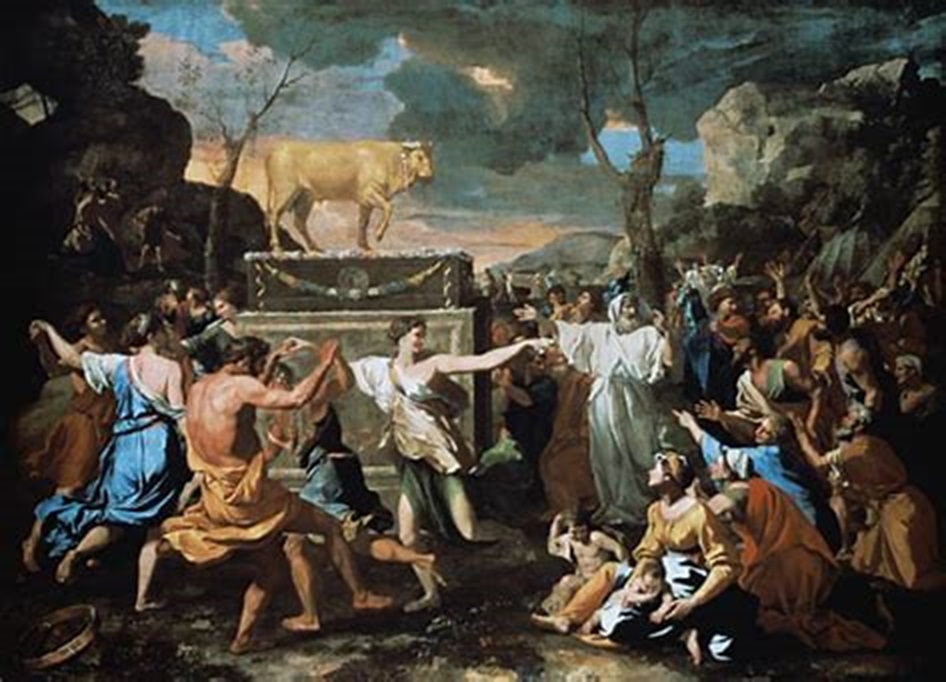
HALIFAX, Nova Scotia, November 20, 2024 – In the Gospels, Jesus states that Moses introduced laws that were contrary to God’s, and that Moses did so because of the “hardness of your hearts”. In other words, Moses legalized sin (such as adultery, by allowing divorce for any number of reasons) because the children of Israel were too spiritually immature to do what was right in God’s eyes, but he didn’t want to alienate them.
Did Paul do the same as Moses? We know Paul mainly from his letters to various churches. In one of those letters, Paul laments that the people there are too spiritually immature to receive the message he wants to give them, that spiritually they’re still drinking mother’s milk when they should be eating hard foods. He also refers to incidences of incest and other sins that frankly leave me wondering whether some of those people were believers at all.
Based on Paul’s letters, it seems that the worldly church was already off and running in the years immediately following Jesus’ ascension. Just as Jesus attracted some drive-by adherents during his ministry years, Paul was also dealing with half-hearted believers. But unlike Jesus, who openly discouraged his less-committed followers and didn’t hesitate to separate the wheat from the chaff, Paul appeared to want to appease the spiritual laggards so as not to thin the herd. In this, he acted more like Moses than Jesus, and perhaps for the same reasons as Moses.
Scripture informs us that of all the people who left Egypt during the exodus, only two fighting-aged men (Joshua and Caleb) made it to the promised land. This means that everyone else aged 20 and older died during the 40-year journey through the desert. God threatened to slaughter them all immediately after the golden calf incident a few months into the journey, but Moses pleaded with him and God relented. He allowed them to live only because he could use them to further his aims for Joshua and Caleb and for those who were younger than 20 at the time. The doomed in the desert were given the job of raising the next generations based on the laws God had dictated to Moses and fighting any enemies they encountered during their wanderings. They were also to serve as a visible and enduring sign of God’s presence on Earth. These are the sole reasons why God kept them alive.
The worldly church is full of the same kind of doomed people who would turn against God in a heartbeat, if circumstances warranted. We know they’d turn against God because they’ve done so already in any number of ways, willfully bringing pagan practices into the church, instituting doctrines of man, and unapologetically living the life of the world so that to the casual observer there is little to distinguish a worldly church member from, say, an atheist or even a satanist. Still, throughout the ages, God has kept these double-minded people alive and allowed them to engage in their rites and rituals because they have a use and purpose for his genuine Church – namely, they act as an incubator, birthing and raising believers until those believers are strong enough to survive outside the worldly church. They also provide resources for God’s children and serve as a visible and enduring sign of God’s presence. These are the tasks assigned to the worldly church today, just as they were assigned to the fledgling worldly church millennia ago and to the children of Israel who made it out of Egypt but didn’t make it to the promised land.
Jesus, on the other hand, was more stringent in his selection of followers because he had to be – he was laying the groundwork for the Kingdom, not for the worldly church. Far from appeasing those who were curious about him, he actively discouraged people from following him by highlighting all the difficulties that came with being his follower. He took everything but their lives away from his twelve disciples and demanded that anyone else who follows him must likewise give everything up. And even those who did do everything he asked of them, he constantly challenged further by demanding they think as God thinks, not as the world thinks.
And so, those in the Kingdom were to love their enemies, which is a concept that was unheard of until Jesus preached it (and is still a hard thing for most people, including and especially those in the worldly church). They were also to embrace poverty and accept being outcasts, all while praying for those who shunned and hated them. They were to keep God’s Commandments, including never to kill, even if it meant they die at the hands of their enemies. And they were to focus on the life to come, not on this life: God was to be their all, as he was for Jesus.
We’d be hard-pressed to find anyone in the worldly church who adheres to Jesus’ requirements of his followers. But God doesn’t expect them to adhere to these requirements and also doesn’t need them to. The role of the worldly church differs from that of the Kingdom, just as the role of the doomed children of Israel differed from that of Joshua and Caleb. With God’s permission, Moses adjusted some of God’s laws to better suit the double-minded, and Paul watered down certain aspects of the Gospel to suit the fledgling worldly church. Their aim in so doing was to keep the numbers up and growing in order to create an incubator for God’s children and an enduring sign of God’s presence on Earth. In their sermons today, the various denominations of the worldly church focus nearly exclusively on the teachings of Paul rather than on the teachings of Jesus, because Paul’s letters were written for people who are not born-again, whereas the Gospels were written for born-again believers.
This blog is written for born-again believers.
FORCE-FEEDING THE WORD: ON MEGAPHONE AND PUBLIC TRANSIT PREACHING
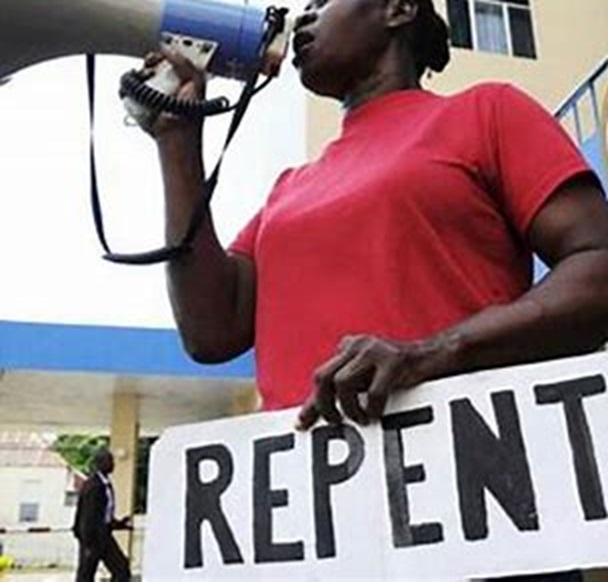
HALIFAX, Nova Scotia, November 19, 2024 – We are blessed beyond measure to have Jesus as our example. Over the three years of his ministry, he showed us how to do everything we’ll have to do during our time on Earth. Still, many Christians ignore Jesus’ example when it comes to preaching the Word. I’m talking here mainly about megaphone street preaching and public transit preaching, the latter which unfortunately appears to be a growing trend. These preachers are like the proverbial bull in the China shop spiritually, causing destruction and chaos wherever they show up. The Word cannot be sown in such an environment.
Based on what I’ve seen, I’d say it’s mostly ego and frustration that drives these preachers to yell at strangers. The only other people I see yelling in public spaces are the sleep-deprived homeless, strung-out addicts, and the deranged, all of whom at least have a valid excuse for their outbursts. As you know if you’ve spent any time here at all on this blog, I am a fully committed born-again follower of Jesus, but whenever any of these preachers come at me screeching Jesus’ name and accusing everyone within earshot of being sinners, all I want is for them to shut up. They sound possessed with a devil rather than filled with God’s Holy Spirit.
You cannot force-feed the Word. If people aren’t hungry for the Truth, they won’t swallow it, not one bite. It doesn’t matter how eloquent (or loud) you are or how true your words: Only the hungry will want to feed, and so only the hungry should be fed. That is a spiritual fact of life that even God won’t override.
Some priests and ministers guilt their parishioners into “reaching out” to people who reject God. Based on the Gospels, we’re not meant to reach out – we’re meant to stand in God’s Truth: Those who want the Truth will eventually reach out to us, and we’ll be there for them. We need to let them know that we’re there for them, but we also need to let them come to God and Jesus in their own time and in their own way. If we force the matter – if we try to force-feed them God and Jesus – we may win some reluctant half-believers, but these will be weak in their faith and will fall away at the first test or trial.
The gospels give us numerous examples of how and where Jesus preached. Under no circumstance did he force himself on others; he always waited for people to come to him. Equally importantly, he ‘read the room’, whether indoors or outdoors, and adjusted his message accordingly. Everyone who came to him did so with a unique need, and Jesus tailored his message to satisfy it spiritually. For instance, the Pharisees came to him dismissively and arrogantly, needing to be warned about their pride and hypocrisy, whereas the adulteress came to him in tears, needing to be comforted but also warned not to sin again. These two very different messages were delivered entirely differently, as they were meant to satisfy two very different needs.
Along with waiting for people to come to him and tailoring his message to the listener, Jesus was careful to leave people with a sense of hope. The Good News is, after all, the most joyful of all messages, so any preachers of the Word who leave their listeners with a feeling of shame or despair rather than an upwelling of hope are doing the Gospel a disservice. Even if you believe that someone who came to you is about as close to being beyond hope as any person can be, you still feed that person hope. No-one who comes to us in earnest is fully beyond hope, no matter how hopeless it may appear to us on the surface. Again, no-one who comes to us in earnest – not in anger or abusively, not feignedly or with evil intent – no-one who comes to us earnestly seeking to be fed God’s Word is beyond hope, or God’s Spirit wouldn’t have sent them to us.
You can see from the above that megaphone and public transit preaching doesn’t align with the preaching examples given to us by Jesus, which means the people who do this type of preaching are following a wayward spirit rather than God’s Holy Spirit. Certainly, fashions change and with them circumstances and technologies, but if Jesus consistently modeled one way of preaching and people today choose an entirely different way, they can’t expect their efforts to be successful. To me, megaphone street preachers and public transit preachers are less like Jesus and more like the demon-possessed woman who followed Peter and Silas around, constantly shouting that they were from God and were showing the way of salvation. Certainly, she spoke the Truth (devils often do), but she was an irritant and did not help anyone by her constant interruptions. The last thing we want to be when we’re delivering God’s Word is an irritating, unhelpful, interruption.
Preach as Jesus preached; don’t be ego- or devil-driven. Let the hungry know you’re there, but let them come to you; and when they do come, feed each of them according to their expressed and unexpressed needs.
Read the room.
Tailor your message.
And always end with hope.
SHHHHH!

HALIFAX, Nova Scotia, November 19, 2024
**********
And who are they? (I pointed to a long line-up stretching as far as the eye could see.)
Those are the ones who thought they could get into Heaven by faith alone. They lived the life of the world and didn’t take the time to get to know God as their loving Father. They were certain that all they needed was “faith” because that’s what their pastors told them. But then they showed by living the life of the world and remaining strangers to God that they didn’t have any faith at all, none whatsoever. It was all just talk.
And those ones over there? (I pointed to another seemingly endless line.)
They thought they could work their way into Heaven. They thought that if they read the Bible and went to church and gave money to charity and volunteered for church activities and missionary work, that was enough. They didn’t spend any time getting to know God as their Father, even though they knew they needed to know him. They just kept busy doing church things.
But if they knew they had to know God as their Father, why didn’t they do it? What stopped them?
They weren’t born-again. You can know about God if you’re not born-again, but you can’t know God as your Father and have a close loving relationship with him unless you’re born-again. You don’t even want to know God personally if you’re not born-again, because you’re still full of unrepented sin. It’s your sin that keeps you from wanting to get close to God and it’s your sin that will keep you out of Heaven.
And what about those ones over there? They look miserable!
They are miserable. Those are the souls who were told they could believe in anything they wanted, as long as they were a good person. They treated spirituality like it was a cafeteria and they could take a little bit from this belief system and a little bit from that, whatever they were hungry for at any given time. They were told that being a good person was all it takes to reach Paradise. Otherwise, they could believe in any religion they wanted to or none at all.
It doesn’t look like Paradise is where they think they’re going.
No, it’s not where they’re going, and they know it now, but they found out too late.
(It made me sad to see all the souls who’d resisted hearing God’s Truth during their time on Earth, but I couldn’t help them anymore. And then I remembered the souls who didn’t resist hearing God’s Truth. It made me happy to think about them, and I wanted to see them.)
What about the ones who’re going to Heaven? Where’s that line-up?
There’s no line-up for the souls going to Heaven.
What?! Why not?
Because those souls don’t need to line up. When they leave their earthly bodies, they go straight to Heaven. A few, like Moses and Elijah, start doing missions right away, but the rest fall into a deep dreamless sleep. They’re dressed in long white robes and their beds are covered in the finest white linen. Think Sleeping Beauty, only much more beautiful. They sleep the best sleep they’ve ever had, and they stay sleeping right up until Judgement Day.
Can I see them sleeping?
No, you can’t.
Why not?
Because they’re sleeping!… Shhhhh!
 A BORN-AGAIN BELIEVER