
Home » Posts tagged 'God’s Holy Spirit'
Tag Archives: God’s Holy Spirit
ON NOT READING THE BIBLE

HALIFAX, Nova Scotia, August 20, 2026 – I was offered the opportunity a few years back to learn Biblical (ancient) Hebrew so that I could read the Old Testament in the original script. I considered the opportunity, discussed it with God, and then respectfully declined. The same opportunity arose again recently, and again I respectfully declined. I’m not against learning Biblical Hebrew or against reading a text in its original language. Both of those things have their merits. I just don’t need to learn Biblical Hebrew in order to read the Bible. In fact, I don’t need to read the Bible at all, and I’ve learned from God that it’s best not to read it.
Let me explain.
The Bible is not a book in the sense that other books are, well, mere books. Unlike mere books, the Bible is a living instrument that God uses to teach us about himself, his Kingdom, and whatever it is we need to learn at any given moment. You can read the Bible, if you want to, in much the same way as you can read a mere book, but your reward in reading the Bible this way is that you’ll get from it as much as you would a mere book. That is to say, you won’t get nothing out of it, but you also won’t get much.
The Bible isn’t meant to be read by us: It’s meant to be read to us by God through his Holy Spirit. If we try to read the Bible under our own initiative and by our own understanding—if we pore over it like the temple elders pored over their scrolls, searching in vain for evidence that the Messiah should or should not come from Nazareth—we’ll learn about people who lived in different places at times, about what these people did (or didn’t do), and about how they died. In learning these things, we’ll form a rough idea of the characters named throughout the Bible, but that’s about it. In other words, we’ll get from the Bible the same depth of information we’d get from any other book, any other mere book.
But if we let God read the Bible to us through his Holy Spirit (the same Holy Spirit that lives in each one of us), something entirely different happens. We see beyond the words on the page, be they ancient or modern Hebrew, Greek, English, etc. In fact, we don’t even need words when God reads us the Bible. The day I was reborn, God spoke to me not in words but in ideas and images. The same thing happens when God reads us the Bible, which is why the language on the page in front of us doesn’t matter. God will help us understand what we need to understand and to see what we need to see supernaturally. Even the version of the Bible (King James vs English Standard vs New Revised Standard, etc.) is ultimately irrelevant: If changes were made to the original text that God didn’t approve, he’ll skip right over them, and we won’t even know they’re there.
We don’t need to approach the Bible as experts in ancient languages: We just need to ask God to read it to us, and he will. And when we open his book (we still need to open it!) to the chapters and verses he wants us to focus on, he’ll open our understanding in ways that can never happen if we read the Bible on our own. He’ll teach us not through the words on the page but through his Word and by the power of his Holy Spirit.
So don’t bother reading the Bible; let God read it to you.
AMONG US

HALIFAX, Nova Scotia, July 13, 2026 – When you take God out of the equation, you have nightmare humans consumed by demons and doing the demons’ bidding. Each successive generation exceeds the former in the measure of evil they arrive here with. That means the souls incarnating now are, even at their birth, already evil in measure beyond that of their parents. The initial measure of evil then increases exponentially when the soul is raised in a Godless home.
The worst form of child abuse is spiritual abuse, which is parents not teaching their children about God and his Commandments, and about Jesus and his victory. By this measure, nearly every child being raised today is spiritually abused. This form of abuse lays the groundwork for every kind of behavioral problem. There are no behavioral problems that don’t directly relate back to spiritual abuse.
I was raised in a strict home, though not a God-fearing one. So I learned to behave appropriately around adults (because they had the authority to punish me), but when I was alone with other children who couldn’t punish me and wouldn’t tell on me, I gave the devil free reign. We did unspeakable things, believing no-one saw us and so there’d be no consequences for our behavior. But God (as I know now) sees everything and there are always consequences. It was a long time before I connected my suffering with my evil behavior.
It takes my breath away to think that the horrors I instigated “out of sight” all those years ago are but child’s play to the generations that came after me.
I talked to God about this, and about the successively evil generations coming into the world, and he assured me of two things: one, that bornagain souls would exist until the end of time, and two, that among the increasingly evil souls being incarnated, there are also a few blessed ones. These souls are like John the Baptist or like Jesus, coming into the world already with a measure of God’s Spirit in them. As such, they don’t need the rebirth process, they only need to navigate the everyday horrors of modern life while retaining their blessedness. God told me I’ve met a few of these souls already in passing. All genuinely born-again believers have met a few of these souls. You’ll know them by your immediate connection with them, like we have with each other. Their arrival means we are well and truly in the end times.
Daniel mentions the coming of these souls, as does Jesus. They are the souls who will do exploits beyond what even we can do as bornagain believers, and their presence in the flesh is meant to be a comfort to us. Knowing they are here now, walking among us not as angels but as humans, gives me a spiritual boost. They are emissaries directly from Heaven, reinforcements sent to bolster our ranks. Evil may abound, but grace will always exceed it in measure, if not in number. As children of God, we may be vastly outnumbered by those of the devil, but we’ll never be outranked. David slew Goliath not because he was bigger and stronger than Goliath, but because David let God work through him.
When we let God work through us, we can, as individuals, withstand a thousand thousand of souls who have only demons working through them. We must never forget that; we must never forget that it’s not our strength but God’s strength that will get us through whatever we have to go through to get Home. Hand in spiritual hand with God and with each other – and with those blessed souls now coming among us – we’ll make it Home.
FOUND

HALIFAX, Nova Scotia, May 2, 2026 – One of Jesus’ major accomplishments (among his many, many major accomplishments) was to move his followers away from worshiping buildings and rituals and artifacts and towards worshiping God in what Jesus called “spirit and truth” – that is, worshiping God sincerely, unfeignedly, and through the power of his Holy Spirit. If you worship God in spirit and in truth, you’re always in worship mode: your worship is as natural and involuntary as your breathing. Jesus said we wouldn’t need to go to the temple in Jerusalem or to participate in any of the rituals and sacrifices that take place there. Those requirements were finished with Jesus’ sacrifice. The only ritual Jesus commanded us to observe was the Passover, which we were to alter as he showed us and to do so in memory of him. No other rituals are required.
The dawn of the age of the New Testament was the death of the age of religion. We are in the New Testament age now. Souls that are cleansed with the blood of Jesus need no further sacrifice, as that sacrifice was one-and-done and perfect, as per scriptural requirement. We need no additional messiah, as Jesus is our one-and-only Messiah, and we need no additional god, as our heavenly Father is our one-and-only God. These are the foundational facts of our beliefs embedded within and throughout the old and new testaments: One sacrifice, one Messiah, one God. We need no other.
I get pestered occasionally (I use the term “pestered” lovingly here) by polite young men who walk up and down my street in twos, asking strangers if they’d like to go to church. I’ve been pestered walking up my driveway, pestered walking out of the grocery store parking lot, and pestered just ambling along on my daily constitutional. They are very persistent, these young men, and each time they ask me if I’d like to go to church, I tell them I’m already in church, that I’m in church all the time. This always elicits from them that tight frozen-in-place smile people reserve for those they suspect might be crazy, but it does do the trick of getting them to back off and leave me alone, if only for the rest of my walk. I’m not sure which ‘church’ they’re so eager to get random strangers to attend, but judging from the fact that they’re always formally dressed and always in twos, I suspect it might be the so-called Church of Latter-Day Saints. Maybe next time I’ll ask them.
Worshiping in spirit and in truth means that we’re always in church. There’s no division between our lives and our worship, just as it was with Jesus. In our Church, which is also known as the Kingdom, spiritual Jerusalem, and Zion, there are only genuine born-again believers. We de facto become members of this Church at rebirth; there is no other way to enter it. We worship God through the abiding presence of God’s Holy Spirit in us, which was given to us at our rebirth. The presence of God’s Holy Spirit in us also enables us to have constant communication with God and Jesus. They are constantly with us, just as Jesus promised us they would be, as long as we remain in our regenerated state of grace. This is our life; this is our worship; this is our Church. All three are the same. We have no need for religion, and in fact it would be a spiritual step backwards for us to involve ourselves in religion. We are not the worldly church; we are the Church.
Being the Church, we constantly worship in fellowship with our brethren bornagain believers. This is what Paul called the cloud of witnesses that surrounds and envelops us, even if we don’t see them or hear them or know them by name. Through the power of God’s Holy Spirit, we are constantly with each other in Spirit, just as we’re constantly with God and Jesus in Spirit. This was another promise Jesus made to us, that we’d be one with God and with each other as he was one with God.
These truths permeate us even as God’s Spirit permeates us, protecting, informing, and comforting us. You’re comforted reading these words, knowing that I’m with you as much as Jesus and God are with you, through the power of God’s Holy Spirit. All your genuinely reborn brethren are with you—right here, right now—through God’s Holy Spirit. We are that cloud of witnesses, the Church with no building, no artifacts, and no ritual beyond the one that Jesus commanded us to observe. We are in this Church not by human invitation or self-will, but by divine decree, for which we have God and Jesus’ sacrifice to thank.
We worship God in spirit and in truth, making no division between our worship and our lives. Jesus said that God is looking for people to worship him in this way. At our rebirth, we didn’t (as the religious saying goes) “find God”; God found us.
ON MARTYRDOM

HALIFAX, Nova Scotia, October 4, 2025 – I saw a video yesterday featuring a middle-aged woman bragging about her children being martyred. In her view, because the children had purposely been put in harm’s way in a war zone and had been killed as a result, Paradise was their guaranteed reward. The woman also mentioned that she hoped her two newly born grandchildren would likewise soon be killed. I’ve seen other videos with other women boasting the same thing. I find them deeply disturbing and can only wonder what Child Protective Services would have to say about this parenting style.
Martyrdom is baked into religious zealotry. Killing for your beliefs and dying for your beliefs (often both at the same time) are hallmarks of a deep-seated faith, but not all faiths are God-seeking, not all faiths are good. Moreover, there’s a difference between actively seeking martyrdom and submitting to it when it’s thrust on you. People who actively seek to be martyred (or actively seek for their children to be martyred) are not well people. This statement needs no explanation. Likewise, a belief system that encourages martyrdom either through killing or suicide (or both simultaneously) is not a healthy belief system. This statement also needs no explanation.
Actively and publicly pursuing martyrdom and expecting a heavenly reward for it is like the man who stood praying at the front of the temple, boasting loudly about his sacrifices so that everyone would see and hear him. Jesus says that man already has his reward (worldly attention and accolades) and God won’t be adding to it.
There was once a Christian theologian who taught that every believer should pray to be martyred. He exhorted his adherents not only to train for certain death but to actively engage in pursuits that would lead to their martyrdom. This is not an accurate take on the Gospel message. In the end, the theologian died at home not from being martyred but from ill-health brought on by an earlier stint in jail.
To my mind, preaching the pursuit of martyrdom is preaching another Gospel. God doesn’t ask us to purposely pursue martyrdom. Nowhere in scripture does Jesus say we should actively seek to be killed to fast-track our way Home. He says it may be necessary to endure persecution and imprisonment, but he never tells us to seek out persecution or purposely do things to be arrested and imprisoned. He himself only put himself in the position to be arrested and imprisoned (and tortured and killed) because it was “his time” and God had specifically directed him to do so. This scenario is entirely different from people who encourage and actively pursue martyrdom as a way of life.
God will never ask you to kill for your beliefs, though he may ask you to die for them. Like your court defence (should you ever need one), martyrdom is not something you should plan in advance. If it comes on you as a test, God will direct you at the time while also strengthening you to “endure to the end”. This is what Jesus taught us and so this is how we should approach martyrdom. We do not train for martyrdom, we do not actively seek out martyrdom, we do not encourage others to actively seek out martyrdom, and we do not pray to be martyred. The theologian who died at home of ill-health rather than being “gloriously martyred” (as he’d hoped and prayed) is a cautionary tale.
Again – God would never ask us to kill for him, though he may one day ask us to die for him. That we should be prepared to die for our belief is part and parcel of what it means to be a born-again follower of Jesus. We shouldn’t romanticize martyrdom, but we should be aware of its possibility, if only to know that, if and when it happens, we should continue to lean entirely on God.
But actively pursuing martyrdom? That’s not God’s Way. Human sacrifice is the domain of the Father of Lies, and he has zero jurisdiction over the allotment of heavenly rewards. Which means that while the devil may well sell you a ticket to Paradise, he can’t deliver on it, so buyer beware.
ARE YOU SPIRITUALLY ALIVE OR SPIRITUALLY DEAD?

HALIFAX, Nova Scotia, August 16, 2025 – There’s a conundrum that we born-again believers must contend with every day. Better said, there’s a spiritual fact that we need to accept as our indisputable reality: In their soul, which is the seat of their will, humans have a measure either of God’s Spirit (which is holy) or of the world’s spirit (which is demonic). There is no third option, no “vacant” or “neutral” humans, no mix-and-match co-habitational arrangement where God’s Spirit shares a soul with demons. You either have God’s Holy Spirit in you, or you have unholy spirits. It’s either one or the other.
No third option.
As a born-again believer, I find this spiritual fact disturbing. I don’t think about it very often, and when I do, I don’t linger on the details. It’s enough for me to know that it’s a fact and to accept it as such.
Scripture tells us that at spiritual rebirth, we pass from death to life. We know this is true not just because scripture tells us it’s true, but because we’ve experienced it ourselves first-hand. It’s our lived reality. When God’s Spirit entered into us, we were alive for the first time in our lives. It’s a funny thing to say “we were alive for the first time in our lives”, because weren’t we alive all along, from the instant of our conception?
Physically, yes, we were alive, but spiritually, no. Other than for Jesus, we’re all born spiritually dead. We don’t come into the world spiritually innocent; we come burdened with Adam’s sin. It was Adam’s sin that brought death to the world – spiritual death, which is far worse than physical death. People who are not born-again and who are afraid to die don’t realize they’re already dead in the only way that matters.
When Jesus instructed one of his followers to “let the dead bury the dead”, he was letting us know the distinction between believers and unbelievers. Believers are spiritually alive, and unbelievers are spiritually dead. Believers belong to God (the living God), whereas unbelievers belong to Satan (lord of the dead). At the same time, unbelievers are plagued to varying degrees by demonic spirits, who also belong to and get their directives from Satan; no unbeliever is free of the demon plague. This is the source of all their emotional and mental illnesses, as well as the cause of most of their physical ailments.
As I mentioned at the outset, I don’t think about the spiritual state of humanity very often because the collective prognosis is so bleak. We’re surrounded by dead people, most of whom don’t even know they’re dead. They were born in their sins and will die in their sins, and that’s how they want it to be. They don’t want to hear about sin. They don’t want to hear about God and Jesus. Even as they rush to undergo every conceivable test and pretest to detect even the faintest presence of this or that disease, they deny their essential spirituality and the reality of their spiritually dead state.
What are we, as born-again believers, to do about these spiritual corpses? Recall that Jesus said: “Let the dead bury the dead” and to let “the blind lead the blind”. He didn’t tell us to run after them and ply them with scriptural passages or try to force-feed them the Gospel. He said to let them be. He called them dead and blind, and he said to let them be, to leave them to each other.
This is another disturbing spiritual reality that I don’t think about very often or when I do, for very long. Here in Canada, a self-described former Christian nation, we’ve reached near Sodom-levels of dead souls. Sure, “spirituality” is widely embraced and promoted, but not God and Jesus. (Don’t you dare mention God and Jesus!) Every other home has a “dreamcatcher” or a buddhist garden statue. Every other family has a pagan or a practicing witch. Whenever there’s a disaster, “thoughts” can be offered “in solidarity” with those who are suffering, but not prayers. (Don’t you dare mention prayers!) The most powerful force in the universe is not welcome here.
The spiritually dead state of unbelievers is not a figure of speech but a hardcore spiritual truth. We are surrounded by demon-infested spiritually dead people who are either unaware of their condition or, if they are aware, don’t care or have embraced it. Some have even free-willingly made a contract with Satan. You are either born-again and spiritually alive or not born-again and spiritually dead. There’s no third option. Being spiritually dead leads to eternal death, just as being spiritually alive leads to eternal life. You can’t be spiritually dead and end up in Heaven. That’s a spiritual impossibility. The only destination for spiritually dead souls is the lake of fire.
Which is why I don’t think about this spiritual conundrum very often. I’m confronted with it every day, but I don’t let myself dwell on it. It’s enough to know that this is our reality, that this is the world we live in for whatever time God allots us here. Rather than dwell on the spiritually dead, I choose instead to think about God and Jesus, about Heaven, and about feeding those sheep who do want to live. This is our mission, to feed those sheep as God gives us guidance.
We can’t help the dead who want to remain dead. They are not our mission. But we can help the sheep who choose life. That’s what Jesus did in his ministry, so that’s what we’re to do in ours.

ME, CHARLTON HESTON, AND AI

HALIFAX, Nova Scotia, July 17, 2025 – When I was eight years old, my grandmother took my sister and I to the movies one hot summer afternoon. We’d planned on seeing the latest Disney flick, but when we got to the theater, we found out that it was no longer playing. The sweltering hour-long bus ride from the suburbs had put my grandmother in no mood for an immediate return trip, and lured by the coolness wafting from the ticket booth window, she decided that what was on the screen didn’t matter: She needed to be in that air-conditioned theater. And so, she purchased one adult and two child tickets for whatever was playing that day, and what was playing that day was The Omega Man.
The Omega Man is a post-apocalyptic horror film starring Charlton Heston. Because it was made for adults, most of the movie was pretty much lost on me, though some scenes stay with me to this day. Granted, what frightened me as a child no longer frightens me as an adult, but what caught my interest then still draws me now, and what caught my interest was the solo life of the main character.
Far from being horrified by his aloneness, I was fascinated by it. I wanted to live alone in a big house like him and speed through deserted streets in a cool car like him. I wanted to shop in deserted stores like him and wander through deserted buildings like him. I’m not sure this was the response that the screenwriters had hoped to elicit from the audience, but it’s what they got from me. That’s what I took from the movie as a kid, that, and the certain knowledge that if your afro suddenly turns white, you’re doomed.
I’ve since rewatched The Omega Man, this time as an adult. I’ve also watched The Last Man on Earth, starring Vincent Price, and I Am Legend, starring Will Smith. All these movies are based on the same novel, and all feature a strong but reluctantly solo male character whose downfall starts when he allows a female into his safe space (plot sound familiar? lol ;D). To me, all the movies kind of fizzle out as soon as the female arrives and the focus shifts from the male’s ingenious survival techniques to the male throwing all caution to the wind for the sake of “gettin’ some”.
The allure of living alone in a deserted city remains as strong for me today as it did years ago. At the start of the so-called pandemic in early 2020, I was the one wandering the deserted streets at all hours and riding around in empty buses. I was the one who didn’t want the lockdowns to end if it meant people continued to cower in their houses and work and study from home. I was the one who wanted the whole store to myself—the whole city to myself—and for a few fleeting moments it seemed like I did.
I mention the Omega movies because I had a curious daydream today that may or may not have been inspired by them. In my daydream, I was the only person living in my part of the city. The reason I was the only one living there is because I was the only one who was born-again. Everyone else had left or died or had otherwise been removed. But far from feeling lonely, I reveled in my aloneness: I’d waited a long time to have this place to myself.
I was aware that there were other born-again believers in other parts of the city. We’d spy each other in the distance on occasion and wave in greeting, but we felt no pressing need to meet up. We were happy to be in our own and God’s company. It was enough for us to know that there were other born-again believers out there as far-flung neighbors and that we could meet up at any time if we wanted to. We also knew that we had nothing to fear from each other because we were God-approved and God-affirmed. We wouldn’t be there if we weren’t.
And so, in my daydream, I lived a life of ease and comfort, never locking my doors, never wary of going out after dark, never worrying about anyone stealing my bike or any of my possessions. I went to stores that stocked all my favorite things, and I never had to pay for them. All the services required for modern life, like clean running water and electricity, continued as before, only better. I lacked for nothing, and everything ran smoothly and seamlessly. But how was this possible with only a handful of people living in the city?
Enter AI. An army of bots had been programmed to provide for my and my neighbours’ every need. From the planting of seeds to the harvesting, processing, delivery, and even display of the final products, everything was done by robots that were directed and monitored by AI. Self-driving buses carted me around on my daily adventures unless I wanted to drive one of the countless abandoned cool cars at my disposal. Self-driving garbage trucks picked up my garbage at my command. If I fancied a pizza, bots would prepare it for me and deliver it piping hot, all within a half hour (and still free!).
As I delved deeper and deeper into my daydream, it occurred to me that what I was seeing was a high-tech version of Heaven that was super-imposed on my current surroundings. It was an idealized here and now that had some elements of the post-apocalyptic movies I’d seen, but with all the negative aspects removed. Instead of mutants and zombies, born-again believers were my neighbors. Instead of overgrown streets and crumbling buildings, tidiness and order ruled the day. Instead of having to forage for leftovers in dead people’s fridges, I was offered fresh produce in pristine stores.
But then I thought: What’s the point of having Heaven on Earth if I can have Heaven in Heaven? I might finally have good neighbors if they’re all born-again, but bugs and dogs can bite me here, and I still generate waste and need a bath. For all its wonders and conveniences, the AI-enabled city I’d envisioned falls far short of the supernatural perfection that awaits us in Heaven. Earth can never be Heaven, no matter how high the tech, and trying to make it so is a waste of time.
Better to daydream about (and wait for) the Real Thing… and maybe be a little pickier about the movies I watch next time!
ON BETRAYAL

HALIFAX, Nova Scotia, July 6, 2025 – One of God’s chief promises is that he will never betray us. I think this promise doesn’t get the star treatment it deserves because most people haven’t lived long enough or suffered enough betrayals to understand its true value. During his time on Earth, Jesus never entirely confided in anyone except God, never put himself in a position of emotional vulnerability with anyone except God because, as scripture tells us, he knew people’s hearts. And knowing people’s hearts, Jesus knew that people were just a hair’s breadth away from betraying him at any given moment.
And he wasn’t wrong about that, considering that even his most loyal disciples ran from him at his arrest and then later denied knowing him. But knowing people’s high probability of betraying you gives you the advantage of not being surprised or even let down when they proceed to do so. We see this in how Jesus responded to his disciples’ betrayal. We need to deal with people who betray us in the same way Jesus dealt with them, all while learning from their betrayal that we’re to trust no-one but God.
I have lived long enough and suffered enough betrayals that I now, like Jesus, only put my trust in God. But it was a hard journey to get there. Unless we live in complete isolation, we interact daily with people, most or likely all of whom are not born again and therefore don’t consider themselves answerable to God. Not considering themselves answerable to God, they’re capable of virtually anything they believe they can get away with, and I’ve personally experienced some real doozies (and done a few myself, before I was reborn). But in every case where I was betrayed after my rebirth, I really didn’t have anyone but myself to blame for trusting people I knew in my heart I shouldn’t trust, not because they purposely choose evil, but because they’re guided by evil without knowing it.
It’s not virtuous to be unwise, and to trust people who are not born-again is unwise. That’s not to say that people can’t be trusted to a certain extent; you have to trust them with mundane everyday tasks or you’d have to withdraw entirely from society and live like John the Baptist before he started his ministry. Even Jesus didn’t do that and prayed that we’d be protected from the world, not taken out of it. He didn’t want us to isolate ourselves from the world, just to be wary of it and be protected from it. In other words, he prayed that we’d interact with the world on the same terms as he interacted with it during his ministry years.
God’s emphasis on his promise not to betray us highlights the importance God places on loyalty. If God values loyalty to such a great extent, so should we. That means we should not only expect it (though again, not from people), we should give it first and foremost to God, but also to people who are likely to turn around and betray us.
We are to expect betrayal from people and so not be surprised when they fulfill our expectations. In not being surprised, we should also not be angry or vengeful about it. Jesus wasn’t. Instead, knowing people’s hearts, Jesus chose not to make himself vulnerable in any way to people so that their inevitable betrayals would not hurt him.
Does this mean we should emotionally harden ourselves as a form of protection? God forbid. We were given a heart of flesh for our heart of stone at our rebirth, and we dare not go back on that trade. We should never emotionally harden ourselves but instead live with the understanding that we will, at some point, be betrayed even by those closest to us, but we will never be betrayed by God. Having this understanding, we allow ourselves to be ourselves only with God, and to give our confidences only to God, and to trust only God. This we can choose to do (it’s a choice), and if we choose not to do it, we have no-one to blame but ourselves when we suffer the consequences of human betrayal.
I love God with all my heart, soul, mind, and strength, and when I’m hurting in any way, I run to him for relief. Among God’s many wonderful characteristics is his utter candor, and so when I run to him with my hurts, he generously lets me know how they came to pass. He does this not while standing at a distance and pointing a finger at me but while I’m sitting on his lap and he’s soothing me. And in every instance, I learn (thanks to God’s candor) that I brought the pain on myself one way or another, usually by trusting the wrong person.
I thank God for this lesson, and his candor, and his soothing.
God’s promise not to betray us is an implicit invitation for us not to betray him. It’s also an implicit invitation to live like Jesus did during his ministry years, not hardening our heart to others but choosing very carefully what to confide and what to hide. God’s promise not to betray us likewise implies that everyone else will sooner or later betray us, a sad fact of this world that is backed up by scripture. Knowing this, we should expect betrayal and not be surprised or outraged by it. Rather, like Jesus, we should do all we can to avoid opening ourselves to betrayal, but if we still end up suffering it, we should take our hurt to God. He will soothe us, all while dealing with our betrayers in his time and in his way.
We can trust God implicitly to do that because he promises us he will, and he would never betray a promise to us.
ON SUFFERING FOR OTHERS’ SINS
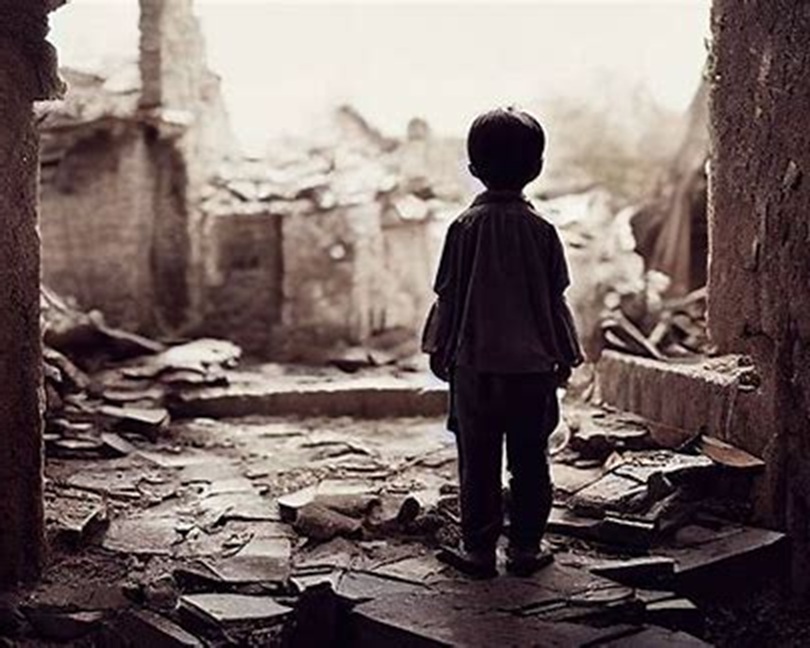
HALIFAX, Nova Scotia, July 6, 2025 – One of the most grievous errors of Christianity is the mistaken belief that you can suffer for others’ sins, that you can take on the burden of their suffering and in that way exonerate them and pay their sin price before God. You cannot do that. Only Jesus could do that, and only for very specific sin. The sin price Jesus paid on the cross was Adam’s sin, which he could only do because he himself was sinless. No-one else could have paid Adam’s sin because no-one but Jesus was sinless.
In paying the sin price owed by Adam, Jesus negated the need for any further ritualistic sacrifice and opened the door for “whosoever will” to enter into right relationship with God again. That door was firmly shut until Jesus’ perfect sacrifice. It’s open now, but only to those God draws to him. Even with Jesus having paid the sin price, we’re still all born sinners. No-one is born in right relationship with God: you’re reborn into right relationship, just as no-one is born a child of God but reborn a child of God. These distinctions are critically important, as they form the basis of who and what we are as born-again believers.
The recent media spectacle of the conclave leading to the coronation of Peter the Roman (a.k.a. Pope Leo the 14th) threw a spotlight on the rank and file of the abomination known as the Catholic church. That organization is infamous for selling ways to reduce sin-related suffering for a certain price, the chief one of which is “indulgences”. Luther condemned the selling of indulgences and in fact pointed to indulgences as being his main motivator for breaking away from the papacy. Unfortunately, that wasn’t the end of the “pay for pray” grifts, as indulgence-like mechanisms persist throughout all denominations even today, fooling people into parting with their money under various promotions such as “donations”, “tithing”, and “sowing”. But the idea underlying what amounts to spiritual extortion is the same as for indulgences: Give us your money, and we’ll make your life better.
As born-again believers, we know that the only way we can make our lives better is through genuine repentance, followed by humbly suffering whatever God deems we need to suffer. There’s no shortcut through this process, no matter how much people want to avoid the suffering part. The good news is that after we repent and are back in right relationship with God, whatever we need to suffer – our own personal sin price – is mitigated by our love for God and his love for us. I’m not saying suffering can be made pleasurable; I would never say that. I’m just saying earned suffering doesn’t feel as bad when you’re in right relationship with God. Scripture says that God will wipe away all our tears, and so he does. No-one can kiss away the pain of a spiritual boo-boo quite like our heavenly Father.
As much as we might want to, we cannot suffer for others as a way to pay their sin price before God any more than we can pay a certain amount of money to make our suffering go away. We all need to make our own peace with God and to do so in our own time and our own way. It cannot be done on by others on our behalf. Jesus paid the sin price owed by Adam and was able to do it 1) because he was born sin-free and 2) lived his life here on Earth sin-free and 3) was tapped by God to do it and agreed to do it. Jesus became the perfect sacrifice that ended the need for any further temple sacrifices.
We, on the other hand, were born in sin and continued to sin up until our rebirth, and then on occasion we sinned again, though not grievously if we’re still born-again, not to the loss of our grace given to us by God at our rebirth. Still, getting into right relationship with God was a process we had to go through; it wasn’t a birthright, just as staying in right relationship with God is an ongoing process, not a “one and done” deal, as false prophets would have us believe.
We cannot suffer for others’ sins because we’re not Jesus, meaning that we weren’t born sinless and haven’t lived sinlessly and aren’t tapped by God to suffer for others. As born-again believers in right-standing with God, we can pray for others, we can help others, we can teach others, and we can preach to others, but we cannot suffer on their behalf: We cannot pray away or pay away their sin. They need to suffer on their own and to the full measure allotted by God. This is a spiritual principle that we need to take to heart lest we, too, be fooled by grifters or by our own spiritual arrogance.
ON SUFFERING TESTS AND DUE REWARDS
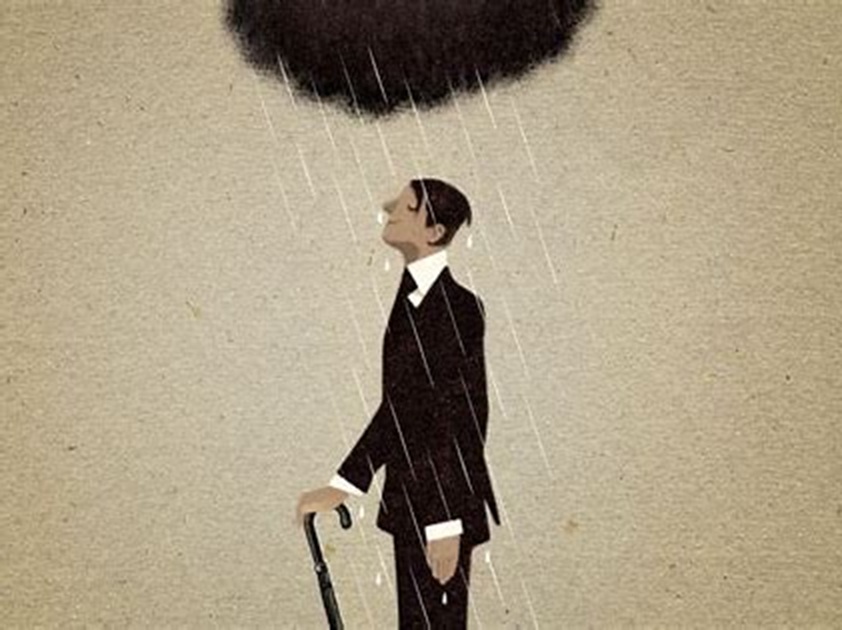
HALIFAX, Nova Scotia, July 6, 2025 – People don’t suffer injustices: They suffer tests of spiritual character and due rewards. If you fight back against either, you won’t advance spiritually. Even Jesus’ crucifixion wasn’t unjust, as we know from scripture that Jesus agreed to suffer (test of spiritual character) for Adam’s sin (due reward).
Although the concept of willingly suffering tests of spiritual character and due rewards is alien to unbelievers (who run to a doctor for every ache and pain and to a lawyer for every perceived slight), it shouldn’t be alien to us. By “willingly suffer”, I don’t mean we should go out of our way to volunteer to suffer. Jesus didn’t go out of his way to volunteer to suffer. He didn’t petition God to suffer; he agreed to the messiahship that God offered him, part of the terms of which was to suffer crucifixion. Remember how Jesus, in the garden of Gethsemane, tried to last-minute negotiate a way around those terms? God held his ground. Sometimes you just have to go through what you have to go through, as the agreed-upon terms are writ in stone and therefore inviolable.
In those cases, you don’t have to embrace the terms, you don’t even have to like the terms – you just have to accept them and go through whatever you have to go through. But ironically, when you do make that decision to agree to God’s terms (a decision so profound it moves mountains in the spiritual realm), that’s when the real power starts flowing through you. We see this in Jesus, in everything he says and does after he exits the garden of Gethsemane up to and including his time on the cross. We see this in Paul, when he agrees to suffer whatever he has to suffer as an apostle of Jesus and of the Gospel. And I saw this firsthand in me, when I agreed to choose to forgive someone I thought was unforgiveable and was instantly reborn from atheist to full-on believer. In that unmeasurable span between choosing to forgive and being reborn, God showed me that the pain I’d felt (or what I thought was injustice) was the pain I’d earned (through what I’d done to others). And then he filled me with his Holy Spirit.
For us, as born-again believers, there should be no question that we agree to suffer whatever we’ve earned or whatever God imposes on us as a test of our spiritual character. How else is God going to know (hard proof) that we choose him over Satan? It’s all well and good to say “Yes, I love and believe in God” and “Yes, I love and believe in Jesus”, but this kind of talk is as cheap as any other in an age when even solemn vows uttered at an altar are broken with a shrug. So how else is God to know that we choose him over Satan unless we’re tested and again tested and then tested again and again and again and again… until he’s satisfied that he and he alone has our whole heart and soul and mind and strength? Because if we don’t give God everything we have and everything we are, that portion we’re holding back (however small) goes to Satan, and that portion that we’ve forfeited to Satan (however small) will still be enough to lose us our spot in Heaven.
If we’re genuinely born again, we’ve been penciled in for a place in Heaven. Jesus said to his disciples: “Don’t rejoice that you have power over the demons; rejoice that your names are written in Heaven.” The highest privilege that can be granted a human soul is to be recorded by name in the Book of Life, but that privilege can be revoked (hence the penciling), which means we would lose our spot in Heaven. If it happened to angels, it can happen to us; if it happened to whole nations, it can happen to us. So we should never gloat over our privilege or take it for granted but be humbly ever-aware of it so that we do whatever it takes to maintain our heavenly reservation in good standing.
And if what it takes is to suffer our due rewards or tests of our spiritual character, those things are as nothing when compared to what awaits us when we get Home.
WE ARE NOT SINNERS

HALIFAX, Nova Scotia, June 29, 2025 – Just a quick reminder that you cannot be born-again and at the same time be a sinner. To be born-again means to be washed clean of your sins. You can’t be washed clean of your sins and at the same time live in a state of sin, which is what it means to be a sinner. You cannot obstinately, purposely, willfully, unrepentantly, perpetually, and with full and conscious intent choose to live in a state of sin and at the same time have God’s Holy Spirit in you. That would be a spiritual impossibility.
To be born-again means to be washed clean of your sins and to have God’s Holy Spirit in you. When this happens, when God’s Spirit is in you and all around you, you’re no longer a sinner—you can’t be, because sin and God’s Holy Spirit cannot occupy the same spiritual real estate. You’ll still have the capacity to sin while you’re on Earth in a human body, but having the capacity to sin doesn’t make you a sinner: It makes you human.
If people tell you (or worse, insist) that you’re a sinner (which I’ve heard from many a preacher), tell them they’re wrong. Tell them you’re born-again and in right-standing with God. Tell them you cannot be genuinely born-again and at the same time be a sinner. You can be tested and fail (we’ve all, except for Jesus, failed some tests), you can be tempted and fail (we’ve all, except for Jesus, failed some temptations), but these are short-term failures that you put behind you once you repent.
And if you’re genuinely born-again, you don’t delay repenting once God has brought your failure to your attention. You don’t hide from repenting: you crave it. You don’t resent that you have to repent: you embrace it with all your heart and soul. Repenting brings you back into right relationship with God, which is the only place you want to be as a born-again believer. For us, right relationship with God is our spiritual Home.
We born-again believers are not sinners. We do not identify as sinners, and we are not defined by sin. Again, just having the capacity to sin by virtue of still having free will doesn’t mean we’re sinners: It means we’re human.

