
Home » Posts tagged 'INCUBATOR'
Tag Archives: INCUBATOR
CHILDREN OF THE WORLD AND CHILDREN OF GOD
HALIFAX, Nova Scotia, November 20, 2024 – In the Gospels, Jesus states that Moses introduced laws that were contrary to God’s, and that Moses did so because of the “hardness of your hearts”. In other words, Moses legalized sin (such as adultery, by allowing divorce for any number of reasons) because the children of Israel were too spiritually immature to do what was right in God’s eyes, but he didn’t want to alienate them.
Did Paul do the same as Moses? We know Paul mainly from his letters to various churches. In one of those letters, Paul laments that the people there are too spiritually immature to receive the message he wants to give them, that spiritually they’re still drinking mother’s milk when they should be eating hard foods. He also refers to incidences of incest and other sins that frankly leave me wondering whether some of those people were believers at all.
Based on Paul’s letters, it seems that the worldly church was already off and running in the years immediately following Jesus’ ascension. Just as Jesus attracted some drive-by adherents during his ministry years, Paul was also dealing with half-hearted believers. But unlike Jesus, who openly discouraged his less-committed followers and didn’t hesitate to separate the wheat from the chaff, Paul appeared to want to appease the spiritual laggards so as not to thin the herd. In this, he acted more like Moses than Jesus, and perhaps for the same reasons as Moses.
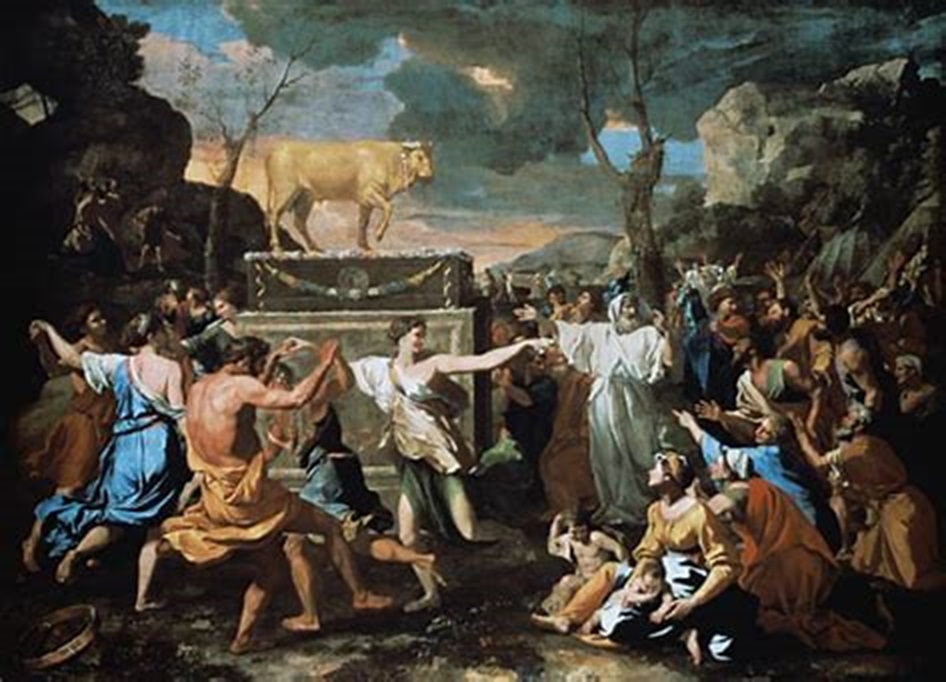
Scripture informs us that of all the people who left Egypt during the exodus, only two fighting-aged men (Joshua and Caleb) made it to the promised land. This means that everyone else aged 20 and older died during the 40-year journey through the desert. God threatened to slaughter them all immediately after the golden calf incident a few months into the journey, but Moses pleaded with him and God relented. He allowed them to live only because he could use them to further his aims for Joshua and Caleb and for those who were younger than 20 at the time. The doomed in the desert were given the job of raising the next generations based on the laws God had dictated to Moses and fighting any enemies they encountered during their wanderings. They were also to serve as a visible and enduring sign of God’s presence on Earth. These are the sole reasons why God kept them alive.
The worldly church is full of the same kind of doomed people who would turn against God in a heartbeat, if circumstances warranted. We know they’d turn against God because they’ve done so already in any number of ways, willfully bringing pagan practices into the church, instituting doctrines of man, and unapologetically living the life of the world so that to the casual observer there is little to distinguish a worldly church member from, say, an atheist or even a satanist. Still, throughout the ages, God has kept these double-minded people alive and allowed them to engage in their rites and rituals because they have a use and purpose for his genuine Church – namely, they act as an incubator, birthing and raising believers until those believers are strong enough to survive outside the worldly church. They also provide resources for God’s children and serve as a visible and enduring sign of God’s presence. These are the tasks assigned to the worldly church today, just as they were assigned to the fledgling worldly church millennia ago and to the children of Israel who made it out of Egypt but didn’t make it to the promised land.
Jesus, on the other hand, was more stringent in his selection of followers because he had to be – he was laying the groundwork for the Kingdom, not for the worldly church. Far from appeasing those who were curious about him, he actively discouraged people from following him by highlighting all the difficulties that came with being his follower. He took everything but their lives away from his twelve disciples and demanded that anyone else who follows him must likewise give everything up. And even those who did do everything he asked of them, he constantly challenged further by demanding they think as God thinks, not as the world thinks.
And so, those in the Kingdom were to love their enemies, which is a concept that was unheard of until Jesus preached it (and is still a hard thing for most people, including and especially those in the worldly church). They were also to embrace poverty and accept being outcasts, all while praying for those who shunned and hated them. They were to keep God’s Commandments, including never to kill, even if it meant they die at the hands of their enemies. And they were to focus on the life to come, not on this life: God was to be their all, as he was for Jesus.
We’d be hard-pressed to find anyone in the worldly church who adheres to Jesus’ requirements of his followers. But God doesn’t expect them to adhere to these requirements and also doesn’t need them to. The role of the worldly church differs from that of the Kingdom, just as the role of the doomed children of Israel differed from that of Joshua and Caleb. With God’s permission, Moses adjusted some of God’s laws to better suit the double-minded, and Paul watered down certain aspects of the Gospel to suit the fledgling worldly church. Their aim in so doing was to keep the numbers up and growing in order to create an incubator for God’s children and an enduring sign of God’s presence on Earth. In their sermons today, the various denominations of the worldly church focus nearly exclusively on the teachings of Paul rather than on the teachings of Jesus, because Paul’s letters were written for people who are not born-again, whereas the Gospels were written for born-again believers.
This blog is written for born-again believers.
 A BORN-AGAIN BELIEVER