
Home » Posts tagged 'Messiah'
Tag Archives: Messiah
WHY NAZARETH?

HALIFAX, Nova Scotia, August 21, 2025 – From the time he was old enough to know his own name, Jesus knew he was the Messiah. It was never a mystery to him, his messiahship, and even at the ripe old age of twelve, he was eager to be out and about doing his Father’s work. But God held him back for nearly two more decades, putting him through his paces and forming him quietly behind the scenes… until one day he emerged suddenly as Jesus the Christ.
But of all the places Jesus could have debuted as the Messiah, why Nazareth? Jesus had already started his ministry work when he made the announcement that shook the very foundations of the spiritual realm. He’d already built a reputation as a preacher and healer, working countless miracles in villages throughout Judea and beyond, and gaining a loyal and growing following.
But Nazareth – Jesus’ hometown was a whole other kettle of fish. There, Jesus was still just the son of a carpenter, big brother to a brood of brothers and sisters, and Mary’s eldest son. Sure, the villagers enjoyed listening to Jesus read from the scrolls, as was his habit on the Sabbath, but when he stood up that day to read the passage from Isaiah that foretold the coming of the Messiah and then announced that he was the fulfillment of that prophecy – well, you could have heard a pin drop. No ecstatic applause greeted his pronouncement. No flowers or teddy bears rained down on him. Just shocked silence, followed by murmurings and occasional angry outbursts and the growing realization among those present that a very great blasphemy had just been committed.
Surely Jesus must have known, when God advised him to choose his hometown to come out as the Messiah – surely Jesus must have known precisely the response he would get from his fellow Nazarenes. When they all leaped to their feet and drove him out of the synagogue and then out of the town itself, aiming to stone him to death and throw him off the cliff, Jesus must have known this would happen.
Death by stoning was the execution method prescribed in the law for cases of blasphemy, and calling oneself the prophesied messiah was the height of blasphemy. Had Jesus purposely set himself up to be executed? I mean, if he’d come out as the Messiah someplace else, someplace where he wasn’t known as the carpenter’s son but as a miracle worker and preacher par excellence – if he’d come out as the Messiah as a stranger in such a favorable environment, it’s highly likely he would in fact have been received as the Messiah and would have gotten his due shower of flowers and teddy bears from the adoring crowds. People might even have strewn their cloaks in his path, like they did when he rode triumphantly into Jerusalem a few years later, just before his crucifixion. But this adulation wasn’t going to happen in Nazareth, where the last thing he was considered was a prophet, let alone THE Prophet spoken of by Moses.
So we can only assume that Jesus chose Nazareth to come out as the Messiah specifically because he wanted to set himself up for future execution. He knew the response he would get from the Nazarenes, and he knew that they would not let it go, that they would report him to the temple elders, and that he would be a hunted man from that point on. But he also knew (because God assured him) that nothing would happen to him on that day or on the days to follow, and that he would continue the work that God had sent him to do until it was done.
We, too, if we’re genuinely born-again and are out and about doing our Father’s work – we, too, have had our moment of standing up in our local synagogue and announcing who we are, only to be met, like Jesus was, with shocked silence, averted eyes, and growing murmurings against us. Like Jesus, we’ve painted a spiritual target on our backs simply by proclaiming who we are, and by so doing, set the ball rolling towards our own execution. This I know for a fact.
And yet, like Jesus, I say: “Bring it on”. God will protect us until it’s our time, and when our time comes, God will be right there with us, like he was with Jesus. Being under the world’s condemnation and having a target on our back is part and parcel of being a born-again follower of Jesus. If you don’t accept being hated and hunted solely for who you are, you’re in the wrong line of work.
Just as surely as we had our Nazareth moment when we came out as born-again, we’ll have our Jerusalem moment when it’s our time. Jesus knew exactly what he was doing when he came out in Nazareth as the Messiah: He was setting himself up for the glorious “baptism” of the cross, which would be his (and our) only way Home.
“WHERE IS YOUR FAITH?”

GREENVILLE STATION, Nova Scotia, June 15, 2021 – We live in an age of widespread and constant fear that is continuously being stoked by politicians, “experts”, and various forms of media. In formerly Christian (that is, free) countries, physical safety has replaced freedom as the highest value. To achieve this safety, most people are willingly giving up their hard-won individual freedoms without a fight, putting their faith in lock-downs and injections while parroting the communist slogan “for the greater good”. Not surprisingly, the more freedom they give up to gain this promised safety, the more elusive it becomes, and the less safe they feel.
The Age of Fear has arrived.
Jesus lived his life fearlessly. Yes, he had a healthy fear of God, but that didn’t mean he was afraid of God; it meant he respected the power that God had over him. As a sign of his respect, Jesus did everything to please God so as not to fall on the wrong side of the power.
As followers of Jesus, we also have the same capacity to live as fearlessly as Jesus did while on Earth. But what made Jesus so fearless? What enabled him to live his life without fear of anyone or anything?
The answer is rooted in Jesus’ complete faith and trust in God, and in his understanding of God’s Kingdom on Earth. As soon as Jesus came out as the Messiah – the king of the Jews – the Kingdom was established. Jesus knew beyond a shadow of a doubt that he was under the protection of God’s Holy Spirit and holy angels while he was in the Kingdom. This was the safe place promised by God to his people: No physical or spiritual harm can come to those who live in the spiritual Promised Land. The physical protection lasts until it’s time to go home (when it’s removed to enable physical death), but the spiritual protection remains as long as the person being protected is in right-standing with God.
Imagine a private security firm made up of billions of expertly trained and well-armed guards surrounding you at all times, and then you have a bit of an idea of the protection afforded you by God’s Kingdom on Earth. When you’re in the Kingdom, your spiritual enemies can’t get anywhere near you. And even if they do, they have no power over you, not until it’s your time.
Jesus knew the protection afforded by the Kingdom and deeply understood it. In fact, it formed the cornerstone of his faith, which is why his response to his disciples’ fears and failures was typically “WHERE IS YOUR FAITH?” Faith is the opposite of fear. If you have faith in God, then you know God’s Kingdom has been established on Earth, with Jesus as King. If you know the Kingdom has been established and that Jesus is your king, then you know you are protected both physically and spiritually. This should give you the same level of fearlessness that Jesus had while on Earth.
So, if you find yourself being afraid of anyone or anything in this Age of Fear, ask yourself “WHERE IS YOUR FAITH?” Then do everything you can to deepen your faith and trust in God and get a better understanding of his Kingdom.
ARE YOU LOW LIKE JOHN THE BAPTIST OR HIGH LIKE JESUS?
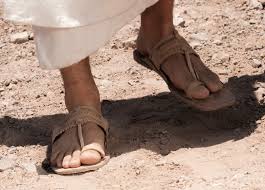
ROCKINGHAM, Nova Scotia, September 29, 2019 – The relationship between John the Baptist and Jesus goes much deeper than mere blood. They were cousins, but we only hear of them interacting in the womb, at Jesus’ baptism, and then shortly before John’s beheading. We can assume that, as cousins, they spent time together growing up and then later, as young men, probably passionately debated scriptures, with Jesus (the younger by a few months) likely besting his older cousin at every turn. At Jesus’ baptism at the River Jordan, John is obviously in awe of his younger cousin and openly considers himself to be so low as to not even to be worthy to put Jesus’ sandals on his feet. When John tells Jesus that he should be the one getting baptized, Jesus gently chides him to go ahead with the baptism in order to fulfill scripture. We catch there a glimpse of the younger cousin again schooling his older cousin.
Jesus calls John the greatest of those born of women, but then also calls him lowest in the kingdom (that is, born of the Spirit). What did Jesus mean by that? It almost sounds like an insult, just as John sending his disciples to Jesus to ask if he were actually “the one” sounds like an insult. Did the cousins have a falling-out that is not recorded in scripture? (more…)
FOR WHOM THE BELL CURVE TOLLS

HALIFAX, Nova Scotia, February 16, 2015 – Jesus ended his ministry on Earth exactly as he started it: Alone.
When he was naked and dying in agony on the cross, no-one except him believed anymore that he was the Messiah, just like no-one, when he was growing up, believed he would become the Messiah.
If you plotted in graphical form the number of followers Jesus had during his time on Earth, a classic bell curve would emerge. From the initial 1, the numbers would swell to many, and then back down to 1 again.
Ding, dong.
Jesus himself is not responsible for the sharp rise and fall of his follower numbers. Rather, it was his followers’ lack of understanding of scripture along with their unwillingness to accept Jesus’ mandate as being spiritual not political that led to their exodus from the truth.
When Jesus burst on the scene dispensing miraculous healings like free condoms at a Pride parade, nearly everyone wanted to be part of the excitement. Jesus was youthful and vibrant and he really sounded like he knew what he was talking about. He thumbed his nose at religious authorities, besting them in every argument, and had a genuine connection with the people. He was a likeable guy doing likeable things. What’s there not to like?
It was only when Jesus started to challenge his followers’ false beliefs that his popularity began to wane. People wanted feel-good excitement and a “winning” candidate that they could get behind, but Jesus was stating very clearly that the winnings would not be in Earthly terms, and that in fact the Earthly reward for being part of the Kingdom would be persecutions and social rejection. Who in their right mind would want to sign up for that?
As follower after follower drifted away, Jesus didn’t water down his message but instead pushed the remaining followers harder and harder. He was weeding them even as he was feeding them. Those who could stomach the truth, stayed; everyone else either ran screaming or slithered off in silence.
At the cross, no followers at all remained, just a few friends and family members along with some soldiers and the usual assortment of haters. No-one believed anymore that Jesus was the prophesied saviour. Some still loved him, but they didn’t believe in him. He alone persisted to his dying breath in the sure belief that he was the Messiah.
After Jesus died, the women went to his tomb a few days later to apply the spices that were part of Jewish burial rites. Even though Jesus had told them explicitly that he would rise from the dead in three days, they still went to dress his corpse. They didn’t believe he would rise because they didn’t believe he was the Messiah. Then, when they found his tomb empty, they simply thought his body had been moved. They thought Jesus was buried, not risen, because they no longer believed he was who he’d said he was.
Self-confidence is a beautiful thing when it’s based on truth. Jesus remained firm in his belief that he was the Messiah because his interpretation of scripture was God-based, not man- or demon-based. In assuming his role as the Messiah, Jesus hadn’t set out to win a popularity contest. He didn’t measure the success of his mission by how many followers he’d accumulated but by how closely he adhered to a Godly interpretation of scripture and how closely his will was aligned to God’s. And in both of these measurements, his mission was more than accomplished.
Most if not all of today’s churches measure their success quite differently. For them, “making converts” has become some kind of a contest and the church with the most “converts” wins the prize. But to make converts to their false version of Christianity, these antichrist Christians – these wolves in sheep’s clothing we were warned about – not only water down the gospel but sweeten it with saccharine lies. I have stood in many of these churches, as have you.
I will stand in them no more, even if it means, like Jesus, I stand alone.
Even if it means, like Jesus, I die alone.
 A BORN-AGAIN BELIEVER