
Home » Posts tagged 'Passover'
Tag Archives: Passover
PASSOVER INCOMING!
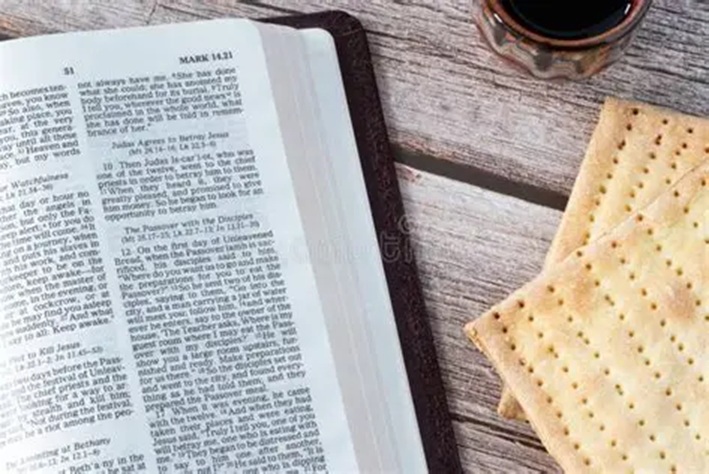
HALIFAX, Nova Scotia, March 31, 2026 – Just a quick reminder that Passover starts tomorrow evening (April 1st, at sundown) and continues into the Feast of Unleavened Bread, ending at nightfall next Wednesday. So if you haven’t yet bought/made your unleavened bread and wine (or wine substitute [I’m using grape pop lol]), now’s the time. Jesus directed us to observe the Passover in memory of him, and to do it as he showed us, so do it we must. It’s obligatory, not optional. Obligatory. And God directed us to observe the Feast of Unleavened Bread throughout our generations, so observe it we will. Yeast out, matzah in!
Now’s also the perfect time to dig back into the Exodus and read the entire account of Moses in Egypt, up to and including the children of Israel’s flight into the wilderness. We bornagains live in that spiritual wilderness; and like the children of Israel, we too are protected by the constant presence of God’s Holy Spirit. They had God’s Spirit without; we have God’s Spirit within.
So, Hallelujah, God Bless You, and Bottom’s Up!

HOLY NIGHT
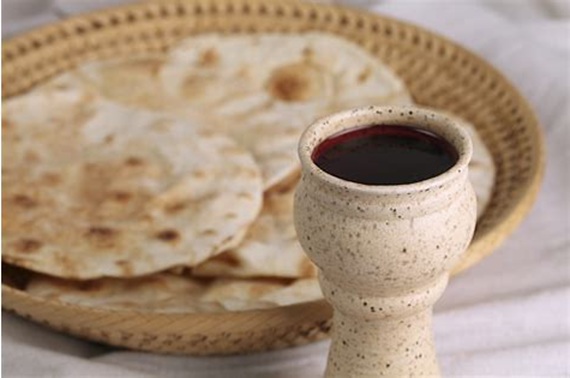
HALIFAX, Nova Scotia, April 12, 2025 – If we follow God’s directive for the timing of the Passover (which we need to do as born-again believers), it starts tonight. That means the act of remembrance that Jesus directed us to do in remembrance of him should be done tonight, without fail. When Constantine corralled a group of elites into creating a religion called “Roman Catholicism” in the early 300s AD, he purposely changed the timing of the Passover so that it wouldn’t coincide with the timing of the real Passover, or what he snidely referred to as “the Jews’ Passover”. He didn’t want Catholicism to reflect anything done by the Jews. And so Constantine purposely changed the timing that Jesus asked us to perform the act of remembrance, and it is this changed timing – fake timing – that most Christians adhere to today.
As born-again believers, we need to do exactly what Jesus directed us to do, and what he directed us to do was to keep the Passover as God directed, not as Constantine directed. We need to keep the so-called Jews’ Passover, and that starts tonight.
We keep the Passover because Jesus directed us to keep it, but he also directed us to keep it in a very specific way. We’re to offer up unleavened bread as a token of Jesus’ sacrificial body and wine as a token of Jesus’ atoning blood. How we choose to keep the Passover beyond that is up to us, but it must, by a directive straight from Jesus (who got it straight from God), include the act of remembrance that Jesus showed us. And it must happen on the first night of the Jews’ Passover.
As born-again believers, we’re holy by virtue of the presence of God’s Holy Spirit with us, a Spirit given to us by God at our rebirth that signifies our spiritual adoption by God. When God gave us his Spirit, we became his children. The abiding presence of God’s Holy Spirit with us separates us from everyone else, the way it separated the children of Israel from the heathens around them during their final days in Egypt and their 40 years of wandering in the desert.
We are holy by the presence of God’s Holy Spirit with us, but tonight is the holiest of holies as far as nights go, because tonight we do as Jesus directed: we do it exactly at the time he directed, and we do it exactly in the way he directed. Nowhere else in the gospels does Jesus give us a directive that is so specific in its timing and content. And because the directive is time- and content-specific, it needs to be done exactly as written.
We need to keep the Passover tonight in remembrance of Jesus, as he directed us to do, and we also need to keep it in remembrance of the first Passover, when God, as he’d promised, “passed over” the children of Israel, leaving them unharmed while killing the first-born of every other human and beast in Egypt, sparing none.
This is a profoundly holy night, by directive of both God and Jesus, and it must be kept as such.
PASSOVER 2025: THE FEAST OF UNLEAVENED BREAD AND A CALL TO FASTING
HALIFAX, Nova Scotia, April 10, 2025 – Here’s your annual heads-up that Passover is coming soon (it starts at sundown on Saturday, April 12th), followed by the weeklong Feast of Unleavened Bread. So if you haven’t yet thought about what you’re going to eat as a bread substitute next week (anything with a leavening agent is a no-no), now’s the time to brainstorm.
You can even make your own unleavened bread with just flour, water, and salt:
How you choose to commemorate the Passover ritual on Saturday night is up to you, but commemorating it how Jesus showed us to commemorate it in the gospels is a good start.
And for those of you who feel called to do it, fasting to mark the time that Jesus was taken away from us (this year, commemorated from mid-afternoon Sunday to early morning Tuesday) will be greatly blessed by God. When the scribes and Pharisees ask Jesus:
“Why do the disciples of John fast often, and make prayers, and likewise the disciples of the Pharisees; but thine eat and drink?”
Jesus tells them:
“Can ye make the children of the bridechamber fast, while the bridegroom is with them?
But the days will come, when the bridegroom shall be taken away from them, and then shall they fast in those days.” (Luke 5:33-35)
This is a 40-hour fast over three days to commemorate “those days” that Jesus was taken away from us, from the time of his death mid-afternoon on the first day of the Passover (this year, it falls on Sunday, April 13th) to the time he was seen resurrected by Mary early in the morning on the third day (this year, it falls on Tuesday, April 15th). This is not a reenactment of the crucifixion and resurrection; it’s a commemoration. How deep you want to go for your fast (zero food/water; water only; unleavened bread and water; soup, juice, and water; etc.) is up to you.
Forty hours is not a long fast, but again, this call to fasting is meant only for those who feel called to do it. There’s no obligation, keeping in mind that any fasting not done free-willingly has no spiritual value, whereas fasting done free-willingly is mightily blessed by God.
May your Passover be mightily blessed!
MARY HAD A LITTLE LAMB

MCLEODS, New Brunswick, 10th of Abib, 5784 – I’ve been waiting a long time to post this picture of the adorable little white lamb and the mischievous little black-booted one sneaking up behind him…. It’s a screen shot from a video on jumping baby goats that was made last spring. These lambs are now one year old and ready to be sacrificed for Passover (if they’re male and unblemished). I’ve posted the video of a barnful of jumping baby goats below. If you’ve never seen baby goats jumping for no apparent reason other than for pure joy, I highly recommend watching the video.
God, through Moses, commanded that a yearling be removed from its flock of either sheep or goats on the 10th day of the month of Abib. The lamb was then to be kept separate from the other animals until being slaughtered on the 14th in preparation for the Passover meal that evening. Today is the 10th of Abib, so the little lambs in the picture above, were they in Israel or somewhere else where the slaughter of the Passover lamb is still observed, could potentially be in the process of being whisked away from their family and friends and cloistered somewhere alone for four days before going Home (euphemism for having their throat slit and their blood drained, being thrown onto a fire and roasted whole, and then eaten).
As brutal as it sounds, this is the kind of animal sacrifice I can get behind. First and foremost, the slaughter of the Passover lamb is fully initiated, commanded, and blessed by God, which means it doesn’t matter what I think: The ritual is still right and good. Secondly, nothing is wasted in the sacrificing of the animal and the meat is equitably allotted – each household is to take one lamb only, but if the household is too small for a lamb, two or more households can combine forces until there are enough people to warrant eating a lamb. Thirdly, the lamb is roasted whole, including its head, feet, and innards. Nothing is removed; nothing is wasted; and no bones are broken in the process. Fourthly, any part of the lamb that isn’t eaten during the Passover feast is burned to smithereens either that same night or very early the next morning. So other than for a few ashes, nothing remains.
The process of slaughtering the Passover lamb is as swift, lean, and tactical as a military operation. To me, its urgency seems less a ritual and more a matter of life or death, which in fact the first Passover was. The Hebrews had to hastily repurpose the lamb’s blood as a door marker to indicate that children of Israel lived in that home so that God’s avenging angels would pass over them and head for Egyptian houses. Then the Hebrews had to finish eating the lamb, burn its remains, throw a few things in a backpack, and get the heck out of Dodge before Pharoah changed his mind again about letting them go.
We, if we’re born-again, bear the blood of Jesus the Lamb of God on our souls. This marks us for protection in the spiritual realm and is inviolable. Jesus was God’s ultimate Passover sacrifice, a role that he willingly accepted and perfectly played. We honor Jesus’ sacrifice during the Passover supper when we raise a glass in his memory and eat a piece of unleavened bread in his honor. He asked us to do these things specifically at Passover, and so we do them at Passover.
Like God’s command to the Israelites to celebrate the Passover, Jesus’ request to his followers to celebrate Passover in his memory is also a command that has the same force as God’s: Do not doubt that for a second. Easter is not Passover; in fact, Easter is more an anti-Passover, as the date for Easter was specifically and purposely chosen by Emperor Constantine and the religious powers-that-be in 325 A.D. to defy the Passover date set by the rabbis in Jerusalem. This decision by Constantine and the religious ptb, as well as the reason for it, is a matter of public record.
Passover is a quintessentially Christian feast, and we need to celebrate it as such.
As for slaughtering a lamb, we don’t have to do that anymore, but we do need to raise a glass in Jesus’ memory (as he asked us to do) and to eat a piece of unleavened bread in his honor (as he asked us to do), even if we celebrate alone (because we won’t be alone; Jesus and God will be right there with us). I hope you choose to follow Jesus’ command. If you’re a born-again believer and you’ve never before celebrated Passover and the accompanying Feast of Unleavened Bread, it’s high time you did, and “better late than never”, as my grandmother would say!
Enjoy!
PASSOVER BREAD RECIPES FOR FOLLOWERS OF JESUS
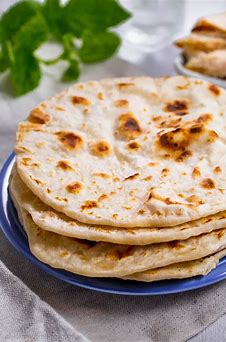
MCLEODS, New Brunswick, April 17, 2024 – When God commanded the Israelites, through Moses, to observe the Passover and the Feast of Unleavened Bread in perpetuity, he was talking to us. Jesus reminded his followers of this command at his final Passover meal with them and even added a special twist to it – raising a glass in remembrance of his sacrifice – to mark the end of the old covenant and the beginning of the new one.
Passover is a thoroughly Christian feast and needs to celebrated by those who are genuinely born-again. It should NEVER have been substituted with Easter.
We don’t ignore God’s commands once we’re made aware of them. We may be ignorant of them for a time, but once we know of them and still ignore them, it will be to our eternal detriment.
Even so, I don’t know why any genuine follower of Jesus, once made aware of God’s command to celebrate Passover, would not want to celebrate it. Passover is a joyous feast that marks two equally joyous occasions – the first one being God’s special protection of the Hebrews in Egypt when every first-born among the Egyptians was killed, and the second occasion being Jesus’ reminder to us that we shouldn’t mourn his (short-lived) death but instead be happy for him, because he was finally finishing what God had sent him to do (redeem us and save us from our sins!) and was triumphantly going Home.
Every year since I started celebrating the Passover supper in my own quirky little way (I don’t drink alcohol anymore, and I don’t like lamb and bitter herbs lol), God has blessed me more and more both during the Passover celebration and the week-long Feast of Unleavened Bread that follows it, as well as during the preparation for both feasts. Knowing my quirky tastes, God allows me substitutes for the lamb and the bitter herbs and the wine, but the unleavened bread needs to be unleavened bread. God doesn’t allow me any substitutes for that.
Not being a fan of the matzo (big dry hard tasteless crackers) that’s available at most grocery stores and delicatessens, I decided a few years ago to start making my own unleavened bread from scratch, using organic ingredients. It’s been a learning experience, to say the least, but I think I’m finally getting the hang of it. All it takes is a little flour, water, olive oil, and salt, a bit of mixing, kneading, and rolling of the dough, and then onto some parchment paper on a baking sheet it goes and into the bottom of the oven, on broil, for a few minutes each side. You have to tend the bread carefully, of course, so that it doesn’t burn, but it’s fun to watch it bake (and, oh, it smells so good!).
For those of you who learn better by visuals, I’ve included two recipes below on how to make classic traditional unleavened bread. One includes photos and shows how to make the baked (oven) version and the other is a video that shows how to make the skillet (stovetop) version. I like both of these breads, but if you prefer less grease, the oven method would be better for you. The videos include the recipe, which you can tweak to your needs and preferences (a little less or more olive oil, for instance).
It’s cool to think that this recipe is probably the exact same one followed by the women who prepared the bread that Jesus ate at his last Passover supper (and also the same recipe for the bread Moses ate at the very first Passover supper).
Enjoy!
Four Simple Ingredients for Unleavened Bread
- spring water
- sea salt
- organic flour
- organic olive oil
For detailed preparation instructions, see the video and link below!
STOVE-TOP (SKILLET) UNLEAVENED BREAD (RECIPE AND INSTRUCTIONS DIRECTLY BELOW)
BAKED UNLEAVENED BREAD (RECIPE AND INSTRUCTIONS DIRECTLY BELOW)
WHY I CANNOT IN GOOD CONSCIENCE CELEBRATE EASTER ANYMORE
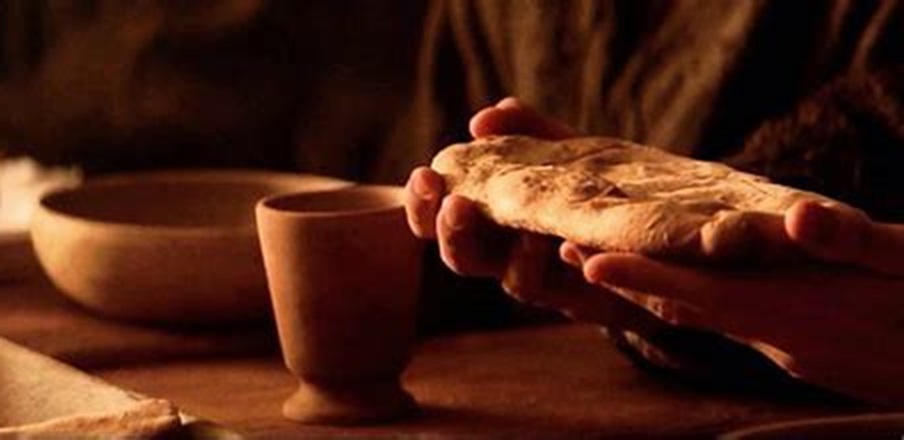
CHARLO, New Brunswick, March 30, 2024 – When someone brings something to your attention, you have two choices: You can either listen to what’s presented and consider its merits, or you can ignore it.
Here’s what I’m bringing to your attention, my dear fellow born-again believers: Easter is not a Christian holiday. Over the centuries, and under the direction and authority of the various Eastern and Western dominant denominations, Easter has become known as a Christian holiday, but it isn’t Christian.
During his final Passover meal with his disciples, Jesus directed his followers to raise a glass in his honor and memory at future Passover meals. This directive has been stylized over the centuries as “the Lord’s Supper” and is in fact celebrated daily all over the world, not just once a year at Passover. I doubt that Jesus intended us to celebrate a stylized version of the Passover ritual every day, let alone several times a day, but that’s a topic for another discussion. What I do know that Jesus intended us to do is to observe Passover, but to do so in the new way he’d demonstrated – with the wine as his blood and the bread as his body – as a token of the new covenant.
Passover is not Easter. The dominant denominations will occasionally pepper their liturgies with words like “paschal” that appear to connect Easter and Passover, but these observances are two distinct events. The anti-christ emperor Constantine, at the Council of Nicaea in 325 AD, openly stated that he wanted to divorce Easter from the Jewish Passover so that the two observances would be distinct and unrelated. That’s a shame, because that’s not what God stipulated for his people when he directed them precisely when and how to observe the Passover; it’s also not what Jesus directed his disciples to do. I wonder on who’s authority Constantine overrode both God and Jesus in setting a date for Easter that had nothing to do with the Jewish Passover?
Just as a reminder, Easter occurs on the first Sunday following the first full moon after the spring equinox (in adherence to the solar calendar), whereas Passover occurs on the 14th day of Abib, in the evening (in adherence to the lunar calendar). The Passover date is as good as writ in stone, as it comes from God himself. If the Passover date is as good as writ in stone and Jesus taught us to observe the Passover in the new way that he directed, why do Christians celebrate Easter and all but ignore Passover?
I’ve written here before about what I think of the Catholic church and other denominational organizations. My opinion hasn’t changed over the years; if anything, it’s solidified. When Christianity became a state religion under Constantine in the early 4th century AD, it did so by absorbing all the local pagan (that is, demonic) practices and rituals. Otherwise, the masses wouldn’t have accepted the state decree to “convert”. What that means is that the Christianity we’ve inherited is thoroughly polluted with practices and rituals that have nothing to do with the Church founded by Jesus. One of those practices and rituals is celebrating the fertility feast of the goddess Ostrea, a.k.a. Easter. And so Easter became the neo-Christian Passover substitute, with Jesus’ crucifixion and resurrection clumsily overlaid, and has continued as such to this day.
I cannot in good conscience celebrate a pagan festival that was tweaked to grudgingly include Jesus. Passover, on the other hand – Passover I will observe as Jesus directed me to observe it. I will observe the Passover ritual and the accompanying Feast of Unleavened Bread. I will do so because I’ve been directed by God and Jesus to do so. I implicitly and unquestioningly trust their authority to direct me. I only wish I’d paid closer attention to their direction sooner, but as my grandmother would say, “better late than never”.
What you choose to do with this information is up to you, but I strongly suggest that you take it to heart if you’re still celebrating Easter. The early Church (which is the same Church you’re in today, if you’re genuinely born-again) continued to observe Passover as Jesus directed them to observe it. When Easter officially replaced the observance of Passover for Christians, those who rejected Easter were considered heretics and treated as such. This is a part of our heritage that is glossed over and swept under the rug, but we need to claim it, remember it, abhor it, and then stand firm in the traditions of Jesus, not of Constantine.
There is one true Church and one true Church only, and that is the Church founded by God and Jesus, as foretold in the Old Testament. Easter is not celebrated in that Church. Passover is observed, in the new way shown to us by Jesus to herald the new covenant enshrined in the new testament, sealed in Jesus’ blood. This is my Church. This is my God. This is my ritual. This is my Messiah.
Anyone trying to make me to think or do otherwise will have my Father to contend with, and good luck with that.
LEAVING JESUS
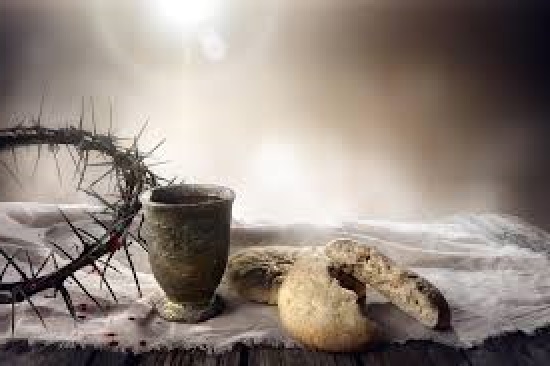
ANNAPOLIS ROYAL, Nova Scotia, April 15, 2022 – As born-again believers, we can only imagine the shame the disciples felt when they realized they’d left Jesus all alone to face the soldiers and certain death. Peter in particular, after boasting he’d rather die than desert Jesus, must have felt like dying. But Jesus was undeterred: He knew beforehand that all his followers would leave him, and so he’d prepared himself accordingly.
He didn’t blame them; he had compassion on them, knowing their weaknesses.
And he forgave them.
Tonight at midnight marks the anniversary of when all of Jesus’ disciples deserted him. The spirit of fear is a powerful force that can make you do things you hadn’t expected you’d do. For instance, God gives women that charming involuntary response of a loud piercing scream whenever they encounter something that makes them unexpectedly afraid. It’s a defense mechanism. I’ve experienced that involuntary defense mechanism myself on occasion: The scream rips out of you before you can stop it. It’s like a reflex.
I think the disciples’ desertion of Jesus all those years ago was also like a reflex. They vamoosed before they realized what they were doing; maybe they even thought at first that Jesus had vamoosed with them.
But Jesus hadn’t vamoosed. He’d stood his ground, completely immune to the fear reflex. No scream escaped his lips. He went to his crucifixion willingly. He even took a moment to lecture one of his followers on the right way to treat others, including the soldiers who were arresting him. As the storm of evil whipped and howled around him, Jesus stood in the eye of it, calm and unflappable.
**********
We are to celebrate Passover as Jesus taught us to celebrate it, in memory of him.
Tonight is Passover.
We are to purge our homes of yeast, as Moses taught us to do. The Feast of Unleavened Bread is the continuum of the Passover feast. We’re to purge our homes of leavened bread and other leavened products because God said to keep this feast for all time. That means it’s ongoing until the end of time. We’re not at the end of time yet, so we keep the Feast of Unleavened Bread. We keep keeping it, because we are the spiritual offspring of the children of Israel, and the children of Israel must keep the Feast of Unleavened Bread for all time. That is a scriptural command straight from God.
If you haven’t yet done so, now is a good time to identify anything in your cupboards or fridge that has yeast in it, and throw it out. Better still, instead of throwing it out, give it to the birds. Don’t give it to people – give it to the birds. Don’t poke it away for later – give it to the birds. But get it out of your house.
That is a command from God.
We’re to celebrate the Feast of Unleavened Bread just as we’re to celebrate the Passover.
The Passover is tonight, and the Feast of Unleavened Bread continues where the Passover lets off and goes for seven days. The Passover is a reminder of God’s supernatural protection of his people, and the Feast of Unleavened Bread is a celebration of the Hebrews being sprung from slavery. Their freedom came so quickly and unexpectedly, they didn’t even have the chance to leaven their bread dough. They had to vamoose with unleavened dough. Jesus tells us we should live our lives with loins girded and shoes on our feet, always ready to leave at a moment’s notice with little more than the clothes on our back. That’s how the Hebrews left Egypt; that’s how Jesus’ parents left with him when they fled Herod’s murderous decree; and that’s how the early Christians lived: Always ready to leave at a moment’s notice.
These feasts are not optional: they are a command.
Jesus told us to celebrate the Passover – not Easter, not Good Friday, not the Last Supper – Passover.
Passover is tonight.
We celebrate the Passover the way Jesus showed us to, and we keep the Feast of Unleavened Bread for the following seven days.
We do this because we’ve been told to do it.
We do this because man does not live by bread alone, but by every word that comes from the mouth of God.
Jesus told us to do it and Moses told us to do it, which means that God told us to do it.
I hope you enjoy your Passover celebrations tonight and that you purge your home of leavened bread for the next week.
Blessings will follow if you keep God’s commands.
Curses will follow if you don’t.
A CALL TO SPIRITUAL ARMS: PREPARING FOR PASSOVER
MEADOWVILLE, Pictou County, Nova Scotia, February 25, 2022 – When I started this blog several years ago, it was not my intention to form a ministry. This was never meant to be an outreach or evangelical site. It was just intended to be a place where born-again believers could touch base, see their views reflected, get some guidance, and maybe get a spiritual spanking, if one was warranted. There are few places like that left in the world, even online, and even fewer among those spaces designated as Christian.
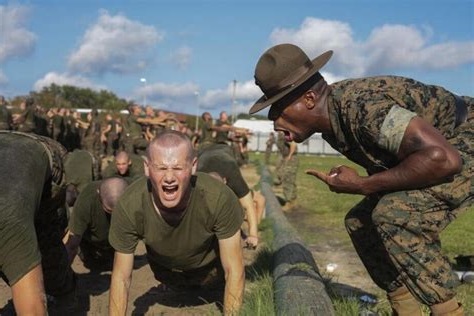
My intentions for this blog have not changed over the years. This is still not a ministry and still not an outreach or evangelical site. If anything, I work hard to push people away by constantly challenging them. It’s more a boot camp than anything else and I’m the drill sergeant. I play the role willingly and well. That’s why God put me here.
If you’re not DAILY examining your conscience before God, comparing your thoughts and actions with those of Jesus and adjusting them accordingly, then you’re falling short of your duties as a born-again believer and you’re getting spiritually flabby. Those who are spiritually flabby won’t make it home. I don’t care what your worldly pastor or some donation-grubbing, feel-good “Christian” on YouTube tells you – being born-again is not a guaranteed ticket to Heaven. Being born-again is a pass that gets you into the Kingdom and a blank check that pays for the services of God’s Holy Spirit to guide and protect you as you make your way through the temptations of this world. But born-again believers can still lose their grace. That is scriptural. “Once saved, always saved” is a lie to keep you spiritually flabby.
In the Bible, every major transition to a higher spiritual state is preceded by a fast or some form of significant separation from the world that lasts 40 days and 40 nights. We see it with Noah during the flood. We see it with Moses on Mount Sinai. We see it with Jesus in the wilderness and again after his resurrection, when he appeared to his followers off and on for 40 days and nights before his ascension. The 40-day-and-night time span is clearly important in God’s economy, so we need to pay attention to it. We should be constantly striving to evolve to a higher spiritual level by following ever closer behind Jesus and drawing ever closer to God.
Over the next seven weeks leading up to Passover, we have the opportunity to do a 40-day fast of some kind. How you choose to fast is between you and God, but I strongly suggest that you do it. A reminder is in order here that Jesus says God requires mercy not sacrifice, and that Isaiah 58 gives a very clear explanation of the kind of fast required by God and the rewards that come from doing it. Again, I’m not telling you how to fast (that’s between you and God); I’m just saying that you should fast in the weeks leading up to Passover.
For us born-again believers, Passover is the annual commemoration and celebration of our freedom from physical, political and spiritual slavery. It also commemorates and celebrates our reconciliation with God. Through Moses, God told us we should always celebrate Passover while we’re on Earth, and through Jesus, God showed us the new way to do it – with wine and bread, rather than with blood and a slaughtered lamb.
We should be constantly challenging ourselves as born-again believers. We should never be satisfied to remain where we are spiritually; we should always be striving to be better than we were yesterday, with our ultimate goal to “be perfect as our Heavenly Father is perfect”. No, we’ll never attain that goal while we’re in our imperfect bodies, but we still need to strive for it to our dying breath.
To do this, we need to be constantly comparing ourselves with Jesus, not with the world. Our standard should be Jesus, not the world. If we have problems, we turn to God, not to the world. If we need guidance and healing, we look to God, not to the world. If we’re angry and frustrated, we go to God, not to the world. Jesus always went to God, and we need to do that, too. But we can’t do it if we’re too attached to the world and its ways. The world has a way of coming between us and God. We need to prevent that from happening.
Separating ourselves from the world through a 40-day fast is a good way to refocus everything on God.
You have your marching orders.
Passover starts at sundown on April 15th, 2022.
GOD’S JUDGEMENT IS NOT A MOVIE

GREENVILLE STATION, Nova Scotia, August 2, 2021 – One of the more disturbing trends that’s emerging in mainstream Christianity is the eagerness of some Christians to witness firsthand the destruction of God’s enemies. They try to smooth it over by saying they’re looking forward to “Jesus coming back soon!”, but they can barely contain their glee when they talk about how all those condemned souls will finally ‘see the light’, though too late to do anything about it. It’s as if these Christians want to feel vindicated and have their I-told-you-so moment, or they’re channeling demonically-inspired schadenfreude. But this is obviously not what God wants.
When God makes his final move to deliver his judgement collectively during the tribulation, he doesn’t want us to watch. God’s judgement is not a movie. He doesn’t want us munching popcorn and peeking out from between the blinds while doing a play-by-play commentary and keeping a body count. He wants us to go into hiding, pray, stay away from windows, pray, and not come out until he gives us the all-clear.
There are many reasons for this, but the three main ones are that he doesn’t want us to rejoice over the execution of his justice, he doesn’t want us to try to intervene, and he doesn’t want us to get swept up in the ensuing chaos.
The slaughter of millions over a relatively short period of time will not be pretty. We are not supposed to be joyful about the dispatching of so many condemned souls to hell. Even if we believe they had it coming (and we should believe they had it coming), we still need to grasp the solemnity of the event. This is not a time for celebrating. This is a time for mourning, fasting, praying, and laying low.
God’s justice is perfect. As born-agains, we know that. Even so, we’re compassionate by nature, and if we see people suffering when we know we can do something to alleviate their suffering, we may be tempted to intervene and try to help them at the same time as God is delivering their punishment. This would obviously lead to all kinds of problems, mainly for us. There is a time for mercy and a time for judgement. God is able to make the switch, but we might not be as able to, which means we would be better off staying far far away from wherever the judgement is taking place.
Lot was hurried out of Sodom by the angels and told not to look back; Noah was kept holed up in the ark for half a year; and the Hebrews at the first Passover were warned not to go out of their houses when all the first-borns in Egypt were being killed. When it’s time for God to deliver his justice in the form of collective judgement, we shouldn’t be anywhere near where it’s happening, or if we are near, we need to hide and pray. The farther away we are from the destruction the better, as the less likely we’ll be to get involved.
Vengeance is God’s job. He’s not asking us to hold his beer while he takes care of business and to cheer him on from the sidelines; he’s warning us to make ourselves scarce. We are to hide our eyes from the execution of God’s judgement so that we don’t gloat over our enemies, don’t try to save them, and don’t get caught up in the confusion. God warns us outright in scripture: “Vengeance is mine; I will repay.” In telling us that vengeance belongs to him, God is essentially telling us to stay out of it. We shouldn’t even have an opinion on the matter, other than, like the angels in Revelation, to affirm that God’s judgement is true and just.
So the next time you come across a discussion about how Jesus is coming back soon and his enemies are going to be destroyed, remind the people that if Jesus does come back when we’re still here, we won’t be watching the destruction from front-row seats. If we’ve endured to the end (as Jesus says we must as a condition of salvation), we’ll be in the process of being gathered together by the holy angels and whisked off to Heaven before the destruction starts. And If we’re still around when some form of collective judgement is rendered before Jesus gets back, we need to hide and stay hidden for the duration. No watching, no attempting a rescue of the condemned, and definitely no gloating.
When it’s time for God to collectively take care of business, it’s time for us to collectively mind ours.
“Come, my people, enter thou into thy chambers, and shut thy doors about thee: hide thyself as it were for a little moment, until the indignation be overpast.”
Isaiah 26:20
PIZZA FOR PASSOVER
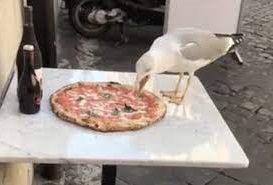
HALIFAX, Nova Scotia, March 27, 2021 – Well, I’m officially crazy: I just baked an organic pizza for the local sea gulls.
Let me explain.
It’s almost Passover, which means it’s also almost the Feast of Unleavened Bread.
Jesus commanded his followers to celebrate the Passover, which includes eating unleavened bread during the meal.
For the Feast of Unleavened Bread, we’re supposed to remove all yeasted products from our home. I had a frozen pizza sitting in my freezer for the past few months, so out it goes (yeast in the crust). But I couldn’t just throw it in the garbage (what a waste!) and I couldn’t give it to the birds frozen (they might complain…), so I baked it for them.
Passover begins this evening at sundown. I wrote last year about how important it is for Christians to celebrate Passover and by extension the Feast of Unleavened Bread. While it’s true we’re no longer under the Law (meaning, we don’t have to sacrifice animals to atone for our sins), God did direct his people to celebrate the Lord’s Passover for all time. It’s a directive that has as much weight as a Commandment.
In keeping the Passover, we commemorate the Hebrews’ final night in Egypt before the Exodus. On that night, the people were directed to eat a special meal in haste and to smear their doorposts with the blood of a slaughtered lamb to protect them from God, who would at midnight “pass over” them and their animals while killing every first-born among the Egyptians. The Passover also involves the reading of certain Bible passages and the singing of psalms, all to be done with shoes on and “loins girded” in expectation of a hasty departure.
Jesus urged his followers to continue keeping the Passover, but to keep it as he showed us during his final meal on Earth. The wine was to represent his blood instead of the ritual lamb’s blood, and the unleavened bread was to represent his body instead of the ritual lamb’s meat. This new Passover meal of Jesus’ blood and body was to commemorate the sacrifice that would take place the next day, with Jesus himself as the sacrificial offering. Remember that, by God’s decree, no bone was to broken in the Passover lamb, so even though the Roman soldiers broke the legs of the two thieves crucified with Jesus, they left Jesus’ legs intact.
The Lord’s Passover is a bittersweet festival. As much as it celebrates God’s rescue of his people from slavery, it also commemorates the slaughter of millions of first-borns, including Jesus. I don’t know about you, but I tend to speed through the description of Jesus’ crucifixion as fast as I can when I read the gospels, just as I speed through the description of the slaughter of the firstborns. I don’t think these events should be dwelt on or even looked upon (see what happened to Lot’s wife when she turned to watch the destruction of Sodom). God’s judgement in action can be brutal for those on the receiving end. It’s enough for us to know that it does happen, and that it’s perfect.
I hope you choose to commemorate the Passover as God and Jesus directed us to do. If you still have yeasted products in your home, now’s a good time to remove them. I’m sure you can find some hungry birds who would be only too happy to take them off your hands.

 A BORN-AGAIN BELIEVER