
Home » Posts tagged 'suffering'
Tag Archives: suffering
ON SUFFERING FOR OTHERS’ SINS

HALIFAX, Nova Scotia, July 6, 2025 – One of the most grievous errors of Christianity is the mistaken belief that you can suffer for others’ sins, that you can take on the burden of their suffering and in that way exonerate them and pay their sin price before God. You cannot do that. Only Jesus could do that, and only for very specific sin. The sin price Jesus paid on the cross was Adam’s sin, which he could only do because he himself was sinless. No-one else could have paid Adam’s sin because no-one but Jesus was sinless.
In paying the sin price owed by Adam, Jesus negated the need for any further ritualistic sacrifice and opened the door for “whosoever will” to enter into right relationship with God again. That door was firmly shut until Jesus’ perfect sacrifice. It’s open now, but only to those God draws to him. Even with Jesus having paid the sin price, we’re still all born sinners. No-one is born in right relationship with God: you’re reborn into right relationship, just as no-one is born a child of God but reborn a child of God. These distinctions are critically important, as they form the basis of who and what we are as born-again believers.
The recent media spectacle of the conclave leading to the coronation of Peter the Roman (a.k.a. Pope Leo the 14th) threw a spotlight on the rank and file of the abomination known as the Catholic church. That organization is infamous for selling ways to reduce sin-related suffering for a certain price, the chief one of which is “indulgences”. Luther condemned the selling of indulgences and in fact pointed to indulgences as being his main motivator for breaking away from the papacy. Unfortunately, that wasn’t the end of the “pay for pray” grifts, as indulgence-like mechanisms persist throughout all denominations even today, fooling people into parting with their money under various promotions such as “donations”, “tithing”, and “sowing”. But the idea underlying what amounts to spiritual extortion is the same as for indulgences: Give us your money, and we’ll make your life better.
As born-again believers, we know that the only way we can make our lives better is through genuine repentance, followed by humbly suffering whatever God deems we need to suffer. There’s no shortcut through this process, no matter how much people want to avoid the suffering part. The good news is that after we repent and are back in right relationship with God, whatever we need to suffer – our own personal sin price – is mitigated by our love for God and his love for us. I’m not saying suffering can be made pleasurable; I would never say that. I’m just saying earned suffering doesn’t feel as bad when you’re in right relationship with God. Scripture says that God will wipe away all our tears, and so he does. No-one can kiss away the pain of a spiritual boo-boo quite like our heavenly Father.
As much as we might want to, we cannot suffer for others as a way to pay their sin price before God any more than we can pay a certain amount of money to make our suffering go away. We all need to make our own peace with God and to do so in our own time and our own way. It cannot be done on by others on our behalf. Jesus paid the sin price owed by Adam and was able to do it 1) because he was born sin-free and 2) lived his life here on Earth sin-free and 3) was tapped by God to do it and agreed to do it. Jesus became the perfect sacrifice that ended the need for any further temple sacrifices.
We, on the other hand, were born in sin and continued to sin up until our rebirth, and then on occasion we sinned again, though not grievously if we’re still born-again, not to the loss of our grace given to us by God at our rebirth. Still, getting into right relationship with God was a process we had to go through; it wasn’t a birthright, just as staying in right relationship with God is an ongoing process, not a “one and done” deal, as false prophets would have us believe.
We cannot suffer for others’ sins because we’re not Jesus, meaning that we weren’t born sinless and haven’t lived sinlessly and aren’t tapped by God to suffer for others. As born-again believers in right-standing with God, we can pray for others, we can help others, we can teach others, and we can preach to others, but we cannot suffer on their behalf: We cannot pray away or pay away their sin. They need to suffer on their own and to the full measure allotted by God. This is a spiritual principle that we need to take to heart lest we, too, be fooled by grifters or by our own spiritual arrogance.
ON SUFFERING TESTS AND DUE REWARDS
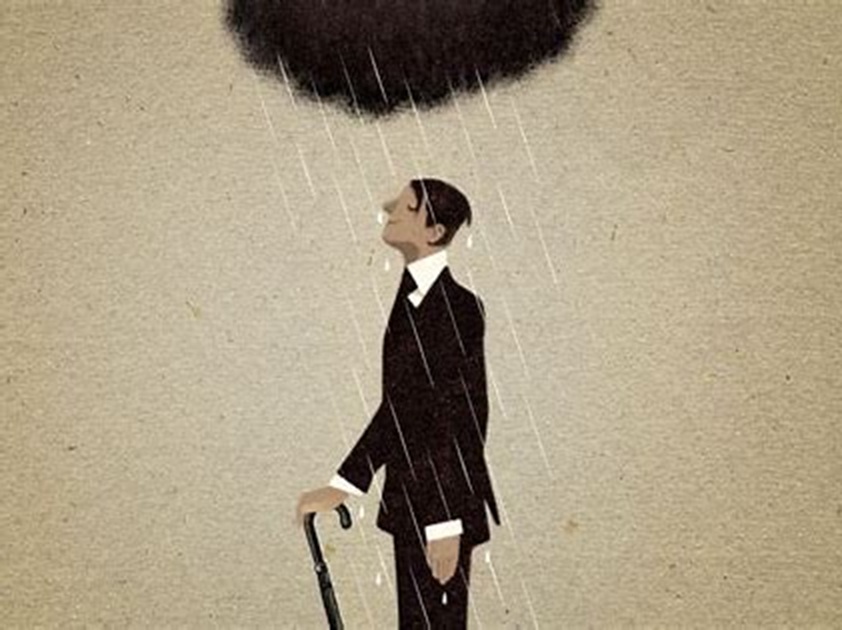
HALIFAX, Nova Scotia, July 6, 2025 – People don’t suffer injustices: They suffer tests of spiritual character and due rewards. If you fight back against either, you won’t advance spiritually. Even Jesus’ crucifixion wasn’t unjust, as we know from scripture that Jesus agreed to suffer (test of spiritual character) for Adam’s sin (due reward).
Although the concept of willingly suffering tests of spiritual character and due rewards is alien to unbelievers (who run to a doctor for every ache and pain and to a lawyer for every perceived slight), it shouldn’t be alien to us. By “willingly suffer”, I don’t mean we should go out of our way to volunteer to suffer. Jesus didn’t go out of his way to volunteer to suffer. He didn’t petition God to suffer; he agreed to the messiahship that God offered him, part of the terms of which was to suffer crucifixion. Remember how Jesus, in the garden of Gethsemane, tried to last-minute negotiate a way around those terms? God held his ground. Sometimes you just have to go through what you have to go through, as the agreed-upon terms are writ in stone and therefore inviolable.
In those cases, you don’t have to embrace the terms, you don’t even have to like the terms – you just have to accept them and go through whatever you have to go through. But ironically, when you do make that decision to agree to God’s terms (a decision so profound it moves mountains in the spiritual realm), that’s when the real power starts flowing through you. We see this in Jesus, in everything he says and does after he exits the garden of Gethsemane up to and including his time on the cross. We see this in Paul, when he agrees to suffer whatever he has to suffer as an apostle of Jesus and of the Gospel. And I saw this firsthand in me, when I agreed to choose to forgive someone I thought was unforgiveable and was instantly reborn from atheist to full-on believer. In that unmeasurable span between choosing to forgive and being reborn, God showed me that the pain I’d felt (or what I thought was injustice) was the pain I’d earned (through what I’d done to others). And then he filled me with his Holy Spirit.
For us, as born-again believers, there should be no question that we agree to suffer whatever we’ve earned or whatever God imposes on us as a test of our spiritual character. How else is God going to know (hard proof) that we choose him over Satan? It’s all well and good to say “Yes, I love and believe in God” and “Yes, I love and believe in Jesus”, but this kind of talk is as cheap as any other in an age when even solemn vows uttered at an altar are broken with a shrug. So how else is God to know that we choose him over Satan unless we’re tested and again tested and then tested again and again and again and again… until he’s satisfied that he and he alone has our whole heart and soul and mind and strength? Because if we don’t give God everything we have and everything we are, that portion we’re holding back (however small) goes to Satan, and that portion that we’ve forfeited to Satan (however small) will still be enough to lose us our spot in Heaven.
If we’re genuinely born again, we’ve been penciled in for a place in Heaven. Jesus said to his disciples: “Don’t rejoice that you have power over the demons; rejoice that your names are written in Heaven.” The highest privilege that can be granted a human soul is to be recorded by name in the Book of Life, but that privilege can be revoked (hence the penciling), which means we would lose our spot in Heaven. If it happened to angels, it can happen to us; if it happened to whole nations, it can happen to us. So we should never gloat over our privilege or take it for granted but be humbly ever-aware of it so that we do whatever it takes to maintain our heavenly reservation in good standing.
And if what it takes is to suffer our due rewards or tests of our spiritual character, those things are as nothing when compared to what awaits us when we get Home.
COME UP HIGHER

HALIFAX, Nova Scotia, March 29, 2025 – You don’t have to do any of it – none of it. God hasn’t ordered you to serve him. He hasn’t forced you or coerced you, any more than he forced or coerced Jesus do give himself as a sacrifice for many. God made Jesus an offer, he invited Jesus, he gave Jesus the opportunity to come up higher, just like he gives us the same opportunity. No guns are pressed against temples, no arms twisted behind backs. It’s an invitation that no-one but God can extend – the chance to come up higher for all eternity.
Jesus was insistent, particularly during his final days among us in mortal form – Jesus was insistent that we understand that the trial he agreed to endure was his choice and his choice only. God had not forced him into it. Even in the Garden of Gethsemane, when Jesus was begging his Father to find another way to get done what needed to be done, God would have let him off the hook if he’d said he wanted off, only the terms could not be changed because prophecy had to be fulfilled. The sacrifice had to proceed as laid out in scripture or God would have to extend the offer to someone else. Yet even so, God mitigated the suffering that Jesus agreed to go through, allowing him to die so soon in the proceedings, it caught the guards by surprise. God softened each blow against Jesus as much as he could (even arranging for someone to carry the cross the final distance) while still keeping up his end of the bargain.
And it was a bargain, what happened that day, a bet made by the devil that Jesus wouldn’t make it all the way through. It was the devil who set the terms that God agreed to. It wasn’t God’s will that Jesus suffer; God permitted it, all the while betting that Jesus would indeed make it all the way through, which he did, and in so doing came up as high as he or anyone possibly could.
We, too, are in the process of coming up higher. With each test and each round of suffering that we don’t solicit but agree to endure, we inch up higher on the heavenly rewards scale. We come up higher. Sometimes it’s by a little bit and sometimes it’s by leaps and bounds. But just as we can come up higher, we can also slide down lower. God does everything in his power to prevent that from happening (the alarms ring loud and clear; trust me, you cannot not hear those alarms when you’re in danger of sliding), but it’s still up to us whether we want to go up or down, to say “yay” or “nay” to God. Heavenly rewards are not a guarantee until our time here is done. It ain’t over ‘til it’s over, and until it’s over, the upward trajectory can just as easily go downward.
Being born-again doesn’t prevent that slide. We still have free will. We can still say “no” to God. We can still go our own way or even the devil’s way. We’re fine now reading this, comfortable in our seats and with a full belly, but some day when the pain gets too extreme, some of us may choose to do or say whatever it takes to make the pain stop, including denying and betraying the Very Ones we now claim we’d die for. It’s happened before to others and will happen again, maybe to us. We need to pray and pray hard that it doesn’t.
This is a depressing article for me to write, knowing that some of you reading this have already made the deal that cannot be undone and that you’re only here to find a chink in my armour that you can use against me. It’s depressing knowing that some of you who haven’t sold your souls still resolutely refuse to accept any of God’s offers and that you’re only reading this because it amuses you and you look forward to mocking me afterwards. It was depressing for Jesus to dine with the hypocrites and to argue with them and endure their insults, but he did it because it was part of his duties, depressing or not. To get through these and similarly distasteful chores, Jesus always kept his eyes on the prize of his heavenly reward, knowing that with each sling he deflected and every arrow he endured, he moved up higher and therefore closer to God.
You have no idea how close Jesus was to God on that cross. No mortal being has ever been closer to God than Jesus was during his time of suffering. That’s how he got through it – putting himself entirely into God’s hands and letting God guide him, step by step, breath by breath.
You cannot endure what you have coming unless you do the same.
RIGHTEOUS PAYBACK OR A TEST?

MCLEODS, New Brunswick, April 19, 2024 – When things get bad on an individual level, most people blame other people for their problems. Similarly, when things get bad on a regional or national level, most people tend to blame the government. Very few make the long torturous perp walk to the nearest mirror to place the blame squarely on the shoulders of the person staring back at them. In fact, most people bristle even at the insinuation that they might possibly be the author of their own misfortunes. For most people, it’s always someone else’s fault, but the inescapable truth is that it’s always – ALWAYS – our own fault.
There is never a time when we don’t get what we earn. Granted, God may be testing us, but his tests are meant to raise us higher than we’d otherwise aim for. God constantly spurs us to be better and better even than we think we can be, because he wants us to have the best possible life while we’re here on Earth and, more importantly, the best possible eternity when we get Home.
With hardship, you’ll know the difference between getting what you’ve earned (“the measure you mete is the measure you get in return”) and being tested, as payback and tests make very different spiritual impressions on your soul. When you get what’s coming to you, it hurts. If you’re not a believer, you’ll probably lash out and start finger-pointing; if you are a believer, hopefully you’ll humble yourself, repent, and endure whatever you’ve brought on yourself until your debt is fully paid.
Tests can also hurt, but they usually come out of the blue and when you least expect (or need) them. That’s one of their chief characteristics; think of Jesus being tempted to conjure bread after he hadn’t eaten for 40 days and nights or being tempted with untold wealth after he’d left everything behind and was living homeless, penniless, and on the brink of starvation. Our tests aren’t usually as dramatic, but besides being out of the blue and coming at a time when we least need them (when we’re weakened in some way), they’ll also come presenting a very persuasive alternative or counterargument to the godly way of dealing with the test. Think of the devil’s solutions to Jesus’ perceived problems in the wilderness or Job’s friends’ explanations and solutions for Job’s sufferings. These “persuasions” almost always are framed as generous and selfless offers of assistance and try to convince you that your suffering is unnecessary and wrong, and that you are in fact a victim of circumstances beyond your control.
But we are, none of us, victims. Once we accept that truth and own what comes to us, whether as righteous payback or a test, we’ll do just fine because then we’ll be leaning on God for guidance and support, not on our own understanding or on someone else’s perhaps well-meaning but still misguided and ultimately back-firing and back-sliding “help”.
I had to learn all this the hard way. But God is patient and lets us make our honest mistakes in our own time, knowing that if we beat ourselves up enough, we’ll eventually knock some sense into ourselves.
Now when hard times come (and they always do, sooner or later), I stop for minute to analyze whether I had this hardship coming to me, as righteous payback, or if it’s a test. That’s the first and most important thing to determine when hardship strikes. Certainly, in either case, you humble yourself under God and endure to the end, but tests are going to require a little bit more determined endurance, since, as I mentioned, they also come with very persuasive arguments against dealing with the hardship in a godly way. This is when we really need to know our God and to stand firm in him, even if it prolongs the hardship. There is never a time when we choose God’s way that he doesn’t help us carry our load. He’s just waiting for us to ask for his help.
What about you? Did you come into this world already knowing how to deal with hardship in a godly way, or did you have to take your knocks like the rest of us and learn the hard way? Our time here on Earth is not meant to be comfortable. We’re not here either for a good time or a long time, though the devil works hard to convince us otherwise. Our allotted time here on Earth is for purging the ungodliness in us and testing our progress, with brief respites to catch our breath before the next hardship arrives.
Yet God also blesses us out of the blue in the same way a father blesses his children, both good and bad, because he just likes to see us happy. God takes no pleasure in allowing us to suffer either righteous payback or tests, but they’re part of what it means to be human. We cannot wriggle out of them as long as we’re living in time and space in a human body.
Consider whatever hardship you’re facing now and determine whether it’s righteous payback or a test, and then proceed accordingly, and always and only with God’s guidance and help.
SUFFERING? HERE’S HOW TO GET THROUGH IT

NIAGARA FALLS, Ontario, December 16, 2022 – It’s good to remember that whatever you’re suffering at the moment has God’s seal of approval. That means God is either permitting you to be tested or is permitting you to experience the measure of pain you’ve brought on yourself by your choices. If it’s a test, it won’t be so difficult that you can’t endure it with God’s help (pray!); if it’s punishment, again, it will be measured in such a way that you won’t be overwhelmed by it, as long as you remember to ask God to help you in your suffering (pray!).
We cannot avoid suffering in this life. It’s part and parcel of the mortal realm. Even Jesus suffered during his time on Earth – he suffered tests, which he always passed with flying colors, and he suffered punishments, which he accepted to suffer on our behalf, not having brought any punishments on himself. So if even Jesus had to suffer, we shouldn’t be surprised that we have to suffer, too.
But let’s be honest – suffering sucks. There’s no pleasure in it; all we can do is endure it without complaint until it’s over.
If you’re not suffering now, think of a time when you were. Was your first response to complain? Did you try to do something to mitigate it? The problem with trying to mitigate your suffering by some means other than God’s mercy through prayer is that you’ll have to suffer the mitigated measure in some other way. You don’t get out of earned suffering by taking a spiritual painkiller and thinking that’s that. Oh, we can try (I know I have), but the suffering will just creep up on you some other way.
Is there a way we can avoid suffering altogether? In a word, no, but we can avoid the kind of suffering that comes from punishment. That, at least, is in our hands. If we choose to do God’s will, we’ll sidestep the suffering that comes as the result of disobedience to God.
Tests, however, we cannot avoid. They come whether we want them to or not, and they usually come when we least expect them and least need them. God’s timing is perfect. I have to laugh (after the fact) at the perfection of God’s timing. I don’t need a test on loving my enemies when I’ve missed my bus, it’s pouring rain, I’m running late, and the wheel just popped off my filled-to-the-brim carry-cart, but I’ll get it. I’ll get the test when I least expect it and least need it, and if I don’t pass it, I’ll get it again and again and under similar circumstances until I get it right.
We cannot avoid tests. God permits them for our benefit, though it doesn’t always feel like it at the time. It’s tempting (and that’s part of the test) — it’s tempting to blame God or get angry with him when the test comes upon you. I’ve done that, gotten angry with God. That’s an automatic fail right there, followed by a redo that’s ratcheted up a notch on the suffering scale.
Scripture says that the remnant of Israel will be a poor and an afflicted people. If we count ourselves part of that remnant, we have to accept that our lot here on Earth will necessarily involve poverty and suffering. Let’s not make things worse for ourselves by getting mad at God or grumbling or feeling sorry for ourselves when we have to go through a test or suffer the consequences of our actions. Let’s not make things worse for ourselves by complaining, even about being persecuted for our beliefs. The world complains, but we’re not the world. Let’s just get the suffering over with as quickly as possible so that we can put it behind us and move on. Every test we successfully survive gets us one test closer to Heaven.
Our lot as born-again followers of Jesus is constant joy from the presence of God and Jesus, through God’s Holy Spirit; constant peace, again, through the presence of our divine companions; and occasional suffering, whether from tests or from consequences. All of these things – joy, peace, and suffering – come with the permission of God. We cannot have joy and peace and then reject or resent the suffering, because it’s a package deal.
But the good news is that while our joy and peace will follow us into Heaven, our suffering will not. There is no suffering in Heaven. If we make it Home, we’ll leave all suffering behind us and never experience it again. If we don’t make it Home, we’ll experience only suffering, unmitigated and unending, forever.
No-one likes to suffer. Pain sucks. But if we accept that we number among God’s chosen remnant, we don’t have any choice but to suffer whatever God permits. When I say “we don’t have any choice”, I mean we don’t have any choice but to suffer patiently and in silence if we ultimately want a good outcome for ourselves. The choice to accept the suffering or resent the suffering is still ours to make. We have free will as long as we remain in our human body. But resenting or fighting the suffering or trying to mitigate it in some way (other than by God’s mercy, through prayer) will only make it worse and/or prolong it. All suffering is permitted by God for a certain purpose and a certain end: The purpose is our purification and edification, and the end is our assured election. There is nothing assured in our election until God says there is. He alone, with the assistance of Jesus, is the sole judge.
Remember how Jesus dealt with his approaching crucifixion. He did not want to suffer that horrendously painful death and prayed to God three times to find some other way to accomplish what needed to be done, but God was adamant that crucifixion was the only way. Remember that Jesus, in petitioning God, ended his prayer with “nevertheless not as I will, but as thou wilt”. God always invites us to petition him. The prayer line directly to God is always open. But his way is the best way, and his say is the final say, and the sooner we get on board with that Truth, the better it will be for us. Jesus couldn’t avoid the crucifixion, but God did lessen and shorten his suffering.
Don’t go looking for ways to suffer, thinking you’ll earn spiritual brownie points. You won’t. But when God permits you to suffer, accept it and pray to God to lessen it or to help you endure it without complaint. If your suffering is not a consequence of your actions, it’s a test. Either way, the sooner you face it head-on with God’s help, the sooner you’ll get through it and past it, and the sooner you’ll get Home.
THE THORNY ISSUE OF HUMAN SUFFERING

NIAGARA FALLS, Ontario, October 30, 2022 – Over the years of keeping this blog, I’ve aimed to keep things real. Jesus kept it real when he talked about the Kingdom, and so do I. At the same time, I’ve steered clear of providing overly personal details. They just don’t belong on a public forum; too many bad actors lurking in the wings.
Paul, I think, also had the same informal policy of keeping things real while avoiding making his letters read like confessionals. So when he made a single reference to the “thorn in the flesh” he’d been suffering, the nature of that thorn instantly became a target of speculation.
Two thousand years later, we’re still wondering what it was.
Paul never went into detail about his “thorn”, other than to say he asked God three times to take it away and he refused. God’s reason for refusing Paul’s request was that his strength could work better through Paul’s weakness, and so the thorn remained lodged in Paul’s flesh (we can assume) until the day he went Home.
I mention all this because I’ve been going through some things over the past few weeks. It’s nothing serious, but it brought to mind Paul’s thorn. God doesn’t like to see his children suffer, but he also knows what’s best for us (and what’s best for us is to have God’s strength working through us at maximum capacity). Over the past couple of days, when my thorn started to expand in scope, I was like “Daddy, WTH??!” He laughed, as he always does at my total lack of self-filter (I keep things as real with God as I do with anyone else – no point in trying to hide my thoughts from someone who can read them), and he told me it’s for my benefit and I should just let it proceed. Considering there’s nothing that any human can do for my particular thorn, letting it proceed was my only alternative if prayers didn’t work, and so my own personal thorn in the flesh proceeds. For how long, I don’t know, but if it’s for life, it’s for life: It’s now entirely in God’s hands.
Instead of praying to God to take it away, I now pray to God to help me endure it without complaint (major challenge, that!). The less of me and the more of God, the better.
The role and purpose of suffering is not something that most believers want to talk about. Even some born-agains want to believe that God doesn’t want them sick or otherwise incapacitated, that he put doctors there for their benefit, and they should liberally avail themselves of their services. I don’t happen to agree with that mindset, as I’ve mentioned here over the years. If we come to a time of suffering and try to avoid it by running to doctors or other “experts”, all we’ll accomplish is to shift the suffering to another aspect of our lives. We don’t get out of due suffering because we reject it. And yes, God does permit us to suffer occasionally, as we see with Jesus and with Paul and with all the saints and martyrs throughout the ages. But he’ll take our earthly suffering, work through it, strengthen us, and then use it to our eternal benefit.
That’s not to say you should seek out suffering to get spiritual brownie points. You should never do that. Jesus didn’t seek out his time of suffering and in fact tried to find a way around it. Paul didn’t seek out his thorn and prayed to God to take it away. That is the natural, intuitive, and sane response to the prospect of suffering. Those who purposely look to suffer or pray for God to send them suffering – well, God might well give them what they’ve asked for, but there will be precious little redemptive quality in their pain. Asking God to make you suffer is just plain stupid; if you do that, you have your reward, as Jesus would say (and don’t expect anything else from God).
We live in an age when nearly every infirmity of the flesh can be overcome by medical or other interventions. That’s a shame, because most of the thorns God permits to impact us were intended for our benefit and for the benefit of those around us. Suffering teaches patient endurance and provokes charity in others. But if that’s true, why did Jesus heal so many people? Why didn’t he just let them suffer?
We know, from the case of the man whose blindness was healed, that Jesus performed many of his miracles to glorify God. They were meant as a sign that Jesus was sent from God and was the Prophet foretold by Moses in his farewell speech. Then what about their suffering? When Jesus healed them, did they lose their eternal benefit in suffering?
Not at all. God is faithful in everything he does. If he removes one type of suffering, he’ll replace it with another, if another is warranted. We can see that already with the man whose blindness was healed – he ended up being kicked out of the synagogue and becoming an outcast in his home and community, simply for telling the religious authorities that Jesus had healed him. So his suffering continued, just in a different way.
Likewise, the due suffering of those who’ve turned to worldly interventions to remove or mitigate their thorns will come out in another way. We cannot escape what we’ve earned: We either suffer now or we suffer later.
*****
Are you going through some form of suffering or weakness? Have you asked God to remove it or in some way mitigate it? If so, what was his response?
Accepting the measure of whatever God permits us to endure now ultimately pays it forward into our heavenly reward. If you have a thorn in your flesh, first ask God to remove it or at least to mitigate it; if God suggests you should instead learn to endure it so that he can work through it to strengthen you, take his advice.
Jesus did. Paul did.
So should we.
THE GREAT TYLENOL BOTTLE IN THE SKY

HALIFAX, Nova Scotia, April 30, 2020 – In his letters, Paul was very clear about one thing: No earthly suffering is too much if it leads to Heaven as the reward.
Heaven is our reward if God judges that we’ve earned it. Most Christians have lost sight of that. Instead of longing for Heaven, they do everything in their power to postpone death. They run to the doctor, they demand a cure, they beg for prayers so they won’t die. Why is that? (more…)
HOW CAN THERE BE A GOD WHEN THERE IS SO MUCH SUFFERING?

DARTMOUTH, Nova Scotia, November 4, 2016 – People say: How can there be a God when there is so much suffering in the world? How can there be a God when good and innocent people are brutalized and murdered? (more…)
 A BORN-AGAIN BELIEVER