
Home » Posts tagged 'worldly church'
Tag Archives: worldly church
NEVER SILENCED: ON BILL C-9 AND OTHER SIGNS OF THE COMING GREAT TRIBULATION

HALIFAX, Nova Scotia, March 29, 2026 – One of the most definitive signs that we’ve entered the Great Tribulation will be the death of the worldly church. That means no more casual Christians, no more denominational Christians, and no more Christians-of-convenience (i.e., people who claim to be fleeing persecution as Christians in order to gain the generous asylum benefits of Western nations). During the Great Tribulation, the only people openly professing belief in God and claiming to be followers of Jesus will be genuine bornagain believers – that is, those who would rather be killed than deny who they are, because killed they will be, and brutally.
We can see from the ongoing presence of the worldly church that we’re not yet—thank God—in the Great Tribulation. We’ve been in the end times now for nearly 2000 years, but we haven’t entered the final stage. We’ll know when we do because, as I’ve mentioned, every vestige of Christianity will have been wiped from the earth, other than for the very rare and increasingly rarer saints, all of whom will have a bounty on their heads.
The end will be very much like it was in the beginning. Public preaching will be outlawed, and we’ll be forced into hiding and hounded from place to place until finally being arrested, imprisoned, tortured, and executed. Once the worldly church has been universally banned—like it is already in North Korea—only genuine believers will remain. No-one else will want to suffer for The Name.
The Canadian government is in the process of enshrining into law a bill (C-9) that removes the “good faith” protection from Canadians when they openly express what they sincerely believe, if what is being expressed is considered “hate speech”. Canadians were granted carte blanche permission by law to openly express what they sincerely believe back in 1970, but when “hate” laws were later thrown into the mix, stating your beliefs and using scripture to back them up started to come under scrutiny, especially when those beliefs concerned the “alphabetization” of Western society or the mass arrival in the West of demon worshipers claiming to worship God. That scrutiny has now turned into a clawing back of the permissions that I and most Canadians once took for granted. When this bill is passed into law within a month or two, much of what I’ve written here in this blog may be cause for me to be fined and/or thrown into jail for promoting so-called hate (otherwise known as God’s Truth).
The push-back to this looming law started as soon as the bill was introduced in Canada’s parliament last fall, but none of it will be successful because the bill has God’s permission. In other words, God himself – not parliamentarians and not even the devil – has deigned that Canadians have forfeited their “good faith” protection. As a nation, Canada has, in its “words and doings”, fallen so far away from God that it’s no longer recognized spiritually or geopolitically as a Christian nation. When a people remove themselves from God, God removes himself from them, and the demons rush in to claim the vacated spiritual turf.
We know that the world is under the authority of Satan, but Satan can only do what God permits him to do, and God will only permit him to do what has been earned either as a reward or a test. God is all-knowing and his justice is perfect; the Canadian parliamentarians aren’t pulling the wool over God’s eyes by sneaking through a law that targets his Word. Jesus reminded Pontius Pilate that he had power over Jesus only because God gave it to him, that God permitted Pontius Pilate to have power over Jesus for a time and for a reason because “all things work together for good to them that love God, to them who are the called according to his purpose”. The power referenced by Jesus didn’t come from from Pontius Pilate but from God, just as the removal of the “good faith” protection under Canadian law doesn’t come from Canadian parliamentarians but from God.
The imminent passing of bill C-9 into law is yet another sign that we are nearing the start of the Great Tribulation. Other nations formerly known as Christian have passed (or are in the process of passing) similar bills into law. With their passage, the threat of fines and/or imprisonment will so constrain the application of God’s Word to everyday life—will so water down what can be shared publicly—that preaching will soon become little more than a feel-good pep talk made agreeable even to unbelievers. This reward, sadly, has been earned. The worldly church will persist for a while, but in such an increasingly emaciated and bloodless form to be nearly inconsequential. When the church is finally outlawed in the name of cultural diversity or some other doctrine of devils, it will be a mercy killing, as the late-stage worldly church will be Christian in name only.
We, however, the Church founded by Jesus Christ and empowered by God’s Holy Spirit, will continue until Jesus comes back to take the last of us Home. We in the Kingdom cannot be silenced, any more than the two anointed witnesses prophesied to preach during the Great Tribulation will be silenced. We may be banned, yes; fined, yes; outlawed, yes; hounded, yes; imprisoned, yes; and killed, yes, but never silenced, because even in our death, the Word God spoke through us will resound.
No law on Earth can stop that.
“Heaven and Earth shall pass away, but my words shall not pass away.”
Matthew 24:35
THE PARABLE

HALIFAX, Nova Scotia, August 9, 2025 – There were two prototype churches during Jesus’ ministry – the inner circle made up of Jesus and his close followers, and the outer circle made up of casual followers who came and went. After Pentecost, these prototypes became, respectively, the Kingdom Church, peopled by Holy Spirit-filled born-again believers, and the worldly church, peopled by everyone else who calls him- or herself a Christian. The two churches remain to this day.
As a born-again believer who came to faith instantaneously and miraculously, I am mystified by people who choose to remain in the worldly church (because it is a choice to remain there, a personal choice). I can’t fathom the mindset where someone would say “I’ll commit this much of myself to God, but no more”. I can only assume the lack of commitment comes from not knowing the first Commandment or, knowing it, choosing not to follow it.
Before I was a believer, I knew many people in the worldly church. There wasn’t much to distinguish them from me, other than that some of them attended a church service on occasion or wore a cross under their shirt. They drank with me, cursed with me, did all manner of whatever with me, but then checked the “Catholic” or “Protestant” box on official forms. I even ridiculed their beliefs to their faces, and they just laughed. Their casual approach to God is one of the main reasons why I never at that time seriously considered looking to God for answers to my many problems, though even if I had considered looking to God, I wouldn’t gotten anywhere until he actually called me.
When God calls you, it’s a one-and-done deal. He doesn’t call you, is rejected by you, and then comes back later to try again. You get one shot. If you accept his call, he’ll test you to gauge your sincerity. If he finds you sincere, he’ll convert you and you’ll be born again, but the tests won’t stop there. They’ll keep on going until you draw your last earthly breath.
Most people in the worldly church have been called and are now being tested for their sincerity. They’re drawn to what God’s offering, but they’re also partly drawn to what Satan is offering. God is patient and so is giving them an allotted time to sort things out. During this time (the duration of which is known only to God), their commitment typically waxes and wanes, though as long as it remains above a certain measure, they’re still in the worldly church, which means there’s still hope for them. But, again, no-one knows the time God allots to each soul. When time’s up and that soul is still dithering, it’s lost forever. This spiritual fact should scare the you-know-what out of everyone in the worldly church.
I was born-again from atheism and so didn’t go through the worldly church phase. When God called me, I immediately threw my full lot in with him, holding nothing back. God knew this (knowing my heart) and so converted me (healed me) on the spot, giving me a portion of his Holy Spirit. The tests, though – the tests have been non-stop for me as a born-again believer, and I’ve struggled with many of them. The higher you climb the mountain, the more rugged the terrain and the tougher the conditions.
Jesus had to teach his casual followers in parables because they weren’t able to receive God’s Truth straight up. His close followers could receive it, but his casual followers needed it veiled. If any of you reading this are still in the worldly church, here’s a parable for you:
There once was a donkey. He was a nice enough donkey, as donkeys go. With few exceptions, he nearly always did what his master asked of him. And because the donkey was more obedient than stubborn, his master kept him and was kind to him and continued to feed and shelter him for many years.
But as time passed, the donkey grew less and less obedient and more and more stubborn. His master noticed this and tried to correct the donkey’s behavior. At first, he tried correcting him with a gentle hand, but the donkey ignored him. So then he tried correcting him with a heavier hand that slightly hurt the donkey (though just enough to get his attention and show him that his master meant business). Still, the donkey persisted in his bad behavior, growing more and more stubborn with each passing day.
The master was at a loss for what to do. He was fond of the donkey, but because of his stubbornness, the donkey was of no use to him. And so, one day, the master made the difficult decision to let the donkey go.
The man who came and took the donkey away didn’t care that he was stubborn.
He was a salami maker.

CHILDREN OF THE WORLD AND CHILDREN OF GOD
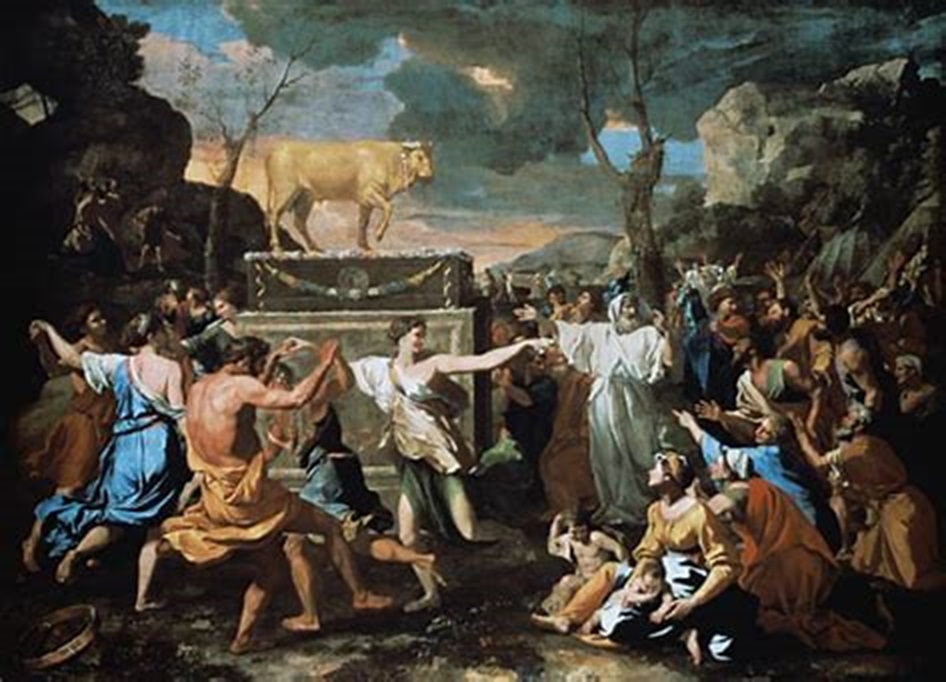
HALIFAX, Nova Scotia, November 20, 2024 – In the Gospels, Jesus states that Moses introduced laws that were contrary to God’s, and that Moses did so because of the “hardness of your hearts”. In other words, Moses legalized sin (such as adultery, by allowing divorce for any number of reasons) because the children of Israel were too spiritually immature to do what was right in God’s eyes, but he didn’t want to alienate them.
Did Paul do the same as Moses? We know Paul mainly from his letters to various churches. In one of those letters, Paul laments that the people there are too spiritually immature to receive the message he wants to give them, that spiritually they’re still drinking mother’s milk when they should be eating hard foods. He also refers to incidences of incest and other sins that frankly leave me wondering whether some of those people were believers at all.
Based on Paul’s letters, it seems that the worldly church was already off and running in the years immediately following Jesus’ ascension. Just as Jesus attracted some drive-by adherents during his ministry years, Paul was also dealing with half-hearted believers. But unlike Jesus, who openly discouraged his less-committed followers and didn’t hesitate to separate the wheat from the chaff, Paul appeared to want to appease the spiritual laggards so as not to thin the herd. In this, he acted more like Moses than Jesus, and perhaps for the same reasons as Moses.
Scripture informs us that of all the people who left Egypt during the exodus, only two fighting-aged men (Joshua and Caleb) made it to the promised land. This means that everyone else aged 20 and older died during the 40-year journey through the desert. God threatened to slaughter them all immediately after the golden calf incident a few months into the journey, but Moses pleaded with him and God relented. He allowed them to live only because he could use them to further his aims for Joshua and Caleb and for those who were younger than 20 at the time. The doomed in the desert were given the job of raising the next generations based on the laws God had dictated to Moses and fighting any enemies they encountered during their wanderings. They were also to serve as a visible and enduring sign of God’s presence on Earth. These are the sole reasons why God kept them alive.
The worldly church is full of the same kind of doomed people who would turn against God in a heartbeat, if circumstances warranted. We know they’d turn against God because they’ve done so already in any number of ways, willfully bringing pagan practices into the church, instituting doctrines of man, and unapologetically living the life of the world so that to the casual observer there is little to distinguish a worldly church member from, say, an atheist or even a satanist. Still, throughout the ages, God has kept these double-minded people alive and allowed them to engage in their rites and rituals because they have a use and purpose for his genuine Church – namely, they act as an incubator, birthing and raising believers until those believers are strong enough to survive outside the worldly church. They also provide resources for God’s children and serve as a visible and enduring sign of God’s presence. These are the tasks assigned to the worldly church today, just as they were assigned to the fledgling worldly church millennia ago and to the children of Israel who made it out of Egypt but didn’t make it to the promised land.
Jesus, on the other hand, was more stringent in his selection of followers because he had to be – he was laying the groundwork for the Kingdom, not for the worldly church. Far from appeasing those who were curious about him, he actively discouraged people from following him by highlighting all the difficulties that came with being his follower. He took everything but their lives away from his twelve disciples and demanded that anyone else who follows him must likewise give everything up. And even those who did do everything he asked of them, he constantly challenged further by demanding they think as God thinks, not as the world thinks.
And so, those in the Kingdom were to love their enemies, which is a concept that was unheard of until Jesus preached it (and is still a hard thing for most people, including and especially those in the worldly church). They were also to embrace poverty and accept being outcasts, all while praying for those who shunned and hated them. They were to keep God’s Commandments, including never to kill, even if it meant they die at the hands of their enemies. And they were to focus on the life to come, not on this life: God was to be their all, as he was for Jesus.
We’d be hard-pressed to find anyone in the worldly church who adheres to Jesus’ requirements of his followers. But God doesn’t expect them to adhere to these requirements and also doesn’t need them to. The role of the worldly church differs from that of the Kingdom, just as the role of the doomed children of Israel differed from that of Joshua and Caleb. With God’s permission, Moses adjusted some of God’s laws to better suit the double-minded, and Paul watered down certain aspects of the Gospel to suit the fledgling worldly church. Their aim in so doing was to keep the numbers up and growing in order to create an incubator for God’s children and an enduring sign of God’s presence on Earth. In their sermons today, the various denominations of the worldly church focus nearly exclusively on the teachings of Paul rather than on the teachings of Jesus, because Paul’s letters were written for people who are not born-again, whereas the Gospels were written for born-again believers.
This blog is written for born-again believers.
LOCKING HORNS WITH THE WORLDLY CHURCH

DARTMOUTH, Nova Scotia, May 9, 2021 – I’ve discussed here before Jesus’ arms-length relationship with the world. His concern was doing his father’s business and tending the lost sheep of the house of Israel, not making the world a better place. In fact, he spent no time at all confronting worldly powers about the evil they liberally dispensed. It was not his business.
What he did confront, however, was the worldly church. He set a clear distinction between those who did not know (the heathen) and those who said they knew but lived as if they didn’t (the hypocrites). The religious powers-that-be were constantly in his crosshairs, just as he was in theirs.
I have also had occasion to lock horns with religious powers-that-be and their supporters in the worldly church, and it is always an aggravating experience. Jesus was not a social justice warrior; he fought for Truth as it manifested in God’s Kingdom, not in the world. Jesus well knew that the world, being under the control of Satan, was not the realm of Truth. As he constantly reminded us: “My Kingdom is not of this world.”
Which is why I feel like I’m banging my head against a wall of unbelief when worldly Christians tell me that the evil of the world needs to be confronted by the church. Jesus never confronted the world. He never upbraided the world. He let the world be. It was not his Father’s business and therefore not his concern. God put the world under the control of Satan, so why would Jesus confront Satan? It would be like fighting against God.
Jesus didn’t advocate fighting against the powers-that-be in the world. When they came for him, he avoided them until it was his time, and then he submitted to them. In the worldly court, during his trial, he refused to defend himself. He submitted to the charges and then submitted to the punishment. Pontius Pilate was perplexed that Jesus would not speak in his own defense. In fact, he was so perplexed that he recommended that Jesus get the lightest possible sentence and be released. It was only at the insistence of the religious powers-that-be that Pilate decreed the death sentence.
The worst enemies of believers are not the worldly powers-that-be but the religious ones. It wasn’t the Romans who were hunting down Jesus’ followers in the early church, it was the religious powers-that-be, like Saul (later known as Paul). Our worst enemies, as believers, will always be those who call themselves Christians but show by their actions (if not their words) that they are anti-Christ.
Jesus warned us that our worst enemies would not be strangers but those under our own roof. And so they are.
I mention confrontation with the worldly church because of the issues currently being faced by many congregations in the form of attendance restrictions or outright banning of services. I am not in favour of openly defying worldly powers regarding attendance restrictions or closures, which puts me in direct opposition with most Christians. When Jesus was told not to go somewhere on pain of arrest, he didn’t go there. He worked around the restriction. When the early church was outlawed and told not to gather on pain of arrest, they fled and went underground. THEY DID NOT CONFRONT THE WORLDLY POWERS-THAT-BE or in any way protest the worldly decrees.
But there is a spirit of confrontation with the world that is growing stronger in so-called Christian congregations, and it is not a Godly spirit. I heartily oppose the face-covering mandate on any number of grounds, but I don’t protest it. I just don’t go where face coverings are required, or if I have to go, I state my exemption (which is part of the mandate). So far, I haven’t had any major problems. I don’t openly protest worldly decrees because Jesus didn’t, and I follow Jesus, not the worldly church.
I also don’t protest closures or meeting restrictions being imposed on congregations because these are the same restrictions being imposed on every other form of gathering, and the worldly church doesn’t deserve any special treatment in that regard. There are any number of work-arounds they could resort to, such as having three or four smaller services instead of one large one, or meeting virtually. These are work-arounds that are reasonable. I don’t attend weekly services (I’m in God’s church every day, all day), so I don’t have any particular sympathy for pastors who are openly defying attendance restrictions and getting themselves and their parishioners arrested and their buildings locked down.
Jesus would never have done this. There is no guidance in scripture supporting openly opposing or protesting worldly decrees. When believers in the early church didn’t agree with decrees not to gather, they quietly did work-arounds (like leaving town or going underground); they didn’t openly protest. The defiant pastors today aren’t getting arrested for preaching the Word; they’re getting arrested for not adhering to attendance restrictions. This is completely avoidable and has nothing to do with God’s Kingdom or preaching the Word. In confronting worldly powers and getting arrested, they are not setting a good example for their flock. Jesus never confronted worldly powers, only religious ones.
For us born-again believers, our worst enemies are not in the world but in the worldly church, just as they were for Jesus and just as Jesus warned us they would be for us. Our response to the world should always be the same: to keep it at arm’s length, but to be cordial and kind. Our response to the worldly church, however, should of necessity be confrontational, as Jesus showed us in his dealings with the Pharisees, Sadducees, scribes, and so on. Our concern is not evil in the world (God put the world under Satan and didn’t tell us to fight it), but evil in the worldly church. It is to be confronted and corrected. But in so doing, expect to be aggravated and occasionally have to overturn a few tables.
 A BORN-AGAIN BELIEVER