
Home » 2015 (Page 5)
Yearly Archives: 2015
WISE

HALIFAX, Nova Scotia, April 10, 2015 – God is no mystery. Obviously, we’ll never know everything about him (any more than we’ll ever know everything about any person, ourselves included), but we can know everything we need to know. God is not trying to hide from us or trying to make us figure him out, like some elusive femme fatale. He’s just God. He’s all-powerful, all-knowing, all-everything, but he’s no mystery. Not if you love him.
God works on a ‘need to know’ basis. Like everything God does, his system is perfect. He explained it to us years ago already, back in the Garden of Eden. He lets us know what we need to know on any given day and at any given hour. More we don’t need to know; it will just get us into trouble.
Wanting to know what you don’t need to know or what won’t serve your or anyone else’s benefit is not an admirable trait. It’s not wise. God doesn’t hide anything from you that you’re not ready to know. If you’re not ready to know something (in other words, if you can’t handle it as it should be handled, so that your knowing it won’t hurt yourself or others), then it’s simply better for you (and for others) that you don’t know what you want to know, even if you want to know it really, really badly.
That is wisdom.
But we don’t live in a wise age; we live in an age where folly and gluttony are not only admired but pursued. The gluttony is an insatiable lust for knowledge at all costs, without bounds or limits. If the words sound familiar that’s because it’s the same story that was played out in the Garden of Eden years ago; the same story that’s been repeating itself over and over and over again since then.
People like to say “knowledge is power”, and then look at you as if they’ve said something profound. But knowledge is not power. Knowledge is just accumulated facts. And accumulated facts applied without wisdom can give results that range from banal to dangerous to destructive, but there is no wisdom in any of it, and therefore no real value, let alone power.
Wisdom is power. There is power in wisdom because wisdom comes from God. Wisdom is flashes of insight from God’s mind. Wisdom is God’s mind speaking directly to yours.
God is no mystery. He lays himself out like an open book for those who love him. And the more we love him, the more pages are added to that book.
Being skilled at accumulating facts might make you wealthy or admired or respected or even feared, but it will never make you wise. No amount of accumulated facts will ever bring you anything of any value, even if your knowledge gives you enough money to wallpaper your house with $1000 bills and pave your driveway with gold.
In the same way, just knowing about God – that is, accumulating facts about him – will not make you wise. Loving God will make you wise.
The more you love God, the wiser you become. Even a child can be wise, if he loves God, just as an old man can be profoundly unwise, though neck-deep in accumulated facts and wealth.
A wise person is happy; an unwise one, unhappy.
God is no mystery. He opens himself like a book to those who love him. To some, he’s like a picture book with just a few words; to others, he’s like an encyclopedia. God wrote the book just for you. It never ends, and once you start reading it, you never want to put it down.
LOVE
HALIFAX, Nova Scotia, April 7, 2015 – People who are hurting hurt people.
Happy people don’t hurt people. Happy people want to help people, not hurt them.
We need to remember this when people are mean or rude or cruel to us.
Jesus said that it’s the sick who need help, not those who are well.
Scratch the surface of anyone who is mean or cruel or hurtful in any way, and you’ll find a painful festering sore below.
The greater the pain gets, the more people deflect it to other people and blame other people.
People who are in pain will growl and bite you if you get too close, the way animals will growl and bite you when you reach to help them.
People in pain need prayers, not curses. They need a gentle presence (from a safe distance, if necessary).
Those people who treat you like dirt – PRAY FOR THEM. Don’t tell them you’re praying for them, just PRAY FOR THEM.
And choose to forgive them.
Don’t dwell on their cruelty; dwell on how miserable they must be, not to know God’s love.
That’s a horrible cold dark wretched place to live, where God isn’t welcome.
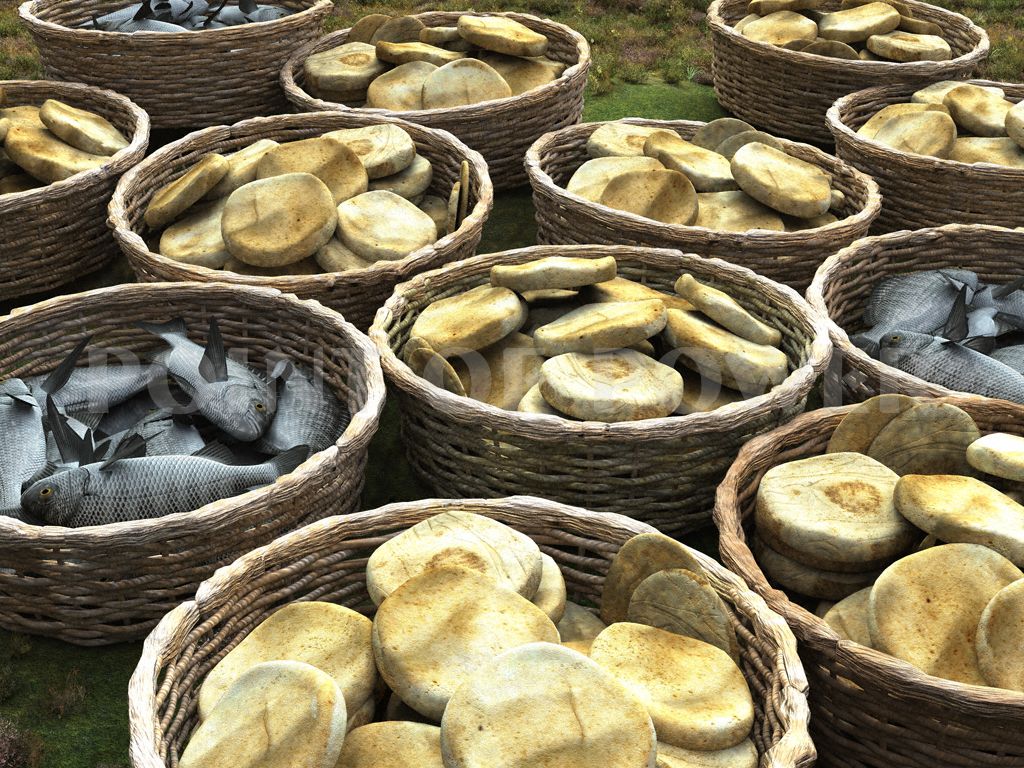
We are blessed to know God’s love, to live in his brightness and joy and warmth. Each of us who is born again has enough of God’s love to share with all the world and still have love to spare, just like Jesus had enough loaves and fishes to feed the hungry masses and still have leftovers. Each of us has that much love – enough for every human in the world, and then some – if we let go of any lingering resentment, and let God love fully through us.
That’s your job, as a born-again, to love like God loves, to love like Jesus loved, fully and without reserve.
Only people who are hurting hurt people.
Don’t make their pain worse: help them.
COCKA-DOODLE-DOO

HALIFAX, Nova Scotia, April 4, 2015 – Of the original disciples, Peter was the one Jesus relied on the most. And yet it was Peter who was outed as being the second biggest traitor (after Judas) when Jesus was arrested.
What happened to Peter? What made him hide who he really was?
Talk is cheap. Anyone can say anything until put to the test. Peter said he’d rather die than deny he was with Jesus (as did all the disciples). Then the test came just a few hours later, and Peter did exactly what he said he wouldn’t do – deny he knew Jesus, so as not to get killed.
And he did it not once, but three times.
Cock-a-doodle-doo!
Jesus told him beforehand that he’d betray him, but Peter refused to believe it. Jesus said: Before the cock crows, you’ll deny me thrice.
Peter said: No way!
Jesus said: Way.
Peter said: NO WAY!
Jesus said: Way.
And Jesus was right.
We all have a bit of Peter in us. Some of us have a lot of Peter in us. We talk a good talk, but when the test comes, who do we obey – God’s voice, or the voice of fear?
(The spirit is willing; the flesh is weak.)
Some of us are even that version of Peter stuck in a time-warp, denying over and over and over again that we know Jesus. To ourselves, oh yes, we’re Christians, but to the world – no way.
That’s how we deny Jesus like Peter did.
Jesus warned us about that. He said that if we deny knowing him, he’ll deny knowing us. That’s a pretty straight-forward warning. And if Jesus denies knowing us, we can kiss heaven good-bye.
Peter knew that if he admitted to being with Jesus, he would be signing his own death warrant. He didn’t want to die. It was as simple as that.
Outing ourselves as followers of Jesus can be uncomfortable. People stop liking us. People talk down to us. People accuse us of being bigots, racists, homophobes, relics of the ‘dark ages’. People start watching us like a hawk, and at our slightest slip-up, they triumphantly point their finger as us and shout “That’s not very CHRISTIAN of you!”
Sometimes, given the world’s response to us when we say we’re Christians, it’s easier just to say nothing. Sometimes it’s easier just to ‘go along to get along’, to hide that we believe in God and follow Jesus. But when we do that, we’re right back in the courtyard with Peter, warming our hands by the fire and sipping a latte while Jesus is out back getting beat up.
Jesus knew Peter would deny him, and later, after his resurrection, Jesus gave Peter another chance. He gave them all another chance, but first he bawled them out for being so hard-headed and cowardly, for having so little faith and for not paying attention to what he’d told them before his crucifixion.
Jesus has told us and shown us everything we need to know to make it to heaven. He beat down the path for us, but we still have to follow closely behind him on that path. Those who try to sneak into heaven another way are kicked out.
It’s not enough to say “I’m a good person” or “I try to be nice to people”. That’s not enough. We’re to go out in the world and preach the Good News, not the watered-down inter-faith version that the world accepts. The name of Jesus features prominently in the Good News. The Good News is all about Jesus. We, as his followers, should be all about Jesus.
Everyone who knows you should know you’re a Christian.
If they don’t, it’s not too late to let them know.
But some day – cock-a-doodle-doo – it will be too late.
JEEE-SUS! JEEE-SUS!

HALIFAX, Nova Scotia, April 2, 2015 – “If you loved me, you’d be happy for me, for I go to the Father.” Jesus said this to his followers during the Passover meal he shared with them the night before he was murdered. Some of his followers were crying. All of them were sad.
But imagine, if instead of being sad, they did what Jesus suggested and were happy for him? Imagine if, instead of standing at a distance and weeping for him, they cheered him on the way a marathon runner is cheered on in the final agonizing stretch of the race? Imagine how those cheers would have encouraged Jesus to “hang in there!” and “keep going!”
Imagine what the crowd would have thought if Jesus’ followers started shouting “Hang in there, Jesus! We know you can do it! Keep going! We’re praying for you! We love you! You’re almost there! You’re almost home! You’re Number 1! GO, JESUS!!!” Imagine what the crowd would have thought if Jesus’ followers had shown up at the crucifixion wearing paper crowns and holding up the first-century version of the foam finger while chanting Jesus’ name over and over and over again.
“JEEE-SUS! JEEE-SUS! JEEE-SUS! JEEE-SUS!”
Their cheers might even have drowned out the jeers of the unbelievers. Imagine the good this rambunctious support would have done Jesus in his dying moments. Anyone who’s been on the receiving end of crowd cheers knows how invigorating those cheers can be. There’s a reason why the proverbial “hometown advantage” is proverbial.
“JEEE-SUS! JEEE-SUS! JEEE-SUS! JEEE-SUS!”
Yes, his supporters might have been arrested for “outing” themselves, but let’s imagine for a moment that they wouldn’t have been. Let’s imagine that, instead of weeping and praying silently, they clapped and cheered and hooted and hollered and shouted their love and encouragement to Jesus as his mission on Earth reached its glorious climax and the Sin of Ages was wiped away.
“JEEE-SUS! JEEE-SUS! JEEE-SUS! JEEE-SUS!”
Imagine how much easier it might have been for Jesus if he’d heard cries of love instead of howls of hate. Imagine how different his death scene might have been.
Imagine.
It’s too late now to do this for Jesus, but we can do it for each other.
Imagine people cheering us on as we die. Because this is what they should be doing, encouraging us to “hold fast” not to life on Earth but to our commitment to God as we approach our final test. As born-agains, we should be happy when it’s our time to die, because, as Jesus told us, we’re going home. It’s what we’ve prayed and prepared for all our born-again lives.
Imagine how joyous our deathbed scene would be if Jesus’ words were adhered to. Imagine tears and whispered condolences being replaced with shouts of “Good for you! You’re almost there!” and “I’m SO jealous!” Imagine people surrounding us with boisterous encouragement, chanting our name as we round the final bend and come in view of our earthly finish line. This is the kind of jubilant death scene we should be having as born-agains, not tears and regrets and tubing and machines and pleas from relatives to ‘hang on’ to this life as long as we can.
Heaven is so far above and beyond anything that Earth can offer, it only makes sense to be happy for whoever’s going there.
At our funeral, it should be our death that is celebrated, not our life. And instead of a cross with “R.I.P.”, our tombstone should be a big stone foam finger emblazoned with “JEEE-SUS!” and “THANK GOD I’M OUTTA HERE!”
“If you loved me, you’d be happy for me.” Remember this when it’s your time to go home.
MONEY

HALIFAX, Nova Scotia, April 1, 2015 – People say that you can’t live without money, but it’s God that you can’t live without.
Money you can definitely live without. God you can’t.
Yet, even knowing this, how many of you still spend the lion’s share your days doing things for the sole purpose of getting something that you can live without (money)?
You don’t need to answer that.
You’re reading this, so I already know the answer.
When will you have your “Matthew moment”? When will you just get up and walk away from whatever it is you do to make money, whatever it is you waste your precious time doing, day in and day out, just to make money?
Matthew walked away, and he never looked back. He didn’t give two weeks’ notice, either. He just upped and walked.
Jesus had no money. People gave him money, but Jesus gave it to Judas Iscariot to hold and disperse to the poor as he saw fit. Judas was a bank and a charitable organization all rolled into one. And, like all banks and most charitable organizations, he cheated, lied and stole. That’s why Jesus put him in charge of the money – because it was of no value to him. Someone who cheats, lies and steals is the best person to put in charge of something that has no value to you.
In a corrupt world, which is what we live in, held captive by a corrupt monetary system, which is what we’re held captive by, the only way to escape it is to reject the corrupt values and refuse to participate.
That’s what Jesus did.
Instead of spending his final few years toiling as a carpenter, earning the roof over his head and the food in his mouth by the sweat of wasted labour, he went to work for God full-time. And all his earnings he invested in the Bank of God. He got paid daily, but asked for only enough to keep body and soul together, while the rest of his earnings he let God disperse as he saw fit.
This is how Jesus lived – working full-time for his Father, and trusting his Father to take care of him.
Jesus had no money. He didn’t need any. Money had no value to him. If he needed a place to stay, God found him one. If he needed food, God arranged for someone to invite him for dinner or took him to a field with corn that was ripe for the plucking. If he was ordered to pay an unexpected tax, God sent him a fish with a gold coin in its mouth.
This is how God works, when you work for God. Just as the wild animals have their needs looked after, so too do God’s labourers have their needs looked after, as long as they put in an honest day’s work in God’s kingdom.
When will YOU have your Matthew moment? When will YOU walk away from money, like Jesus did?
Money you can live without, even in this corrupt world.
God you cannot live without.
Ho, every one that thirsteth,
come ye to the waters,
and he that hath no money;
come ye, buy, and eat;
yea, come, buy wine and milk
without money
and without price.
Wherefore do ye spend money
for that which is not bread?
and your labour
for that which satisfieth not?
Hearken diligently unto me,
and eat ye that which is good,
and let your soul delight itself
in fatness.
Isaiah 55:1-2
READY

HALIFAX, Nova Scotia, March 25, 2015 – There was a news story the other day about a TV reporter who dropped dead from a brain aneurysm a few minutes after giving a news report. Yesterday, we heard about yet another plane that dropped from the sky in mysterious circumstances, leaving no survivors. We hear about these deaths, maybe say a prayer for those who are mourning their dead, and then we move on with our lives. We didn’t know the reporter. We didn’t know anyone on that flight. These are other people’s problems.
Jesus says no-one knows the time of the end, not even the angels in heaven. He gives us a general run-down of ‘signs’ we should watch for, but they’re so vague they could apply to any age in history. At the same time, he tells us always to be ready not only for the world’s end, but for our own: Both of these, guaranteed, will come without warning.
I don’t know about you, but this stuff makes me stop dead in my tracks and panic a bit. I think: What if my end came now? Would I be ready? Was the reporter ready? Were all the people on that plane ready?
Jesus calls death the ‘thief in the night’ who enters your house while you’re sleeping. Sleeping means unaware and vulnerable. Sleeping means darkness. Sleeping means defenceless. Sleeping means looking like you’re dead.
The sleep described here is a spiritual sleep, not a physical one, and the thief a spiritual thief, not a common one. When we let ourselves be lulled by the world into thinking we have all the time in the world to get things right, we’re spiritually dozing and setting ourselves up to be robbed of everything God’s planned for us. We’re in danger of losing heaven.
When the urgency of “doing the Father’s work” is replaced with “eating and drinking with the drunken” and “beating fellow-servants”, we’re in trouble. Jesus spells out precisely what will happen to us if we lose that sense of urgency, and he does so using terms that leave no room for misinterpretation.
God loves us, but he also means business. Every day, all around us, we see and hear about people who experience their own personalized version of the end of the world. Some of these people we even knew well enough to be emotionally affected by their death. When their end came, were they ready?
God lets us hear about other people’s deaths so that we will imagine ours. Everyone in the Bible has gone through what is waiting for us. Half of my family has already gone through what is waiting for us. Death won’t always happen to other people. One day, when we least expect it, the thief will come for us.
Knowing this, we have no excuse if we’re not ready. We can’t claim ignorance.
We all need to seriously think about the reporter with the brain aneurysm and the people on that plane. Their stories are graphic reminders of Jesus’ warning always to be ready because we don’t know – we won’t know – the time of our end. If you were that reporter, if you were on that plane, would you have been ready a few days ago?
Are you ready now?
But, thank God, Jesus not only told us that we should be ready, he showed us how. We need to be sober. We need to watch. We need to have lots of oil in our lamps. We need to be ready to leave at a moment’s notice. And, most importantly, we need to treat other people as kindly and mercifully and respectfully as we ourselves want to be treated, and to make the best use of everything God’s given us.
If this doesn’t describe you and your life, you’re not ready.
Today may be your last day to get it right.
Do it now.
MISTEAKS

HALIFAX, Nova Scotia, March 22, 2015 – One thing I especially love about the gospels is how Jesus and his followers are portrayed as normal everyday people. No royalty there (not in earthly terms, anyway), and not even any trained ministers among them. Jesus was a carpenter from a poor hick town and his followers came from the lowly ranks of fishermen, tax collectors, administrators, and even party girls. And, being normal everyday people, they all occasionally screwed up (sometimes royally), and we get to read about it and learn from it.
This is a huge blessing for us and a further testimony to God’s love for us, how we can read about the everyday ‘normalness’ of Jesus and his early followers. We can screw up, just like they occasionally did, and God won’t give up on us. Just as we keep forgiving people (seventy-times-seven times, if necessary), God keeps forgiving us. We fall down; he picks us up. And he’ll keep on doing that as long as we’re sincere in wanting to follow Jesus.
The best-known royal screw-up is, of course, Peter denying knowing Jesus three times. Think about it – Jesus spells out to Peter that he’ll betray him three times before the cock crows (meaning, within less than a day), but Peter swears he’d never betray Jesus and he’d even die for him if necessary. All of the disciples swear the same thing. Let me repeat that – Jesus tells Peter precisely when and precisely how he’s going to screw up, but Peter refuses to see it as a possibility. And then, within only a few short hours, Peter does exactly what Jesus says he’d do.
(OOPS!)
This “warts and all” approach is one of the main things I love about the gospels. The information about Peter was included not to denigrate him – no, not at all. Rather, the information was included to show us that we’re just like Peter and Peter’s just like us, especially when we screw up. And, just like Peter, we too can get another chance, if we sincerely love God and sincerely want to follow Jesus.
I wonder how many of us reading (and writing) this can imagine being in Peter’s shoes. I’m guessing that most of us who call ourselves born-again followers of Jesus have, like Peter, sworn in our hearts that we’ll do anything and everything to follow Jesus, anything and everything to do God’s will.
I also imagine that we’ve been tested on this already and have come up far, far, far short of what we’d envisioned for ourselves.
But take heart, you worms! As my grandmother used to say: “Mistakes keep you humble.”
Without humbling ourselves before God (meaning, without handing our one and only true possession over to God, day in and day out [meaning, without handing our will over to him, day in and day out]), we won’t be able to do God’s will and we won’t be able to get to heaven.
That’s a spiritual fact.
Peter screwed up royally, we occasionally screw up royally, even Jesus made the odd mistake, like when he assumed, when he was 13 years old, that he was old enough to start his ministry, or when he tried to heal a blind man and had to do a second round of healing to get it right.
Jesus wasn’t perfect. He wasn’t a sinner, but he wasn’t perfect. His followers aren’t perfect, either. Only God is perfect. We strive for perfection (Jesus says “be ye perfect, even as your heavenly Father is perfect”) but we’re not expected to achieve it. When we fall short and fall down, God will pick us up, pat or spank us on the bum, and then set us back on the path we need to go.
After his resurrection, Jesus asked Peter three times if he loved him. Peter said yes, of course, he loved him, and even got a little impatient with Jesus for asking him the same question over and over again. People interpret Jesus’ three questions about loving him as being the resolution of the three times that Peter denied knowing Jesus (and I agree with this interpretation), but I also see Jesus’ repetition of the same question as being a way to emphasize a profoundly important point – that in living your life, you occasionally screw up and do the exact thing that you swear you’ll never do. But that doesn’t mean you don’t get another chance, as long as your heart is in the right place, and as long as you still love God and still want to follow Jesus.
The gospels show us how the early disciples lived their lives while they were here on Earth. We can see ourselves in their triumphs and confusion and weak faith and occasional royal screw-ups. But we can also see ourselves in how they kept going and how they were rewarded for their perseverance by a steadily increasing faith and an ever-closer relationship with God and Jesus.
You’re going to make mistakes – that’s for sure.
Just don’t let your mistakes unmake you.
WORSHIP

HALIFAX, Nova Scotia, March 22, 2015 – Sunday is the day that most Christians flock to church. They don their ‘Sunday-best’ and shine up their church faces to smile at other shined-up church faces. During the hour-long so-called worship service, they stand on command, sit on command, kneel on command, recite on command, sing on command, keep silent on command, and (most importantly) give money on command. This is what worship service is all about. After it’s over, they leave the church building and figure they’ve done their worshiping for the week. Then they go about their non-church lives.
Apparently these Christians didn’t get the memo: You don’t need to go into a building to be in church or to worship. If you’re born again, you’re already in church – God’s church, which is made up of born-again souls in human bodies. If you’re born again, you’re in church now, wherever you are. You’re in church all the time, and everything you do is your worship.
Everything you do is your worship.
Everything you do is your worship.
Make sure it’s worthy of God.
Jesus was not a fan of ritual during his ministry years on Earth. In the gospels, we see only two episodes that could be considered rituals – one was his baptism by John the Baptist, and the other was the Passover meal just before his crucifixion. Nothing he did in between could really be construed as ‘ritual’. Even his public prayers were in no way ritualized. He just talked to God the way I’m talking to you now. That’s what prayer is.
Contrast Jesus’ extreme lack of ritualized worship to the super-abundance of ritualized worship that characterizes most church services today. In some cases (Catholicism, for instance), the entire service is a ritual that is essentially just a performance, a show (as in “as show of piety”). There is nothing genuinely worshipful about it. You don’t even have to be a Catholic or even believe in God to take part in it; you just have to show up, preferably with your wallet.
Jesus said that God is looking for people to worship him in spirit and in truth. A ritualized worship service where everything is scripted and done on command is NOT worshiping in spirit and in truth. At the very best, it’s just “showing up”; at the very worst, it’s demon worship. Demons demand ritual and strict order in worship. God doesn’t: he just wants you to be yourself and do what you do, with him in mind.
This, here and now, is worship. I’m worshiping by writing, and you’re worshiping by reading.
This is what Jesus meant when he said to worship in spirit and in truth. He meant to be authentic. He meant to be real. Paul said to do all things as if unto God and to pray without ceasing. He meant to live your life knowingly and consciously in God’s presence. He meant to do your best at all times, and to look to God for help and guidance at all times. He meant to make your entire life your worship, not just one hour a week in a designated building.
Everything you do is your worship, from the time you get up in the morning until the time you go to bed at night. You are always in church. You are always in God’s presence.
Everything you do is your worship.
Let your life reflect that.
FAITH

HALIFAX, Nova Scotia, March 16, 2015 – Throughout the gospels, people ask Jesus to increase their faith.
Interestingly, he doesn’t. He just tells them that if they had faith the size of a mustard seed, they could move mountains. He also constantly berates his followers for their lack of faith.
Faith seems to be a pretty important part of being a follower of Jesus, yet how many people actually know what it is (or how you can increase it)?
Paul defined faith as being “evidence of things unseen”. This view of faith quantifies it much like Jesus quantifies it in comparing faith to a mustard seed. Faith here is a measurable and palpable ‘thing’ that can even be used as evidence (presumably, in God’s court of law). But this definition doesn’t explain how faith can be increased or why it’s so important.
Here’s another definition that expands the idea of faith to include its mechanism of growth: “Faith is the means to and the measure of your relationship with God.” If we see faith both as a “way” (a means) and a quantity (a measure), faith becomes dynamic. In other words – we not only see that faith can grow, but we see how it can grow.
Every time you know God’s will and choose to do it, your faith grows. Every time you know God’s will and choose not to do it, your faith shrinks. It’s a very simple dynamic that even a child can understand. People who claim to have “lost” their faith actually still have a tiny fraction of faith (God never lets our faith balance go to zero), but their choices have put them in a near faithless state. That’s a sad and painful place to be. They got there by their choices, not because of something God did or didn’t do to them.
Faith is not something that someone else can increase for you, so Jesus could not have increased his disciples’ faith just because they asked him to. Faith is something you have to increase yourself. You increase it by your choices, just like you decrease it by your choices.
When a soul enters a body, it’s given a measure of faith. This is the capacity to be obedient to laws that God’s written on our hearts. Everyone knows those laws, though most people ignore them. Each time we ignore the laws written on our hearts, our faith decreases. But each time we heed those laws, our faith increases.
We born-agains have an even greater potential to increase our faith because of our one-on-one relationship with God through his spirit. We don’t have to guess whether or not we’re doing God’s will, we can know for sure simply by knowing scripture or asking God directly. This is why Jesus’ faith was so strong. He knew scripture, he had a one-on-one relationship with God, and he always chose to do God’s will.
Many people confuse faith with belief or a set of beliefs, but these are not faith. Your faith is intensely personal and entirely unique to you. It’s quantifiable and measureable. You’ve built it over the course of your lifetime. Every time you choose to do God’s will, you expand it. Every time you choose not to do God’s will, you shrink it.
OK, you say. I get it. I understand faith, and I understand how I can increase my faith. But why is faith so important? And why did Jesus always get in his disciples’ faces about their lack of faith?
We know faith is important because Jesus told us it was. We need great faith not to move mountains but to have the best possible relationship we can with God. The greater our faith, the closer we grow to God; the closer we grow to God, the greater our faith.
And here’s the kicker – the closer we grow to God, the more God can work through us in the world.
This is why having great faith is so important. This is why not only knowing God’s will but choosing to do it is so very, very, very important.
God works through the strength of our faith. God loves through the strength of our faith. God makes the world more endurable through the strength of our faith. God brings people back to him through the strength of our faith.
People of great faith can do great things not by their own power, but by God’s.
We are all gifted with an equal measure of faith. How great that initial measure of faith grows depends on the choices we make in our lives. The more we choose God’s way, the greater our faith grows, and the closer we grow to God; the closer we grow to God, the more likely we are to choose God’s way, which in turn increases our faith, and so on, and so on. This is how faith grows exponentially.
This is also how a thing as tiny as a grain of mustard seed can turn into a great spreading tree, through which God spiritually feeds and shelters his loved ones.

HEART WORDS

HALIFAX, Nova Scotia, March 12, 2015 – There are two types of words: the ones you speak, and the ones you mean.
You know what I’m talking about. You can say something or write something, but inside you’re thinking something quite different, maybe even the opposite.
God is not a lip reader. He reads hearts. He is aware of the words that come out of your mouth or flow through your fingers, but they count for far less than the words he hears coming from inside you. He knows and records every single one of your heart words, and he’ll use them as evidence against you (if he must) come Judgment Day.
Jesus warned us not to be hypocrites. We might fool some people, but we won’t fool God.
Our heart words have the power to justify our salvation in God’s eyes, and they have the power to condemn us and cause us to lose our salvation.
If our heart words justify us in God’s eyes, we go to heaven.
If our heart words condemn us in God’s eyes, we go to hell.
It doesn’t get any plainer than that.
Jesus said: “For by thy words thou shalt be justified, and by thy words thou shalt be condemned.”
We need to pay very, very close attention to this. He didn’t say: “Just believe in me, have faith in me, and you’ll be fine.”
No, he said: “For by thy words thou shalt be justified, and by thy words thou shalt be condemned.”
He didn’t say if you’re baptised in my name or born again, everything’s fine and you have nothing to worry about.
He said: “For by thy words thou shalt be justified, and by thy words thou shalt be condemned.”
He didn’t say he’ll do everything for us so that all we need to do when we get to the pearly gates is to say: “I’m with Jesus!”, and we’ll be fine.
No, he said: “For by thy words thou shalt be justified, and by thy words thou shalt be condemned.”
You determine your salvation by the words you choose to speak and the thoughts you choose to permit. You can ALWAYS choose your spoken or written words. No-one can force you to speak or write anything. That power is yours.
And while you can’t always prevent thoughts from coming to your mind, you can choose whether or not you permit them to stay there. That power is also yours.
As with everything in life, the only way you’re going to get through this minefield of heart words is with God’s help. Paul says to pray without ceasing. He means, never cease being conscious that God’s spirit is with you. If you’re constantly aware of God’s presence, you’ll be more likely to ask for his advice and also more likely to heed it.
“Ye have heard that it was said by them of old time, Thou shalt not kill; and whosoever shall kill shall be in danger of the judgment: But I say unto you … whosoever shall say, Thou fool, shall be in danger of hell fire.”
Paul says to work out your salvation with fear and trembling. He didn’t say you’re born again, so you’re good to go and heaven’s a sure thing.
No, he says: work out your salvation with fear and trembling.
Watch what you say.
Watch what you write.
But even more so, watch what you choose to think.
“For by thy words thou shalt be justified, and by thy words thou shalt be condemned.”
Matthew 12:37
 A BORN-AGAIN BELIEVER