
Home » Posts tagged 'atheist' (Page 7)
Tag Archives: atheist
THE HOLY DOOR-STOPPER

HALIFAX, Nova Scotia, February 16, 2015 – All of my life I’ve been a voracious reader. Before I was born again, I had a private library of about 3,000 volumes, some of which were signed first editions. I had a Bible, too, that had been given to me by a neighbor (it had been her grandparents’, but she didn’t want it), and I dutifully added God’s Word to the collection. But I never read it.
I worshiped a constantly changing stable of writers and philosophers, all of whom were either suicidal or dead (or both). Sylvia Plath, T.S. Eliot, Vladimir Nabokov, William Shakespeare, Friedrich Nietzsche, Franz Kafka, Virginia Woolf, J.D. Salinger, Margaret Laurence, Anthony Burgess, Jean Rhys – these were the sad souls I looked to for help as I groped and stumbled my way through the darkness. I faithfully memorized their words and tried to apply them to my life, but their ‘guidance’ only led me to share in their despair. I, too, became suicidal. I, too, threw myself into loveless ‘love affairs’. I, too, became booze-addicted. I, too, thought it was romantic to live outside the bounds of society’s norms. I, too, simultaneously disbelieved in and hated God, not realizing it was illogical to do so. I, too, learned to hate myself.
Most of these writers’ works were introduced to me through school assignments. Before I was even in my teens, I was force-fed what I know now is potent spiritual poison: Sylvia Plath’s The Bell Jar; Shakespeare’s MacBeth; Herman Hesse’s Siddhartha. I read these works because I was told to read them. It never occurred to me that I had a choice in the matter. If my teachers had said: “Here’s a bottle of poison; drink it”, I certainly wouldn’t have drunk it. But no-one ever said to me: “Here’s some spiritual poison; read it.” The essay assignments came with no warning labels or disclaimers, though they certainly should have. Spiritual poison is far deadlier than physical poison, and far easier to swallow.
Of the millions upon millions of words I had to consume as a student, I was told to read from the Bible only once. It was for a university course, and by that time I was so demon-addled, I couldn’t read the Bible even though I tried. All the words ran together. They made no sense. I gave up and relied on what I’d heard in class to answer the Bible-related exam questions.
In one of those curious episodes that only make sense in hindsight through a born-again perspective, I came to read about Jesus while searching for a book of essays on Jean Rhys. I have no idea why I decided to take books on Jesus out of the library, but I did. I read them while sitting at the kitchen table smoking and drinking. I can still see the look my boyfriend gave me when he saw the books on the table. “Jesus?” he sneered. I don’t remember what I said to him in response, but I do remember reading the books. They characterized Jesus as a rebel and a champion of the underdog, not as the son of God. They were Jesus from an historical and atheistic perspective. He came across as a pretty cool guy. I liked him.
Six months later, I was born again.
Since being born again, the only book I own is the Bible. I’m as voracious a reader as ever, but now I have no desire to read anything but the Bible (and the occasional blog or newspaper). My favorite writers are Isaiah, Jeremiah, David, John and Paul. Unlike when I was an atheist, I now understand the power of words to poison or to feed a soul. I also see writing not as a craft for impressing people, but as a means to deliver God’s truth through words, the plainer the better.
In the movie The Day After Tomorrow, some characters are holed up in the New York Public Library, burning books to keep from freezing to death. Interestingly, the only book the atheist librarian chooses not to burn is the Bible. His reasoning is that this particular Bible was the first book produced on a printing press and therefore represented a seminal moment in human achievement that should be preserved at all costs. As noble as it sounds, I’m not buying his explanation. I think that he, like me when I was an atheist, recognizes that there’s something special about the Bible, something that sets it apart from all other written works. As an unbeliever, I didn’t want to read the Bible but I still knew I had to have one in my collection. I know now that the feeling of “having to have a Bible”, for whatever reason, was God sticking his foot in the door, refusing to let me shut him out entirely.
FOR WHOM THE BELL CURVE TOLLS
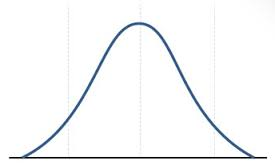
HALIFAX, Nova Scotia, February 16, 2015 – Jesus ended his ministry on Earth exactly as he started it: Alone.
When he was naked and dying in agony on the cross, no-one except him believed anymore that he was the Messiah, just like no-one, when he was growing up, believed he would become the Messiah.
If you plotted in graphical form the number of followers Jesus had during his time on Earth, a classic bell curve would emerge. From the initial 1, the numbers would swell to many, and then back down to 1 again.
Ding, dong.
Jesus himself is not responsible for the sharp rise and fall of his follower numbers. Rather, it was his followers’ lack of understanding of scripture along with their unwillingness to accept Jesus’ mandate as being spiritual not political that led to their exodus from the truth.
When Jesus burst on the scene dispensing miraculous healings like free condoms at a Pride parade, nearly everyone wanted to be part of the excitement. Jesus was youthful and vibrant and he really sounded like he knew what he was talking about. He thumbed his nose at religious authorities, besting them in every argument, and had a genuine connection with the people. He was a likeable guy doing likeable things. What’s there not to like?
It was only when Jesus started to challenge his followers’ false beliefs that his popularity began to wane. People wanted feel-good excitement and a “winning” candidate that they could get behind, but Jesus was stating very clearly that the winnings would not be in Earthly terms, and that in fact the Earthly reward for being part of the Kingdom would be persecutions and social rejection. Who in their right mind would want to sign up for that?
As follower after follower drifted away, Jesus didn’t water down his message but instead pushed the remaining followers harder and harder. He was weeding them even as he was feeding them. Those who could stomach the truth, stayed; everyone else either ran screaming or slithered off in silence.
At the cross, no followers at all remained, just a few friends and family members along with some soldiers and the usual assortment of haters. No-one believed anymore that Jesus was the prophesied saviour. Some still loved him, but they didn’t believe in him. He alone persisted to his dying breath in the sure belief that he was the Messiah.
After Jesus died, the women went to his tomb a few days later to apply the spices that were part of Jewish burial rites. Even though Jesus had told them explicitly that he would rise from the dead in three days, they still went to dress his corpse. They didn’t believe he would rise because they didn’t believe he was the Messiah. Then, when they found his tomb empty, they simply thought his body had been moved. They thought Jesus was buried, not risen, because they no longer believed he was who he’d said he was.
Self-confidence is a beautiful thing when it’s based on truth. Jesus remained firm in his belief that he was the Messiah because his interpretation of scripture was God-based, not man- or demon-based. In assuming his role as the Messiah, Jesus hadn’t set out to win a popularity contest. He didn’t measure the success of his mission by how many followers he’d accumulated but by how closely he adhered to a Godly interpretation of scripture and how closely his will was aligned to God’s. And in both of these measurements, his mission was more than accomplished.
Most if not all of today’s churches measure their success quite differently. For them, “making converts” has become some kind of a contest and the church with the most “converts” wins the prize. But to make converts to their false version of Christianity, these antichrist Christians – these wolves in sheep’s clothing we were warned about – not only water down the gospel but sweeten it with saccharine lies. I have stood in many of these churches, as have you.
I will stand in them no more, even if it means, like Jesus, I stand alone.
Even if it means, like Jesus, I die alone.
HAPPY CARITAS DAY!

HALIFAX, Nova Scotia, February 14, 2015 – When I was in university, I had to read excerpts from the Bible for a comparative literature assignment. I was an atheist at the time and hated the Bible or anything that spoke of God in a positive way. I thought believers were idiots and I had zero patience for them.
The assignment specifically required me to read passages from Paul’s letter about faith, hope and charity. As an atheist, I had a difficult time reading the New Testament because all the words ran together and I couldn’t make head or tails of what was being said. Trying to read the New Testament for this assignment was no different; none of the words made any sense to me. It was as if they were written in a foreign language that I had no knowledge of.
In discussing the assignment in class, my professor talked about “caritas”, or charity, as a type of love that was distinct from other forms of love. He was a kind man and a diligent instructor, and I can still see him struggling to convey a meaning that can only be understood by people who are born again. I doubt whether he, at the time, was born again, or even if anyone in the class believed in God. I certainly didn’t understand what my professor meant by “caritas”, but I dutifully picked up enough of his explanation to regurgitate it on the exam and get a pass for the course.
Caritas is often translated as “charity”. It means self-less love, the kind that God gives us. God loves us selflessly, even arrogant university students who spit venom at the sound of his name. He gives of himself without expecting anything in return. As an atheist, I could not fathom a type of love that wasn’t feelings-based and wasn’t meant to be reciprocated on some level; to me, love without palpitations and weak knees just wasn’t love. Sure, I understood that my parents and grandparents loved me without palpitations and weak knees, but that was different. I was expected at least to show my respect to them, so in this they got something in return for their love.
But to love expecting nothing in return – what kind of fool would do that? My atheistic mindset had no place for such as concept. To me, the notion of caritas made the idea of God all the more far-fetched.
Muddying the waters even more was my personal experience of the charity industry. I saw charities as seedy organizations whose sole purpose was to separate people from their time, energy, and money. How could these organizations truly be called ‘charities’ if they gave tax receipts for monetary expressions of love? Wasn’t real charity supposed to be done selflessly and without expecting anything in return?
Despite his best efforts, my professor could not bring me to an understanding of Paul’s concept of charity, nor make me grasp why Paul considered charity to be the highest virtue. It was only after I was born again and able to read the New Testament that I started to get a feeling for what Paul meant.
Jesus said to give freely without expecting anything in return, to love your enemies, and to treat other people as you want to be treated. He also tells us to be perfect as our Heavenly Father is perfect. This is the caritas that Paul was talking about – being kind to people without expecting to be treated kindly in return, and giving freely to those in need without expecting anything in return (including a tax receipt or even a thank-you). And to do it all sincerely, and with a smile in your heart.
To Jesus and Paul, charity simply meant to love as God loves. No palpitations or weak knees are required. Caritas is initiated in us by an act of our will, not a feeling. It is an act that is done for no other reason than that it is the right thing to do; no personal gain is involved. This is the selflessness that my professor struggled to convey all those years ago.
When we say “yes” to caritas, God loves through us. The simple nod of our will gives God permission to work through us so that we can, in fact, love as God loves: fully and selflessly. In saying “yes”, we feel God’s love flow through us, and we know there is no greater love.
HAPPY CARITAS DAY, EVERYONE!
 A BORN-AGAIN BELIEVER