
Home » Posts tagged 'Christian' (Page 77)
Tag Archives: Christian
TGIS

HALIFAX, Nova Scotia, March 6, 2015 – I was “baptized” a Roman Catholic when I was three weeks old, but I was raised an atheist. I mention this because, when I was born again at age 36, I had no idea whatsoever what it meant to be a Christian. I wasn’t, as they say, “raised in the faith”. Everything I’ve learned about being a follower of Jesus has come from the Bible, my conversations with God and Jesus, and my own experience as a born-again.
This is why I’m always a wee bit surprised when I come across doctrinal arguments that have already been dealt with and resolved by Jesus in the gospels. If Jesus has already resolved these issues, why are people who call themselves Christians still arguing about them?
One favorite issue that rigid legalists like to bring up again and again is the concept of “keeping the Sabbath”. They argue over which day is the ‘real’ sabbath day. They argue about what is and is not permitted to be done on that sabbath day. And then they warn that if you don’t strictly adhere to their interpretation of “keeping the sabbath”, you’re going straight to hell, do not pass ‘Go’, do not collect 200 dollars.
What did Jesus have to say about the sabbath?
He said: “The sabbath was made for man, not man for the sabbath.”
He said this in response to some rigid legalists (in this case, Pharisees) who were peeved that he and his disciples had picked and eaten a few ears of corn while walking through a cornfield. Jesus used as a justification how David and his men had eaten food offerings from an altar when they were hungry and had no other food source. In eating the food that was meant only for priests, David was breaking a rule. Jesus’ point here was that expediency and urgency of human need are greater even than altar rules. Jesus and his disciples were hungry; the corn was there; they ate it. End of story. Just like David and his men were hungry; the food was there; they ate it. God had put the food there not to tempt them but to satisfy their need.
Jesus reiterated his stand on how human need trumps the rigid rules around “keeping the Sabbath” when later the same day he healed a man in the local synagogue (I’m using Mark’s gospel here, the end of Chapter 2 and the beginning of Chapter 3). The same Pharisees were there to witness this “Sabbath violation” and it set them off on the warpath to “destroy” Jesus. Even after Jesus had explained to them in simple terms that it was better to do good than evil on the sabbath and better to save a life than take it, they still didn’t get it. All they could see was their beloved rule and that Jesus had broken it.
Jesus was totally exasperated with their “hardness of heart” and their inability to grasp even the simplest concepts of who God is and how we are to serve him. This kind of rigid legalistic interpretation of “keeping the Sabbath” persists to this day, despite Jesus having dealt with it once and for all. And not surprising, the same type of people who gave Jesus grief all those years ago are still giving Christians grief about the sabbath today.
As I mentioned, everything I know about being a follower of Jesus, I learned from the Bible or directly from God and Jesus. Regarding the sabbath, I usually take one day off a week, and it’s usually Sunday, but not always. If I end up having to work on Sunday, I take the next day off that I can. I know that if I don’t get my ‘day of rest’, I’ll be a nightmare to be around, just like I’ll be a nightmare to be around if I don’t get my 8 hours’ sleep. I’ve tried splitting my sabbath day into two by taking two half-days off, but that doesn’t work as well. I don’t get the same level of rejuvenation as I do when I take a whole day to ‘do nothing’.
Because I’m a follower of Jesus, I prefer to spend my entire day off just hanging with God and Jesus and the holy rellies (you know, that cloud of witnesses Paul was talking about). If I had my druthers, I’d spend every day doing nothing but just hanging with God and Jesus and the holy rellies, but that’s not advisable, since we do still have work that needs to be done. God loves it when we just spend time with him for no other reason than that we love him, but we can’t do that 24/7. We still have work to do during our time here, just like Jesus had work to do during his time here.
I’m not telling you what to do or not to do on your sabbath. That’s up to you to decide. As for me, I look to Jesus and my own conscience as to how I spend my weekly day off. Jesus states quite clearly that the sabbath is meant for our benefit and that it’s not so set in stone that it can’t be altered if the situation calls for it. I’ve worked through days that I should have taken off, and I’ve suffered for it by getting tired and cranky. I look forward to my ‘day of rest’ once a week, but if an emergency comes up that can’t be put off (and I get clearance from God to deal with it), I deal with the emergency. I don’t think twice about it, and neither does God.
For any of you legalists out there reading this and tearing your robes – lighten up. Get to know God and Jesus better. Read the gospels. Jesus said that “the Son of man is Lord of the sabbath”. Anyone who’s a born-again follower of Jesus is a “Son of man”, meaning a prophet (meaning, a revealer of God’s truth). If Jesus could dictate what could and could not be done on the sabbath, so can we. Jesus didn’t arbitrarily and just for the sake of it do whatever he wanted to do on the sabbath – no. But if circumstances were such that he had to do something that could not be delayed, he did it, and so should we.
And yes, I do know the commandment about keeping the sabbath day holy. Nothing I’ve said here violates that, any more than anything Jesus said or did violated the holiness of the sabbath day. As a born-again, you should live EVERY day in holiness, not just one day in seven. Jesus certainly did. Living in holiness just means keeping your will aligned with God’s so that you make the right (God-inspired) choices. This isn’t possible without consciously being in God’s presence, through his spirit. So, in a sense, born-agains, who by definition always have God’s spirit with them and should always be conscious of his presence, “keep the Sabbath day” all week long, and every day is a holy day.
Even so, I’m still looking forward to my day off!
STOP, AND CHOOSE TO FORGIVE

HALIFAX, Nova Scotia, March 5, 2015 – Every day, I ask God what I should write about. Today he said: “Forgiveness.”
Then he said to tell everyone to stop what they’re doing.
Just STOP.
He said this is the most important thing you’ll do today.
Stop whatever else you’re doing and pay attention.
Forgiveness is not a touchy-feely warm ‘n’ fuzzy group hug kind of emotion.
Forgiveness is a choice.
And chances are that you won’t want to make that choice.
But if you don’t, you won’t get to heaven.
These are the facts. God isn’t going to change the facts just because you don’t feel like forgiving everyone.
Yes, EVERYONE.
No-one gets into heaven with any unforgiveness on their soul. If you’re harboring resentment or grudges, that’s unforgiveness. If you’re blaming someone for something they did last week or 60 years ago, that’s unforgiveness. Having unforgiveness on your soul is the same as having unrepentant murder.
The end of your world will come in your lifetime. That’s a guarantee. It may come in 20 years or it may come in 20 seconds.
But when it does come, you won’t get into heaven with unforgiveness on your soul.
Once your time is up, it’s too late to make the choice to forgive. God, in his mercy, may give you one final chance, but don’t count on it. It all depends on how many times you’ve been told to forgive, and how many times you’ve rejected the advice.
God is patient, but he’s no sucker.
So whatever it is you’ve been holding onto, let it go. Just say: “I CHOOSE TO FORGIVE.”
Just like that.
Say: “I CHOOSE TO FORGIVE.”
And then make good on your choice by choosing not to think or talk about the grievance anymore. And if it pops into your head for whatever reason, say again: I CHOOSE TO FORGIVE. Every time it pops up, say again: I CHOOSE TO FORGIVE.
Forgiveness is a choice, not a feeling.
Forgiveness is a choice, not a feeling.
Forgiveness is a choice, not a feeling.
If you don’t choose to forgive, God will not forgive you.
If God doesn’t forgive you, that means no soul healing and no ‘heaven on Earth’ as a born-again.
And if you refuse to forgive even up to the moment of your death, your unforgiveness means you go to hell.
Forever.
There is no other option.
Forgiveness leads to heaven; unforgiveness leads to hell.
This is a spiritual fact of life.
If you’re living or working in an abusive situation, leave immediately and choose to forgive.
Do not go back. Do not press charges or file a report. If you’ve already pressed charges or filed a report, drop them.
Do not go back into the abusive situation, but choose to forgive.
Jesus says we are to forgive our abusers not seven times by seventy times seven.
He means there are no limits to how many times we forgive: we forgive as many times as we’re hurt.
Jesus says that if we don’t forgive those who hurt us, God will not forgive us. If God doesn’t forgive us, we won’t get into heaven.
If God doesn’t forgive us, we won’t get into heaven.
Let that sink in: If God doesn’t forgive you, you won’t get into heaven.
That’s another spiritual fact of life.
So how do you get God to forgive you?
By choosing to forgive others.
“Forgive us our trespasses as we forgive those who trespass against us.”
There are ZERO exceptions.
Just like there are no asterisks on the Ten Commandments, stating in fine print below that it’s OK to murder in self-defense or in the line of duty, there are no asterisks and fine print below Jesus’ directive to forgive.
What you choose to do with this information is up to you, but God and Jesus are begging you to choose NOW to forgive everyone for everything.
CHOOSE TO FORGIVE.
It may be the best and last thing you ever do.
HAMMER

HALIFAX, Nova Scotia, March 4, 2015 – I always find it interesting and also very educational that Jesus only railed against a chosen few. He didn’t yell at the heathens for being, well, heathen; he didn’t yell at the “lost sheep” for being lost or the “sick” for being sick: he yelled at the Pharisees and the Sadducees and other legalists for being hard-headed and hard-hearted.
In Jesus’ eyes, these people should have “known better”, as my grandmother would say. They had the knowledge, but they didn’t use God’s help to translate it into wisdom.
Something was blocking them.
When Jesus burst on the scene, he seemed to have come from nowhere. Those who loved truth immediately recognized him as the Messiah and dropped everything to follow him. He drew huge crowds. He preached and healed. He was The One.
Then he came to the attention of the religious authorities. These were the wealthy Jews who held political as well as religious control over what they called the “rabble”. Initially, the Pharisees and Sadducees were curious about Jesus and wanted to meet him; then they met him and became Jesus’ worst enemies.
What did they have against Jesus?
He knew who and what they were. He could see past their religious façade and wasn’t afraid to tell them so. He didn’t respect their authority because he knew it didn’t come from God. He knew they were hypocrites and he had no qualms about calling them hypocrites to their face and to the world.
We all, as born-agains, have encountered these kinds of self-important legalists. They seem to know a lot about God, but they’re blind, to varying degrees, and the cause is always the same: Arrogance. To me, they have a curious kind of relationship with God – dutiful and ritualistic, but very arm’s length and lacking in warmth and intimacy. They remind me of the petulant older brother in the Prodigal Son parable.
Jesus railed at these hypocrites because he knew the only way he could reach them was to smash through their arrogance. They were so used to demanding and receiving “respect” that it threw them for a loop when someone refused to bow down to them. Jesus railed at them because ultimately he wanted to help them. But first he had to break them.
Some (a very few) were broken, but most persisted in their hardness. They refused to see Jesus as the Messiah because he had no formal education and came from a working-class family and a poor part of the country. His followers were likewise uneducated and from modest backgrounds. This did not fit the preconceived mold of who or how the Messiah should be. Like Satan, the legalists refused to bow down to someone so lowly.
They saw Jesus through the eyes of the world, not the eyes of God. Their arrogance blinded them and also prejudiced them against Jesus. They couldn’t get past his provincial accent and his lack of formal training. He wasn’t in their club. He wasn’t one of them. If he wasn’t one of them, how could he possibly be The One?
Legalists are good at quoting chapter and verse, but so are demons. Following Jesus means more than just memorizing scripture and spewing it on cue. Arrogance is the worst form of blindness because it renders you nearly immune to help, and we’re all here to get help. If we didn’t need help, we wouldn’t still be here.
I can’t imagine knowing God and at the same time rejecting Jesus. But Satan can imagine it, and so can the religious legalists who’ve hounded and harassed and tortured and killed true believers ever since Adam’s son Cain slew Abel. We all, as born-agains, have encountered these kinds of ice-cold believers, and they might even be the death of us, as they were with Jesus. But that doesn’t mean that we shouldn’t hit them and hit them hard with spiritual hammers, while there’s still time. It may be that one of them might yet crack.
ON SHUTTING UP IN THE CHURCH

HALIFAX, Nova Scotia, March 3, 2015 – Physically, I’m a woman. I don’t think about that fact much; I just kind of take it for granted. God made me female, and that’s the way I am.
So it always surprises me when someone uses the fact that I’m a woman as grounds for telling me that I can’t do something or that I should just shut up. I’m not very good at shutting up, never have been – not as an atheist, and certainly not as a born-again follower of Jesus.
I mention this because I came across a website today that seemed to have good “God intel”. I was just about to email the site’s creator to tell him how much I enjoyed his site when God suggested I take a look at one of the blogs first. It was about “Women in the church” and how they are just to shut up. More to the point, and based on the blog-writer’s rather narrow interpretation of scripture, women shouldn’t teach, women shouldn’t preach, and women sure as heck shouldn’t hold ministerial positions of authority over men.
Needless to say, after reading that blog, I moved my half-written email to the “draft” file and had a little chat with God. I even tried the blog-writer’s advice of “shutting up” on for size, but it didn’t fit me very well. I kept thinking: Why would God give me the gift of grace if he doesn’t want me to use it? Jesus tells us that we are not to put our light under a bushel but on a candle stick, so that all will see it. He also tells us not to bury God’s gifts but to invest them so that they’ll grow. In other words, Jesus wasn’t telling me or anyone else to shut up about God but rather to do the opposite.
The Old Testament was all about genetic exclusivity. If you weren’t one of the twelve tribes of Israel, you weren’t in “the chosen” club. Certainly, you could petition to get in, but it was a lengthy and complicated procedure. Few “gentiles” bothered to do it, unless they truly felt called.
Jesus overthrew all that. Just as God promised through his Old Testament prophets, the kingdom has been taken away from “the chosen” and given to those who are considered more worthy (meaning, the followers of Jesus). Salvation is no longer based on membership in the Olde Jewish Boys’ Club but on the belief in Jesus as the Messiah and on a genuine willingness to live by faith by follow the promptings of God’s spirit. Jesus’ followers come from every nationality and culture and are of both sexes. In fact, Jesus even overrode gender by stating that his followers should strive to become spiritually like eunuchs (Matthew 19:12), who are neither male nor female, just like the angels are neither male nor female.
When God looks at me, he doesn’t see me solely as a female. He sees my will and my soul first, and my sex is secondary. What I’m saying is – my femaleness is just not an issue with him. If it’s not an issue with God, then it shouldn’t be an issue with anyone who says he’s a follower of Jesus. God made me a woman but he also made me a born-again believer, which de facto makes me a spiritual eunuch. I am a woman to those who are outside the kingdom, but to those inside the kingdom, I am simply brethren. As brethren, we all equally have the right and duty to preach the Word of God, whether our voice is high or low.
So no, I’m not going to shut up in the church or elsewhere. God doesn’t want me to, Jesus doesn’t want me to, and neither do I. If you can’t get past my sex, the problem is yours, not mine. Physically I’m a woman, but spiritually I’m genderless, just like Jesus. Maybe you should try looking at me through your spiritual eyes, not your physical ones.
I’M A SAINT

HALIFAX, Nova Scotia, March 2, 2015 – If you’re genuinely born again, you’re a saint, not a sinner.
Yet how many times have you heard the phrase “We’re all sinners” in relation to Christians?
If you’ve heard it even once, that’s already one time too many.
Catholicism states that you can’t be a saint unless you’re dead and a pope decrees you’re a saint.
Then Catholics are told to pray to you and you get a day named after you and maybe even some made-in-China trinkets molded in your image.
That’s right – in total violation of what God says in the Old Testament about praying to dead people or making graven images, Catholicism orders you to do both, if you’re a ‘good Catholic’.
A sinner is someone who is unholy. Born-agains certainly have the potential to be unholy (we’ll have that potential, through our free will, until the day we die), but by definition we can’t be sinners because then God’s holy spirit wouldn’t be with us. And if God’s holy spirit isn’t with us, then we’re not, by definition, born again.
God’s holy spirit cannot be in the same place as an unholy spirit. The two are mutually exclusive. Where evil dwells, God’s spirit will not dwell. You can’t have demons and God’s spirit in you at the same time.
You cannot be holy and unholy.
So you see the difficulty with born-again Christians being told they’re sinners.
We’re born sinners, but we’re born again saints.
The next time a preacher calls you a sinner even knowing you’re a born-again Christian, tell that preacher he’s dead wrong. You’re a saint. And if the preacher or the pope has a problem with you calling yourself a saint, tell them to take it up with God.
Freedom

HALIFAX, Nova Scotia, March 1, 2015 – Jesus is the greatest of all freedom fighters. He told us that knowing the truth will make us free, and so it does. God is truth, so knowing God as our Dad brings us into God’s kingdom on Earth and makes us free from the attacks of our spiritual enemies. This is the true freedom that God promised Israel through the Old Testament prophets. This is true safety and security, not the fake one promoted by the Homeland Security organizations of the world. As long as we keep wanting and choosing what God wants for us (knowing that God wants only the best), then we are secure in our safety and freedom.
But at the same time God loves and encourages free thought. In fact, he loves the notion of free thought so much that he embedded it in the concept of free will. We are free to think our way into choosing what God knows is best for us, and we are equally free to think our way into rejecting it.
We are as free to be illogical and wrong in our thought processes as we are free to be logical and correct.
Why would God do that? Why wouldn’t he just make us receptive only to correctness rather than allow us to doubt and make wrong choices based on those doubts?
God loves it when we use the gifts he’s given us, and the gifts he loves us most to use are free thought and free will. God doesn’t want automatons serving him; he doesn’t want forced obedience: he wants us to come to him because we want to come to him. He wants us to weigh the pros and cons (do a cost/benefit analysis, if you will) and then decide what we think is best. Of course, he’s always putting in his two cents’ worth; he never leaves us guessing as to which option is the right one. He wrote his laws on our hearts, and if we’re still not sure, he gave us scripture, his spirit, and Jesus.
I love Jesus! He’s such a cool guy. Nothing ever fazes him. That’s because, when he was in his Earthly body, he lived fully in God’s promise of freedom, protection and security. That doesn’t mean, however, that he automatically did God’s will in everything – no, not at all. He took advantage of his free thought and free will to try to negotiate better terms with God.
One of these famous “negotiations” played out in the Garden of Gethsemane the night before Jesus was crucified. God had earlier told Jesus what was going to happen to him, and certainly Jesus knew from scripture what was going to happen to him, but he didn’t like it. Not one bit. And why would he? He was a virile young man in the peak of health. He didn’t want to die, and certainly not the way that was laid out for him. If he had willingly embraced his humiliation and crucifixion and gone marching to his death with a smile on his face, he would have been insane, and Jesus most certainly was not insane. So, trying to wheedle maybe a few more days or weeks or even hours out of God, Jesus asks him if there’s some other way he can do what needs to be done. He asks him once, and God says “No.” He asks him again, and again God says “No.” He asks him a third time, and when God’s answer is still “No”, Jesus throws in the towel and says he’ll do it.
Does he do it with a smile on his face? Not at all. We know from scripture that he barely spoke a word from that moment onwards. With his God-given free thought, Jesus weighed the pros and cons of what was required of him to be the Messiah. He also used it to try to find some way around the worst of the requirements, but God wasn’t budging. Still, he let Jesus think it through. Still, he stood firm while Jesus tried to find a short-cut that would not involve crucifixion. When the combined witness of God, scripture and his own heart showed Jesus that the best way to do what had to be done was simply to do it, Jesus conceded. He wasn’t coerced; he wasn’t forced; he could have said “no” and gone down another path that might have ended with him marrying Mary Magdalene and bouncing 12 Junior Jesus’s on his knee, but he deduced, through logic and God’s witness, that choosing God’s way was the best way to achieve his goal of Messiahship, so he chose it. God then strengthened him, and less than 24 hours later, Jesus took his place forever at the right hand of God.
David had a similar clash of wills with God over David’s first-born with Bathsheba. Through the prophet Nathan, God informed David that the child would fall ill and die, but David reasoned that maybe God would change his mind if he fasted and prayed and mourned. So, he held vigil for seven days and nights, refusing to eat or drink or even talk to anyone. Despite David’s efforts, the child died, but instead of mourning his death, David got up, took a shower, grabbed a bite to eat, and then headed over to Bathsheba’s private suite to “comfort” her in the Biblical way. His servants are taken aback by what they saw was his odd behavior at the death of his son, but he explained that while his child was still alive, there was a chance that God would change his mind and let the child live. The child’s death signaled that God would not change his mind, so David conceded. It was as simple as that. And at David’s concession, God strengthened him, and Solomon was conceived that very night.
God not only allows us but encourages us to use our free thought and free will. He invites us to align our wills with his not by coercion but by logical choice. God wants only the best for us, but sometimes no pain means no gain. God protects us spiritually, but spiritual protection doesn’t mean that we won’t have to suffer pain while still in our Earthly bodies. We need to make up our mind to accept that now, because, as with Jesus and David, some form of pain is almost definitely going to be in the cards if we intend to “endure to the end”. Still, maybe God will give us some wiggle room; who knows? It never hurts to ask. But if you do ask, and he doesn’t budge, you can be sure that what awaits you on the other side of that temporary pain is a whole lot of gain beyond your wildest dreams.
LOVE THE SINNER

HALIFAX, Nova Scotia, February 23, 2015 – One of the easiest ‘sin traps’ to fall into is forgetting that God loves everyone equally, no matter what they do or say.
He doesn’t love what everyone does or says, but he does love whoever is doing the doing or saying.
We need to remember this hard-core fact when we find ourselves repulsed by something someone has said or done. We need to separate the horrible thing from the person doing and saying it. We need to separate the sinner from the sin.
“Love the sinner, hate the sin.”
“Love the sinner, hate the sin.”
“Love the sinner, hate the sin.”
To do this, it helps to see the sinner as you. It helps to remember that you, at times, also say or do horrible things. It helps to remember that you hope not to be condemned even despite your screw-ups. It helps to remember that God shows mercy to you.
Knowing this, we must also acknowledge that:
- God loves the Muslim suicide bombers who blow up children.
- God loves whoever was responsible for 9-11.
- God loves the guards at the Nazi concentration camps who flicked the gas switch on.
- God loves Judas Iscariot.
This is the God we serve. Our God isn’t someone who hates those who hate him or who hates those who do horrible things. Our God is someone who loves all people equally, even those in hell and those on their way there.
Jesus told us to be perfect even as our heavenly Father is perfect.
God loves us.
All of us.
All of the time.
* * * * * * * * * * * * * *
Years ago, when I was an atheist, I went to an abortion clinic. Because the clinic had received so many bomb threats, the front entrance was permanently barred and people had to enter through the rear gate. An armed security guard stood watch. As I went to enter, a man self-identified as a minister and separated himself from the small group of anti-abortion protestors who held permanent vigil there. He quickly moved towards me and tried to push himself between me and the gate. I pushed him back and the security guard intervened. As he was being hauled away, the minister yelled over and over again that I was a sinner and would go to hell if I had an abortion. I yelled back words that aren’t fit to print here, but you get the idea. There was no love lost on either side. What I remember most about this encounter was that it was with a minister and that his eyes were full of hate. That pretty much summed up my impression of Christians in those days.
Today, being born-again, I understand the loathing that the minister must have felt when he saw me make my way to the abortion clinic gate. I understand his hatred of what he assumed I was about to do, and I also understand how his hatred for abortion could spill over into hatred for me. I get it. It’s easy to do, hating the sinner as well as the sin. It’s a classic sin trap.
That’s why we must always be on our guard against it. Come Judgment Day, it’s probably not the big sins like theft or adultery or even abortion that will condemn us in God’s loving eyes, but the sins that slip under our radar, disguised as holy outrage.
“Love the sinner, hate the sin.”
“Love the sinner, hate the sin.”
“Love the sinner, hate the sin.”
STAND UP FOR GOD, NOT YOUR ANTHEM
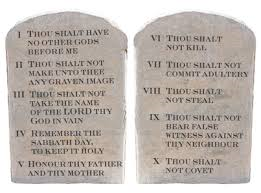
HALIFAX, Nova Scotia, February 22, 2015 – God commands us to worship no-one and nothing but him. In fact, God is such a self-professed “jealous” God, that he made this commandment to be the first and foremost of all. Jesus reiterated the commandment’s importance and fleshed it out as: You shall love the Lord your God with all your heart, and all your soul, and all your mind, and all your strength. This leaves little room for misinterpretation, and yet every time you recite a pledge of allegiance to your country or salute your flag, you’re breaking this commandment.
When you pledge allegiance to your country, you’re worshipping your country. When you salute the 100% polyester ‘graven image’ of your flag, you’re likewise worshipping your country.
Most people don’t see it that way. They see saluting a flag or swearing an oath as a show of respect, and showing respect for your country isn’t the same as worshipping your country, is it?
Or is it?
Jesus told us not to swear any oath whatsoever, and that includes pledges of allegiance. And in God’s eyes, saluting a flag is the same as bowing down before it, which God told us not to do before anyone or anything but him.
When your country asks you to support your troops or to take up arms to kill an enemy, but God says “Thou shallt not kill” – who will you obey?
When your country demands that you treat all religions as being equal, but God says there is no God but him – who will you obey?
When your country makes it illegal for you to openly speak or write God’s truth, but Jesus says to go out into the world and preach the Good News – who will you obey?
If heaven is your goal and doing God’s will is your means to get there, then you’d better make up your mind that when it comes to choosing between God and your country, you’ll choose God.
Sadly, many countries have twisted the notions of “serving God” and “serving country” to appear to mean the same thing. That’s a slick trick of the devil. Catholicism does the same, so that in serving “the Church” and being obedient to the pope, Catholics believe they’re doing God’s will. But nothing could be further from the truth. Stripped to its core, Catholicism is demon worship, just as, stripped to its core, patriotism is demon worship.
God should always take precedence over any construct of man, whether that construct be a country or a religion. Those who purposely confuse the issue by equating God with a country or a religion will get their reward, and it won’t be the one with the cherry on top.
What does this mean, then, in everyday terms? Serve God, not your country. Your duty as a citizen is to obey the laws of the land, not to bow down before a flag-draped entity. And wherever the laws of the land conflict with God’s laws, always choose God, regardless of the consequences.
Countries that guarantee their citizens freedom of religion also guarantee their citizens the freedom from having to salute a flag or recite a pledge, if those acts conflict with their religious beliefs. This right is inherent in religious freedom and should be freely exercised. So, for instance, if you hold US or Canadian citizenship, the freedom not to salute your flag and not to pledge allegiance is your right as a citizen. In exercising this right, you ultimately show your obedience to God first and foremost. As a born-again, the only one you should ever stand up for, salute, or bow down before is God.
“PUT YOUR SWORD BACK IN ITS PLACE!”

HALIFAX, Nova Scotia, February 21, 2015 – With the increase in killings and land-grabs by what Obama calls “violent extremists” (the newest PC term for Islamic terrorists), so-called Christian militias are forming to combat them. The aim of these militias is to protect the few ancient Christian villages remaining in Iraq and other war-torn nations, but their mandate is not from God.
Two words that don’t belong together are “Christian” and “militia”. Two words that can never go together are “Christian” and “militia”. Christians cannot fight in any militia, except one whose weapons are prayer and words.
Jesus made it very clear that those who live by the sword, die by the sword.
God made it very clear that he’s in charge of vengeance, and that we’re not to kill, not under any circumstance,
These terms are non-negotiable.
As Christians, our strategy should always be to avoid going places where we know God’s word is not welcome, and to leave our current location if we find out that God’s word is no longer welcome. This is what Jesus did, and we’re to follow his example.
If Christians in Iraq are being persecuted, they should leave – just up and leave, like Joseph and Mary and Jesus did. Leave with nothing but the clothes on their backs, if necessary. Staying and fighting is not an option. Not for Christians, anyway.
And as they leave, they should pray for those who are persecuting them and driving them from their homes.
It is not our duty, as Christians, to provide financial or spiritual support to an army that takes up weapons to kill in the name of Jesus. God doesn’t want us killing in Jesus’ name, and certainly neither does Jesus.
The people under attack in Iraq need to flee. This is a time-honored Christian strategy. Flee, and God will deal with the invaders and murderers. It’s not for Christians to deal with them in any way except prayer and words. The invaders have given them the option to flee, but instead Iraqi, and now also American and Canadian Christians have taken up arms in Iraq. This is the wrong response. They have made themselves murderers in God’s eyes. If just looking at a woman in lust makes you an adulterer, then picking up weapons with the intent to use them makes you a murderer.
Dwekh Nawsha is the name these so-called Christian militiamen have adopted for their militia. It’s an Aramaic phrase that means “self-sacrifice”.
God says: I require mercy, not sacrifice. These self-styled, self-sacrificing anti-Christ “Christian” killers strutting around Iraq with automatic weapons need to give their ego-swollen heads a shake: what they’re doing is not God’s will. It’s Satan’s will.
Someone needs to tell them the same thing that Jesus told the follower who whipped out his sword and cut off the ear of one of the soldiers taking Jesus to his crucifixion. Jesus said to this follower: Put your sword back in its place, for all those who draw the sword will die by the sword.
Those who kill are doing Satan’s will, not God’s will. No if’s, and’s, or but’s.
“Put your sword back in its place! And pray for those who are persecuting you.”
THE HOLY DOOR-STOPPER

HALIFAX, Nova Scotia, February 16, 2015 – All of my life I’ve been a voracious reader. Before I was born again, I had a private library of about 3,000 volumes, some of which were signed first editions. I had a Bible, too, that had been given to me by a neighbor (it had been her grandparents’, but she didn’t want it), and I dutifully added God’s Word to the collection. But I never read it.
I worshiped a constantly changing stable of writers and philosophers, all of whom were either suicidal or dead (or both). Sylvia Plath, T.S. Eliot, Vladimir Nabokov, William Shakespeare, Friedrich Nietzsche, Franz Kafka, Virginia Woolf, J.D. Salinger, Margaret Laurence, Anthony Burgess, Jean Rhys – these were the sad souls I looked to for help as I groped and stumbled my way through the darkness. I faithfully memorized their words and tried to apply them to my life, but their ‘guidance’ only led me to share in their despair. I, too, became suicidal. I, too, threw myself into loveless ‘love affairs’. I, too, became booze-addicted. I, too, thought it was romantic to live outside the bounds of society’s norms. I, too, simultaneously disbelieved in and hated God, not realizing it was illogical to do so. I, too, learned to hate myself.
Most of these writers’ works were introduced to me through school assignments. Before I was even in my teens, I was force-fed what I know now is potent spiritual poison: Sylvia Plath’s The Bell Jar; Shakespeare’s MacBeth; Herman Hesse’s Siddhartha. I read these works because I was told to read them. It never occurred to me that I had a choice in the matter. If my teachers had said: “Here’s a bottle of poison; drink it”, I certainly wouldn’t have drunk it. But no-one ever said to me: “Here’s some spiritual poison; read it.” The essay assignments came with no warning labels or disclaimers, though they certainly should have. Spiritual poison is far deadlier than physical poison, and far easier to swallow.
Of the millions upon millions of words I had to consume as a student, I was told to read from the Bible only once. It was for a university course, and by that time I was so demon-addled, I couldn’t read the Bible even though I tried. All the words ran together. They made no sense. I gave up and relied on what I’d heard in class to answer the Bible-related exam questions.
In one of those curious episodes that only make sense in hindsight through a born-again perspective, I came to read about Jesus while searching for a book of essays on Jean Rhys. I have no idea why I decided to take books on Jesus out of the library, but I did. I read them while sitting at the kitchen table smoking and drinking. I can still see the look my boyfriend gave me when he saw the books on the table. “Jesus?” he sneered. I don’t remember what I said to him in response, but I do remember reading the books. They characterized Jesus as a rebel and a champion of the underdog, not as the son of God. They were Jesus from an historical and atheistic perspective. He came across as a pretty cool guy. I liked him.
Six months later, I was born again.
Since being born again, the only book I own is the Bible. I’m as voracious a reader as ever, but now I have no desire to read anything but the Bible (and the occasional blog or newspaper). My favorite writers are Isaiah, Jeremiah, David, John and Paul. Unlike when I was an atheist, I now understand the power of words to poison or to feed a soul. I also see writing not as a craft for impressing people, but as a means to deliver God’s truth through words, the plainer the better.
In the movie The Day After Tomorrow, some characters are holed up in the New York Public Library, burning books to keep from freezing to death. Interestingly, the only book the atheist librarian chooses not to burn is the Bible. His reasoning is that this particular Bible was the first book produced on a printing press and therefore represented a seminal moment in human achievement that should be preserved at all costs. As noble as it sounds, I’m not buying his explanation. I think that he, like me when I was an atheist, recognizes that there’s something special about the Bible, something that sets it apart from all other written works. As an unbeliever, I didn’t want to read the Bible but I still knew I had to have one in my collection. I know now that the feeling of “having to have a Bible”, for whatever reason, was God sticking his foot in the door, refusing to let me shut him out entirely.
 A BORN-AGAIN BELIEVER