
Home » Posts tagged 'God’s Holy Spirit' (Page 40)
Tag Archives: God’s Holy Spirit
ARE YOU GIVING EVERYTHING TO GOD, OR ARE YOU HOLDING SOMETHING BACK?

GREENVILLE STATION, Nova Scotia, August 15, 2021 – Are you giving everything you’ve got to God, or are you holding something back? What are you still giving to the world that you know you should be giving to God?
When I was reading the book of Isaiah yesterday, I saw someone standing before God on Judgement Day and God asking the person: “Why did you hold back on me? When you knew you should give me everything, why did you hold back?” His tone wasn’t angry. He wasn’t upset. If anything, he was sad, and he was listening intently to hear the person’s response.
Jesus says that by our words we are justified and by our words we are condemned. If we know that we should do something and choose not to do it, we have no-one but ourselves to blame. When we stand before God on Judgement Day and he asks us why we held back a part of ourselves from him even though we knew we shouldn’t, we will have no option but to tell him the truth. You cannot lie to God. It is impossible to stand before God and lie. You can’t lie, you can’t doubt, you can’t dissemble, you can’t even argue. Any form of communication that is shades of gray rather than plain black or white is disabled when you stand before God.
So what are YOU holding back from God? If you die tonight and the next thing you know you’re standing before God on Judgement Day, what will you say to him when he asks you why you didn’t give him everything?
What will you say?
Will you tell him you were too busy? You didn’t have time? You were working two jobs trying to pay off your debts? That you wanted to think about it for a while? That you’d planned on giving him everything, but you were waiting until the time was right?
That you were waiting until the time was right?
If you’re reading this now and you haven’t yet given everything to God, the time is right. The time will never be more right than it is right here and right now. You will not survive what’s coming unless you are fully under God’s protection as a born-again follower of Jesus, and that means giving everything you have to God, holding nothing back.
BIBLE READ-THROUGH: DAY 24 REFLECTION (ISAIAH 55 – JEREMIAH 22:30)

“40 Days and 40 Nights of God’s Word”
DAY 24: AUGUST 15
ISAIAH 55 – JEREMIAH 22:30
GREENVILLE STATION, Nova Scotia, August 15, 2021 – The book of Isaiah, as I’ve mentioned repeatedly over the past few days, has Jesus written all over it. Most of the book is about Jesus as God’s servant. The final few chapters of Isaiah in today’s reading are more about the fruit of Jesus’ labours, which is God’s Kingdom on Earth, otherwise known as spiritual Zion, the holy mountain, and spiritual Israel. These are all the same place, and their establishment was foretold in scripture, including and foremost in Isaiah.
If you’re born-again, you live in God’s Kingdom on Earth (i.e., spiritual Zion, the holy mountain, spiritual Israel). Establishing this Kingdom is what Jesus came to accomplish by offering himself as the final and perfect redeeming sacrifice. He aced it, and is now seated at the right hand of God, ruling over us born-agains as our King and High Priest. Being redeemed enables us, as Jesus’ followers, to have the same relationship with God as he had, and as Adam once had (before the fall), and as all true prophets have had throughout the ages.
- Isaiah 61:1-2 is the famous verse that Jesus quoted in his hometown synagogue in Nazareth when he came out as the Messiah. In case anyone in the synagogue was dozing off that day, Jesus forcefully and unequivocally stated that he was the fulfillment of that scripture. He left no room for misinterpretation. Then he went on to castigate the hometown crowd for their spiritual blindness and lack of faith, and in so doing incited a lynch mob against him. But Jesus just calmly walked through the midst of them and left.
- In this reading, the “Great Invitation” that was initially given only to the children of Israel is being extended to everyone else who chooses God’s way over the world’s way. What we essentially see here is God petitioning for new believers outside the 12 tribes of Israel. At the same time, Isaiah gives us a run-down of why God is looking for new spiritual blood – the spiritual leaders are blind and greedy and leading the people astray, and the people themselves are unrepentantly following the demon-worshiping practices of the heathens around them. This, as we’ve seen in previous readings, is nothing new for the children of Israel, but God has reached the end of his patience. If his chosen don’t want what he’s offering, maybe someone else will. As for his children who reject him, “the Lord God shall slay [them] and call his servants by another name”.
- Hence, “Christians”.
- I’m sad to see the last of Isaiah in this read-through. I could scour that book every day, never tiring of it and still finding something I hadn’t noticed before, still hearing an echo from something written elsewhere in the Bible. Jesus, I suspect, knew Isaiah by heart. It was, after all, his script. Note that it even mentions the kings, the shepherds, and the angels (Isaiah 60:1, 2 and 3, respectively) coming to worship him. God laid it all out for Isaiah, and Jesus soaked it up.
________________________________________
- Jeremiah is considered by some Jewish historians as a “failed prophet” solely because his warnings failed to turn the children of Israel (particularly Judah) back to God. But that’s not the job of a prophet, to force people to worship God. A prophet speaks God’s Word; he/she doesn’t twist arms and coerce people into doing what they don’t want to do. Even God doesn’t do that. Is God, then, by the measure of these same Jewish historians, a failed God?
- Jeremiah is anything but a failed prophet (and God is anything but a failed God!). On the contrary, and even despite being imprisoned for preaching, Jeremiah never swerved from speaking God’s Truth. There were other prophets also prophesying at the time who lied to the people and told them “everything’s going to be OK”, but Jeremiah warned the Israelites that unless they turned back to God wholeheartedly, “OK” was the last thing everything was going to be.
- For me, Jeremiah’s is the voice of this present age. I think the times we’re in now, with so-called formerly Christian nations collectively turning their backs on God and adopting demonic lifestyles and laws, is much like Israel just before the destruction of Jerusalem and their captivity in Babylon. Jeremiah was singular in his message but pretty much universally ignored, as are all people who speak God’s Truth today. In fact, speaking God’s Truth today can get you arrested, just like in Jeremiah’s day.
- I particularly relate to Jeremiah’s lack of a bedside manner. When there’s plenty of time, you can be soft-spoken, hold hands, and sing Kumbaya; but when time is almost up, you speak plainly and bark orders. Those who want what God is offering will gratefully accept it; those who object to how the message is being delivered are lost anyway, so don’t waste your time on them. Let them go.
- It might be helpful to take note of the kings under which both Isaiah and Jeremiah were prophesying (you can check the list of kings in 2 Chronicles, towards the end of the book). Isaiah prophesied mostly under kings who “did that which was right in the sight of the Lord”, whereas Jeremiah was stuck with the short stick, except for Josiah. After Josiah, all the kings Jeremiah endured “did that which was evil in the sight of the Lord”. This in large part explains both the trouble Jeremiah had (arrests, imprisonment, etc.) and also the spiritual disaster state that was the children of Israel. We get the leaders we’ve earned through our thoughts and actions, and the Israelites at that time had earned some real doozies. So have we.
What are your thoughts about the final chapter of Isaiah and the opening chapters of Jeremiah? Do you object to Jeremy’s lack of bedside manner, or do you find it refreshing? He certainly doesn’t mince his words, and those who prefer to see themselves as victims rather than as getting back what they put out would obviously object. This is so much like today’s society, where perceived (that is, false) victimhood has been elevated to a new form of secular sainthood by the social justice crowd. Don’t give into them and don’t go along with them. Be like Jeremiah, who stood alone on God’s Truth
________________________________________
For a full schedule of the BIBLE READ-THROUGH, click on the links below.
BIBLE READ-THROUGH: DAY 23 REFLECTION (ISAIAH 17 – 54:17)
“40 Days and 40 Nights of God’s Word”
DAY 23: AUGUST 14
ISAIAH 17 – 54:17
GREENVILLE STATION, Nova Scotia, August 14, 2021 – I mentioned a few days ago, when we were doing the Solomon readings, that I had to skim through most of the proverbs because the material was so dense. Each line really required a study in itself, which isn’t suited to our current “quick ‘n’ dirty” read-through mode.
Today’s reading is likewise dense, but O Mama! There was no way I wasn’t going to slow down and savour every morsel of what God is feeding us through Isaiah. So instead of the anticipated few hours I’d scheduled for this reading, I took the whole day. Sometimes you just gotta.
- Jesus, as I said before, is all over the book of Isaiah. We can see from today’s reading why Jesus favored this prophet and also why he chose to read a passage from Isaiah at the synagogue in Nazareth when he outed himself as the Messiah. God revealed to Isaiah more about Jesus and the Kingdom than he did to anyone else, and Isaiah also wrote more eloquently about Jesus and the Kingdom than did anyone else. Even in a translation of a translation of a translation, the power of God’s Word is so forceful, it’s at times overwhelming. I always come away from a reading of Isaiah completely exhilarated and with a deeper insight into Jesus and spiritual Zion.
- Along with descriptions of Jesus and the role he would play as Messiah, the book of Isaiah also gives us a run-down of what will happen to those who either fight against Israel or defy God. It isn’t pretty. Reading the passages about what will ultimately happen to Israel’s enemies (even though in the interim they seem to prosper in their evil and get away with it), I couldn’t help but think of those who say they believe in God and yet give only part of themselves to him, holding the rest back. I couldn’t help thinking that these people, by holding part of themselves back, are essentially defying God and are enemies of spiritual Israel. Do you think that people who hold part of themselves back from God, giving it to the world instead, will secure a place in Heaven? That is not a rhetorical question; that is actually a “yes” or “no” question, and the answer is a resounding “NO!”. We’ll read later in Acts what happens to people who claim to love God and follow Jesus but hold part of themselves back. They end up no different than God’s enemies.
- God told Isaiah to get naked and barefoot and walk that way FOR THREE YEARS as a sign against Israel’s enemies, and he did it. We need to be as willing as Isaiah to do whatever God tells us and for whatever length of time. The alternative is losing our place in Heaven. If it means getting naked and walking barefoot for three years, we get naked and walk barefoot for three years, but only if GOD tells us to do it. Personally, I don’t think God will ask any of us to do that. Just before I was reborn, God gave me the choice to forgive or not to forgive, making it very clear that choosing to forgive was the right choice and would lead to the better outcome. What I’m saying is that God didn’t ask me to walk naked and barefoot for three years. That was just for Isaiah. But God might give you the “to forgive or not to forgive” choice, because God doesn’t answer the prayers of people whose hearts are hardened by resentment.
- I’m looking forward to the Isaiah grand finale tomorrow and the start of the book of Jeremiah. Jesus also quoted extensively from “Jeremy”, as you’ll see as we make our way through the book over the next few days.
So what are your thoughts on Isaiah? Do you find the scripture exhilarating, or are you stuck thinking what’s up with God that he made Isaiah walk naked and barefoot for three years? God made his prophets do a few bizarre things (wait until we get to Ezekiel!), but everything was for a purpose and a sign, and was meant either to get his people back on track or to warn their enemies, or both. God knew the more outrageous the sign, the more impactful it would be.
Has God made you do anything crazy yet? If not, watch out for it. The more you say you want to give everything to God, the more he’ll test you to see if you really mean it. As Mary, at the wedding in Cana, said of Jesus: “Whatever he says to you, do it”. Just make sure it’s God you’re hearing from, not some other spirit.
________________________________________
Click on the links below for a full schedule of the BIBLE READ-THROUGH on PDF.
BIBLE READ-THROUGH: DAY 22 REFLECTION (PROVERBS 26 – ISAIAH 16:14)
“40 Days and 40 Nights of God’s Word”
DAY 22: AUGUST 13
PROVERBS 26 – ISAIAH 16:14
GREENVILLE STATION, Nova Scotia, August 13, 2021 – LOVE ME SOME ISAIAH! You know it’s coming straight from God’s mouth when it feeds you in the way that only God can. That’s why Jesus was so effective in teaching and preaching – God spoke directly through him to the people in real-time. Isaiah was one of the “thus saith the Lord” prophets who heard from God first and then relayed what he heard later, but his words still have much of the same immediacy as Jesus’. You get the sense that they were written down as soon as God spoke them to him. That’s why they’re so fresh even after nearly 3000 years.
- Compared to yesterday’s proverbs, Solomon really switches gears here in Ecclesiastes and then again in The Song of Solomon. I find Ecclesiastes very approachable and always learn from it, but the “song” leaves me scratching my head. There’s also a deep sadness that pervades Solomon’s writings. This is particularly evident in Ecclesiastes. I hesitate to call it depression, but it seems that even with all his wealth, power, wisdom and wives, Solomon was not a happy man. Maybe he had too much of everything. And maybe, judging from some of his words, he knew it.
- I also find it very telling that many of Solomon’s proverbs mention how it is better to be poor with few cares than wealthy with many. He seemed to romanticize material poverty the way most poor people romanticize material wealth. In any case, something ultimately drove him into the arms of countless strange women, to be seduced there by their strange gods. This is not a happy ending. Solomon was renowned in life not for his joy and faith, but for his wealth and wisdom. His legacy is the same to this day. A tribute to Solomon in song is below the read-through schedule.
- It’s no secret that Isaiah was Jesus’ favourite Olde Tyme prophet. When he came out as the Messiah in his hometown synagogue, Jesus stood up and read a passage from the book of Isaiah as evidence that God’s Kingdom had come. For his trouble, he was immediately run out of town. We can see even from the few chapters we’ve read in Isaiah today that Jesus is all over it, as are descriptions of the Kingdom as a spiritual realm. Isaiah more than any other prophet made it very clear that Zion was a spiritual safe haven, not a geopolitical one. Jesus’ famous phrase “my kingdom is not of this world” is in large part premised on the writings of Isaiah.
- Jesus learned from God directly what it meant to be the Messiah and what he had to do and accomplish and endure as the Messiah, but he also learned at the feet of Isaiah. Now we’re sitting there learning, too.
- I find the passage about what it means to live in Zion (another name for God’s Kingdom on Earth) particularly inspiring:
16 And there shall be an highway for the remnant of his people, which shall be left… like as it was to Israel in the day that he came up out of the land of Egypt.
12 And in that day thou shalt say, O Lord, I will praise thee: though thou wast angry with me, thine anger is turned away, and thou comfortedst me.
2 Behold, God is my salvation; I will trust, and not be afraid: for the Lord Jehovah is my strength and my song; he also is become my salvation.
3 Therefore with joy shall ye draw water out of the wells of salvation.
4 And in that day shall ye say, Praise the Lord, call upon his name, declare his doings among the people, make mention that his name is exalted.
5 Sing unto the Lord; for he hath done excellent things: this is known in all the earth.
6 Cry out and shout, thou inhabitant of Zion: for great is the Holy One of Israel in the midst of thee.
Isaiah 11:16-12
- Jesus quoted and paraphrased Isaiah throughout the Gospels. For instance, Matthew 24, which is about the time of tribulation and judgement, includes verses from Isaiah 13, some word for word. We can know which of the prophets most heavily influenced Jesus by how often he quotes them, and Isaiah wins that prize hands down. I’m so looking forward to the next few days of Isaiah readings!
What are your impressions of today’s scripture? Does The Song of Solomon leave you scratching your head, or does it make sense to you? And what jumped out at you in Isaiah? For me, every time Isaiah mentions the remnant, I see him waving to me. We born-agains are the prophesied remnant and we live in spiritual Zion, which is God’s Kingdom on Earth. Jesus made that very clear, and so does Isaiah.
________________________________________
The schedule for the BIBLE READ-THROUGH is directly below.
BIBLE READ-THROUGH: DAY 21 REFLECTION (PSALM 120 – PROVERBS 25:28)
“40 Days and 40 Nights of God’s Word”
DAY 21: AUGUST 12
PSALM 120 – PROVERBS 25:28
GREENVILLE STATION, Nova Scotia, August 12, 2021 – Today we say good-bye to the psalms and hello to Solomon’s proverbs. I find the proverbs very rich and, unlike the psalms, quite difficult to do in read-through mode. They’re better ingested one at a time and chewed over slowly. That’s not what a read-through is about, however. I’m not sure how you’re dealing with this dilemma, but I confess that I skimmed over most of the proverbs section of the reading, though I did dig deeper into the passages on lady wisdom and her nemesis, the strange woman.
- I think it’s difficult for us to grasp how unfathomably awful the children of Israel must have felt both individually and as a people when Jerusalem was destroyed. They essentially lost everything except their lives. Psalm 137, which was written during the 70 years of their exile in Babylon, has the feel of a vengeful funeral dirge. Lots of wailing and finger-pointing, but not much self-reflection (that would come later). The line about little ones being dashed against stones gives us an idea of what was done to the Israeli children during the slaughter. It also shows how seriously these people took “an eye for an eye”, even to the point of murdering each other’s children without blinking.
- Thank God (and thank Jesus) we’ve moved beyond that barbarism to loving our enemies. I don’t think I could stomach watching someone dash my child against stones, any more than I could stomach doing the dashing myself with someone else’s child. Even so, a lot of songs have been written using parts of Psalm 137 (though not the kid-dashing part). Interestingly, in the musical Godspell, some lines from this psalm are in a song that’s sung just before Judas Iscariot betrays Jesus. The song is posted here below the BIBLE READ-THROUGH schedule.
- The rest of the psalms were a bit of a mixed bag. We read some by David but also some that were written hundreds of years after David died. There was another retelling of the exodus story and the time in the wilderness, along with reminders to praise and thank God in every situation and to rely only on him. I’m glad the book of Psalms ended on a high note, praising God. That should always be our default response, no matter what happens to us. Stand up, look up, and praise the Lord!
- As we know from an earlier reading, Solomon prayed to God to be granted wisdom above all else. God was so pleased that Solomon had asked for wisdom instead of the usual laundry list of riches and long life, that he gladly gave him his request. The book of Proverbs is the fruit of Solomon’s wisdom. Unfortunately, Solomon didn’t have the same flair for words as his father, which sometimes makes for hard reading.
- As I mentioned, the sections that I spent the most time on in this read-through are those on lady wisdom and the strange woman. The rest of the reading, I must confess, I raced through, and the thought that came to me as I was doing the racing was “Love God with all your heart, soul, mind and strength, treat others as you want to be treated, and obey the Commandments”. Most of the proverbs seem to be saying that in different words.
- But lady wisdom and her nemesis the strange woman were much more compelling to me. Solomon gives a good run-down of all the benefits of choosing and cherishing wisdom in comparison to choosing the strange woman. As alluring as the strange woman is initially, she’ll only to lead to your doom. There is no other outcome if you get involved with a strange woman.
- Recall that anyone who was not a child of Israel was considered “strange”, as were prostitutes and women in adulterous relationships. Scripture often conflates the three metaphorically to describe how the children of Israel started worshiping the heathens’ demon gods. Solomon himself married several hundred strange women and ended up being led astray by them, as we read last week. There are many such cases of people who warn against a temptation, only to be snared by the very same temptation they cautioned against.
- Maybe wisdom can only take you so far. Maybe, as Job found out, complete submission to God in recognition of his absolute greatness and your absolute not-greatness is the only thing worth striving for.
What was your impression of this reading? Did any of the psalms or proverbs speak to you in particular, whether in encouragement or correction? Many of the proverbs spoke to me, but I’m not saying which ones or why. That’s between me and God. ;D
________________________________________
Click on the links below for a schedule of the BIBLE READ-THROUGH.
BIBLE READ-THROUGH: DAY 20 REFLECTION (PSALMS 73-120)
“40 Days and 40 Nights of God’s Word”
DAY 20: AUGUST 11
PSALMS 73-120
GREENVILLE STATION, Nova Scotia, August 11, 2021 – Unlike the history of people, places and events that makes up the first half of the Bible (yes, we’re now halfway through! Woohoo!), most of the psalms are you talking to or about God. Rather than being spoken to or lectured to, you’re the one doing the speaking. You’re center-stage. The words are coming from you. Maybe that’s one of the reasons why the psalms are so accessible, even to unbelievers. They speak your heart without you having to say a word.
- All of the psalms (except one) that we read yesterday were written by David. Today’s reading is a mixed bag of psalmists that includes David, Asaph, Moses, and a few others whose names are unfamiliar to me. There are also psalms that are uncredited. Determining who wrote which psalm is a whole theological field in itself, which we’re obviously not going to go into here. The only reason I mention all the different psalmists in today’s reading is that the tone and content of a work reflect the author, so having different authors means that we have a broader range of tone and content. It’s all still talking to and about God, but in slightly different voices.
- Lots of retelling about the exodus from Egypt in these psalms. Spiritual rebirth is an exodus out of spiritual bondage to Satan and into the spiritual freedom of God’s Kingdom on Earth. If you’re genuinely born-again, you’re in the Kingdom in the same way as the children of Israel were in the wilderness. You’re supernaturally protected by God and you’re being taught by God, but you’re also being tested to see whether or not you genuinely want what God is offering you – the Promised Land of Heaven. Pay close attention to what happened to the children of Israel in the wilderness and learn from their mistakes so that you don’t end up as most of them ended up. That’s the reason why the story of the 40 years in the wilderness is told and retold throughout scripture – it’s a cautionary tale.
- Jesus is all over these psalms! We either see him in lines that he spoke in the Gospels, or we see him in lines that are written about him. As I mentioned yesterday, the whole Bible is all about Jesus, not just the New Testament. Jesus is the fulfillment of God’s promise of redemption to his people, and the Bible – from start to finish – is the story of our redemption.
- Psalm 91 has been getting a lot of press lately in Christian communities because of the promise that God will not let any pestilence come near his people. But as we’ve seen in earlier readings, God did let pestilence come near those who said they were God’s people but acted as if they were the devil’s. Yes, God will protect his people from everything until it’s their time, as long as they keep his Commandments and treat others (including their enemies) right. If you don’t keep God’s Commandments and don’t treat others right, the protections promised in Psalm 91 will not apply to you.
- Jesus quotes the opening lines of Psalm 110 as evidence of why the Messiah can’t be David’s son. I would reference the same lines as evidence that Jesus can’t be God.
- When I was in high school, I played the role of Mary Magdalen in our school’s production of the musical Godspell. I couldn’t sing very well, and the Mary Magdalen character didn’t have a solo, so that role had my name written all over it in more ways than one. When the call went out for performers, so many kids auditioned that the director decided to have two casts: an “A” and a “B”. The “A” cast was made up mostly of Grade 12 students who already had theatrical experience and were really good singers (some were professionally trained), while the “B” cast was made up mostly of younger students (I was in my first year of high school), and none of us had much by way of training. We were, however, very enthusiastic and loved being in the spotlight. That made up for whatever we lacked in talent and experience.
- I mention this because most of David’s Psalm 103 (which, by the way, I just realized today was written by David) is a song in Godspell called “Bless the Lord”. So when I read Psalm 103 today, I got to thinking about our “B” cast in high school. Everyone in it eventually came to God. The guy who played Jesus gave up his rock band and the lifestyle that went with it and became a pastor. He was older than the rest of us in the cast (I think he was in his second or third year of Grade 12), but if ever anyone “looked like Jesus”, that guy was a dead ringer – tall, lanky, bony-faced, long hair, and a way about him that just naturally drew people. Whenever I saw him in the school hallways, he had an entourage trailing behind him. Like me, he wasn’t much of a singer, but his natural charisma and enthusiasm for the role made up for it. He ended up marrying his then-girlfriend, who was also in the “B” cast (a beautiful girl and beautiful singer).
- As I said, everyone in that cast eventually came to God on some level. I’ve posted the Psalm 103 Godspell song below, for anyone who’s interested in hearing it.
- I don’t know about you, but whenever I read the “long psalm” (the one that’s divided under the letters of the Hebrew alphabet), I want to do and be everything it says. I want to completely and entirely live in God’s blessings and within his boundaries. I don’t want to stray even one inch outside them. That’s the beauty and the power of these psalms that are written in first person: The psalmists’ words become yours.
So what jumped out at you today? Are you as enamored with the psalms as I am? Do they speak your heart, too? Which psalms in particular had something to teach you this time around? And have you ever written a psalm?
________________________________________
The schedule for the BIBLE READ-THROUGH is on PDF directly below:
BIBLE READ-THROUGH: DAY 18 REFLECTION (THE BOOK OF JOB)
“40 Days and 40 Nights of God’s Word”
DAY 18: AUGUST 9
THE BOOK OF JOB
GREENVILLE STATION, Nova Scotia, August 9, 2021 – Where rebellion ends, fear begins; where fear ends, knowledge begins; where knowledge ends, wisdom begins; where wisdom ends, faith begins; where faith ends, trust begins; where trust ends, love begins; and where love ends, humility begins.
- Job loved God. The scripture in our reading today says that Job was upright before the Lord and did nothing wrong. Job even tried to cover the sins of others (his children) with constant sacrifices, knowing they weren’t right in their hearts before God.
- And yet God still permitted Satan to have his way with Job, first by killing his children and taking away all of his wealth and possessions, and then by plaguing Job with open running sores so that he was able to do nothing but sit in a pile of ashes and scrape the pus off with a piece of broken pottery. That hardly seems a fair way for God to reward someone who is blameless and upright. Surely God overplayed his hand with Job? Or maybe Job wasn’t as blameless as God and scripture lead us to believe? Maybe Job had earned all his misery?
- Like the book of Esther that we read yesterday, the book of Job has a whiff of the fairy tale about it, as if some details were pumped up and highlighted, while others were subdued or left out altogether because they didn’t support the narrative. Everything in God’s Word is meant for our edification, and if we approach it that way, we will be edified. So if things were puffed up or left out, it doesn’t matter: God will teach us what we need to know if we are willing to learn.
- God has made us to be curious and to want to know things. That’s how we’re hard-wired as his creatures. We can see that same inbuilt curiosity and desire to know things in animals as they try to figure things out. Our curiosity and desire to know things (i.e., figure things out) has been given to all his creatures by God. He doesn’t want us not to be curious, but like the sea, our curiosity needs to have boundaries, so God has limited our knowledge and understanding to certain bounds.
- Trying to understand God within the bounds of our limited intelligence will only get us so far. We can have an inkling of God, but we can’t possibly know everything about him, including how and why he does what he does. In earlier readings, we see that God rewards right behavior and punishes wrong behavior. This makes sense to us. These are rules we can follow. But God allowing us to be punished for a whim of Satan? This goes beyond the bounds of our understanding.
- Job’s friends tried to help him figure out what was happening to him and how he could get out of his dilemma, but their advice was premised on the simple equation of do good, get good; do bad, get bad. This equation does apply in most situations, but not in all. The friends assumed that Job wasn’t as blameless as he seemed and that he had done something bad to bring the bad on himself. I think most of us would assume the same. But Job stands his ground against their accusations and can think of no word or deed he’d done that would have brought this level of calamity onto him.
- AND THEN IN COMES GOD LIKE A TIDAL WAVE.
- We learn best when our focus is entirely on the situation at hand. If that situation is painful, we learn even better and faster. The desire to learn amidst the sensation of pain is solely to find a way to make the pain stop. In this regard, Job is fully open to this teaching moment arranged by God.
- And what a teaching moment it is! God pushes the limits of Job’s understanding of his situation by bombarding him with example after example of what he, as God, has done and is able to do. Wave after wave of evidence of God’s unfathomable power wash over Job until all he can do is cry out for mercy and humble himself before his Lord and Creator.
- Humility before God is not the same as being humiliated by God. In another part of scripture we’re told to humble ourselves under the mighty hand of God, resist the devil, and he will flee. We’re not told to have faith in God or even to love God, but to humble ourselves under him. Humility before God is an even greater level of submission than faith or trust or love. Humility presumes nothing and asks for nothing. It’s a simple open acknowledgement of your total powerlessness in the face of God, and an acknowledgement that everything you are and everything you have comes from God. Yes, you have free will as your sole possession, but you wouldn’t even have that if God hadn’t given it to you. Humility signifies that you acknowledge God’s superiority and infinite power in every regard, and that you wholly submit to him. Full stop.
- Humility means not demanding to know why God does what he does. Knowledge + wisdom + faith + trust + love (minus rebellion) = humility.
- Like Esther, Job also has a happy ending. The devil flees as soon as Job humbles himself under God’s mighty hand, as promised by scripture. God then gives Job even more wealth than he had before, along with a good long life.
What did you think of today’s reading? Do you consistently humble yourself under God’s mighty hand, or are you always trying to figure out why God does what he does? God gives us leeway to ask questions and even to (foolishly) question him at times, but every now and then he needs to remind us who’s boss and why, so that we don’t get ahead of ourselves.
Humility before God is the most underrated of virtues and also the most important, if we’re to have the kind of relationship with God that he’s inviting us to have.
________________________________________
The schedule for the BIBLE READ-THROUGH is directly below:
ARE YOU IN THE WRONG CHURCH?
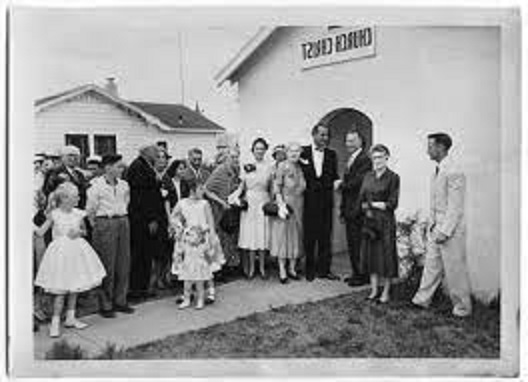
GREENVILLE STATION, Nova Scotia, August 8, 2021 – Have you ever had the feeling that you’re in the wrong church? That you’re wasting your time? That you’re being asked to do things and give things that you don’t feel like doing and giving?
If you have those feelings, it’s probably because you are actually in the wrong church. You’ll know a church is wrong because it will do the following things:
- Guilt you into giving money
- Guilt you into volunteering
- Leave you emotionally and spiritually flat
- Be full of people you don’t like and don’t relate to
- Guilt you into attending events you don’t want to attend
There are more identifiers of wrong churches, but you get the point. The wrong church is just plain wrong. Period. It might have some good points (nice pastor, nice building), but overall it leaves you feeling that there must be more to church than what you’re experiencing there.
The reason that you’re feeling this way is that the wrong church takes from you rather than gives to you. It drains you rather than feeds you. It expects you to support it rather than it supporting you.
It expects you to support it rather than it supporting you.
The right church, on the other hand, supports you without you even having to ask for support, because its sole purpose is to support you and others like you in your journey home to Heaven.
Which church is the right church? Well, it doesn’t hold services in a building and it doesn’t identify as any particular denomination. In fact, it doesn’t hold services at all, because people in the right church don’t practice their faith: They live it. They’re not in some kind of endless dress rehearsal where they passively learn a script but never actually perform it. Those who are in the right church don’t need a script. They ad lib, with prompts from God’s Holy Spirit.
The right church is God’s Church, which is the collective of all born-again souls on Earth. Jesus is the high priest in God’s Church and everyone else is a minister.
God’s Church is the one and only right church for all true believers because it’s the only one that can support you in the way you need to be supported. In return, it expects nothing from you other than that you remain loyal to God and Jesus. It costs you nothing to join God’s Church and doesn’t require any financial contributions from you at any time.
Every church that isn’t God’s Church is a worldly organization that needs you only because it needs your money and your energy. Worldly churches take, whereas God’s Church gives. Worldly churches demand your support, whereas God’s Church offers it.
When all is said and done, every worldly church is a wrong church. There is no right worldly church.
The only right church is God’s.
Are you in it?
HAVING A SPIRITUAL BAD HAIR DAY? TEST INCOMING!

GREENVILLE STATION, Nova Scotia, August 8, 2021 – Our time on Earth is a series of trials and tests, but God doesn’t test us when we’re ready and waiting for it. He tests us when we’re least ready, when we’re tired and running late and having what amounts to a spiritual bad hair day. That’s when he tests us, when we’re feeling our worst, because how we respond when we’re feeling our worst is the most accurate measure of where we are spiritually.
If God gave us a heads-up that we were going to be tested on a particular day at a particular time, we’d clear our schedules and spend the preceding days in prayer, so that when our testing time came, we’d be centered, grounded and focused. We’d ace that sucker! But that’s not who we are. That’s make-believe us. That’s lab-condition us, not field-condition us. God needs to know how we’ll perform in the field under real conditions. So he springs tests on us when we least expect them.
God needs to test us when we’re at our worst so that he can see what he has to work with. He also needs to see (and to show us) what we need to work on. After he’s tested us, he lets us know how we’ve done.
It’s best to take God’s progress report humbly and not get defensive or try to make excuses for poor performance. Best just to acknowledge that you still need to work on this or that or the other thing, and resolve to do better next time. That’s all you can really do and that’s all God expects you to do – resolve to do better next time. No point in being belligerent or self-denigrating. No point in feeling sorry for yourself. If you mess up, own it, make amends, and move on.
Imagine if babies, when they’re learning to walk, got angry at the person trying to help them. Imagine if they refused to stand up for the rest of their life if it meant they were going to fall down again. They’d never learn to walk, let alone run, skip, hop, dance, skate, etc. To a baby, falling down is part of walking. It goes something this: wobbly step, wobbly step, wobbly step, plonk on your bum, look surprised, struggle to your feet, and then wobbly step, wobbly step, wobbly step, plonk on your bum, etc. To a baby, that’s walking.
Notice, too, how most babies try to skip the learn-to-walk phase and go straight to running, which of course only makes them fall down all the more. I think you know what I’m getting at here. Spiritually, we often take on more than we can handle, and then we get knocked back. It’s a humbling experience, to get knocked back spiritually, and most of us don’t do humble well. Humility is an acquired trait. We’re not born with it. We’re not even born-again with it. We have to learn to be humble, which is also one of our earthly tests.
Have you been tested lately? If so, how did you do? Did you learn something about yourself that you didn’t know before? And did God highlight something for you that you need to work on?
We shouldn’t dread God’s tests and trials or try to avoid them. They’re for our benefit. We need to know where we stand spiritually and what we need to work on. And God also needs to know the same thing so he can help us.
So the next time you’re having a spiritual bad hair day and God springs a test on you, remind yourself that it is a test and give it all you’ve got.
BIBLE READ-THROUGH: DAY 17 REFLECTION (EZRA 5 – ESTHER 10:3)
“40 Days and 40 Nights of God’s Word”
DAY 17: AUGUST 8
EZRA 5 – ESTHER 10:3
GREENVILLE STATION, Nova Scotia, August 8, 2021 – We pick up today where we left off yesterday, with Judah picking up the pieces after their exile in Babylon. Lots of humbling going on the part of the returnees, lots of vows and promises being made to themselves, to each other, and to God, as well as lots of opposition by those who see the returned Jews and their rebuilding of Jerusalem as a threat.
- Judging by the description of Jerusalem, it was mostly uninhabited for the 70 years of Judah’s exile. Recall from one of the earlier readings that the only people spared during the destruction and slaughter were those of no distinction or power (and thus of no perceived threat) who were left behind to work the land. So the city of Jerusalem had essentially lain fallow for decades, meaning that those who returned to rebuild it certainly had their work cut out for them.
- Whenever the Spirit of God starts a mighty movement in his people, there is always the same degree of opposition that arises to stop it. We saw this with Moses and David at the start of their power, and now we see it with the returnees at the start of theirs. In fact, the opposition prevailed to such an extent at one point that the rebuilding and restoration work was halted altogether. When faith falters, evil gets the upper hand. Those who eventually overcame the opposition were strong in faith and were also guided by others who were strong in faith, like the prophets Ezra, Nehemiah, and Haggai.
- Interesting detail about how they worked non-stop and with swords at their side to rebuild the city wall. This kind of urgency could be used today in God’s Church. Also interesting how only those who wanted to contribute to the rebuilding “free-willingly” (particularly of the temple) were asked to contribute. The same request was made when the tabernacle was being built in the wilderness during Moses’ time. It’s important to God that only those who want to give of their own free will contribute to the building of his house. Jesus later references this preference of God by saying that only those who want to worship God “in Spirit and in Truth” should do so, as “God seeks such to worship him”. God has no use for lip-servers. He would rather that someone be outright oppositional than pretend to love him. God hates deception in matters of faith and the heart.
- Another interesting and highly relevant (to us) detail is how the Levite priests and their assistants were commanded to separate themselves from their “strange” (that is non-Jewish) wives and children, as marrying these women and having children by them was a violation of the law. When the priest class became aware that what they had done was wrong in the eyes of God, they simply did whatever was required to make it right, which in this case was to say bye-bye to the wife and kiddies for life.
- We likely can’t imagine a situation where we would do the same, but still it’s expected of us. All of the married disciples left their wives and kids when they got the call to follow Jesus. If we are commanded to put God ahead of everything and everyone else, walking away from elements that no longer belong in our lives and that in fact prevent us from following Jesus the way we need to follow him should be self-evident. We are, as Paul tells us, priests and prophets, if we’re in the Kingdom and are Spirit-filled born-again believers. Priests and prophets are not to live with people who are not priests and prophets, as it would be a form of spiritual defilement. That’s why Jesus lived separately from his family and former friends, and only laid his head at night among fellow believers.
- We see again in this reading a retelling of the story of the children of Israel from the time of Abraham. The emphasis in this retelling is not so much on the glory and grandeur of God and his wondrous miracles, but on God’s longsuffering patience and mercy. Ezra, who is described as being both priest and prophet, does the retelling. He also reads Moses’ book of the law to the people, and then reminds them of how God gave them chance after chance after chance, even despite their continual backsliding. Ezra also warns the people that worse will happen to them if they backslide after their return to Jerusalem.
- The story of Esther is an intriguing one. If you do some digging, you can find where it fits in the chronology of Biblical events, but it always seems to sit by itself as a guide to Jewish people and a warning to their enemies. The Jewish holiday of Purim emerged from the events that happened to Esther and her uncle Mordecai as they foiled the plan to slaughter all the Jews in the land. The plan was turned back on the conspirators, and they ended up being the ones who were slaughtered, after which all their possessions were given to the Jews.
- It’s a cautionary tale, for sure, and also a reminder that if you mess with God’s people, you mess with God. Even so, there’s something slightly fairy-tale-ish about this story that makes me wonder if some details were added (and others left out) to heighten the impact. I don’t feel the same connection to these characters as I do to others in the Bible who do God’s will. I’m not sure why that is, but there it is. Maybe your impressions of the story of Esther and Mordecai are different than mine.
So what jumped out at you in this reading? I’m guessing that you, like me, are now pretty much able to recite your own summary of the story of the children of Israel, from the time of Abraham up to and including their exile in Babylon. See how effective the mechanism of repetition is? We’ll be encountering even more repetition in the days to come. That’s how God teaches his people!
________________________________________
For a schedule of upcoming readings, see the PDF below:
 A BORN-AGAIN BELIEVER