
Home » Posts tagged 'God’s will'
Tag Archives: God’s will
GOD’S WILL AND GOD’S PERMISSION
HALIFAX, Nova Scotia, March 24, 2025 – There’s a difference between what God wills and what God permits.
This is important, so listen up here.
Jesus always did that which pleases the Father. We know that Jesus always did that which pleases the Father because he told us he did: “I always do that which pleases the Father.” When he said he always did that which pleases the Father, Jesus meant he always did God’s will. Again, this is important, so listen up here. It’s important because God’s will is not the same as what God permits, and we need to know the difference.
GOD’S WILL
God’s will is that everyone should do what pleases him. God states multiple times in scripture that if we only do that which pleases him, life will be good for us, because then he can give us all the blessings he wants to give us during our time here. Doing God’s will and doing what pleases the Father is the same thing.
And what is God’s will as it plays out in our everyday lives? Keep the Commandments. Choose the good. Follow Jesus’ example in everything you do, say, and think. Keep your eyes on the prize of your eternal reward, not the earthly ones. Suffer what you need to suffer, whether as an earned reward or a test. Suffer patiently and in silence. Give what God commands you to give, speak what God commands you to speak, be silent when God commands you to be silent. Do whatever God advises you to do one-on-one. Help those he explicitly directs you to help. And remember that not everything God tells you needs to be told to others. Most of what God told Jesus he kept to himself.
GOD’S PERMISSION
God’s permission is not God’s will: God’s permission is our free will intersecting with God’s justice. Doing what God permits is not the same as doing God’s will. Jesus didn’t say he always did that which the Father permits; he said he always did that which pleases the Father; he always did God’s will.
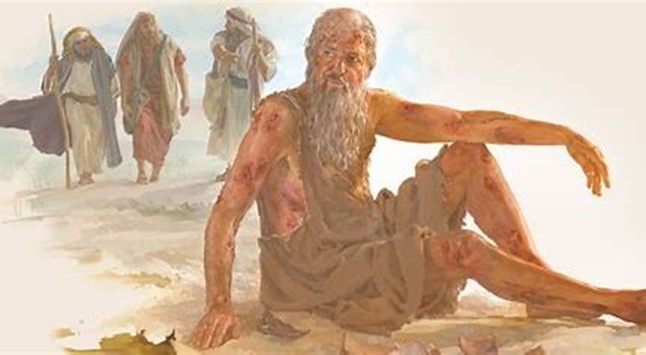
Satan does what God permits. Once upon a time (actually, once upon an eternity), Satan did God’s will, but that all ended with the rebellion in Heaven. Now Satan can only do what God permits: that’s his one and only job description. Satan and all those who follow him can only do what God permits. They cannot do more than what God permits, and you can bet the bank they won’t do less. They hate us and want only for us to suffer during our time here and then lose the reward of Heaven. No matter what they tell their human recruits when they’re enticing them into their ranks, Satan and his horde want only for us to suffer to the most extreme degree, ending with our eternal damnation. God wants the best for us and Satan wants the worst, which is why God strictly limits what Satan is permitted to do, as we see in Job.
God permits suffering as a reward for bad choices, but he also permits suffering as a test. He doesn’t will that we suffer; he permits us to suffer, but always with the proviso that our suffering, if we handle it righteously, will be to our benefit.
When God permits you to suffer, don’t try to avoid it. Don’t revel in it, either (it’s not God’s will that you revel in suffering; reveling in suffering is not a godly response: nor is boasting about it). Endure your suffering. Get through it. Come out the other side. Be silent in the face of God’s tests and negative rewards. If you have them coming, you have no right to complain; if you’re undergoing a test, you have no reason to complain, because “all things work together for good to them that love God, to them that are the called.”
God created evil and permits it to thrive only when and where it’s been earned. He doesn’t will evil; he permits it. He uses the forces of evil as a reward for bad choices and as temptations and tests, all of whose end goal is to bring us up higher. Even babies can be on the receiving end of evil, bearing in mind that souls come into the world already sin-stained. The only one who arrived here sin-free was Jesus.
TL;DR
God’s will is that we do what pleases him, like Jesus did, so that everything will be good for us. Jesus is our best and greatest example of how to do God’s will. But because not everyone chooses to do his will, God permits an earned and precise measure of evil to exist in the form of temptations, tests, and suffering, with the aim of bringing us up higher. God wills that we not only to come to knowledge of him – the ultimate good – but form a close and loving bond with him, like he has with Jesus. This can only happen if we do God’s will.
REAL JESUS, REAL YOU

NIAGARA FALLS, Ontario, September 20, 2022 – One of the few things we know for sure about Jesus is that he never sinned during his time on Earth. He came into the world sinless and he left it sinless. Had he not be entirely sinless, he wouldn’t have been able to pay the sin debt owed by Adam. But the debt’s been paid; the kingdom’s come; and Jesus is at the right hand of God, where he belongs.
But Jesus being sinless doesn’t mean that Jesus always wanted to do what God wanted him to do. What most Christians don’t consider (and they should consider it, they really, really should) is that while Jesus was always obedient to God, he didn’t always want to be. Sometimes he dragged his heels, sometimes he jumped the gun, and sometimes he tried to negotiate his way around it.
This is important, that we acknowledge that Jesus didn’t always want to do what God was asking him to do but that he did it anyway. Because if we’re honest with ourselves, we’ll admit that we don’t always want to do what God is asking us to do. All of us occasionally try to find a way around God’s will or a justification for not doing it. All of us do this, and if you say you don’t, you’re lying to yourself.
We’re constantly being tested to see whether we want what God is offering or what the world is offering. But God is not going to permit us to be tempted when we’re all fired up after a revival meeting; no, he’s going to test us after we’ve been fasting for 40 days and nights in the wilderness. He wants to see the real us, not the one we claim to be with our Christian friends. He wants to see how we respond not when we’re at the top of our game, but when we’re scraping the bottom of the barrel; when we’re tired and cranky; when we’ve spent the past 3 weeks sleeping on the airport floor: when we’re hungry and thirsty and exhausted and lost and people are being downright nasty to us. That’s when we’ll be tested. That’s when we’ll be pressed to do God’s will against every nerve and bone in our body.
This is where many people fall. They fail the test and then decide not to get back up again. But if we understand that Jesus himself didn’t always want to do what God tasked him to do (that is, that he didn’t always want to choose to forgive, that he didn’t always want to turn the other cheek, that he didn’t always want to love his enemies, etc.), it makes it easier for us to be obedient through gritted teeth. Because you wanna bet that Jesus was gritting his teeth on many an occasion when he chose to do God’s will. He wasn’t always doing it with a smile on his face. No-one on Earth always does God’s will with a smile on their face. It’s not possible to do that.
But it is possible to be obedient to God while gritting your teeth or grumbling under your breath. God’s not asking you to give up who you are or to stop being authentically you; he’s just inviting you to choose his way rather than the world’s way. That’s what it means to be obedient to God, to do God’s will, and it can be done through gritted teeth and while grumbling.
Or you can choose not to do God’s will, and fail the test. When that happens, you need to acknowledge your failure and move on. Don’t grovel in your failure; learn from it. And you’d might as well learn from it, because you’re going to be tested again on that exact same point. You don’t get out of something by failing it, not in God’s economy: You get a re-do when you least expect it.
Case in point: Several weeks ago, I had a run-in with a woman at a bus shelter in Halifax. She was smoking, pointedly ignoring all the “NO SMOKING” signs painted around the shelter’s interior. I politely asked her to stop smoking, but she ignored me. I asked her again, she still ignored me, and that’s when things took a turn for the worse. It’s also when I should have backed off and let God deal with her, but I wasn’t in the mood to do that on that particular day. So I locked horns with the woman.
I won’t bore you with the details, but let’s just say it got nasty. Real nasty. It almost came to physical blows, but God sent us off in different directions before that could happen.
A few weeks later, the night before I left Halifax, I was on a bus, and who should get on but the woman I’d locked horns with. She sat down next to me, but she didn’t recognize me at first. She’d had a problem finding her monthly bus pass when she was boarding the bus, so I asked her if she wanted mine, as I was leaving town the next day and wouldn’t need it anymore. She thanked me and said no, she had a pass already, she just needed to find it at the bottom of her purse. She dug through her bag for a minute and triumphantly flashed her pass at me and the bus driver. Then she thanked me again for my offer and complimented me on my coat.
It was at that point that I noticed a glimmer of recognition in her eyes, but not clear recognition. I could tell that she was trying to place me from somewhere, but she wasn’t sure where. So we chatted for a few minutes about the weather turning cold and about my upcoming trip, and then she gathered her things together to get off the bus. That, I think, is when the penny dropped for her and she remembered where she knew me from. But instead of lighting into me (which she could easily have done), she instead stared me straight in the face and wished me a good night and safe travels. I returned her well wishes, and we nodded and smiled good-bye to each other as if we were old friends.
I think I can say with confidence that I passed the re-do test, as did she. God’s timing is perfect. The funny thing is, during our brief bus trip together, the woman reminded me so much of me. We had similar mannerisms and ways of expressing ourselves, and it wouldn’t surprise me if she were a Christian, though not necessarily a born-again one. I have a feeling I’ll see her again someday, and we’ll have a good laugh over our bus shelter battle. God’s sense of humor, like his timing, is always perfect.
But WE are not perfect, and neither was Jesus during his time on Earth. That means we sometimes have to do God’s will through gritted teeth and while grumbling under our breath. That means we sometimes get mad at God. He’s our Dad, after all. (Surely you’ve been angry with your earthly father!) God would rather that you be real with him than fake it, and anger is a reasonable response to being asked to do something you don’t want to do.
Choosing God’s way was something Jesus always did, though not always with a smile on his face. God doesn’t expect us to do what even Jesus couldn’t do. What he does expect us to do is to grumble and to fail on occasion; and when we do fail, to get back on the horse ASAP. Obedience to God doesn’t require a smiling face, just a grudging “yes” when we’d sometimes rather say “no”.
A simple “yes” will do it.
God will do all the rest.
ONE DAY CLOSER TO HEAVEN

ROCKINGHAM, Nova Scotia, October 17, 2019 – Every morning I wake up, I’m ONE DAY CLOSER TO HEAVEN.
Every step I take, I’m ONE STEP CLOSER TO HEAVEN.
Every breath I take, I’m ONE BREATH CLOSER TO HEAVEN.
With every heartbeat, I’m ONE BEAT CLOSER TO HEAVEN.
We all have a finite number of days, steps, breaths and heartbeats.
We don’t know how many we’ll get in total, but God does, just as he knows how many hairs are on our head.
We don’t need to know how many more days have been allotted us (or how many hairs are on our head); all we need to know is that every day we wake up, we’re one day closer to Heaven, as long as we stay the course that Jesus showed us. (more…)
FAITH

HALIFAX, Nova Scotia, March 16, 2015 – Throughout the gospels, people ask Jesus to increase their faith.
Interestingly, he doesn’t. He just tells them that if they had faith the size of a mustard seed, they could move mountains. He also constantly berates his followers for their lack of faith.
Faith seems to be a pretty important part of being a follower of Jesus, yet how many people actually know what it is (or how you can increase it)?
Paul defined faith as being “evidence of things unseen”. This view of faith quantifies it much like Jesus quantifies it in comparing faith to a mustard seed. Faith here is a measurable and palpable ‘thing’ that can even be used as evidence (presumably, in God’s court of law). But this definition doesn’t explain how faith can be increased or why it’s so important.
Here’s another definition that expands the idea of faith to include its mechanism of growth: “Faith is the means to and the measure of your relationship with God.” If we see faith both as a “way” (a means) and a quantity (a measure), faith becomes dynamic. In other words – we not only see that faith can grow, but we see how it can grow.
Every time you know God’s will and choose to do it, your faith grows. Every time you know God’s will and choose not to do it, your faith shrinks. It’s a very simple dynamic that even a child can understand. People who claim to have “lost” their faith actually still have a tiny fraction of faith (God never lets our faith balance go to zero), but their choices have put them in a near faithless state. That’s a sad and painful place to be. They got there by their choices, not because of something God did or didn’t do to them.
Faith is not something that someone else can increase for you, so Jesus could not have increased his disciples’ faith just because they asked him to. Faith is something you have to increase yourself. You increase it by your choices, just like you decrease it by your choices.
When a soul enters a body, it’s given a measure of faith. This is the capacity to be obedient to laws that God’s written on our hearts. Everyone knows those laws, though most people ignore them. Each time we ignore the laws written on our hearts, our faith decreases. But each time we heed those laws, our faith increases.
We born-agains have an even greater potential to increase our faith because of our one-on-one relationship with God through his spirit. We don’t have to guess whether or not we’re doing God’s will, we can know for sure simply by knowing scripture or asking God directly. This is why Jesus’ faith was so strong. He knew scripture, he had a one-on-one relationship with God, and he always chose to do God’s will.
Many people confuse faith with belief or a set of beliefs, but these are not faith. Your faith is intensely personal and entirely unique to you. It’s quantifiable and measureable. You’ve built it over the course of your lifetime. Every time you choose to do God’s will, you expand it. Every time you choose not to do God’s will, you shrink it.
OK, you say. I get it. I understand faith, and I understand how I can increase my faith. But why is faith so important? And why did Jesus always get in his disciples’ faces about their lack of faith?
We know faith is important because Jesus told us it was. We need great faith not to move mountains but to have the best possible relationship we can with God. The greater our faith, the closer we grow to God; the closer we grow to God, the greater our faith.
And here’s the kicker – the closer we grow to God, the more God can work through us in the world.
This is why having great faith is so important. This is why not only knowing God’s will but choosing to do it is so very, very, very important.
God works through the strength of our faith. God loves through the strength of our faith. God makes the world more endurable through the strength of our faith. God brings people back to him through the strength of our faith.
People of great faith can do great things not by their own power, but by God’s.
We are all gifted with an equal measure of faith. How great that initial measure of faith grows depends on the choices we make in our lives. The more we choose God’s way, the greater our faith grows, and the closer we grow to God; the closer we grow to God, the more likely we are to choose God’s way, which in turn increases our faith, and so on, and so on. This is how faith grows exponentially.
This is also how a thing as tiny as a grain of mustard seed can turn into a great spreading tree, through which God spiritually feeds and shelters his loved ones.

 A BORN-AGAIN BELIEVER