
Home » Posts tagged 'Jesus' (Page 94)
Tag Archives: Jesus
Freedom

HALIFAX, Nova Scotia, March 1, 2015 – Jesus is the greatest of all freedom fighters. He told us that knowing the truth will make us free, and so it does. God is truth, so knowing God as our Dad brings us into God’s kingdom on Earth and makes us free from the attacks of our spiritual enemies. This is the true freedom that God promised Israel through the Old Testament prophets. This is true safety and security, not the fake one promoted by the Homeland Security organizations of the world. As long as we keep wanting and choosing what God wants for us (knowing that God wants only the best), then we are secure in our safety and freedom.
But at the same time God loves and encourages free thought. In fact, he loves the notion of free thought so much that he embedded it in the concept of free will. We are free to think our way into choosing what God knows is best for us, and we are equally free to think our way into rejecting it.
We are as free to be illogical and wrong in our thought processes as we are free to be logical and correct.
Why would God do that? Why wouldn’t he just make us receptive only to correctness rather than allow us to doubt and make wrong choices based on those doubts?
God loves it when we use the gifts he’s given us, and the gifts he loves us most to use are free thought and free will. God doesn’t want automatons serving him; he doesn’t want forced obedience: he wants us to come to him because we want to come to him. He wants us to weigh the pros and cons (do a cost/benefit analysis, if you will) and then decide what we think is best. Of course, he’s always putting in his two cents’ worth; he never leaves us guessing as to which option is the right one. He wrote his laws on our hearts, and if we’re still not sure, he gave us scripture, his spirit, and Jesus.
I love Jesus! He’s such a cool guy. Nothing ever fazes him. That’s because, when he was in his Earthly body, he lived fully in God’s promise of freedom, protection and security. That doesn’t mean, however, that he automatically did God’s will in everything – no, not at all. He took advantage of his free thought and free will to try to negotiate better terms with God.
One of these famous “negotiations” played out in the Garden of Gethsemane the night before Jesus was crucified. God had earlier told Jesus what was going to happen to him, and certainly Jesus knew from scripture what was going to happen to him, but he didn’t like it. Not one bit. And why would he? He was a virile young man in the peak of health. He didn’t want to die, and certainly not the way that was laid out for him. If he had willingly embraced his humiliation and crucifixion and gone marching to his death with a smile on his face, he would have been insane, and Jesus most certainly was not insane. So, trying to wheedle maybe a few more days or weeks or even hours out of God, Jesus asks him if there’s some other way he can do what needs to be done. He asks him once, and God says “No.” He asks him again, and again God says “No.” He asks him a third time, and when God’s answer is still “No”, Jesus throws in the towel and says he’ll do it.
Does he do it with a smile on his face? Not at all. We know from scripture that he barely spoke a word from that moment onwards. With his God-given free thought, Jesus weighed the pros and cons of what was required of him to be the Messiah. He also used it to try to find some way around the worst of the requirements, but God wasn’t budging. Still, he let Jesus think it through. Still, he stood firm while Jesus tried to find a short-cut that would not involve crucifixion. When the combined witness of God, scripture and his own heart showed Jesus that the best way to do what had to be done was simply to do it, Jesus conceded. He wasn’t coerced; he wasn’t forced; he could have said “no” and gone down another path that might have ended with him marrying Mary Magdalene and bouncing 12 Junior Jesus’s on his knee, but he deduced, through logic and God’s witness, that choosing God’s way was the best way to achieve his goal of Messiahship, so he chose it. God then strengthened him, and less than 24 hours later, Jesus took his place forever at the right hand of God.
David had a similar clash of wills with God over David’s first-born with Bathsheba. Through the prophet Nathan, God informed David that the child would fall ill and die, but David reasoned that maybe God would change his mind if he fasted and prayed and mourned. So, he held vigil for seven days and nights, refusing to eat or drink or even talk to anyone. Despite David’s efforts, the child died, but instead of mourning his death, David got up, took a shower, grabbed a bite to eat, and then headed over to Bathsheba’s private suite to “comfort” her in the Biblical way. His servants are taken aback by what they saw was his odd behavior at the death of his son, but he explained that while his child was still alive, there was a chance that God would change his mind and let the child live. The child’s death signaled that God would not change his mind, so David conceded. It was as simple as that. And at David’s concession, God strengthened him, and Solomon was conceived that very night.
God not only allows us but encourages us to use our free thought and free will. He invites us to align our wills with his not by coercion but by logical choice. God wants only the best for us, but sometimes no pain means no gain. God protects us spiritually, but spiritual protection doesn’t mean that we won’t have to suffer pain while still in our Earthly bodies. We need to make up our mind to accept that now, because, as with Jesus and David, some form of pain is almost definitely going to be in the cards if we intend to “endure to the end”. Still, maybe God will give us some wiggle room; who knows? It never hurts to ask. But if you do ask, and he doesn’t budge, you can be sure that what awaits you on the other side of that temporary pain is a whole lot of gain beyond your wildest dreams.
LOVE THE SINNER

HALIFAX, Nova Scotia, February 23, 2015 – One of the easiest ‘sin traps’ to fall into is forgetting that God loves everyone equally, no matter what they do or say.
He doesn’t love what everyone does or says, but he does love whoever is doing the doing or saying.
We need to remember this hard-core fact when we find ourselves repulsed by something someone has said or done. We need to separate the horrible thing from the person doing and saying it. We need to separate the sinner from the sin.
“Love the sinner, hate the sin.”
“Love the sinner, hate the sin.”
“Love the sinner, hate the sin.”
To do this, it helps to see the sinner as you. It helps to remember that you, at times, also say or do horrible things. It helps to remember that you hope not to be condemned even despite your screw-ups. It helps to remember that God shows mercy to you.
Knowing this, we must also acknowledge that:
- God loves the Muslim suicide bombers who blow up children.
- God loves whoever was responsible for 9-11.
- God loves the guards at the Nazi concentration camps who flicked the gas switch on.
- God loves Judas Iscariot.
This is the God we serve. Our God isn’t someone who hates those who hate him or who hates those who do horrible things. Our God is someone who loves all people equally, even those in hell and those on their way there.
Jesus told us to be perfect even as our heavenly Father is perfect.
God loves us.
All of us.
All of the time.
* * * * * * * * * * * * * *
Years ago, when I was an atheist, I went to an abortion clinic. Because the clinic had received so many bomb threats, the front entrance was permanently barred and people had to enter through the rear gate. An armed security guard stood watch. As I went to enter, a man self-identified as a minister and separated himself from the small group of anti-abortion protestors who held permanent vigil there. He quickly moved towards me and tried to push himself between me and the gate. I pushed him back and the security guard intervened. As he was being hauled away, the minister yelled over and over again that I was a sinner and would go to hell if I had an abortion. I yelled back words that aren’t fit to print here, but you get the idea. There was no love lost on either side. What I remember most about this encounter was that it was with a minister and that his eyes were full of hate. That pretty much summed up my impression of Christians in those days.
Today, being born-again, I understand the loathing that the minister must have felt when he saw me make my way to the abortion clinic gate. I understand his hatred of what he assumed I was about to do, and I also understand how his hatred for abortion could spill over into hatred for me. I get it. It’s easy to do, hating the sinner as well as the sin. It’s a classic sin trap.
That’s why we must always be on our guard against it. Come Judgment Day, it’s probably not the big sins like theft or adultery or even abortion that will condemn us in God’s loving eyes, but the sins that slip under our radar, disguised as holy outrage.
“Love the sinner, hate the sin.”
“Love the sinner, hate the sin.”
“Love the sinner, hate the sin.”
STAND UP FOR GOD, NOT YOUR ANTHEM
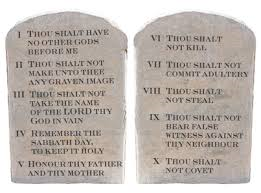
HALIFAX, Nova Scotia, February 22, 2015 – God commands us to worship no-one and nothing but him. In fact, God is such a self-professed “jealous” God, that he made this commandment to be the first and foremost of all. Jesus reiterated the commandment’s importance and fleshed it out as: You shall love the Lord your God with all your heart, and all your soul, and all your mind, and all your strength. This leaves little room for misinterpretation, and yet every time you recite a pledge of allegiance to your country or salute your flag, you’re breaking this commandment.
When you pledge allegiance to your country, you’re worshipping your country. When you salute the 100% polyester ‘graven image’ of your flag, you’re likewise worshipping your country.
Most people don’t see it that way. They see saluting a flag or swearing an oath as a show of respect, and showing respect for your country isn’t the same as worshipping your country, is it?
Or is it?
Jesus told us not to swear any oath whatsoever, and that includes pledges of allegiance. And in God’s eyes, saluting a flag is the same as bowing down before it, which God told us not to do before anyone or anything but him.
When your country asks you to support your troops or to take up arms to kill an enemy, but God says “Thou shallt not kill” – who will you obey?
When your country demands that you treat all religions as being equal, but God says there is no God but him – who will you obey?
When your country makes it illegal for you to openly speak or write God’s truth, but Jesus says to go out into the world and preach the Good News – who will you obey?
If heaven is your goal and doing God’s will is your means to get there, then you’d better make up your mind that when it comes to choosing between God and your country, you’ll choose God.
Sadly, many countries have twisted the notions of “serving God” and “serving country” to appear to mean the same thing. That’s a slick trick of the devil. Catholicism does the same, so that in serving “the Church” and being obedient to the pope, Catholics believe they’re doing God’s will. But nothing could be further from the truth. Stripped to its core, Catholicism is demon worship, just as, stripped to its core, patriotism is demon worship.
God should always take precedence over any construct of man, whether that construct be a country or a religion. Those who purposely confuse the issue by equating God with a country or a religion will get their reward, and it won’t be the one with the cherry on top.
What does this mean, then, in everyday terms? Serve God, not your country. Your duty as a citizen is to obey the laws of the land, not to bow down before a flag-draped entity. And wherever the laws of the land conflict with God’s laws, always choose God, regardless of the consequences.
Countries that guarantee their citizens freedom of religion also guarantee their citizens the freedom from having to salute a flag or recite a pledge, if those acts conflict with their religious beliefs. This right is inherent in religious freedom and should be freely exercised. So, for instance, if you hold US or Canadian citizenship, the freedom not to salute your flag and not to pledge allegiance is your right as a citizen. In exercising this right, you ultimately show your obedience to God first and foremost. As a born-again, the only one you should ever stand up for, salute, or bow down before is God.
“PUT YOUR SWORD BACK IN ITS PLACE!”

HALIFAX, Nova Scotia, February 21, 2015 – With the increase in killings and land-grabs by what Obama calls “violent extremists” (the newest PC term for Islamic terrorists), so-called Christian militias are forming to combat them. The aim of these militias is to protect the few ancient Christian villages remaining in Iraq and other war-torn nations, but their mandate is not from God.
Two words that don’t belong together are “Christian” and “militia”. Two words that can never go together are “Christian” and “militia”. Christians cannot fight in any militia, except one whose weapons are prayer and words.
Jesus made it very clear that those who live by the sword, die by the sword.
God made it very clear that he’s in charge of vengeance, and that we’re not to kill, not under any circumstance,
These terms are non-negotiable.
As Christians, our strategy should always be to avoid going places where we know God’s word is not welcome, and to leave our current location if we find out that God’s word is no longer welcome. This is what Jesus did, and we’re to follow his example.
If Christians in Iraq are being persecuted, they should leave – just up and leave, like Joseph and Mary and Jesus did. Leave with nothing but the clothes on their backs, if necessary. Staying and fighting is not an option. Not for Christians, anyway.
And as they leave, they should pray for those who are persecuting them and driving them from their homes.
It is not our duty, as Christians, to provide financial or spiritual support to an army that takes up weapons to kill in the name of Jesus. God doesn’t want us killing in Jesus’ name, and certainly neither does Jesus.
The people under attack in Iraq need to flee. This is a time-honored Christian strategy. Flee, and God will deal with the invaders and murderers. It’s not for Christians to deal with them in any way except prayer and words. The invaders have given them the option to flee, but instead Iraqi, and now also American and Canadian Christians have taken up arms in Iraq. This is the wrong response. They have made themselves murderers in God’s eyes. If just looking at a woman in lust makes you an adulterer, then picking up weapons with the intent to use them makes you a murderer.
Dwekh Nawsha is the name these so-called Christian militiamen have adopted for their militia. It’s an Aramaic phrase that means “self-sacrifice”.
God says: I require mercy, not sacrifice. These self-styled, self-sacrificing anti-Christ “Christian” killers strutting around Iraq with automatic weapons need to give their ego-swollen heads a shake: what they’re doing is not God’s will. It’s Satan’s will.
Someone needs to tell them the same thing that Jesus told the follower who whipped out his sword and cut off the ear of one of the soldiers taking Jesus to his crucifixion. Jesus said to this follower: Put your sword back in its place, for all those who draw the sword will die by the sword.
Those who kill are doing Satan’s will, not God’s will. No if’s, and’s, or but’s.
“Put your sword back in its place! And pray for those who are persecuting you.”
THE HOLY DOOR-STOPPER

HALIFAX, Nova Scotia, February 16, 2015 – All of my life I’ve been a voracious reader. Before I was born again, I had a private library of about 3,000 volumes, some of which were signed first editions. I had a Bible, too, that had been given to me by a neighbor (it had been her grandparents’, but she didn’t want it), and I dutifully added God’s Word to the collection. But I never read it.
I worshiped a constantly changing stable of writers and philosophers, all of whom were either suicidal or dead (or both). Sylvia Plath, T.S. Eliot, Vladimir Nabokov, William Shakespeare, Friedrich Nietzsche, Franz Kafka, Virginia Woolf, J.D. Salinger, Margaret Laurence, Anthony Burgess, Jean Rhys – these were the sad souls I looked to for help as I groped and stumbled my way through the darkness. I faithfully memorized their words and tried to apply them to my life, but their ‘guidance’ only led me to share in their despair. I, too, became suicidal. I, too, threw myself into loveless ‘love affairs’. I, too, became booze-addicted. I, too, thought it was romantic to live outside the bounds of society’s norms. I, too, simultaneously disbelieved in and hated God, not realizing it was illogical to do so. I, too, learned to hate myself.
Most of these writers’ works were introduced to me through school assignments. Before I was even in my teens, I was force-fed what I know now is potent spiritual poison: Sylvia Plath’s The Bell Jar; Shakespeare’s MacBeth; Herman Hesse’s Siddhartha. I read these works because I was told to read them. It never occurred to me that I had a choice in the matter. If my teachers had said: “Here’s a bottle of poison; drink it”, I certainly wouldn’t have drunk it. But no-one ever said to me: “Here’s some spiritual poison; read it.” The essay assignments came with no warning labels or disclaimers, though they certainly should have. Spiritual poison is far deadlier than physical poison, and far easier to swallow.
Of the millions upon millions of words I had to consume as a student, I was told to read from the Bible only once. It was for a university course, and by that time I was so demon-addled, I couldn’t read the Bible even though I tried. All the words ran together. They made no sense. I gave up and relied on what I’d heard in class to answer the Bible-related exam questions.
In one of those curious episodes that only make sense in hindsight through a born-again perspective, I came to read about Jesus while searching for a book of essays on Jean Rhys. I have no idea why I decided to take books on Jesus out of the library, but I did. I read them while sitting at the kitchen table smoking and drinking. I can still see the look my boyfriend gave me when he saw the books on the table. “Jesus?” he sneered. I don’t remember what I said to him in response, but I do remember reading the books. They characterized Jesus as a rebel and a champion of the underdog, not as the son of God. They were Jesus from an historical and atheistic perspective. He came across as a pretty cool guy. I liked him.
Six months later, I was born again.
Since being born again, the only book I own is the Bible. I’m as voracious a reader as ever, but now I have no desire to read anything but the Bible (and the occasional blog or newspaper). My favorite writers are Isaiah, Jeremiah, David, John and Paul. Unlike when I was an atheist, I now understand the power of words to poison or to feed a soul. I also see writing not as a craft for impressing people, but as a means to deliver God’s truth through words, the plainer the better.
In the movie The Day After Tomorrow, some characters are holed up in the New York Public Library, burning books to keep from freezing to death. Interestingly, the only book the atheist librarian chooses not to burn is the Bible. His reasoning is that this particular Bible was the first book produced on a printing press and therefore represented a seminal moment in human achievement that should be preserved at all costs. As noble as it sounds, I’m not buying his explanation. I think that he, like me when I was an atheist, recognizes that there’s something special about the Bible, something that sets it apart from all other written works. As an unbeliever, I didn’t want to read the Bible but I still knew I had to have one in my collection. I know now that the feeling of “having to have a Bible”, for whatever reason, was God sticking his foot in the door, refusing to let me shut him out entirely.
FOR WHOM THE BELL CURVE TOLLS

HALIFAX, Nova Scotia, February 16, 2015 – Jesus ended his ministry on Earth exactly as he started it: Alone.
When he was naked and dying in agony on the cross, no-one except him believed anymore that he was the Messiah, just like no-one, when he was growing up, believed he would become the Messiah.
If you plotted in graphical form the number of followers Jesus had during his time on Earth, a classic bell curve would emerge. From the initial 1, the numbers would swell to many, and then back down to 1 again.
Ding, dong.
Jesus himself is not responsible for the sharp rise and fall of his follower numbers. Rather, it was his followers’ lack of understanding of scripture along with their unwillingness to accept Jesus’ mandate as being spiritual not political that led to their exodus from the truth.
When Jesus burst on the scene dispensing miraculous healings like free condoms at a Pride parade, nearly everyone wanted to be part of the excitement. Jesus was youthful and vibrant and he really sounded like he knew what he was talking about. He thumbed his nose at religious authorities, besting them in every argument, and had a genuine connection with the people. He was a likeable guy doing likeable things. What’s there not to like?
It was only when Jesus started to challenge his followers’ false beliefs that his popularity began to wane. People wanted feel-good excitement and a “winning” candidate that they could get behind, but Jesus was stating very clearly that the winnings would not be in Earthly terms, and that in fact the Earthly reward for being part of the Kingdom would be persecutions and social rejection. Who in their right mind would want to sign up for that?
As follower after follower drifted away, Jesus didn’t water down his message but instead pushed the remaining followers harder and harder. He was weeding them even as he was feeding them. Those who could stomach the truth, stayed; everyone else either ran screaming or slithered off in silence.
At the cross, no followers at all remained, just a few friends and family members along with some soldiers and the usual assortment of haters. No-one believed anymore that Jesus was the prophesied saviour. Some still loved him, but they didn’t believe in him. He alone persisted to his dying breath in the sure belief that he was the Messiah.
After Jesus died, the women went to his tomb a few days later to apply the spices that were part of Jewish burial rites. Even though Jesus had told them explicitly that he would rise from the dead in three days, they still went to dress his corpse. They didn’t believe he would rise because they didn’t believe he was the Messiah. Then, when they found his tomb empty, they simply thought his body had been moved. They thought Jesus was buried, not risen, because they no longer believed he was who he’d said he was.
Self-confidence is a beautiful thing when it’s based on truth. Jesus remained firm in his belief that he was the Messiah because his interpretation of scripture was God-based, not man- or demon-based. In assuming his role as the Messiah, Jesus hadn’t set out to win a popularity contest. He didn’t measure the success of his mission by how many followers he’d accumulated but by how closely he adhered to a Godly interpretation of scripture and how closely his will was aligned to God’s. And in both of these measurements, his mission was more than accomplished.
Most if not all of today’s churches measure their success quite differently. For them, “making converts” has become some kind of a contest and the church with the most “converts” wins the prize. But to make converts to their false version of Christianity, these antichrist Christians – these wolves in sheep’s clothing we were warned about – not only water down the gospel but sweeten it with saccharine lies. I have stood in many of these churches, as have you.
I will stand in them no more, even if it means, like Jesus, I stand alone.
Even if it means, like Jesus, I die alone.
WE ARE ISRAEL

HALIFAX, Nova Scotia, February 15, 2015 – The geopolitical state of Israel is not the Holy Land.
I’ll repeat that loud and bold in case some of you missed it: THE GEOPOLITICAL STATE OF ISRAEL IS NOT THE HOLY LAND.
I mention this because, again and again, I see Christian groups pledging their support for Israel and for Jewish causes, and all I can think is: Oy vey!
Mind you, I have nothing against the state of Israel. I might even visit it some day. How, when, and with whom it chooses to wage war it its business. I buy cookies that are made in Israel and eat clementines that are grown there. I have no problems doing business with the geopolitical state of Israel.
But still, you cannot convince me that that place is the Holy Land. The “former Holy Land”, certainly, but the Holy Spirit has since left the building.
Jesus told us that his Kingdom is not of this world. If his Kingdom is not of this world, then the geopolitical state of Israel cannot be the Holy Land. No place on Earth can be the Holy Land.
Jesus also tells us that only God is good and that only God is holy, so where God’s spirit is – THAT is holy ground.
The night before he was crucified, Jesus told his disciples that he and God would come to live with them. This is the very definition of being born-again and being a follower of Jesus. You are not born-again or a follower of Jesus unless Jesus and God are living with you, through the presence of God’s Holy Spirit.
People who are not born-again do not have God’s Spirit with them. Countries, of course, cannot be born-again.
I am born-again, which means that God and Jesus are constantly with me, so where I am is holy ground. I am not holy; only God is holy, but his presence in me and all around me makes me holy ground.
All born-agains are holy ground.
In contrast, the geopolitical state of Israel is the last thing from holy ground. Just because Jesus walked there when he was in human form doesn’t make it holy. Just because God chose to reveal himself to the Jews in Old Testament times doesn’t make it holy, either.
We need to discredit the claim that a geopolitical state or a people are “holy” or somehow favored by God. No people and no country are favored by God, not even born-agains. Since the dawn of New Testament times, God has revealed himself equally to all people by writing his laws on their hearts, not on stone tablets hidden away in an ark. We are all equally able to access God’s truth if we choose to.
The Israel that was prophesied in the Old Testament is Jesus’ Kingdom that was established since Jesus walked the earth. It’s a spiritual state, not a geopolitical one. We are citizens of the spiritual state of Israel, if we’re born-again followers of Jesus. We are the true Jews, not the fake ones of the synagogue of Satan that Jesus warned us about.
We are Israel.
So if you want to pledge your support for Israel and the Jewish cause, pray for yourself and your fellow born-agains. If you want to go on a pilgrimage to the Holy Land, walk over to a mirror and wave to yourself. Maybe even take a foot selfie. If you’re born again, where you are is holy ground.
The geopolitical state of Israel is just another war-mongering country steeped in blood and motivated by revenge, and there ain’t nothin’ holy about that.
Jesus saith unto her, Woman, believe me, the hour cometh, when ye shall neither in this mountain [Samaria], nor yet at Jerusalem, worship the Father.
Ye worship ye know not what: we know what we worship: for salvation is of the Jews.
But the hour cometh, and now is, when the true worshippers shall worship the Father in spirit and in truth: for the Father seeketh such to worship him.
God is a Spirit: and they that worship him must worship him in spirit and in truth.
John 4:21-24
Father’s spirit is the wall of fire around
Father’s spirit is the glory that’s inside me
So where I stand is holy ground
Where I sit, holy ground
Where I lie at night, holy ground
And I claim it in the name of Jesus!
It doesn’t matter where I go
God is always with me, so
where I am now is holy ground.
Be not afraid, for I am with you.
Be not afraid, for I am with you.
HAPPY CARITAS DAY!

HALIFAX, Nova Scotia, February 14, 2015 – When I was in university, I had to read excerpts from the Bible for a comparative literature assignment. I was an atheist at the time and hated the Bible or anything that spoke of God in a positive way. I thought believers were idiots and I had zero patience for them.
The assignment specifically required me to read passages from Paul’s letter about faith, hope and charity. As an atheist, I had a difficult time reading the New Testament because all the words ran together and I couldn’t make head or tails of what was being said. Trying to read the New Testament for this assignment was no different; none of the words made any sense to me. It was as if they were written in a foreign language that I had no knowledge of.
In discussing the assignment in class, my professor talked about “caritas”, or charity, as a type of love that was distinct from other forms of love. He was a kind man and a diligent instructor, and I can still see him struggling to convey a meaning that can only be understood by people who are born again. I doubt whether he, at the time, was born again, or even if anyone in the class believed in God. I certainly didn’t understand what my professor meant by “caritas”, but I dutifully picked up enough of his explanation to regurgitate it on the exam and get a pass for the course.
Caritas is often translated as “charity”. It means self-less love, the kind that God gives us. God loves us selflessly, even arrogant university students who spit venom at the sound of his name. He gives of himself without expecting anything in return. As an atheist, I could not fathom a type of love that wasn’t feelings-based and wasn’t meant to be reciprocated on some level; to me, love without palpitations and weak knees just wasn’t love. Sure, I understood that my parents and grandparents loved me without palpitations and weak knees, but that was different. I was expected at least to show my respect to them, so in this they got something in return for their love.
But to love expecting nothing in return – what kind of fool would do that? My atheistic mindset had no place for such as concept. To me, the notion of caritas made the idea of God all the more far-fetched.
Muddying the waters even more was my personal experience of the charity industry. I saw charities as seedy organizations whose sole purpose was to separate people from their time, energy, and money. How could these organizations truly be called ‘charities’ if they gave tax receipts for monetary expressions of love? Wasn’t real charity supposed to be done selflessly and without expecting anything in return?
Despite his best efforts, my professor could not bring me to an understanding of Paul’s concept of charity, nor make me grasp why Paul considered charity to be the highest virtue. It was only after I was born again and able to read the New Testament that I started to get a feeling for what Paul meant.
Jesus said to give freely without expecting anything in return, to love your enemies, and to treat other people as you want to be treated. He also tells us to be perfect as our Heavenly Father is perfect. This is the caritas that Paul was talking about – being kind to people without expecting to be treated kindly in return, and giving freely to those in need without expecting anything in return (including a tax receipt or even a thank-you). And to do it all sincerely, and with a smile in your heart.
To Jesus and Paul, charity simply meant to love as God loves. No palpitations or weak knees are required. Caritas is initiated in us by an act of our will, not a feeling. It is an act that is done for no other reason than that it is the right thing to do; no personal gain is involved. This is the selflessness that my professor struggled to convey all those years ago.
When we say “yes” to caritas, God loves through us. The simple nod of our will gives God permission to work through us so that we can, in fact, love as God loves: fully and selflessly. In saying “yes”, we feel God’s love flow through us, and we know there is no greater love.
HAPPY CARITAS DAY, EVERYONE!
GET THEE BEHIND ME, CHANGE!

HALIFAX, Nova Scotia, July 6, 2025 – During his ministry years, Jesus had a tumultuous relationship with Peter. Even while granting him heavy responsibilities, Jesus submitted “the Rock” to numerous public chastisements. In one of the more extreme confrontations, Jesus calls Peter “Satan” and lambasts him for thinking as man thinks, not as God thinks. This outburst must have been confusing for Peter and for the other disciples, as Peter had simply been pledging to protect Jesus when Jesus explained what was waiting for him in Jerusalem. And vowing to protect people is good, isn’t it?
Not when it’s against God’s plan.
We born-agains all have a bit of Peter in us, wanting earnestly to serve God and follow Jesus and yet occasionally taking on the role of Satan without realizing it. I doubt that Peter was aware that he was acting like Satan when he offered to protect Jesus, just as we’re not away that we’re acting like Satan when we want to, for instance, make the world a better place.
“Change!” is the new rallying cry of political parties, governments, youth-oriented organizations and much of the globalized masses, and with it comes the pledge to “make the world a better place”. But do we really mean when we say we want to make the world a better place?
What we’re implying is that the world could be better than it is. Surely there’s nothing wrong with that statement. We’re all working on improving ourselves, so why not improve the world, too?
Working to improve yourself is one thing; it implies a decision of your own will to work on yourself. It implies an action that you choose, followed by a consequence that’s specific to you. To get better consequences for yourself, you choose to do better actions. However, when you impose this mode of thinking on the world, you attempt to override the consequences of other people’s actions. What you’re in effect saying is: The consequences of other people’s actions are not suitable. But what you’re really saying is: God’s justice is flawed and therefore God’s justice is imperfect and needs to be changed.
As born-agains, we know that God’s justice is perfect. We know that we live in “the best of all possible worlds” because God gives us exactly the consequences to our actions that we’ve earned. If anything, he mitigates (lessens) the consequences we suffer out of love for us, to the extent that mitigation is warranted (e.g., we are unaware that what we are doing is wrong, or we do something out of a “blind rage” or in an extreme emotional state). God’s mitigation (or mercy) is reflected in the most civilized of the world’s courts, and it should also be reflected in us.
God’s justice is perfect. If we accept this statement as self-evident, then we necessarily have to see the rallying cry for “Change!” as a howl from the pit of hell. God never changes; his truth and justice are as perfect today as they have ever been or will ever be.
God
Does
Not
Change.
As the old adage goes, you can’t improve on perfection. If God’s justice is perfect, then the only way to make this profoundly flawed world a better place is to make better choices yourself, and in that way improve your own outcomes. But when you try to change or mitigate the consequences of other people, you simply shift the earned outcome to another circumstance. They get what’s coming to them sooner or later, one way or another.
A clear example of “shifting outcomes to another circumstance” is the evolvement of disease. The proponents of modern Western medicine like to gloat that numerous diseases have been eradicated through medical interventions, but what they don’t add is that in eradicating certain diseases, others have either become more virulent or more widespread. Bacteria-caused diseases and conditions are getting harder and harder to treat due to the evolvement of bacteria that is now resistant to antibiotics. At the same time as Western medicine is claiming higher “survival rates” of cancer victims, more and more people are contracting the disease than ever before. People are living longer (allegedly, although Methuselah might not agree with that assumption) through improved health care and sanitary conditions, but their quality of life is questionable, given that most older adults experience multiple diseases and conditions, which only increase as they grow older. Is it really an improvement to live to the age of 90, if you spend the last decade of your life confined to a bed in a long-term care institute?
Whenever you hear the rallying cry “Change!”, you need to add “…the more things stay the same” and “Get thee behind me, Satan!”. God’s justice is perfect; it cannot be improved. The only change you can make is in yourself. You cannot impose change on others; if you try, all you do is shift consequences to another circumstance.
Peter wanted to protect Jesus, but Jesus needed to undergo the arrest, torture and crucifixion in order to fulfill scripture as the Messiah. I’m not saying to ignore the beaten-up guy along the side of the road like the priest and Levite did in the Good Samaritan parable. What I’m saying is to wait for God to show you who to help and when to help them. These people will come to you, trusting that you can help them. God will have sent them. This is how Jesus healed: he could only help those who came to him and who trusted him to help them. The people of Nazareth didn’t trust him and therefore were not healed.
Wait for God to show you who and when to help. Rather than blindly following the world’s Satanic cry of “Change!”, wait for God, like Jesus did.
And in the meantime, make better choices.
MILLENNIALISM AND OTHER LIES

HALIFAX, Nova Scotia, February 8, 2015 – The Bible is an open book for anyone with eyes to see and ears to hear.
If you want to know anything about God, including what he has in store for us, all you have to do is ask him. He’ll tell you, and then he’ll show you supporting passages in scripture to back up what he said.
Having rejected mainstream Christianity as a belief system built on doctrines of devils, I don’t waste a lot of time poring over its contrived nonsense. But every so often God points something out that he then suggests I should point out to others. One such item is Millennialism.
Millennialism is the notion that Jesus will return to Earth at his second coming and reign here for a thousand years. The thousand year time-frame may be literal or figurative, but the actual reign of Jesus in a physical body, on planet Earth, is an indisputable part of Millennialism. Even those who reject Millennialism (e.g., Catholic Amillennialists) still believe that God’s Kingdom will physically be set up on Earth as a geo-political entity after Jesus’ second coming.
Consider that this ‘notion’ developed and spread even though Jesus himself declared to his disciples nearly 2,000 years ago that his kingdom had already arrived, that it is not of this world, and that he would return in grand style with his holy angels just long enough to gather together the few believers that were remaining on Earth, and then leave everyone else behind to “mourn”.
Not once did Jesus make any mention of putting down roots here after his second coming.
To find out more about Millennialism, I did a quick google search. I wish I hadn’t. Some things you just can’t unsee. Suffice to say, it’s all nonsense piled on nonsense infused with outright lies and topped off with a large dollop of crap. I’m ashamed of those who’ve bought this stupidity, and I’m even more ashamed of those who’ve created and spread it.
I do have a sneaking suspicion, though, as to just who is behind this crazy little thing called Millennialism. It’s that same certain someone who benefits from people being duped. (You know who I mean.) But what could he possibly gain from getting people to hope and pray to live in a Golden Age on Earth?
Imagine if that same certain someone could convince not only Christians but also adherents of other religions to believe in a coming Golden Age where there would be peace on Earth under a benevolent ruler. Imagine if you could find a common thread connecting all religions to this one theme, and imagine if all religions agreed that all religions agree on this one point and this one point only.
Imagine!
This is how the devil works, and this is how the world works. We’ve been warned that the devil will send a strong delusion that will fool not only false believers and unbelievers, but even some of God’s own children (meaning us).
Muslims are waiting for their messiah leader who will come after an age of widespread turmoil, unite the world, and usher in an age of peace.
Jews are waiting for their messiah leader who will come after an age of widespread turmoil, unite the world, and usher in an age of peace.
Millennialism Christians are waiting for Jesus to return after an age of widespread turmoil, unite the world, and usher in an age of peace.
I don’t know about you, but I see a pattern developing here. Buddhists and Hindus are also waiting for a messiah-like leader who will – yes, you guessed it – come after an age of widespread turmoil, unite the world, and usher in an age of peace.
In fact, it seems that every organized religion on this planet promotes the coming of a messiah-life figure to put things right after everything goes terribly wrong. This should not be surprising to us, since Jesus tells us that many will come saying they are the Christ, but they will be false Christs and false prophets. He warned us nearly 2,000 years ago not to be taken in by their deceptions that will come in the form of ‘miracles’ and doctrines of devils (like Millennialism).
The alleged basis for Millennialism is Revelation 20. But when I read Revelation 20, I see a description of a God’s spiritual kingdom on Earth, not a geo-political realm. I see a description of a spiritual realm that is very much in power here today, not in some hazy future. The passage describes God’s church, of which I am a card-carrying member. Jesus said that his kingdom had already arrived, is not of this world, and is eternal. He meant that his kingdom was not a geo-political structure confined by time and space. Jesus never intended to set up an earthly kingdom. Anyone who truly knows God and truly knows Jesus knows that.
Bluntly put – every form of Millennialism, including Amillennialism, is a lie. When Jesus returns, it will only be long enough to rescue whatever followers are remaining here and to show himself as the true Messiah. Scripture says that everyone will see him and everyone will know who he is. There will be no doubt and no need for persuasion or explanation: Everyone will just know. And then his faithful followers will leave with him, and everyone else will be left behind to face the final destruction of planet Earth, as foretold in Daniel’s visions.
On the cross, Jesus said: It is done. He didn’t say: “Well, that’s all for now, folks. But I’ll be back for more fun and games after everything’s been polluted and destroyed, and most of God’s creatures are extinct. Can’t wait!” What possible motivation would Jesus have to set up a physical kingdom on Earth when he already has a spiritual kingdom here and a perfect home in Heaven where he reigns at God’s right hand? It’s illogical for him to set up physical kingdom on Earth. And it’s redundant. And it plain just doesn’t make sense. Add to that it’s ascriptural, and you’ve got the makings of a true heresy.
So, Millennialists are living a lie, and Jews who deny that Jesus is the Messiah are also living a lie, because, well, Jesus IS the Messiah. Jews who pin their messianic hopes on anyone other than Jesus are just setting themselves up for a fall. They are deceived. Muslims who believe that Jesus will co-rule with their long-awaited messiah are likewise deceived. As explained above, Jesus won’t be hanging around long enough to share a throne, let alone attend committee meetings. And regardless of what the Koran says, Jesus is not Islamic.
I don’t know Buddhism or Hinduism well enough to go into any detail as to why their messianic hopes are also false, but it doesn’t make me any less certain that they are, for the same reason that the Millennialism Christians’ Jews’ and Muslims’ hopes are false. You don’t have to throw yourself face-first into a steaming pile of manure to know that it’s manure; it’s sufficient just to stand within smelling range. The Buddhist and Hindu messiahs have more than a whiff of the Millennialist, Jewish and Muslim messiahs about them, and for that reason alone do not pass the smell test.
Ultimately, the devil’s game is to deceive us so that those who are on their way to receiving the truth will turn away and get lost, and those who already have the truth will lose it (as the devil did). The messianic deception is the devil’s final and most heinous trick – and how important it must be if he’s been working on it since before Jesus was even born! In fact, you can say the whole of human history has been a behind-the-scenes arranging and rearranging of events and circumstances, all leading up to the enthroning of what Paul called the “man of perdition” or what we know will be the false Christ or ‘Antichrist’. Supporters of Millennialism have had a hand in his crowning, as have Jews, Muslims, Buddhists, Hindus, etc., as well as those working towards the establishment of the global police state known as the New World Order.
We cannot stop the false messiah from coming, but we can be aware that he is a false messiah and do what we can to make others aware of it. Like Jesus, all we can do is tell the truth. It’s up to others whether or not they want to receive it.

