
Home » Posts tagged 'religion'
Tag Archives: religion
THE ANSWER TO MY PRAYER
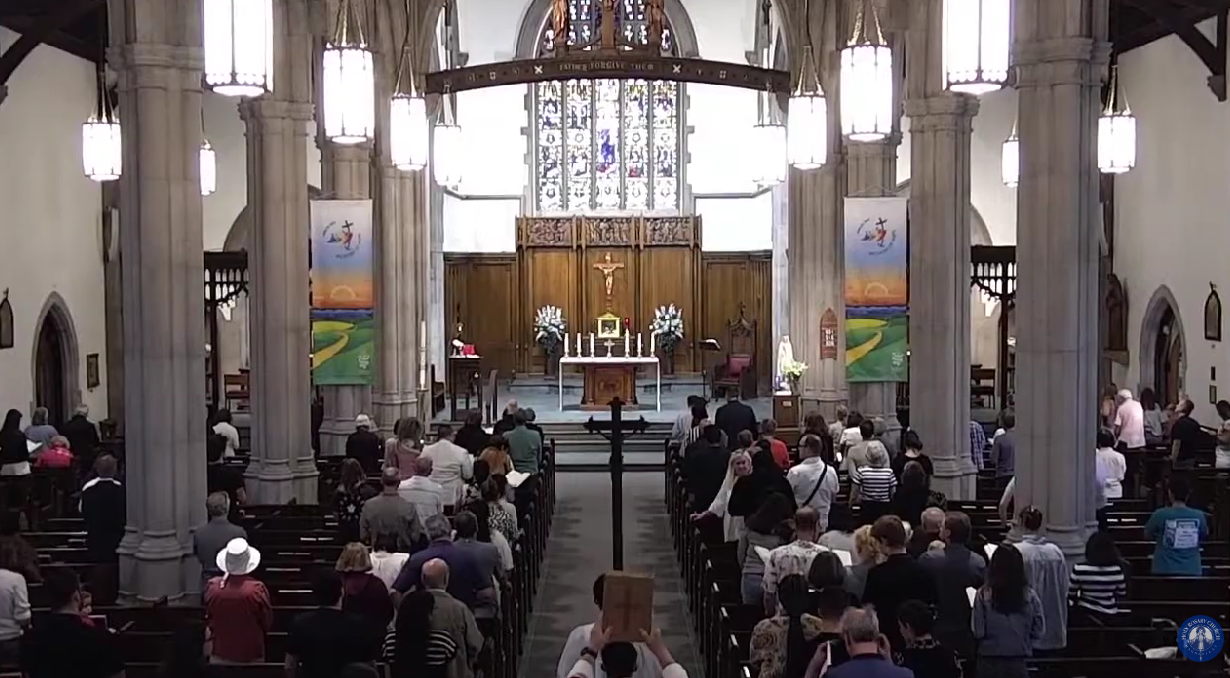
HALIFAX, Nova Scotia, February 14, 2026 – Because I came to belief as an adult rather than as a child, my faith evolved differently than most believers. Still, even as an adult, I was as docile as a child when I first believed. Having been infant-baptized into the Roman Catholic church and so believing that’s where I belonged, I started attending Catholic masses shortly after I was reborn. Sometimes I’d go twice a day (noon and five p.m.) and on Sundays I’d go three times. I couldn’t get enough of God, who (as I was told by the priests) lived in a box at the side of the altar. I’d always sit in the front pew so I could get as close to him as possible.
As I matured in my faith, I started having doubts about what the priests were telling me. I started not being able to say some of the responses during mass because I knew they were wrong. I started reading with horror about the various Inquisitions and other crimes, past and present, of the papacy. I also (and this for me was by far the worst) started to feel a distance developing between me and God. The joy that had been my constant companion in the early days and months of my rebirth began to retreat. In its place was a sense of duty (attending mass, praying the rosary, following all prayer and fasting directives issued by the pope, decorating my place with crucifixes, pictures of saints, prayer candles, etc.) that seemed to be taking me farther and farther away from God.
Three-and-a-half years into my rebirth, I was heavily involved in Catholicism. Along with attending mass daily, I sat on several committees, was appointed lector, taught a Bible class, and was even entrusted with a key to the church building, I was there so often. I also rented the church basement for my employment-related events. My life revolved around “the church”, so what happened on January 12th that year upended everything.
It was a Sunday. I was sitting in my pew after the service, reveling in my usual post-mass bliss and enjoying the smell of the just-extinguished altar candles. I loved that smell because it reminded me of birthday candles (and so birthday cake!). Other than for a few people milling around some statues of saints, lighting candles and bowing down in prayer before them, I was alone in the church’s main room. As I sat there in a haze of spiritual warm ‘n’ fuzzies, God suddenly opened my eyes. I say “opened my eyes”, but it was more like something fell from my eyes and I could see what I hadn’t seen before. And what I saw horrified me.
I was in a pagan temple. I wasn’t in a God-worshiping church, I was in a pagan temple, and the people bowing down before the statues were bowing down before effigies of demons. Even worse was the abomination of the mangled corpse that hung, larger than life, over the altar. It was a reenactment of Jesus on the cross that was supposed to represent God’s great love for us, but all I could see (and all I still see, whenever I see a crucifix) was Jesus’ tormented and humiliated body. This is not how God shows us his love.
While I sat there in shock at what was being revealed to me, the priest slipped through one of the back doors behind the altar, smiled at me, and asked me if I’d be attending the Christmas party in the church basement at noon. I managed to squeak out a “we’ll see”, to which he nodded and disappeared back through the door. Then the deacon bustled up the aisle behind me to prepare the altar for the next mass. Seeing me sitting there, he also asked me if I was attending the party, to which I managed another weak “we’ll see”. He murmured a few more pleasantries while performing his housekeeping duties and then disappeared through the same back door as the priest.
I took this as my cue to leave.
Carefully, deliberately, I stood up and put on my shoes. For three and half years, I’d removed my shoes whenever I passed the threshold of the church, believing the place to be holy ground. For me to put on my shoes while I was still at the church pew was an act of revolution. Likely no-one else noticed me putting on my shoes at the pew, but I did and God did. And then, firmly shod, I made my way to the back of the church, out the doors, and onto the street, never to return.
In showing me the truth about the church building I’d just exited, God didn’t say to leave it. He gave me no directive or command in that regard: He simply revealed to me what manner of place I was in and then left it up to me to decide what to do. But having seen what I just saw, there was no way I could stay there. And not being able to stay there (or in other places like it), I could no longer be a Catholic.
When I got back to my apartment, I immediately tore down all the crucifixes and pictures of saints adorning my walls and threw them into a box. Into a second box went my rosary beads, chaplets, prayer cards, and every other piece of Catholic paraphernalia I’d collected (at great expense) over the years, including my Catholic Bible, hymn books, and catechism. I then closed the two boxes and shoved them under a table out of sight.
I half expected to be struck by lightning through my skylight while I was doing this, but nothing happened other than that the room appeared much brighter and cleaner after the purge. Then I sat down at my kitchen table and opened a second-hand Bible I’d bought on impulse a few years earlier but hadn’t used (because it wasn’t Catholic) and started reading the Old Testament for the first time in my life. I’d been reading the New Testament every day since my rebirth, but I hadn’t yet touched the Old Testament. I’d been relying instead on the carefully selected and sanitized OT snippets that were doled out during mass. But in reading the older books for myself, I soon realized why those snippets had been so carefully selected.
The OT clearly showed that Catholicism is not Christianity. Many of the rites and rituals taught to Catholics are expressly forbidden and even outright condemned in the Old Testament. Tellingly, those verses are never included in the OT morsels spoon-fed to us during mass.
From that day forward, I removed myself entirely from the church and all its activities without telling anyone there why. God had me remain silent, as I wasn’t yet strong enough to combat their arguments. I let them draw their own conclusions as to why I’d left. Occasionally, I’d pass a congregant on the street, but they’d avert their eyes and ignore my greeting. The priest stopped me once and asked me “Charlotte, what happened?…”, but I could only mumble some vague excuse that I no longer recall and that didn’t resolve the confusion in his eyes.
The priest was a kindly man. He’d consistently supported me in everything I did at the church, appointing me as lector at noon mass and even agreeing to let me teach a Bible study, which at that time was unheard of in a Catholic church. He knew my conversion was real and that I was different from most if not all the other congregants. I could see the hurt in his eyes that day on the street, hurt and concern underlying his confusion, but God had me remain silent beyond my mumbled excuse. It wasn’t my time to explain.
The revelation God showed me on January 12th that year was an answer to a prayer I’d prayed on my face in tears on a milestone birthday nine days earlier. In that prayer, I’d begged God to take out of my life everything that was keeping me from doing his holy will, to take me back spiritually to how I was when I was first reborn. My prayer was awkward and stilted (I was repeating a phrase I’d heard from a televangelist), but my tears were real and my agony was real and my desire to reconnect with God—to be close with him again like we were at the beginning—was a cry from the heart, pure, raw, and unfeigned.
And God heard my prayer.
And he answered it.
In his time and in his way, he answered it, showing me that what was keeping me from doing his will was Catholicism and all its trappings. He didn’t tell me to leave Catholicism; he showed me what it was – first, by revealing the true nature of the place I’d been worshiping in, and second by revealing to me in scripture how Catholicism violated his commands and how I’d been replacing him with Catholicism, faith with religion. What I chose to do with that knowledge was up to me.
I know I made the right choice in walking away from the Catholic organization. Although my life was temporarily upended and I became an outcast in that community, the reward was a closer relationship with God. My prayer was answered in the best possible way. I’ve never once regretted leaving Catholicism and I have no plans to return. But in rejecting the church, I didn’t reject the people I’d met there; most of them were kind-hearted and well-meaning, just spiritually confused. It wasn’t Catholics I was rejecting, it was Catholic doctrines, Catholic creeds, Catholic paraphernalia, and the whole rotting edifice of the papacy. It’s all spiritual garbage, but it does have a worldly purpose, and so I let it be. Catholicism is not my concern.
I’m glad I experienced the worldly church firsthand, but I’m also glad it was “one and done”. I might have been infant-baptized into Roman Catholicism, but I was reborn into God’s Kingdom. I know now, as a mature bornagain believer, that my worship center is the Kingdom established by Jesus, and my fellow worshipers are bornagain believers. This is my Church. These are my people. This is where I belong. No buildings. No creeds. No recitations. No props. Faith, not religion. Just us living in constant spiritual communion with each other and with God and Jesus, through God’s Holy Spirit.
This is all I want and this is all I need until I get Home.
EVERYDAY JESUS

MCLEODS, New Brunswick, March 12, 2024 – I am not a fan of religion. I believe that organized religion, more than any other force on Earth (including sin and Satan) is the biggest barrier stopping people from seeking God. This should be ironic, that religion prevents people from finding God, but it’s actually been par for the course for thousands of years. Jesus also had issues with organized religion during his ministry years and likewise considered it to be the main stumbling block to genuine faith.
Even so, organized religion can still be used as a resource tool for genuine believers. It has good value in that regard and God permits it to continue mainly for that purpose. In my case, God encouraged me to attend mass every day for nearly three and a half years after I was reborn from atheism so that I could be in an environment where belief was accepted and I could hear God’s Word spoken and explained, albeit from a Catholic perspective. I was grateful at the time (and still am) that the doors to the various Catholic churches I attended were open for the scheduled services and that the priests did the job they were paid to do. But as I matured in my faith and reached the stage where I needed to be consciously developing a relationship with God as my Father and Jesus as my brother and best friend, God pulled back the veil cloaking Catholicism, and what I saw made me walk out, never to return.
Jesus used the synagogues and the temple for teaching purposes. He also took full advantage of the hospitality of the religious powers-that-be by accepting their invitations to dine, knowing full well that their motive for inviting him was less than charitable. But eating at their tables and using their religious buildings for his purposes didn’t blind Jesus to the problems inherent in organized religion and didn’t stop him from making the best of the situation and suggesting better ways forward than killing those who disagreed with you. He didn’t overlook the corruption and rot that had come to characterize Judaism; he stared it down and offered himself as a solution.
Faith, as we know, is far more than just reciting a list of beliefs and attending a service. Faith is life, as much as God is life and Jesus is life. I know for a sure fact that without my faith, I would be dead. My faith encompasses my belief in God and Jesus and everything they teach, but it also includes how I interact with people on a day-to-day basis when I’m not consciously thinking about God and Jesus. My faith informs those interactions, and charity guides them. That’s the goal, anyway.
When Jesus said that God was looking for people to worship him in spirit and in truth, he meant God was looking for genuine believers who were interested in the practical application of Jesus’ teachings, not hypocrites who relied on ritual to mask their lack of belief. Ritual has its place in faith when used sparingly (like in the changes to the ritual of the Passover meal that Jesus introduced), but it should never override faith or be equated with faith. Ritual should never be the centerpiece of faith. The centerpiece of faith should always be our one-on-one relationship with God and Jesus, which should not be contrived and preset but unfeigned and spontaneous, the way we are with anyone we love and who loves us in return.
What does the practical application of Jesus’ teachings look like? It can take many forms, but it definitely doesn’t look like religion. It looks like everyday life. It also doesn’t announce itself as the practical application of Jesus’ teachings: It simply responds to situations as Jesus did.
We born-again believers aren’t called to be religious; we’re called to follow Jesus, which means we’re called to make the same life choices Jesus did – everyday Jesus, not religious Jesus. There’s no such person as religious Jesus.
May you never let religion come between you and God.
ANATHEMA
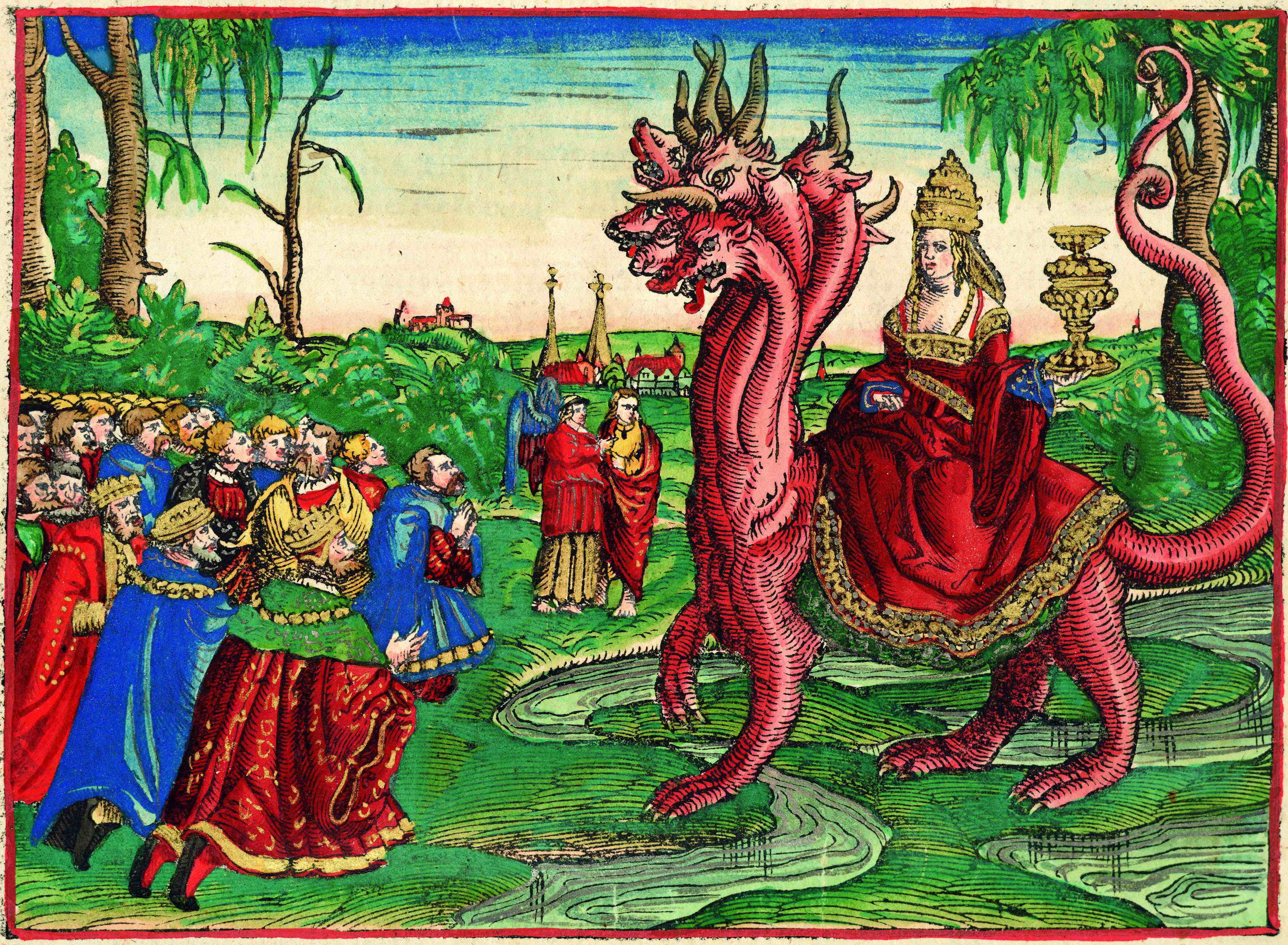
HALIFAX, Nova Scotia, July 17, 2016 – The world is under the control of Satan: this is not news to anyone with knowledge of scripture. What does appear to be news, sadly, even to those who call themselves believers, is that God’s kingdom has already come.
It’s here.
Now.
All around us. (more…)
HEAVEN TEN

BEDFORD, Nova Scotia, November 5, 2015 – I am rabidly areligious. I hate all religions equally, and I hate them with a passion.
In my mind, ‘freedom of religion’ just means freedom to bow down to whichever demon you fancy, because all religions are demon worship, every single one. It’s better to live where religion is outlawed than to live where all religions are welcome.
Take Christianity, for instance. It’s loosely based on Jesus’ life and teachings, but it’s polar opposite to what Jesus intended. When he warned us: “Many will come in my name”, he was referring to the multiplicity of denominations that would spring up like weeds after a hard rain. None of these denominations reflect the true teachings of Jesus, and yet all claim to be “Christian”. Like the other demon-worshiping cults they mimic (Judaism, Islam, Buddhism, Hinduism, etc.), denominational Christianity is based on creeds and a rigid system of beliefs rather than raw live faith.
Jesus wanted us to experience faith raw and live, and he showed us how we can do that. Rather than institute a religious system that requires us to mouth “vain repetitions” (by reciting certain words over and over at certain times of the day) or perform deeds that were disconnected from our daily lives (like attending worship services), Jesus demonstrated how faith in God should not be something separate from what we do every day but instead should be life itself. He constantly referred to God as “the living God”, and invited us to live along with him. We don’t need to go into a building to worship God because our worship is the choices we make, every day, all day. We are our faith, we don’t just “practice” it.
If you follow Jesus as you should be following Jesus, your faith is indistinguishable from your life. In fact, if you follow Jesus as you should be following him, you could live in a Muslim country where Christianity is outlawed, and still openly live your faith 24/7. This is what is so astounding about what Jesus accomplished: he not only conquered death by paying our sin-debt on the cross, but he also conquered religion and the need for religious worship by turning everyday life into worship.
If you follow Jesus, you automatically are worshiping God.
If you follow Jesus, you live your faith real and raw by the choices you make, every day, all day.
Following Jesus is the highest calling a human being can aspire to; it’s also the most natural and the most rewarding. Jesus was a cool guy who lived a cool life. He was answerable to nothing and no-one but God, whose values he fully shared and fully espoused. He was areligious in the extreme.
So should you be.
 A BORN-AGAIN BELIEVER