
Home » 2021 (Page 9)
Yearly Archives: 2021
BIBLE READ-THROUGH: DAY 19 REFLECTION (PSALMS 1-72)

“40 Days and 40 Nights of God’s Word”
DAY 19: AUGUST 10
PSALMS 1-72
GREENVILLE STATION, Nova Scotia, August 10, 2021 – I’ve made no secret of the fact that I’ve skimmed through what I call fly-over scripture, particularly in the genealogies and parts of the law pertaining to animal sacrifice and so on. But today’s reading I soaked up every word. Maybe it’s the former literature major in me, but I can’t get enough of the psalms, especially David’s (no surprise there! ;D). They’re like poetry to me. I’m like that deer that pants for God’s Word and then finds a cool, clear, pure running stream of it in the psalms. This morning I lapped it up and then plunged my whole face into it, coming up only to breathe.
- The psalms are probably the most accessible part of the Bible to believers and non-believers alike. Even as an atheist, I had a nodding acquaintance with “the Lord is my shepherd”, though I had no idea what it meant. Now I’m living it.
- At some point, while there’s still time, I’d like to go through all of David’s psalms and write a reflection on each one in my blog, but for today I’m just going to cherry-pick either whole psalms or lines that jumped out at me for whatever reason.
- If you didn’t have the time or inclination to lap up every word of today’s reading, let me give you the Coles Notes version: Those who put their trust in God will be protected by God and blessed by God. God himself will go to battle for them. If you love and trust and obey God, enemies will be all around you all the time, but God will protect you; you will have afflictions, but God will get you through them. No matter how bad things are, praise the Lord and give thanks to him, and he will rescue you. There is no down-side to trusting and serving the Lord.
- I hadn’t noticed before that Psalm 14 and Psalm 53 are the same psalm with only slightly different wording. All the years I’ve been reading the psalms, and I just noticed this morning they were both the same. Not sure what the story is there, but I thought it was interesting. Lines are often repeated from one psalm to another, but not the entire thing. Maybe there will be more instances of this in the rest of the psalms. We’ll find out over the next few days. By the way, all of the psalms in today’s reading were written by David, except for one that was written by Asaph.
- Jesus quoted the psalms a lot, even as he was dying on the cross. Psalm 22 pretty much lays out the crucifixion scene, with Jesus’ dying words “MY GOD, MY GOD, WHY HAST THOU FORSAKEN ME?” as the opening line. Jesus quoted the psalm to show all who were present that what was happening to him had to happen according to scripture. Some people have taken it to mean that David saw the crucifixion scene in a vision and that Jesus cried out in actual despair, but Jesus was very clear about doing things in accordance with scripture (and he was never in despair). He purposely did and said certain things because scripture stated that the Messiah would do or say this or that, and so he did and said this or that. And he also purposely quoted the opening lines of Psalm 22 to let those within earshot (as well as those reading about the crucifixion years later) know that it had to happen the way it did in order to fulfill scripture as pertaining to the Messiah.
- It’s worth noting that only Matthew and Mark mention Jesus quoting the opening lines of Psalm 22. Luke mentions Jesus quoting another line (“Into thy hands I commend my spirit”), which is also in today’s reading (“commend” is translated to “commit” in the KJV), along with the Messiah being given vinegar to drink (done to Jesus on the cross).
- In fact, there are numerous references to Jesus in the first 72 psalms. I’m not going to go through them here, but if you’ve done the reading today, you’ve likely seen them yourselves. As I said, at some point over the next few months I’m going to do a reflection on each of the psalms and talk about how they relate to Jesus. The whole Bible, in fact, relates to Jesus, but some lines and verses are more overt.
- I love all the psalms, but those that speak to me in particular are Psalm 27, which I learned to sing in ancient Hebrew without understanding a word (lol), except for ADONAI; Psalm 30 (“O Lord my God, I cried unto thee, and thou hast healed me”), which is one of the first psalms that spoke directly to my heart when I was a bouncing baby newborn-again; and Psalm 68, which I mentioned in an earlier reflection, quoted Moses in the opening lines (the same lines which terrify the fallen beings whenever they’re spoken in sincerity). I also like Psalm 23 for its simplicity and brevity (which makes it easy to memorize and recite when you need it most), and because it pretty much describes the life of a believer. Which psalms are your favorites or speak directly to your heart in some way?
- As we know, David was a musician as well as a poet, and the psalms were sung in performance, not spoken. They certainly weren’t written solely to be read silently. The original music is no longer available to the general public (although some people may have access to it still). To make up for that loss, a few musicians have set the psalms to their own compositions. I found a recording of Psalm 27 in ancient Hebrew on a YouTube video a few years ago, and set to learning it. I did (mostly) learn it, but I have no idea what I’m singing without sneaking a peek at the English translation. Even so, it’s fun to sing along. I’ve posted the psalm below for anyone who wants to try their hand at singing ancient Hebrew!
What jumped out at you today? Did you notice something in these 72 psalms that you hadn’t noticed before? Share it with us, if you feel so inclined.
________________________________________
A PDF schedule of the BIBLE READ-THROUGH is directly below:
BIBLE READ-THROUGH: DAY 18 REFLECTION (THE BOOK OF JOB)
“40 Days and 40 Nights of God’s Word”
DAY 18: AUGUST 9
THE BOOK OF JOB
GREENVILLE STATION, Nova Scotia, August 9, 2021 – Where rebellion ends, fear begins; where fear ends, knowledge begins; where knowledge ends, wisdom begins; where wisdom ends, faith begins; where faith ends, trust begins; where trust ends, love begins; and where love ends, humility begins.
- Job loved God. The scripture in our reading today says that Job was upright before the Lord and did nothing wrong. Job even tried to cover the sins of others (his children) with constant sacrifices, knowing they weren’t right in their hearts before God.
- And yet God still permitted Satan to have his way with Job, first by killing his children and taking away all of his wealth and possessions, and then by plaguing Job with open running sores so that he was able to do nothing but sit in a pile of ashes and scrape the pus off with a piece of broken pottery. That hardly seems a fair way for God to reward someone who is blameless and upright. Surely God overplayed his hand with Job? Or maybe Job wasn’t as blameless as God and scripture lead us to believe? Maybe Job had earned all his misery?
- Like the book of Esther that we read yesterday, the book of Job has a whiff of the fairy tale about it, as if some details were pumped up and highlighted, while others were subdued or left out altogether because they didn’t support the narrative. Everything in God’s Word is meant for our edification, and if we approach it that way, we will be edified. So if things were puffed up or left out, it doesn’t matter: God will teach us what we need to know if we are willing to learn.
- God has made us to be curious and to want to know things. That’s how we’re hard-wired as his creatures. We can see that same inbuilt curiosity and desire to know things in animals as they try to figure things out. Our curiosity and desire to know things (i.e., figure things out) has been given to all his creatures by God. He doesn’t want us not to be curious, but like the sea, our curiosity needs to have boundaries, so God has limited our knowledge and understanding to certain bounds.
- Trying to understand God within the bounds of our limited intelligence will only get us so far. We can have an inkling of God, but we can’t possibly know everything about him, including how and why he does what he does. In earlier readings, we see that God rewards right behavior and punishes wrong behavior. This makes sense to us. These are rules we can follow. But God allowing us to be punished for a whim of Satan? This goes beyond the bounds of our understanding.
- Job’s friends tried to help him figure out what was happening to him and how he could get out of his dilemma, but their advice was premised on the simple equation of do good, get good; do bad, get bad. This equation does apply in most situations, but not in all. The friends assumed that Job wasn’t as blameless as he seemed and that he had done something bad to bring the bad on himself. I think most of us would assume the same. But Job stands his ground against their accusations and can think of no word or deed he’d done that would have brought this level of calamity onto him.
- AND THEN IN COMES GOD LIKE A TIDAL WAVE.
- We learn best when our focus is entirely on the situation at hand. If that situation is painful, we learn even better and faster. The desire to learn amidst the sensation of pain is solely to find a way to make the pain stop. In this regard, Job is fully open to this teaching moment arranged by God.
- And what a teaching moment it is! God pushes the limits of Job’s understanding of his situation by bombarding him with example after example of what he, as God, has done and is able to do. Wave after wave of evidence of God’s unfathomable power wash over Job until all he can do is cry out for mercy and humble himself before his Lord and Creator.
- Humility before God is not the same as being humiliated by God. In another part of scripture we’re told to humble ourselves under the mighty hand of God, resist the devil, and he will flee. We’re not told to have faith in God or even to love God, but to humble ourselves under him. Humility before God is an even greater level of submission than faith or trust or love. Humility presumes nothing and asks for nothing. It’s a simple open acknowledgement of your total powerlessness in the face of God, and an acknowledgement that everything you are and everything you have comes from God. Yes, you have free will as your sole possession, but you wouldn’t even have that if God hadn’t given it to you. Humility signifies that you acknowledge God’s superiority and infinite power in every regard, and that you wholly submit to him. Full stop.
- Humility means not demanding to know why God does what he does. Knowledge + wisdom + faith + trust + love (minus rebellion) = humility.
- Like Esther, Job also has a happy ending. The devil flees as soon as Job humbles himself under God’s mighty hand, as promised by scripture. God then gives Job even more wealth than he had before, along with a good long life.
What did you think of today’s reading? Do you consistently humble yourself under God’s mighty hand, or are you always trying to figure out why God does what he does? God gives us leeway to ask questions and even to (foolishly) question him at times, but every now and then he needs to remind us who’s boss and why, so that we don’t get ahead of ourselves.
Humility before God is the most underrated of virtues and also the most important, if we’re to have the kind of relationship with God that he’s inviting us to have.
________________________________________
The schedule for the BIBLE READ-THROUGH is directly below:
ARE YOU IN THE WRONG CHURCH?
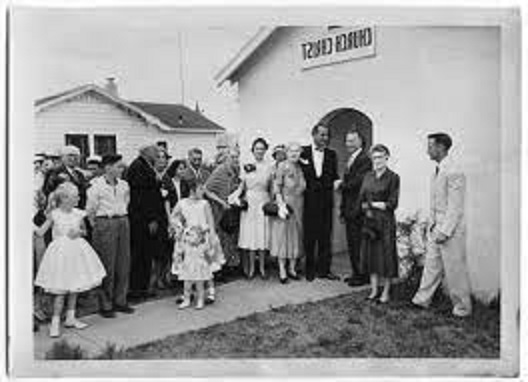
GREENVILLE STATION, Nova Scotia, August 8, 2021 – Have you ever had the feeling that you’re in the wrong church? That you’re wasting your time? That you’re being asked to do things and give things that you don’t feel like doing and giving?
If you have those feelings, it’s probably because you are actually in the wrong church. You’ll know a church is wrong because it will do the following things:
- Guilt you into giving money
- Guilt you into volunteering
- Leave you emotionally and spiritually flat
- Be full of people you don’t like and don’t relate to
- Guilt you into attending events you don’t want to attend
There are more identifiers of wrong churches, but you get the point. The wrong church is just plain wrong. Period. It might have some good points (nice pastor, nice building), but overall it leaves you feeling that there must be more to church than what you’re experiencing there.
The reason that you’re feeling this way is that the wrong church takes from you rather than gives to you. It drains you rather than feeds you. It expects you to support it rather than it supporting you.
It expects you to support it rather than it supporting you.
The right church, on the other hand, supports you without you even having to ask for support, because its sole purpose is to support you and others like you in your journey home to Heaven.
Which church is the right church? Well, it doesn’t hold services in a building and it doesn’t identify as any particular denomination. In fact, it doesn’t hold services at all, because people in the right church don’t practice their faith: They live it. They’re not in some kind of endless dress rehearsal where they passively learn a script but never actually perform it. Those who are in the right church don’t need a script. They ad lib, with prompts from God’s Holy Spirit.
The right church is God’s Church, which is the collective of all born-again souls on Earth. Jesus is the high priest in God’s Church and everyone else is a minister.
God’s Church is the one and only right church for all true believers because it’s the only one that can support you in the way you need to be supported. In return, it expects nothing from you other than that you remain loyal to God and Jesus. It costs you nothing to join God’s Church and doesn’t require any financial contributions from you at any time.
Every church that isn’t God’s Church is a worldly organization that needs you only because it needs your money and your energy. Worldly churches take, whereas God’s Church gives. Worldly churches demand your support, whereas God’s Church offers it.
When all is said and done, every worldly church is a wrong church. There is no right worldly church.
The only right church is God’s.
Are you in it?
HAVING A SPIRITUAL BAD HAIR DAY? TEST INCOMING!

GREENVILLE STATION, Nova Scotia, August 8, 2021 – Our time on Earth is a series of trials and tests, but God doesn’t test us when we’re ready and waiting for it. He tests us when we’re least ready, when we’re tired and running late and having what amounts to a spiritual bad hair day. That’s when he tests us, when we’re feeling our worst, because how we respond when we’re feeling our worst is the most accurate measure of where we are spiritually.
If God gave us a heads-up that we were going to be tested on a particular day at a particular time, we’d clear our schedules and spend the preceding days in prayer, so that when our testing time came, we’d be centered, grounded and focused. We’d ace that sucker! But that’s not who we are. That’s make-believe us. That’s lab-condition us, not field-condition us. God needs to know how we’ll perform in the field under real conditions. So he springs tests on us when we least expect them.
God needs to test us when we’re at our worst so that he can see what he has to work with. He also needs to see (and to show us) what we need to work on. After he’s tested us, he lets us know how we’ve done.
It’s best to take God’s progress report humbly and not get defensive or try to make excuses for poor performance. Best just to acknowledge that you still need to work on this or that or the other thing, and resolve to do better next time. That’s all you can really do and that’s all God expects you to do – resolve to do better next time. No point in being belligerent or self-denigrating. No point in feeling sorry for yourself. If you mess up, own it, make amends, and move on.
Imagine if babies, when they’re learning to walk, got angry at the person trying to help them. Imagine if they refused to stand up for the rest of their life if it meant they were going to fall down again. They’d never learn to walk, let alone run, skip, hop, dance, skate, etc. To a baby, falling down is part of walking. It goes something this: wobbly step, wobbly step, wobbly step, plonk on your bum, look surprised, struggle to your feet, and then wobbly step, wobbly step, wobbly step, plonk on your bum, etc. To a baby, that’s walking.
Notice, too, how most babies try to skip the learn-to-walk phase and go straight to running, which of course only makes them fall down all the more. I think you know what I’m getting at here. Spiritually, we often take on more than we can handle, and then we get knocked back. It’s a humbling experience, to get knocked back spiritually, and most of us don’t do humble well. Humility is an acquired trait. We’re not born with it. We’re not even born-again with it. We have to learn to be humble, which is also one of our earthly tests.
Have you been tested lately? If so, how did you do? Did you learn something about yourself that you didn’t know before? And did God highlight something for you that you need to work on?
We shouldn’t dread God’s tests and trials or try to avoid them. They’re for our benefit. We need to know where we stand spiritually and what we need to work on. And God also needs to know the same thing so he can help us.
So the next time you’re having a spiritual bad hair day and God springs a test on you, remind yourself that it is a test and give it all you’ve got.
BIBLE READ-THROUGH: DAY 17 REFLECTION (EZRA 5 – ESTHER 10:3)
“40 Days and 40 Nights of God’s Word”
DAY 17: AUGUST 8
EZRA 5 – ESTHER 10:3
GREENVILLE STATION, Nova Scotia, August 8, 2021 – We pick up today where we left off yesterday, with Judah picking up the pieces after their exile in Babylon. Lots of humbling going on the part of the returnees, lots of vows and promises being made to themselves, to each other, and to God, as well as lots of opposition by those who see the returned Jews and their rebuilding of Jerusalem as a threat.
- Judging by the description of Jerusalem, it was mostly uninhabited for the 70 years of Judah’s exile. Recall from one of the earlier readings that the only people spared during the destruction and slaughter were those of no distinction or power (and thus of no perceived threat) who were left behind to work the land. So the city of Jerusalem had essentially lain fallow for decades, meaning that those who returned to rebuild it certainly had their work cut out for them.
- Whenever the Spirit of God starts a mighty movement in his people, there is always the same degree of opposition that arises to stop it. We saw this with Moses and David at the start of their power, and now we see it with the returnees at the start of theirs. In fact, the opposition prevailed to such an extent at one point that the rebuilding and restoration work was halted altogether. When faith falters, evil gets the upper hand. Those who eventually overcame the opposition were strong in faith and were also guided by others who were strong in faith, like the prophets Ezra, Nehemiah, and Haggai.
- Interesting detail about how they worked non-stop and with swords at their side to rebuild the city wall. This kind of urgency could be used today in God’s Church. Also interesting how only those who wanted to contribute to the rebuilding “free-willingly” (particularly of the temple) were asked to contribute. The same request was made when the tabernacle was being built in the wilderness during Moses’ time. It’s important to God that only those who want to give of their own free will contribute to the building of his house. Jesus later references this preference of God by saying that only those who want to worship God “in Spirit and in Truth” should do so, as “God seeks such to worship him”. God has no use for lip-servers. He would rather that someone be outright oppositional than pretend to love him. God hates deception in matters of faith and the heart.
- Another interesting and highly relevant (to us) detail is how the Levite priests and their assistants were commanded to separate themselves from their “strange” (that is non-Jewish) wives and children, as marrying these women and having children by them was a violation of the law. When the priest class became aware that what they had done was wrong in the eyes of God, they simply did whatever was required to make it right, which in this case was to say bye-bye to the wife and kiddies for life.
- We likely can’t imagine a situation where we would do the same, but still it’s expected of us. All of the married disciples left their wives and kids when they got the call to follow Jesus. If we are commanded to put God ahead of everything and everyone else, walking away from elements that no longer belong in our lives and that in fact prevent us from following Jesus the way we need to follow him should be self-evident. We are, as Paul tells us, priests and prophets, if we’re in the Kingdom and are Spirit-filled born-again believers. Priests and prophets are not to live with people who are not priests and prophets, as it would be a form of spiritual defilement. That’s why Jesus lived separately from his family and former friends, and only laid his head at night among fellow believers.
- We see again in this reading a retelling of the story of the children of Israel from the time of Abraham. The emphasis in this retelling is not so much on the glory and grandeur of God and his wondrous miracles, but on God’s longsuffering patience and mercy. Ezra, who is described as being both priest and prophet, does the retelling. He also reads Moses’ book of the law to the people, and then reminds them of how God gave them chance after chance after chance, even despite their continual backsliding. Ezra also warns the people that worse will happen to them if they backslide after their return to Jerusalem.
- The story of Esther is an intriguing one. If you do some digging, you can find where it fits in the chronology of Biblical events, but it always seems to sit by itself as a guide to Jewish people and a warning to their enemies. The Jewish holiday of Purim emerged from the events that happened to Esther and her uncle Mordecai as they foiled the plan to slaughter all the Jews in the land. The plan was turned back on the conspirators, and they ended up being the ones who were slaughtered, after which all their possessions were given to the Jews.
- It’s a cautionary tale, for sure, and also a reminder that if you mess with God’s people, you mess with God. Even so, there’s something slightly fairy-tale-ish about this story that makes me wonder if some details were added (and others left out) to heighten the impact. I don’t feel the same connection to these characters as I do to others in the Bible who do God’s will. I’m not sure why that is, but there it is. Maybe your impressions of the story of Esther and Mordecai are different than mine.
So what jumped out at you in this reading? I’m guessing that you, like me, are now pretty much able to recite your own summary of the story of the children of Israel, from the time of Abraham up to and including their exile in Babylon. See how effective the mechanism of repetition is? We’ll be encountering even more repetition in the days to come. That’s how God teaches his people!
________________________________________
For a schedule of upcoming readings, see the PDF below:
BIBLE READ-THROUGH: DAY 16 REFLECTION (2 CHRONICLES 13 – EZRA 4:24)
“40 Days and 40 Nights of God’s Word”
DAY 16: AUGUST 7
2 CHRONICLES 13 – EZRA 4:24
GREENVILLE STATION, Nova Scotia, August 7, 2021 – Today’s reading continues the review of the kings of Judah and Israel, up to and beyond the 70-year captivity in Babylon and the return of God’s people to Jerusalem. One of their first tasks upon arriving back in Jerusalem was to lay plans for the construction of what would eventually become known as the second temple.
- As we’ve seen over the past several days, many of the kings start out being right with God, but somewhere along the line go astray. After that, only a few find their way back to God. Most of the kings, though, start out evil and end up even more evil, with one notable exception – Hezekiah’s son Manasseh.
- Hezekiah was one of those kings “who did right in the sight of the Lord” and was celebrated by his people for being a great and godly ruler. But Manasseh came like a wrecking ball after him, destroying all of his father’s accomplishments. Things eventually got so bad for King Manasseh that he ended up in prison in chains, where he ultimately repented. Manasseh was released after his conversion and returned to his kingship in Jerusalem, at which time he undid everything he had previously undone of his father’s, finally doing, as scripture would say, “that which was right in the eyes of the Lord”. So he started out an enemy of God but ended his days in God’s grace. This is one of the happiest stories in the Bible.
- It’s not how you start that matters, it’s how you end. After the starting gun is fired, the first horse out of the gate doesn’t automatically win the race; the race has to proceed over time, and then the winner is declared at the finish line. You don’t win the race just because you’re in it or because you’re the first out of the gate, and you don’t lose the race just because you fall behind. You win it because you end in God’s grace. Manasseh was one of the last out of the gate and lagged far behind the others during the race, but he ultimately won because he ended in God’s grace.
- As I read through the stories about the kings of Israel and Judah and their people, I can’t help but think that God is immensely patient. He gives them chance after chance after chance, king after king after king, but then eventually his patience comes to an end. When that happens, punishment is swift, brutal, and thorough. In this part of scripture, punishment means the slaughter of the king and his people, the sacking and destruction of Jerusalem, and the captivity of whoever escaped the slaughter. It honestly doesn’t get much worse than that.
- Look around you wherever you are now and imagine everything destroyed – looted, smashed to pieces, and then burned in a great conflagration. Now imagine everyone you know slaughtered. And while you’re imagining that terrifying scenario, think about what might happen to you if it came to pass. Would you be among the dead, or would you escape?
- In hypothetical SHTF scenarios, we all like to imagine we’ll be one of the few who survive. But when it comes to God’s punishment, there is no escape. There’s nowhere to run and nowhere to hide; if you have it coming, you’ll get it.
- The sacking and wholesale destruction of Jerusalem and all the people in it reads like a horror story, but what makes us think we deserve anything less than those people? Our sins as “formerly Christian” nations are equally as horrendous as theirs. By some measures, our sins are even worse. God has not changed; he’s still patient until he isn’t. It’s hard not to think that a great punishment is coming our way.
What are your thoughts about the kings and their evil deeds in these past few readings? Does it strike you as odd or even frustrating that they seemed to have no understanding of right and wrong? God had not yet put his law into their hearts, so maybe that’s part of the reason why he was so patient with his people when they messed up. But after the book of the law had been found in the temple and read to all the people, they no longer had the excuse of ignorance.
As for us, we definitely don’t have the excuse of ignorance, not only because we know God’s law, but even more so because it’s now written on our hearts. That means we have ZERO excuse for doing evil. And since that’s the case, and since we continue as “formerly Christian” nations to do “that which his evil in the sight of the Lord”, how much worse – and how much more deserved – our punishment will be than that of the people we read about today.
________________________________________
The schedule for the BIBLE READ-THROUGH is given in the PDF below.
ARE YOU UNDER SATAN OR UNDER GOD?

GREENVILLE STATION, Nova Scotia, August 7, 2021 – Jesus says the world is under Satan. Jesus also tells us that Satan is the Father of Lies. So what exactly does that mean?
It means the world is the realm of lies.
It means you’re either in the world (the realm of lies) or in the Kingdom (the realm of Truth).
There is no third option.
Most Christians live in the realm of lies. Even worse, given the choice, most Christians choose to remain in the realm of lies. Why? Because it’s comfortable there. It’s familiar there. It’s where they’ve always been and it’s where they want to be. They can’t imagine being anywhere else. And why should they? They can have their spiritual cake and eat it too.
They get to live with their family and friends, whether believers or not, earn a good salary, live in a nice house, go to the medical establishment for treatment (maybe even donate to a cancer charity for tax benefits) – in other words, they get to live like everyone else in the world, with all the creature comforts. And why shouldn’t they? Surely God is blessing them with family and friends (whether believers or not), and a good salary and a nice house and medical treatments and tax benefits. Surely those are blessings straight from God, right?
My grandmother used to say “the devil is good to his own”. If you’re living a life that’s indistinguishable from the lives of unbelievers, I don’t think your “blessings” are coming from God. Jesus is very clear about what life in the Kingdom looks like; he doesn’t sugar-coat it. He says you’ll live separately from your family and unbelieving friends; you’ll be poor and without possessions; you’ll be ridiculed, hated and despised; you’ll be constantly on the move, teaching and preaching the Word; you’ll either not work in the world or just enough to keep body and soul together; and you’ll rely 100% on God for health and healing. That’s what life in the Kingdom looks like.
What does your life look like? Do you have a job? A house? A family doctor? Tax write-offs? Are you living with your spouse? Your children? In other words, are you living the life of the world or the life of the Kingdom? You can’t be living both at the same time, with a little bit of the world mixed in with a little bit of the Kingdom, because that means you’re living the life of the world. You can’t be a little bit in the Kingdom any more than you can be a little bit pregnant. You either are or you’re not; you’re either pregnant or you’re not: you’re either in the Kingdom or you’re not.
The problem with claiming to be a Christian and yet living the life of the world is that you’re deceived. You’re living a lie. You’re fooling yourself. Do you think God is fooled by you claiming to be a Christian but living the life of the world? Or are you one of those Christians who thinks that Jesus’ directives don’t apply to you? That how Jesus’ followers lived thousands of years ago doesn’t apply to you? That the Commandments don’t apply to you? That being a Christian just means going to church and saying you believe in Jesus, but otherwise living your life like everyone else in the world? Are you one of those Christians?
Or are you like Jesus?
I need to ask this because I see a lot of people claiming to be Christians but living the life of the world. Jesus says by their fruit shall ye know them. If their fruit is a spouse and children and a job and a house and a family doctor, then they live in the realm of lies and are under Satan, not God. Especially if they go to the medical establishment for healing. That is the biggest piece of low-hanging worldly fruit right there, to rely on doctors and chemicals rather than on Jesus and God.
I’m not saying you’re living the life of the world. I’m not accusing you of anything. That’s not my job. That’s Satan’s job. If you’re living the life of the world while claiming to be a Christian, Satan is accusing you before God. And what’s your response to God? “I didn’t know”? But you do know, because Jesus told you and now I’m reminding you. “Everyone else is doing it”? But Satan is accusing YOU, not everyone else. You’re responsible for your choices, not for other people’s choices. “But it’s so hard to live like Jesus”? No-one said that following Jesus would be a cakewalk. Jesus says his burden is easy and his yoke is light, but it’s still a burden and still a yoke. You can’t get through life without some kind of burden and some kind of yoke, and Jesus’ are the easiest and lightest, which you would know if you were in the Kingdom.
As I said, I’m not accusing you of anything. But if you’re living the life of the world while claiming to be a Christian, Satan is accusing you. And I have a sneaking suspicion you might also be accusing yourself.
If that’s the case, you have a choice to make. You can keep on living in the realm of lies, going to church and saying you believe in Jesus and hoping that will be enough to save you in the end, or you can walk away from the realm of lies and enter the realm of Truth, following Jesus the way he teaches you in scripture to follow him, the way his early followers followed him.
The choice is entirely yours.
You are either living in the world in the realm of lies under Satan, or you’re living in the Kingdom in the realm of Truth under God. You can’t be living in both at the same time.
It’s not possible to live in both.
So where are you?
BIBLE READ-THROUGH: DAY 15 REFLECTION (1 CHRONICLES 11 – 2 CHRONICLES 12-16)
“40 Days and 40 Nights of God’s Word”
DAY 15: AUGUST 6
1 CHRONICLES 11 – 2 CHRONICLES 12:16
GREENVILLE STATION, Nova Scotia, August 6, 2021 – As we dig deeper into the Old Testament, we can see that the material starts to repeat, though it’s presented from a different perspective and with different aspects highlighted. The same process occurs in the New Testament with the four Gospels. The purpose in repeating the material isn’t to bore the reader or to give a sense of déjà vu, but to affirm and expand on what has already been relayed by other writers. As I’ve mentioned previously, the repetition with slight (or sometimes major) changes is also a very effective teaching tool.
- Today’s reading brings us again the story of David and his son Solomon, though with entirely different details than the earlier telling. The stress here is on the building and furnishing of the temple rather than the military victories of David or the private lives of the two kings. I personally found it kind of dry, and if it were presented alone without the accompaniment of the earlier story, David would lose a good deal of his appeal on a human level and would also lose the moral lessons that his life teaches us. I’m guessing that historians and maybe also theologians appreciate the details provided here about the temple, but for me it’s flyover country. Same with the lineages and who did what in whose service. God knows my heart and he knows I mean no disrespect in saying this, but who begat who, and how many and what kind of animals were sacrificed is not information that I can do anything with. Even so, whoever’s involved in the building of the third temple and setting up the beast system is, I’m sure, poring over every word.
- What jumped out at me in particular today is how many times the eternal kingdom of David’s lineage is mentioned. I love reading in the OT about Jesus and his Kingdom! Whenever I come across a passage that references the Kingdom, I get a little jolt of recognition, like you get when you’re driving somewhere you’ve never been before and all the place names are unfamiliar and then suddenly you see one that’s familiar. It waves to you. The first time Bethlehem is mentioned in the OT, it waved to me, as did Jerusalem, Damascus, Gaza, Hebron, etc. I know these places because they’re still functioning cities today. But when Jesus is referenced through the prophesy of the kingdom that will have no end, I’m pretty much doing a stadium wave and kicking like John the Baptist in the womb.
- I get excited because I know that place, that eternal kingdom that’s prophesied in the OT. I know it because I live in it. It’s my spiritual hometown. If you’re born-again, it’s your spiritual hometown, too. And I know that eternal King that keeps getting mentioned, because he’s not only my Messiah and Lord and savior, he’s also my big brother and best friend. This is how the OT talks to me, not as a dry chronicle of names and building materials, but of promises made and kept by a living God who is as ever-present with us today as he was thousands of years ago. That living God is my father, and he’s right here right now as I write these words and you read them. Jesus is here, too, because wherever two are gathered in his name, there he is among them.
What jumped out at you in today’s reading? Do you, like me, fly over the lineage and building details, or do you actually read them? The beauty of scripture is that different things will appeal to different people at different times and for different reasons.
A few years back, I took a short bus trip out to the countryside just before Christmas. The bus was nearly empty, so I sat behind the driver and starting chatting with him. As it turned out, he was a big fan of the Bible, and we had a fascinating discussion that lasted nearly the entire two hours of the trip. When I was gathering my things together to disembark, the driver said to me quite matter-of-factly “I’m not a Christian, you know. I just like reading the Bible.” Like I said, God’s Word appeals to all kinds of people for all kinds of reasons. I’m praying that the driver, if he someday humbles himself and converts, will be a great teacher of God’s Word, as he knows it so intimately, like Paul knew it before his conversion.
________________________________________
The PDF of the BIBLE READ-THROUGH schedule is directly below.
BIBLE READ-THROUGH: DAY 14 REFLECTION (2 KINGS 14 – 1 CHRONICLES 10:14)
“40 Days and 40 Nights of God’s Word”
DAY 14: AUGUST 5
2 KINGS 14 – 1 CHRONICLES 10:14
GREENVILLE STATION, Nova Scotia, August 5, 2021 – This is a sobering reading. The parade of kings who “did evil in the sight of the Lord” continues, interspersed with only a few who “did right in the sight of the Lord”. But those who did right did it mightily, as we see in King Josiah.
- Remember that God had not yet put his law in people’s hearts in those days, so they still had to be taught right from wrong. When Josiah was presented with Moses’ book of the law, which “by chance” had been found in the temple by the high priest, he was quite rightly horrified by how far his people had strayed from what God had commanded them through Moses. But Josiah’s response was absolutely on target – he gathered everyone together, from the great to the small, the holy to the profane, and read them the book. And then, standing before the people as his witness, Josiah made a covenant with God to follow the laws written in the book with all his heart and all his soul.
- But promises are cheap. People can say anything and seem to mean it at the time. The proof of the sincerity of their word is whether or not they follow it up with action, and Josiah did just that. Starting at the temple, he ordered a purge of everything that didn’t belong there, and then fanned out and purged everything and everyone in his kingdom that was in opposition to God’s law. The details of what he ordered are quite telling. Frankly, we could use just such a purge now in “formerly Christian” lands.
- When God heals, he leaves no rot behind. The potential for rot to grow again is still there, but the initial healing is perfect. Whenever I buy a container of fruit, I always go through it and remove any pieces that have mold or rot on them. If I don’t, the mold will move from the moldy pieces to the pieces around them until eventually the whole container of fruit is rotten and covered in mold. As long as I have that container of fruit, I have to go through it every other day to purge the newly moldy fruit.
- The same holds true for people. The reality is that some people are spiritually moldy and rotten inside. If you permit those people to live and spread their mold to those around them, soon everyone will be covered in mold. This reality of how spiritual mold spreads was deeply understood by believers such as Moses and Josiah. They also understood that the only way to deal with it was to cut it out and remove it entirely, and to do periodic purges in case the mold takes hold again.
- As followers of Jesus, we can’t go around destroying demon-worshiping altars and killing those who oppose God, but we can remove ourselves from them. If we live among them, they are going to spiritually infect us eventually, just like moldy fruit rots the fruit around it. Jesus moved through the world and taught in the world, but he lived separate from it; when he wasn’t teaching or preaching or healing, he spent nearly all his time with people who loved and obeyed God.
- You can’t live in the same house as unbelievers and think you’re somehow immune to their spiritual mold. You’re not. You also can’t live in a city or town that’s covered in spiritual mold, because the mold will start growing on you eventually. Even worse, God will see your continued presence among the rot as an indicator that you’re in agreement with it.
- We need to live separately from those who hate God and refuse to follow Jesus. We do no-one any favours, least of all ourselves, if we live with unbelievers. Our witness is continually compromised and we come nowhere near our spiritual potential, nowhere near what God wants for us and what we can do for others. Our lost potential has repercussions not just for our time on Earth, but for all eternity.
- Despite Josiah’s words and actions (including presiding over the greatest Passover since the days of Moses), Judah eventually fell into the hands of the heathens. After Josiah’s death, his son undid much of what his father had accomplished, as did the few kings that succeeded him, up until the siege and destruction of Jerusalem. Just how bad the destruction was is captured in the description of the deposed king Hezekiah being forced to witness the slaughter of his sons and then having his eyes plucked out. When God permits this level of evil to happen to the city that houses his temple and the king that leads his people, you know the situation is beyond redemption. Maybe not quite yet Sodom-level of hopelessness, but pretty close.
As I mentioned at the outset of this reflection, today’s is a sobering reading. There are a few bright spots, but most of this section of scripture is about all the evil done by the children of Israel and how they essentially became indistinguishable from the heathen around them. We are very much reliving those times today in “formerly Christian” nations. Why, then, should we expect our outcome to be any different than Judah’s?
________________________________________
For a full schedule of the BIBLE READ-THROUGH on PDF, click on the links below.
PREP LIKE AN OUTLAW, NOT AN ANTI-CHRIST

GREENVILLE STATION, Nova Scotia, August 4, 2021 – With the US and Canada gearing up for what looks like another lock-down, many people have started stockpiling supplies again, hoping to beat the rush. Rising prices and rumors of lost crops due to drought and wildfires have also spooked people into panic-buying before prices skyrocket. Even worse, there is a very real threat that the “unvaccinated” will be banned from stores soon if health passports are adopted for general use stateside and in Canada
But none of this should affect us born-again believers. We are not preppers. God did not call us to panic-buy food, water, ammo, or whatever. He called us to prep in his Word.
Here’s why.
If not already, very soon we will be outlaws. No genuine born-again believer has willingly taken the shot, and at this point it is still by consent. You have to consent to be injected with the experimental drug, and I can tell you as a word straight from God that no genuine believer has consented to be injected. Lots of alleged Christians have taken the shot, but no born-again believers have taken it. And they won’t, which means that when the shot becomes mandatory to move around in public, born-again believers are going to be on the wrong side of the law. That makes them outlaws.
Like Jesus.
And like Jesus, we’ll be on the run. There’ll be places we can’t go because we’ll likely be arrested and possibly forcibly injected, or at the very least incarcerated in containment facilities (i.e., concentration camps). But there will also be safe havens scattered here and there. God always makes safe havens for his children, but you have to go to them; they won’t come to you. And don’t expect to hunker down in the safe havens. These will be temporary places of safety only, as no place will be safe for long. Think of how Jesus moved around: at first openly, living in houses, and then furtively, sleeping rough, until finally he was arrested.
Behold, your future!
Which is precisely why being a prepper is actually anti-Christ (that is, against Jesus and his teachings). Because when you’re on the run living as an outlaw, what are you going to do with all your preps? You can’t take them with you. At most, you’ll be able to take a knapsack or something similar, but you might not even have time to grab that when God tells you to leave. Remember that Jesus said you shouldn’t even go back for your coat. When God gives you the signal to go, you go, and if it’s just with the clothes on your back, then it’s just with the clothes on your back.
God will provide for all your needs, as long as you stay loyal to him and Jesus.
You have no chance of surviving either physically or spiritually if you plan to hunker down somewhere with all your preps. What are you going to do when someone comes to get you or your supplies (or both)? Are you going to shoot them? Evangelize them?
When Jesus told us to sell whatever we had to buy a weapon, he wasn’t giving us permission to kill people, certainly not over food. He meant for us to carry a weapon as a deterrent. Strangers will see us armed and give us a wide berth. That’s the point of having a weapon, not killing people. Jesus would NEVER advise his followers to break a Commandment.
Again – God will provide for all our needs if we remain loyal to him and Jesus. That is the full extent of the preps we need to do: obeying God and his Commandments and following Jesus.
There is no instance in the New Testament of anyone prepping, other than for the one guy who filled his barn with supplies and then died the next day, and he’s meant as an example of what NOT to do.
If you’ve prepped, you’d better make your peace with having to say good-bye to it all, because if you’re genuinely born-again, at some point you’re going to have to leave your preps behind. Don’t be like the rich guy who Jesus advises to sell everything and follow him, and the rich guy gets depressed because he doesn’t want to do it. Don’t be that guy. Be like all the ones who, when they got the call, walked away from everything and followed Jesus.
As for what do with your preps, here’s a thought: Sell them and buy yourself a weapon.
 A BORN-AGAIN BELIEVER