
Home » Uncategorized (Page 34)
Category Archives: Uncategorized
WHERE ITH YOUR FAITH?

HALIFAX, Nova Scotia, January 29, 2015 – One day, when Jesus and his disciples were on the road to Bethany to visit Mary, Martha, and Lazarus, God asked Jesus if he would do him a favor: “There’s a man in Gadarenes who’s been plagued by demons for years. It’s gotten so bad lately that the villagers had to chain him up in a cemetery, far away from the houses, so that he wouldn’t frighten the children. This man is in a lot of pain and he needs to see you now. It’s urgent, my son. He’s finally ready for you.”
Jesus nodded, agreeing to do the favor his father asked of him, and told his disciples there would be a slight change of plans.
“We have to go to Gadarenes right away,” he said. A loud collective sigh was heaved by the group. Jesus smiled understandingly. “I know. I know. You’re tired, we’ve been on the road a long time, and you’ve been looking forward to Martha’s chicken pot pie and sleeping in a warm bed tonight. But this is an emergency. A man needs our help immediately. It can’t wait.”
“But Jesus,” protested Peter, “it’s not possible. Gadarenes is a three-day’s journey from here. We’ll never make it by nightfall.”
“What is impossible for man, is possible with God,” replied Jesus. “You know that, Peter. And besides, I know a short-cut.” Then he turned to the rest of the disciples. “Look, guys – I need a break as much as you do, but this is something that needs to be done right now, so let’s just do it, OK? Or as Martha would say: Less talk, more action.”
“Less talk, more action; less talk, more action,” hissed Judas Iscariot under his breath as he trudged along beside Thomas. “Yeah, I’d like to see a little less talk and more action, moneywise. I don’t get paid enough for this stuff. A three-day’s journey in half a day? Does that mean we’ll get three times our daily wage?”
Thomas snickered and whispered: “I know what you mean, Judas. I’m starting to have my doubts about this whole travelling around thing, too. And as for us getting to Gadarenes by nightfall, it’s just not going to happen. No, let me rephrase that – it’ll happen, but only when pigs fly.”
Judas smirked. “Good one, Tommy! ‘When pigs fly’! I’ll have to remember that.”
Jesus overheard the two men whispering and pulled them aside.
“Judas,” he said, “when you agreed to be my disciple, didn’t you also agree to a daily wage of a certain amount to cover your needs?”
“Yes, I did. What of it?”
“Have you been receiving that daily wage?”
“Yes, I have.”
“Then what’s the problem?”
“Well, since you asked…. Sometimes we have to work in the evenings as well as the days. And now you have us postponing our time off and doing a three-day’s journey in half a day. You say it’s possible, and maybe it is, but it’s just not fair. The least you could do is give us a little overtime pay – you know, for our additional pain and suffering.”
Jesus stared intently at Judas and then said quietly. “Oh, you’ll get your overtime pay, Judas Iscariot. That’s a promise. Before my work here is done, you’ll be getting 30 pieces of silver. Consider that your overtime pay.”
Judas smiled broadly. “Thank you, master. I knew you’d be fair about this.”
“I appreciate the sentiment, Judas, but it won’t be me you’ll be thanking for the money.” Then Jesus turned to Thomas. “As for you, my doubting Thomas, before this day is through, you’ll get to see your flying pigs. That’s a promise.”
The other disciples overheard Jesus’ conversation with Judas and Thomas, and a wave of uneasiness passed over the group. Jesus walked on ahead for a bit, and then stopped suddenly and turned to face them.
“You say we can’t make a three days’ journey in half a day, but I said to you that with God’s help we can. And yet, even with this assurance, you still grumble and doubt. I’ve asked you before and I’ll ask you again – Where is your faith?”
The disciples stared at the ground, too ashamed to speak. Then a small voice piped up from the back. It was Simple Simon, a little boy with a lisp who sometimes followed the group around, helping them with their chores.
“I know! I know!” Simon said, his voice trembling with excitement. “I know, Jethuth! I know where my faith ith!” Simon spoke slowly and deliberately, knowing that his lisp sometimes prevented people from understanding what he said.
The disciples smiled at him good-naturedly (Simon was like a son to them), but Peter tried to shush him.
“No, Peter,” said Jesus. “Let the boy speak. So tell us, Simon, where is your faith?”
Knowing that all eyes were on him, Simon stood up as straight and tall as he could, and, pointing to his head, he cried: “Here it ith, Jethuth! Here’th my faith! Here’th my eyeth, my nothe, and my mouth. See? It’th my faith!”
Jesus and the disciples roared with laughter, and the mood quickly changed to upbeat camaraderie. “Never in all of Israel have I seen such faith as this,” said Jesus. Simon beamed. “Let this serve as a reminder that children are always welcome wherever I am. The Kingdom of Heaven is made of such as these.”
True to his word, Jesus led his disciples through a shortcut to a lake, on the other side of which was Gadarenes. They found a boat for hire, and
sailed to Gadarenes, and when he stepped out on the land, there met him a certain man from the city who had demons for a long time. And he wore no clothes, nor did he live in a house but in the tombs. When he saw Jesus, he cried out, fell down before him, and with a loud voice said, “What have I to do with You, Jesus, Son of the Most High God? I beg You, do not torment me!” For he had commanded the unclean spirit to come out of the man. For it had often seized him, and he was kept under guard, bound with chains and shackles; and he broke the bonds and was driven by the demon into the wilderness.
Jesus asked him, saying, “What is your name?”
And he said, “Legion,” because many demons had entered him. And they begged him that he would not command them to go out into the abyss.
Now a herd of many swine was feeding there on the mountain. So they begged him that he would permit them to enter them. And he permitted them. Then the demons went out of the man and entered the swine, and the herd threw themselves violently over the cliff into the lake, looking for all the world as if they were flying, before they plunged into the water and drowned.
That night, while they were sitting around the campfire, Jesus turned to Thomas and said: “See? I told you you’d see pigs fly today.”
Thomas laughed and promised Jesus he’d never doubt him again.

FEAR NOT!

HALIFAX, Nova Scotia, January 28, 2015 – Jesus was a freedom fighter. One of his greatest gifts to us (and he’s given us countless, but one of the greatest of these) is the gift of living free of fear.
John tells us that perfect love casts out all fear. What does that mean? And what does it mean that we no longer have to live our lives in fear?
Jesus said that there is only one person we should fear, and that person is the one who has the power to throw us, both body and soul, into hell. Of course, Jesus is referring to God. The ‘fear’ described here isn’t the kind that leaves you quivering in your boots with a puddle around your feet. No. We’re to ‘fear’ God as a form of respect, understanding that God means business. He means what he says. He keeps his promises. At the same time, we’re also to understand that God’s justice is perfect and tempered by mercy. Being perfect, God doesn’t play favorites. In fact, when it comes to punishing his children (that is, those who should know better), he’s prone to punishing them more, because, well, they should know better. Those who don’t know God and who aren’t as aware of the difference between right and wrong and the consequences of choosing wrong, God is more lenient with. And so it should be.
But let’s get back to Jesus’ gift to us, the gift of not having to live in fear. Have you received that gift as Jesus’ intended? Did you set it aside, not quite sure what to do with it, or did you tie it around your finger or pin it to the front of your shirt so that you would always have it before you as a reminder?
We must keep Jesus’ gift always within sight, carrying it with us everywhere we go. Fear is the world’s primary motivator. We don’t have to look much beyond this blog to see how fear is used to manipulate people into doing things they otherwise wouldn’t do. People can be easily controlled by fear. You can take away their freedoms and liberty like licorice from a baby simply by telling them it’s for their safety and security. It’s been done, it’s being done, and it will continue to be done.
Fear, not money, makes the world go ‘round. Fear of disease, fear of economic hardship, fear of failure, fear of losing, fear of being a loser, fear of being caught in wrong-doing – the list goes on and on and on and on…. There is seemingly no end to things you can fear in this life, and if you forget even for an instant, you’re quickly reminded. Most of the fears are imaginary, though some are real. And yet, here is Jesus telling us that we only have one thing – one person – to fear, and that’s our heavenly father. I don’t know about you, but I’m not afraid of my Dad. And if I do fear him, it’s a healthy fear. It protects me rather than frightens me. I love and respect God, and I know he means business, but I’m not afraid of him. He’s my Dad. He doesn’t want me to be afraid of him.
So that leaves us with nothing and no-one to fear at all. Perfect love casts out all fear, and now we see how that is possible. When the world, which is under Satan, throws one of its temper tantrums (terrorist attack, disease outbreak, etc.) and demands we bow down in fear before it, there’ll be no bowing on our part. Jesus has made us free to fear nothing and no-one on Earth. Not even death leaves us quivering in our boots anymore.
This is what makes born-agains so dangerous to the powers-that-be on Earth – we don’t respond to fear, not even fear of death. The primary motivator just doesn’t work with us. So when we’re threatened to act a certain way out of fear of death, we’re not moved. This is how we stand our spiritual ground. In fact, not only are we not moved, we actually end up praying for the people who mean us harm.
How on Earth are we to be dealt with, if this is how we respond to fear?
The world has nothing that we want and nothing that causes us to be afraid. Jesus made sure of that, with his final sacrifice that ushered in God’s kingdom on Earth. As Jesus reminded us – they can take away our stuff and our jobs and our reputation and even our bodies, but that’s all they’re going to get. Our souls belong to God, and our wills to us. Those are the only two things that have any value anyway, those, and the record of what we’ve done with the grace of time, space, and talent that God’s given us. These are the true treasures that Jesus told us to store in heaven.
The world is fond of saying: “There is nothing to fear but fear itself”, and based on that adage tries to dismiss fear as if it doesn’t exist at all. Oh, yes, fear exists. We know, because most of us born-agains used to be motivated by it, just like everyone else in the world. To say that fear doesn’t exist is to say that Jesus’ sacrifice was worthless and that his gift has no value. We know that’s not true. The biggest advocates of the “there is nothing to fear but fear itself” adage are those who also say that God doesn’t exist, that his kingdom therefore doesn’t exist, and that by extension there is no Satan, the prince of fear.
That, of course, is a lie from the pit of hell. Pretending fear doesn’t exist will not protect you from it. Fear is a spiritual stronghold that those who are born again have been freed from, if they choose to accept Jesus’ gift in the way he intended it. Pretending fear doesn’t exist is like pretending the ebola virus doesn’t exist simply because you can’t see it and no-one you know has it. Go to Africa and spend some time in an ebola ward, and then come back and tell me that the ebola virus doesn’t exist.
Fear is real, even if the things we’re supposed to fear are mostly imaginary. But Jesus has given us the gift of freedom from fear, which we should always keep before us, if we’re wise. Never be motivated by fear, never let fear prevent you from speaking the truth (regardless of the personal cost), and never be lulled into thinking there is nothing to fear. There is a whole world of things to fear, along with a whole spiritual realm of evil that could destroy you in an instant if you weren’t under God’s protection. Fear is real, but God’s love is stronger.
“Humble yourselves under the mighty hand of God, resist the devil (fear), and he will flee.”
Thank you, Jesus, for helping us to live free of fear, and thank you, God, for not being scary.
Amen.

HELP WANTED?

HALIFAX, Nova Scotia, January 27, 2015 – I used to run a resume service. In general, I dealt with two types of job searchers – those who wanted a general resume that they could fire off “cold” to thousands of companies, and those who wanted a targeted resume that they could send to one employer in response to a job ad. The job searchers who sent out targeted resumes were almost always successful at getting at least an interview, whereas the job searchers who blanketed companies’ inboxes with their “To Whom It Concerns” resumes always, with very few exceptions, came up empty. Many job searchers were burnt out by the lack of response and lost interest in looking for work altogether.
Born-agains want to help people. It’s part of our spiritual DNA. We want others who don’t yet follow Jesus to experience how joyful life can be. The desire to help is so overwhelming sometimes that we feel we have to help everyone, every day, everywhere we go.
It should be no surprise to us that we end up helping no-one when we adopt the ‘shoot wide’ approach. People who don’t want to be helped cannot be helped. In job-search terms, they’re not currently hiring and they’re not open for our business.
God knows that. It’s how he operates. It’s also how Jesus operated during his ministry years, and it’s how we must operate, too, if we genuinely want to help someone.
Let’s take a look at scripture. In it, we can see examples of how Jesus and God can only help people who want their help. Certainly, God wants to help everyone all the time, but because of free will, only those who allow him to help them can be helped.
Jesus taught those who came to him, either in public places, in houses of worship, or at his home. During those teaching sessions, there were many who asked Jesus for specific help (e.g., more wine, healing physical ailments or deformities, casting out evil spirits, etc.), and, with God’s assistance, he was able to oblige. They sought him out, they wanted his help, and they believed he could help them. This is of particular importance – they believed he could help them. Many born-agains spend a lot of time trying to convince people they can help them. This is as backwards as making a decision about something you want to do, and then asking God to bless that decision and your subsequent efforts. From personal experience, I can tell you that this approach does not work very well. In fact, it doesn’t work at all.
The right approach is to wait for God to guide your decision, and then he will bless your efforts. Likewise, the right approach is to wait for people to seek out your help, and then you can help them because they’re open to what you can offer them. Metaphorically speaking, they’re open for business, they’re hiring, and you’re the favored candidate.
Jesus told us that those who make it into heaven are those how feed the hungry, clothe the naked, visit the sick, and so on. What distinguishes people in these situations from people in general is that they are in a position of need so they are open to getting help. That’s not to say that we can’t, like God, always be ready to help someone at the slightest indication that they want our help. When I was still an atheist, I chicken-sat in Australia. It was a 3-month house-sitting gig that involved looking after two pet chickens (Red and The White One) for a Christian woman named Mildred. Mildred had a Bible in her living room. Before she left, she didn’t tell me “Oh, by the way, there’s a Bible in the living room, if you want to learn about God and Jesus.” She knew that I, as an atheist, wouldn’t be open to that kind of pointed info, so she just left the Bible there, out in plain view where I could easily find it, in case I needed it.
And need it I did. Within a month and a half of being at her place, I was born again, and the first thing I did was make a bee-line for the Bible and read the New Testament from cover to cover. Thank God Mildred left the Bible out where I could easily find it, and thank God she didn’t try to bang me over the head with it.
You can waste your time and energy trying to help people who don’t want your help, or you can invest your time and energy wisely, like Jesus did, and target your help to those who ask for it. Always be ready and willing to help, but wait for the request. In the meantime, it doesn’t hurt to leave a Bible out where people who are clearly in need can easily find it.
ARE CHRISTIANS MINIONS OF SATAN?

“Resistance is already victory.” – David Crowley, assassinated truth soldier and director of Gray State
HALIFAX, Nova Scotia, January 25, 2015 – Jesus tells us that the world is under Satan. We don’t have to look very far to see that Jesus is right about this, as he was in all things. If the world is under Satan, then who are Satan’s minions?
The list is very long and includes the usual suspects, such as all governments and the puppets that front them, the United Nations, the World Bank, the international banking system, the Vatican, the shadow governments (the NWO, the illuminati), alpha-numeric clubs like the CIA and MI6, freemasons, mainstream religions, run-of-the-mill Satanists, millionaires and billionaires, media moguls, Hollywood, Bollywood, international charities, televangelists, and so on. These are the big players, but any agency or organization that wields control over other people and guides them to do the opposite of God’s expressed will is doing Satan’s bidding, so that’s pretty much everyone except maybe you and me.
KIDDING!
Or maybe not.
We know from scripture that Satan’s chief characteristic is lying. Jesus calls him the “Father of Lies” and states that when he lies, he is speaking his own language. At the core of all lies is the desire to control a situation or a person. Lies misrepresent reality in order to control a person’s response to that reality. Lies are a means to tempt you to make choices that you wouldn’t otherwise make so that you’ll fall from grace and lose your place in heaven, just like Satan.
As born-agains, we know the 10 Commandments are from God. They are unquestionable and have zero exceptions. There’s no fine print stating the Commandments are to be considered null and void under certain circumstances, and yet many professed Christians live as if there were such exemptions, arguing for their right to kill someone in defense of their person or property. The right to kill in self-defense is glorified and reinforced in TV show after TV show, Hollywood movie after Hollywood movie, and in high-profile court cases. As born-agains, we know there are no exceptions to God’s directive not to kill people, but how many Christians kill in the name of self-defence, or in defence of their property, or in defence of their country, or in defence of freedom? How many Christians are in fact minions of Satan?
Christians should not kill people. Full stop. Period. Christians should also not condone the killing of people through “support our troops” or pro-abortion / pro-euthanasia / pro-right-to-die campaigns, or by supporting capital punishment. Christians should not take the directives of their country’s Constitution or laws as being of higher authority to them than God’s directives. The Constitution and laws are written by Satan’s minions with the express purpose of tempting you to choose Satan’s way instead of God’s way. Make sure your life’s choices reflect God’s will, not Satan’s.
God said: Thou shallt not kill. Jesus said: Put down your weapons; those who live by the sword, die by the sword. Satan’s lies are all around you, sugar-coated and served up on a silver star-spangled platter as unassailable civil and human rights. Learn to discern the lies from the truth, Satan’s voice from God’s voice.
Killing people, under any circumstance, is wrong.
Yes, the world is under Satan and the worldly powers-that-be are his chief minions. We born-agains, however, are not under Satan’s authority. This was Jesus’ great achievement – enabling the establishment of God’s kingdom on Earth. It’s here. It’s now. We’re living proof.
So make choices that reflect Jesus’ hard-won and glorious victory. If your country asks you to do or support something that is against God’s laws, refuse to do it, even if it means your death.
Jesus says: “Those who endure to the end will be saved.”
Resistance is victory.
God Is Not A Prepper

HALIFAX, Nova Scotia, January 24, 2015 – Let me say from the outset that I am not an anti-prepper. I believe setting aside some rainy-day funds or supplies is appropriate if you have children, elderly parents or others who depend on you for their daily needs. But if you’re a born-again with no dependents, like Jesus and Paul, then there’s no need to prep, and prepping is also not advisable.
For clear guidance on prepping, as in all things in life, let’s look at what Jesus did during his ministry years. Was there any evidence that he prepped or hoarded supplies or precious metals towards a future undefined breakdown of society or natural/unnatural disaster? None whatsoever. On the contrary, Jesus always advised his followers to be ready and willing to leave town at a moment’s notice, even without the shirt on their back, if necessary. That would be hard to do if you had a bunker full of food and supplies.
As Jesus told us, we’re to store our ‘treasures’ in heaven, not underground.
The sermon on the mount gives us a good example of Jesus’ approach to prepping. After he’d finished preaching, he realized that the attendees faced a long walk home on an empty stomach. A quick inventory of the available food on hand revealed they had just a few loaves of bread and a couple of fish. How was that going to satisfy the hunger of thousands of people? Undeterred by the seeming hopelessness of the situation, and knowing the people’s genuine need, Jesus did what he always did – he turned to God for help. And God, as always, delivered.
Now I’m not saying you should adopt the attitude that you should never worry about supplying for your own needs because God will always miraculously attend to them. We ask God to provide us “our daily bread”, and so he does, but he still expects us to do our part. The lack of food at the sermon on the mount event was an exemplary situation; the attendees ran out of food not because they were too lazy to work or too careless to bring anything with them, they just simply ended up staying longer than anticipated, so enraptured were they with hearing Jesus talk about the Kingdom. Also keep in mind that they faced extreme hunger that was health endangering; this wasn’t a simple case of a skipped meal. God miraculously intervened because there was a genuine need and insufficient resources, coupled with Jesus’ profound faith that he would provide for them.
But in our everyday lives, we still need to work (if we’re able to) to earn our keep. The apostles agreed that anyone in their ranks who could work and chose not to, should not be given free food and rent. This is a good reflection of God’s way with regard to satisfying our day-to-day needs. Anyone who is willing and able to work will always have their needs met, whereas those who are able to work but choose not to will likely experience hardship.
When you supply the needs of people who are able to work but choose not to, you’re not doing God’s will.
Another example of God’s “just-in-time” approach to prepping is when Jesus is asked to pay a tribute tax (a form of custom fee) for entering a certain territory. He didn’t have any savings other than, I guess, for the money that Judas Iscariot carried with him in his infamous bag. Jesus considered the tax an unfair charge, but knowing that he had to pay it if he wanted to enter the region, he came up with the required funds at a moment’s notice: he told one of his followers to go fishing, and that the fish he caught would have a gold coin in its mouth. The gold coin was of such a high value, that Jesus was able to pay the tribute tax for himself and for all of his followers present. This is one of many instances where Jesus paid our debts with God’s miraculous help.
The story of Jesus and the gold coin gives a clear indication of what God thinks of prepping and saving – he doesn’t advise it. If we’re willing to work and choose to work, we’ll always have enough ‘daily bread’ for our needs – not more, not less, just enough. If someone makes unreasonable and unforeseen demands on us that we’re unable to meet, God will miraculously supply our shortfall.
We know this is true both by Jesus’ example and by faith. Most of us have probably also experienced this personally. I certainly have.
Prep if you want, but Jesus wouldn’t, and I doubt you’ll be able to use your bounty should a disastrous situation arise. Better to share your excess wealth now with those who are unable to earn their daily bread. God will reward you and also provide for you, should the need arise.
Bizarro World: Protesting Freedom of Speech
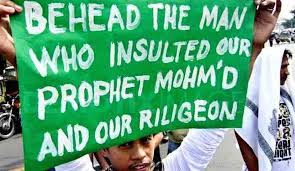
HALIFAX, Nova Scotia, January 23, 2015 – There is an epidemic of offense going around these days. Everyone, it seems, is offended by something or someone. Jesus advised his followers not to be offended by what he said, because he spoke the truth. Despite his warning, many were and still are offended.
The truth resonates in every soul, but most people have closed themselves off to it. They would rather keep believing their self-satisfying and self-protecting version of reality than accept even for an instant that maybe, just maybe, they might be wrong, or maybe they’re just taking themselves way too seriously.
Freedom of speech is a hard-won and precious right that is currently under attack in the free world. We shouldn’t throw away freedom of speech just because some people’s sensibilities are offended by insults to, say, their religion or confusion over their gender. As we see in scripture, the response of being offended arises in people who don’t want to hear the truth. They are presented with the truth, and they reject it. The offense isn’t because people are speaking the truth; the offense is because people don’t want to hear the truth.
There was a protest march yesterday in Sydney, Australia, AGAINST freedom of speech.
Let that sink in.
I’ll rephrase it, while you’re letting it sink in: Using their hard-fought and hard-won right to openly voice their opinions, a group of Australians protested against their hard-fought and hard-won right to openly voice their opinions.
You can’t make this stuff up.
The protest group was comprised of around 800 young Muslims, and the catalyst for this particular protest was the Charlie Hebdo cartoons of Mohammed. Trying their own hand at creating and promoting offensive material, some protesters displayed drawings of dogs urinating on the graves of the victims of the Charlie Hebdo massacre in Paris.
I don’t find either the Charlie Hebdo or the anti-Charlie Hebdo drawings offensive; I just find them childish and petty. If people took themselves less seriously, then maybe they’d share my opinion, which I suggest is a healthy and sustainable one.
I prefer to take Jesus’ advice and not be offended, as there really isn’t anything to be offended about. You shouldn’t find the truth offensive, and you shouldn’t find petty insults offensive.
THANK GOD, in free countries, people are still legally entitled both to hold and express their own opinions, whether in spoken, written or graphic form, however unsavory and downright ridiculous those opinions might be to others. There should be no limits to freedom of speech. Those who want to limit the expression of your opinions really just want to control you.
Don’t let them.
The moral of the story is: Go ahead and protest against the right to protest, if that’s what you want to do, but don’t be offended if I laugh at you. You’ve earned it.
The Mahdi = Antichrist

HALIFAX, Nova Scotia, January 23, 2015 – Everyone loves a hero. Everyone loves the rush of being caught up in the worship of someone who just seems to have it all – looks, money, talent, charm, intelligence, power, charisma – especially when that very special person swears that his entire purpose is to bring world peace and fulfill everyone’s deepest desires.
Who wouldn’t, I mean, WHO COULDN’T love such a person?
I remember feeling that heady rush of worship for David Cassidy when I was 8 years old and he was starring as “Keith” in the 1970’s sitcom “The Partridge Family”. I’m not sure if “Keith” ever specifically addressed the issue of world peace during any of the half-hour episodes, but I would nevertheless have followed him anywhere and done anything he asked of me. And I wasn’t alone in my worship of Keith. His female fans were (and still are) legion.
The Muslims have their own version of Keith Partridge in the figure of the Mahdi. The Mahdi is a political, military and spiritual leader who is prophesied to emerge in the end-times, rule over the entire world, and usher in an age of peace and plenty. He’s supposed to be charming, handsome, brave, generous, and kind.
And then there’s the Antichrist. In the New Testament, as well as in verses in Daniel, the Antichrist is described in terms similar to Keith Partridge (just kidding!) the anticipated Muslim hero. However, for born-agains, the prophesied Antichrist is no hero. In fact, he’s going to be our worst nightmare.
So what does all this have to do with the here and now?
As with all prophecies, whether real of fake, the Mahdi prophecy comes with a long-standing series of signposts and timelines indicating what to expect and when to expect it. I’m not going to get into the nitty-gritty of the prophecy, mainly because it contains elements that are highly contradictory, depending on which sect of adherents you ascribe to. Instead, I will present a brief overview of some features that are common to both the Mahdi and the Antichrist. I think you’ll agree, when you see these signposts and timelines, that something is definitely afoot in world events today, and we should remain alert.
The Mahdi is characterized as a leader who will first and foremost bring “peace” to the world. He’ll espouse a religion that all of the world’s people, regardless of their former beliefs, will accept and adhere to, and he’ll usher in an age of material wealth that extends to all people. His reign is expected to last around seven years.
Sounds kinda nice, doesn’t it?
Maybe too nice.
The Antichrist is also supposed to usher in seven years of world peace and plenty, but at the barrel of a gun. And those who don’t buy into his Keith Partridge act will be kissing their own heads good-bye.
To get a good idea of the Antichrist, think of him as being the polar opposite of Jesus. So, where Jesus was of humble birth, the Antichrist will arise from the ruling elite; where Jesus lived in subsistence-level poverty, the Antichrist will be stinking rich; where Jesus was not classically good-looking, the Antichrist will be handsome and sexy; where Jesus claimed his kingdom is “not of this world” (meaning, he’s Lord of the spiritual realm), the Antichrist will lay claim to the entire world and all the ‘stuff’ in it, including people; where Jesus predicates his teachings on truth (a.k.a. God), the Antichrist will promote lies; where Jesus invites us to worship God, leaving it up to us whether we accept his invitation, the Antichrist will force us to worship him as the supreme being; where Jesus defers to God in all things, the Antichrist will defer only to himself; and where Jesus leaves all decisions about spiritual and material life in our hands, respecting our God-given free will, the Antichrist will force us to do things, denying that we even have free will.
Seen in this context, is the Mahdi really just the Antichrist viewed through rose-colored glasses?
Absolutely. Yes. Without a doubt.
And here’s where the timeline gets particularly timely.
The Mahdi is supposed to appear soon after the Saudi King, Abdullah, dies (check), when Yemen is in political turmoil (check), and when brutally violent armies flying black flags overrun the Middle East (check, check, check).
According to Shiite hadiths (traditional prophecies), following “the death of a king named Abdullah in the Hijaz — a western region of present-day Saudi Arabia — no successor to the throne would be accepted, and disagreements would escalate and persist until the rise of Imam Mahdi…. Some believe that the rise of terrorist groups in the Levant, along with their black flags, is another sign of Mahdi’s resurrection…. Black flags can suggest the Islamic State, which is killing [tens of thousands] of innocent people in the region with brutality.”
The disturbing aspect to these prophecies is that while genuine Christians are dreading the coming of the Antichrist, Muslims are eagerly awaiting the Mahdi. In fact, they want to help him come to power.
One Muslim scholar, giddy as a school girl, recently stated: “Many [Muslim clerics] believe that the rise of Imam Mahdi is imminent. Even important figures in the seminary have expressed their hope for this event to happen and have called for our readiness to help him.”
If the Mahdi is the Antichrist, then we born-agains need to keep vigilant watch – not in eager anticipation to help him, like the Muslims, but in readiness to expose his lies and withstand his evil acts, even if he does come crooning “I Think I Love You.”
STOP TALKING ABOUT IT! Choosing to Forgive Means Not Talking About it Anymore

HALIFAX, Nova Scotia, January 22, 2015 – Christians are a funny bunch. They spend a lot of time in group hugs and “sharing” sessions, all the while lamenting what a rough time they’ve had at the hands of parents, spouses or acquaintances before they became Christians. They even sometimes go into gory details about their abusers, offering up their abuse stories for sympathy (I suppose), although they mask it as a learning or a teaching moment.
These stories aren’t teaching anyone anything except how NOT to choose to forgive.
When we choose to forgive, we should do the same thing as God does when he forgives – forget about it. Forgetting about it means to CONSCIOUSLY choose to put it to the back of our minds, even if it keeps popping up. It’s a decision of the will. It’s not a feeling (you won’t feel like forgetting and you may even feel like you can’t forget; that’s why it’s a decision, not an emotion-based response). Ask God to help you with this. He’s more than happy to help you. THAT’S WHAT HE’S THERE FOR.
If you truly want to forgive, don’t talk about people who’ve hurt you and whom you’ve chosen to forgive. Don’t talk about what they’ve done to you, however horrible it was and however deeply it scarred you. As a born-again, you’ve become a completely new person. God has forgiven you because you’ve chosen to forgive everyone who’s hurt you. Whatever people did to you in the past, pre-rebirth, is dead and done; whatever people are doing to you now, post-rebirth, is likewise dead and done after you’ve chosen to forgive them (which you should do as soon as you notice someone’s hurt you).
Here’s what you do when you choose to forgive: You simply act as if it never happened, you pray for your abusers, and you keep a safe distance from them. If people prod you to talk about your experience, tell them it’s over and you don’t want to talk about it anymore. If you feel it starting to overwhelm you, take your pain to God in private. He wants to counsel and comfort you. He’s your counselor and your comforter. Chances are pretty good that he’ll tell you what I’m telling you – if you want the pain to go away, choose to forgive and TOTALLY forget.
Imagine if God says he forgives us one day, and then turns around the next day and starts railing at us about things we did two years ago! That would be very confusing for us and also very un-Godlike. Once God forgives us for something, he forgives us that thing forever. We’re supposed to do things God’s way, as Jesus did, and as Jesus taught us to do.
Remember: “Forgive us our sins, as we forgive those who sin against us.”
Choosing to forgive also means choosing to forget.
God will help you with this. Just ask him. He loves you. He’s waiting. Ask him.
A True Fast: Giving Up Lent
HALIFAX, Nova Scotia, January 22, 2015 – For practicing Catholics, Lent is the time of year when, for 40 days and 40 nights prior to Easter Sunday, you “give up” or stop doing something you enjoy doing, such as watching TV or eating sweets. In many instances, the activity you give up for Lent is a ‘bad habit’ that you want to quit anyway, like smoking cigarettes or overeating.
Why, then, do you only temporarily ‘give up’ something that you shouldn’t be doing in the first place? What is the benefit of giving it up for only five and a half weeks?
When questioned about Lent, Catholics explain that they ‘give up’ things for a certain time every year because it is traditional to do so. They also cite the importance of self-restraint and self-sacrifice in developing good character. For Catholics, Lent is essentially just a symbolic gesture of self-restraint and sacrifice as well as a sign of obedience to the pope.
But what does God think of Lent?
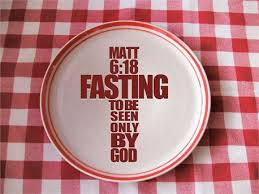
Not surprisingly, he’s not a fan. In Hosea, he states “I desire mercy, not sacrifice.” Jesus reiterates this position in Matthew, and Isaiah (58) explains in stark detail precisely what God means by fasting, including the consequences of ‘false’ and genuine fasting.
Jesus also advised us NOT to look like we’re fasting when we fast, stating that our fasting should be between us and God, and should not be announced or even visible to the world. This is similar to his advice to pray in private and to give alms (charity) anonymously by not letting your left hand know what your right hand is doing.
Lent is basically just a public display of piety. On Ash Wednesday, which is the beginning of the 40-day “Lenten season”, observant Catholics receive a cross-mark of ashes on their foreheads from the priest. This is supposed to represent, again symbolically, their repentance of, say, eating too many Snickers bars. The ashen cross also serves as a public declaration that for at least the next 40 days and nights, they’ll do their level best to abstain from eating Snickers bars (or smoking cigarettes or whatever). That the highly visible black smudge on the forehead goes against Jesus’ clear advice not to show the world that you’re fasting, should not be a surprise to anyone.
I have a real problem with Lent, just like I have a real problem with most things Catholic. My understanding is that Lent was initially supposed to represent the 40 days and 40 nights Jesus spent fasting in the desert prior to starting his Earthly ministry. During this time, he was tempted by the devil and overcame each temptation by a rebuttal based on the true interpretation of scripture.
The Catholic organization should take a page from Jesus’ book. He wasn’t out there in the desert to kick a bad habit or give something up for the sake of giving it up – he was being tested to show that even under circumstances of extreme physical and psychological duress, he was able to do God’s will, combat the devil’s insidious attacks, and withstand temptations with God’s help. He was using fasting as a form of training and preparation for the spiritual and physical rigors of his ministry work, which he could successfully accomplish only with God’s help.
Yes, I bolded those three little words so you can see what’s important here. Yet again, Jesus was showing us that we can do the seeming impossible (i.e., withstand and outsmart the very Devil, even though we’re nearing the end of our physical and mental reserves) with God’s help.
Jesus’ time in the desert wasn’t about self-sacrifice or any other kind of sacrifice. It was about leaning on God for all our needs, both physical and spiritual. In contrast, Lent focuses on self-sacrifice and leaning on one’s personal resolve to ‘give up’ something. This, I suppose, is meant to impress God in some way or win you spiritual brownie points, but I’m not buying it and scripture doesn’t support it. And it has nothing to do with Jesus’ time in the desert.
Fasts occur throughout the Old Testament. Typically, a fast is called in order to defer God’s wrath, such as when all the residents of Nineveh (including the cattle) successfully fasted to prevent the destruction of their city that was scheduled to occur within 40 days (see Jonah). Judaism also features specific fasting days, but they are at most a 24-hour period. A fast where you just randomly ‘give up’ something for 40 days and 40 nights has no basis in scripture at all, and is yet another example of what Jesus called “doctrines of man” masquerading as religion (which itself is a cheap knock-off of faith). Catholicism is mostly doctrines of man propped up on a base of demon worship, and Lent is its big red flag.
So what about fasting?
In this, as in everything else, we are to follow Jesus’ example and do God’s will. When God wants you to fast, he’ll not only let you know, he’ll give you the strength to do it. And it will be for a genuine purpose (like Jesus in the desert), not for some contrived hogwash like Lent.
Onward, Truth Soldiers!

HALIFAX, Nova Scotia, January 21, 2015 – One of Jesus’ best features was his quiet authority. He didn’t ask for notoriety; he cautioned nearly everyone he miraculously healed not to tell anyone what he’d done for them. He wasn’t looking for applause or approval; he was merely doing his job.
People listened to him and responded to him not because he was loud or demanded prime-time coverage, but because he spoke the truth, and truth resonates in all souls. Even the soldiers who came to arrest him (John 7: 45-46) were captivated by the truth he spoke, and attributed his ability to convey the truth as a sign that he was sent by God.
Every human being craves truth.
Some crave it openly; some crave it secretly; and some aren’t even aware they crave it, the lust for truth is so much a part of who they are.
Knowledge is not truth, because all knowledge (except that related to truth) is premised on assumptions and hypotheses, most of which are ultimately discredited. We only need to look to the history of scientific discoveries to see that.
In contrast:
- Truth cannot change.
- Truth is instantly recognizable.
- Truth feels like home.
But truth is not an abstract concept or a ‘thing’ – it’s a person.
Truth is God.
So when we speak the truth, we are speaking God’s language. When we search for the truth, we are searching for God. When we crave the truth above all else, we are craving God’s presence in our lives.
And when we fight for the truth, we are part of God’s eternal army of truth soldiers, the head of which is Jesus.
Never stop fighting. Never give up. Never surrender.
There is no life outside of truth.
Instead of asking “What is truth?”, Pilate (John 18:38) should have asked: “Who is truth?”
Then he would have gotten his answer:
God.
 A BORN-AGAIN BELIEVER