
Home » Christian (Page 18)
Category Archives: Christian
FLOATING THROUGH THE UNBELIEF

ANNAPOLIS ROYAL, Nova Scotia, April 19, 2022 – The world is a hostile place for believers. Everything we go through and experience, Jesus went through and experienced before us, including living in an unbelieving world. Yes, many people were slavishly religious (at least on the surface) in Jesus’ day, but there was precious little genuine faith, any more than there is today. Had there been genuine faith, more people would have known, by God’s Spirit, that Jesus was the Messiah. As it was, very few knew, and of those who claimed to know, some still doubted.
In fact, the conditions that Jesus lived under were uncannily like the conditions that Moses lived under, which were uncannily like the conditions that David lived under, which were uncannily like the conditions that Elijah lived under, and those which Isaiah lived under, and Paul lived under, and so on and so on, all the way up to now.
In other words, nothing much has changed spiritually in the world. The ratio of genuine believers to religious believers has remained pretty much stable over the millennia, with a few minor peaks and troughs. However, Jesus warned us that, at the very end of time, there would be a precipitous trough that would bottom out, never to rise again. Thank God we’re not there yet.
Thank God there’s still time.
But that’s not to say that believers don’t have a hard run of it these days. For the past several decades at least, across former Christian nations, fewer and fewer people identify as believers. That puts Christians in the minority in those nations. Of those who do identify as Christian, most have very little knowledge of the Bible or even of the Ten Commandments. They have a vague notion of the importance of being “charitable” or forgiving, but otherwise their lives resemble the lives of those in the world in nearly every regard – they marry, divorce, remarry, have children, get a job, get a mortgage, worry about money, worry about their kids, worry about their health, support the troops, etc. They may or may not attend church services, and if they do attend, they may or may not actually want to be there or to pay attention to the sermon. In fact, many claim to be Christian based solely on their weekly attendance at a church service. Otherwise, they live the life of the world, never wanting more.
Yes, I’m generalizing here, but my experience over the past few decades bears me out. Genuine born-again believers are a rare commodity, and even of those, few live their lives according to the example set by Jesus. Even sadder, very few express a desire to live like Jesus and his disciples. They dismiss that lifestyle as an historical relic that has no relevance in the 21st century. Walking away from your job and your family and everything that ties you to the world is crazy talk, right? Right?
Wrong. Jesus’ example of how to live and move through the world is as valid today as it was 2000 years ago. And just as he and his disciples were thought crazy for choosing to live as they did, we, too, are thought crazy – even by Christians – for believing that we should be living as Jesus did.
I’ve spent the better part of the past two years living in isolation out in the country for no other reason than I felt driven to be there. Now I feel driven to be back among the unwashed hordes. It’s been a culture shock of sorts. I’d forgotten how deeply anti-Christ mainstream Canadian society is. That’s not to say there aren’t pockets of light among the gloom. That’s not to say I haven’t encountered unusual kindnesses in unexpected places. But it still takes some getting used to that hotels don’t as a general rule put Bibles in the night tables anymore. It takes some getting used to that saying the name of Jesus in a public place draws sneers (and in some cases growls). It takes some getting used to that the only time God’s name comes out of most people’s mouths is as a curse. It takes some getting used to that crosswalks are now synonymous with multi-colors, even in the smallest of small towns.
This is the world. I was insulated from it for a while, and now I’m not. Even so, I feel like I’m moving through a parallel universe that is in the world but separate from it. No, thank you, I don’t drink. No, thank you, I don’t smoke. No, thank you, I don’t do drugs. No, thank you, I don’t date. Yes, I’m a Christian. I feel like I should get a card made up, like the gypsies in the Paris subway. I could flash the card to people so they’d know upfront who and what I am and could either dismiss or engage me. I’ve taken to wearing a simple gold cross necklace that may or may not have belonged to my great-grandmother (it’s passed through too many hands and stories to know for sure) as an identifier. Yes, I’m Christian. Yes, I really am a Christian. Yes, I believe that how Jesus lived is how his followers should live. No, thank you, I don’t date.
The world is a hostile place for believers. It might even be ever so slightly more hostile to female believers. Certainly, the Marys in scripture were perpetually getting psychologically back-handed by the male disciples. Jesus had to defend them on more than one occasion. True to his promise and true to form, Jesus is right here with me now through God’s Holy Spirit, protecting me as he protected the Marys. I never feel alone or vulnerable. The world may be hostile, but the Kingdom wraps around me like a warm and soft bubble with the toughest of outer sheaths. Nothing evil can penetrate as long as I, like Jesus, remain loyal to God.
IN TIME OF WAR
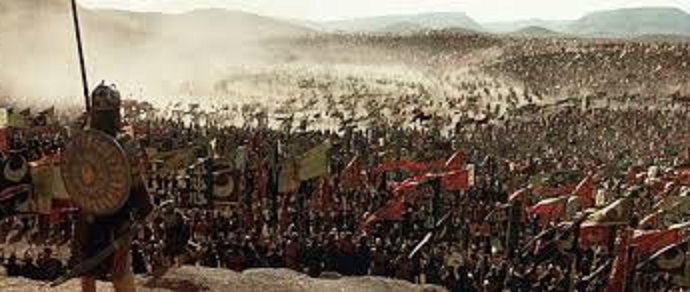
ANNAPOLIS ROYAL, Nova Scotia, April 19, 2022 – As the world prepares once more for war, as sides are chosen and alliances formed, we need to remember who we are, what we stand for, why we’re here, and who has our loyalty.
In case you’ve forgotten, we’re followers of Jesus, we stand for God’s Truth, we’re here to preach and teach the Word and to do whatever God guides us to do, and God alone has all our loyalty.
God alone has all our loyalty, as it was for Jesus.
These facts are indisputable and non-negotiable.
*****
We do not choose sides in a war. We have the God-given right to abstain from choosing sides.
We do not kill, we do not injure, we do not support one side over the other.
We do not point fingers. We do not hate or kill our enemies.
We love them.
Even if it means we have to die ourselves for them, we love our enemies. That is a commandment from Jesus, which means it comes straight from God. There are no exceptions to God’s commandments, not under any circumstances.
*****
We do not take sides.
We do not pick up weapons to hurt or kill.
We do not support those who hurt or kill.
We do not hurt or kill in self-defence or in defence of our loved ones or property.
Our weapons are for deterrence only.
We do not hurt or kill.
*****
As the world once again turns to war, we need to remember who we are.
We are NOT the world.
We are the Kingdom.
THE ANNUAL PURGE

ANNAPOLIS ROYAL, Nova Scotia, April 16, 2022 – Once again, we born-again believers are tasked with throwing caution and all leavened products to the wind in our annual fridge and cupboard purge. It doesn’t matter if the bread’s still good or the crackers are still crunchy – if they’ve got leavening in them, out they go.
Some people are real sticklers about leaven and leavening agents. My understanding of scripture is that the leaven that’s verboten during the Feast of Unleavened Bread is the slow-acting type used to make dough rise. The Hebrews were so hasty in their departure from Egypt, they had no time to let their dough rise before leaving, which meant they later had to bake unleavened bread. Leaven requires time to work its magic, but the Hebrews didn’t have the luxury of time. When we choose to celebrate the Feast of Unleavened Bread for a week, as commanded us by God, we honor the memory of our spiritual forefathers. We remember and celebrate the miracles that got them their freedom at the very small cost of having to eat unleavened flat bread until the flour ran out.
Then they ate manna for 40 years.
The spiritual concept of leaving in haste is built-in to being a believer. You don’t do things in your time; you do them in God’s time. And God’s time can be any time, which is why you should always be ready to leave at the drop of a hat – to always have (as scripture describes) your loins girded, your staff in your hand, and your shoes on your feet. That’s how you’re to eat the the Passover meal and that’s also pretty much how you should be going through life as a born-again believer. We no longer do things because we want to do them our way and in our time; we do things because God advises or commands us to do them, in his way and in his time. And often his time is in haste.
We also have the option not to live that way. We have a free-will right to hunker down when we want to and disobey God. We can prep 10 years worth of food and supplies and refuse to budge in our mortgaged house, even as the waters start rising all around us. We can still choose the world’s way. But if we do, it won’t turn out well for us in the end. That’s a guarantee.
God intervened in the Hebrews’ sufferings and sprung them from their Egyptian prison in answer to their prayers. In return, they took on a life of wandering and relative hardship, but they never went hungry and all their basic needs were met as long as they stayed the course. Those who didn’t stay the course were unceremoniously removed from the collective.
The same is going on with us born-again believers. Through rebirth, God sprung us from our spiritual prison where Satan was our overlord. In return, he placed us in the spiritual realm of the Kingdom, outside the spiritual reach of the world. He’s given us all jobs to do and rules to follow, and he amply provides for us, as long as we stay our allotted course. If we don’t, the same thing will happen to us as happened to the children of Israel who rebelled against God.
I don’t know about you, but I think giving up leavened products for a week and purging your home of leaven is a small price to pay for everything God does for us – both those things we know about and the things we don’t. Getting rid of leaven is a timely reminder that when God moves in our lives, it’s usually unexpected and requires of us that we be ready to move IN HASTE, sometimes at just a moment’s notice. When that happens, don’t expect to be able to take anything with you but the clothes on your back and what you can easily carry in your hands.
As always, God will provide for your needs. He always provides for his children.
No matter how insanely impossible it looks, God will provide.
When has he not?
LEAVING JESUS
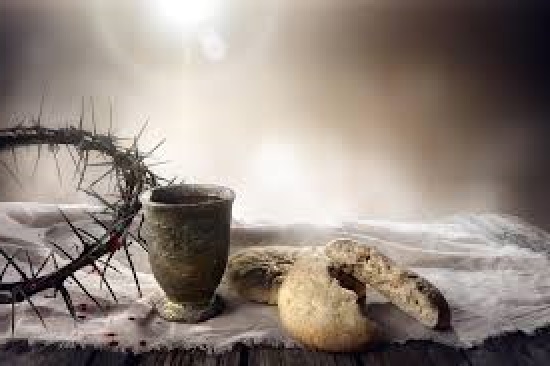
ANNAPOLIS ROYAL, Nova Scotia, April 15, 2022 – As born-again believers, we can only imagine the shame the disciples felt when they realized they’d left Jesus all alone to face the soldiers and certain death. Peter in particular, after boasting he’d rather die than desert Jesus, must have felt like dying. But Jesus was undeterred: He knew beforehand that all his followers would leave him, and so he’d prepared himself accordingly.
He didn’t blame them; he had compassion on them, knowing their weaknesses.
And he forgave them.
Tonight at midnight marks the anniversary of when all of Jesus’ disciples deserted him. The spirit of fear is a powerful force that can make you do things you hadn’t expected you’d do. For instance, God gives women that charming involuntary response of a loud piercing scream whenever they encounter something that makes them unexpectedly afraid. It’s a defense mechanism. I’ve experienced that involuntary defense mechanism myself on occasion: The scream rips out of you before you can stop it. It’s like a reflex.
I think the disciples’ desertion of Jesus all those years ago was also like a reflex. They vamoosed before they realized what they were doing; maybe they even thought at first that Jesus had vamoosed with them.
But Jesus hadn’t vamoosed. He’d stood his ground, completely immune to the fear reflex. No scream escaped his lips. He went to his crucifixion willingly. He even took a moment to lecture one of his followers on the right way to treat others, including the soldiers who were arresting him. As the storm of evil whipped and howled around him, Jesus stood in the eye of it, calm and unflappable.
**********
We are to celebrate Passover as Jesus taught us to celebrate it, in memory of him.
Tonight is Passover.
We are to purge our homes of yeast, as Moses taught us to do. The Feast of Unleavened Bread is the continuum of the Passover feast. We’re to purge our homes of leavened bread and other leavened products because God said to keep this feast for all time. That means it’s ongoing until the end of time. We’re not at the end of time yet, so we keep the Feast of Unleavened Bread. We keep keeping it, because we are the spiritual offspring of the children of Israel, and the children of Israel must keep the Feast of Unleavened Bread for all time. That is a scriptural command straight from God.
If you haven’t yet done so, now is a good time to identify anything in your cupboards or fridge that has yeast in it, and throw it out. Better still, instead of throwing it out, give it to the birds. Don’t give it to people – give it to the birds. Don’t poke it away for later – give it to the birds. But get it out of your house.
That is a command from God.
We’re to celebrate the Feast of Unleavened Bread just as we’re to celebrate the Passover.
The Passover is tonight, and the Feast of Unleavened Bread continues where the Passover lets off and goes for seven days. The Passover is a reminder of God’s supernatural protection of his people, and the Feast of Unleavened Bread is a celebration of the Hebrews being sprung from slavery. Their freedom came so quickly and unexpectedly, they didn’t even have the chance to leaven their bread dough. They had to vamoose with unleavened dough. Jesus tells us we should live our lives with loins girded and shoes on our feet, always ready to leave at a moment’s notice with little more than the clothes on our back. That’s how the Hebrews left Egypt; that’s how Jesus’ parents left with him when they fled Herod’s murderous decree; and that’s how the early Christians lived: Always ready to leave at a moment’s notice.
These feasts are not optional: they are a command.
Jesus told us to celebrate the Passover – not Easter, not Good Friday, not the Last Supper – Passover.
Passover is tonight.
We celebrate the Passover the way Jesus showed us to, and we keep the Feast of Unleavened Bread for the following seven days.
We do this because we’ve been told to do it.
We do this because man does not live by bread alone, but by every word that comes from the mouth of God.
Jesus told us to do it and Moses told us to do it, which means that God told us to do it.
I hope you enjoy your Passover celebrations tonight and that you purge your home of leavened bread for the next week.
Blessings will follow if you keep God’s commands.
Curses will follow if you don’t.
WHAT IS THE RIGHT WAY TO FAST?

MEADOWVILLE, Pictou County, Nova Scotia, April 2, 2022 – As Passover once again approaches, and with it the ceremony that Jesus asked us to do in memory of him, fasting assumes a more important role than at other times of the year. When asked why his disciples didn’t fast like John the Baptist’s, Jesus said that while the bridegroom was with them, they had no need to fast, but when the bridegroom would be taken away, then they should fast.
So while fasting is not something we should neglect as born-again believers, it’s also not something we should rush into on a whim. As with everything else we do, we should first wait for the green light from God, and then we should fast for the right reason and in the right way.
But what is the right way to fast?
In Isaiah 58: 5-11, we learn the right reason for fasting and also the right way to do it.
If you break the passage down, you see that fasting isn’t about abstaining from food, but abstaining from evil. It’s about disciplining your soul, not your body. It’s about choosing to do what’s good and right in God’s eyes, rather than what’s good and right in the eyes of the world.
This is the fast that has value to God – to fast from doing evil, which Jesus so aptly summed up as treating all others as we’d want to be treated.
And just look at the rewards you get for doing it!
“Thy light shall break forth as the morning”
“Thine health shall spring forth speedily”
“Then shalt thou call, and the Lord shall answer”
“Thou shalt cry, and he shall say, Here I am”
“And thy darkness be as the noonday”
“And the Lord shall guide thee continually”
“And thou shalt be like a spring of water, whose waters fail not”.
I don’t know about you, but I’d rather have even just one of those rewards than all the money or accolades or pleasures in the world. To have God’s Holy Spirit like a spring continually welling up inside of you, with the joy and insight that brings – nothing on Earth can rival that. To have God’s protection, to have his constant presence, to have his guidance, to have our worst moments be no darker spiritually than noonday (that is to say, not dark at all) – there is nothing on Earth better than that, and all we have to do to earn those rewards is to spend at least $250 before tax in a single purchase (not to be combined with any other offer) – KIDDING!
All we have to do to earn the only rewards that have any real value in this life is to fast from doing evil.
Well, you say, I don’t do evil. Where are my rewards?
And here’s where it gets tricky for us mere mortals.
Very few people like to think of themselves as doing evil. And yet God in the Isaiah passage above is very clear about what he considers as doing evil – accusing people, whether falsely or otherwise; pointing people out as doing this or that or the other thing wrong; standing in judgement of someone; having the ability to help someone who’s come to you for help, but making excuses why you won’t do it; gossiping; and being rude and mean-spirited, either outright or in your heart. For many people, this is all in a day’s work, and yet to God, it’s evil.
Jesus taught us that we have to be careful about what comes of our mouth, as what comes out of our mouth reveals what’s in our heart.
I guess we should start first with giving our heart a good scrubbing, and then we won’t have to worry so much about what comes out of our mouth.
This is why the desire and necessity to fast from doing evil is so important for us born-again believers. It’s like renewing our rebirth state. Remember the passage where Jesus tells his disciples that certain demons can only be cast out by prayer and fasting? I’m pretty sure the kind of fasting he meant was the Isaiah kind of fasting, not fasting from food. The Pharisees and Sadducees fasted all the time, yet I doubt they would have been able to cast out demons the way Jesus did. Jesus cast them out by the power of God’s Holy Spirit, and we know the Spirit only works through those who have a clean heart, those who, in other words, fast from doing evil.
I hope that, before Passover, you seriously consider doing an Isaiah kind of fast rather than a Pharisee or Sadducee one. I hope you scrub your heart right down to the rebirth state and enjoy all the rewards that come with a more powerful presence of God’s Spirit, because that’s what Isaiah is describing. Fasting from doing evil brings you back into alignment with God, just like sincere repentance and spiritual rebirth do.
We need to realign periodically. God will let us know when.
There is no greater joy than living fully in God’s presence.
Fasting from doing evil will get you there.
WAVES

MEADOWVILLE, Pictou County, Nova Scotia, March 20, 2022 – Once upon a time, when I was not yet a teen, my family moved from the city to a new subdivision in a small fishing village. The village was quite insular and the locals didn’t take kindly to outsiders, even those who had just come from 20 miles away. But among the insular villagers were two teenage boys – identical twins – who had been adopted by an older couple in the village. Like us, the twins were “outsiders”, and maybe for that reason they had taken on the role of the village’s unofficial good-will ambassadors. Their job was to smile and wave at every car that drove by, whether or not they knew the car’s occupants.
We quickly learned that our job was to smile and wave back.
Down the ages, I can still see those two boys waving.
Paradoxically a greeting and a farewell, waving is the universal gesture for both hello and good-bye. We usually reserve our waves for people we know, but sometimes we spread them around to strangers, like candy flung from a parade float.
I was taught, as a child, to wave at trains and departing ships, whether or not I knew anyone on them. I still do it. Yes, I’m that random person standing on the overpass or the dock, waving and smiling my fool head off. That’s me; guilty as charged. Sometimes someone smiles and waves back at me, and for a second we connect without touching or even knowing each other.
I mention the waving thing because, as some of you may know, I’m currently living on a former farm in rural Nova Scotia. It has a 100-foot driveway that gets professionally plowed when it snows, but the plow driver doesn’t have sufficiently delicate equipment to plow out the mailbox at the end of the driveway. I have to clear that myself with a shovel, or the mailman won’t deliver the mail.
We got a lot of snow this winter, so I’ve been spending a lot of time at the end of the driveway fussing over the mailbox. While I’m down there, I’ve taken to waving at passing vehicles. I’m not sure how that started; maybe the drivers were waving at me first, like people in the country tend to do, but it’s now developed into a full-blown wave-a-thon. My initial shy wave-like-the-queen tight little hand quiver has blossomed into a NASCAR start-and-finish-line full-body shout-out, which rewards me not only with smiles and waves in return, but also the occasional honk.
I know none of these people who drive by, and none of them know me. And yet there we are, smiling and waving at each other like the best of friends. And for the briefest of seconds, we are.
I’m not sure what kind of biochemical reaction occurs when strangers wave to each other. Maybe on a scale of 1 to 10, it spikes briefly at 7 or higher on the pleasure scale, but there’s definitely a spike. Otherwise people wouldn’t do it. There’s probably also an electromagnetic connection, with the energy from the connecting bodies interacting through invisible waves. Of course, I’m only making this up (I’m not a science nerd), but yet I’m not entirely unconvinced that the biochemical response produced by the physical waving and smiling induces electromagnetic waves that literally reach out and invisibly touch each other. I’m not unconvinced that that is actually what is going on when I’m waving my fool arm off to strangers and they wave back.
Waving is a natural booster. (No needles required!)
When Jesus healed people’s illnesses, he reached out and touched them. Sometimes the touching was hands-on, and sometimes it was done from a distance, but it always involved the gesture of reaching out – the people who wanted healing reached out to Jesus, and Jesus responded by reaching out to them. The reaching out was a form of stylized waving, or is waving a form of stylized reaching out? I’m not sure which way it goes. It sounds like a conundrum along the lines of what-came-first-the-chicken-or-the-egg? And like a conundrum, it’s not really meant to be solved, just mulled over.
I learned to wave at strangers long before I was born-again. It was handed down to me from my older relatives, like my wavy hair was handed down. It was inescapable. I can imagine my older relatives had learned to wave from their older relatives, just like all the strangers who wave at me likely learned to wave from their older relatives. Down the ages, we reach out in waves and briefly connect in waves, even just for a millisecond.
Sometimes that’s all it takes to heal someone’s day.

THE GIFT OF LIKE

MEADOWVILLE, Pictou County, Nova Scotia, March 19, 2022 – Jesus’ one command to us, his followers, is to love our enemies.
Thank God he didn’t command us to like them.
That Jesus commanded us to love rather than to like is a very important distinction.
You can love someone without liking them. In other words, you don’t have to like someone to keep Jesus’ command to love them.
The world today is premised on likes. We see that now especially in social media, but it pervades every aspect of the world. Likes are in fact the realm of the world and are based on conformism to a specific ideal. They are also heavily weighted and guided by fleeting and superficial “feels”.
Love, on the other hand, can be surprisingly devoid of feelings. You don’t need to feel love in order to do love. Jesus taught us that loving is less a feeling and more a doing – you love your enemies not by liking them, but by praying for them and doing good to them, even as they curse you.
I have found it helpful, over the years, to remind myself of the distinction between liking and loving. It’s been particularly helpful over the last two years, when I’ve been stigmatized and exiled from society not for something I did, but for something I wouldn’t do (cover my face and inject drugs). I despise many of the values that now prevail in Western society. I despise and reject those values, but I don’t despise and reject the people who hold them. I don’t particularly like those people and I wouldn’t want to spend time with them (unless they, on their own volition, wanted to spend time with me), but I don’t despise them. The command is to love them, regardless of my personal feelings towards them.
Even so, I would never tell them that I love them according to Jesus’ command and that I’m praying for them. My words would be unwelcome. If they outright asked for my prayers, I would unhesitatingly tell them that they have them. But otherwise, I pray for them in secret, like Jesus taught us to do.
Knowing the difference between liking and loving and using that knowledge as the basis for how we interact with the world is crucial to living in the Kingdom. We cannot survive as born-again believers – or even call ourselves Christian – unless we love our enemies. But at the same time, we cannot in most cases love our enemies unless we also understand that we don’t have to like them.
Jesus’ command was not to like but to love. Again, it’s a COMMAND, not a suggestion. And like the other Ten Commandments, it has no asterisks after it, meaning there are no exceptions to the rule. No matter what people say, no matter what they believe or how they live their lives, no matter what side of the military or political or social battle they fight on, and no matter how they treat you or those you actually do like – you are commanded to love them, which means you are commanded to pray for them and do good to them. And because they will likely reject whatever good you would do to them, you need to do your loving of them in secret, without their knowledge and without fanfare.
As I mentioned at the outset, I thank God that I only have to love my enemies rather than to like them. But I find that the more I pray for and bless them, the softer my feelings grow towards them (although I would never show those feelings to them, because they would be unwelcome). The softening of my feelings is the presence of God’s Holy Spirit working through my obedience to God. The Spirit doesn’t work through fake like or love, only through genuine submission of the will.
Like Jesus, I submit to no-one but to God. God alone has my heart, and I willingly give him my will as well. And also like Jesus, I don’t have to give God my heart or my will – I’m not forced to do it; no-one’s forcing me: it’s something I choose to do. I have the capacity to do it and I choose to do it. There is no forcing going on.
When we do that, when we willingly put everything we have and everything we are into God’s hands, he can work through us. He can’t (that is to say, he won’t) work through us if we fake it; he’ll only work through us if we’re genuine in our submission to him.
Submitting to God means keeping his Commandments.
Loving our enemies is a choice we make; coming to like them is a gift from God.
SPIRITUAL VALUE

MEADOWVILLE, Pictou County, Nova Scotia, March 9, 2022 – I have to tread lightly with this topic so that my words of encouragement aren’t interpreted as condemnation. This is not condemnation. This is encouragement.
We all have a spiritual value. We are all equally loved by God, but we all have a different spiritual value that is expressed as a score. Some of us have a high value, some of us have a low value, and the rest of us have something somewhere in between. We can’t avoid having a spiritual value score. It can change depending on a wide range of factors, but none of us can opt out of having one. It’s calculated automatically in the spiritual realm and is perpetually being updated.
The world also assigns its own forms of valuation in the form of scores. China is leading the way in assigning a social credit score to each of its citizens, while the rest of the world, for the time being, only assigns evaluations such as credit and academic scores. Social media is rife with scores. When I was growing up, men assigned women a value out of 10 as a form of appraisal. (I think many men still do that.) We’re also assigned number valuations in the form of age, income, height, weight, vision acuity, etc., and scores on our various abilities and disabilities, including athletic achievements. Our intelligence is expressed numerically. All of these features are given a value that is almost always a number, so that eventually, in the eyes of the world, we become little more than a collection of numbers that hang off us like so many price tags fluttering in the appraisal breeze.
As born-again believers, we know that our worldly evaluation is unimportant. What people or worldly entities think of us is irrelevant. Our only concern should be our evaluation in the spiritual realm, so our spiritual value score is the one we should constantly work to increase. Counter-intuitively, however, we increase our spiritual value score not by focusing on it, but by focusing on God and his righteousness.
Again, I need to stress here that spiritual evaluation is not meant to discourage you. There is no need to be discouraged. Your spiritual value is in your hands. You determine what it is by the choices you make and by the words and images you choose to entertain within your own mind and to share with others. Unlike with worldly scores, your spiritual value score is not downgraded for failing to accomplish a particular task. In fact, sometimes our failures give us the biggest boost in spiritual valuation, because it’s not necessarily in the winning that we win, but in our sincere desire to do what’s right in God’s eyes.
In Old Testament times, there were hundreds of laws that the faithful followed in order to stay in God’s good graces, as directed by Moses. But we’re currently in New Testament times. Beyond the Ten Commandments, we no longer need to adhere to the Mosaic laundry list of to-do’s regarding purification, ritual, and sacrifice. Jesus took care of all that once and for all time by his sacrifice on the cross. But we do still need to stay in God’s good graces. We can’t go to Heaven otherwise.
So how do we raise our spiritual value score? This is a question we need to ask ourselves because we should always be aiming to raise our score, no matter how high we may think it is. We can’t know our score (only God and those he designates to know can know it); we can only guess our score, and we can definitely guess wrongly. Think of the parable of the sheep and goats. In the parable, Jesus divided them into going to Heaven and not going to Heaven. The goats he dealt with first, telling them they hadn’t made the cut and informing them why. They were shocked that they’d been condemned not based on things they’d done, but on things they hadn’t done. The sheep were also surprised to find that they were justified based on things they’d done without realizing they had even done them.
And that’s my point – we don’t raise our spiritual value score by checking off a laundry list of “to do’s”, like in Old Testament times. We don’t go out looking for people to help; we help whoever God brings to us to help. This is a critical difference. The sheep who were justified did all the right things in God’s eyes without realizing it; they just simply and quietly went about their lives righteously. The goats, on the other hand, ignored the cries for help of those God brought to them, and as such lived unrighteous lives. Even if they’d checked off every box of the Old Testament laundry list of laws, the goats would still have ended up condemned, because they chose not to help those God put in their path to help. Think of it as the Good Samaritan law that we’re all bound by and that’s encapsulated in the Ten Commandments and in Jesus’ command to love our enemies. There are no asterisks (*) in any of those commands denoting exceptions under special circumstances. That includes war.
I don’t know about you, but I want my spiritual value score to be as high as it possibly can be during my time on Earth. I know I’m responsible for it: My score is 100% my doing. I know it doesn’t go up by my checking off a laundry list of to-do’s, but by living righteously in God’s eyes. Whoever he sends to me to help, I help. Whoever he sends to me to forgive, I forgive. Whoever he sends to me to slap upside the head, I slap upside the head, but lovingly, so as not to discourage them. This is how Jesus lived and moved through the world, and this is how we’re to live and move.
I can only imagine how high Jesus’ spiritual value score was during his time on Earth. None of us can ever achieve that, but we can still aim for it.
WHY DID JESUS GO INTO THE DESERT FOR 40 DAYS AND NIGHTS?

MEADOWVILLE, Pictou County, Nova Scotia, March 8, 2022 – Time, as the adage goes, heals all wounds. The passage of time – one tick-tock after another in steady, constant procession – also has the capacity to change one’s focus. Sometimes the best approach to conflict is simply to wait it out, to wait for the anger and emotion to fizzle out, to sleep it off.
In nearly every case, things do look better in the morning.
The two aspirins and a good night’s sleep are in fact all you’ll need to feel better.
But what underlies these changes and apparent miracle healings is time and the things that move and change under the surface and behind the scenes where you don’t (and can’t) see them.
Forty days and nights is a sizeable chunk of time. Throughout scripture, we read time and time again of the 40 day and 40 night timeframe. The rains lasted 40 days and nights during the flood, Moses spent 40 days and nights on the mountain with God, learning the Law and the laws. As well as spending 40 days and nights in the wilderness prior to starting his ministry, Jesus ended his ministry with the same timeframe, appearing 40 days and nights to his disciples and followers after his resurrection and before his ascension.
But why 40? What is so special about 40 days and nights?
I don’t know the answer to those questions. What I do know is what can happen to a human body over a 40-day period. It can change without trying to change. It can survive without food without dying.
It can change without trying and survive without food. I read somewhere that the average time a human can survive without food is 42 days. Jesus, after 40 days without eating, would have been emaciated but still functional. But why do this to yourself? What would be the purpose of fasting nearly to the point of death?
The advantages of fasting are well-known. They include physical as well as mental/spiritual/emotional benefits. I would suggest that one of the main reasons Jesus fasted for 40 days and nights was to gain an extremity of those benefits, and that the reason he went into the desert to do the fast was to change without trying to change. He let the isolation factor of the wilderness and the passage of time change him rather than trying to change himself.
Isolation brings you face-to-face with yourself. It also – and more importantly – brings you face-to-face with God, like Moses on the mountain. Full disclosure here: I have never fasted for 40 days and nights in a wilderness setting, mainly because I haven’t been “driven” to do so, as scripture says Jesus was. So I don’t know what happened to Jesus’ sinless mindset during that time, but it obviously was to his benefit and to ours.
From a purely practical perspective, Jesus left the Martha work (his carpentry) and the cares of the world behind. When your days and nights are not filled with your own and other people’s expectations of what you should or should not be doing, a massive amount of time and spiritual space frees up. It’s like in spring, when you open the doors and windows again to let in the fresh cool air after months of trying to keep it out, only instead of just opening the doors and windows, you also take off the roof and knock down the walls. All you have left is the floor beneath your feet, so you can walk and sit and lie down. You could even dispense with the floor, if you wanted to, and just use the ground.
This is what Jesus did. He walked and sat and slept and on the ground for 40 days and nights – no walls, no windows, no roof, and not even a floor. He had no daily rounds or tasks or carpentry orders. He didn’t have to prepare meals, or eat them, or clean up afterwards. He didn’t have to do laundry or make his bed. He didn’t have to make small talk. He didn’t have to solve people’s problems for them. He didn’t have to listen to local gossip or stay caught up on the latest news. He didn’t have to care about the cares of the world. Simply by relocating himself to the wilderness in isolation, all of the cares fell away. They left him as much as he left them. It was a mutual parting.
From a spiritual perspective, I can only speculate how the isolation and the fasting and the passage of time interplayed with Jesus’ one-on-one with himself and with God. But I get excited thinking about it. It’s like Jesus the caterpillar carpenter entered the pupal stage and emerged after 40 days and nights as the most beautiful of all spiritual butterflies. And all he had to do was to do nothing but be with God.
We ourselves may or may not someday be driven into the wilderness like Jesus. It may or may not be for 40 days and nights; it may or may not involve fasting from food. Each of us is different and has a different relationship with God. Jesus is our example, but we’re not cut-out dolls of him. We are, each of us, unique before God.
What Jesus had to do was very specific to his role in the Kingdom, just as what we have to do is specific to our role in the Kingdom. We follow Jesus’ example, but we don’t mimic him. We don’t go 40 days and nights without food because he did. We don’t wear a crown of thorns and carry a cross around because he did. We are unique before God. What Jesus had to do was between him and God, just as what we have to do is between us and God.
Even so, the benefits of fasting for a prolonged period of time were clearly demonstrated by Jesus. By “fasting” I don’t just mean fasting from food. It could be fasting from anything that takes you away from your focus on God and from doing his will. Time has a way of changing us without our trying to change ourselves. If you remove yourself from the influence of the world and open yourself to God by throwing open your spiritual windows and doors and knocking down your spiritual walls and roof – something amazing happens.
That’s a guarantee.
And then, when time is up and the fast is over, you take that amazingness back to the world, like Jesus did. You shed the caterpillar fluff, like Jesus did, and you get your wings.
CHRISTIANS DON’T CHOOSE SIDES

MEADOWVILLE, Pictou County, Nova Scotia, February 26, 2022 – Just a timely reminder that Christians don’t choose sides in a war.
Also a timely reminder that Christians don’t fight in a war or in any way support a war.
We are to treat all people as equal before God and all people as loved by God.
We are to love and pray for those who hate and oppose us in the same measure as we’re to love and pray for those who love us.
You don’t kill or malign those you love.
__________
If you choose a side in a war, you are not following Jesus, you’re following the world.
Even Jesus, in his occupied country, didn’t favor his people over the occupying Romans.
Just a timely reminder, because Satan is working overtime to get God’s people to fall for the war propaganda.
Don’t be tempted into hating or supporting one people over another.
Don’t be fooled.
__________
Love all equally. We are all made in God’s image and all equally loved by God.
Remember how kind Jesus was even to Judas Iscariot, knowing full well who Judas was.
That is our model of how to treat people: love all, without exception.
That is our job description.
And that is how we differ from the world.
 A BORN-AGAIN BELIEVER