
CHARLO, New Brunswick, February 8, 2024 – When Jesus advised us to pick up our cross daily, he didn’t mean what most people today think he meant. The cross Jesus was talking about isn’t what most of us envision when we think of a cross. During the heyday of the Roman Empire, a cross was simply the crossbar that was used in crucifixions; it was a large and heavy piece of wood that was affixed crossways to a tree or pole, which is why it was called a cross. The cross was separate from the tree or pole and was fastened to either one or the other during a crucifixion and then removed after the prisoner was dead. The cross would then be reused for the next crucifixion, as would the tree or pole. The cross was mobile; the tree and pole weren’t.
So when Jesus told us we should pick up our cross daily, he was referring to that large and heavy mobile straight piece of wood that was intended to be carried by the condemned to the execution site, where it would then be affixed to a tree or pole and the prisoner hung on it with cords or nails until he or she died.
The structure that was temporarily formed from these two separate pieces of wood was not called a cross in Jesus’ day; only the crossbar was called a cross. At some point, the entire structure took on the name of the cross and became symbolic of Jesus and Christianity. I’m not sure this has been to our benefit, for the following reason.
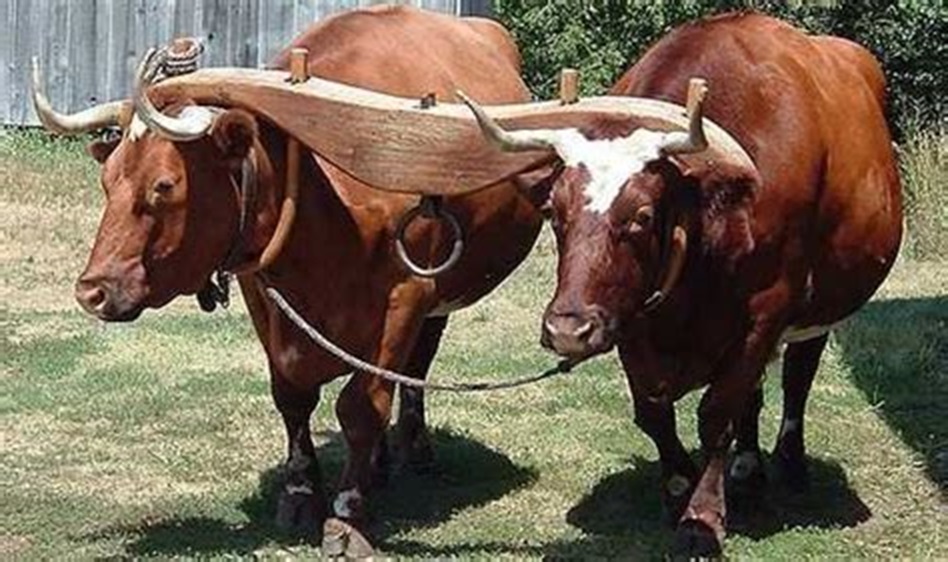
If you’ll recall, along with picking up and carrying our cross daily, Jesus also invited us to take his yoke upon us. What he meant was that we should yoke ourselves to him, like cattle are yoked together, two by two, in a team. He said that the burden of his yoke would be easy and light. Like the cross reference, the yoke reference would have been readily understood by his contemporary audience. These references aren’t quite as well understood today, mainly because we don’t often see cattle yoked together and working in a field anymore, but also because of the confusion caused by what was meant by a cross in Jesus’ day and what is meant by a cross today.
I don’t know about you, but the yoke reference made a lot more sense to me after I found out what a cross was in ancient Roman times. I could envision the two different pieces of wood being used interchangeably as a metaphor, and I think that’s what Jesus was aiming for when he talked about the cross and the yoke. In both cases, whether we’re labouring under a crossbar or a yoke, we’re labouring side-by-side with Jesus, we’re following along next to him in his footsteps and he’s helping us carry our burden. He’s gently showing us what to do next and how to do it, and he’s quietly encouraging us every step of the way. As followers and disciples of Jesus, we’re working in tandem with him; we’re not working with other people: We’re working with Jesus.
Sometimes we’re plowing. Sometimes we’re harvesting. And sometimes we’re being driven to the slaughterhouse or to a place of sacrifice. But regardless of the type of task, test, or temptation we’ve been given, Jesus is always right there next to us, carrying the lion’s share of the load. We can be absolutely sure of this because he told us he would be doing just that.
And I don’t know about you, but I can’t think of anyone I would rather be yoked together with in my labours daily than Jesus.
 A BORN-AGAIN BELIEVER