
HEAR, O ISRAEL!
The Lord our God is one Lord:
And thou shalt love the Lord thy God with all thine heart, and with all thy soul, and with all thy might.
HALIFAX, Nova Scotia, September 1, 2025 – As many of you know, I came to belief in God and in his Messiah, Jesus, directly from atheism. I didn’t meander down a long and twisted path of “Is he?” or “Isn’t he?”, trying to apply logic and deductive reasoning to the existence of God and by extension to the messiahship of Jesus. You can’t logic your way into genuine belief, as your belief exists prior to knowing you believe. In other words, I believed before I knew I believed, because my belief in God came from God, not from me. Genuine belief is placed in us as a measure of God’s Holy Spirit; it isn’t generated by us. Genuine belief comes from God and is God.
You can’t genuinely believe in God based solely on logic and reasoning. You can only genuinely believe in God if God is working through you, by his Holy Spirit. So when I went from unbelief to belief in under a second, it wasn’t my doing. It was God’s doing. All I did was choose to forgive, and God did the rest.
Which brings me to the topic of today’s discussion, which is God, and by extension his Messiah, Jesus. These are two distinct beings, with God being God and Jesus being the Messiah. God is Lord over everything and everyone, and Jesus is Lord over those areas and beings God designates Jesus to have lordship. They are two distinct beings with different and in some cases overlapping jurisdictions, but in the cases of overlap, God still has ascendancy, as Jesus pointed out when he stated: The Father is greater than I.
God’s Holy Spirit is God manifesting in time and space. The Old Testament prophets well knew this, as should we. When the Holy of Holies was built as the inner sanctum within the temple, according to God’s specifications, the Holy of Holies was meant for God to come to visit his people on designated days or sometimes to show up unannounced. It wasn’t meant for a “lesser” spirit that was tapped by God to represent him. It was built for God himself to descend to the temple in Spirit form, as he was and is wont to do when he interacts with earthly beings (not just humans). God had previously descended in Spirit form on numerous occasions in the tabernacle that he specified be built just after the exodus from Egypt. Again, it wasn’t a messenger of God that Moses went to be with in the tabernacle, it was God himself, manifesting as the Holy Spirit.
Old Testament prophets also knew that God’s Holy Spirit was God himself manifesting in Spirit form. Whenever they’d inquire of God or be inspired by God, it was to God directly they’d inquire or by God directly they’d be inspired. They knew it wasn’t a messenger sent from God they were interacting with, but very God himself. Genuine prophets today likewise inquire of God directly through his Spirit and are inspired by God directly through his Spirit. If you’re genuinely reborn, you would know this, because you have a portion of God’s Holy Spirit in you at all times (not just on occasion, like Old Testament prophets). You are one of several perambulating Holy of Holies that Jesus, by his sacrifice, enabled you to be.
God directed Moses to declare:
HEAR, O ISRAEL: The Lord our God is one Lord:
And thou shalt love the Lord thy God with all thine heart, and with all thy soul, and with all thy might.
Jesus later declared this the greatest of all God’s Commands, and yet it rarely features in any list of the Ten Commandments. It should always be there, front and center. If Jesus says that the most important of all God’s Commandments is that the Lord our God is one Lord, and that we should love the Lord our God with all our heart, soul, and might, then it’s unquestioningly the most important of all Commandments, and as Jesus’ followers, we need to know it and embrace it and live it and preach it.
Which is a roundabout way of saying the doctrine of the trinity is nonsense and has no place in the hearts and minds of genuine believers. When I was born-again and taught directly by God, as scripture says his children will be, God never taught me the trinitarian doctrine. It’s not in the Bible and it’s certainly not in the Ten Commandments. In fact, I only came to know about the trinitarian doctrine when I first started attending Catholic masses about six weeks after I was reborn. Which is to say, I had to learn about this doctrine from men, not from God. Which is to say, this is one of those dreaded doctrines of men that Jesus (and later, Paul) warned us about and dismissed.
To be honest, I dismissed the trinitarian doctrine the first time I heard of it. The trinitarian concept of God was not the God I knew as my heavenly Father, and certainly not the Jesus I knew as my Lord, teacher, big brother, and best friend who, during his time on Earth, had a greater measure of God’s Spirit in him than anyone before or since, but that still didn’t make him God. It was this exceedingly great measure of God’s Holy Spirit in him that enabled Jesus to perform so many miracles, but that still didn’t make him God. It made him Lord, but it didn’t make him God.
Nor did the trinitarian doctrine reflect the Holy Spirit that I knew was God’s way of interacting with me as a mere mortal, the same Spirit God placed in me by measure at my rebirth, when he adopted me as his child. As Jesus said, “God is spirit”, and so he is to us now, but if and when we get to Heaven, Paul promises we’ll see God as he is, “face to face”.
You can’t limit God to this or that or one or the other, as God is all-powerful and can do all things, far beyond anything we can imagine. But when God stated to Moses that he is One Lord, we need to take him at his word, not spiritually genetically modify him into something he clearly stated he isn’t. We can’t sub-divide God into three co-equal beings that are somehow by some tortured human logic still all “God”, all while thinking we’re adhering to the Commandment that God is one Lord.
God is God, our heavenly Father.
Jesus is God’s Son and the one and only Messiah.
And the Holy Spirit is God manifesting in time and space.
This is not difficult to understand. God never meant it to be difficult. Truth is never difficult, not to those who have God and Jesus in them.
DECEPTION
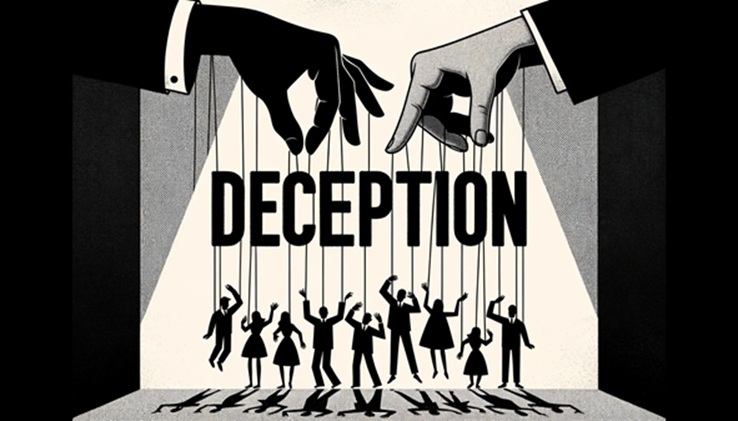
HALIFAX, Nova Scotia, August 31, 2025 – I wrote a few days ago about how children are easily deceived, especially by people older than them. I remember as an eight-year-old thinking that my 13-year-old babysitter was a trustworthy adult because she was allowed to make Kraft Dinner all by herself. Whenever she’d babysit, I’d do whatever she’d tell me to do (including dutifully eat her rock-hard macaroni with lumpy cheese sauce) because I unquestioningly accepted her full authority over me.
I saw the same unquestioning obedience in the three- and seven-year-old sons of a former boyfriend of mine. Whenever they’d come over for the weekend, I’d take them to the corner store for treats, just the three of us. The littler one would hold on tight to my hand, fully trusting me though he hardly knew me. Whatever candies I’d buy for them, they’d solemnly eat. It was strange for me, not being a mother myself, to see how willingly they complied with my every word.
It’s easier to deceive children than adults because children haven’t yet developed the healthy skepticism that comes with age and experience. Still, many people allow themselves to be deceived even into adulthood, perhaps out of a misplaced desire to recreate the safe haven they felt as children. But we born-again believers don’t have the luxury of willful naivete or of suspending our disbelief and holding on tight to the hands of worldly authorities. We also can’t afford to accept at face value the revelations of self-proclaimed prophets in the worldly church. We need to stand firm in God’s truth at all times, no matter how uncomfortable that might be for us or how alone we stand. God is our Truth, not rumor, innuendo, peer pressure, frenzied mobs, or false prophecies.
Which brings me to the topic of today’s article – deception. A tool of the devil, deception is also used on occasion as a testing strategy permitted by God. When the devil wields deception as a reward (that is, as something that’s been earned), he delivers it as a spiritual stronghold, so that those under its thrall are under his direct authority. Prior to my rebirth, I was constantly under the devil’s spiritual strongholds of one kind or another, especially in relationships, and so I know how nearly impossible it is to see clearly when you’re in them, let alone to break free of them. On the other hand, when God permits deception for testing purposes, he also provides a clear way for us to discern the lie and so to avoid falling for it.
You can’t “logic” a person out of a spiritual stronghold. You also can’t pray them out. Even if you think you’re making headway with someone who’s under a stronghold, they’ll willingly tighten their own chains as soon as you’ve gone home for the night. When the devil uses deception as a reward, he has God-given authority over everyone under the appointed stronghold: Even God won’t intervene in those cases, other than in rare exceptions that lead to spiritual rebirth.
But deception when allowed by God for testing purposes is vastly different. It’s still administered by the devil, but it’s not a spiritual stronghold; it’s not a due reward for choices made: It’s a test that comes in the form of a temptation to believe something that isn’t true. Jesus says that sometimes these deceptions are so extreme, even the “elect” (that’s us!) can be deceived. So how are we to know who or what to believe during these tests?
Paul advises us always to test the spirits, so even when we’re being tested, we need to test the spirits. (Especially when we’re being tested, we need to test the spirits.) However, when we’re being tested, we can’t just go to God in prayer and ask him for answers like we normally do, any more than when we were in school we could ask our teacher for answers when we were writing exams. During testing, we’re pretty much on our own as far as the answers go. That means we need to rely on what we’ve previously learned, and we need to use our discernment.
The best and most recent example of a God-sanctioned spiritual stronghold under the devil is the alleged September 23-24 rapture of the church. Suffice to say it’s just another version of the same-old same-old that’s been making the rounds for nearly 2000 years. The Jesus-is-coming-back-soon hysteria tends to be cyclical, but people still willingly embrace it so the devil keeps trotting it out, confident in its positive results for him. “Jesus is coming back soon!” is one of the devil’s favorite lies, as he harvests a bumper crop of disillusioned souls each time the prophecy fails.
Ironically, when Jesus does actually come back, the devil won’t be plying us beforehand with this particular deception. He won’t be allowed to. Like the virgins who fall asleep just before the bridegroom appears, we won’t know exactly when Jesus is coming until he’s suddenly here. The knowledge will be supernaturally withheld from us by God, who’s also, according to scripture, the only one who knows exactly when Jesus is coming back. Even Jesus himself still doesn’t know when he’s coming back and won’t know until he gets the signal that it’s time to ride.
As for us, our only heads-up will be our ongoing standing order to keep doing our jobs so that when Jesus does appear, he finds us doing what we should be doing during our time on Earth – namely, the specific work that God has given each of us to do. The last thing we want Jesus to find us doing is laboring under the latest lie of the devil.
We aren’t children anymore, to naively entrust ourselves to worldly authority figures or to believe lies because we don’t know any better. We also shouldn’t be easily deceived when we have God’s Spirit of discernment to guide us. Yes, tests on deception can be difficult (they’re meant to be), but God will only test us according to our ability: He doesn’t test us on what we don’t know; he tests us on what we do know, to see how we apply our learning in real-life situations.
As born-again believers, we don’t have to worry about being under demonic strongholds anymore, not as long as we’re under God’s grace. If we genuinely have God’s Spirit with us, we can’t come directly under the devil’s authority. It’s a spiritual impossibility. We can, however, be subjected to tests on deception delivered by the devil. God will permit that. Which means we always need to be on our spiritual toes, because those tests don’t come announced, and when they do come, they come hard and fast, often before we even realize we’re being tested.
This September’s rapture prophecy will play out like the countless other rapture prophecies before it, and the devil will take his payment in souls, like he always does. When the stronghold spell is broken on September 25, the majority of the people now under its thrall will quietly delete their “I had a dream” videos and move onto the next craze, having learned nothing from the experience. Some will even walk away from God altogether, feeling betrayed.
I pray you’re not among them.
ON COVETING AND CREDIT CARDS: A MESSAGE YOU WON’T WANT TO HEAR

HALIFAX, Nova Scotia, August 31, 2025 – I need to premise this article with the reminder that this blog is for born-again believers. By “born-again believers”, I mean people who’ve been converted by God into disciples of Jesus. I mean people who have God’s Holy Spirit in them, not worldly spirits. That’s what I mean by “born-again believers”. If you’re not born-again, this article is not for you.
If you are born-again, please do read on, though it’s possible that you won’t like what you read. Consider this your fair warning. Still, it was written especially for those who won’t agree with the teaching, and I hope they read through to the end, anyway, and pray on it.
As for those of you who will agree with what you’re about to read, the Holy Spirit in me greets the Holy Spirit in you!
**********
Eve was the first to covet, and she did so in the Garden, being tempted by Satan to want more knowledge than God had given her. Every form of coveting since then is a replay of Eve’s.
**********
We live in an age when coveting is so deeply entrenched in our everyday activities, we no longer recognize it as sin. All loans, including mortgages and credit cards, are coveting. What is a loan except something you’ve been given access to (for a price) that you don’t need and haven’t earned? How are loans different from Eve wanting more knowledge than she needed or was owed? If you do need something—genuinely need it—you won’t have to borrow to get it, because God will provide it for you without your having to borrow or even to ask. Borrowing is a sure sign of the sin of coveting as well as an indicator of weak faith.
I can already hear the excuses – “how else am I going to afford a house in this market??!!”, “but I only use my credit card to get points!!! I pay it off every month”, “it’s just such a convenience to have everything on one card”, “I never use my overdraft; it’s only there if I need it”, and so on. But the truth is, if you have a mortgage, you’re coveting. If you use credit cards, you’re coveting. If you have an overdraft or other line of credit, you’re coveting. You might not know that you’re coveting, it might not seem to you that you’re coveting, and you might not agree that you’re coveting, but you are coveting.
At the same time, you’re also making of yourself a borrower and of someone else a lender, which is tempting God. Scripture advises us not to borrow or lend, which means not only that we should not borrow or lend ourselves, but also—and equally importantly—that we shouldn’t make borrowers or lenders of others.
And worst of all – it means that you’re ungrateful for everything God has given you free and clear. Essentially, when you borrow, what you’re saying is: “I’m not happy with what God has given me. It’s not enough. I deserve more.”
Which is pretty much what Satan said just before he fell.
I warned you that some of you wouldn’t want to read this. Coveting has been so normalized that even we born-again believers do it without thinking. But coveting is also something by God’s Commandment that we dare not do. So, if we are doing it—even unknowingly—we need to stop.
As always, Jesus is our example of how not to covet. We know he didn’t have any business with usurers (the bankers of the day) because Judas Iscariot was in charge of the group’s money bag. We also know that Jesus operated on the “just in time” philosophy of satisfying needs, relying fully on God to provide for him and his followers. This was made clear in the feeding of the thousands when all they had in the cupboard was a few loaves and fishes. As I’ve written here before, Jesus was no prepper. His faith in God to provide what he needed when he needed it is our gold standard on how not to covet.
What we perceive as our needs are often just wants, and God, in his longsuffering patience, lets us roll with that confusion for a while. But when he sees that we’re open to learning the difference between wants and needs, he’ll help us differentiate between them, though what we do with that knowledge is still up to us. We’re free to keep coveting, if that’s what we want to do, just as we’re free to kill, steal, or commit adultery, but none of those activities are advisable and they all come with heavy spiritual penalties, especially for born-again believers.
If you’re born-again and reading this and you have some kind of loan or line of credit, including a mortgage or credit card, you know what you need to do. Notice that I said “need” to do, not “want” to do, because you’re likely not going to want to give up what you consider your right or convenience. Whether or not Jesus owned property, we don’t know (because it’s not mentioned in scripture), but we do know that he didn’t borrow money to buy property, because he rented places or slept rough. And that was Jesus, our Lord and God’s Messiah. Why should we think we deserve more than Jesus?
The world prods us, mainly through advertisement and cultural norms, to want more than we need or have earned. We’re constantly being hounded to replace things that aren’t yet worn out or to get the latest model when we only just a few months ago got the previous latest model. Unsolicited offers of credit cards show up in the mail daily. Students are encouraged to get student loans. New immigrants are ambushed upon arrival by banks urging them not just to set up savings and checking accounts, but to get credit cards and all forms of loans without any background or credit checks. Coveting has been normalized in the West because greed is now our cultural value and norm. Wanting more than what you need is a sign of ambition, and unbridled ambition is good (or so say the ungodly).
But the only ambition that has any value in God’s eyes is the ambition to do God’s will. That’s why God gave us ambition in the first place, and that’s the only ambition we should have as born-again believers.
**********
We’re no different than Eve in the Garden of Eden when we want what we don’t need or haven’t earned. Jesus taught us to pray for our daily bread, not for a McMansion in the suburbs or a platinum credit card. John the Baptist advised the soldiers: “Be content with your wages.” Anything beyond that comes from the devil.
CLARITY IN THE AGE OF DECEPTION
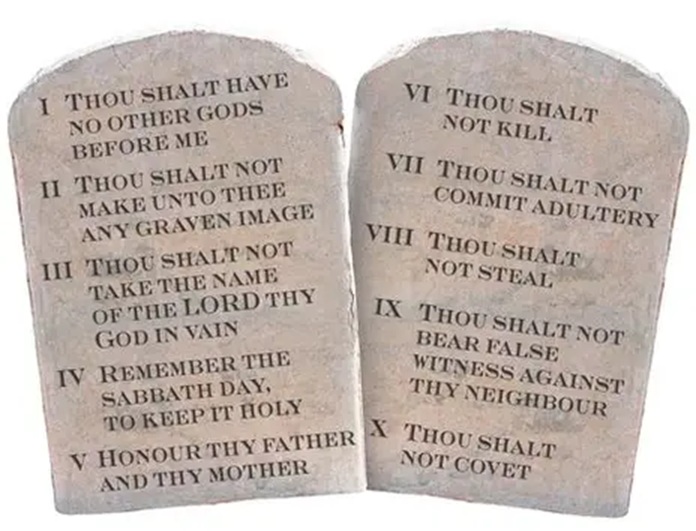
HALIFAX, Nova Scotia, August 30, 2025 – In the age of deception, it’s easy to get turned around, especially in matters concerning God (which for us should be everything). That’s why God wants to simplify our lives. He knows the spiritual obstacles we face, and so he’s devised a framework that we can refer to for all our decisions, intending that we not lose our way.
The framework is very simple. We can learn it in a few seconds and then, based on the application of that learning, successfully sidestep every provocation and test the devil can throw at us. Here is the framework:
- The Ten Commandments.
- Jesus’ words in the New Testament.
- Everything else in scripture.
As you can see, it’s a hierarchy of what to believe and in what order. Jesus taught us the framework and wants us to use it. He himself deferred to God and scripture in everything he did, but in cases where scripture could be misinterpreted and twisted to mean something else, the Ten Commandments provide clarity and therefore take precedence.
There’s nothing clearer than the Ten Commandments when it comes to what to do and what not to do. Which is why God, through his prophets, advised us not only to memorize his Law, but to surround ourselves with it in written form – on walls, doorposts, even our bodies. And then, knowing that even that might not always work, he carved his Law on our hearts.
Jesus’ words in the Bible are clear, too, but they can be twisted and taken out of context. They also run the risk of being mistranslated or removed altogether, if they counter the prevailing political or social narratives. So while we, as followers of Jesus, are to do everything that Jesus advised us to do, we need to make sure that what we’re being told are Jesus’ words are actually Jesus’ words. This we can do by prayer only, not by research. We need to go to God in prayer to find out if what Jesus is alleged to have said, Jesus actually said.
The same process of discernment applies to the rest of scripture. We can’t lazily assume and accept that everything in the Bible is God’s Word. Yes, we can assume and accept by faith that the Bible contains God’s Word, but we can’t assume and accept that all its contents are God’s Word. That would be spiritually lazy of us, and we’re not called to spiritually laziness. We’re called to discern the godly from the ungodly, and that includes what’s in the Bible.
We can use this simple framework – the Ten Commandments, Jesus’ words, everything else in scripture, in that order – to help discern truth from lies. Because discerning God’s Truth from the devil’s lies is the first order of business in the age of deception: Everything else hangs on it. If we don’t know whether we’re adhering to God’s Truth or succumbing to the devil’s lies, we can’t proceed as followers of Jesus. Everything we do will be done on a shaky foundation if we ourselves are unsure of our spiritual footing.
THE PRIMACY OF THE TEN COMMANDMENTS
I love the Commandments. They are the Law of the land of the Kingdom: They’re written on our hearts. If we keep the Commandments in every conceivable way, as Jesus taught us—that is, if we keep not just the letter of the Law, but its spirit—we’ll remain on firm spiritual footing and never lose our way.
Like the psalmist, we should be meditating on God’s Law night and day, mulling it over and tasting it for its deep and rich flavors. What exactly does it mean not to covet? Can I have a mortgage or use a credit card and still claim not to be coveting? I think you know the answer to that. What exactly does it mean to honor my mother and father? Can I expose their sins if I say they later came to God? Would I still be honoring them? I think you know the answer to that. Is medical assistance in dying both murder and suicide (that is, killing and self-killing)? I think you know the answer to that.
We need to know God’s Commandments, but that’s just the start. We also need to understand them and apply them, but even that’s not everything. We need to preach them, and not just as a curious ten-point footnote to the Gospels but as the fundamental doctrine that informs our every decision. Note that I say “informs” not “dictates”, because the Law, despite being the greatest of all of God’s commands and the Law of the Kingdom, is voluntary for us to adhere to. We don’t have to keep the Commandments. It’s a choice to keep them.
Still, we need know the Commandments before we can keep them, and we need to learn them before we can know them. I hope you’ve learned and know the Commandments, and even more so, I hope you keep them and preach them. I hope you love them so much, you meditate on them night and day and use them as your guiding light. God wrote them on your heart for that purpose.
In the age of deception, where even committed Christians are falling for the lies of the devil, we need the Ten Commandments now more than ever. We need Jesus’ words, too, and the rest of scripture, but those words are vulnerable to mistranslation, misinterpretation, or outright fraud. The Ten Commandments are inviolable and clear. They’re part of us. God made them that way because he knew the rest of scripture would be messed with.
Don’t let yourself be messed with. Adhere to God’s three-point framework, setting his Commandments at the very top.
THE COMING PERSECUTIONS

HALIFAX, Nova Scotia, August 24, 2025 – Today, we’re going to have a little lesson in geography, followed by a lesson in survival. Geography is important for us to know, because some geographical areas are dangerous for Christians to be in. Let’s call those areas “no-go zones”. Survival is important for us because if we don’t survive, Christianity will die.
GEOGRAPHY LESSON
Pretty much the entire Middle East is a no-go zone for Christians, as is much of Asia. The northern half of Africa’s not looking so great, either. If you took a globe and put your thumb on Jerusalem and then traced a circle with your pinky—hand outstretched and keeping your thumb on Jerusalem—most of the countries that would fall within the circle are either by law or by culture hostile to Christians. Not coincidentally, most of those countries are Muslim.
Countries that are by law hostile to Christians have outlawed anything to do with Christianity. That means no church buildings, no church services, no Christian bling (like crosses), and no Bibles are allowed. The penalties for breaking those laws range from imprisonment to beatings to execution. Iran, Afghanistan, Pakistan, and Somalia are some of the worst places you could be caught reading a Bible while wearing a cross. In nearly every instance, you would be killed.
Countries that are by culture hostile to Christians are places like India, Lebanon, Egypt, and Nigeria. Christianity is not illegal in these countries, but it might as well be. Christians in culturally hostile places suffer varying degrees of persecution, while their places of worship and faith-based health or educational institutions are habitual targets of vandalism, arson, and even bombings. It’s not as dangerous for Christians to be in areas that are culturally hostile compared to areas where Christianity is outlawed, but it’s still not advisable to be there. No Christian should be living or traveling in these countries. They are no-go zones.
SURVIVAL LESSON
And here comes the whole point of this brief geography lesson – the survival of Christianity. The stupidest thing a Christian can do is to choose to live or travel in an area that is either by law or by culture hostile to Christians. This is hands-down the stupidest thing that a Christian can do. It’s right up there with calling the head of the Catholic church “pope” (which means “papa”, as in “father”) when Jesus explicitly said to call no-one on Earth “father” because we have one Father, who is in Heaven.
Christians who choose to live in or to visit areas that are hostile to them are not adhering to Jesus’ directives. At no time does Jesus tell his followers to put themselves in danger by going to or remaining in areas that are hostile to them. He himself modeled what we’re to do when we encounter persecution or open hostility – we’re to leave that area and go where we’re not being persecuted. This is a directive straight from Jesus. It’s also basic common sense.
God doesn’t want his children purposely choosing persecution. To purposely choose persecution is to tempt God, even when it involves evangelizing. Living in or visiting places that are no-go zones also shows extreme hubris, not courage; hubris, not wisdom, unless you’ve been explicitly directed by God to go to those places, like Jesus was directed to go to Jerusalem when it was his time.
By “explicitly directed”, I mean just that. I don’t mean adhering to the so-called Great Commission of going into all the world and preaching the Good News. That is not an explicit directive. That is a general directive that needs to be applied wisely and in accordance with Jesus’ example of how to evangelize. Using the Great Commission as an excuse to to fly to Iran with a suitcase full of Bibles is just plain stupid, and Jesus didn’t teach his followers to be stupid. He taught us to be wise as serpents, so let us be wise as serpents.
But if we don’t go to no-go zones that are hostile to Christians, how will people there hear the Good News?
Good question, and the answer is:
Internet.
Radio.
God.
I’m living proof that you don’t need someone evangelizing you to be born-again. God himself exorcised me on a lonely beach in Australia and then put his Spirit in me, adopting me as his child. No-one preached to me (no-one dared preach to me, I was so rabidly anti-Christ as an atheist). No-one pressed a smuggled Bible into my hands. God simply and patiently waited for me to break and then immediately rushed in to save me when I cried out for help. No person could have done for me what God did that day. To believe otherwise is extreme hubris.
It’s worth mentioning that most of the areas that are now no-go zones for Christians were previously evangelized, meaning that most of the people there are deprived of the Word not by circumstance but by free-will choice. Jesus was once preached and lauded in those streets, but he’s since been rejected in favor of other beliefs. It’s also worth mentioning that most of the populations in the no-go zones can travel to areas that are not no-go zones and so can hear the Word there if they choose to hear it. But if even after hearing the Word they reject it, we need to respect their free-will choice and let them be.
COMING PERSECUTIONS
Along with showing places that are hostile to Christians, today’s geography lesson highlights that the no-go zones are expanding. Places that used to be Christian strongholds, like Turkey and Lebanon, are now openly hostile to the Word. These places are lost and will not return. Christians living there need to leave.
At the same time, those of us living in the West know only too well that Christianity’s days are numbered here, too. For example, Christians are now a minority in my home country of Canada, where Christian ministers serving in the military are forbidden to say “God” or “Jesus” in their public sermons (or even to call their sermons “sermons”). It’s not illegal to be Christian here, but Canada is becoming increasingly hostile to followers of Jesus by lumping Christianity in with all other religions and instituting laws and normalizing cultural practices that favor “diversity, equity, and inclusion” over religion.
So, while we’re not yet openly persecuted in the West, we experience what can be called soft persecution. With the sole exception of the United States, all Western nations are promoting and permitting soft persecution. The “othering” of Christians and silencing of the Word will continue until it shifts into open cultural hostility, followed by the outlawing of Christianity altogether. This shift will happen very quickly and, I believe, very soon.
If we want to see what most of the West or even the entire world will look like some day, we need only to look at the Christian no-go zones of today
And when that “some day” comes, where will we go?
WHY NAZARETH?

HALIFAX, Nova Scotia, August 21, 2025 – From the time he was old enough to know his own name, Jesus knew he was the Messiah. It was never a mystery to him, his messiahship, and even at the ripe old age of twelve, he was eager to be out and about doing his Father’s work. But God held him back for nearly two more decades, putting him through his paces and forming him quietly behind the scenes… until one day he emerged suddenly as Jesus the Christ.
But of all the places Jesus could have debuted as the Messiah, why Nazareth? Jesus had already started his ministry work when he made the announcement that shook the very foundations of the spiritual realm. He’d already built a reputation as a preacher and healer, working countless miracles in villages throughout Judea and beyond, and gaining a loyal and growing following.
But Nazareth – Jesus’ hometown was a whole other kettle of fish. There, Jesus was still just the son of a carpenter, big brother to a brood of brothers and sisters, and Mary’s eldest son. Sure, the villagers enjoyed listening to Jesus read from the scrolls, as was his habit on the Sabbath, but when he stood up that day to read the passage from Isaiah that foretold the coming of the Messiah and then announced that he was the fulfillment of that prophecy – well, you could have heard a pin drop. No ecstatic applause greeted his pronouncement. No flowers or teddy bears rained down on him. Just shocked silence, followed by murmurings and occasional angry outbursts and the growing realization among those present that a very great blasphemy had just been committed.
Surely Jesus must have known, when God advised him to choose his hometown to come out as the Messiah – surely Jesus must have known precisely the response he would get from his fellow Nazarenes. When they all leaped to their feet and drove him out of the synagogue and then out of the town itself, aiming to stone him to death and throw him off the cliff, Jesus must have known this would happen.
Death by stoning was the execution method prescribed in the law for cases of blasphemy, and calling oneself the prophesied messiah was the height of blasphemy. Had Jesus purposely set himself up to be executed? I mean, if he’d come out as the Messiah someplace else, someplace where he wasn’t known as the carpenter’s son but as a miracle worker and preacher par excellence – if he’d come out as the Messiah as a stranger in such a favorable environment, it’s highly likely he would in fact have been received as the Messiah and would have gotten his due shower of flowers and teddy bears from the adoring crowds. People might even have strewn their cloaks in his path, like they did when he rode triumphantly into Jerusalem a few years later, just before his crucifixion. But this adulation wasn’t going to happen in Nazareth, where the last thing he was considered was a prophet, let alone THE Prophet spoken of by Moses.
So we can only assume that Jesus chose Nazareth to come out as the Messiah specifically because he wanted to set himself up for future execution. He knew the response he would get from the Nazarenes, and he knew that they would not let it go, that they would report him to the temple elders, and that he would be a hunted man from that point on. But he also knew (because God assured him) that nothing would happen to him on that day or on the days to follow, and that he would continue the work that God had sent him to do until it was done.
We, too, if we’re genuinely born-again and are out and about doing our Father’s work – we, too, have had our moment of standing up in our local synagogue and announcing who we are, only to be met, like Jesus was, with shocked silence, averted eyes, and growing murmurings against us. Like Jesus, we’ve painted a spiritual target on our backs simply by proclaiming who we are, and by so doing, set the ball rolling towards our own execution. This I know for a fact.
And yet, like Jesus, I say: “Bring it on”. God will protect us until it’s our time, and when our time comes, God will be right there with us, like he was with Jesus. Being under the world’s condemnation and having a target on our back is part and parcel of being a born-again follower of Jesus. If you don’t accept being hated and hunted solely for who you are, you’re in the wrong line of work.
Just as surely as we had our Nazareth moment when we came out as born-again, we’ll have our Jerusalem moment when it’s our time. Jesus knew exactly what he was doing when he came out in Nazareth as the Messiah: He was setting himself up for the glorious “baptism” of the cross, which would be his (and our) only way Home.
ARE YOU SPIRITUALLY ALIVE OR SPIRITUALLY DEAD?

HALIFAX, Nova Scotia, August 16, 2025 – There’s a conundrum that we born-again believers must contend with every day. Better said, there’s a spiritual fact that we need to accept as our indisputable reality: In their soul, which is the seat of their will, humans have a measure either of God’s Spirit (which is holy) or of the world’s spirit (which is demonic). There is no third option, no “vacant” or “neutral” humans, no mix-and-match co-habitational arrangement where God’s Spirit shares a soul with demons. You either have God’s Holy Spirit in you, or you have unholy spirits. It’s either one or the other.
No third option.
As a born-again believer, I find this spiritual fact disturbing. I don’t think about it very often, and when I do, I don’t linger on the details. It’s enough for me to know that it’s a fact and to accept it as such.
Scripture tells us that at spiritual rebirth, we pass from death to life. We know this is true not just because scripture tells us it’s true, but because we’ve experienced it ourselves first-hand. It’s our lived reality. When God’s Spirit entered into us, we were alive for the first time in our lives. It’s a funny thing to say “we were alive for the first time in our lives”, because weren’t we alive all along, from the instant of our conception?
Physically, yes, we were alive, but spiritually, no. Other than for Jesus, we’re all born spiritually dead. We don’t come into the world spiritually innocent; we come burdened with Adam’s sin. It was Adam’s sin that brought death to the world – spiritual death, which is far worse than physical death. People who are not born-again and who are afraid to die don’t realize they’re already dead in the only way that matters.
When Jesus instructed one of his followers to “let the dead bury the dead”, he was letting us know the distinction between believers and unbelievers. Believers are spiritually alive, and unbelievers are spiritually dead. Believers belong to God (the living God), whereas unbelievers belong to Satan (lord of the dead). At the same time, unbelievers are plagued to varying degrees by demonic spirits, who also belong to and get their directives from Satan; no unbeliever is free of the demon plague. This is the source of all their emotional and mental illnesses, as well as the cause of most of their physical ailments.
As I mentioned at the outset, I don’t think about the spiritual state of humanity very often because the collective prognosis is so bleak. We’re surrounded by dead people, most of whom don’t even know they’re dead. They were born in their sins and will die in their sins, and that’s how they want it to be. They don’t want to hear about sin. They don’t want to hear about God and Jesus. Even as they rush to undergo every conceivable test and pretest to detect even the faintest presence of this or that disease, they deny their essential spirituality and the reality of their spiritually dead state.
What are we, as born-again believers, to do about these spiritual corpses? Recall that Jesus said: “Let the dead bury the dead” and to let “the blind lead the blind”. He didn’t tell us to run after them and ply them with scriptural passages or try to force-feed them the Gospel. He said to let them be. He called them dead and blind, and he said to let them be, to leave them to each other.
This is another disturbing spiritual reality that I don’t think about very often or when I do, for very long. Here in Canada, a self-described former Christian nation, we’ve reached near Sodom-levels of dead souls. Sure, “spirituality” is widely embraced and promoted, but not God and Jesus. (Don’t you dare mention God and Jesus!) Every other home has a “dreamcatcher” or a buddhist garden statue. Every other family has a pagan or a practicing witch. Whenever there’s a disaster, “thoughts” can be offered “in solidarity” with those who are suffering, but not prayers. (Don’t you dare mention prayers!) The most powerful force in the universe is not welcome here.
The spiritually dead state of unbelievers is not a figure of speech but a hardcore spiritual truth. We are surrounded by demon-infested spiritually dead people who are either unaware of their condition or, if they are aware, don’t care or have embraced it. Some have even free-willingly made a contract with Satan. You are either born-again and spiritually alive or not born-again and spiritually dead. There’s no third option. Being spiritually dead leads to eternal death, just as being spiritually alive leads to eternal life. You can’t be spiritually dead and end up in Heaven. That’s a spiritual impossibility. The only destination for spiritually dead souls is the lake of fire.
Which is why I don’t think about this spiritual conundrum very often. I’m confronted with it every day, but I don’t let myself dwell on it. It’s enough to know that this is our reality, that this is the world we live in for whatever time God allots us here. Rather than dwell on the spiritually dead, I choose instead to think about God and Jesus, about Heaven, and about feeding those sheep who do want to live. This is our mission, to feed those sheep as God gives us guidance.
We can’t help the dead who want to remain dead. They are not our mission. But we can help the sheep who choose life. That’s what Jesus did in his ministry, so that’s what we’re to do in ours.

PROPHECY FULFILLMENT OR THE DEVIL’S LIES? ON THE DREAMS AND VISIONS OF CHILDREN

HALIFAX, Nova Scotia, August 16, 2025 – Eve didn’t know that the devil was lying when he told her that eating from the forbidden tree would be good for her. Eve didn’t know the devil was lying because no-one had ever lied to her before. She’d never experienced deception. She took what the devil told her at face value because she had no reason not to take it at face value. Lies and malicious intent were not yet part of her life experience. And because they weren’t yet part of her life experience, she wasn’t hardened to them. She had no battle scars. She had no personal repository of lie-related hard-learned lessons to draw from.
And so, in her naivete, she ate the forbidden fruit, and finding it tasted good, she went running to Adam and repeated the devil’s lies and he ate the forbidden fruit.
And their world came crashing down.
As born-again believers, we have no excuse for not being aware that someone might be lying to us. We have ample life experience, and even more crucially we have discernment through God’s Holy Spirit and his written Word. While having these resources doesn’t mean we won’t be lied to (we will), it does mean we’ll be better able to know when we’re being lied to.
Like Eve, people sometimes lie without knowing they’re lying, because they too have been deceived. The world and the worldly church are full of such people (both the deceived and the deceivers; the sheep and the wolves), and so we need to be careful when interacting with them. We not only need to bring the repository of our hard-learned life lessons to all our interactions, we also—and more importantly—need to run everything past God and compare it against his Word, even when what we’re being told is allegedly from God. Not to do our due diligence in this regard would be a profound failing on our part.
I thank God I’ve been lied to, and lied to copiously and mercilessly, throughout my life. I thank God, because I’ve learned from these hard lessons not to take people and what they say at face value. When scripture warns that Satan can appear as an angel of light, we need to take this warning to heart. Jesus calls Satan the Father of Lies because lying is Satan’s nature: It’s who and what he is. Satan cannot not lie (except when he’s in God’s presence), as truth is entirely absent from his being. And if he does on occasion slip a fact or two into his lies, he does it only to bolster his deceit.
We’re constantly being bombarded by lies from the devil and his followers, most of whom don’t even know they’re followers of the devil (or that they’re repeating his lies). Many of the lies concern God and Jesus, especially Jesus’ return to Earth in bodily form. If it sometimes appears as if the lies are a coordinated effort, it’s because they are a coordinated effort. It goes something like this: Satan gets permission from God to release another zinger, he relays the lie to his followers, and his followers launch the lie campaign.
One of the most prominent lie campaigns in the worldly church is “Jesus is coming back soon”. It’s been making the rounds now for nearly 2000 years, waxing and waning according to the “signs of the times”. The direr the times and the more glaring the signs, the more widespread and hysterical the campaign. We’re in the midst of another blitz now, only this time the devil has upped his game by preying on children or better said weaponizing children to deliver his message. Most children are very much like Eve in the Garden of Eden in that they don’t know when they’re being lied to. Certainly, children can learn to lie at an early age, but they’re unlikely to recognize they’re being lied to when the lie comes from an adult or an adult-like figure.
Enter the adult-like figures of the devil and his demons. Shimmering like angels of light, these deceivers come to children in their dreams and in visions, whispering beautiful lies. The children relay what they saw and heard to their parents, who then proudly repeat the dreams and visions to others, usually by recording what the children have said or what the children claim to have seen and heard. The devil’s followers pick up the recordings and spread them far and wide. And yet, through all this, no-one appears to question the source of the revelations. No-one appears to suspect that what the children saw and heard might not be coming from God.
Which is why we born-again believers need to ask the hard questions and apply our experience and God-given discernment without discrimination. This may earn us the ire of the proud parents and make us targets of the deceivers, but we still need to do it. I don’t mean we should confront the people pushing what may in fact be lies (nothing can be gained by confronting them); I just mean we need to discern for our own purposes and not contribute to the devil’s campaign.
As born-again believers, we can’t take at face value what children claim to have seen and heard. They’re like pre-fallen Eve in their spiritual gullibility, and we need to recognize that. I find it interesting that the promoters of the children’s dreams and visions invariably quote the scripture about God pouring out his spirit in the end times so that “your sons and daughters shall prophesy”, as if to imply that questioning what the children saw is the same as questioning God’s Word.
I’m not questioning God’s Word here (I would never question God’s Word); I’m questioning whether the latest phenomenon of children having dreams and visions of Jesus coming back soon is a fulfillment of prophecy or a lie of the devil. We need to question the spirits, meaning we need to question whether they’re from God or not. We need always to question the spirits, even in our own dreams and visions. Not to do so would not be doing our due diligence as followers of Jesus, making us as vulnerable to the devil’s lies as Eve.
HOLY HATE

HALIFAX, Nova Scotia, August 14, 2025 – Hate is getting a bad rap these days, but it shouldn’t. As born-again believers, we need to hate as much as we need to love. The two are not exclusive, hate and love, but rather different expressions of the same passion for God. If you don’t hate sin, you don’t love God.
Sin is another word that’s been getting a bad rap lately. The same people who talk smack about hate also dis sin, if they mention it at all. For the hate haters, sin doesn’t exist, at least not to them. I guess if you claim something doesn’t exist, you can’t be held responsible for it.
But we know only too well that sin exists because it was sin that once separated us from God. We were all deeply acquainted with sin, we born-again believers, and so based on our former deep acquaintance can stare sin straight in the face and call it what it is. We have no problem identifying sin or calling sin “sin”. We don’t look the other way and pretend it doesn’t exist. We don’t call it “a lifestyle choice” or “born that way”. We don’t dismiss it as a “product of his or her environment”. We don’t promote it as “progress” or “cultural expression”. We don’t give sin medals. We see sin for what it is and have no problem calling it out. We have no problem hating sin. In fact, hating sin is one of the chief characteristics of a born-again believer.
If we don’t hate sin, we don’t love God.
Allow me to state for the record that I hate and I hate unapologetically. I hate with a passion and a fervor, and I let my hatred burn where it ought. There’s a firepit in my soul that God made especially for my holy hatred. There I tend my hate and let it burn. I don’t quench it. I don’t deny it. I let the flames rise freely and steadily and hot, as God intended.
But it’s sin I hate, not people. This distinction must be made and held tightly – it’s sin I hate, not people: the sin within people, the sin done by people, the sin condoned by people. I don’t brush sin off as not my concern. I’m not cold to sin. I’m not indifferent to it. If you sin anywhere near me, don’t expect me not to hate your sin. Don’t expect me to embrace your sin and celebrate it. Don’t expect me to soothe you in your sin. Expect me to hate your sin and to call it sin. The same everything I give to loving God, I give to hating your sin.
We born-again believers need to revel in our holy hate for sin. It’s another way of expressing our love for God. Never let anyone tell you that you can’t hate or that your hate is wrong. “Love the sinner, hate the sin” is not a blithe byline but a core Kingdom doctrine. Note that it’s “hate the sin”, not look past the sin or lightly rebuke the sin. Hate is what is called for when it comes to sin: Hate, pure and strong; hate that is God-sanctioned and God-fueled, the kind of hate that drove Jesus to overturn tables in the temple.
Love the sinner, HATE the sin.
Nothing less will do.
THE PARABLE

HALIFAX, Nova Scotia, August 9, 2025 – There were two prototype churches during Jesus’ ministry – the inner circle made up of Jesus and his close followers, and the outer circle made up of casual followers who came and went. After Pentecost, these prototypes became, respectively, the Kingdom Church, peopled by Holy Spirit-filled born-again believers, and the worldly church, peopled by everyone else who calls him- or herself a Christian. The two churches remain to this day.
As a born-again believer who came to faith instantaneously and miraculously, I am mystified by people who choose to remain in the worldly church (because it is a choice to remain there, a personal choice). I can’t fathom the mindset where someone would say “I’ll commit this much of myself to God, but no more”. I can only assume the lack of commitment comes from not knowing the first Commandment or, knowing it, choosing not to follow it.
Before I was a believer, I knew many people in the worldly church. There wasn’t much to distinguish them from me, other than that some of them attended a church service on occasion or wore a cross under their shirt. They drank with me, cursed with me, did all manner of whatever with me, but then checked the “Catholic” or “Protestant” box on official forms. I even ridiculed their beliefs to their faces, and they just laughed. Their casual approach to God is one of the main reasons why I never at that time seriously considered looking to God for answers to my many problems, though even if I had considered looking to God, I wouldn’t gotten anywhere until he actually called me.
When God calls you, it’s a one-and-done deal. He doesn’t call you, is rejected by you, and then comes back later to try again. You get one shot. If you accept his call, he’ll test you to gauge your sincerity. If he finds you sincere, he’ll convert you and you’ll be born again, but the tests won’t stop there. They’ll keep on going until you draw your last earthly breath.
Most people in the worldly church have been called and are now being tested for their sincerity. They’re drawn to what God’s offering, but they’re also partly drawn to what Satan is offering. God is patient and so is giving them an allotted time to sort things out. During this time (the duration of which is known only to God), their commitment typically waxes and wanes, though as long as it remains above a certain measure, they’re still in the worldly church, which means there’s still hope for them. But, again, no-one knows the time God allots to each soul. When time’s up and that soul is still dithering, it’s lost forever. This spiritual fact should scare the you-know-what out of everyone in the worldly church.
I was born-again from atheism and so didn’t go through the worldly church phase. When God called me, I immediately threw my full lot in with him, holding nothing back. God knew this (knowing my heart) and so converted me (healed me) on the spot, giving me a portion of his Holy Spirit. The tests, though – the tests have been non-stop for me as a born-again believer, and I’ve struggled with many of them. The higher you climb the mountain, the more rugged the terrain and the tougher the conditions.
Jesus had to teach his casual followers in parables because they weren’t able to receive God’s Truth straight up. His close followers could receive it, but his casual followers needed it veiled. If any of you reading this are still in the worldly church, here’s a parable for you:
There once was a donkey. He was a nice enough donkey, as donkeys go. With few exceptions, he nearly always did what his master asked of him. And because the donkey was more obedient than stubborn, his master kept him and was kind to him and continued to feed and shelter him for many years.
But as time passed, the donkey grew less and less obedient and more and more stubborn. His master noticed this and tried to correct the donkey’s behavior. At first, he tried correcting him with a gentle hand, but the donkey ignored him. So then he tried correcting him with a heavier hand that slightly hurt the donkey (though just enough to get his attention and show him that his master meant business). Still, the donkey persisted in his bad behavior, growing more and more stubborn with each passing day.
The master was at a loss for what to do. He was fond of the donkey, but because of his stubbornness, the donkey was of no use to him. And so, one day, the master made the difficult decision to let the donkey go.
The man who came and took the donkey away didn’t care that he was stubborn.
He was a salami maker.

 A BORN-AGAIN BELIEVER