
CHARLO, New Brunswick, March 30, 2024 – When someone brings something to your attention, you have two choices: You can either listen to what’s presented and consider its merits, or you can ignore it.
Here’s what I’m bringing to your attention, my dear fellow born-again believers: Easter is not a Christian holiday. Over the centuries, and under the direction and authority of the various Eastern and Western dominant denominations, Easter has become known as a Christian holiday, but it isn’t Christian.
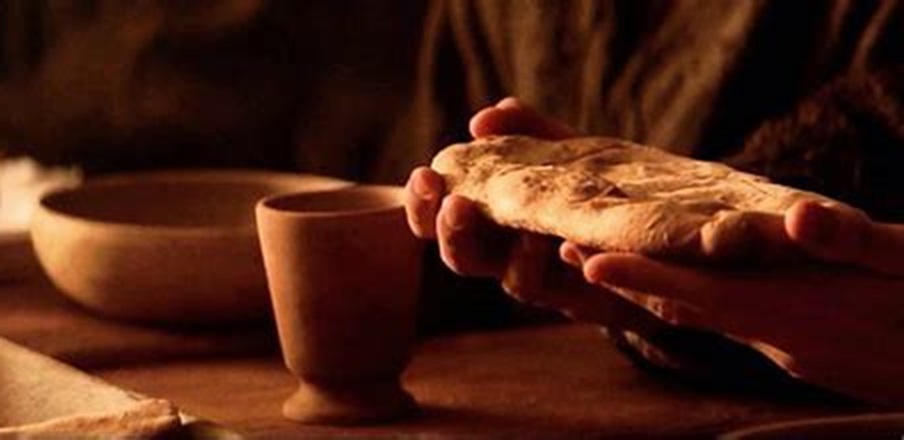
During his final Passover meal with his disciples, Jesus directed his followers to raise a glass in his honor and memory at future Passover meals. This directive has been stylized over the centuries as “the Lord’s Supper” and is in fact celebrated daily all over the world, not just once a year at Passover. I doubt that Jesus intended us to celebrate a stylized version of the Passover ritual every day, let alone several times a day, but that’s a topic for another discussion. What I do know that Jesus intended us to do is to observe Passover, but to do so in the new way he’d demonstrated – with the wine as his blood and the bread as his body – as a token of the new covenant.
Passover is not Easter. The dominant denominations will occasionally pepper their liturgies with words like “paschal” that appear to connect Easter and Passover, but these observances are two distinct events. The anti-christ emperor Constantine, at the Council of Nicaea in 325 AD, openly stated that he wanted to divorce Easter from the Jewish Passover so that the two observances would be distinct and unrelated. That’s a shame, because that’s not what God stipulated for his people when he directed them precisely when and how to observe the Passover; it’s also not what Jesus directed his disciples to do. I wonder on who’s authority Constantine overrode both God and Jesus in setting a date for Easter that had nothing to do with the Jewish Passover?
Just as a reminder, Easter occurs on the first Sunday following the first full moon after the spring equinox (in adherence to the solar calendar), whereas Passover occurs on the 14th day of Abib, in the evening (in adherence to the lunar calendar). The Passover date is as good as writ in stone, as it comes from God himself. If the Passover date is as good as writ in stone and Jesus taught us to observe the Passover in the new way that he directed, why do Christians celebrate Easter and all but ignore Passover?
I’ve written here before about what I think of the Catholic church and other denominational organizations. My opinion hasn’t changed over the years; if anything, it’s solidified. When Christianity became a state religion under Constantine in the early 4th century AD, it did so by absorbing all the local pagan (that is, demonic) practices and rituals. Otherwise, the masses wouldn’t have accepted the state decree to “convert”. What that means is that the Christianity we’ve inherited is thoroughly polluted with practices and rituals that have nothing to do with the Church founded by Jesus. One of those practices and rituals is celebrating the fertility feast of the goddess Ostrea, a.k.a. Easter. And so Easter became the neo-Christian Passover substitute, with Jesus’ crucifixion and resurrection clumsily overlaid, and has continued as such to this day.
I cannot in good conscience celebrate a pagan festival that was tweaked to grudgingly include Jesus. Passover, on the other hand – Passover I will observe as Jesus directed me to observe it. I will observe the Passover ritual and the accompanying Feast of Unleavened Bread. I will do so because I’ve been directed by God and Jesus to do so. I implicitly and unquestioningly trust their authority to direct me. I only wish I’d paid closer attention to their direction sooner, but as my grandmother would say, “better late than never”.
What you choose to do with this information is up to you, but I strongly suggest that you take it to heart if you’re still celebrating Easter. The early Church (which is the same Church you’re in today, if you’re genuinely born-again) continued to observe Passover as Jesus directed them to observe it. When Easter officially replaced the observance of Passover for Christians, those who rejected Easter were considered heretics and treated as such. This is a part of our heritage that is glossed over and swept under the rug, but we need to claim it, remember it, abhor it, and then stand firm in the traditions of Jesus, not of Constantine.
There is one true Church and one true Church only, and that is the Church founded by God and Jesus, as foretold in the Old Testament. Easter is not celebrated in that Church. Passover is observed, in the new way shown to us by Jesus to herald the new covenant enshrined in the new testament, sealed in Jesus’ blood. This is my Church. This is my God. This is my ritual. This is my Messiah.
Anyone trying to make me to think or do otherwise will have my Father to contend with, and good luck with that.
 A BORN-AGAIN BELIEVER
👏👏👏
LikeLike